Edmund Burke, an 18th-century philosopher, argued in his book 'A Philosophical Inquiry into the Origin of Our Ideas of the Sublime and Beautiful' that the sublime differs fundamentally from beauty: while beautiful objects are small, smooth, delicate, and attractive (like a blue bill or a doll), sublime objects are vast, gloomy, dark, and threatening (like cliffs, mountains, or thunderstorms). Unlike beauty which produces pleasurable feelings, the sublime overwhelms us with terror while paradoxically still delighting us—because experiencing the sublime activates our basic self-preservation instincts and exercises the nerves that would save our lives in genuinely dangerous situations. This theory had a profound influence on Romanticism, the artistic movement that celebrated the untamed power of nature.
Edmund Burke on the Sublime: A Philosophical Inquiry
Added:Introduction to Aesthetics: A basic understanding of aesthetics as the branch of philosophy concerned with the nature of beauty, art, and taste.

Aesthetics is the branch of philosophy that studies beauty and the emotions it evokes, derived from the Greek word 'aisthesis' meaning sensory knowledge or sensitivity, and was formalized by German philosopher Alexander Baumgarten as the rational study of what awakens aesthetic emotions in human beings; while ancient Greeks used 'poetics' to study artistic creation, aesthetics has evolved to encompass all artistic reflection, and from a contemporary phenomenological perspective, each artwork establishes its own unique type of beauty rather than being judged by a single universal standard.

Aesthetics (علم الجمال) is the philosophical science of beauty that studies how humans perceive, evaluate, and appreciate beauty in art and life. Unlike the science of art, which is sensory and material, aesthetics is a psychological and feeling-based discipline that involves critical evaluation and appreciation of artistic works. Examples of aesthetics in practice include recognizing beauty in moments, coordinating styles, choosing optimal angles for photography, and conducting artistic criticism to develop and improve creative works.

Aesthetics is a philosophical discipline that studies the forms and essence of beauty, distinct from estheticism. The video explores fundamental questions about beauty: whether it exists universally, when it emerged, and how it relates to art. Art is defined as a category of aesthetics, representing humanity's attempt to capture and express beauty. The discussion traces how beauty transcends basic survival needs, representing a higher human aspiration that emerged as societies developed beyond mere subsistence.

An aesthetic is a collection of colors, imagery, objects, or fashion that conveys similar emotions. The term derives from '-chic,' describing similar things grouped together. Academia aesthetics center on learning and knowledge, including dark academia (moody, 19th-century European romanticism), light academia (positive themes like friendship), art academia (art creation focus), chaotic academia (rebel against traditional education), and pastel academia (East Asian-inspired, colorful, girly aesthetic).
Aesthetics is a branch of philosophy concerned with art and beauty, examining questions about what constitutes art, the nature of aesthetic judgment and experience, and the criteria for aesthetic value; it falls under the broader category of value theory in philosophy and addresses fundamental debates about whether aesthetic standards are objective or subjective, how different art forms relate to each other, and what distinguishes high art from popular art.
Empiricist Philosophy (John Locke): Familiarity with the empiricist view that human knowledge and ideas originate primarily from sensory experience.
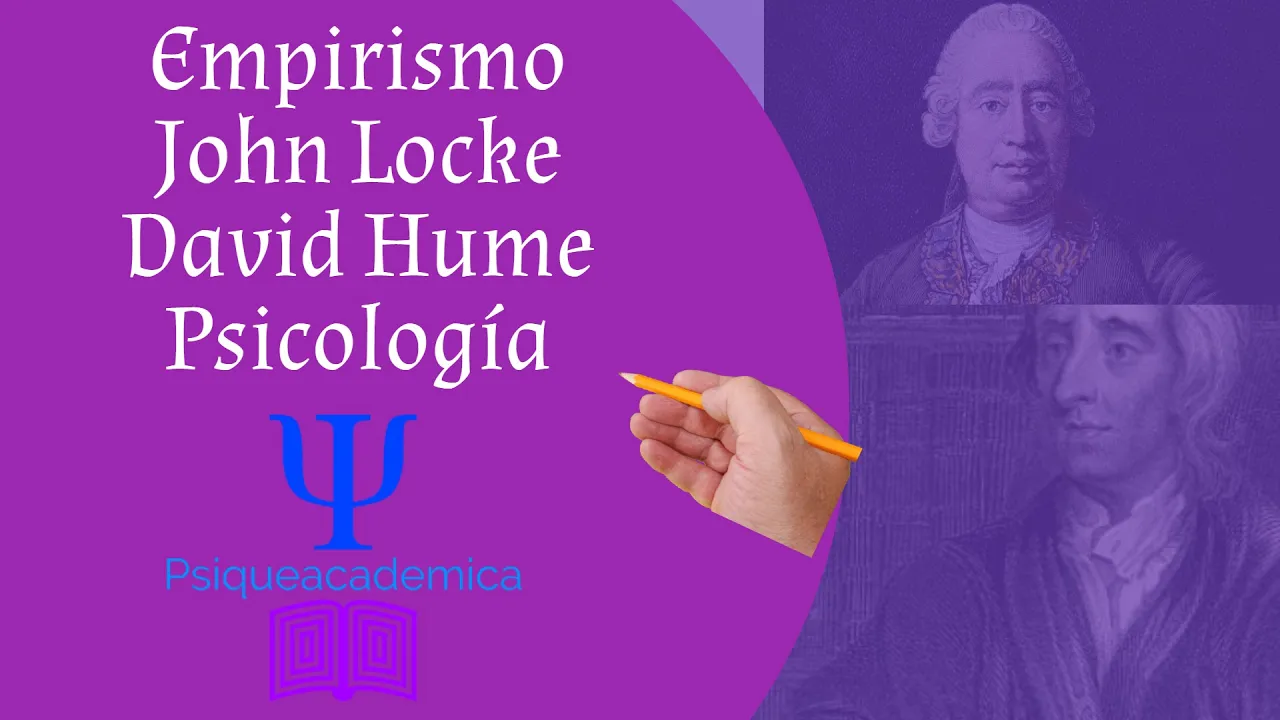
John Locke, known as the father of English liberalism, was a prominent empiricist who challenged rationalism by asserting that knowledge comes from sensory experience. He proposed the tabula rasa theory, stating humans are born as blank slates with only basic reflexes, and all learning occurs through experience. Locke classified ideas into simple (sensation and reflection) and complex (aggregations of simple ideas). His empiricist approach revived the value of sensory experience as a primary source of knowledge, countering medieval views that senses were unreliable and led to sin.

Empiricism emerged as a challenge to rationalism, particularly to Descartes' view of inborn ideas. John Locke (1632-1704) is considered the father of empiricism. He argued that the mind at birth is a 'tabula rasa' (blank slate), containing no innate ideas. All knowledge, according to Locke, comes from sensory experience. This view directly challenged the rationalist position that certain ideas are inborn.

John Locke was an empiricist philosopher who believed that knowledge comes from experience. He argued that the human mind is like a blank slate at birth and that all knowledge is acquired through sensory experience. This contrasts with rationalism, which holds that knowledge comes from reason. Locke's empiricism was foundational to modern epistemology and influenced the development of scientific methodology.
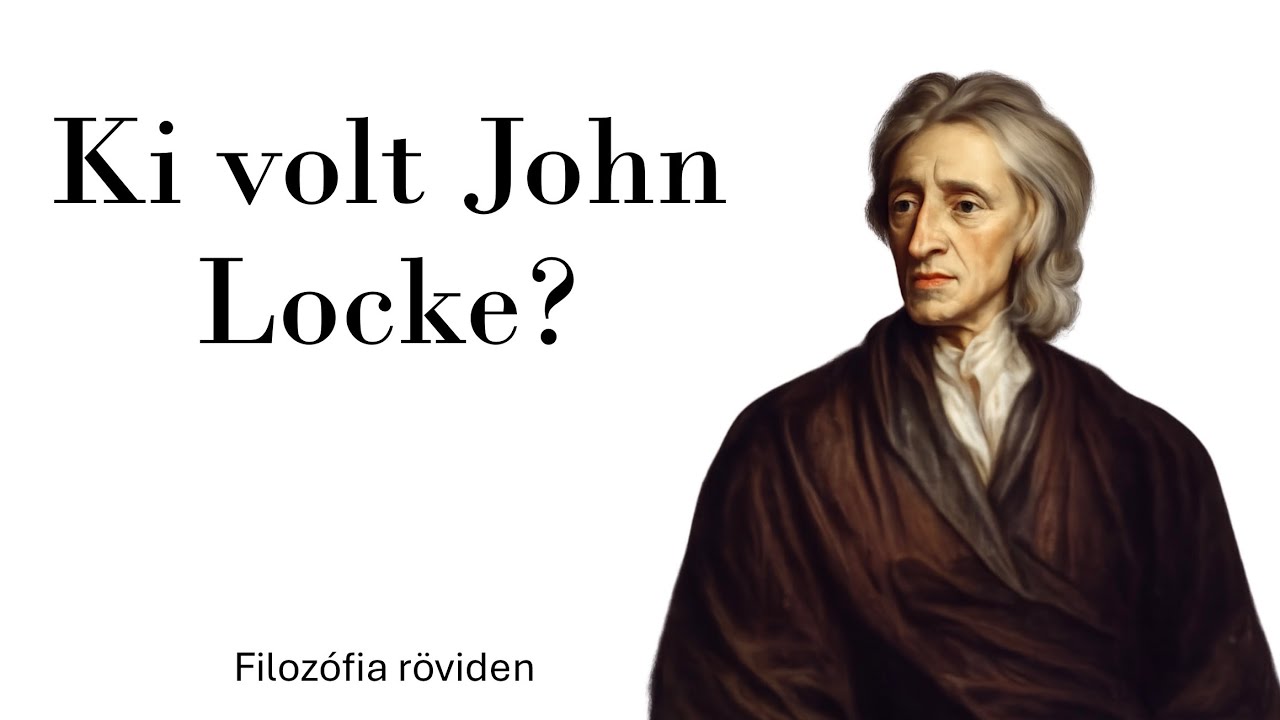
John Locke, born in England during the Civil War and educated at Oxford, developed a revolutionary empiricist philosophy. He rejected Descartes' innatism, arguing the mind at birth is a blank slate (tabula rasa). All knowledge derives from two sources: sensation (sensory experience) and reflection (internal mental operations). Locke distinguished simple ideas (indivisible sensory inputs like colors) from complex ideas (combinations of simple ideas). He further differentiated primary qualities (objective properties like size and shape) from secondary qualities (subjective experiences like color and taste). This empiricist approach fundamentally challenged traditional scientific authority and laid groundwork for modern science.

John Locke was a major Enlightenment thinker who argued that the human mind is a blank slate (tabula rasa) at birth, with all knowledge derived from experience rather than innate ideas. This empiricist view held that nurture determines beliefs and actions more than nature. Locke also advocated for the separation of church and state and emphasized the rights to life, liberty, and property, which heavily influenced the U.S. Declaration of Independence and Constitution. However, Locke had contradictory positions—he wrote against slavery while investing in the slave-trading Royal Africa Company and supported child labor. His influence on political philosophy was enormous, affecting thinkers like Berkeley, Kant, and Hume.
Classical Concepts of Beauty: Understanding the traditional definitions of beauty rooted in harmony, symmetry, proportion, and order.

The classical concept of beauty originated in ancient Greece and was characterized by perfectly formed, perfectly proportioned, noble, and serene works. Examples include the Apollo Belvedere (a marble statue of Apollo showing athletic grace) and the Aphrodite of Milo (Venus de Milo, representing the goddess of love and beauty). This concept of beauty was inherited by the Renaissance and represented an ideal type of humanity.

Beauty is not merely subjective taste but has objective structure and real significance for humans. Aquinas identified three characteristics: unity, harmony, and clarity. Augustine argued beauty exists independently of our feelings. Jakštas defined beauty as unified variety arising from non-accidental harmony. This classical view reverses modern assumptions: we do not assign value to things, but value is revealed through them. Beauty emerges from the tension between unity and diversity when diverse elements create a higher unified whole.

In classical Western philosophy, truth, goodness, and beauty are the three transcendentals—fundamental concepts identified with God. Plato believed beauty exists as an ideal form in a transcendent realm, more real than physical objects. Physical things participate in and reflect these eternal forms, making physical beauty derivative. Plato taught a hierarchy of beauty where internal character beauty surpasses external physical beauty, ultimately leading to God. The Pythagoreans connected truth, goodness, and beauty through underlying numerical reality. Aristotle identified specific criteria for beauty: unity/coherence, proper proportion, and symmetry. This classical understanding, rooted in Greek philosophy, formed the foundation of Western culture's emphasis on reason, ethics, and aesthetics, contrasting sharply with modern subjectivist views that reduce beauty to mere personal preference.
Kant's aesthetic theory rejected both classical and sentimental approaches to beauty. Classical aesthetics held that beauty was the sensible illustration of intellectual truths (like marble representing mathematical perfection). Sentimentalist aesthetics held that beauty was whatever pleased human sensibility. Kant argued that beauty is neither purely intellectual nor purely sensory - it is the 'accord contingent and miraculous' between the sensible and the intelligible. When we experience beauty (like listening to a Chopin prelude or viewing a Corot landscape), we feel something speaks to us, as if telling a story or conveying meaning, yet there are no words, no concepts, no explicit intellectual content. Beauty occurs when the sensible appears to have meaning without being reducible to mere sensation or mere thought - a reconciliation of the sensible and the intelligible that transcends both.
The classical theory of beauty, developed by Pythagoreans, Plato, and Aristotle, holds that beauty is an objective property of things themselves, not merely subjective experience. Beauty exists independently of human perception, with certain proportions and arrangements being beautiful by nature. This theory asserts that beauty constitutes the essence of being—what exists is beautiful, and what is beautiful exists. Augustine and Thomas Aquinas further refined this by arguing that we love things because they are beautiful, not vice versa. Beauty encompasses not just physical objects but also moral character and intellectual excellence, representing the highest form of spiritual and moral beauty.
Early Modern Theories of Passion: Awareness of how 17th and 18th-century philosophers classified human emotions, particularly instincts of self-preservation versus sociality.
In the 17th and 18th centuries, philosophers like Descartes, Malebranche, Cudworth, and Clarke held that passions are natural inclinations toward good and aversion to evil that can be beneficial when governed by reason, but reason alone cannot motivate action without passions; Hume challenged this view by arguing that reason, which only discovers truth or falsehood, cannot generate impulses to action, and that passions are original feelings that do not represent anything beyond themselves.

This section introduces the genealogical method as a critical approach to sociology that challenges the presuppositions of humanistic thinking. The speaker explains how this method, rooted in Foucauldian archaeology, examines how social knowledge is constructed and how seemingly natural categories are actually products of historical processes. The video describes how traditional sociology makes three problematic assumptions: the analyst's privileged position, the assumption of complete wholes, and the automatic connection of phenomena to society. The section traces the evolution of passion theory from the 17th century to the 18th century, explaining how Descartes' and Hobbes' passion theories were transformed into Locke's problems of human understanding and self-love. The speaker explains that early modern passion theory was most concerned with love, including its pathological forms like madness, frenzy, and melancholy, and argues that modern social theory has eliminated passions as inexplicable forces external to society.

Plato proposed a tripartite soul (rational, irascible, concupiscible), with the concupiscible part being least noble. Aristotle recognized passions cannot be separated from the body - they are affections requiring bodily operation. Galen viewed passions as physiological conditions to be cured rather than moral failings, anticipating contemporary psychiatric approaches. Descartes, in 'The Passions of the Soul,' developed a physiological theory viewing passions as somatic movements caused by stimuli reaching the soul through the brain via 'animal spirits.' This Cartesian approach opened the way for studying passions as physiological phenomena, influencing Darwin's work on emotions.
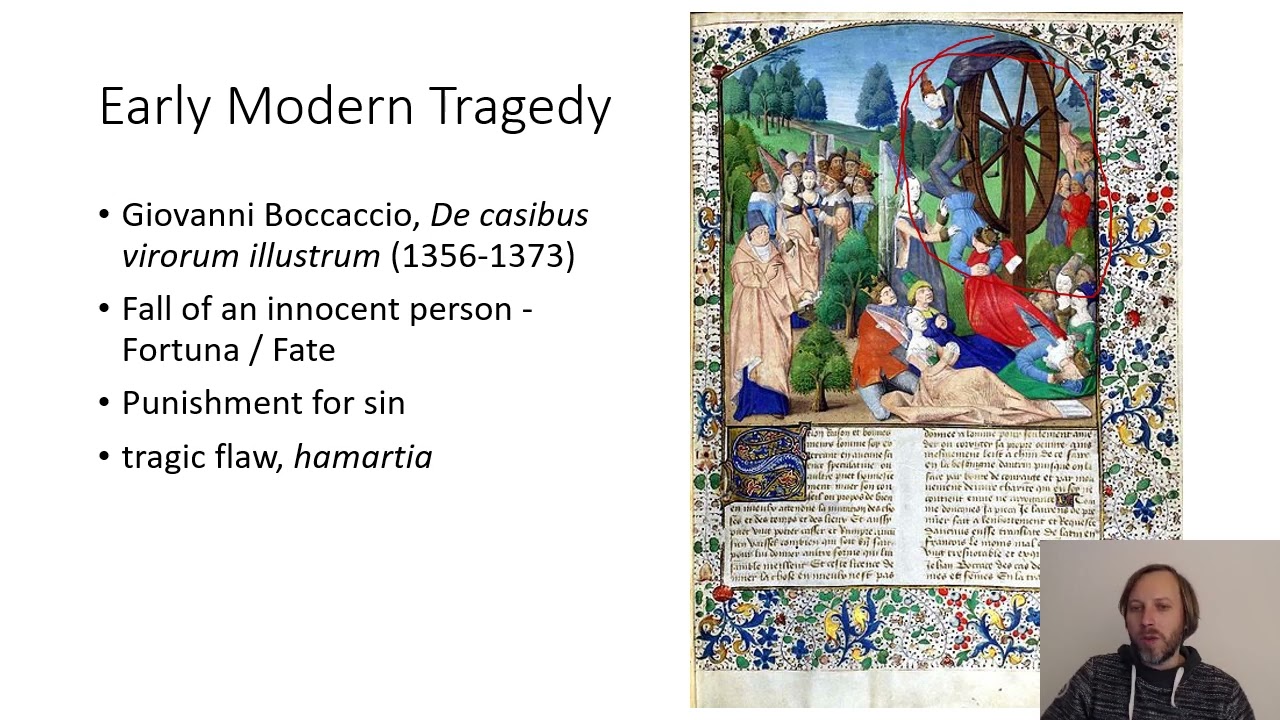
Slaves of passion become less than human beings by being ruled by their passions, which connect them to lower spheres of existence. Giving in to passion makes them beast-like and sinful. However, early modern tragedy moves away from clear condemnation of passions found in morality plays where passions were personified and externalized. Instead, audiences develop sympathy for passionate characters and see themselves in them, making clear condemnation more difficult.

Medieval Christian philosophers developed theories of passions heavily influenced by Christian tradition. Gregory of Nyssa viewed sorrow as inherently evil, believing it depresses the soul and leads to sin, comparing passions to ulcers opposed to reason. John Damascus identified eight passions to be destroyed, including listlessness as a state lacking will that leads to sin. Augustine claimed most passions corrupt the soul, except sorrow of separation from God. Thomas Aquinas presented a metaphysical framework where the soul is nobler than the corruptible body, and passions unite body and soul. Sorrow was caused by present evil repugnant to the will, depressing the soul and most powerful to the body. These theories were morally burdened, viewing depression and sadness as evil to be avoided, with emotions embedded in the soul and the body playing no important role.
Prerequisite Knowledge
- Concept 01Introduction to Aesthetics: A basic understanding of aesthetics as the branch of philosophy concerned with the nature of beauty, art, and taste.
- Concept 02Empiricist Philosophy (John Locke): Familiarity with the empiricist view that human knowledge and ideas originate primarily from sensory experience.
- Concept 03Classical Concepts of Beauty: Understanding the traditional definitions of beauty rooted in harmony, symmetry, proportion, and order.
- Concept 04Early Modern Theories of Passion: Awareness of how 17th and 18th-century philosophers classified human emotions, particularly instincts of self-preservation versus sociality.
Subsequent Learning
- Step 01Kant's Critique of Judgment: Exploring how Immanuel Kant systemized and intellectualized Burke's ideas, dividing the sublime into the mathematical and the dynamical.
- Step 02Romanticism in Art and Literature: Analyzing how Burke's sublime influenced the Romantic movement, visible in the poetry of Wordsworth and the landscape paintings of Caspar David Friedrich.
- Step 03Gothic Literature and the Theory of Terror: Investigating how Burke's links between terror, obscurity, and delight served as a foundational framework for Gothic novels like Mary Shelley's Frankenstein.
- Step 04Contemporary Environmental Aesthetics: Applying the concept of the sublime to modern ecological thought, examining humanity's relationship with the vastness and destructive power of nature.
The Sublime
0:06- 1
Contrasts beautiful objects with sublime ones in scale and emotion.
- 2
Explains that terror and delight combine in sublime experiences.
- 3
Ties the sublime to self-preservation and Romanticism's ideals.
Immanuel Kant’s Transcendental Sublime
While Edmund Burke defines the sublime through empirical psychology, attributing it to physiological sensations of terror and self-preservation, Immanuel Kant offers a major counterpoint in his 'Critique of Judgment'. Kant shifts the locus of the sublime from external nature to the internal human mind. He argues that the sublime is not a property of physical objects, but a transcendental cognitive experience. When confronted with nature's overwhelming scale or power, our imagination fails to comprehend it, yet our reason successfully grasps the concept of infinity. Thus, for Kant, the sublime is not about physical fear or survival instincts, but rather a realization of the human mind's moral and intellectual superiority over the physical world.
Kant's Critique of Judgment: Exploring how Immanuel Kant systemized and intellectualized Burke's ideas, dividing the sublime into the mathematical and the dynamical.

Kant's Critique of Judgment explores the nature of aesthetic experience through four key characteristics of beauty: disinterest (beauty is appreciated without ulterior purposes), universality (true beauty must be universally appealing), purposiveness without purpose (beauty suggests meaning without being able to explain it rationally), and necessity (beauty produces unavoidable pleasure). Kant distinguishes between the beautiful (arising from harmony between imagination and understanding) and the sublime (arising from overwhelming magnitude or power that transcends our comprehension). The sublime produces an ambivalent feeling of both insignificance and grandeur, representing humanity's confrontation with the limits of reason. Kant argues that aesthetic judgment is a priori and universal because all humans share the same cognitive structures, and that beauty resides in the subject's response to objects rather than in the objects themselves—a third Copernican revolution placing the human subject at the center of aesthetic experience.
Kant's Critique of Judgment (1790) serves as a mediating work between the Critique of Pure Reason (1781) and the Critique of Practical Reason (1788), bridging the gap between knowing and desiring. The text is divided into aesthetic and teleological judgments. Kant argues there is no science of beauty, only a critique, because aesthetic judgments cannot be resolved scientifically independent of experience. The term 'aesthetic' refers only to the doctrine of perception, not beauty as a scientific discipline.

In Kant's Critique of Judgment, the third of his three major critiques, human feeling operates through two fundamental principles: freedom and necessity. Kant distinguishes between constitutive judgments (necessary, incontrovertible judgments like 7+5=12) and reflective judgments (which connect us to human sentiment). Reflective judgment divides into aesthetic judgment (concerning beauty and the sublime) and teleological judgment (concerning the order and purpose in the world). Beauty is characterized as being without interest, concept, or purpose, while the sublime involves our confrontation with infinity, either through nature's power (dynamic sublime) or through mathematical concepts (mathematical sublime). Teleological judgment reflects on the ordered structure of the world, suggesting that contingent beings like humans must be necessary within this purposeful order. This aesthetic dimension prepares the ground for Romanticism by emphasizing the role of feeling in understanding the world.

In 1787, Kant published a revised edition of Critique of Pure Reason. In 1788, he published Critique of Practical Reason, expanding the moral theory from Groundwork. Practical reason is the capacity humans have, through reflection, to guide the course of their moral actions - what should I do? What is correct? It differs from theoretical reason (dedicated to knowledge of the natural world) by being dedicated to guiding moral actions. The first key aspect is autonomy of the will - moral agents should not act under external pressures but have an internal sense of duty, including innate knowledge like justice (a noumenon). The second key point is the relationship between true freedom and morality - true freedom is not doing whatever one pleases but exercising responsibility. We are only free when we act in conformity with natural law, expressing the best of our nature. We become slaves when dominated by our own desires, passions, or others' interests. There is a constant struggle between duty and pleasure, between our passions and our interests. Humans cannot trust their senses to deliberate morally (as Kant refuted Hume) and must resort to innate knowledge of the noumenon to guide practical reason in making good moral decisions. Practical reason provides a framework for understanding and guiding moral actions autonomously and responsibly - this is freedom. In 1790, Kant published Critique of Judgment, his third work of critical philosophy. By the end of the decade, he consolidated as the main reference of German philosophy and a thinker with continental recognition. Critique of Judgment addresses the utility of art, the relationship between art and ethics, and how to interpret the purposes of nature. It has two parts: Critique of Aesthetic Judgment (how we judge beauty) and Critique of Teleological Judgment (how we judge nature's purposes). Aesthetic judgments are based on disinterested pleasure - we appreciate beauty not for material utility or personal benefit but simply for what it is. For Kant, aesthetic appreciation arises from the harmonious interaction between content (what we obtain from the chaotic external world through senses) and form (the rationalization of that data we categorize and conceptualize). Art is a harmonious way of understanding the world, and through this understanding, we can evaluate or infer the purposes of nature. Kant held that art incorporates the most important ethical and moral ideas, making it a natural extension of philosophy. Art is not a passive expression but informs our morality - we should immerse ourselves in more art to become better people. Kant concluded that aesthetic experiences reveal a deeper connection between our cognitive faculties and nature itself. Art is a form of cognition - a harmonious cognition that not only increases knowledge and helps us understand the world better but also informs our moral deliberations. In 1793, Kant wrote 'Religion Within the Limits of Reason Alone,' which was censored by the King of Prussia for attacking Christian foundations. He also produced essays on anthropology and political philosophy. In 1796, Kant retired from the university. His mental faculties gradually declined, showing signs of senile dementia, which affected his philosophical production, especially after 1800.
Immanuel Kant's 1790 'Critique of Judgment' fundamentally transformed art by establishing that genius is the opposite of imitation, prioritizing spontaneous expression over technical craft, which led to the modernist movement where artists like Mesier and later pop artists were valued for their conceptual innovation rather than technical skill, resulting in the loss of the human face and classical artistic values in contemporary art.
Romanticism in Art and Literature: Analyzing how Burke's sublime influenced the Romantic movement, visible in the poetry of Wordsworth and the landscape paintings of Caspar David Friedrich.

Romanticism in art is exemplified by Caspar David Friedrich's paintings, which depict solitary figures seeking heights and transcendence above mundane existence. In literature, Heinrich Heine's poetry captures the romantic spirit through longing for escape from the 'cursed world of merchants' and yearning for distant lands like Lapland or Africa, reflecting the romantic rejection of conventional society.

Romanticism was an artistic and literary movement that emerged in the late 18th and early 19th centuries, challenging the dominant Neoclassical style. Unlike Neoclassicism, which emphasized reason, order, and idealization, Romanticism emphasized emotion, imagination, personal feelings, and the senses. This movement influenced how artists and writers depicted historical and literary subjects, including tragic love stories like that of Francesca and Paolo.
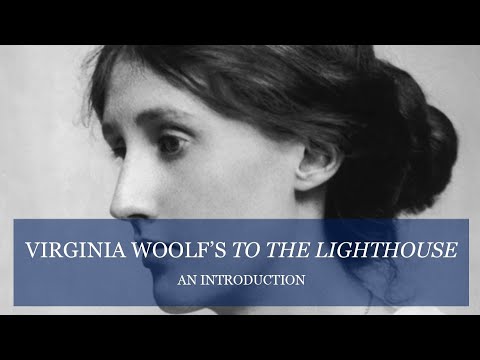
Romanticism (late 18th-early 19th century) emphasized nature's power and sublimity beyond reason's capacity to capture it, heroic themes, and powerful emotions. In visual arts, Théodore Géricault's 'The Raft of the Medusa' (1818-19) exemplifies this through dramatic elevation of reality rather than faithful depiction. In literature, Wordsworth's 'Tintern Abbey' portrays nature as tranquil and restorative, yet still possessing overpowering sublimity that exceeds reason.

Romanticism emerged early in the 19th century as a movement in literature, art, and music. It was concerned with emotion rather than reason, atmosphere rather than form. The dominant overarching theme was the pursuit of an unattainable ideal, and Romanticism includes preoccupation with death and dying and by extension with the supernatural.
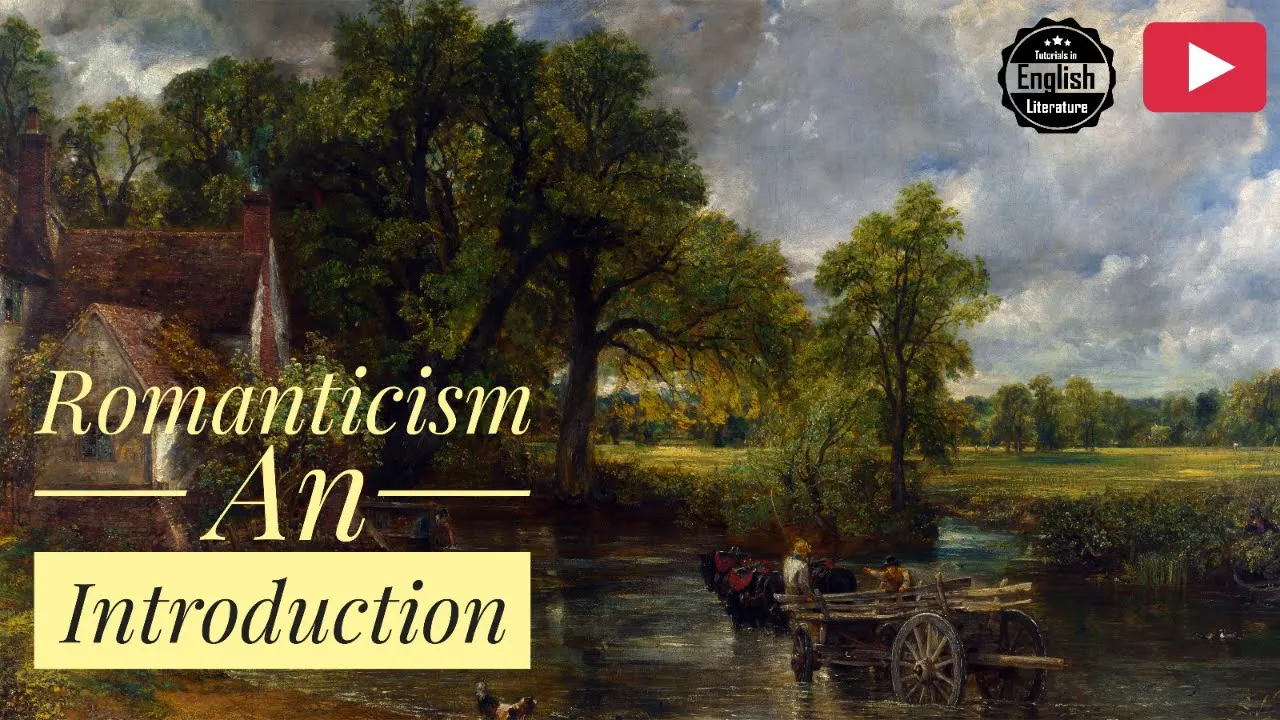
Romantic artists explored themes of madness, emotion, and nature through groundbreaking works. Henry Fuseli's 'The Nightmare' (1782) pioneered exploration of human psychology during the Age of Reason, depicting a woman with a demon and spectral horse to capture the limits of reason and power of the irrational. Goethe's 'The Sorrows of Young Werther' (1774) created the romantic hero archetype—artist at odds with society, doomed to self-destruction through passion. The novel sold three million copies and changed attitudes toward love by privileging emotional outpouring over rational concerns. Wordsworth's poetry celebrated nature as salvation from industrialization, depicting humble landscapes as moral edens. These works collectively established Romanticism's emphasis on intense emotion, individual experience, and rejection of Enlightenment rationalism.
Gothic Literature and the Theory of Terror: Investigating how Burke's links between terror, obscurity, and delight served as a foundational framework for Gothic novels like Mary Shelley's Frankenstein.

Gothic literature draws on sophisticated theoretical frameworks of fear and awe. Edmund Burke's 'Philosophical Inquiry' (1756) distinguished beauty (superficial pleasure) from the sublime (profound fear from overwhelming force—mountains, storms, desolate ice). Anne Radcliffe extended this by distinguishing horror (sudden fear like being spooked) from terror (lasting, solemn fear linked to the sublime). Using Shakespearean examples, she argued that Macbeth's ghost represents horror while Hamlet's ghost represents terror because it connects with cold, darkness, and expectation-building. Sigmund Freud's concept of the uncanny—'that species of the frightening that goes back to what was once well-known and had long been familiar'—explains how Gothic literature transforms familiar domestic spaces into sites of terror, where the home meant to provide security becomes threatening.
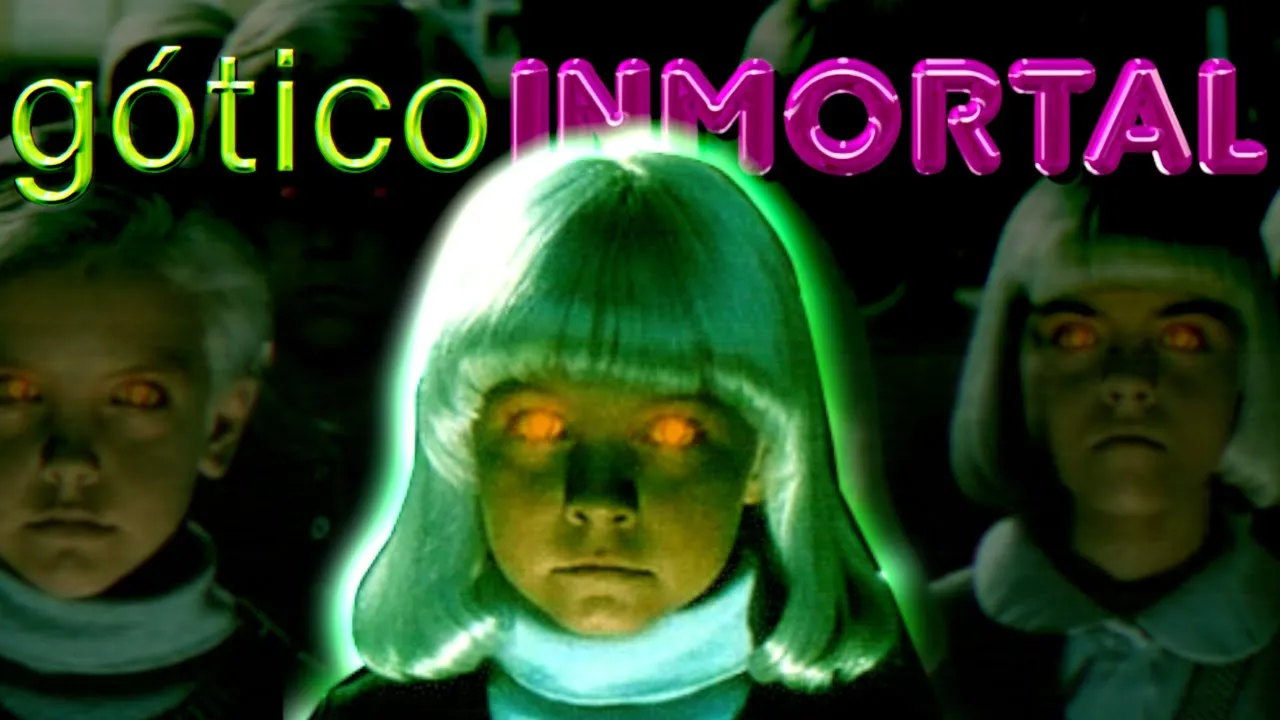
Gothic literature distinguishes between horror and terror. Terror is a negative sensation that paralyzes creativity and perception, while horror is an experience that intoxicates and possesses the mind, leading to superior understanding of unknown experiences. This distinction, developed by Ann Radcliffe, represents a key theoretical contribution to Gothic literary analysis and understanding of emotional responses to supernatural narratives.

Ann Radcliffe pioneered 'terror' - the anguish before something incomprehensible or wrong that isn't yet clearly visible. In her works, supernatural elements receive rational explanations at the end, focusing on the heroine's psychological experience. Matthew Lewis, in 'The Monk', pushed to 'horror' - explicit crimes, demonic pacts, graphic violence, and sexual content. Terror prolongs expectation while horror shocks and produces repulsion. These two effects, combined with different doses, have accompanied Gothic literature throughout its history.

Gothic literature distinguishes between terror and horror as different emotional experiences. Terror is linked to the obscure—that which cannot be fully seen, grasped, or understood. This obscurity creates a sense of being overpowered by an external force. Horror, in contrast, is more like being spooked by something visible and tangible. The strategic obscuring of specificity in descriptions creates terror because readers' imaginations fill in the gaps with their own fears, which are typically more horrible than any specific description could be.

Ann Radcliffe distinguished between terror and horror in Gothic literature. Terror expands our sensibilities and draws us to obscured places as we listen desperately to what's happening, relying on the unseen and impending threat. Horror overwhelms us, confronting us with shocking, grotesque, or obscene images that disturb our complacency.
Contemporary Environmental Aesthetics: Applying the concept of the sublime to modern ecological thought, examining humanity's relationship with the vastness and destructive power of nature.

We maintain a confused relationship with aesthetics without considering environmental ethics of such confusion. Recognizing aesthetic choices' negative impacts enables directing thinking toward environmentally sound ends, representing ecological literacy. Aldo Leopold fused aesthetic and ethical value, defining right actions as those preserving biotic community integrity, stability, and beauty. Environmental aesthetics extend beyond vision to include hearing (noise pollution), smell (unpleasant natural odors), and taste (meat preferences contributing to greenhouse gases). This multi-sensory approach reveals how aesthetic appreciation of nature inherently involves caring for it, as pollution is criticized not just for harm but for being unsightly.

Environmental Aesthetics emerged in the 1980s as a response to environmental crises, with two main branches: the Anglo-American tradition led by Arnold Berlin and Alan Carlson, and the continental German tradition pioneered by Gernot Böhme. This lecture focuses on Böhme's work because it is underrepresented due to language barriers and offers productive insights for questions about ideology and aesthetics in the Anthropocene. Böhme introduces environmental aesthetics as ecological aesthetics of nature, moving beyond classic nature aesthetics to encompass broader environmental experiences. The field addresses how humans perceive and relate to the natural environment, challenging traditional aesthetic theories that focused primarily on artworks and disinterested pleasure. Böhme proposes that perception should be understood as beginning not with the subject-object distinction but with a sense of being in the world or presence, introducing atmospheres as preceding objects in perception. In Böhme's expanded conception of aesthetics (eistices), art serves as one means among many for experiencing atmospheres. New materialism approaches (associated with Bruno Latour and Jane Bennett) share similarities with Böhme's work but add emphasis on ideology and constructivist questions. Böhme introduces 'ecstasis' (stepping outside) to denote how things literally step outside of themselves into the sphere of their presence, becoming palpable as present. Using early automobility literature as an example, environmental representations are shown to be ideologically underpinned, connecting to contemporary environmental politics including class distinctions and millennialist narratives within the ecological movement.

Environmental aesthetics is a distinct philosophical subfield that studies aesthetic appreciation of natural and modified environments, distinguishing itself from artistic aesthetics by emphasizing immersive, multi-sensory engagement with nature rather than distanced artistic appreciation; this field explores how aesthetic values interact with ethical values and addresses the significance of developing intergenerational thinking in response to climate change, moving beyond the limited 'scenery model' of picturesque landscape appreciation to embrace diverse aesthetic experiences including non-beautiful elements like wetlands and challenging landscapes.
Environmental aesthetics is the philosophical study of aesthetic values in the environment, which emerged in the 20th century to address environmental issues; it evolved from classical philosophers like Emmanuel Kant's concept of disinterested pleasure in nature's beauty and sublimity, through Romanticism and transcendentalist movements, to modern thinkers like Aldo Leopold who combined ecological knowledge with aesthetic sensitivity, ultimately promoting environmental education and responsibility for well-informed aesthetic appreciation of natural environments.

Contemporary art increasingly engages with environmental and ecological issues as active sites where concepts are deformed, reconsidered, and contested from multiple disciplinary perspectives. Ecological aesthetics have evolved beyond research framing to become operational across domains, mobilized in service of policymaking. The atmosphere functions as both material space and representational schema, creating distinct problems for political theorization as it becomes a medium through which control and dominance is enacted. Three aesthetic strategies emerge: transparency (marking completion between private and public spheres), reflection (working with cloud physics to create provocative gestures), and socio-environmental processes (using social relationships as laboratories to refashion skills and tactics of power). Non-documentary landscape photography uses still photographs to create images without documentary intent, where photographs made at sites of great phenomenological power paradoxically cannot adequately embody presence. Non-scientists experience imaginative lacunae when confronted with abstract ideas associated with fundamental science, where extremes of macro and micro scale operate beyond human perception.
The Sublime
0:06- 1
Contrasts beautiful objects with sublime ones in scale and emotion.
- 2
Explains that terror and delight combine in sublime experiences.
- 3
Ties the sublime to self-preservation and Romanticism's ideals.
Immanuel Kant’s Transcendental Sublime
While Edmund Burke defines the sublime through empirical psychology, attributing it to physiological sensations of terror and self-preservation, Immanuel Kant offers a major counterpoint in his 'Critique of Judgment'. Kant shifts the locus of the sublime from external nature to the internal human mind. He argues that the sublime is not a property of physical objects, but a transcendental cognitive experience. When confronted with nature's overwhelming scale or power, our imagination fails to comprehend it, yet our reason successfully grasps the concept of infinity. Thus, for Kant, the sublime is not about physical fear or survival instincts, but rather a realization of the human mind's moral and intellectual superiority over the physical world.
some things that move us are beautiful others are Sublime but the sublime moves us more profoundly than the beautiful that's what the 18th century thinker edman Burke claimed in his book a philosophical inquiry into the origin of our ideas of the sublime and beautiful but what did he mean beautiful objects he observed tend to be small smooth delicate and attractive Sublime ones vast gloomy dark and threatening a blue Bill a greyhound or a doll might be beautiful a cliff face a mountain or a thunderstorm at Sea Sublime beautiful things produce pleasurable feelings Sublime ones overwhelm us and are terrifying they affect us viscerally but at some level almost paradoxically they still Delight us WE peer over the edge of a precipice are frightened but manage to feel a kind of delight in our experience despite the danger a huge waterfall could engulf us but at some level that's part of its appeal the sheer power is exhilarating Burke thought the reason why the sublime moves us so deeply was that it is tied to the possibility of pain and so triggers basic feelings of self-preservation when we experience the sublime we exercise the nerves that could save our lives in a genuinely threatening situation this idea of the sublime had a powerful influence on ROM Romanticism the artistic movement that extolled the Untamed power of the natural world
Up Next

The Sublime in Thomas Aquinas: A Philosophical Exploration
@ThomasAquinasCollege
119 views•2026-03-31

John of Damascus on Holy Images: A Theological Defense
@BannedBooks
139 views•2026-04-25

John Rawls' Veil of Ignorance Explained in 2 Minutes
@bbcradio4
393.6K views•2015-04-08
The Myth of Sisyphus: A Greek Legend of Eternal Punishment
@TEDEd
8.6M views•2018-11-13
Related Study Plans & Knowledge Roadmaps
Structured learning paths in Philosophy