In Samuel Taylor Coleridge's The Rime of the Ancient Mariner, the frame narrative introduces a mysterious old mariner who stops a wedding guest to recount his tale of killing an albatross, a seemingly innocent act that triggers supernatural consequences and eternal penance; this poem exemplifies Romanticism's emphasis on the sublime—the awe-inspiring grandeur of nature (embodied by the Antarctic landscape, storms, and ocean)—which Coleridge uniquely associated exclusively with boundless natural elements like the sky, sea, and desert, distinguishing his view from contemporaries who saw the sublime in other contexts; the mariner's punishment cycle parallels the Wandering Jew myth, illustrating how disrupting nature's harmony leads to eternal suffering.
The Rime of the Ancient Mariner Part 1 | Summary & Analysis
Added:An introduction to the British Romantic Movement, including its emphasis on nature, emotion, and the sublime.
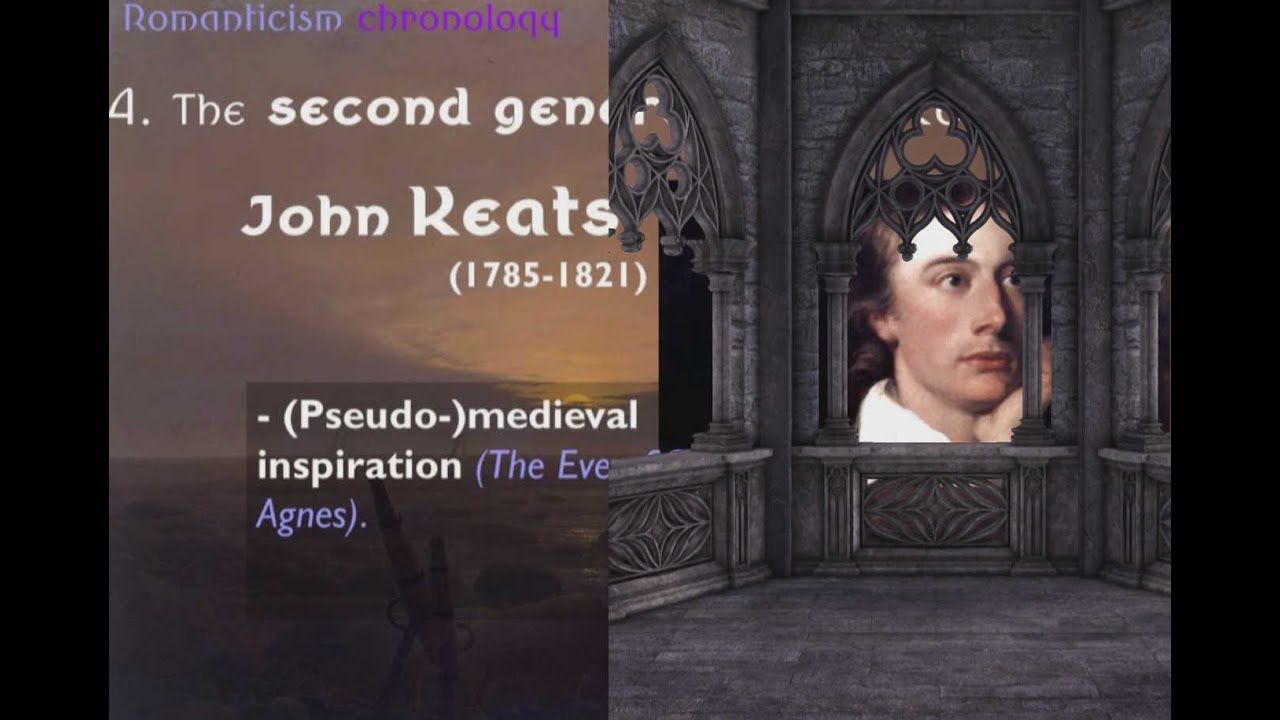
British Romanticism (1760-1850) was a pan-European cultural movement that rejected Enlightenment rationality in favor of emotion, imagination, and individual sensibility, featuring key figures like Wordsworth, Coleridge, Keats, Byron, and Shelley who emphasized nature, the cult of the self, organic form, and the noble savage, while also engaging with political revolutions and exoticism across Europe.

The English Romantic Movement (1770-1850) was a literary and artistic rebellion against Enlightenment rationalism, emphasizing powerful emotions, individualism, nature, and the common person over scientific reason and social conformity; key characteristics include a preference for folk culture and simpler language over classical sophistication, exploration of passionate love and Gothic horror, celebration of nature and the countryside as alternatives to industrialization, and the belief that every individual has the right to personal expression and emotional experience.

The Romantic Period of English Literature (1785-1832) was a literary movement emphasizing nature, emotion, and artistic freedom as a reaction against Enlightenment rationalism and industrialization; key characteristics include glorification of nature, celebration of emotion and imagination, emphasis on aesthetic beauty, themes of solitude and exoticism, spiritual elements, vivid sensory descriptions, personification, and focus on the self and autobiography, with major authors including Wordsworth, Coleridge, Blake, Byron, Shelley, Keats, Austen, and Mary Shelley.

The Romantic Movement was a 19th-century literary and artistic movement that emphasized emotion, nature, and individual expression over formal conventions, pioneered by five great English poets—William Wordsworth, Samuel Taylor Coleridge, Lord Byron, Percy Bysshe Shelley, and John Keats—who transformed poetry by introducing personal feelings, celebrating ordinary people, and exploring themes of individual freedom, imagination, and the human connection to nature, marking a departure from the formal and restricted poetic traditions of the previous century.

Romanticism was a late 18th to early 19th century literary movement that reacted against rationalism by emphasizing emotion, nature, individual experience, and the sublime; key poets like Blake, Wordsworth, Coleridge, Byron, Shelley, and Keats explored themes of nature's beauty, personal feelings, political rebellion, and the imagination, with Wordsworth defining poetry as 'the spontaneous overflow of powerful feelings' and Edmund Burke describing the sublime as 'astonishment' where the soul's motions are suspended with some degree of horror.
Basic biography of Samuel Taylor Coleridge and the significance of 'Lyrical Ballads' (co-authored with William Wordsworth).

Samuel Taylor Coleridge (1772-1834) was a pivotal leader of the British Romantic movement; born in Devon, England, he studied at Cambridge where he met William Wordsworth, with whom he co-authored 'Lyrical Ballads' (1798), considered the first great work of Romantic poetry containing his famous poem 'The Rime of the Ancient Mariner'; he later studied German philosophy in 1798, lectured on literature and philosophy, and published his seminal literary criticism in 'Biographia Literaria' (1817), while struggling with health issues and opium addiction throughout his life.

Samuel Taylor Coleridge and William Wordsworth co-authored 'Lyrical Ballads' (1798), with Wordsworth appending a controversial preface in 1802. Coleridge, who considered Wordsworth the greatest poet alongside Milton and Shakespeare, felt compelled to defend his own views on imagination in Biographia Literaria (1817). By this time, their friendship had ended, and Coleridge responded to Wordsworth's essay on imagination by presenting his own definition, which critics traditionally interpret as expressing Romantic ideals despite his fundamentally different theoretical stance.

The two greatest Romantic poets behind the creation of 'Lyrical Ballads' are William Wordsworth and Samuel Taylor Coleridge. 'Lyrical Ballads' was first published in 1798, marking the beginning of the Romantic Period. The second edition was published in 1800. This joint composition established the principles of Romantic poetry.

This section covers Wordsworth's friendship with Samuel Taylor Coleridge and the publication of Lyrical Ballads. In 1795, they met in Somerset, sparking one of the most famous literary friendships. Together they laid the foundation for the English Romantic Movement by rebelling against the artificial and rational poetry of the 18th century Augustan Age. In 1798, they jointly published 'Lyrical Ballads' anonymously, containing 23 poems (19 by Wordsworth, 4 by Coleridge). The opening poem was Coleridge's 'The Rime of the Ancient Mariner' and the closing poem was Wordsworth's 'Tintern Abbey.' The publication of Lyrical Ballads in 1798 is considered the official beginning of the Romantic Age in English literature.

Lyrical Ballads (1798) was a joint work by William Wordsworth and S.T. Coleridge, marking the beginning of English Romanticism. The first edition contained 23 poems: 19 by Wordsworth and 4 by Coleridge. The opening poem was 'The Rime of the Ancient Mariner' and the last was 'Lines Composed a Few Miles above Tintern Abbey' by Wordsworth. The work went through four editions in 1798, 1800, 1802, and 1804.
Understanding of the literary ballad form, including its traditional structure, rhythm, and oral-storytelling roots.

A ballad is a short narrative poem written to be sung, telling a story in simple language about a single episode. The word 'ballad' derives from the Latin 'ballare' meaning 'to dance,' as ballads originally accompanied dance before evolving into purely literary narrative poetry. Ballads are one of the oldest forms of literature, belonging to the oral tradition that existed long before written records. During the Middle Ages in England and Scotland, ballads flourished and were composed and performed by wandering minstrels and bards who traveled from village to village. Traditional ballads were passed down from generation to generation through oral transmission, leading to variations of the same ballad. In the 18th century, scholars began collecting these oral ballads, with Thomas Percy's 'Reliques of Ancient English Poetry' (1765) being the most famous collection. Ballads have distinctive characteristics: they always tell a story with simple vocabulary accessible to common people, told through action and speech rather than detailed summary, with heavy dependence on dialogue between characters. They typically have sudden beginnings without background introduction and abrupt endings. The narration is impersonal and objective, rarely using first-person pronouns. They frequently use supernatural elements like ghosts and fairies, with common themes including tragedy, love, war, murder, revenge, and sea adventures. Ballads use repetition of words, lines, and stanzas for musical effect, with a refrain (recurring line at section ends) and incremental repetition (lines repeated with slight additions advancing the story). Traditional ballads are written in ballad stanza (quatrain with ABAB rhyme scheme), where first and third lines have four stresses (iambic tetrameter) and second and fourth lines have three stresses (iambic trimeter). There are two main types: Folk ballads (ancient, orally transmitted, anonymous authors, sung by common people) and Literary ballads (written by educated poets who consciously imitate folk ballad style, form, and subject matter). Famous traditional ballads include 'Sir Patrick Spens,' 'Edward,' 'Barbara Allen,' 'The Wife of Usher's Well,' 'The Three Ravens,' and 'Chevy Chase.' Famous literary ballads include Coleridge's 'The Rime of the Ancient Mariner,' Keats' 'La Belle Dame Sans Merci,' and Oscar Wilde's 'Ballad of Reading Gaol.' Ballads differ from epics (long poems about national heroes) and lyric poems (expressing personal emotions subjectively). Folk ballads are ancient, orally transmitted, and have anonymous authors, while literary ballads are modern, written texts by educated poets who consciously imitate folk ballad characteristics.

A ballad is a narrative poem or song telling a brief story, typically about heroic deeds or tragic events. Key characteristics include anonymous authorship, oral transmission across generations, impersonal tone, abrupt openings, refrain repetition, and focus on tragic themes. Two main types exist: traditional ballads (folk ballads, ballads of growth, authentic ballads) composed and transmitted orally before being written down, exemplified by 'Robin Hood Ballads' and 'Chevy Chase'; and literary ballads (ballads of art) deliberately crafted by named poets, including Keats' 'La Belle Dame sans Merci' and Coleridge's 'Rime of the Ancient Mariner.' Bishop Percy published 'Reliques of Ancient English Poetry' in 1768, preserving many traditional ballads for posterity.

A ballad is a narrative poem or song that tells a story, typically featuring themes of bravery, adventure, and heroic exploits of legendary figures, characterized by its four-line stanza structure (quatrain) with an iambic meter where the first and third lines contain eight syllables (four iambic feet) and the second and fourth lines contain six syllables (three iambic feet), with the second and fourth lines rhyming; ballads are traditionally categorized into two main types: traditional/folk ballads (authored anonymously and passed down orally through generations, such as Robin Hood and Chevy Chase) and literary ballads (deliberate imitations of folk ballad form by known authors like Samuel Taylor Coleridge's 'The Rime of the Ancient Mariner' and Walter Scott's works).

A traditional literary ballad is characterized by short musical stanzas (quatrains) with an ABAB or ABCB rhyme scheme. It typically narrates a folk story and is often accompanied by musical instruments like the harp or fiddle. The ballad form originated in oral tradition and was passed down through generations.

The ballad is one of the oldest English poetry forms, predating Chaucer and originating naturally within English culture. Originally meaning a dance song, it was sung from village to village with harp or fiddle accompaniment by strolling singers, sometimes with tribal dancers. As a short story in verse, it features deeds rather than thoughts, with simple subjects like feuds, adventures, love, war, and supernatural elements. Structurally, it uses four-line quatrains in iambic meter (alternating 4-3 feet), with rhyming second and fourth lines. The ballad opens abruptly, is impersonal, and ignores time/place details. There are two main types: authentic ballads of growth (genuine folk forms like 'Chevy Chase') and literary ballads of art (imitative forms like 'Rime of the Ancient Mariner'). A minor form is the mock ballad, treating comic themes with ballad seriousness, exemplified by 'John Gilpin.'
Familiarity with fundamental literary devices such as symbolism, allegory, and personification.

This segment covers three fundamental literary devices used in poetry. Personification gives human qualities to non-human entities, as seen when trees are described as 'sprinting' in Kamala Das's poem. Contrast highlights differences between subjects, such as the contrast between the mother's lifeless appearance and the vitality of young trees and children. Symbolism uses concrete images to represent abstract concepts, like the winter moon symbolizing old age. These devices work together to create vivid imagery and emotional impact in poetry.

Literary devices include: (1) Personification (kişileştirme) - giving human characteristics to non-human objects, such as 'hırçın dalgalar' (angry waves) or 'ihtiyar çınar ağacı' (old pine tree) being described as whispering or accompanying conversations; (2) Metaphor (benzetme) - comparing one thing to another using 'gibi' (like), such as 'bilge bir dede gibi' (like a wise grandfather) to describe the pine tree; (3) Hyperbole (abartma) - exaggerating for effect, such as 'dünyalara kadar seviyorum' (I love you to the ends of the world); (4) Antithesis (tezat) - using contrasting words in the same sentence, such as 'güzel, çirkin, iyi, kötü' (beautiful, ugly, good, bad).

Personification is a literary device that gives human qualities, emotions, or actions to non-human objects, animals, or abstract concepts. Examples include trees 'running' or 'fleeing' (given human actions), rain 'speaking' or 'talking' (given human communication), and the moon 'resting' (given human rest). The purpose is to help readers understand and connect with non-human entities by relating them to human experiences, making abstract or inanimate concepts more relatable.

This section covers three key literary devices used in poetry. Metaphor describes one thing as another without using 'like' or 'as' - in 'O Rose', the rose is described as 'sick' which is metaphorical since roses cannot actually get sick. Personification gives human qualities to non-human things - the rose 'speaks' and the worm has 'secret love' and 'destroys' the rose. Symbolism uses objects to represent abstract ideas: the rose symbolizes beauty, purity, and innocence; the worm symbolizes sin, corruption, or hidden desires; the storm symbolizes chaos and danger; the night symbolizes secrecy and darkness. These devices help convey deeper meanings beyond the literal surface of the poem.

Literary devices enhance text meaning. Personification (kişileştirme) assigns human characteristics to non-human entities, such as 'Sabah dağların ardından yavaşça gülümsedi' (Morning smiled slowly behind the mountains). Personification (konuşturma) gives speech to non-human entities, like 'Kuşlar birbirlerine merhaba dedi' (Birds said hello to each other). Contrast (karşıtlık) presents opposing elements, such as 'doğanın canlılığı' (nature's liveliness) versus 'köyün sessizliği' (village's silence), or 'yaşam' (life) versus 'ölüm' (death).
Prerequisite Knowledge
- Concept 01An introduction to the British Romantic Movement, including its emphasis on nature, emotion, and the sublime.
- Concept 02Basic biography of Samuel Taylor Coleridge and the significance of 'Lyrical Ballads' (co-authored with William Wordsworth).
- Concept 03Understanding of the literary ballad form, including its traditional structure, rhythm, and oral-storytelling roots.
- Concept 04Familiarity with fundamental literary devices such as symbolism, allegory, and personification.
Subsequent Learning
- Step 01Analysis of Parts 2 through 7 of 'The Rime of the Ancient Mariner' to understand the full narrative arc and character development.
- Step 02Exploration of the theological themes of sin, penance, and redemption within the poem's narrative.
- Step 03A comparative study of Coleridge's other prominent poems, such as 'Kubla Khan' and 'Christabel', to analyze his use of the supernatural.
- Step 04Investigation of how the 'Albatross' has evolved into a psychological and cultural archetype representing a psychological burden.
Mariner's Tale
0:01- 1
An old mariner stops a wedding guest to tell his harrowing story.
- 2
The ship journeys south, becoming trapped in ice until an albatross appears.
- 3
The mariner shoots the albatross with his crossbow for no clear reason.
Postcolonial and Historicist Critiques of the Mariner's Journey
While traditional analyses of Part 1 focus on Romantic nature worship and Christian allegories of sin, postcolonial and New Historicist critics offer a counter-reading grounded in the historical context of British imperialism and the transatlantic slave trade. Scholars argue that the Mariner’s voyage mirrors the actual shipping routes of contemporary British merchant and slave ships. From this perspective, the unmotivated killing of the Albatross is not merely a spiritual transgression against Romantic nature, but a representation of colonial violence and the exploitation of the non-European world. The subsequent curse and collective guilt of the crew symbolize the anxieties and moral corruption of an empire built on maritime subjugation and commerce. This approach challenges universalized, purely aesthetic or theological interpretations by re-centering the poem within the material realities of 18th-century expansionism.
Analysis of Parts 2 through 7 of 'The Rime of the Ancient Mariner' to understand the full narrative arc and character development.
This video analyzes Parts 2-7 of Coleridge's 'The Rime of the Ancient Mariner,' covering the mariner's supernatural punishment after killing the albatross, including the crew's suffering, the ghost ship encounter with Life-in-Death, and the mariner's eventual penance through prayer and love for all creatures. The poem explores themes of sin, redemption, and the power of prayer, with the mariner's final message emphasizing that true prayer comes from loving all things—both man, bird, and beast.

In 'The Rime of the Ancient Mariner,' the mariner's killing of the albatross symbolizes how our actions have consequences that affect us and others, as the sailors initially curse him but later change their minds when the sun rises normally, illustrating that people often judge others harshly without understanding the full context of their actions.
![Iron Maiden - Rime of the Ancient Mariner [Flight 666 DVD] HD | Rapper Reacts](https://i.ytimg.com/vi_webp/qXBGx-l96qA/maxresdefault.webp)
The poem follows the Ancient Mariner's curse upon his crew, causing fifty men to die one by one. The Mariner is then forced to sail alone, experiencing supernatural phenomena and isolation. His redemption comes when he blesses God's creatures, particularly the albatross, which falls from his neck like lead into the sea. The poem teaches that we must love all things that God has made, and the Mariner becomes a wise figure who tells the story wherever he goes to teach God's word by his own example.

The Rime of the Ancient Mariner tells the story of an ancient mariner who kills an albatross (a bird believed to bring good luck), bringing a curse upon his ship. The sailors face supernatural punishments, many die, and only the mariner survives. He is tormented by guilt and must wander the world telling the story to teach others to respect nature. The poem has seven parts representing stages of the mariner's journey. Part One: The mariner stops a wedding guest and forces him to listen. The ship leaves happily with good winds. The albatross appears as a sign of good luck. The mariner shoots the albatross without reason, symbolizing senseless killing. Part Two: After the bird's death, the wind stops and the ship is stuck. The sailors blame the mariner. Ghost ships appear carrying death and life. The sailors die one by one. Part Three: The mariner is alone with dead bodies. He notices sea creatures' beauty and blesses them unconsciously. The curse begins to lift when the albatross falls from his neck. Part Four: The mariner is alone with dead bodies. He tries to pray but cannot because his heart is too heavy with guilt. He looks at sea creatures and feels hatred, but then notices their beauty and blesses them. The curse lifts when the albatross falls from his neck, showing partial forgiveness. Part Five: The mariner is exhausted and faints. While he sleeps, rain begins to fall, restoring life to the ship. Strange spirits inhabit the sailors' bodies and make them sail again. Music and voices fill the air. The mariner realizes he is not abandoned. Part Six: The ship moves swiftly, steered by supernatural forces. Two voices discuss the mariner's crime, showing partial forgiveness but more penance to do. The ship reaches home, and the mariner is saved. The voices act as cosmic judges, showing moral judgment. The poem shows that forgiveness is ongoing, not immediate.

The Rime of the Ancient Mariner by Samuel Taylor Coleridge presents a complete narrative arc of sin, punishment, and redemption. The ancient mariner shoots the albatross with his crossbow, committing what he describes as an 'hellish thing.' This act of killing the bird that brought favorable winds and good fortune represents a profound moral transgression. The favorable conditions disappear immediately - breezes drop, sails drop, and the ship becomes 'sad as sad could be.' The crew speaks only to 'break the silence of the sea.' The ship becomes motionless in a 'hot and copper sky' with the 'bloody sun at noon' standing 'no bigger than the moon.' The sea becomes a place of horror with 'slimy things' crawling upon it, 'death fires' dancing at night, and water 'like a witch's oils' burning in unnatural colors. The crew cannot speak, their tongues 'withered at the root.' A strange shape appears in the sky, eventually revealing itself as a 'spectre ship' with a skeleton crew. The skeleton crew dances and plays dice with the mariner, representing the supernatural realm and the macabre consequences of sin. The skeleton crew and the woman 'were playing dice' and the woman declares 'I've won. I've won.' A gust of wind 'stirred up behind' and 'whistled through his bones, through the holes of his eyes and the hole of his mouth, half whistles and half groans.' The crew dies one by one, their souls 'fled to bliss or woe,' passing by the mariner 'like the whiz of my crossbow.' The wedding guest fears the mariner's 'skinny hand' and 'glittering eye.' The mariner describes himself as 'alone, alone, all all alone, alone on the wide, wide sea.' He notes that 'Christ would take no pity on my soul in agony.' The many men who were 'beautiful' are now dead, and 'a million millions slimy things lived on, and so did I.' The mariner looks upon the 'rotting sea' and 'Eldrich deck' where the dead men lie. He tries to pray but 'wherever a prayer had gushed, a wicked whisper came and made my heart as dry as dust.' He closes his eyes 'till the balls like pulses beat' because 'the sky and the sea and the sea and the sky lay like a load on my weary eye.' The dead men's 'look with which they looked on me had never passed away.' An orphan's curse would drag to hell a spirit from on high, but 'more horrible than that is the curse in a dead man's eye.' He saw this curse for 'seven days, seven nights' and 'yet I could not die.' The moon rises and shines upon the water, creating a 'charmed water' that burns 'all way a still and awful red.' The mariner watches 'water snakes' moving in 'tracks of shining white' with 'rich attire, blue, glossy green, and velvet black.' He blesses them 'unaware' and feels 'a spring of love gushed from my heart.' This represents the mariner's transformation from guilt to compassion, a crucial step in his redemption. The moment the mariner blesses the water snakes, 'from my neck so free, the albatross fell off and sank like lead into the sea.' This represents the removal of the burden of his sin. The mariner dreams that the buckets on deck are filled with dew, and when he awakes, it rains. His lips are wet, his throat is cold, and his garments are 'all were dank.' He feels 'so light almost' and thinks 'I had died in sleep and was a blessed ghost.' A roaring wind shakes the sails, and the upper air bursts into life with 'a hundred fire flags sheen.' The stars dance, and the coming wind 'doth roar more loud.' The rain pours from a black cloud, and the moon is at its edge. The thick black cloud is cleft, and lightning falls 'with never a jag, a river steep and wide.' Beneath the lightning and moon, the dead men 'gave a groan. They groaned. They stirred. They all upro. They spake. They moved their eyes.' The dead men rise and work the ropes, 'raised their limbs like lifeless tools.' The mariner's brother's son stands by him, and they pull the same rope together. The daylight dawns, and the dead men drop their arms and cluster round the mast. Sweet sounds rise slowly through their mouths and pass from their bodies. The sounds include 'the lark's song,' 'all little birds that are,' 'instruments,' and 'an angel song that makes the heavens be mute.' The mariner tells the wedding guest that 'never sadder a tale was told to a man of woman born. Sadder and wiser thou wedding guest, thou rise tomorrow morning mourn.' The mariners return to work as silent as before, but the mariner is 'as thin as air' and 'they cannot me behold.' The ship sails silently without breeze, moving 'slowly and smoothly' 'from beneath.' Under the keel 'nine fathom deep from the land of mist and snow, the spirit sled, and it was he that made the ship to go.' The sun fixes the ship to the ocean, but in a minute she 'can stir with a short uneasy motion, backwards and forwards, half her length, with a short uneasy motion.' The mariner falls into a sound, and in his soul he discerns 'two voices in the air.' One voice represents the spirit who 'biteth by himself in the land of mist and snow' and 'loved the bird that loved the man who shot him with his bow.' The second voice is 'a softer voice as soft as honeydew' and says 'the man hath penance done, and penance more will do.' This represents the dual nature of the supernatural realm - both punishment and the possibility of redemption through penance. A wind breathes on the mariner, 'nay sound, nay motion made, its path was not upon the sea, in ripple or in shade.' It 'raised my hair. It fanned my cheek like a meadow gale of spring.' It 'mingled strangely with my fears' yet 'felt like a welcoming.' The ship sails 'swiftly, swiftly' yet 'sailed softly, too.' The mariner sees the lighthouse top, the hill, and the Kirk, and asks 'Is this indeed the lighthouse top I see? Is this the hill? Is this the Kirk? Is this mine own country?' The harbor bay is 'clear as glass, so smoothly was it stone, and on the bay the moonlight lay, and the shadow of the moon.' The moonlight bay is 'white all over till rising from the same full many shapes that shadows were like as of torches came.' A little distance from the prow, 'those dark red shadows were.' The mariner sees that 'my own flesh was red as in a glare.' He turns his head in 'fear and dread' and sees the bodies advancing. They 'lifted up their stiff right arms. They held them straight and tight, and each right arm burnt like a torch, a torch that's born upright, their stony eyeballs glittered on in the red and smoky light.' The mariner 'prayed and turned my head away, forthlooking as before.' The deck is 'flat, lifeless and flat' and by the holy rite, 'a man all light, a seraph man on every course there stood this seraph band each waved his hand.' It was a 'heavenly sight.' They stood as signals to the land, 'each one a lovely light.' No voice did they impart,
Exploration of the theological themes of sin, penance, and redemption within the poem's narrative.

Robert the Bruce is portrayed as having committed homicide by murdering his rival in a church, leading to excommunication. The poem presents his subsequent years being pursued around his own kingdom as penance for this sin. This theme culminates in Bruce wanting his heart taken on crusade to achieve atonement for his sins, though he does not undertake this himself. Instead, he sends James Douglas (whose hands are even more covered in blood) to carry his heart on crusade, completing the narrative arc of sin, punishment, and redemption. This religious dimension adds depth to the political narrative, showing how medieval leaders framed their struggles within Christian moral frameworks. The poem's famous lines on freedom define it as the opposite of thraldom—the state of being under another's dominion with rights stripped away—providing both aspirational rhetoric and concrete political justification for resistance.

The video provides a comprehensive theological analysis of the relationship between sin, redemption, and penance. The speaker explains that Jesus 'effaced the debt of sins' through redemption, but this does not eliminate the need for repair. The speaker distinguishes between pardon (where the priest acts as Christ to forgive sins) and repair (where penance is assigned to repair the offense made to God, others, and oneself). The speaker argues that critics confuse these concepts, creating false contradictions. The speaker also addresses the claim that the Child Jesus could not speak about redemption, arguing that if Jesus speaks through the Child Jesus about redemption accomplished on the cross, this demonstrates His capability.
Sin, punishment, and penance drive the narrative—the mariner's momentary sin against nature and God leads to eternal punishment. He is compelled by supernatural forces to confess to chosen listeners, paralleling the Wandering Jew and Flying Dutchman legends. The albatross symbolizes innocent beauty and divine creation; its death triggers the mariner's spiritual awakening. The gaze serves as supernatural communication, holding the wedding guest captive. Nature and spirit represent opposing yet interconnected realms—the wedding guest attends a spiritual marriage while the mariner embodies natural connection. The Sun represents obvious natural forces, while the Moon reveals hidden supernatural truths. This cyclical journey from sin to redemption mirrors the Sun-Moon cycle, demonstrating how Romantic literature explores humanity's relationship with both the natural world and the divine.
The poem explores three interconnected themes: Sin (the Mariner's act of killing the albatross), Retribution (Nature's punishment through supernatural forms), and Redemption (the Mariner's eventual repentance and salvation). The albatross serves as a symbol of nature, and its killing triggers supernatural punishment. The Mariner's journey from guilt to repentance demonstrates that acknowledgment of wrongdoing and genuine remorse can lead to spiritual salvation. This theme structure is central to understanding the poem's moral message about the consequences of harming nature and the path to redemption through repentance.

This Christian worship song explores the theological concept that all humans are guilty under God's law, unable to achieve righteousness through their own efforts, and must surrender to God to receive forgiveness through Christ's sacrifice, which provides redemption from sin and spiritual renewal.
A comparative study of Coleridge's other prominent poems, such as 'Kubla Khan' and 'Christabel', to analyze his use of the supernatural.

Coleridge's poem 'Kubla Khan' treats supernatural elements through its dream-like setting in the imaginary land of Xanadu, featuring magical and mysterious occurrences such as the supernatural river Alph that flows into deep caves and a silent sea, the mysterious woman who cries for her demon lover, and the poet's transformation into a supernatural figure who has 'drunk the milk of paradise' and become like a magician or prophet, demonstrating how imagination creates a world more powerful than reality.

Coleridge's major poetic collections include 'Poems on Various Subjects' (1796), 'Lyrical Ballads' (1798), 'Christabel' (1803), and 'Kubla Khan and The Pains of Sleep' (1816). 'Christabel' explores supernatural themes including black magic and homoerotic undertones. 'Kubla Khan' is a dream-vision poem written from an opium-induced dream, exploring artistic life versus non-artistic life through the symbolism of Xanadu as a perfect artistic world. The poem is incomplete because Coleridge could not fully recall the entire dream vision. Coleridge's poem 'The Ancient Mariner' explores the theme that humans must respect nature and all its creatures, as all are created by the same spiritual figure (God). The Mariner's curse - having to tell his story to everyone he meets - serves as a permanent reminder of his disrespect for nature.

This segment analyzes two of Coleridge's major works. 'Kubla Khan' (1797, published 1816) was composed during an opium-induced dream and is titled 'A Fragment' because it was incomplete. The poem describes Kubla Khan's palace with a river, dense forests, and caves, celebrating the creative power of poetic imagination. The famous line 'A stately Pleasure Dome decree' describes the palace built for Kubla Khan. The poem explores how imagination transforms ordinary experiences into artistic creation. 'Christabel' is a Gothic narrative poem featuring supernatural mystery and psychological tension, telling the story of Christabel who encounters the mysterious Geraldine in the forest, representing evil and temptation.

Samuel Taylor Coleridge's 'Kubla Khan' (1797, published 1816) is a Romantic poem depicting Kubla Khan's pleasure dome in Xanadu, created from a dream interrupted by a visitor, exploring themes of imagination and creativity, mighty nature, and the fleeting nature of dreams versus reality; the poem's fragmentary form reflects the instability between visionary inspiration and conscious artistic execution.

Coleridge's major poetic works demonstrate his mastery of supernatural themes and innovative narrative structures. 'The Rime of the Ancient Mariner' (1798), the first and longest poem in 'Lyrical Ballads,' follows a sailor who kills an albatross, bringing supernatural punishment and eternal penance. 'Kubla Khan' (1797) was inspired by Samuel Purchas's 'Pilgrimage' and written under opium influence, describing the legendary Chinese emperor's palace but remaining unfinished. 'Christabel' (1797, revised 1800) represents his most important Gothic work, featuring supranatural elements and an open ending requiring reader interpretation. Written in distinctive 'Christabel meters,' these works exemplify Coleridge's ability to create atmospheric, mysterious narratives that challenge traditional narrative structures.
Investigation of how the 'Albatross' has evolved into a psychological and cultural archetype representing a psychological burden.

This episode analyzes Taylor Swift's 'The Albatross' from her album 'The Tortured Poets Department,' examining how the song uses literary allusions to explore the psychological burdens of public relationships. The hosts discuss the poem's references to Samuel Taylor Coleridge's 'The Rime of the Ancient Mariner,' Shakespeare's 'Romeo and Juliet,' Sophocles' 'Antigone,' and other literary works to frame a narrative about repudiation and redemption. The song tells the story of a relationship where the narrator is initially characterized as an 'albatross' (a bad omen) by 'wise men' who spread rumors, but ultimately reverses perspective to reveal these critics as the true problem. The hosts analyze how Swift employs frame story techniques, alliteration, and irony to critique how public figures are judged and how relationships become distorted under media scrutiny.
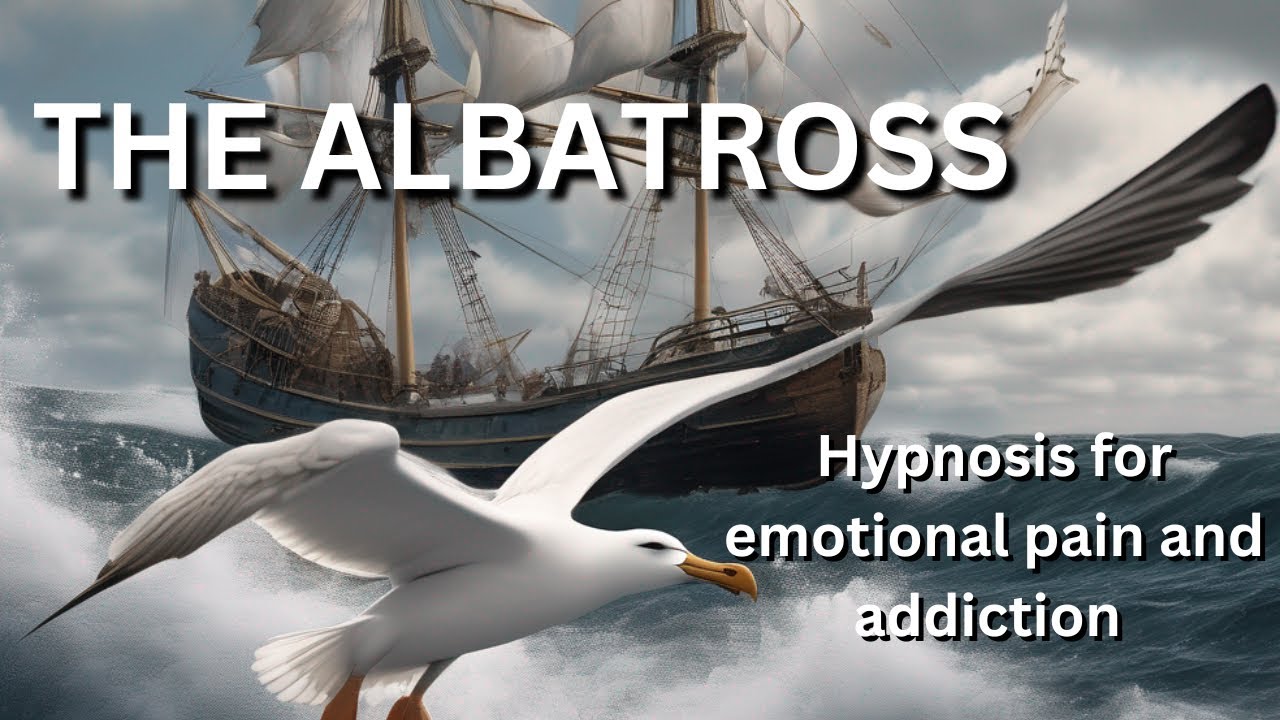
The unconscious mind remembers everything that ever happened to a person, including every feeling, smell, experience, and thought. It stores information in unique ways such as images, feelings, smells, or colors. The captain and boat metaphor represents the client's journey through life, with the client as captain navigating a boat representing their life journey. The albatross represents a false solution or coping mechanism that initially seems promising but ultimately causes more problems. When the captain follows the albatross believing it will bring salvation, the confusion and suffering actually worsen. The albatross grows talons and becomes threatening, symbolizing how coping mechanisms that seem helpful can become harmful burdens.

The albatross serves as a profound literary symbol representing guilt, burden, and the lasting consequences of one's actions. In Coleridge's 'The Rime of the Ancient Mariner,' the mariner kills an innocent bird and must carry it around his neck as eternal punishment. This symbolizes how small, seemingly insignificant actions can create lasting psychological burdens. The video explores how this literary device can be applied to relationships, where one person's actions destroy innocent potential, leaving lasting emotional scars. The albatross represents the weight of guilt that follows us regardless of intent, and how we carry the consequences of our choices throughout our lives.

The albatross is used as a metaphor for burdens and responsibilities. In the video, a character mentions having an albatross tattooed on their shoulder, referencing the ancient legend where sailors would carry albatrosses as omens of bad luck. The bird represents something that weighs heavily on a person, both literally (as a physical burden) and figuratively (as emotional or psychological weight).

The song 'The Albatross' uses the metaphor of an albatross (a large seabird) to represent a persistent burden or symbol of bad luck that follows someone, drawing from the literary tradition of the albatross as a symbol of misfortune; the lyrics describe how this 'albatross' (the person or situation) is 'here to destroy you' and represents a dangerous, unwanted presence that cannot be easily escaped, illustrating how some burdens become permanent fixtures in one's life.
Mariner's Tale
0:01- 1
An old mariner stops a wedding guest to tell his harrowing story.
- 2
The ship journeys south, becoming trapped in ice until an albatross appears.
- 3
The mariner shoots the albatross with his crossbow for no clear reason.
Postcolonial and Historicist Critiques of the Mariner's Journey
While traditional analyses of Part 1 focus on Romantic nature worship and Christian allegories of sin, postcolonial and New Historicist critics offer a counter-reading grounded in the historical context of British imperialism and the transatlantic slave trade. Scholars argue that the Mariner’s voyage mirrors the actual shipping routes of contemporary British merchant and slave ships. From this perspective, the unmotivated killing of the Albatross is not merely a spiritual transgression against Romantic nature, but a representation of colonial violence and the exploitation of the non-European world. The subsequent curse and collective guilt of the crew symbolize the anxieties and moral corruption of an empire built on maritime subjugation and commerce. This approach challenges universalized, purely aesthetic or theological interpretations by re-centering the poem within the material realities of 18th-century expansionism.
[Music] in part one of The Rime of the Ancient Mariner an old man stops a younger man who's on his way to the wedding of his family member he's kin to the groom when the wedding guest tries to brush past the Mariner the Mariner stops him and with his glittering eye and skinny hand and his strange manner he compels the wedding guests to listen to his story by beginning there was a ship as part of the crew of a ship the mariner sets off to sea the ship sails southward eventually arriving in the Antarctic where they see icebergs and are surrounded by the icy cold the ship becomes trapped in the ice until an albatross appears when they feed the bird the ice holding them fast breaks apart and the helmsman steers the ship away as they sail the albatross follows behind answering the calls of the Mariner the wedding guests comments on the look on the Mariners face the Mariner confesses that he shot the albatross with his crossbow but he gives no reason for doing so the narrator sets up the frame story as the wedding guest is stopped by the Mariner readers are launched immediately into the Mariners story with his line of there was a ship offering no introduction beyond that the natural world plays a large part in both the poem and in Romanticism the sea the storm and the ship's eventual arrival at the South Pole typify the grandeur of the natural world this illustrates the sublime considered the realm of experience beyond rational thought which arises from the beauty and awe inspiring phenomena of the natural world one of the main themes of Romanticism Coleridge took a differing view of the sublime than his contemporaries believing that the sublime could only be found in nature in the sky the sea and the desert because of their boundlessness the beauty of the ocean the storm sky and the ice and mist are all present in the Rime of the Ancient Mariner when the Mariner shoots the albatross he commits a sin that he must serve penance for in the hope of absolution cycle of the Mariners pennants is reminiscent of The Wandering Jew narrative a Jewish man doomed to walk the earth because he taunted Jesus on his way to the crucifixion he cannot die until Jesus comes again and eternal penance you
Up Next
The Sublime in Gothic Literature: A Brief Introduction
@snowyfictions
1.5K views•2023-08-27

Formalism in Literary Criticism: An Academic Lecture Overview
@mattalberhasky9952
39.1K views•2015-08-05
Kindred by Octavia Butler | Plot Summary & Literary Analysis
@coursehero
36.9K views•2020-03-10

1984: Orwell's Dystopian World and the Mechanisms of Totalitarianism
@AlternateHistoryHub
7M views•2017-03-04
Related Study Plans & Knowledge Roadmaps
Structured learning paths in Literature