









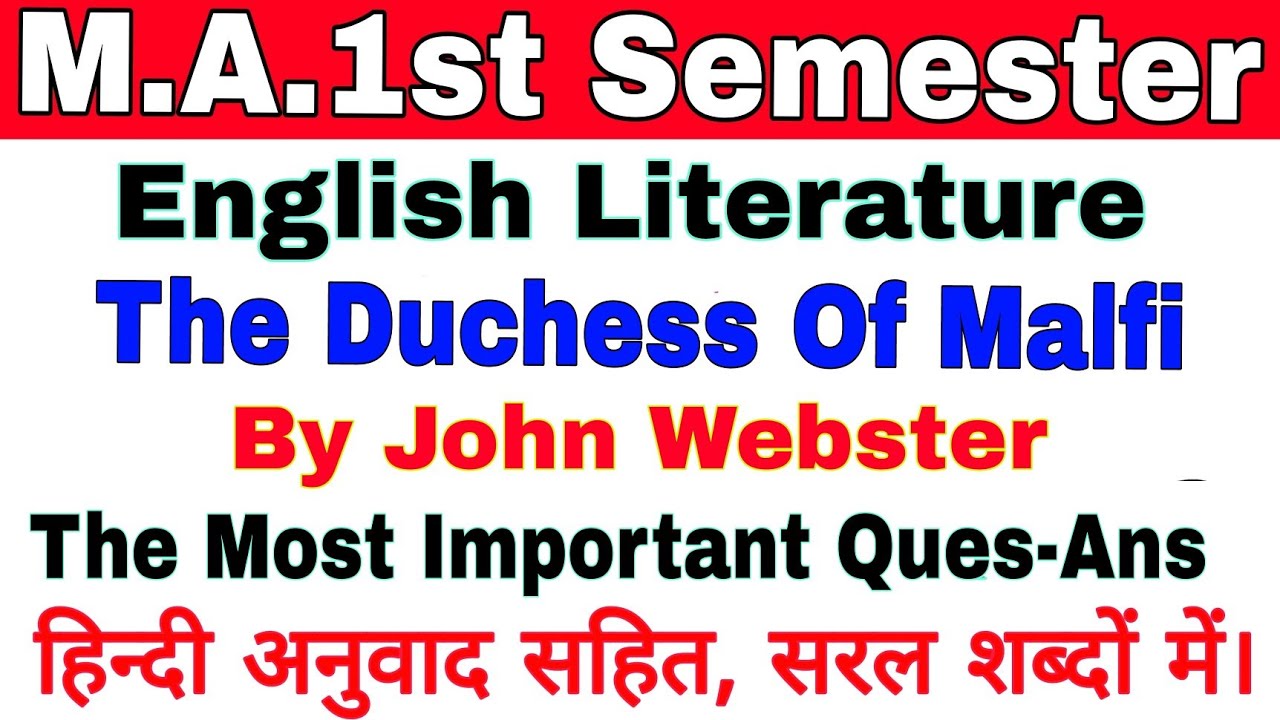
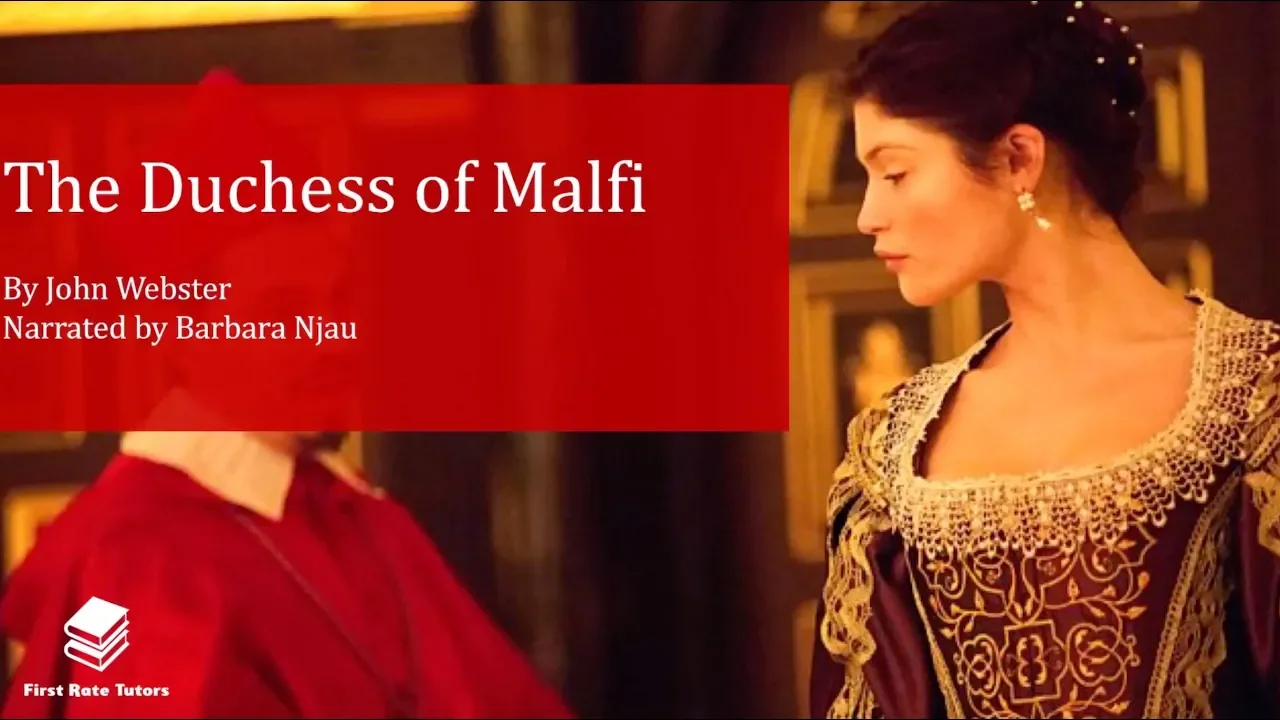








The Duchess of Malfi, written by John Webster, is a Jacobean tragedy set in Renaissance Italy where a young widow defies her brothers Duke Ferdinand and the Cardinal by secretly marrying her servant Antonio; the brothers, driven by jealousy and greed, hire Basola as a spy to monitor her, ultimately leading to the Duchess's brutal torture and death, while the brothers themselves descend into madness and guilt, demonstrating how unchecked power and betrayal destroy both the victim and the perpetrators.
The Duchess of Malfi by John Webster | Summary Analysis
Added:Understanding the conventions of Jacobean Drama, specifically how it differs from Elizabethan theater in its darker, more cynical themes.
Familiarity with the characteristics of the Revenge Tragedy genre, including themes of corruption, madness, and violent retribution.
Knowledge of historical context regarding gender roles and social hierarchy in early modern Europe, particularly the societal expectations of widows and class-mixing marriages.
A comparative literary analysis between Webster's 'The Duchess of Malfi' and Shakespeare's tragedies (e.g., 'Hamlet' or 'Macbeth') to explore differing approaches to tragic heroes.
An exploration of feminist and psychoanalytic literary theories as applied to the characters of the Duchess, Ferdinand, and Bosola.
Investigation of anti-Catholic sentiment and the portrayal of Italian court corruption in Jacobean literature as a mirror for English political anxiety.
Analysis of modern stage and screen adaptations of the play to evaluate how contemporary directors translate its extreme violence and psychological horror.
4.5K views70likes9:07Original Release: 2023-06-01
summary of The Duchess of mouthy by John Webster The Duchess of malfi takes place in Roman Catholic Italy which English viewers at the time the play was written would have thought of as corrupt it starts in the House Of The Duchess a young Widow who runs the town of Amalfi in Italy Antonio her servant just got back from a trip to the French court and basola a murderer who used to work for her brother the Cardinal just got back from being punished soon Duke Ferdinand and his whole Entourage come in he is the duchess's other brother in a private talk with his friend DeLeo Antonio says that even though the Cardinal and Duke look good they are actually jealous sneaky and disgusting he also says that even though her brothers are awful The Duchess is kind balanced beautiful and smart The Duchess is still young and beautiful but her brothers don't want her to get married again they want to keep their honor by making sure they stay sexually pure and they want to receive her money by making sure she stays a widow Ferdinand gives basola a job on the duchess's estate and hires him as a spy to make sure they get what they want vasola doesn't want to be a spy but he feels it's his job to obey the Duke even if that makes him dirty Ferdinand and the Cardinal then go up to the duchess and give her a speech that they have practiced telling her not to get married again she agrees not to but as soon as her brothers leave she tells her maid cariola that she is going to marry in secret The Duchess then was Antonio turning the roles of men and women in Love on their heads they marry behind closed doors after nine months The Duchess is pregnant with a child from Antonio still watching for Ferdinand bossola notices that she is pregnant and plans to give her apricots which are known to make people go into labor as a test The Duchess eats the apricots goes into labor and Causes Chaos in her Court Antonio and The Duchess tell people that The Duchess is sick with some disease to keep the secret Antonio talks to basola about the peaches and asks him if they were poisoned basola denies the charge but after the argument he sees that Antonio has dropped a piece of paper it's a baby's horoscope which gives bosola solid proof that the duchess had a child he chooses to write a letter to the duchess's brothers in Rome and send them the paper when Ferdinand and the Cardinal find out that the duchess has disobeyed them they are Furious because they think their Noble blood has been tainted Ferdinand is also Furious that The Duchess has been having sex but they decide to wait until they know who the father is before doing anything after a few years The Duchess had two more children with Antonio basola told Ferdinand about the children so Ferdinand chooses to talk to The Duchess in her bedroom Ferdinand sneaks into the room and scares the duchess he then gives her a knife and tells her to kill herself she tells him she's married and he gets very angry he says that she has ruined her name and he swears that he will never see her again in his life Antonio and The Duchess make a plan to leave Amalfi The Duchess tells Antonio that he has been fired because he has been using his job to steal from her and has been caught after basola secretly tells the duchess that Antonio is a good and honorable man The Duchess tells basola that Antonio is innocent and is actually her husband she wants to run away with him back in Rome bossola tells the Cardinal and Ferdinand what The Duchess is planning the Cardinal then sends The Duchess Antonio and their children away in an official way Ferdinand asks Antonio to make up but Antonio thinks it's a trap so he and his oldest son run away to Milan instead of accepting after he goes basola comes back in Disguise and follows the brother's orders to capture The Duchess and her other two children the brothers put the Duchess in jail in her house in Amalfi there Ferdinand meets The Duchess in the dark because he swore he would never see her again he gives her his hand to hold but then tells her it's the hand of a dead man to make her believe that Antonio is dead he then uses Shadows to trick The Duchess into thinking that her children are also dead which makes her want to die Ferdinand tells basola that he wants to torture her by putting her in front of crazy people from the local hospital for the insane even though basola feels bad for The Duchess and doesn't like being a part of her torture he still does what the Duke tells him to do the Crazy People Meet The Duchess in cariola in her jail basola then comes and dressed as an old man and tells the duchess that he is going to kill her The Duchess is calm and not afraid but when the executioners come in they kill her her two children and cariola Ferdinand doesn't feel sorry for the children but as soon as he sees the duchess's dead body he starts to feel bad Ferdinand goes crazy because he feels guilty and basola admits that he also feels bad Ferdinand then blames basola for doing what he was told and won't pay him for the work he did after Ferdinand leaves The Duchess wakes up but only long enough for basola to tell her that her husband is still living almost as soon as she wakes up she dies for real now that Antonio is in Milan he doesn't know what happened to his wife he chooses to put everything on the line and face the Cardinal in person to try to calm things down Ferdinand on the other hand has been given a diagnosis of lycanthropia or werewolf disease he starts acting like a madman and even attacks his shadow out of guilt the Cardinal doesn't want anyone to know that he had something to do with the murder so he tells basola to kill Antonio the Cardinal has been having an affair with a woman named Julia Julia falls in love with basola and he tells Julia to try to get the Cardinal to confess Julia faces the Cardinal and finds out his secret in order to kill her he makes her kiss a poisoned book vasola tells the Cardinal that he is responsible for both the killings and the confession he says he will help the Cardinal if he pays him but this is a trick he plans to do everything he can to save Antonio and get back at the brothers in the Cardinals house he tells his courtiers not to come near his room no matter what they hear even if he screams and shouts to test them fosola sneaks into the castle and finds out that the Cardinal wants to kill him if he helps him soon after that Antonio sneaks into the house to find the Cardinal and put an end to their fight but because it was dark basola accidentally stabbed Antonio because he thought he was one of the brothers Antonio only stays alive long enough for bossola to tell him that The Duchess and two of their children have been killed after that Antonio doesn't want to live anymore basola goes to find and kill the cardinal when the Cardinals starts screaming for help no one comes because basola told everyone to stay away during the chaos bossola stabs the Cardinal twice then Ferdinand comes in and stabs both the Cardinal and bosola because he thinks his brother is the devil bosola then stabs Ferdinand who says in his last words that we all die because of what we do the Cardinal dies while basola tells what happened and basola also dies after his final speech after everyone has died DeLeo comes in with Antonio's son and says that he will help the son get his rightful Fortune this is the end of the play about the author John Webster's life was not very well known one knows for sure when he was born and when he died he was possibly born in London in 1580.
his parents were Elizabeth Coates and John Webster who was also a tailor in London people think that Webster went to the well-known Merchant Taylor school but it's not clear if he did or not in the beginning of his work he wrote plays with other writers in 1604 he wrote the malcontent with John Marston and in 1607 he wrote Westward hole with Thomas Decker Webster married 17-year-old seraphiniel who was seven months pregnant at the time in 1605 or 1606.
they had more than one child we don't know much else about Webster but we know he was dead by 1634 because he was mentioned in a book in the past tense hope we summarized it fully and you liked it please hit the like button and subscribe to our channel so that we are motivated to create more videos
Up Next
52:23
Iris Murdoch Interview: 92Y & The Paris Review, 1990
@92YPlus
25.7K views•2013-12-09

40:06
Street Haunting: Virginia Woolf’s London Essay Analysis
@ExtraLiteraryAffairs
146 views•2025-01-24
7:24
The Revenger's Tragedy by Thomas Middleton: Plot Summary & Analysis
@asm-literatureandpoetry4604
872 views•2024-01-08

15:25
1984: Orwell's Dystopian World and the Mechanisms of Totalitarianism
@AlternateHistoryHub
7M views•2017-03-04
Related Study Plans & Knowledge Roadmaps
Structured learning paths in Literature
literature
Graphic Memoirs: Visual Art, Trauma & History
01Foundations of Sequential Art and Visual Language
02Autographics and Processing Historical Trauma
03Visualizing Personal Trauma, Grief, and Graphic Medicine
+ 2 more learning modules
14h5 modules
Explore Roadmap
literature
Campus Novels: Evolution, Themes & Critique
01Introduction to the Campus Novel Genre
02Mid-Century Satire and the Post-War Academy
03Dark Academia and the Critique of Privilege
+ 2 more learning modules
14h5 modules
Explore Roadmap
literature
Theater of the Absurd: Philosophy & Plays
01Postwar Existentialism & Historical Roots
02Dismantling Narrative: Esslin & Absurdist Conventions
03Samuel Beckett and Tragicomic Existentialism
+ 2 more learning modules
12h5 modules
Explore Roadmap
literature
Revenge Tragedy: Justice, Madness & State
01Foundations of Early Modern English Theatre
02Anatomy of Revenge: Structural Conventions
03Psychological Complexity: Madness and Melancholy
+ 2 more learning modules
15h5 modules
Explore Roadmap