




![[MKU] Era Post Truth: Manipulasi Media dan Emosi Sosial](https://i.ytimg.com/vi/iYIWIfW2Vx0/maxresdefault.jpg)












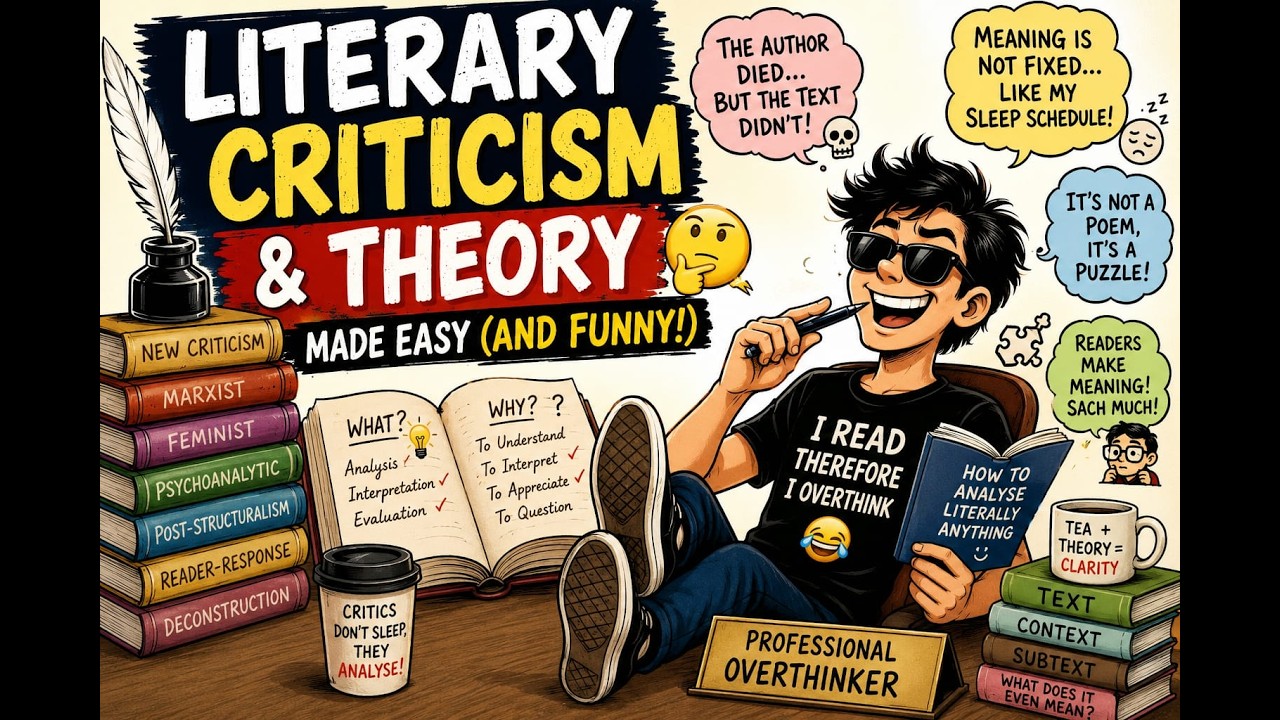


Formalism is a literary criticism approach that analyzes texts based on their internal structure, language, and literary devices rather than external factors like author intent or reader response; it emphasizes close reading, the distinction between form and content, and the idea that literary works have meaning independent of their historical or biographical context.
Formalism in Literary Criticism: An Academic Lecture Overview
Added:Introduction to Literary Theory: A basic understanding of what literary criticism is and why we analyze texts.
Fundamental Literary Devices: Familiarity with core poetic and narrative elements such as irony, metaphor, meter, and tone.
Traditional Literary Approaches: An awareness of biographical and historical criticism, which Formalism emerged to challenge.
The Concept of Textual Autonomy: A preliminary understanding of viewing a text as an independent piece of art rather than a historical document.
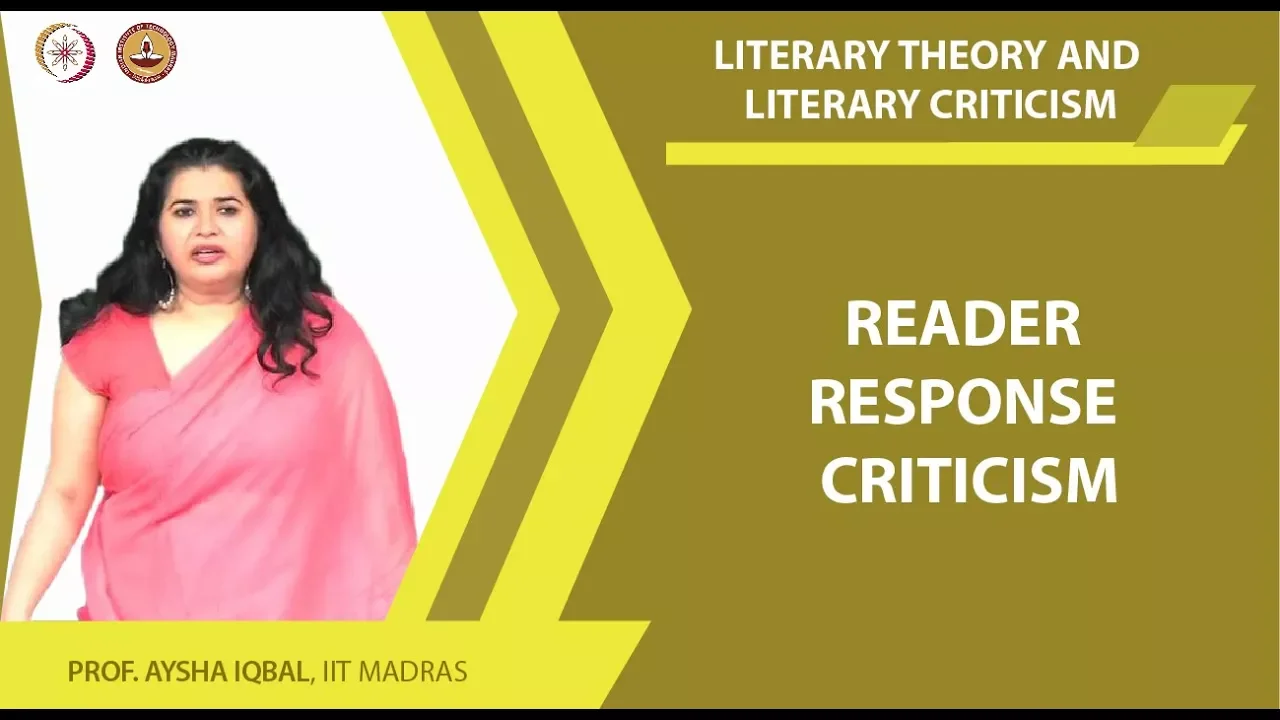
Reader-Response Criticism: Exploring how meaning is actively constructed by the reader, directly opposing the formalist 'text-only' focus.
Post-Structuralism and Deconstruction: Analyzing how texts have unstable, contradictory meanings, challenging the formalist search for organic unity.
The Affective Fallacy: A deeper investigation into Wimsatt and Beardsley's concept regarding the emotional effect of a text on the reader.
Russian Formalism and Defamiliarization: Studying Viktor Shklovsky's concept of making the familiar strange (ostranenie) as a precursor to Anglo-American New Criticism.
Practical Close Reading Application: Conducting a rigorous, word-by-word analysis of a complex poem using New Critical methodologies.
39.1K views499likes13:43Original Release: 2015-08-05
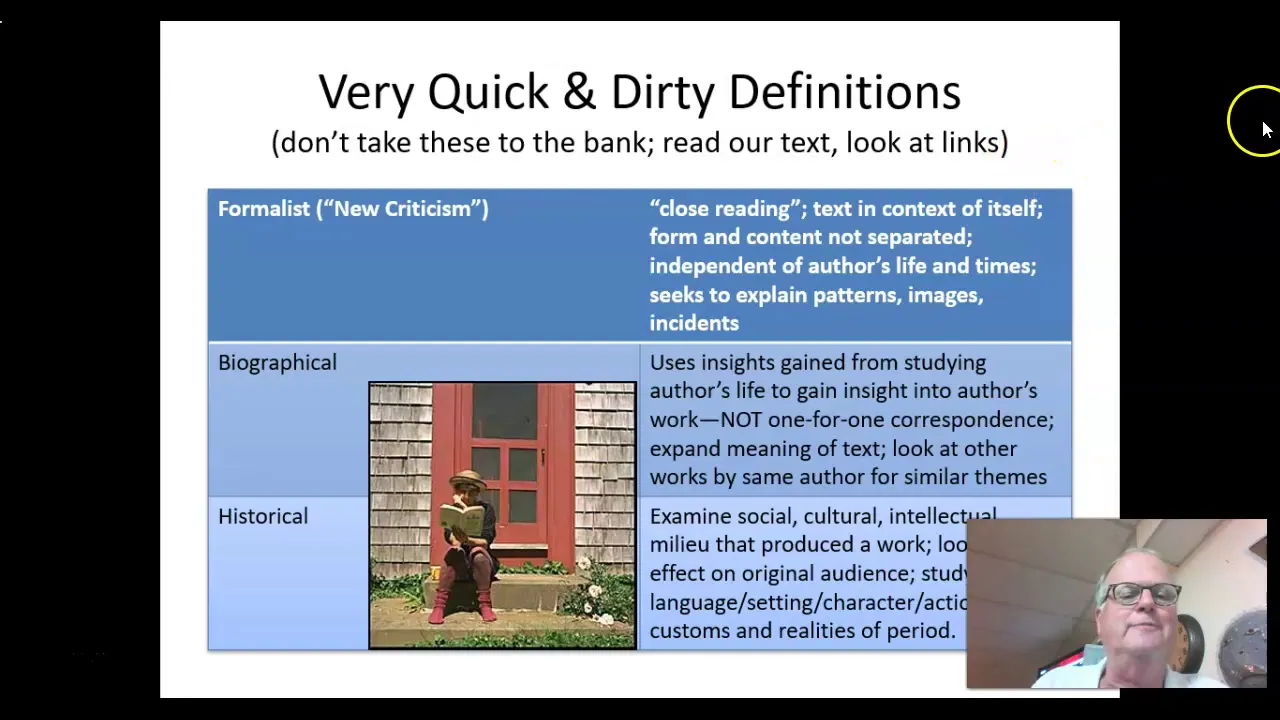
hi students Professor Matt here today's lecture is on new criticism and formalist Analysis now before we begin I'm going to talk a little bit about Theory versus criticism so when we talk about literary Theory Theory involves defining what literature is who and author is and how readers make meaning and of course these are very Broad and general questions that might seem at first very easy to answer but it's sort of like opening the proverbial can of worms that once you start to dig deeper into these things uh the more elusive that they become criticism on the other hand involves questions of why we care about literature evaluation of literary works and whether they are good or bad so coming up with some set of criteria or form of analysis whereby we can judge them now the history of theory and criticism follows a trajectory that uh the ideas of literature are formed primarily by three different things and the first phase involves the idea that literature is primarily formed by language so as a study of linguistics the second phase involves literature as formed primarily by the human psych and here we see the influence of psychoanalysis in the third phase we see literature as being understood primarily through social economic and historical forces another definition hermeneutics is the art of interpretation and hermeneutics becomes necessary when the meaning of a text is important and simultaneously that meaning is difficult to discern some might say that theory is useful in and of itself but others might argue that theory is useful to the extent that it informs criticism and helps put those theories into practice many of you might be unfamiliar with different literary theories schools of criticism but if you've taken a literature course and not been defined as having been taught a certain Theory then probably what you've been doing is a form of formalist theory and formalism is the oldest school of theory dates all the way back to Aristotle's book Poetics which was an argument against Plato's notion that poetry imitates reality badly the Greek word here for imitation is mimesis and Aristotle was arguing that poets are not so much imitating reality as they are reconstructing it Plato's emphasis had been on the other hand that of the the harmful effects of poetry and drama on society because they were seen as mislead imitations of Truth and Aristotle's counterargument was that poetry presents things not as they are but as they should be new criticism is a specific uh School of formalism that begins in the 1930s and the new critics focused on very close readings of a text and they helped to revolutionize the literature classroom by demonstrating that the study of literature was Far More Than Just recitation and appreciation the new critics picked up on the philosopher kant's term uh the purposeful versus the purpose of and in looking at experiencing objects or text as being Pleasant or unpleasant versus thinking about those text on more cognitive grounds so the text as purpose of means that the text has meaning unto itself rather than simply saying the text brings me pleasure or it doesn't bring me pleasure and I'm going to use that as sort of the measure or the criteria by which I evaluate a text whether it does something for me and saying rather you know what is the text trying to do on its own terms and the new critics would study U the text as having meaning unto itself looking at its internal coherence looking at its organization looking at its complexity and as such the readers begin to appreciate the work on its own terms right again not because they have any selfish interests the text is going to bring me pleasure or displeasure um that would be instrumental interest in the new critical tradition the realization that we can appreciate object objects or we could substitute that with other people without having the instrumental interest those selfish designs you know is it bringing me pleasure or not is really foundational to our value as independent moral agents and so the the freedom of the literary text from our own desires our un selfish designs is really the moral basis of Integrity in the formalist tradition and it establishes uh a real sense of Ethics from a formalist perspective now modernist writers like TS Elliot help to to create What's called the literary canon the Canon is an exclusive list of works or authors that are worthy of critical study now John Crow Ransom was the figure who coined the term new criticism and this was a school of formalism that was going against two traditions of literary scholarship in Academia at the time one of those being philology which is the Greek word for the love of words um and essentially is a study of linguistics and liter in historical context and by the 1930s the scholars literary Scholars had established a Canon of literature that included nearly everything that mattered and of course this would involve uh Schauer Milton Shakespeare kind of those key foundational what we call canonical authors the second tradition against which the new critics were formed is the notion of appreciative teaching so the idea that we should just memorize recite and applaud really great literature by those canonical authors and maybe throw in a few choruses of Kumbaya so the new critics came along um and preached that we need to focus on close readings of the text we need to F focus on the unity of the work which includes both its coherence and its complexity a few of the other mantras of the new critics were uh the heresy of the paraphrase which is to say that that it's really not adequate that we could summarize or paraphrase a text because it speaks for itself and any attempt to do so is to diminish the originality of the text the new critics also warned of the intentional and the effective fallacies the intentional fallacy was the belief that we can't trust the intentions of the author so it was a new critic's way of kind of dismissing the role of the author in the the task of making meaning of literature and the effective fallacy was a way of the new critics doing way with the notion of the reader so the the readers you know how a text might emotionally a reader is something that the new critics wanted to push past through so you push through that emotional response and you get to uh to deep dish analysis of the text itself so if we look at the the major players in the function of literature we have the author we have the text and we have the reader the new critics are going to put the primary emphasis on the text uh doing away with the author through the intentional fallacy doing away with the The Reader through the effective fallacy so in this sense the new critics put for the not of universal meaning that text can have meaning Beyond its uh time and culture Beyond its historical context and of course the Assumption there is that there's some sort of Ideal reader who can decode the text and understand all these literary devices another Legacy of the new criticism is the idea that terms such as short story poem novel documentary Etc are themselves formal distinctions so this is how you probably have been practicing some form of formalism um anytime you've you've studied literature because these are accepted terms that come from a formalist tradition now Russian formalism actually came before new criticism and the Russian formalists were interested in what they call literariness or the devices of literature and the way that authors deploy these devices and text to impede the reader arrival at meaning and alter the reader understanding of meaning so it's a way of using language in a artistic or literary sense to to have a certain sense of style and attempts to articulate the literary studies uh in scientific terms was a way of trying to justify that literature has a place in Academia alongside other disciplines like biology and calculus because of course it has its own set of terms it has its own set of uh devices that warrant its study Russian formalist looks at literary history is a sequence of changes in which literary devices struggle to become the dominant device that motivates or pre-selects devices in a given textual field of course this has a sort of darwinian ring to it um we have a sort of struggle or survival of different literary devices that are trying to uh beat one another out the Russian formalist also talked about the concept of defamiliarization which is similar to Ezra pound's injunction to make it new which in a sense makes the the notion of defamiliarization a transnational concept or idea but defamiliarization is is Tak something that is really familiar to us and making it new or making it strange in a way and literature could do this by uh causing us to think about you know really simple things in ways that we don't always think about them the r Russian formalist uh make a distinction between form and content and the argument is put forward that in attempting to isolate something as content it turns out at the bottom to be a device among other devices and of course here we have that sort of darwinian notion of of the struggle of devices to become the dominant mode and we have we we can chart the difference between evolution or modification of form Evolution being sort of a more organic way that literary devices develop so they responding to other impulses at the time and they either become accepted into the larger culture the the field of of devices um or they do not they kind of pass on versus modification of form is when you have someone like Stalin who comes in and says You must write stalinist realism of course doesn't say it as such but you know the idea is that if you're not producing socialist propaganda then you know you're not allowed to write and so here we have the intervention of some political historical figure that modifies the form in that way censorship or propaganda some of the key principles of formalism one is that the aesthetic experience is unique powerful and significant formalist tradition we're going to focus again more on form more on the text in the new critical tradition we have the idea of universal truth of a text and the possibility of Enlightenment again we're focusing on the text rather than the reader so the effective fallacy is a way of doing away with the emotional responses that a reader has to literature and we're pushing past that to be able to read a text on its own terms the second key principle is that literature has formal aspects distinguish it clearly from other types of expression and so we we have in the sense the construct nature of the literary work the construct itself is Meaningful and we understand that um literature is is a written word is different than say your shopping or your grocery list right that too is could be a written word but we generally don't Define a shopping list is literature however if you took a shopping list and published it in a book of poetry then you know suddenly you know we we we see that the the lines start to get a little bit fuzzy or blurry right um and that's where we go back to some of those original questions about the nature of theory as it asks those general questions what you know what is literature you know is the shopping list literature if I've written it down on a piece of paper and I take it to the to the grocery store you know probably not but if I publish that in a journal of poetry does that suddenly make it literature so there's sort of interesting questions to explore there the third key principles is literature can be usefully subdivided into genres we can think of genres you know very broadly as uh Pros versus poetry we can also think of genres within fiction right we have literary fiction we have romance fiction detective fiction science fiction Etc and so there's a variety of ways we can look at the notion of genre but there are certain rules or typify certain genres the fourth key principle is that literary analysis has its own specific interests focuses and terminology that differentiate it from the fields of History psychology and sociology Etc so these are all distinct disciplines that you can study in Academia the fifth key principle is that literature has meaning beyond the intent and biography of the author so again this is the the new critics notion of the intentional fallacy we need to move Beyond just what the author intended the work to mean because writers are not always consciously aware of what they're doing they don't always understand all the aspects of their work or all the ways that meaning can be constructed from their work and of course intentions can be very misleading so an author might have intended his or her work to mean one thing but the outcome could be very different from that intention the six key principles that close reading and atttention to form language in detail are key to discussion of literature's qualities themes and functions and you know we're going to talk about a lot of different methodologies in this course but all of them are going to share this key principle in common is that you know we need a close reading of the text we need judicious examples to help support our ideas our generalizations our conclusions and this notion can be traced back to the formalist tradition of course the the new critical tradition is instrumental in focusing on these close readings on careful detail and on using examples to support your ideas so this is Professor Matt signing off until next time
Up Next
29:01
Feminist Narrative Theory: A Conversation with Robyn Warhol
@ProfessorLatinX
636 views•2020-06-19

4:35
The Best We Could Do: A Graphic Memoir of Family & Vietnamese Refugee Experience | Thi Bui Book Review
@LiterallyGraphic
1.5K views•2022-05-14

6:08
Point of View in Fiction: First Person vs. Third Person
@magicalthriftyteacher
153.8K views•2014-03-31

15:25
1984: Orwell's Dystopian World and the Mechanisms of Totalitarianism
@AlternateHistoryHub
7M views•2017-03-04
Related Study Plans & Knowledge Roadmaps
Structured learning paths in Literature
literature
Graphic Memoirs: Visual Art, Trauma & History
01Foundations of Sequential Art and Visual Language
02Autographics and Processing Historical Trauma
03Visualizing Personal Trauma, Grief, and Graphic Medicine
+ 2 more learning modules
14h5 modules
Explore Roadmap
literature
Campus Novels: Evolution, Themes & Critique
01Introduction to the Campus Novel Genre
02Mid-Century Satire and the Post-War Academy
03Dark Academia and the Critique of Privilege
+ 2 more learning modules
14h5 modules
Explore Roadmap
literature
Theater of the Absurd: Philosophy & Plays
01Postwar Existentialism & Historical Roots
02Dismantling Narrative: Esslin & Absurdist Conventions
03Samuel Beckett and Tragicomic Existentialism
+ 2 more learning modules
12h5 modules
Explore Roadmap
literature
Revenge Tragedy: Justice, Madness & State
01Foundations of Early Modern English Theatre
02Anatomy of Revenge: Structural Conventions
03Psychological Complexity: Madness and Melancholy
+ 2 more learning modules
15h5 modules
Explore Roadmap