

















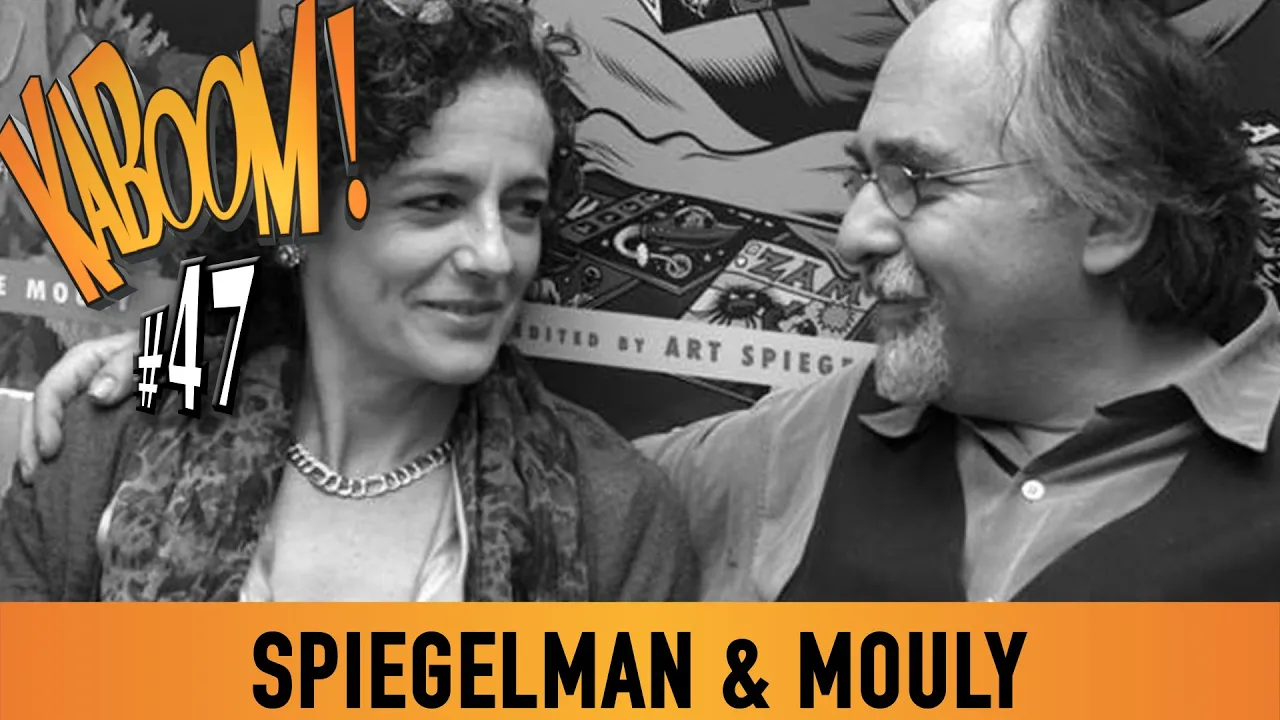




Art Spiegelman, creator of Maus (the first true graphic novel depicting his parents' Holocaust survival through allegorical mice and cats), discusses how comics evolved from being dismissed as low art to achieving literary recognition, emphasizing that comics can address profound themes like memory, trauma, and historical atrocities while maintaining their unique visual storytelling power.
Art Spiegelman: How Graphic Novels Became High Art
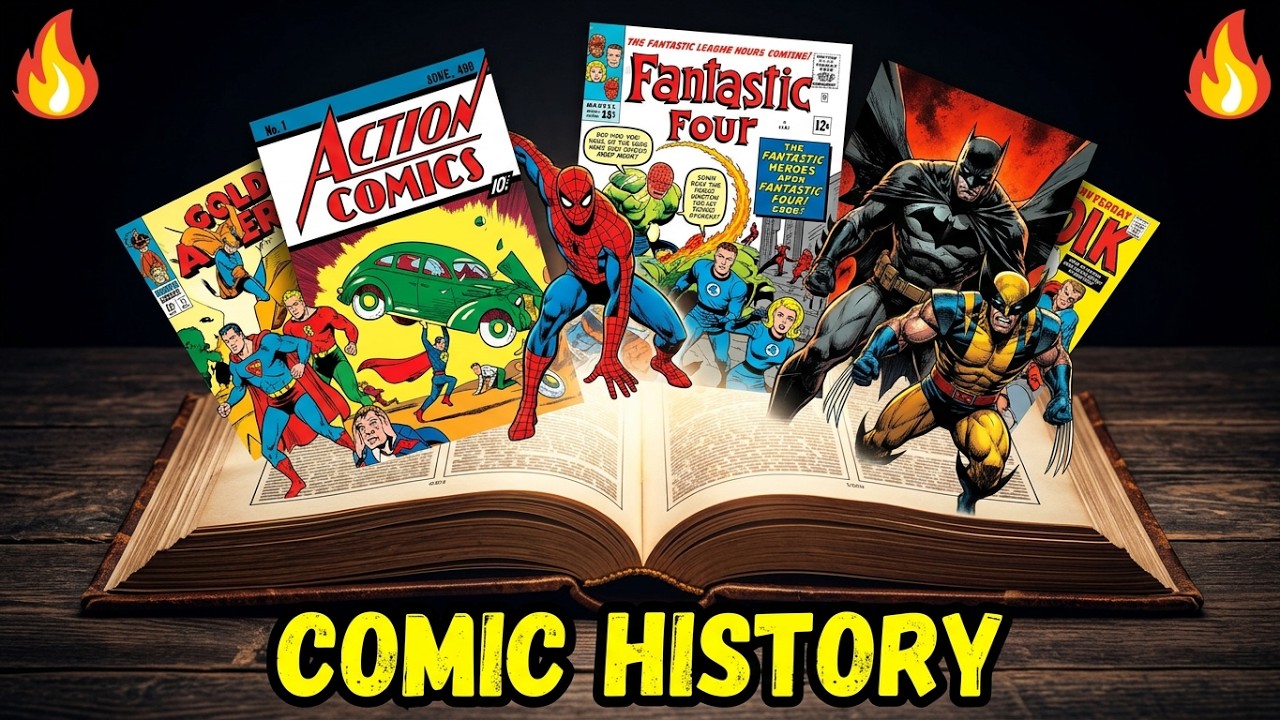
Added:The historical perception of comics in the mid-20th century as lowbrow, juvenile entertainment prior to the emergence of the term 'graphic novel'.
Basic historical context of the Holocaust and the premise of Art Spiegelman's 'Maus' as an autobiographical memoir utilizing anthropomorphic allegory.
The cultural and sociological division between 'high art' (traditionally canonical literature, fine art) and 'low art' (pop culture, mass media).
Fundamental concepts of visual literacy, specifically how text and image combine in sequential art to construct narrative meaning.
A comparative study of other landmark graphic novels of the 1980s, such as Alan Moore's 'Watchmen' and Frank Miller's 'The Dark Knight Returns', that challenged mainstream perceptions of the medium.
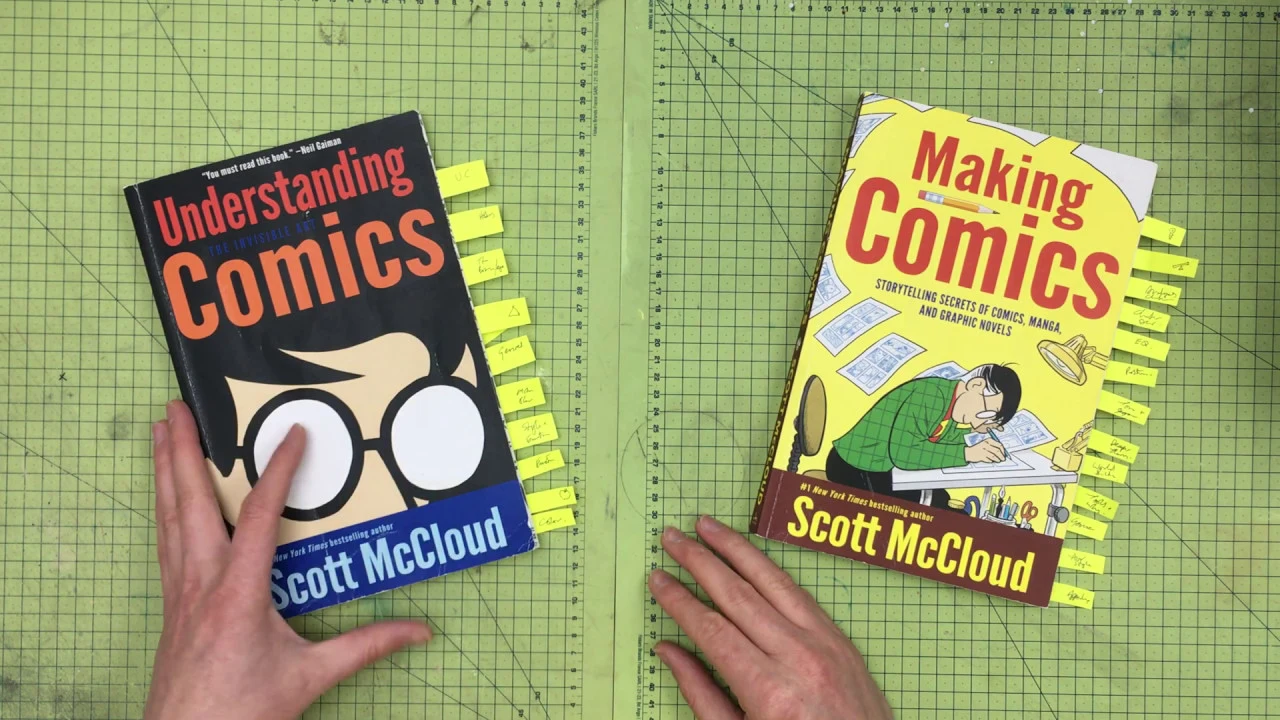
Deep dive into comics theory and semiotics by exploring foundational texts like Scott McCloud's 'Understanding Comics'.
Investigation of Spiegelman's editorial career, particularly his co-founding of the avant-garde comics anthology 'RAW' and his controversial cover art for 'The New Yorker'.
The ethical, philosophical, and aesthetic challenges of representing historical trauma, memory, and autobiography through graphic and visual narratives.
57.5K views770likes10:20Original Release: 2015-01-12
way it's great because now it Comics can be anything art spiegelman is the father of modern American comics when he was a kid comic books were considered as illicit as pornography but for spiegelman Comics were like literature where you could speak about the Unspeakable like Mouse his groundbreaking graphic novel that tells the story of his parents survival under the Nazis portraying Jews as mice and Nazis as cats it's considered by many to be the first true graphic novel it won spiegelman a piter prize and helped turn comics from low art into high art it's the work most people know of mine it's work the only work I ever spent 13 years on he was soon hired at the New Yorker where his covers were courageous and sometimes outrageous sharing many of the principles of his colleagues at Charlie Abdul well Comics were seen as a dangerous s substance to be controlled because they would turn kids into juvenile delinquents as somebody who was shaped by the comics I didn't see that as a problem I wanted to make comics of one kind or another and fortunately for me I came of age at a moment where this thing a phenomenon happened underground Comics was part of the uh anti-war anti-vietnam War movement of the uh invention of the pill and the sexual Revolution that came with it and massive infusions of psychedelics grass into the culture and it changed the people making the comics and the comics that were made do you think that Comics are still subversive they can be I'm afraid that I might have helped domesticate them in ways that I'm apologizing for wherever I go because as a lower middle class kid I was interested in where High art and low art smash up against each other and wanted to be uh invited places I had no business being like the ago so you think you've domesticated Comics is well I'm afraid that for some people it seems to be the case and I'm I'm all for Comics being as uh vulgar and nasty as as they can be as well as uh as sophisticated as they can be well everyone says now that you're sort of the the father of the gra I know and I've been asking for a paternity test ever since you don't like that I don't like the phrase because it's uh but it works I mean if you just it depends what you mean by it I mean I've seen things that are called graphic novels all they are is a bunch of stapled superhero stories bound together in one volume if you think of graphic novel as uh an ambitious comic book then maybe that's all right [Music] so just I guess tell our audience what what is mouse about uh Mouse is uh a telling of the stories my father told me about his life in aitz when asked and it's about me trying to understand assimilate and present those stories in a Comics format dealing with the fugitive nature of memory the difficulty of understanding of transmitting information and how one can engage with all those uh things simultaneously through a medium remarkably well suited to that endeavor which is Comics H it sounds very complicated for a comic but that probably sounds condescending yeah it does uh it's not complicated maybe my language about it is complicated but you asked me to explain concise well I think a lot of people who don't read what are now called graphic novels thanks J um don't realize how profound and deep Comics can be and that I think that was something that was really important to you yeah I mean they they really were a window into art and literature for me uh uh I used to think of comics as sort of a gateway drug into reading or something you know uh so you were trying to tell your dad's story in a comic I was trying to tell the story of what it would mean to understand his story so it's about my relationship with him and what it is that he lived through uh and the Holocaust yeah so it goes from right before to after the Holocaust but it's basically talking to my father as an old man and working out our difficulties with each other uh um in such a way that I'm trying to reinhabit his past enough to understand it so it's about a cartoonist trying to understand his father by making a comic book about what he went through [Music] but this is Prisoner on the hell Planet uh which at the time was an unusual thing to have happen in an underground comic book it wasn't about sex drugs and rock and roll uh and politics it was about remembering my mother's suicide at a time where I totally blocked it like it had happened in' 68 this strip was made in uh 72 um and if somebody asked me where my mother was I could say she committed suicide but I didn't remember anything about it I just or I didn't think about it it was cauterized and opened it up here and then when it flooded back into me I stopped everything else I was working on which was much more trivial was doing this not even knowing if I'd let it get published anywhere uh but started making a comic that didn't look like other Comics around me at all uh you got a lot SC mother father stuff your Don't You Comics oh in my Comics but in my life not in my life is a an open book and it's a book that includes a lot of mother and father stuff I would imagine if you dig no I'm I'm different than other people oh really okay no mother just born under a cabbage I'm doing the interview of you I'm letting you mom um no I'm okay duh anyway this was about um uh killing one's father screwing one's mother as basic subject matter this was even more perverse uh this is about child I'm not necessarily proud of it but this was in the in keeping with the kind of underground Comics are around me in terms of its in inspiration and influences in terms of something about the crowded drawing style that to lots of decorative patterns and lines that was in keeping with a lot of the underground Comics so in the early 90s you went to the New Yorker I did I was invited in at a time where had a new editor yeah uh who had very little respect for the New Yorkers tradition and was looking to Li things up a good thing for me yeah uh cuz it allowed me to do these covers that were uh not always but occasionally rather uh I remember this one yeah that was the one that started off the possibility of making controversial covers in the magazine what did you want to well that was stir up with that well it was you know I didn't even know what I was stirring up and I didn't know how stirred things could get because this was before the internet um so this was in the wake of the Crown Heights riots i' just been invited into the magazine Crown Heights was a neighborhood in Brooklyn where there was uh uh race riots between the hidic Jewish community and the West Indian African-American community that was turning into a blood bath it was tragic so that led to this image of them kissing and making up uh and I had no idea it was going to create that kind of an uproar and it really was uh people were upset people were really upset all over the world for some reason it really like became uh the first internet Scandal of this this kind you know uh fore an internet ah let's see Jews were upset because as I was told uh a htic Jew is not even allowed to touch his wife in public uh and blacks were upset I was told on a radio show where somebody was yelling at me who's a reverend in the Crown Heights Community if you had any guts you'd have shown a black man kissing a white lady a Jewish lady a white Jewish lady I remember that one tell me the story obviously it's 911 yeah the New Yorker cover well my wife franois is the art editor of the New Yorker in charge of the covers and we were both living are both living about 10 12 blocks away from uh where the World Trade Center was and when we were out in the street that morning a plane went into that building and we were watching it as we were on our way to vote in a Democratic primary this picture of a blackon black image resulted because I kept going back and forth between house and studio and as soon as my back was to the towers that you could always see from either place I couldn't believe they were still gone so it was like Phantom limb I would turn around they weren't there so this somehow whichever way we wrestled it into existence with each other is the blackon Black cover of dealing with that Phantom limb of something that's both there and not there depending on how the light headset so seeing how uh I was then stuck with trying to deal with the theme of um what does one understand through media what does one understand directly and I became very resentful of it all being reduced to a war recruiting poster within two weeks so what are you mad at now mad at now oh I'm I'm I'm heartbroken like uh whatever the little Whispers of an ideal America that we aimed toward once might have been uh that had me actually at my most uh weepy sentimental when Obama won the election uh little voice told me a friend's voice actually saying prepare to be disappointed and are you yes what are you going to do I mean you've done all of these retrospectives for I'm always wondering but usually you know everything that I've been doing after each one of the major pieces I Collapse and don't think I'll ever do anything else and then something rallies and pushes something else into existence you got an idea for I have some ideas it's been a real pleasure to meet you thank you thanks so much byebye after the attacks at Charlie ABDO we got back in touch with art spigelman to get his reaction he referred us to an article he wrote years ago when people were killed for the Danish cartoon mocking the prophet spigelman was defiantly in favor of all cartoonists freedom to express whatever they want
Up Next
24:42
Exploring Art Books: Artist's Guide to Inspiring Collections & Techniques
@littletinyegg
32.7K views•2023-02-25

12:54
Triumph of Orthodoxy Icon: Byzantine Art & History Explained
@BenCallan
2.1K views•2024-08-06

9:49
FastAPI vs Flask vs Django: Choosing the Right Python Web Framework
@TechWithTim
302.5K views•2024-05-26

1:42
Game of Thrones Opening Credits: A Cinematic Analysis
@gameofthrones
46.3M views•2011-04-18
Related Study Plans & Knowledge Roadmaps
Structured learning paths in General & Interdisciplinary Studies
general-studies
Elevator Engineering: History, Physics & Cities
01From Hoists to Safety Brakes: The Dawn of Vertical Lift
02Hydraulic vs. Traction: The Engineering Physics of Elevators
03Modern Speed, Safety, and Algorithms
+ 2 more learning modules
12h5 modules
Explore Roadmap
general-studies
Rubber: Material Science, History & Geopolitics
01Origins of Natural Rubber & Mesoamerican History
02The Chemistry of Natural Rubber & Vulcanization
03The Geopolitics of the Rubber Boom & Colonization
+ 2 more learning modules
12h5 modules
Explore Roadmap
general-studies
Containerization: Evolution, Logistics & Trade
01Ancient Trade & Bulk Cargo: Amphorae to Barrels
02The Industrial Revolution & Cardboard Packaging
03The Containerization Revolution: Malcom McLean
+ 2 more learning modules
12h5 modules
Explore Roadmap
general-studies
Textile Tech: Evolution, Labor & Global Impact
01Pre-Industrial Textiles: Handloom & Cottage Industry
02Mechanization: The Spinning Jenny to the Power Loom
03The Factory System & Global Labor Transformation
+ 2 more learning modules
10h5 modules
Explore Roadmap