







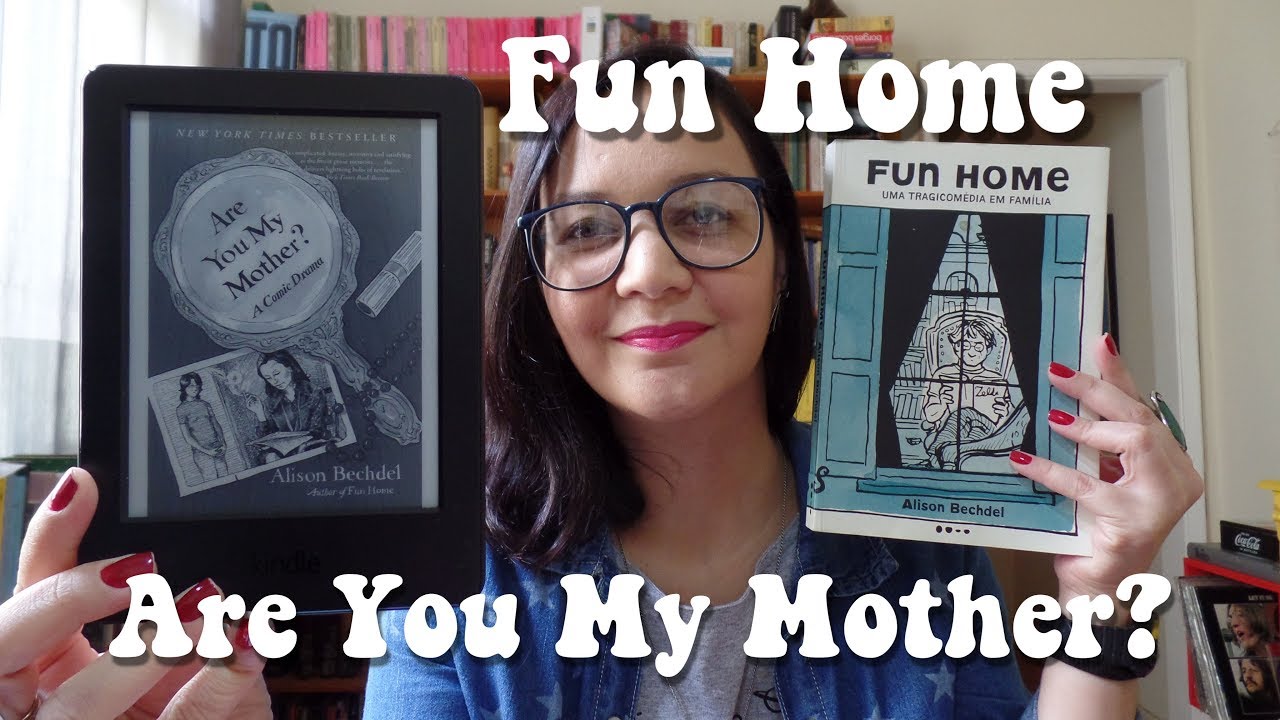

















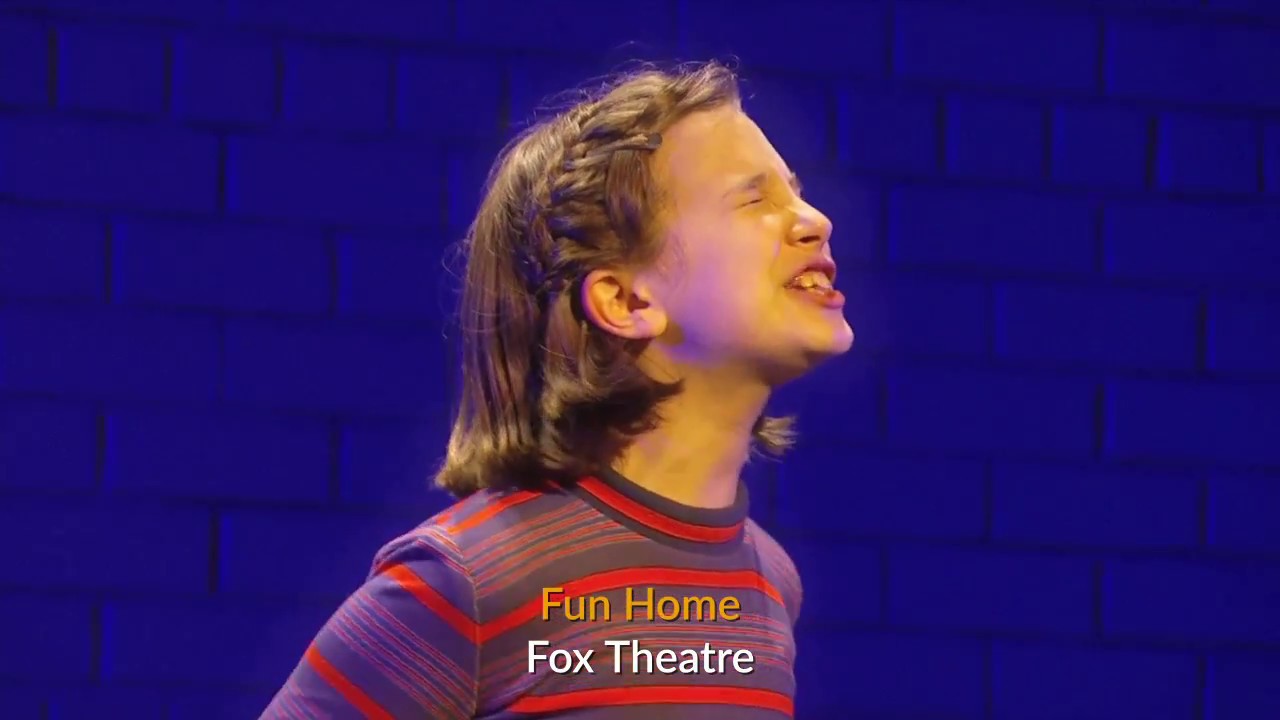
Graphic memoirs like Alison Bechdel's 'Fun Home' demonstrate how the combination of words and images creates a unique form of truth-telling that neither medium could achieve alone. Bechdel explains that her childhood experience of discovering that language was unreliable and appearances were deceiving led her to become a cartoonist, as the 'triangulation' between text and image allowed her to get closer to truth. This approach enabled her to navigate the complex dynamics of her family, particularly her father's secret life as a gay man, by using the visual medium to express what language alone could not capture. The graphic novel format thus serves as both a personal narrative tool and a means to explore the intersection of intimate experience and broader political contexts.
Alison Bechdel on Graphic Memoir & Creative Process
Added:this is a production of Cornell University good evening welcome to the event which is not full frontal feminism and if you're here for full frontal feminism which is upstairs I think you should stay I'm welcoming you on behalf of a collaborative group this performance is reading this extraordinary event that we're about to see is provided by the anonymous funding of two anonymous Cornell alumni it is co-sponsored by the lesbian bisexual and gay Studies Program by the gender and sexuality reading group and by the department and program where all studies originate English and creative writing I'd like to thank especially Ellis Hansen who among many other things is the associate chair of English and helped put this whole event together and Molly Hite the chair of English who will be introducing Alison Bechdel Molly hike is one of the original feminists not just in our program not just in our university but I think really in the country in 2002 she won the Florence how award that's given by the Women's Caucus of the MLA she's a legendary classroom teacher and has won the Russell distinguished Teaching Award she's a feminist scholar whose works on women's narratives and a wide variety of women writers and who also has worked on Thomas Pynchon and she's a scholar who's also a novelist and has published two novels I can't think of anyone more appropriate to introduce a multi-talented woman than Molly hight thank you looks like we ran Alison Bechdel country right I knew it as Bechtel is one of my great culture heroes and she's a lot younger than I am to that happens I wonder Oh first of all I wanted to say we're honored to have tonight Nancy baryon Oh a longtime friend of us in Ithaca and in the Cornell community who was Allison's original publisher of the dykes to watch out for books by the way a huge assortment of are they all there though they're not all there you should buy them all and has had this long long association with Alison Bechdel I met Alison for the first time tonight that's very weird to me because I feel like I've known her for years and years I feel like I've been living in her community for a long time even decades and I think a number of people also feel that way that somehow they've been living living with Moe and Sidney and ginger and and all that that extraordinary group of people that that creates that very long and important sustained strip that sustains sustains many many of us it's also I should mention to those of you who don't know the strip one of the very few I would say to genuinely political and genuinely funny strips and I mean and I would add that you know we never talked about universals in English but I want to say there's that that Moe is a universal character she's an absolute point of identification and that my husband identifies with Moe totally well little bit of genitalia but otherwise not a problem now what's very very strange and and wrong is the dykes to watch out for is not syndicated in an ethical paper I don't know why and I think we might do something about it but I will say for those of you who want to follow it it's been online it for some time it planted out calm and also now on Alison Bechdel's own website where she also blogs and discusses events like this one so we can O go see what she sees of us eventually Alison Bechdel's career however took a momentous turn about two years ago and the occasion was the publication of her graphic memoir fun home which is also there I thought I was gonna bring my copy which is I forgot I left it in my office but it's interesting because it all has all these little slips of paper in it the reason it does is because I teach it and it's an extraordinary major major major work of art it is very it's a memoir I teach it in experimental fiction classes where it goes over amazingly well what happened with fun home as the vector went from being a passionate object of interest to several hundred thousand people to being a passionate object of interest to millions and millions of people this book was an absolute phenomenon first of all it was the first for graphic books in that it was named one of the ten best books of the year from the year times and the best book of the Arthur King picture nonfiction poetry self-help the best book of the Year by salon and Time magazine ok this it was a momentous piece of work before that happened I didn't cotton on to it I didn't realize this was happening till the New York Times did the review and I thought oh goodness so I was I happen to be at a conference in Seattle which has a very vibrant independent bookstore culture and I went to twelve or so bookstores trying to find the damn thing and it was gone it was so it was not a Missoni that was completely sold out for about two months I mean I just took off and but I would go into these bookstores and I'd say I'm looking for fun home and whoever I was talking to would say oh that's a really good book so you know I think I own five copies now I give it to everybody all the time it's a drop-dead brilliant book I'm now giving you my review it's extraordinarily literary that's one of the things that you know struck a lot of people I work in 20th century literature and it's elusive its playful it's structurally very very very very complex there is also an amazing way in which the strip is laid out and a number of different styles of drawing that go into this particular memoir but finally it is a wrenching powerful true mostly true right we're talking about if my memoir could ever be totally true I don't think he can but an extraordinary story about Bechdel's father and I'll let you thank you so much this is like really amazing um very happy to be here at Cornell I'm very happy to be here an ethic I have a very special attachment to ethica because of Nancy baryon oh and firebrand books as you all seem to know I don't think I would be here standing here tonight if it weren't for Nancy who discovered me when I was 25 oh this is not working hang on how's this and your that can you hear that that's really far away um can you hear me if I talk like this I can't seem to really get it much closer we turn this up so now it's dead it's working it's just this one if you yell into that alright let's just dispense with this altogether all right as I was saying I wouldn't be here tonight hunched over this microphone if it weren't for Nancy be Rihanna she saw my comic strips I was publishing in woman news of feminist paper in New York City in 1985 she wrote me a fan letter I didn't know what to do with it I'd never received a fan letter before and eventually she asked me if I wanted to do a book with her she had started up this publishing company firebrand and I said hell yeah and she published my texts to watch out for books for years and I also have to say it was Nancy who encouraged me very early on publishing genius that she is to try my hand at a graphic novel which no one had even heard of at the time that you were thinking about this so I'm very indebted to Nancy for getting me started on fun home so um here we all are I'm gonna talk to you tonight about thanks to watch out for and about fun home I'm gonna start it's just sort of talked about my career and my work process and then I'm gonna segue into reading to you from fun home so can we turn the lights down somebody somebody anybody all right sorry for that little screen saver thing before um can you read that caption there it says well Kendrick still think I'm just an alarmist um my earliest cartoon influenced with Charles Adams my parents had one of his books and I would look at these cartoons all the time before I even knew how to read and I would try to decipher these mystifying scenes when I finally did learn to read I found that it really didn't help that much this one says we won't be late miss Weems get the children to bed around 8:00 and keep your back to the wall at all times I had no idea what that meant these just baffled me yet at the same time they were they were deeply familiar I grew up in an old antique filled house that looked very much like the world Adams was drawing this is a panel from fun home so those cartoons were both very familiar and and enigmatic at the same time but actually the enigmatic part was itself deeply familiar because I also grew up in a house that was filled with secrets and where appearances were extremely important so the way that I didn't get Charles Addams his cartoons reminded me I think of the way that I didn't get what was going on in my life in his family where there was a real dis juncture between appearance and reality are you unhappy darling oh yes yes completely so it was it was somehow both tantalizing and soothing to see that this juncture reflected back at me this slippage between the words and the picture between the expected and the unexpected between what Adams was saying and what you were seeing things didn't quite match up and I very much wanted things to match up I wanted people to tell the truth but what I found out as it went along was that nothing matches up that this slippage is everywhere even when you try to tell the truth you can't because language itself has a slippery relationship to reality in my diary when I was 10 this is a more stuff from fun home I started doubting whether the things I was writing were really absolutely demonstrably true and I would qualify sentences with these tiny little I think's at the end and then I started going over them multiple times to sort of reinforce them till they were blots but that got very time-consuming so I abbreviated that I think into a symbol like this little bird-like thing which I started putting over individual names and proper nouns as a sort of protective spell and then it occurred to me I could put it over an entire entry and if I could do that once or twice then why not do it like multiple times until it was pretty much obliterating everything that I wrote anyhow I'm telling you this because I think it all has something to do with why I became a cartoonist and in one way I became a cartoonist because I like drawing funny drawings but I do think that on some level there was something else going on that if well if language was indeed unreliable and appearances were deceiving and maybe somehow by triangulating between those two things you could manage to get a little closer to the truth and telling the truth remained a bit of a compulsion for me as I grew up our big family secret was that my dad was gay so when I figured out I was a lesbian I wanted to be very open about it somewhat to my mother's distress I started reading this comic strip called eggs to watch out for this is a very early episode about a young lesbian who keeps being mistaken for a man and she has this encounter in the ladies room in the morning and then as the day goes on what I loved about cartooning was what I had learned from Charles Adams that the space between the image and the words was a very powerful thing if you could figure out how to work with it really sad thing about this cartoon is that I wrote it 20 years ago so dykes to watch out for evolved into a continuity strip like an ongoing soap opera strip with regular characters which I've been doing for 25 years now and one of my preoccupations in this trip has been the tension between being an outsider and being a citizen I always kind of liked being an outsider being like you know outside of civilized society I felt like it gave me an objectivity about how the world worked that I would lose if I were completely inside the sphere of privilege and normalcy you know also always yearned on a deep level to to be normal or rather for my for my queerness to be seen as normal so the comic strip became a way for me to normalize my own difference it was never about explaining or defending homosexuality but taking that as a ground assumption and then moving on from there I always really hoped that this trip would win a broader audience yet I was very committed to the specificity of my lesbian viewpoint you know I didn't want to have to water anything down I wanted people to like the stuff or leave it and I'm also very committed to specificity not just in terms of my viewpoint but in terms of detail detail is very important to me perhaps to a fault here's the scale that I work at this is like crazy but there's a foreground figure then there's that computer screen and there's through the window and the background there's this whole little psychodrama happening it's about the size of a quarter but I'm always trying to get as much crap as possible into my panels the comic strip is a hybrid of a soap opera and an editorial cartoon it unfolds in real time and I'm always trying to weave current events into the drama of the characters relationships which is sort of an uneasy mix but feels worth doing to me for some reason I'm just confounded by the news whenever I pick up the newspaper or listen to the television I can't make any sense out of it so what's what I this trip has become a way for me to just make some order out of the chaos of of politics and current events by recasting things and these more familiar everyday terms like this this drawing of the mall is a microcosm of the country like I came of age learning this mantra that the personal is political that our intimate lives have political implications but I also believe the converse that our political lives have an intimate aspect that the relationships between countries between citizens and their government between politicians and their constituents are personal relationships writ large with basically the same dynamics as a marriage or family a severely dysfunctional one but when has basic workings we all recognize which brings me to my dysfunctional family memoir you know in a way fun home carries on the mission of dykes to watch out for it's an intensely personal story but it's also a story about the way our most intimate selves can't escape their political and cultural context is illustrated by how differently my father's life turned out for mine his life as a gay person and mine the book is about his suicide but it's also about the opposite of suicide about creativity and how I learned to be an artist from my dad I had the somewhat unusual experience of being raised by parents who loved music and books and art and who really wanted me to become an artist or a writer and that might sound really great but it's it's a double-edged sword because you still have to rebel against it so I think I came up with a pretty good way of rebelling instead of becoming an artist or a writer like they wanted me to I became both at once I kind of fixed their wagons or their or their canary-coloured caravans which you can see here um in a way fun home is really the story of how and why I became a cartoonist a because it was the only creative turf my parents had no interest in and b-because the combination of words and images seem to solve a problem for me as this section here in the book progresses I talk about how my favorite part of the wind in the willows coloring book which my dad has commandeered here is the map this is actually my copy of the actual map in the book but this was really a profoundly mystical image to me as a kid as powerful in its own way as the Charles Addams stuff and for similar reason because the cool thing about the map was it was a map with a symbolic overlay of labels and the compass rose up there in the corner you know it was this two dimensional document but if you looked up close it was also this almost animated depiction of reality you know you could see mr. toad careening along in his motorcar there and it was this bridging of symbol and reality of the label and the thing the thing itself that was so exciting to me that endless slippage between the signifier and the signified that was so troubling to me in my diary seems somehow to come to rest here or at least pause momentarily so I feel like I'm able to explain something through this combination of words and pictures that I can't in any other way and cartoons are like maps to me in the way that they distill not just the chaos of the three-dimensional world but also the passage of time into into a layer of pictures and a layer of words and I feel like in the end fun home is a fairly accurate map of my life in some ways I think of my obsessive compulsive fifth grade diary is a very early draft of fun home because it's a similar attempt to pin down something accurate about my experience and my creative process still entails a certain amount of self obliteration and and obsessiveness as i will show you here this is this is how I write it took me a long time to figure this out but I said I started writing fun home in a word processing document and that very quickly sort of came to a dead end like I couldn't get where I needed to go I needed to be thinking visually and I so I started writing in Adobe Illustrator in a drawing program which gave me this whole two-dimensional field of the page to compose on I could reshape these panels I can I can type I use the digital fonts like I'm like type right on it and edit as I go and move these things move the panel's around shape to move the word you know reshape the words anyway I wanted so once I would get the writing sort of nailed down I wasn't doing any drawing I was thinking visually and I here you can see I wrote a description of what's going to be in this panel table and living room with Jack in the pulpit um but I would I would print that out on just on typing paper and start drawing just really rough pencil sketch on the typing paper and then I would refine that and a couple of layers I'd put tracing paper down over that and make it tighter and tighter by using various references by in this case I posed a lot four figures in the drawings like I posed as myself holding that dust rag and a photograph I had a lot of visual references that this is an actual picture of the living room eye of her house that's the table I grew up dusting and so all that research went into creating this final tight pencil sketch on my good paper on my bristol board and at this point the the drawing itself was like 95% done all the really hard parts were done and I could just ink it that was the fun part and then I would scan this into Photoshop and then I shaded the artwork on a separate piece of paper I put that line art down on a light box and put watercolor paper on top of it and shade with watered down ink ink wash it's called on top of that and then I would scan this into Photoshop and it wasn't until I had both those layers scanned and combined that I could see what was really going to look like and I made all kinds of decisions as I did this like I took out that inked in wallpaper background cuz that looked too heavy and overbearing so in fact there really aren't any originals there's nothing actually that looks like this in existence because it's all in different layers and I made all these digital changes and then I would add the text and the publisher would turn that gray layer into a color oh here's a little movie let me see if this works just gonna work mm-hmm I guess not oh here yeah wait wait go back oh well whatever here this is me here I'm illustrating that this crazy posing technique where I posed for the characters I'm describing to you what I'm doing I have my camera set up there on a tripod I'm wearing those stunt glasses and this is for a pose of a guy lying on a couch reading a book so I set my timer and then I run over and assume the position and the camera takes the picture and then I have that right on my little LCD screen on my camera which I just hold in my hand and draw from as I'm sketching it seems a little nutty I know but it's actually a very quick and easy and very cheap drawing reference like here's that here's the very very rough pencil sketch of that scene before I had posed like I knew roughly that I wanted that guy lying on the couch but I didn't know exactly how it was going to work out like how his hands would look holding the book so I got that from the photograph and I did this more refined sketch and then there's the pencil before I finked it the really neat version yeah all right here's some examples of these actual poses like that's me as my dad for this drawing and didn't always like put on costumes this was like an unusual one cuz he had been I know the angle of the lapels and the necktie seemed very challenging mostly I would just do stuff on the fly like here I'm posing for my mom and this scene or Here I am posing as my my child itself for this drawing it was weird like you know acting these scenes out embodying the various people in my family it was very odd sensation this is just another example of some crazy obsessive behavior I engaged in well working on the book I had to quote a Charles Addams cartoon at one point and I couldn't just steal his artwork I didn't that wouldn't work so I figured it would be okay if I meticulously copied his cartoon by him so this is his original on the left and here's my painstakingly copied version took me like two days and another thing another project I had to do was create a generic New Yorker cartoon and this took me like a week because I had to look at hundreds of New Yorker cartoons I wanted like a generic analyst cartoon so it couldn't look like any particular cartoon of style I just had to evoke that New Yorker quality yeah it was a week's work and it was all just for this tiny little one-inch square thought balloon I did a lot of painstaking copying of text this is this is dictionary and here's my copy of the dictionary I got really crazy about this I I would actually I wouldn't just scan the books I would photograph the book so I could preserve that curvature of the of the line of type as that goes down into the gutter this isn't this is a very unsuccessful example of it but over you can see that like these letters are closer together than these but it's a nice idea I didn't quite carry off this was a entire lost weekend this is the living room wallpaper of the house they grew up in it became the endpapers of the book but I had to like paint that it's like you know it's like this big and I just copied the pattern he felt like some kind of strange penance this is a photograph of my dad I used a lot of photos in the book the book actually came like sort of came out of a photograph this one key photograph that I found with one of my dad's boyfriends and his underwear it was like stuck in an envelope with our family photographs I found that when I was like 20 soon after my dad died and it was really the thing that sparked this whole book that this key to my dad's secret life that I wanted to uncover but each of the chapters in the book there's seven chapters in each one begins with it an actual my copy of a family photograph this is chapter one the book itself is drawn in a in my regular like blue cartoony style but these but these chapter head drawings were drawn very photographically like this and I got very into the challenge of trying to reproduce the tone of a photograph in the in line and just little black and white line segments um which was it I don't know in a way I think that's sort of like what the whole book is about like taking the richness of life and trying to put it into this digital format and he selected the photographs at photographs I had a lot of meaning for me this this one I took this picture of my dad one afternoon I remember this and we to me it just captures this kind of funny playful intimacy that we had that we would call this his Mick Jagger photograph and it wasn't really trying to look like Mick Jagger it was just kind of being silly which I don't know if that translates or not but to me it's this it just infuses this image and shows this this intimacy and shared understanding that that we have so now I'm just gonna I'm gonna read to you a little bit from the book chapter one old father old artificer like many fathers mind could occasionally be prevailed on for a spot of airplane as he launched me my full weight would fall on the pivot point between his feet and my stomach it was a discomfort well worth the rare physical contact and certainly worth the moment of perfect balance when I soared above him in the circus acrobatics where one person lies on the floor balancing another are called a carrion games considering the fate of Icarus after he floated his father's advice and flew so close to the Sun that his wings melted perhaps some dark humor is intended in our particular reenactment of this mythic relationship it was not me but my father who was deployment from the sky but before he did so he managed to get quite a lot done his greatest achievement arguably was his monomaniacal restoration of our old house when other children called our house a mansion I would demur I resented the implication that my family was rich or unusual in any way in fact we were unusual though I wouldn't appreciate exactly how unusual until much later but we weren't rich the guilt cornices the marble fireplace the crystal chandeliers the shelves of CAF bound books these were not so much bought as produced from thin air by my father's remarkable legerdemain my father could spin garbage into gold he could transfigure a room with the smallest offhand flourish he could conjure an entire finished period interior from a paint chip he was an alchemist of appearance a savant of surface a Daedalus of decor for if my father was Icarus he was also Daedalus that skillful artificer that mad scientist who built the wings for his son and designed the famous labyrinth and who answered not to the laws of society but to those of his craft historical restoration wasn't my father's job it was his passion and I mean passion in every sense of the word libidinal manic martyred our Gothic Revival house had been built during the small Pennsylvania towns one brief moment of wealth from the lumber industry in 1867 but local fortunes had declined steadily from that point and by the time my parents bought the place in 1962 it was a shell of its former self the shutters and scrollwork were gone the clouds had been shaved with scabrous shingles the bare light bulbs revealed dingy wartime wallpaper and woodwork painted pastel green all that was left of the houses lumber era glory were the exuberant front porch supports but over the next 18 years my father would restore the house to its original condition and then some he would perform as Daedalus did dazzling displays of artfulness he would cultivate the barren yard into a lush flowering landscape he would manipulate flag stones that weighed half a ton and the thinnest quivering layers of gold leaf it could have been a romantic story like in It's a Wonderful Life when Jimmy Stewart and Donna Reed fix up that big old house and raise their family there but in the movie when Jimmy Stewart comes home one night and starts yelling and everyone it's out of the ordinary Dedalus ii was indifferent to the human cost of his projects he blithely betrayed the king for example when the Queen asked him to build her a cow disguise so she could seduce the white bull indeed the result of that scheme a half bull half man monster inspired Daedalus his greatest creation yet he hid the Minotaur in the labyrinth a maze of passages and rooms opening endlessly into one another and from which astray youths and maidens discovered to their peril escape was impossible then there are those famous wings was Daedalus really stricken with grief when Icarus fell into the sea we're just disappointed by the design failure sometimes when things were going well I think my father actually enjoyed having a family or at least the air of authenticity we went to his exhibit sort of still life with children and of course my brothers and I were free labor dad considered us extensions of his own body like precision robot arms in this regard it was like being raised not by Jimmy but by Martha Stewart in theory is arrangement with my mother was more cooperative in practice it was not we each resisted in our own ways the story this projector is lagging we each resisted in our own ways but in the end we were equally powerless before my father's curatorial onslaught I'm not sure what's going on why this is taking so long my brothers and I couldn't compete with the astral lamps and Juran doles and Hepplewhite sweet chairs they were perfect I grew to resent the way my father treated his furniture like children and his children like furniture my own decided preference for the unadorned and purely functional emerged early I was Spartan to my father's Athenian modern to his Victorian butch to his Nellie utilitarian to his s feet I developed a contempt for useless ornament what what function was served by the scrolls tassels and bric-a-brac that infested our house if anything they obscured function they were embellishments in the worst sense they were lies my father began to seem morally suspect to me long before I knew that he actually had a dark secret he used his skillful artifice not to make things but to make things appear to be what they were not that is to say impeccable he appeared to be an ideal husband and father for example but what an ideal husband and father have sex with teenage boys it's tempting to suggest in retrospect that our family was a sham that our real house was not a their house was not a real home at all but the simulacrum of one a museum yet we really were a family and I really did live in those period rooms still something vital was missing an elasticity a margin for error most people I imagine learn to accept that they're not perfect but an idle remark about my father's tie over breakfast could sent him into a tailspin my mother established a rule if we couldn't criticize my father showing affection for him wasn't even dicey AirVenture we were not a physically expressive family to say the least but once I was unaccountably moved to kiss my father goodnight having a little practice with the gesture all I managed was to grab his hand and bust the knuckles slightly as if he were a bishop or an elegant lady before rushing from the room and embarrassment this embarrassment on my part was a tiny scale model of my father's more fully developed self-loathing his shame inhabited our house as pervasively and invisibly as the aromatic musk of ageing mahogany in fact the meticulous period interiors were expressly designed to conceal it mirrors distracting bronzes multiple doorways visitors often got lost upstairs my mother and my brothers and I knew our way around well enough but it was impossible to tell if the minitor lay beyond the next corner and the constant tension was heightened by the fact that some encounters could be quite pleasant his bursts of kindness was incandescent as his Tantrums were dark although I'm good at a numerating my father's flaws it's hard for me to sustain much anger at him I expect this is partly because he's dead and partly because the bar is lower forefathers and foremothers my mother must have bathed me hundreds of times for example but it's my father rinsing me off with the purple metal cup that I remember most clearly this effusion of warmth as the hot water has loosed over me the sudden unbearable cold of its absence was he a good father I want to say at least he stuck around but of course he didn't it's true that he didn't kill himself until I was nearly 20 but his absence resonated retro actively echoing back through all the time I knew him maybe it was the converse of the way amputees feel pain and a missing limb he really was there all those years a flesh and blood presence steaming off the wallpaper digging up the dogwoods polishing the finials smelling of sawdust and sweat and designer cologne but I ached as if he were already gone and that's the end of the first chapter it's really hot in here you guys like sweating we like open the doors or something let's we can do questions if you if you're not like dying anybody have any questions linoleum artwork he's throwing the piece did you intentionally put the sunbeam bread there is an illusion of things to come it wasn't something yeah well I can't yeah I tried to work a sunbeam bread illusion into each chapter my dad ironically was killed by a sunbeam bread truck which I just found kind of like really morbidly funny you know cuz bread is life um so I don't know and and they know that the logo for somebody bread was this annoying little pink cheeked girl then I had to look at my whole entire childhood just like hated that drawing so I don't know it's just like this graphic fixation on that image and so I thought okay I'm just gonna like put that in each chapter one chapter I couldn't find a way to work in it but in all the chapters there's a son named bread wrapper somewhere yeah it's an allusion to the to my father's death yes there was some interest in doing that but um I thought the worst thing in the world would be to have somebody make a bad movie and what are the chances it would be a bad movie like 99.9999 yes it was funny experience having to draw my father to draw my hole every one of my family to draw myself it took a lot of practice like a lot of failed efforts before I got comfortable doing it and it's also a very intimate thing to do it's like your drawing is like touching someone so it was weird to just be drawing my dad so many times and I don't I didn't really consciously think about the what how I was drawing I just tried to make it look like him and in a way that I could duplicate somebody pointed out that he doesn't smile at all in the book which is kind of unfortunate cuz he did smile a lot he would be very silly sometimes um so I failed to capture that part of him but I don't know didn't who you know memoir is fiction so I had to make it up had to make it fit my Satori yes what's happened to the home I grew up and you know what the time phone home came out two years ago it was on the market it was for sale and if New York Times did a little article about it like they they invited me to come back and they took pictures of like as a wallpaper was still in the living room and I think they expected me to have that some big emotional experience but I didn't really really oblige the writer but someone I'm a Mennonite family bought it first two gay men bought it which I thought was wild but the deal fell through and then this Mennonite family bought it no bunch of Mennonites live in my house well yeah but a part of the book is about how weird it was having grown up around this as just a matter of course of everyday life having dead people around and weirdo is to actually have you know someone that close to me died it was just completely unreal I mean even more unreal than I think it is for anyone because I had a context for it and it was just crazy so rather than making me more used to death it was had the sort of the opposite effect but yeah and I might my whole family just you know we had all these jokes the hold the title of the book fun home is the joking term we would use to refer to the funeral home so yeah I guess I was kind of jaded you could say yes I was hoping I know from your website the year working on another memoir and then you also have a you know big anthology of all the dykes to watch out for cartoons thank you for mentioning yeah okay um okay there is a big anthology coming out of all these books that are impossible to find individually anymore this fall it's called the essential decks to watch out for I'm supposed to be writing the introduction right now and it's gonna be great it's gonna be a nice big it's the 25th anniversary of the strip this year so it's kind of like I thought it would be a way to like keep the strip alive and keep new readers coming to it because they're just the books are just really hard to get ahold of sadly and then yeah I'm working on another memoir I'm just kind of like milk my life for as long as I can it's not going very well fun home took me seven years to write this next book is due in like 15 months and I'm like I haven't done anything on it for six months I figure if I go around in public enough talking about how panicked I am and how behind schedule am it'll kind of light a fire under me but tonight it's not looking very good right now it's a it's gonna be about my relationships gonna be about relationships in general and I'm going to draw on material for my own actual documentary relationships to illustrate these abstract ideas about intimacy there's about that same scale yeah yeah well it's nutty it's not the way you're supposed to do a cartoonists are supposed to draw twice as big as the final reproduced well that's what I learned anyway but my stuff is like maybe a hundred and fifty percent bigger but it's just the scale I got stuck on if I worked really big I would just feel a bigger space with all those tiny details and no one will be able to read it yes they write about me who's gonna be problems like I was just listening to a really great interview with Isabel Allende on Democracy Now the other day she was talking to Amy Goodman about her memoir writing and she gets total she shows her drafts to everyone in her family she'll rewrite the book if one person says I don't want my story in here and it's somehow crucial she said she rewrote the book around one guy who didn't want to be in it that's amazing I don't know if I could you know be that committed to have that kind of integrity but my idea is to really have people's okay for what I do and have that not hopelessly take me off track of my own story but we'll see haven't really gotten into that yet okay way back up there no the sad truth is I I really do have to write it to live and it's it's funny because fun ohm i I totally wrote it was totally a labor of love I didn't you know I didn't sell it until I was four five four years into it and I just did it at my own pace no one was expecting anything that was a great luxury although of course I was broke but now still I haven't I mean fun home it I have a lot more money than I used to but it still I'm you know I'm okay sometimes 90s someone did a cartoon about how you were approached by what means Syndicates think about whether you know you have a house or maintain the style of writing that you were used to and I just wondered how like that why is that so important love dykes to watch out for but you know the naked penis in the process you know that why are those things so important to me you know I just I'm not being Noble or anything I just couldn't write I couldn't do anything I just do what I can do and what I do is write write about the community that I live in and there's naked people having sex and going to the bathroom the thing about the syndicate offers have gotten kind of mythologized it was just a vague offer that you know it wasn't really clear what compromises I would have to make I just knew I didn't want to make any compromises so um I didn't even pursue it and you know Frew that's just my thing and it seems you're working out okay like finally like I people are I think coming around a little bit more to dykes to watch out for that sensibility is a little more acceptable it's not like I'm you know these newspapers are dying to carry it but I do feel a very odd very definite change and what's happened with who's reading it
Up Next

In Limbo: Deb JJ Lee Reviewed | Comics Memoir Analysis
@LivingtheLine
965 views•2023-04-12

Triumph of Orthodoxy Icon: Byzantine Art & History Explained
@BenCallan
2.1K views•2024-08-06

FastAPI vs Flask vs Django: Choosing the Right Python Web Framework
@TechWithTim
302.5K views•2024-05-26

Game of Thrones Opening Credits: A Cinematic Analysis
@gameofthrones
46.3M views•2011-04-18
Related Study Plans & Knowledge Roadmaps
Structured learning paths in General & Interdisciplinary Studies