







![What is...?![Обзор фанфиков] Я круче вас всех!](https://i.ytimg.com/vi/hsOpuYCf8ow/maxresdefault.jpg)



![Palestine by Joe Sacco [cc]](https://i.ytimg.com/vi/xjAOiJjLrH0/hqdefault.jpg)










This video presents Stuart McMillen's top 5 essential graphic novels, highlighting how comics can tell compelling stories beyond superhero narratives: (5) This One Summer by Jillian Tamaki and Mariko Tamaki, which captures childhood summers through a child's perspective while subtly revealing parental marital issues; (4) Understanding Comics by Scott McCloud, a meta-comic that explains how comics work as a communication medium using comics themselves; (3) Maus by Art Spiegelman, the first Pulitzer Prize-winning graphic novel that uses animal allegory (Jews as mice, Nazis as cats) to depict his father's Holocaust experiences; (2) Fun Home by Alison Bechdel, an autobiographical comic exploring her relationship with her closeted gay father; and (1) Blankets by Craig Thompson, an epic autobiographical work about growing up in a religious household and first love, featuring expressive artwork that conveys emotion through loose, flowing brushstrokes.
Essential Graphic Novels: Maus, Fun Home, Blankets | Literary Comics Guide
Added:[title music: "Dart" by Screamfeeder] [title text: "Top 10 Essential Graphic Novels" list by comics artist Stuart McMillen, Part 2] So, number 5 on my comics countdown is This One Summer by Jillian Tamaki and Mariko Tamaki.
Now, this is a book that I've only just read within the last 6 months, but it really blew my socks off when I read it.
It's about a girl named Rose who goes on a summer holiday with her parents.
And it's about all the little things that happen when you're a kid on summer holiday.
So the whole story is told through the lens of Rose's summer friendship with another girl from the village named Windy.
And as the book goes on, it becomes apparent that Rose's parents are actually going through some sort of relationship issues, and there's tension within their marriage.
But since the story is mostly seen through the eyes of children, that's a factor that's largely pushed into the background, because a kid's mind isn't quite able to comprehend the kinds of things that adults have to care about.
Kids would rather do things like go swimming, or spy on the other kids in the caravan park.
I mean, Rose is generally aware of what's going on with her parents, but she doesn't yet have the maturity to contribute to the situation in any meaningful way.
Now, the attention-to-detail in Jillian Tamaki's artwork is fantastic.
In fact, you can tell that both creators spent a lot of time on location planning this book, because when you read it, you really feel like you are a kid on a summer holiday.
The book engages all of your senses, and draws upon your own memories of holidaying by the beach.
You can imagine sneaking around the backyards of the caravan park, hoping that a grown-up isn't going to catch you in the act.
So, if you want your senses engaged with a child's perspective of a family holiday, pick up This One Summer by Canadian cousins Jillian Tamaki and Mariko Tamaki.
This graphic novel is an absolute pleasure to read for all 300 pages, and it would be such a great book to give to someone who is yet to "see the light" as to the power of comics for telling compelling stories.
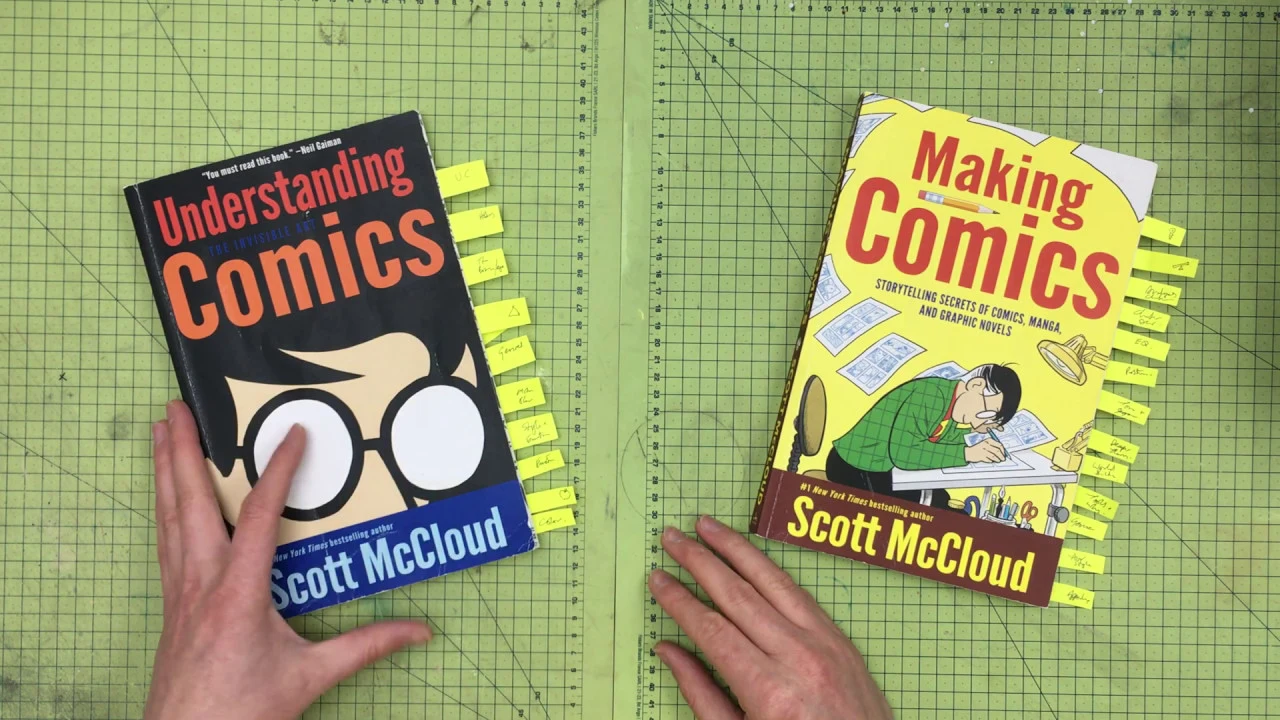
[Theme music, cover of graphic novel "Understanding Comics: The Invisible Art" by Scott McCloud (1993)] Now the next book I'm going to recommend you read is a comic that's about comics.
Number 4 on my list is Understanding Comics by Scott McCloud.
This is a book that was released in 1993, during a period after some landmark comics had been released, such as Watchmen, and Batman: The Dark Knight Returns.
So, it was during a time when comics were beginning to be taken more seriously, and people were seeing that comics didn't necessarily need to be used only for childish or silly stories.
Basically, Scott McCloud thought it was a shame that comics were mostly being used to tell superhero stories, when that genre is just one of many different types of stories that comics could be telling.
So, Scott McCloud decided to make an argument for the virtues of comics as a communication medium.
And, he decided to present his argument for comics using comics itself as the medium of his book.
So Scott appears as the narrator – he’s the sole character featured throughout the comic - and he explains the way that panel-by-panel comics actually function.
So, it’s a kind of meta-book, where the book is itself explaining to you the way that it’s actually telling the story to you.
And it turns out that if you want to understand comics, you have to think about a lot of other things that we take for granted in our everyday lives.
Such as the alphabet, the diagrammatic symbols that we use for basic communications every day, the way that we interpret the world with our five senses, the way that we imagine our self, and our body in relation to the world around us.
Now, this all sounds like a strange concept for a book that I’m recommending so highly up my list of Essential Graphic Novels......and, yeah, it is a little hard for me to explain quite why I like this book so much, to someone like you who hasn’t yet read it.
But I think that reading Understanding Comics sort of scratches the same itch as listening to a really good radio documentary or podcast, like Radiolab, or This American Life, where the journalist is digging deep into a topic that seems mundane at first, but is actually really interesting once you see what's beneath the surface.
And I think that once you read Understanding Comics, all of these other books that I've been recommending to you will become more clear.
It will be like a master key has been turned in your head, and you'll start seeing things in these books that suddenly make sense.
So check out Understanding Comics by Scott McCloud.
And there's a sequel to this book that I really like called Making Comics.
And if you want to hear me speak a little more about Making Comics, check out another video on this YouTube channel about my list of recommended books for comic creators to read.
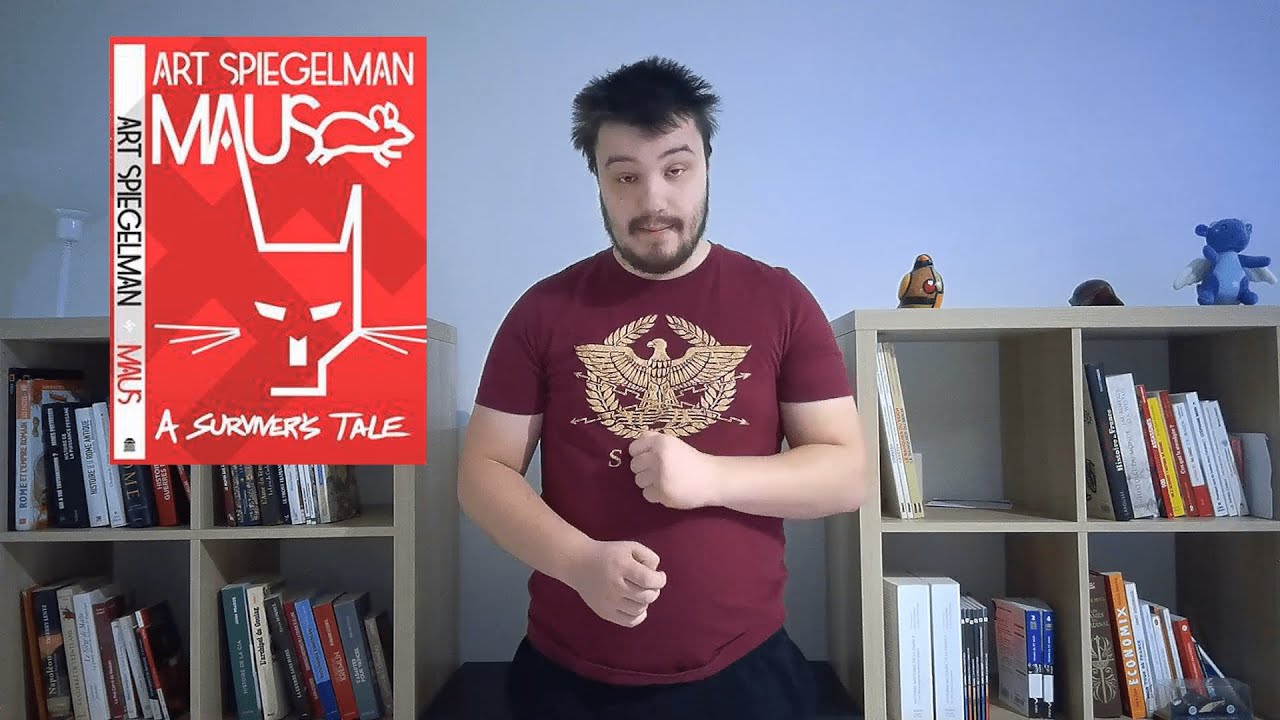
[Theme music, cover of graphic novel "Maus" by Art Spiegelman (1991)] Now, the next book I'm going to discuss is a big one.
It's actually the first comic to win the Pulitzer Prize for literature.
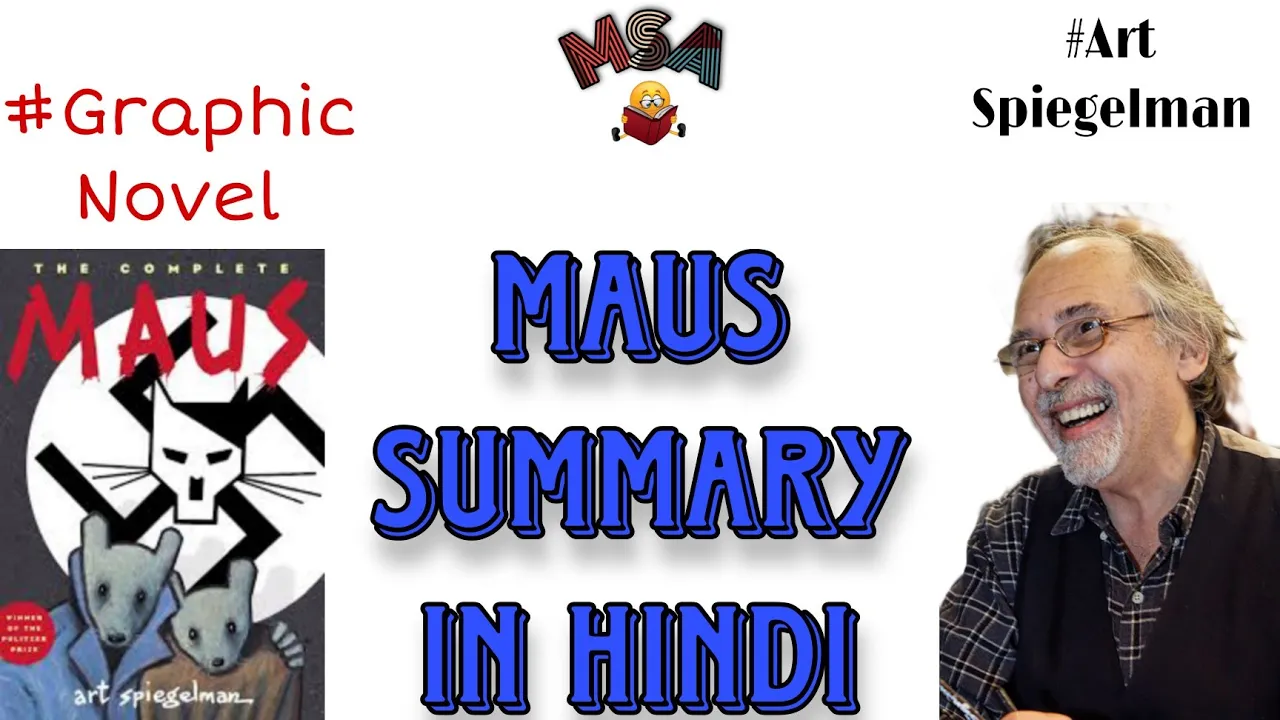
Of course, it's Maus by Art Spiegelman.
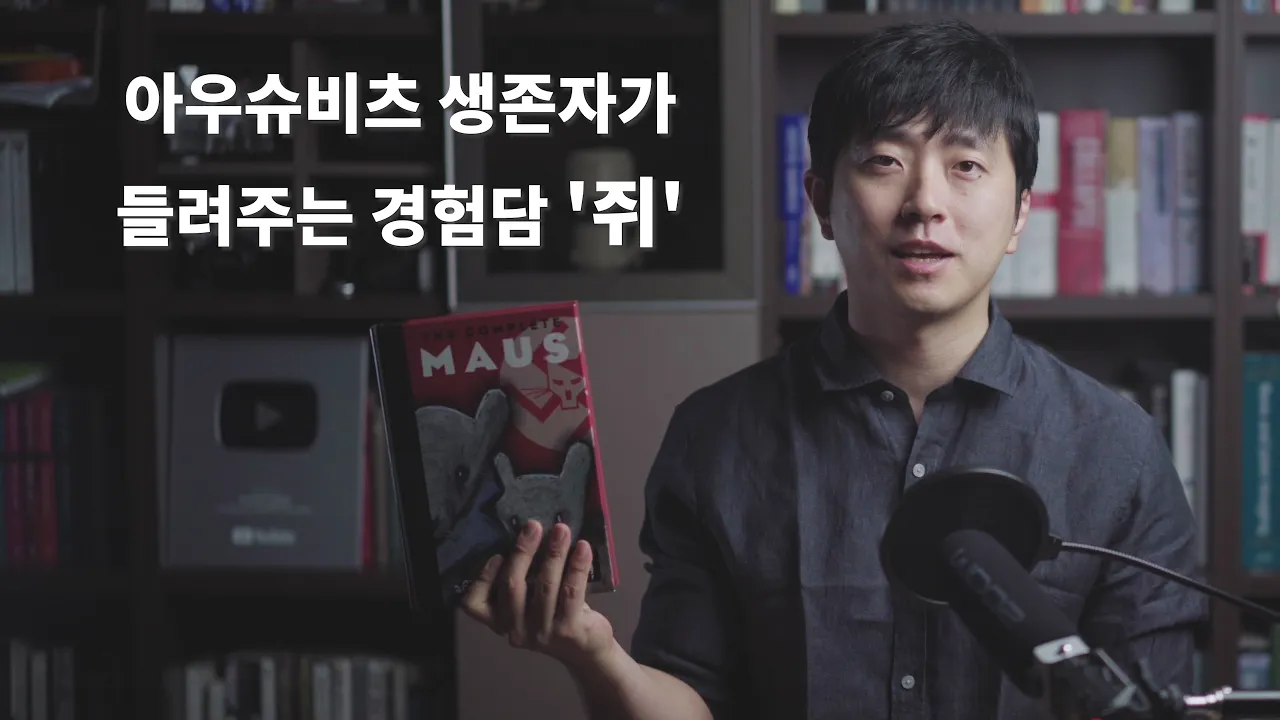
Maus is an autobiographical comic about Art Spiegelman's own experiences as the son of Jewish holocaust survivors.
The book bounces backwards and forwards in time: we see Art interviewing his elderly Dad during the 1970s, and we get flashback scenes that show the events of World War II that his dad is describing.
So, the book is one man’s experience of the holocaust, intermixed with scenes that depict the actual process of the interview.
And also, scenes with Art – the son – ruminating on the whole experience, such as talking to his wife about it all.
Now, famously, with the artwork for Maus, Art Spiegelman decided to draw the Jews as mice, and the Nazis as cats.
Which is a decision that he made for a number of reasons.
But, one of the major reasons is that drawing the story with simplistic animal faces allowed him to focus on telling the story at hand, without becoming too concerned about realistic facial features.
And, in a weird way, having a lots of basic and simple faces, lets you think about the universality of how awful genocide is.
The book is drawn in a simple, but effective style, with a deliberate focus on moving the story forward, rather than trying to dazzle the reader with all sorts of weird angles and visual tricks.
But there some effective times where he does ‘break out’ and draw a feature page that breaks the mould.
Art Spiegelman said that his goal with Maus was to draw a long comic that a reader would need to use a bookmark with, which was a very uncommon length for a comic, back when he was drawing this in the 1980s.
And at almost 300 pages of quite dense comics, this is definitely a landmark work.
So, check out Maus by Art Spiegelman, and I also recommend his book MetaMaus, which is sort of a "making-of" book that features all sorts of interesting information about the creative decisions, and the process that he used as he was planning and drawing Maus.
[Theme music, cover of graphic novel "Fun Home" by Alison Bechdel (2006)] Alright, number two on my list of essential graphic novels is: Fun Home by Alison Bechdel.
Fun Home is a comics memoir of Alison's childhood growing up in a small town in Pennsylvania.
Now, the title of the book is Fun Home because Alison’s dad was actually the embalmer and funeral director for their town, as well as being an English teacher as his day job.
The book focuses on Alison's relationship to her family, and in particular her dad, who died when Alison was in college.
Just before his death, Alison realised that her dad was actually a closeted gay man, so the book is very much about her trying to understand the man that her dad was.
And trying to understand the threads that connected his life to hers.
The story smooshes together Alison's present-day narration of the story, along with dialogue and thought-bubbles that occurred in the past, and even journal entries from her childhood.
There's a lot going on here, in terms of the volume of information that she presents, but it’s actually effortless to read, because she's masterfully distils everything down to a clear and engaging story.
And, arguably, it's the choice of comics as the medium that allows her to tell such a multi-faceted story so efficiently.
I also really like the artwork of the comic, especially the pensive, deadpan facial expressions that the family members seem to continuously have on their faces.
But, there’s just something about Alison’s artwork in general that just makes it such an enjoyable book to read.
I’ll pick up Fun Home at least once a year, just to flip through the pages and re-read some of my favourite scenes.
So, do yourself a big favour, and read Fun Home by Alison Bechdel for an excellent use of comics to tell a personal story.
[Theme music, cover of graphic novel "Blankets" by Craig Thompson (2003)] Number one on my list of Essential Graphic Novels is... Blankets by Craig Thompson.
Now, this is another autobiographical comic that's actually quite similar to Fun Home by Alison Bechdel that I just mentioned.
Blankets is about Craig Thompson's childhood growing up in a small town in Wisconsin, and growing up in a strongly religious household.
The book jumps backwards and forwards in time between Craig's early childhood and his late adolescence.
Now, the book is titled Blankets because beds are a recurring theme in the book.
Craig shows how he used to sleep in the same bed as his brother when he was a young boy, and it's also called Blankets because it shows what it's like for a teenage boy to share a bed with a teenage girl for the first time.
This is depicted beautifully through Craig Thompson's artwork, which gives you such a great sense of the cold winter landscape outside, as well as the warmth and comfort within his girlfriend's house and bedroom.
A big part of the reason that I love the book is Craig Thompson’s artwork, which is mostly brushed with a free-flowing style.
There’s a real looseness to the way the book is drawn.
Craig doesn’t worry too much about making sure that the characters look exactly the same from panel to panel, he doesn’t worry too much about making sure that the scenes are in proper perspective.
Instead, he sort of lets the mood and the feelings come through in the artwork. Which, is so important for a story like this.
Blankets is an epic book, that goes for almost 600 pages, and I totally appreciate the lengths that Craig Thompson went to, to provide us with such a rich reading experience.
I say this both in terms of the quality of artwork, as well as his braveness in choosing to reveal such a personal story about himself and his family.
Apparently there were quite some tensions between Craig and his parents after he released this book.
Blankets by Craig Thompson is my favourite comic of all time, and it's also probably my favourite book of all time.
So what I'm saying is, if you don't read and enjoy this book, I can't relate to you as a person, and I'm giving you a lifetime ban from my YouTube channel.
Got it?
[camera nods] Good. So check out Blankets by Craig Thompson.
[Theme music, title of "Top 10 Essential Graphic Novels according to Stuart McMillen"] So that's it: that's my list of Top 10 Essential Graphic Novels - the comic books that I think hopefully everyone will enjoy.
Now, please keep subscribed to this YouTube channel, because I’m going to continue these book reviews.
Next time, I’ll be recommending some comics that I really like, but may not be everyone’s cup of tea.
I’ll also release a video about my favourite Tintin albums, as well as some book recommendations for cartoonists who are wanting to make their own comics.
If this list was helpful, and you'd like to buy some of these books that I've recommended, check out my Book Depository affiliate links below.
If you make any book purchases through The Book Depository after clicking the link, I'll get a little financial kickback.
Which would be a nice little tip from you to me, don’t you think?
And if you like these YouTube videos, please support my ongoing crowdfunding campaign.
My crowdfunding campaign helps me to find the time to make these videos, as well as to draw the comics that I publish through my website.
So, if you like this sort of content, please visit crowdfundstu.com, where you can pledge a small recurring monthly payment.
Thanks for watching this video, and I really hope you'll consider reading some of these books. Thanks!
Up Next

Visual Storytelling & Future Media: Scott McCloud’s Comic Theory
@TED
332.3K views•2009-01-15

Triumph of Orthodoxy Icon: Byzantine Art & History Explained
@BenCallan
2.1K views•2024-08-06

FastAPI vs Flask vs Django: Choosing the Right Python Web Framework
@TechWithTim
302.5K views•2024-05-26

Game of Thrones Opening Credits: A Cinematic Analysis
@gameofthrones
46.3M views•2011-04-18
Related Study Plans & Knowledge Roadmaps
Structured learning paths in General & Interdisciplinary Studies