

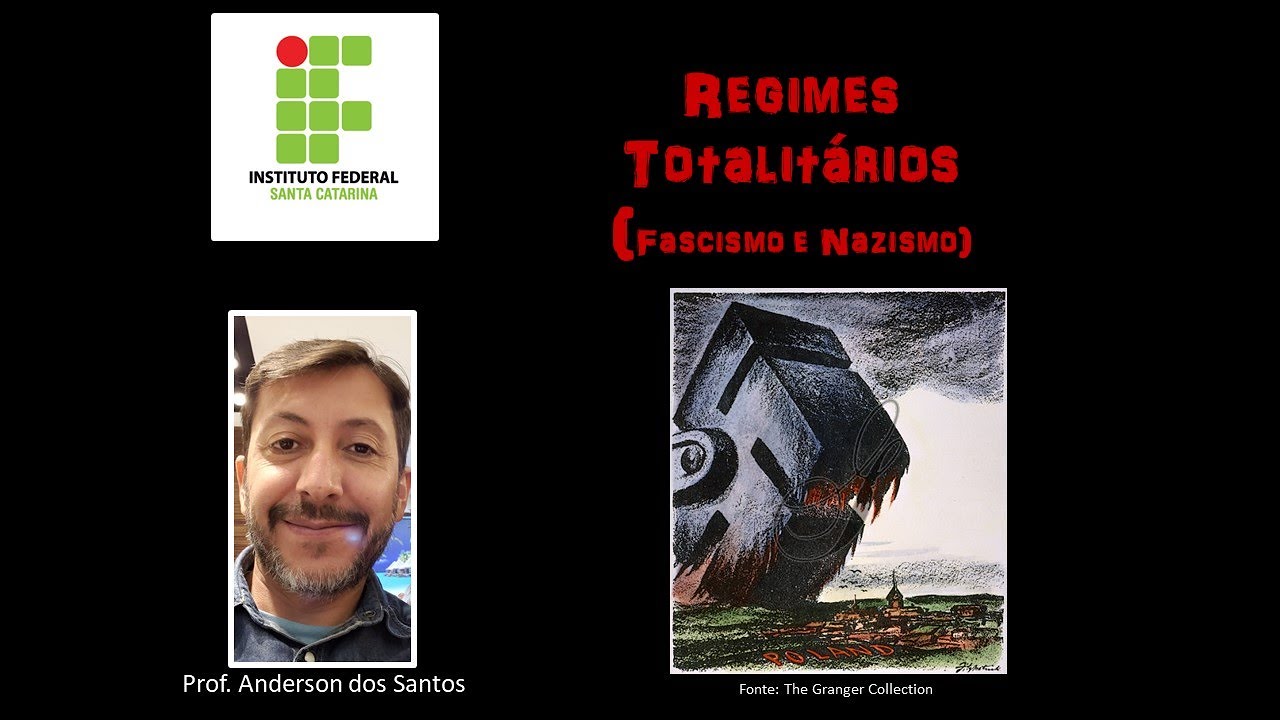

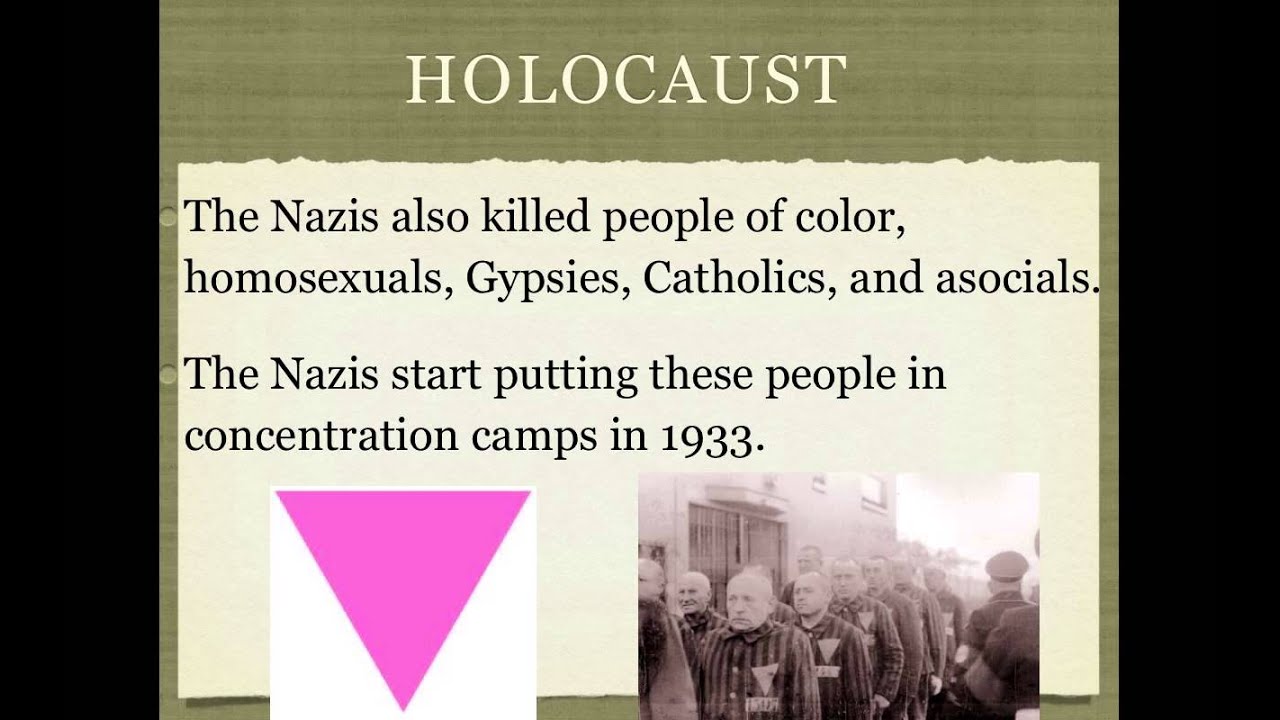


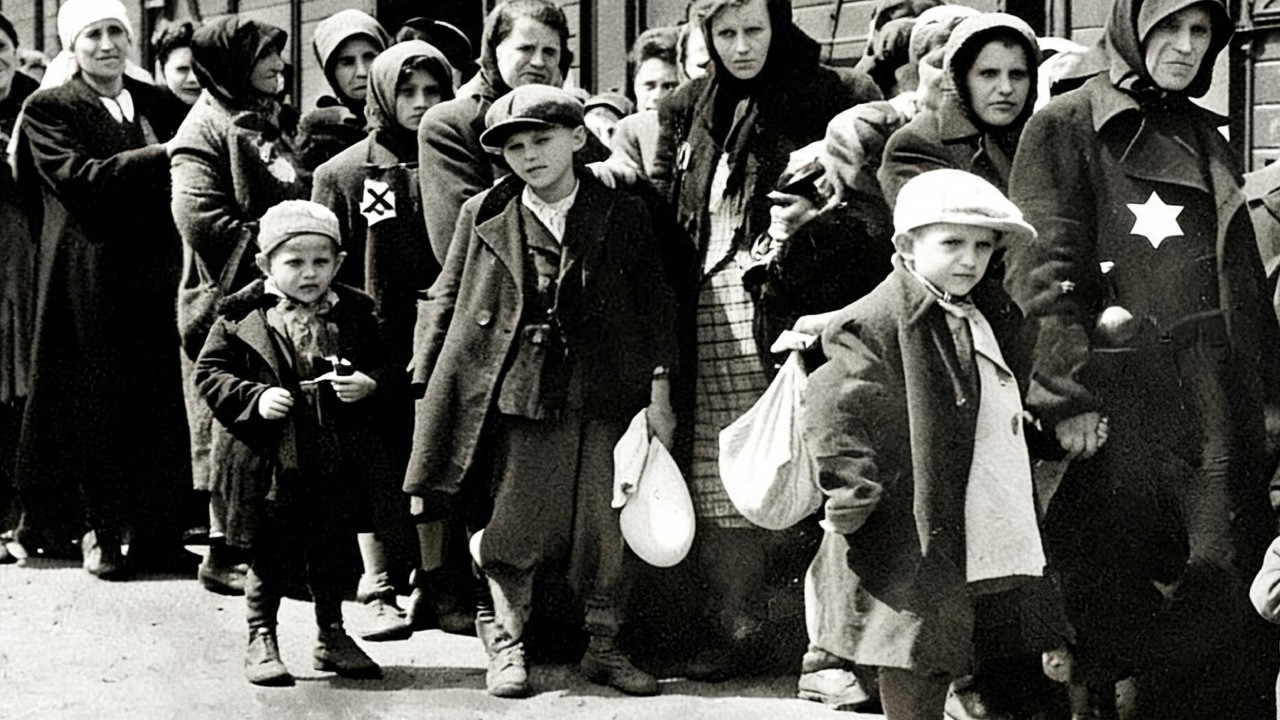











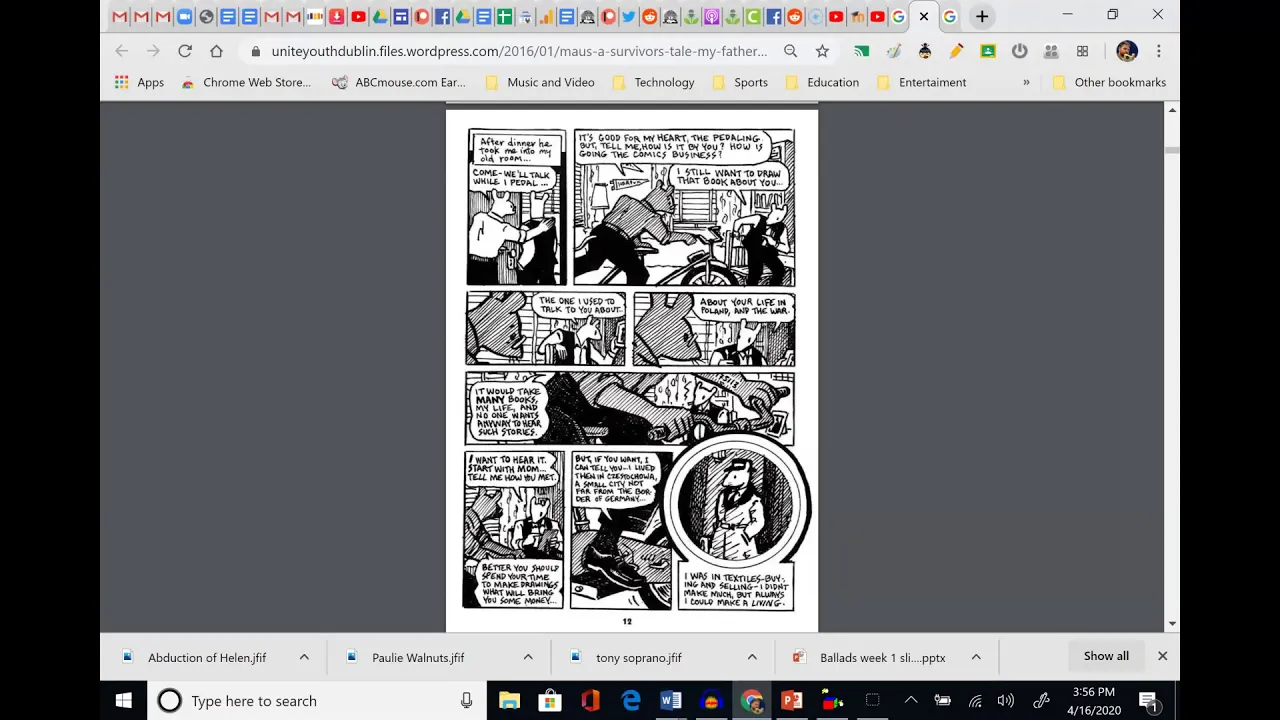





Art Spiegelman's graphic novel Maus uses animal allegory (Jews as mice, Nazis as cats) to represent the Holocaust, transforming Adolf Hitler's dehumanizing rhetoric into a powerful artistic medium that enables survivors to process and transmit traumatic historical memory across generations, demonstrating how visual storytelling can make incomprehensible atrocities accessible while honoring the humanity of victims.
Art Spiegelman's Maus: A Holocaust Graphic Novel Documentary (1987) | BBC
Added:A foundational understanding of the Holocaust, including the Nazi regime's systematic persecution and genocide of European Jews during World War II.
Familiarity with the premise of Art Spiegelman's 'Maus', specifically its use of anthropomorphic animal allegories (e.g., Jews as mice, Germans as cats) to depict survivors' stories.
An appreciation of the graphic novel as a legitimate and serious literary medium capable of handling profound historical and psychological themes.
The concept of intergenerational trauma, particularly how the psychological suffering of Holocaust survivors is transmitted to and processed by their children.
The academic concept of 'postmemory'—how subsequent generations inherit, reconstruct, and bear witness to traumatic memories they did not personally live through.
Historiographical analysis of personal oral history versus official archival records, evaluating the strengths and limitations of survivor testimony.
The ethics of representation in art, exploring the debates surrounding how historical tragedies like the Holocaust can or should be depicted in popular culture.
Comparative study of other seminal works of Holocaust literature and cinema, such as the writings of Primo Levi and Elie Wiesel, or Claude Lanzmann's documentary 'Shoah'.
130.7K views1.1Klikes44:50Original Release: 2014-05-12
[music] Heat. Heat.
Heat.
[music] Heat.
One of this year's most remarkable publishing successes was Mouse, a survivor's tale. It's a novel about the Holocaust, but it's written entirely in comic strip form by Art Spiegelman.
Mouse first appeared in serial form in the New York magazine Raw, an internationally acclaimed journal of avanguard comics and graphics.
Raw is a compilation of the finest comic strip art from all over the world and it's co-edited by France Mulli Spiegelman's wife.
Raw attempts to expand the very notion of what a comic strip can do. Its artists believe that comics are just as capable of telling enthralling stories as the novel or the cinema.
Spiegelman and his wife have been publishing RAW for 8 years. Every edition has carried an episode of Mouse.
Art Spiegelman is one of the leaders of the generation of artists who have revolutionized the comic strip. Mouse is his most ambitious and controversial work to date. His parents were Polish Jews who survived Ashvitz. Mouse tells their story. It uses one of the most familiar devices of children's comics, presenting humans as animals. But in Spiegelman's novel, the mice are Jews and the cats are Nazis.
I know the publishers were rather frightened that the book would be seen as somehow a joke in very bad taste. I mean, if you [music] describe the book in its short form, well, it's a comic book and it's about the Holocaust and it uses cats, mice, and pigs. What do you think? Makes it sound like all it is is something in terrible taste. This isn't my metaphor. It's a really stupid stupid metaphor. It's a dumb idea, but that's the point. The thing is, the book starts with an epigraph in Adolf Hitler. The Jews are undoubtedly erased, but they're not human. Adolf Hitler.
The image of mice seemed appropriate. In in mine camp, you find references to Jews specifically as vermin. This is Hitler's metaphors, not mine.
And it was my point to use these animals. Once I start with mouse, yes, the logical animal for a mouse to worry about is a cat. In each instance, however, these are not real animals.
They're humans wearing masks. They're masks that are meant to be removable in the sense that when you're reading the story, I think what happens is you do find these, I hope, the characters rather human.
Mouse is a personal quest on Spiegelman's part. It not only tells the story of his parents' experience as Jews during the war, it's also an attempt to come to terms with his rather difficult relationship with them. The book is the result of 8 years work during which Spiegelman had to coax his father into remembering the past.
The tale is told by a father mouse to his son who's anxious to know the true story of his parents' lives.
The story of Mouse is derived from more than 30 hours of tape recorded conversations that Spiegelman had with his father Vladk. Vlad Spiegelman died in 1982 and never saw the finished work.
I was uh dressed like a gist.
I organized myself who high boots and and slacks such puffy sls you know this kind that Yes. here it was never and here they were buffy. So they because they were had such a I had mustache and and I and I also spoke only German when I came out in the street. I didn't speak any other language only German. If I went to somebody asked me only German because not so well but I knew German better than the people who lived there in Oish because this was together.
Shopit Kovitz was together with us noviets with a walking distance you could go from one town to the other let's say we were hidden you know in shopping the events in mouse take place amid a triangle of three towns in southwest Poland Krakowitz and Snovviets this is the site of the ghetto in Krakow it's all that remains remains of the Jewish stle culture in Poland.
Vladic and Anna Spiegelman lived in a Jewish community that numbered more than 30,000 before the war.
I wouldn't really want to make the case that my father survived cuz he was heroic because he was somehow a very very good man. I felt had uh his his positive attributes and negative attributes. And if if I wanted cleaned up the act a bit and decided to like portray him a little bit more noly, let's say, what one would come away with was I see if I act nobly, I too might survive a holocaust. And that's really not the point at all.
Earlier this year, Spiegelman visited Poland to see for himself the places he'd only heard about from his father.
These two men are among the very few Jewish survivors who still live in the area.
This was your house here.
Next to the court.
Wow. Here.
Here by the house.
Here.
I'm now standing in my my father's house. Huh? Standing on your father's doorstep, I guess. So tell me conjure up the house for me.
Tell me this house.
This was the entrance right here. This man house.
Well, let's go in. Yeah.
In the winter of 1939, Poland withstood the German and Soviet onslaught for just a few weeks.
With a division of spoils, Sviets, where the Spiegelmans were living, came within the German Reich, as did Avitz.
Jews were dragged out of their homes in so-called special operations and herded into ever more cramped ghettos.
They were paraded through the streets carrying humiliating placards.
Mouse has currently been translated into 10 languages. At first, Spiegelman objected to it being translated into German, but finally he relented and it's to be published in Germany as well.
from the Czechoslovak.
You like This is the house. This is the house.
London.
What happened?
Mhm.
Seven Jews.
Oh, they hang them on trees. It wasn't on a special news.
This was the way I visualized uh what happened based on what I was told.
I didn't know.
I' never saw.
They took them from down to they took them to The Jews were required to assemble at this sports stadium where they were to be separated out.
All the Jews of Susnavius were told to come here. That was about 30,000 Jews.
And they were selected. They were chosen by whether they were healthy or sick, uh, working, young, old. 20,000 were put here, 10,000 were put there. Those 10,000 were taken away and never came back.
Hey, you guys.
And you drew that before he ever saw this stadium.
Yeah, I envisioned a somewhat uh more elaborate stadium when I first tried to picture it, but it's not that far off. The fortunate thing about drawing these crude drawings is that it works.
The young ones are playing football and they don't know.
Yeah, this could be another planet rather than the same piece of ground.
It is another planet.
Spiegelman's father was fortunate enough to be sent to the right hand side of the stadium, and he and his wife and young son were allowed to go.
For days on end, the Spiegelmans and the other surviving Jews were crammed together in only four houses, thousands to each house. Many of them died. Many jumped from these balconies.
At that time, the Spiegelmans had one child, a three-year-old son called Rishu. Vladc managed to escape with his young family through an underground passage.
Amen.
Together they made their way to the ghetto in Shradullah, a town which was raised to the ground later in the war.
Fearing for the safety of their son, the Spiegelman sent him to relations, hoping he'd have a better chance of survival with them.
However, threatened with Ashvitz, his foster mother poisoned Rishu, herself, and her whole family.
For the last time, the Spiegelmans managed to escape back to Sviets, where they hope to go underground.
This was a Jewish neighbor.
This was the Jewish neighbor. This was the main drag, you know. And the whole time what I'm trying to do is see what was try to see the old push carts, the peddlers, try to find that lost world of my parents, you know. And for the most part, what's here is so present that it's hard for me to replace it with what I saw before. Maybe it's a kind of psychological protection. I don't know.
But people are the same.
Some of the people are the same. I look at the old people and I try to figure out which ones would have helped my parents, which ones would have like sold them down the river. I I don't know. But I can't help but look into their faces and try to figure that out and just try to figure that my father once for sure once many times walked up and down the street bargaining, haggling, making deals left [music] and right both before the war and during the war.
You think they see you as a Jew?
I'm sure they see me as a Jew as my father said they can smell them.
And you think that's why everybody is staring at you as well as Well, no. I think it has to do with the crew being awesome.
[music] Finally, a smuggler offered to get them safely to Hungary, but then betrayed them to the Gestapo.
from house.
So this is actually the last stop of your parents.
This was the end of the line. This was when they got caught uh trying to escape Poland and got sent out. Awitz. This was where they were sent before they were sent to Awitz.
The Spiegelmans were sent from Beiel to Ashvitz not as ordinary Jews but as criminals. Criminals were considered the better species of the two. This was another small advantage which helped them to survive.
Heat.
You ever feel guilty because you didn't take that trip to your father?
In a sense. Yeah. in a sense of like never being able to understand what it is that he went through. Uh I feel I have an obligation to to try to understand that now. So I suppose that just makes me uh go to these rather extreme lengths of having to recapitulate things.
In a way it's safer to do it the way I'm doing it, which means working on a book about it rather than some more dramatic way of trying to recapitulate concentration camp life.
help you detach yourself from it.
I hope I hope so. I think it's a way of uh looking something in the eye as a way of uh making it go away at least a little bit rather than letting it always be a pressure from behind.
Why did you want debate to come along?
Well, it'll be too hard to tell Franuis what happened any other way. And we're too close for us to do things separately in that sense. Uh it'd be too big a part of my life that would be uh she'd be cut off from and we need to have that. You know, there's something for me that feels like I like the idea of being able to spit in somebody's face and being able to like say, "See, here we are and uh we've got a baby and things are still life goes on in spite of everything those bastards did." That's something, you know, like to be able to go there and walk away from it. That's something Today, Ashvitz has become one of the busiest tourist attractions in Poland.
The land between the station and the camp gate belongs to a dozen local farmers. whose families have lived here for generations.
Permission to cross has to be negotiated.
I thought you Heat This is the entrance to Ashvitz Burkanau, an adjunct of the main camp where Art Spiegelman's mother spent 8 months. His father was in the main camp.
The Jews were divided up into different categories of prisoner on this selection site. At that time, the total population of the camp was 155,000.
As Burkanal has yet to be turned into a museum, this first view from the train remains unchanged.
When Vlad Spiegelman arrived, he was told, "When you leave here, you leave through the chimney.
[music] Heat up here.
[music] Spiegelman used his father's concentration camp number on the cover of the projected second volume of Mouse Mousvitz.
Vladex Spiegelman belonged to the special commando squad, the Zonda Commando, whose final task was to blow up the crerematoria and their ovens before the Russians moved Amen.
This is one of the four crerematoria and gas chambers. People came down those stairs over there undressed, left their clothes over there and were taken to a shower to take a shower. Over here, this was the supposed shower, the gas chambers where people were killed. From there, their bodies were taken. Over here, these were the crerematoria where they burned the bodies, went up in smoke.
There are some people that pretend that I should never took place and no one ever was gassed there.
It's so hard to believe it could be done. Maybe it's the only explanation other than absolute evil.
Heat.
The first gas chamber, Ashvitz number one, is still intact.
Because it was smaller, it was used more as a storehouse.
In the crerematorium adjacent to it, only the walls have been rebuilt. The furnaces remain as they were.
When the camp was liberated in January 1945, it was still being enlarged.
Yeah.
Why did you want to come here and throw this?
I needed to come here because I need to understand and and this is what it was like there then. It's it's what it was.
Heat.
This is the women's barracks where my mother was.
This is women's camp B1A and B which had 55 barracks all of the same size.
Each of these sections housed 10 to 12 women.
Not only was there an orchestra in Ashvitz, but the inmates were required to entertain the Nazis with camp songs.
Are you out and not on [singing] my living in the dog on And in their burn in their free are lost on me.
are up.
I prov.
[music] and fros.
Night of no.
It's gigantic cuz it's so horrify. It's just one right there is one of the snake.
It's just more of this 44. Is it 40,000?
Just part of the 40,000 the numbers become meaningless. I don't understand what means. I just know this was a sea of people. Can you see the people actually here?
6 months after the war ended, Spiegelman's parents were reunited.
It was a reunion that happened against all the odds. Before they were liberated, his mother was about to be transported to Bellson and his father to Gross Rosen, a smaller camp on the way to Dhaka, where hardly anyone survived.
After a long search, they found each other again here in Savvitz in a Jewish rooming house which is now a club for the blind.
Did they actually know that they were alive about each other?
No. Well, this is the first place they met. This is when my father found out my mother really had survived the war.
Can you imagine what happened at that moment?
Well, I I I was told that everybody who was here burst into tears. Out of two large families, that's all that was left.
You've been invalid.
Having managed to survive, the couple went to Stockholm where in 1948 their second son Art was born.
Actually, if your father hadn't made it, you wouldn't be here today.
That's for sure. I think about that a lot while working on this project.
It sort of means that I somehow have to justify my life, you know.
Spiegelman was brought up in New York.
In his teens and early 20s, like many of his generation, he was estranged from his parents. He had a breakdown and spent some time in an asylum. And in 1968, his mother, finding she could no longer communicate with either her husband or her son, committed suicide.
Spiegelman tried to exercise the experience through his work.
[music] So, this trip to Poland was um I I'm hoping it was useful. I haven't even had a chance to sort through what happened for myself yet. Um the experience of it was of course colored by the fact that there was always uh a film being made.
So, it always kept me uh half a step away from what I was seeing.
I haven't had time for it all to flood back in even since I've been back. Um, also what keeps what was really bizarre was um walking around with these characters, you know, like um uh being filmed there being objectified.
Didn't you also enjoy it?
It's a kind of pleasure, but rather minimal.
On the other hand, it's not nearly as painful as what I I'll eventually have to confront.
We went to the ruins, and that's really what's there is the ruins of what was there before of the barracks my mother had been in. Also to the uh site of the creremator and gas chambers. I brought you a gift.
This is a a brick from the one of the crerematoria.
It's a tombstone of a kind to bring back.
And somehow that was really something to me like uh walking through being there was was moving.
It's very dangerous to do a lot of research into this Holocaust stuff because uh most Holocaust scholars end up killing themselves.
I don't remember where I heard that or whether it holds any water or not, but um but it's an incredibly dark thing to have to like delve into day in day out. And uh and rather there seems to be something insane about achieving some kind of celebrity for for uh working in that area, you know, like there's no way that that uh feels deserved or or um relishable, you know.
Do you hear everyone?
Yeah. Yeah. Yeah.
Since 1980, Art and France Spiegelman have been working painstakingly on their graphic magazine, Raw. Trying to figure out the lettering on the cover.
Original editions are now collector's items and change hands for hundreds of dollars. But the magazine appears irregularly as it takes Spiegelman more and more time to produce a new chapter of Mouse Art. Why do you draw Jews as mice in your cartoon?
Well, it's not my metaphor. It's Hitler's. Uh Heath was the one that uh decided that uh there was such a thing as subhuman humans as vermin to be exterminated. And uh well, in any case, they're they're not mice. They're masks of for humans in my comic.
Why Germans is cats?
Well, when you have mice, you have cats.
I've seen enough animated cartoons to know that already.
Most everyone loves cats. Yeah, but I don't think they can love the cats and mouths.
France, is it always as easy as it seems to be without Spielman?
Well, what's interesting is that it changes all the time and there's times where it's pretty rough and there are times where it's really wonderful.
At one time, Art, you had a mental breakdown.
How much time did you actually spend in a nut house?
Well, I was in college for 2 years and I did post-graduate work in a mental hospital for about 6 weeks.
What did it actually feel like to be nuts?
Crazy, man. [snorts] Why did you take drugs?
Well, I I took mostly psychedelic drugs, you know, and I found them um as they were advertised, they were consciousness expanders. They made one aware of things one hadn't been aware of before. And for me, that was a thrilling search for knowledge.
Are you keeping him out of trouble and out of breakdowns?
That would be too hard a job. No, only art can do that.
Are you doing it yourself?
As best I can from day to day. Of course.
Do you feel that one can reconstruct your parents's Awitz in a comic strip or in anything for that matter?
No, in a sense uh any form of shaping uh about Awitz, any kind of telling involves a kind of lying and then as a result the only choice one has is uh either one remains silent and that's one choice or one speaks and if one speaks it involves an intelligent kind of lying and that kind of lying hopefully can at least point towards some truth.
Do you think that the warning that your book expresses can contribute to save humanity?
You know, in a way, all I'm trying to do is save myself.
His [music] [music] eight years working on mouse have turned Art Spiegelman into a national celebrity.
[music] As a result of the publishing success, Mouse is now in its ninth printing. Two more books by raw artists are to be published in the spring. There's also the possibility of an animated cartoon, but Spiegelman's main project is his next mouse book. It's to be called From Mousevitz to the Catkills and beyond, and he has no idea when he'll finish it.
Heat up [music] here.
[music]
Up Next
67:11
Alison Bechdel on Graphic Memoir and Creative Process | UChicago
@UChicago
5.9K views•2015-08-13

13:43
Formalism in Literary Criticism: An Academic Lecture Overview
@mattalberhasky9952
39.1K views•2015-08-05

6:08
Point of View in Fiction: First Person vs. Third Person
@magicalthriftyteacher
153.8K views•2014-03-31

15:25
1984: Orwell's Dystopian World and the Mechanisms of Totalitarianism
@AlternateHistoryHub
7M views•2017-03-04
Related Study Plans & Knowledge Roadmaps
Structured learning paths in Literature
literature
Graphic Memoirs: Visual Art, Trauma & History
01Foundations of Sequential Art and Visual Language
02Autographics and Processing Historical Trauma
03Visualizing Personal Trauma, Grief, and Graphic Medicine
+ 2 more learning modules
14h5 modules
Explore Roadmap
literature
Campus Novels: Evolution, Themes & Critique
01Introduction to the Campus Novel Genre
02Mid-Century Satire and the Post-War Academy
03Dark Academia and the Critique of Privilege
+ 2 more learning modules
14h5 modules
Explore Roadmap
literature
Theater of the Absurd: Philosophy & Plays
01Postwar Existentialism & Historical Roots
02Dismantling Narrative: Esslin & Absurdist Conventions
03Samuel Beckett and Tragicomic Existentialism
+ 2 more learning modules
12h5 modules
Explore Roadmap
literature
Revenge Tragedy: Justice, Madness & State
01Foundations of Early Modern English Theatre
02Anatomy of Revenge: Structural Conventions
03Psychological Complexity: Madness and Melancholy
+ 2 more learning modules
15h5 modules
Explore Roadmap