


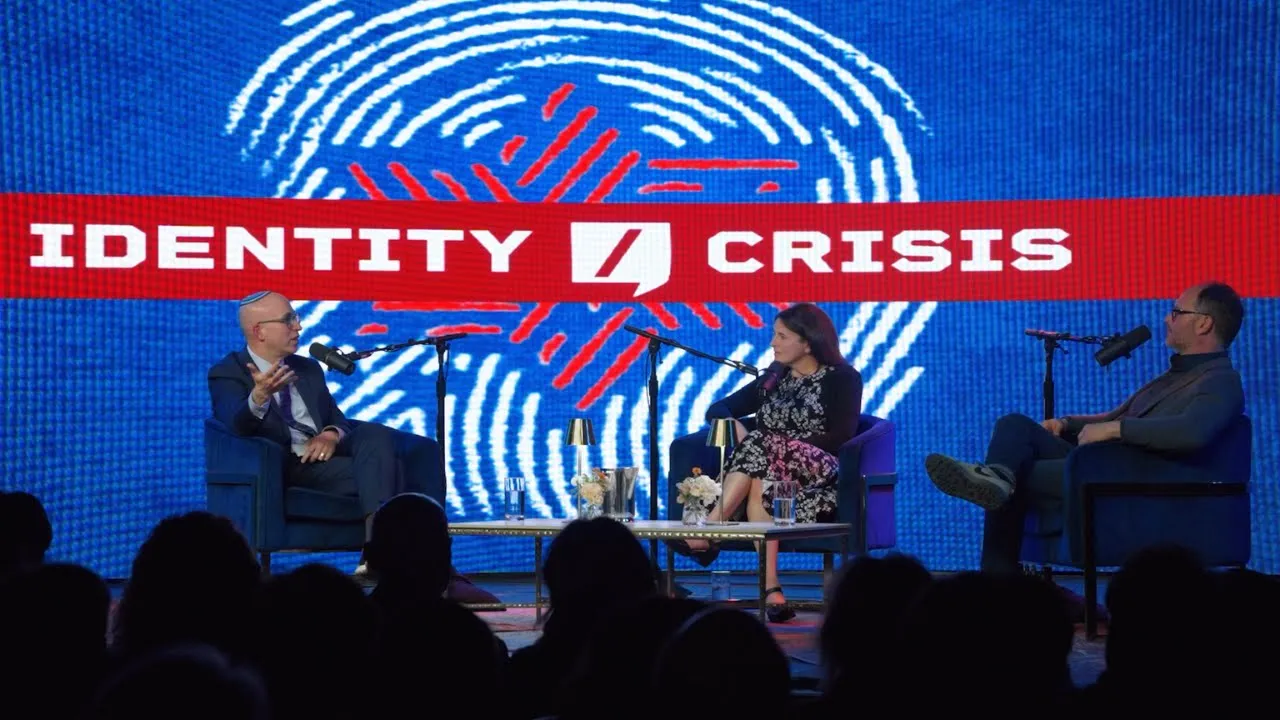










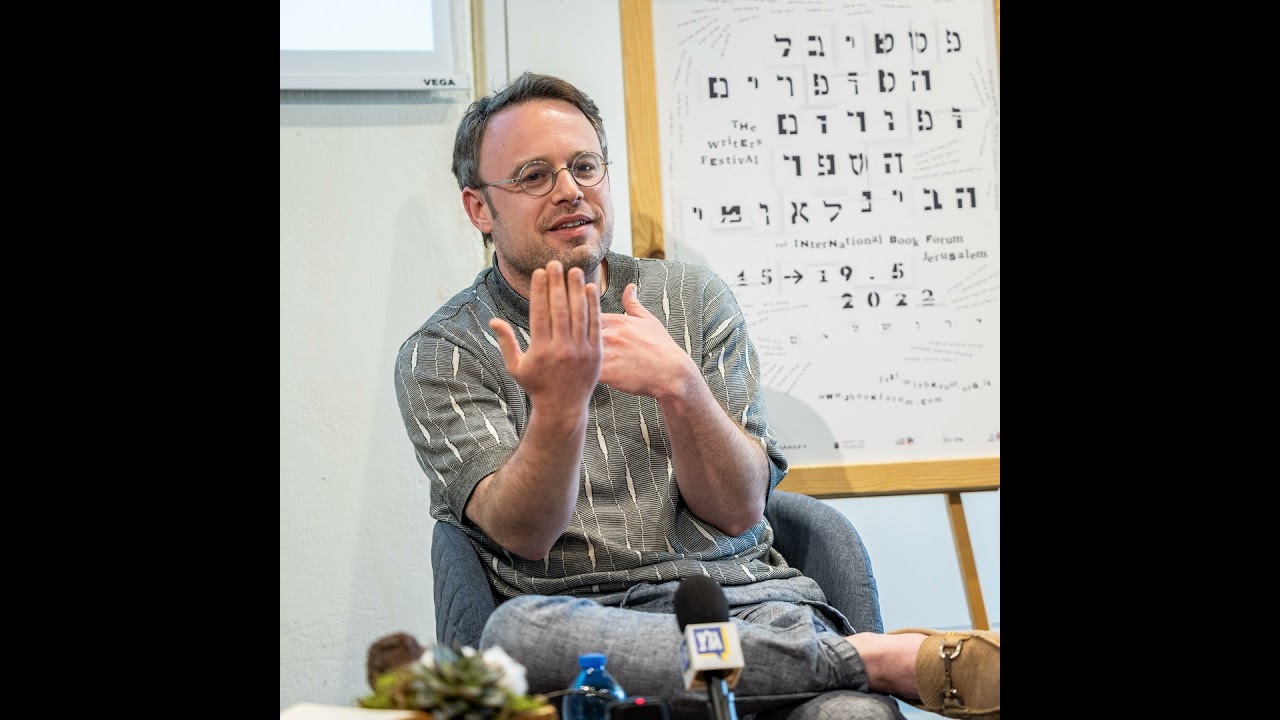


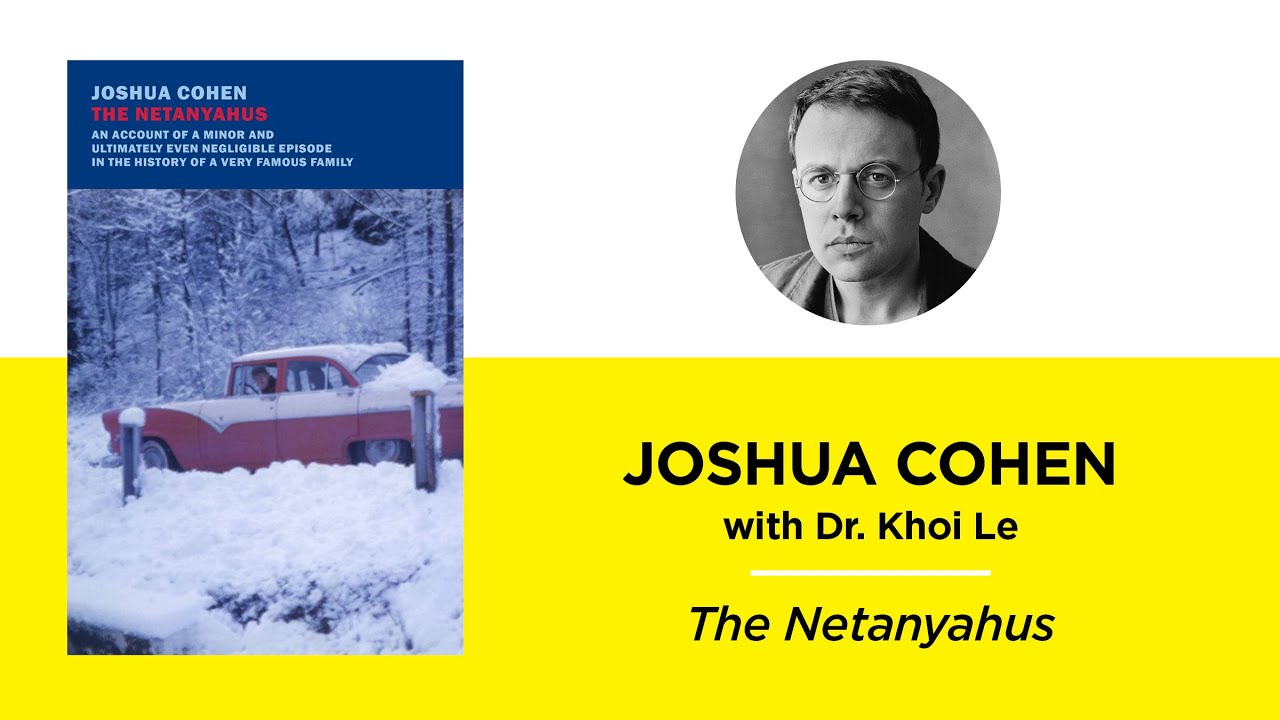







In this book launch discussion, author Joshua Cohen explains how his novel 'The Netanyahus' originated from a story told by literary critic Harold Bloom about Benzion Netanyahu's 1959-1960 visit to a Cornell-like college campus, where the revisionist Zionist scholar faced controversy as a persona non grata figure; Cohen uses this semi-fictionalized account to explore the widening ideological divide between American Jews (typically more liberal) and Israeli Jews (often more conservative), examining themes of chosenness, diaspora versus Zionism, and the challenges of maintaining open dialogue across deeply divergent political perspectives within Jewish communities.
Joshua Cohen Discusses The Netanyahus: History, Identity, and Satire
Added:Familiarity with the history of Zionism, specifically the ideological distinctions between Labor Zionism and Revisionist Zionism.
Understanding of the mid-20th century American Jewish experience, focusing on assimilation, identity, and the dynamics of academia during this era.
Knowledge of the 'campus novel' literary genre and how satire is traditionally used to critique academic institutions.
A basic biographical understanding of Benzion Netanyahu (his academic work on the Inquisition) and his family's legacy in modern Israeli politics.
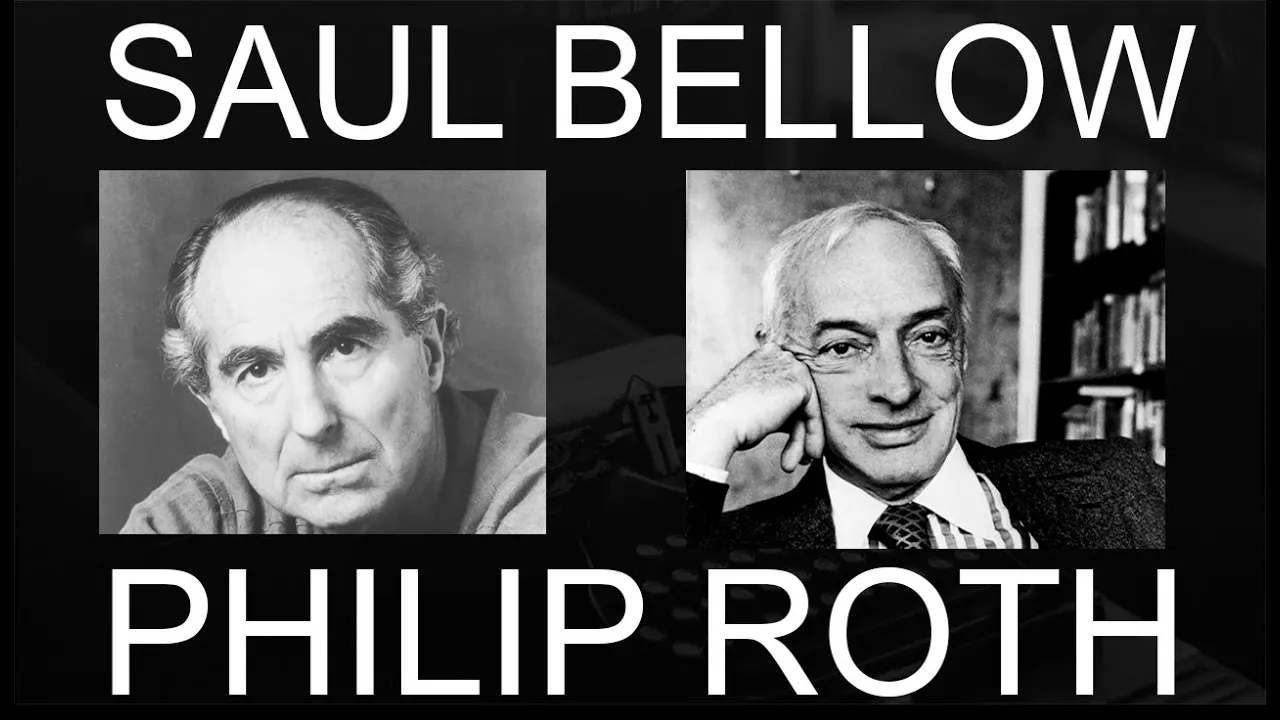
A comparative study of Joshua Cohen's literary style alongside other prominent Jewish-American satirists, such as Philip Roth and Saul Bellow.
An in-depth investigation into the historiography of the Spanish Inquisition and how Benzion Netanyahu's historical theories influenced his political worldview.
Analysis of how Revisionist Zionism transitioned from a marginal intellectual movement to a dominant political force in modern Israel.
Exploration of the literary and ethical implications of historiographic metafiction—blending real historical figures with highly fictionalized, satirical narratives.
3.1K views28likes39:34Original Release: 2023-08-03
foreign [Music] my name is Jeffrey Herbst I'm president of American Jewish University in Los Angeles today it's a real pleasure to welcome Joshua Cohen author of The netanyahuas Joshua is the author of several books he's received Awards in Israel in the United States and was noted by as one of the Granada's new best young American novelist in 2017. Joshua congratulations on the book and thanks so much for being with us on launch day today oh thank you for thank you for having me this is a very interesting book uh it's the part of a long tradition of Campus novels where there's a lot to write about on the foibles or the different occupants of college campuses but it's also a book about a real person and a real family uh in a semi-fictionalized setting so could you explain to the audience the origin story why you were inspired to write the netanyahu's which has the subtitle an account of a minor and ultimately even negligible episode in the history of a very famous family yeah well I mean I I think the netanyahu's in the book are uh the real people I I don't know if the netanyahu's themselves would agree that that that that when they appear in the book they are in fact as they were uh in the winter of 1959 to 1960. uh though the kids might be too young to remember it um I I I got to know the literary critic uh Harold Bloom toward the end of his life um literary critic I think is a you know lots of people are literary critics I worked as a literary critic it's not a very big uh word it's not a very you know for Harold you need uh sort of a a larger epithet like King right King Harold Harold blooms is it was uh um a passionate um deeply intelligent fiercely intelligent scarily uh uh penetrating uh literary scholar um and and I got to know him uh he summoned me up to his home in in New Haven that he shares with uh shared at the time with his wife Jean and uh this is toward the end of his life and um he had read something of mine that he liked and he wanted to talk to me about it which you know going to Jewish men of a certain age and you know if you're the younger Jew coming to you know it means that he's telling me what I should be writing next you know is is it until he told me what he liked about the book but really is you know what he didn't like about the book and I wanted to hear from him about something other than myself I mean I think it was a little scary to hear him be you know talk about me and so I I was trying to get stories out of him because he lived a a long and colorful life and you know there were stories about Jacques derida there were stories about all the mom there were stories about uh Philip Roth and then you know Netanyahu uh was on CNN kind of in the background and he goes oh I met him and I'm thinking oh did you meet you know Vivi Netanyahu I don't know when he was UN Ambassador or something or I had some picture of some weird cocktail party that I'm not invited to on the upper west side or something and he said no no I think he was like 10 years old when I hosted his father benzion Netanyahu on a campus is it and he proceeded to tell me this story and I was fascinated by it because it seemed to me some sort of a microcosm of of or an allegory for uh uh for sort of one particular type of Jewish debate that that is going on a very important Jewish debate kind of going on uh in contemporary Jewish life and I kept on saying Harold can you tell it again can you tell it again because he went into his 80s and every time he would tell something it was even with his memory it was slightly different or certainly with his creativity it was slightly different every time and and then when he passed away I couldn't get the story out of my my head and so I wrote it down so this story is about benzion that Netanyahu the father uh distinguished uh historian but also a political activist visiting uh a college campus which looks like Cornell University in Upstate New York um yeah I mean yeah I mean benzio Netanyahu was was was sort of persona on grata um for a number of reasons um uh in Israel he was uh he was a follower of of Vladimir tinski he was a revisionist Zionist um uh who were certainly out of favor among the kind of early labor Zionist founders of the state and for many reasons um he couldn't get a job in Israel and that found him kind of uh completing his PhD and sort of something that I'm very sympathetic to of peddling yourself around the kind of freelance adjunct Market in America and it just so happened that he has this interview and Harold who was in the uh English Department not in the history Department was called upon to kind of Be The Chaperone to show to show benzion Netanyahu around because you know he was the only other Jew up there at the time and so they thought you know he's one of yours take him around and uh and instead of showing up alone Benzino shows up with his wife Sila uh his oldest son uh Yoni Netanyahu the hero of antibi uh his middle son Bibi and his youngest son Edo Joshua you begin the the the story uh uh the book with a quote from jabotinski uh who says eliminate the diaspora or the diaspora will eliminate you um why'd you choose that because I think you know it's this stupid strategy that I've I've kind of Hit Upon that if you put your most extreme sentence first and the reader doesn't immediately shut the book then you have the right reader you know I wrote a number I wrote a book called Book of Numbers in 2015 as a kind of a book about the early days of the internet um uh uh uh kind of the beginning of of of search technology and the first line of that book is if you're reading this on a screen off you know and I thought you know if someone can make it through that first sentence then they're going to be with me the rest of the way so here's this you know it was the same thing with with this epigraph I mean javitinsky was a um the problem with javitinski I mean this is a good way to begin a sentence the problem with jabatinsky right is that um is that he was um violent and um and pitiless almost with you know without Mercy about the the absolute need for a Jewish State and at the same time history proved him right because he was the person who was running around in the 30s like a chicken with his head cut off saying um all of European jury will be destroyed we need to get them out immediately we need to raise an army not just to defend the land but even a Jewish Army to go fight the Nazis and and you know so this was a person who was very much a person whose politics were by by any means necessary by all means necessary and uh uh uh and yet you know he was someone who's um whose relationship to the early statehood is deeply complicated because you know his concept was unlike bengalion unlike uh a lot of the other figures of early of early uh Zionism his idea was we're not going to wait for the British to give us a state you know we're not going to wait until the great powers of the world decide that we have suffered enough and now we deserve one we're going to take it and that that that led him to uh acts of Terror not just against uh the native Palestinian the Arab population of of of of of of Palestine but against the British as well and you note that he was buried in fact in Long Island and only later exhumed and taken to Israel right right and you know and and I I you know there are a few rumors that are still floating around of was it really his bones in that bag or did they just find some bones in Long Island right I mean I I think I think for me that that idea of you know eliminate the diaspora or the doctor eliminate you is interesting to me um you know from its opposite right because on one hand there is this idea that that that this is the way a Jew treats the diaspora um because the diaspora has treated the Jew in in that way and the the inverse of that statement kind of flows throughout and has been used many times as the Counterpoint to that statement which is eliminate Zion or Zion will eliminate you meaning you know can Jewish identity only Thrive without its re-making in the image of Zionism and and these are the two polls that I explore in the book because these are the two poles that have Riven the Jewish Community between an American Jewish community that by and large at least of my generation and younger is is is is is fairly far left certainly compared to their parents generation and and and this same generation in Israel who um and and family I have there who grew up with the second intifada who are farther right than I think any previous generation in Israel so the Gap has never been wider and it was sort of the attempt it was my attempt to understand the nature of that widening Gap and and to have a conversation across that Gap in the in really at at the roots of that uh Divergence which I'm putting really with you know a kind of classic FDR New Deal liberal and uh and a job when you started the book I'm sure you were familiar with benzion Netanyahu learn much more after a deep exploration writings his actions his life um his family what had you learned about him that you didn't know when you started uh I think this is maybe appropriate to say a few days after Father's Day I learned to be appreciative of my own father that he was fairly unlike benzio Netanyahu um Netanyahu was uh um a brilliant brilliant brilliant man and a very frustrated man but a man full of of of of resentment that that in a way um he he was in his mind he was prevented from his destiny um there is this odd rhyme right I mean you know there's it's a familiar Trope of the right wing here if you know the immigrants are taking away quote our jobs whoever we are right and uh uh and then there's this notion of benzene yeah who's who's not a sober but comes very young and grows up in in Palestine um where uh uh and his Hebrew is is is is is as close to natives that generation has right and uh where every year that he's rising in the academic ranks a new great historian from a university in Munich and University in Berlin the University of in in you know in Krakow they're coming in and these are you know the the leading academic likes of Europe are seeking Asylum or seeking refuge in Palestine and he finds himself unable to kind of get a job um in addition to his you know political work which which makes him sort of persona non grata I I think I learned really to appreciate um this idea of not rejecting one's political enemies but always keeping lines of communication open because um what is allowed to sort of fester in darkness um does come back and bite you later on um uh uh certainly BB seems like a return of the repressed of the entire revisionist movement um I think I think another thing is an appreciation really for history and historiography um you know benzio Netanyahu I only mean this partially as a as a slight was an excellent fiction writer he was an excellent writer but he wasn't trying to write fiction he was a historian and he really understood the necessity of Storytelling to the nation building process and I I appreciated that enormously and and I think I also came to understand his um his attempts to save what he prized of Jewish Cosmopolitan cosmopolitanism which is you know a certain uh fluency in various World cultures and a certain belief in um and a certain belief in academic exchange and his sort of willingness to sacrifice that on an altar of particularism or of the parochial uh that seemed to me a um uh uh uh what's the word a self-negating Act of odd insanity and courage benzio netanyahu's major worth the origin of the Inquisition in 15th century Spain features in the book um not so not only the book itself but the criticisms of the book that he's writing about the Inquisition through the lens of history and maybe you could talk about that um and why uh why this book uh is so important so important as both for what it signals about the older Netanyahu but also um its view of History well I mean I think this is what makes it which which I hope makes you know my own book sort of pertinent to to today and maybe the American present which is Benzene Netanyahu has the idea that it's really with the Spanish uh uh with the Iberian inquisitions the Spanish leader Portuguese Inquisition which are not papal inquisitions but are uh the inquisitions of a monarchy you know that they are they're run by um by by their political inquisitions run by uh the nobility in the monarchy um that this marks the real modern moment that treats uh that creates the idea of Judaism as a race um uh because he says you know there are all of these Jews who converted uh uh uh uh uh to Catholicism um between really the the purging of the Moorish influence uh uh uh the Reconquista right The Purge of more influence and control of Iberia and the reassertion of of Catholic hegemony and and all of these Jews who now are kind of liberated quote unquote from the you know the Moorish yoke as as Netanyahu would put it um now uh uh uh convert to Catholicism sort of convert willingly happily because it advances them uh in business it advances them um uh uh it advances their their freedoms they're suddenly allowed to live where they want to live and and do business in the way they want to do business and and um and and yet the Inquisition comes along uh uh after a long period of these conversions and begins invalidating these conversions it says you know we don't believe you we don't believe you're really Catholic we don't believe you really given up this and they begin forcibly deconverting Jews right and so it's been Zion's question of why does this happen and uh uh and it's his idea that that that first of all the mechanism we're good for a second the mechanism of making this happen he says the Catholic Church does this because it begins to apply a new definition to Jewish life it's not a religion it's a race it begins to really accept what you know what Jews themselves had had an uneasy relationship with for a very long time and it begins to deeply racialize uh uh uh Judaism and it's benzio netanyahu's belief that it was done because um because essentially the goyam always needs something to hate because it's useful to have a Jewish population that that a nobility for example or a monarchy can blame things on in order to distract the populace's um anger at their exploitation at the hands of their leaders they can say oh it's not me Alfonso the tenth who's doing this to you it's the Jews it's you know it's not Ferdinand or Isabella who's doing this to you it's the Jews so they were a useful scapegoat and it was benzio netanyahu's interpretation of this which is still a very controversial interpretation that he really uh uh uh sets out this idea of the racialization of jewishness so it says it doesn't matter what you say or what you claim um you are a Jew if you are a Jew by Blood using you know the the blood principles of of of of Catholic Spain and he of course by implication intimately ties the inquisitions of Spain to the Nazi Holocaust Joshua let's talk about the Dynamics of the campus novel and start with the the narrator Reuben bloom a Jewish historian but not a historian of the Jews yeah and um when you were constructing him um uh what what did you hope to what did you hope he would represent I wanted to do that you know that really dirty word that you're not allowed to say anymore I wanted to make a liberal right I wanted to just uh uh uh I I I think about him as sort of a classic classic liberal um in the sense of he feels that he is open to all and to to he'll take all comers um he feels that he is open to ideas and to compromise but in many ways you know he's the liberal who lets this hardliner into his home because he hosts Benzino Netanyahu and it's the idea of you know the liberal says sir come visit me at home you know sure um my daughter will babysit your three boys I'm gonna you know sure come and eat my food sure your wife can borrow my wife's clothes and jewelry to wear to the lecture tonight sure your son can eventually sleep with my daughter right it's the idea of a liberal who gives and gives and gives and gives not realizing that that in that classic liberal sense you know he is his Own Worst Enemy by being unable to know where to draw a line being unable to draw a line at all uh the question is is is to what uh uh forces uh is he pray to what um what what what horror can come into His Life by his desire to accommodate and uh and what makes a man like this His Own Worst Enemy and what makes uh and is there any way to be a liberal without being One's Own Worst Enemy I I feel like I wanted to work through through these questions with him you made him interestingly a historian of Taxation uh why was that I wondered if one if that field existed and I was you know taxation studies it sounds good um no I mean I couldn't write Harold Bloom I mean who could I mean he he uh uh no one would believe Harold if you tried to write Harold's uh uh uh such beauty and such passion and such intelligence it just it would seem a caricature and uh uh uh or would seem hey Geographic in a way that that I wouldn't be comfortable with and so uh but Harold's you know most popular uh uh book um is the anxiety of influence and you know the very brief kind of potted Wikipedia summary of this is that is that you know all writers and really you can extrapolate you know creative artists are you know their output or what they make their Creations are made in response to uh the past the influences and you know if one is kind of strong um one can can can hold up against uh uh uh uh uh uh uh past influence like a writer who came before and sort of write against them but many times you know there are these kind of weaker people who can merely um uh imitate or create kind of um brittle versions of something that came in the past but it was really Harold's belief in his kind of his use of his importation of of of of psychoanalysis or Freud into literary criticism the idea that that we all kind of respond to the past to influence of the past through a um a misreading of the past a misunderstanding of it whether conscious or more usually unconscious reaction to uh to history and and you know I always thought about this idea of influence and how we deal with influence is the tax that history uh exacts from you the idea that we all have a debt to the Past um I I always think about that word debt when it's applied you know I I think about debt way too much and for many students doing in other contexts and and so the idea of a debt to the past so I thought maybe a professor of Taxation studies who thought about sort of how the history of uh imposing taxes on people and how that led to uh instances of revolt and political revolution uh which is his particular field would be interesting when when sort of mingled with Harold's theories Joshua there's a long history and I'm a consumer of the campus novel uh lots of authors have found uh uh to be a very uh [Music] very productive area lots of targets lots of targets have for fun and ridicule um and uh too many authors to name have been part of it that tradition how do you see yourself fitting in and writing the the next great campus novel well I mean I think that that that that in a weird way the world has become a campus since the Heyday of the campus novel I mean I think one of the thoughts about the campus novel is with unity of you know what is it Unity of location Unity of of of of of place Unity of time right those ideas of setting a story in a certain uh a place with a certain number of characters that happens of a certain time span the University was always very conducive to this right and especially because of its power hierarchies already in place you know one could understand uh uh uh one didn't have to explain too much of their kind of furniture in the room uh uh to a reader of a campus novel but one of the thoughts about the campus novel was that you know a campus was there to kind of keep you know the intellectuals uh safe from the world and keep the world safe from the intellectuals and it was this kind of you know walled readout uh uh uh you know walls kind of thicker and stronger than the walls of Jerusalem you know that would never be breached where where where we would all kind of debate uh the world as um as as the world went on Merrily on you know unawares of of of of of of of our discussion outside and and I think that that there was always that question of what was the connection between the campus and and and and and and and general life right and I think that that a lot of old campus novels kind of the world poured into the campus and you would begin to see something like you know McCarthyism you know which came from outside the campus kind of play in uh uh on the stage of campus life now I kind of see the opposite I see a lot of these discussions happening on campus um I think because a lot of people's lives have been frozen in academic training for a number of Economic and you know socioeconomic reasons and I think that that that the questions of Academia have bled out to become the questions of uh uh of the world in general um you know questions of of of you know what are our Traditions what are our histories what are our canons who can speak you know um where are places that where our safe spaces who can determine what that safety means you know all of the these um uh uh uh ideologies which have been cooking in American campuses really since the the introduction of theory uh uh uh so for the last half century in American campuses have have you know they've always periodically exploded onto the uh you know onto the the political stage but now they seem to have um um through the internet become uh uh the common media discourse and so uh so you know I I love penin by by nobelkov I love you know Mary McCarthy's campus novel I love you know I I even like some bits of David Lodge I like um but but but truthfully um you know the two campuses that I was thinking of with this novel were the campus of Israel because you know Israel is a you know is is sort of a campus with a nuclear program and I was also thinking about um the campus of Twitter yeah what's this day today of the Jewish novel in America in America we saw after World War II an explosion of Jewish authors who in many ways dominated the literary scene not so much now is there uh well how do you feel uh writing as do writing about Jews but uh is there something to say about the Jewish novel in America today yeah I don't you know I I I think I would drop the word American in a sense um I think that that that the every novelist who writes now you know they hope to be read by um uh they hope to be authentic to their own communities well however constituted uh and to the and to speak most intimately to the people that they you know are are uh in contact with and inspired by uh uh or writing against and they're also contending with the public that's larger than ever right so at the same time one has to be authentic to one's community and yet there is access to the internet to to hundreds of millions of people and it's very difficult to speak intimately to such a large audience I think that the generation that you're talking about with you know the the Roth you know Bellow malama generation Roth in particular they were so concerned to to to kind of beat their breasts about how American they were you know they they they and it's almost poignant now and touching to see how concerned they were with demonstrating their american-ness um I I think that that that really there's hardly any country in the world that isn't touched by uh by American interests there hardly is a country in the world that isn't influenced you know by the the flapping of the wings of a dragonfly in America right and and and and truthfully um I I I think that that the the novelist subject has you know where the novelist subject and audience has always been the world in possibility and and and so the idea that there's a a national uh brand on it um to me is is is difficult and I include Jewish in that as well I I I want to be read uh and I write for and against uh the people I know and let's be honest uh most of them are Jews um uh but but um but there is a sense of um there is a sense of wanting to the world could recognize the authenticity of of of my parochial ideas and I want to to not water down my specificity for the world but I'm always conscious that the world is there uh member of the audience rights is writing a straight comedy different process from constructing the darker mode of moving Kings both deal with modern day Israel vis-a-vis American Jewelry but a very different reading experiences oh yeah I don't know that this is a you know I don't like a straight comedy I don't know um I think uh when I was writing moving Kings I think I was pretty happy uh and when I was writing netanyahu's it was the beginning of lockdown and quarantine so I think you know I tend to write the opposite of How I Live um I think that that a lot of things in netios uh respond to respond to uh uh some of the media let's say of of the time in which it's set um early television early sitcoms uh which themselves kind of respond to a lot of the kind of kitchen sink drama uh uh that you find of the uh uh of the 30s and 40s and uh and so for me it wasn't about being easier or harder or it was about kind of being truer to a certain model that I had established for for myself and um and and also frankly there was a sense in writing comedy where it's um it is harder in one sense where where uh you know when you do something serious you're not competing against much except maybe death but when you're when you're writing comedy you're competing against you know all the comedies that are out there in you know on on on on our screens and truthfully I was just tired of this um of the of what I call the tyranny of Comedy I was tired of this I'm trying not to curse here this reign of comedy of you know of this Larry David and Jerry Seinfeld nonsense where they're and especially this kind of behind the scenes comedy thing where Comics talk about how difficult it is to write comedy and how much of a craft it is it's you know uh uh if you read real writers you know a real writer is as funny as most comedy writers for the screen with about one of their fingers you know and so this is like a part of the incentive to write this book was to sort of prove to the world that like it ain't that hard and come for the comedy and you'll also get something else that you're missing when you're watching those other things and if you want to miss those other serious things then that's something that you should think about why you want to exclude certain uh uh let's say the price of Comedy or the price of the laugh after you laugh Joshua another uh member of the audience writes uh what would benzion think of bibi's political career in views and I know that must be a question that um and well generally what can we learn about BB's future uh from this book well I mean I think Benzino Netanyahu was a proud father I think he also enjoyed saying do it this way or this is how I would have done it except you know uh uh uh he's practicing his paternal advice on the level of statecraft uh uh I don't know I mean you know the the netanyahu's Netanyahu lived he was a centenarian he lived over 100 years old I mean he would say that his son has many more acts probably another uh audience member writes in the spirit of Howard Bloom how conscious of you are engaging in an agon with Roth Bell and malmud do you purposely sit out to one-up them on their own thematic territory and explore untrodden ground within that territory so a good literary question yeah I don't know that I wrestle I don't you know I mean certainly not with not with malamud not with Roth maybe Bello more um I think I you know I hear Bellows music a little bit more I think that his concept of History um uh and his idea of of of how he treats ideas is more interesting to me but um but no I don't necessarily wrestle with with them I mean I think I have my own uh uh Thomas mon uh uh would be someone that I have some I've had some tussles with I don't know um it tends not to be the people who treat the same material that you treat I I I I I I I think it it it's it's it might be closer to someone who who has the same who or is perceived or Bloom might say misperceived as having some of the same Ambitions that that you yourself Harbor um you know there there was a sense uh with with Bellow and with Roth um I think especially that they were writing to a far wider audience than any one of my or really I think most anyone uh uh that I respect of my generation whatever I have access to I mean you know these were men on these were people on bestseller lists right and so they had an idea of what it means to sort of speak ex cathedra to a very large audience and a very you know large educated audience and and and part of wrestling with them is wrestling with the ways that they with the part of it I don't know [Music] part of wrestling with them is is is in a way wrestling with how they would deal with uh uh uh uh uh such a large audience you know we have a very literary informed audience today another member of the audience writes can you talk about the formation of the structure of the novel certainly has a different shape than the two-part movement of moving Kings or the big system novels that you previously have written uh I like these these are all students I like this you know it's good yeah yeah um uh you know I don't know I was about to get defensive and say oh it's kind of a system uh uh two letters of recommendation Benzino and Netanyahu is is applying for a job at Corbin college at the same time Judith uh Blum is applying to uh go to uh uh uh to get into college so you have someone applying to be a professor you have someone applying to college uh you have two letters of recommendation there are two dinners set on two holidays one Rosh Hashanah the other one uh Thanksgiving um you know there there there's a lot of uh uh architecture and planning in the way that that these things are set up um uh uh I I really thought about uh the idea of repetition in a joke uh how long can you string the uh set up for a joke before punchline you know how many repetitions can you have um uh uh you know how many rabbis priests you know ministers and imams can you have walk into a bar before you you know before you give the kicker and so it was about delaying the Neti house arrival delaying their arrival delaying their rival um so no it was a lot of it was a lot of kind of conscious crafting of of of for pacing uh and so on but but um but I I really wrote it as I wrote as I write everything which is you know I kind of uh uh uh there's an a medic process right I vomit out what I I really want to say and then I kind of see how incoherent it is and I realize that you know that they're I need to you know now that I have this you know gelatinous mass of Flesh I need to get the bones and put the bones in there so that so that the thing has some shape and uh uh so it tends to always be this this uh back and forth between um creating materials structuring it creating material and structuring it another uh member of the another viewer writes can you talk a little bit more about what you mentioned before the campus of Twitter and he was an author of a big book you know think about it the the campus of Twitter I mean you know this ha I mean I think it's I think it's interesting it's it's you know I grew up as I think uh uh uh and I might be among the the last let's say of a My Generation might be the last if not one of the last generations to grow up with this idea that when one is reading fiction right you're reading uh uh you know in author's creation of characters and that the characters uh don't share the opinions uh of of the author but the author is kind of using them whether you want to there's so many theories you could have the author is using them as mouthpieces of certain ideas or the author is trying to be faithful to a a real person who exists or a composite person to exists and try to depict their views uh in such a way as to depict a specific person to type a a a a a a a a Confluence of ideas and uh uh and then there seems to be a social media uh a cohort or generation that grew up really um after the age of anonymous screen names where uh where where your name is identified with all of your statements so everything that you write uh uh is kind of it must be interpreted right as a uh as a statement that reflects you as the Creator's own opinions and so losing that fictional mask that allows us to inhabit and not just inhabit but represent other points of view so I see Twitter as this place of utter identification between the utterance or the the written remark and uh and someone's identity and it's a permanent and ruthless uh identification uh uh so that at any point in the future one's comments can be dug up and identified no matter you know no matter how much you've changed or if you were just joking um I think then when I say the campus part of it is the way in which these uh uh statements are then weighted in relative eyes in terms of speed in terms of politics um where um where suddenly uh in order to kind of parse their way through the certain valuation of of of statements online um you have to kind of surround yourself with a tribe or a group that protects you and that you protect and that the idea is that you know when you're you know attacked you sort of Harden and your tribe hardens ideologically in order to um uh uh uh in order to kind of in a sense gain more space or gain more representation or or or or um assert your identities in a stronger fashion and all that to me really reminds me of of Campus Wars because those things truly don't take place in workplaces at least no workplace that I've worked at outside of Academia and it certainly doesn't take place um or hasn't taken place um you know in in let's say the liberal spaces of um of bars uh where I'm most comfortable we're really grateful that you've taken the time to appear on the platform today thank you and congratulations again on the book oh thank you very much I appreciate it [Music]
Up Next

98:20
Mitch Dubin SOC on Camera Operating for Steven Spielberg: Craft & Collaboration
@HugoWill
838 views•2025-10-15

12:54
Triumph of Orthodoxy Icon: Byzantine Art & History Explained
@BenCallan
2.1K views•2024-08-06

9:49
FastAPI vs Flask vs Django: Choosing the Right Python Web Framework
@TechWithTim
302.5K views•2024-05-26

1:42
Game of Thrones Opening Credits: A Cinematic Analysis
@gameofthrones
46.3M views•2011-04-18
Related Study Plans & Knowledge Roadmaps
Structured learning paths in General & Interdisciplinary Studies
general-studies
Elevator Engineering: History, Physics & Cities
01From Hoists to Safety Brakes: The Dawn of Vertical Lift
02Hydraulic vs. Traction: The Engineering Physics of Elevators
03Modern Speed, Safety, and Algorithms
+ 2 more learning modules
12h5 modules
Explore Roadmap
general-studies
Rubber: Material Science, History & Geopolitics
01Origins of Natural Rubber & Mesoamerican History
02The Chemistry of Natural Rubber & Vulcanization
03The Geopolitics of the Rubber Boom & Colonization
+ 2 more learning modules
12h5 modules
Explore Roadmap
general-studies
Containerization: Evolution, Logistics & Trade
01Ancient Trade & Bulk Cargo: Amphorae to Barrels
02The Industrial Revolution & Cardboard Packaging
03The Containerization Revolution: Malcom McLean
+ 2 more learning modules
12h5 modules
Explore Roadmap
general-studies
Textile Tech: Evolution, Labor & Global Impact
01Pre-Industrial Textiles: Handloom & Cottage Industry
02Mechanization: The Spinning Jenny to the Power Loom
03The Factory System & Global Labor Transformation
+ 2 more learning modules
10h5 modules
Explore Roadmap