





















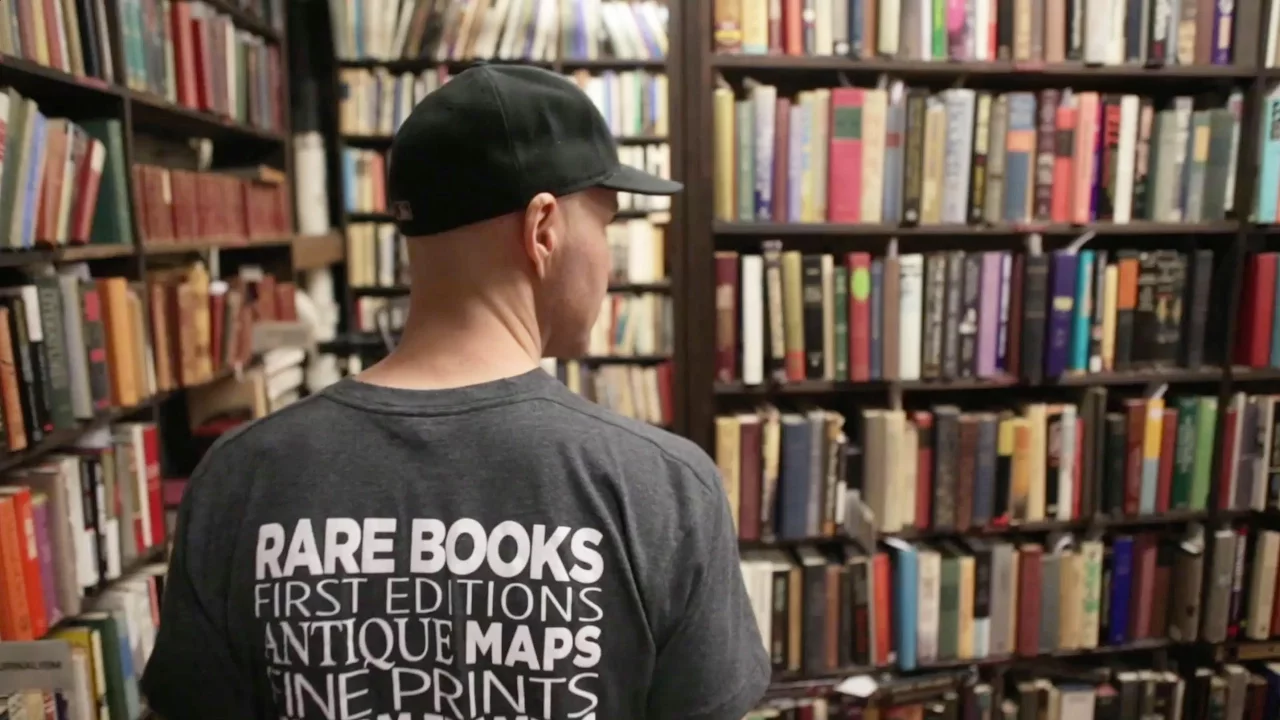



This video demonstrates how personal reading preferences evolve through diverse literary experiences, featuring discussions of James Baldwin's 'The Fire Next Time' (described as emotionally powerful), Aysegul Savas's 'White on White' (an understated novel about a student in an artists' apartment), Bell Hooks's 'Bone Black' (memoirs about growing up Black in the South), and Chanel Miller's 'Know My Name' (a harrowing memoir), while also showcasing the joy of discovering new books through used bookstores and the emotional connection readers form with literature.
Bookshelf Organization for Book Collectors
Added:Basic book categorization and taxonomy principles (e.g., alphabetical, genre-based, or chronological sorting).
Fundamental concepts of interior styling and visual design, including balance, visual weight, and color harmony.
Basic environmental science of material preservation, specifically how humidity, temperature, and UV light affect paper and leather.
An understanding of book formats (e.g., paperbacks, hardcovers, special editions) and their structural storage requirements.
Digital cataloging and collection management systems to track acquisition dates, conditions, and market values.
Advanced archival preservation techniques, such as using acid-free materials, dust jacket protectors, and specialized shelving setups.
Strategic book curation, focusing on sourcing rare first editions, signed copies, and fine-press books.
Custom spatial planning and lighting design specifically tailored for home library environments to prevent degradation while enhancing aesthetics.
131.5K views6.8Klikes16:52Original Release: 2025-02-24
hey guys I'm about to go into Georgetown I'm going to switch over my bag today I've been using this one from nothing written for the past week and I adore it it's so cute I love the twoot te and also the two different Fabrics I'm actually going to take out Miss Margo which I have not used in a while not since I was in Korea oh my God I forgot how much I like her she's a bit crushed I should have stuffed her with something I forgot how beautiful the row leather is like do you guys see this it's like a felt liner my friend we both have a row bag and she saw that mine didn't have this liner she was like what are you doing and then that night she sent me like the link to buy comb actually I like to keep my comb in my pocket this is sacred santal I'm going to switch this with vanilla Verve today Advil you never know my hand cream wallet and then I have some Tic Tacs car keys I'm going to wear vanilla Verve today the perfume oil because I want to wear odwell I plan to stop at a bookstore and I feel like odwell by dipti is such a bookstore shopping perfume [Music] [Music] [Applause] [Music] [Music] [Music] [Applause] [Music] [Music] [Music] [Music] [Music] [Music] as you guys can see I have new bookshelves these are just the Billy bookshelves and the color I think is called Birch I am a dark oak girl I wanted something a bit lighter because I feel all my furniture in here is dark wood um and I feel that makes the space look smaller so I went with something lighter and I think the yellow tone is really cute and it makes the darker book spines stand out I did kind of decorate it a bit but I still need to mess with it I posted this on my Instagram and a lot of people thought I got rid of my fra shelves they're still here I love them I don't think I would ever get rid of them I'm going to keep them for life and maybe add on to them that's like the benefit of having a mounted bookshelf they still haven't sent me the two missing shelves so I wanted to give an update on my reading did I mention I finished the fire next time by James baldon last week phenomenal loved it loved every single sentence moving it made me tear up just I'll talk about that more in my February reading wrapup so that would be this book this is the Every Man's Library print and it has the fire next time nobody knows my name no name in the street and the devil finds work early this morning I finished white on white by a lot of you guys told me how to pronounce her name aaou savash yes this was a very understated book it's about a student living in an apartment the apartment I believe is owned by two artists an older couple the wife also at some point comes to stay at the apartment to work I think on a painting her name is Agnes and while there she tells a student I guess stories about her life she tells her about her children and also her husband and from the get-go you can tell that there is some tension between her and her husband it seems that she doesn't really like her husband she has a lot of resentment towards him there isn't much of a plot there's not much that's happening and a lot of the conclusions you just have to draw by yourself uh but I did enjoy it I thought the pros was beautiful and striking her other book is I think called Walking On The Ceiling yes yeah enjoyed that and then I did start bone block by Bell hooks I think last week but I've only read a few pages in it cuz I was focusing mostly on white on white and also know my name so yeah now I'm going to give this my full attention I'm enjoying it so far I think it's going to be amazing in my last video you guys asked me about um using ribbons as bookmarks I don't do anything fancy guys I just cut the ribbon and I use it as a bookmark it's pretty useful if you put your books in a bag The Bookmark the ribbon never falls out so and then I am alternating between reading and listening to Know My Name by Chanel Miller no words and I really recommend listening to the audio book I'm doing both um just cuz I wanted a physical copy as well such a harrowing read it's making me so angry but I think it's a very important and necessary read it's the end of the day and I had a few nerve-wracking meetings today it's so I feel a bit exhausted and also kind of like I was sweating and then the sweat dried so I'm like eager to take a shower and just wind down I wanted to say I wore this perfume today this is Dave by Henry Rose and I really like this guys this is for people who want a vanilla that's not like a typical gourmont vanilla it has that creamy warmth like Gourmand element that vanilla has but at the same time there's this strong floral I think think it's Magnolia I think this is a really impressive vanilla and I would definitely recommend it to you guys if you can go sniff it I think at Sephora it's a special one I'm thinking for my next video I would show my entire perfume collection but I worry that not every viewer is interested in perfumes so let me know guys do you want to see my entire perfume collection it's going to be a long video I have a lot of perfumes let me know if that would be interesting for you guys I'm about to head out and then later I'm going to go to the used bookstore and I will try to Vlog it I also wanted to update all my reading so I read more of bone black by Bell hooks this morning and I'm really enjoying it so G Sunday in the library recommended this and she said it's a good companion piece for Sula by Tony Morrison which I totally understand I also think this would be a good companion piece for The Bluest Eye as well what I'm getting so far they are basically Bell Hook's memories from girlhood and also her experience growing up black in the South um someone on my Tik Tok commented that I should combine o dwell with oron yes amazing they complement each other so well I would have never thought to put these two together Odell is like an aromatic Woody vanilla a little bit incy too the EDP version anyways I think the EDT is different personally orphon reminds me of like a bubbly clean scent there's a lot of juniper that comes through and it also reminds me of like fresh snow but at the same time it's very cozy if you own these or if you get the chance in a dipti store definitely try them combined the person who commented told me that they I think work at the San Francisco dip teak store thank you if you happen to be watching it was kind of a long drive it's called McKay used books and it is in Manasses I think [Music] I just got home and I changed into a fleece sweatsuit because I'm going to walk Benson and it's so cold and windy outside but before I go I want to show you guys what I got this is John updikes assorted Pros a rare collection by the national book award winner I read Rabbit Run by John Updike and if you guys have read rabbit run you know rabbit the main character is just this awful awful guy however I do think John updike's Pros is so sharp and clever I do want to read more by him I like how the edges are read there were a lot of nybs there this time I got Kingsley amos's lucky gym I read take a girl like you and kind of like Rabbit Run take a Girl Like You features a very unpleasant gross male character I don't know if that's Kingsley amos' thing but I do want to read more by him he's supposed to be very funny and then I got this copy of the handmaids tale by Margaret Atwood I have already read this book I read it when I was pretty young though so I would be interested in reading it again it's quite big so this is an nyrb I wonder what print this is 1986 I always like to check the inside to see if someone has written their name ooh I got a bookmark The Strand Bookstore and then another nyb this one is called basic black with pearls which sounds like a good styling note by Helen winig this one was $5.49 this was purchased originally at a store called p&t knitwear for 15 bucks I've never heard of this author I don't think then I got scoop by evely and W I saw they had in this same style Brides had Revisited which I love that book I've already read it and I have a copy so I passed on it I do like the style of this cover though this one was $42 4 I also got some essays by Audrey Lord your silence will not protect you I've been wanting to read this actually I got Ethan from by Edith warten the reason why I got this is number one I really like this cover and number two this one has been annotated by someone you see they wrote economics and love William fauler light and August one I just really liked the cover of this I'm pretty sure I only read Sanctuary by him I think it's sanctuary and I did not like it at all willing to give him another shot so this looks like a good place to start Judy patters 1971 wow and now it's here with me Ernest hummingway another author I don't always get along with um his writing I think this is a collection of short stories this is $4.99 they actually had a few of these with covers like this but most of them I had already read this I've definitely already read for school this is The Scarlet Letter by Nathaniel Hawthorne there was just no way I was going to pass on this cover though guys this was $2.99 maybe I'll reread it again another nyrb this is the land Breakers by John L um there's a staff pick sticker on it I'm assuming the bookstore put it on it says Mount Dora Florida oh this one is also annotated a little bit there's some underlines that's exciting another nyrb I actually almost purchased this the other day at Bridge Street books this is have by Jan Morris Joyce Carol oats this is solstice I got this for9 I really like Joyce Carol oats um they had quite a lot of her books there guys it says to marqu Marque on Mother's Day 2005 you are such an outstanding mother and woman Rebecca and I are extremely lucky to be able to love you and to be loved by you in return I personally am extremely thrilled to be able to share this special day with you and see how excited and loving Rebecca is an anticipation of your special day I love you K that that just raised the value of this book and I only paid 99 Cents for this I have saw Bellow's the victim I want to get into saw Bellow I recently purchased the dean Dumber by him um and now I have this one the victim I love these penguin covers I think these are the old penguin Classics and then I think they've been changed into this I'm not sure though whenever I see one of these covers with the white box like I always try to snatch it up oh this one is also annotated animal in man this is another nyrb apus confession by marcelus OTS I can't say no to an nyrb that's my used bookstore haul oh no oh oh no o this one is not coming off okay just keep it there look what arrived if you have followed me for a long time you know that Christina's World used to hang behind me in my backdrops in my older videos and now I have a giant gorgeous actual size one I'm so happy I'm going to put this over my bed so I hung up Christina's World earlier this morning and I'm very pleased with how it looks I love it I'm so happy to have this piece in my space again I also have this art book which I bought vintage say Christina's World it's missing the book cover but that's okay it's just a big book of all of Andrew wy's artwork in the very back we have Christina's World so there's just a little story about Christina and the first time she saw the painting she has been in other paintings by him but this one was her favorite whenever people see this painting it evokes strong feelings in them I've seen it at the MoMA in New York City and I feel like this is one of their crowning pieces and it's a piece that when people see for the first time despite never having seen it before or knowing about it they just pause and stare at it it has that kind of power I feel I like the unevenness if I'm honest I don't like when things are too symmetrical now I just have this piece I want to hang up somewhere H I need to think about it [Music] [Music]
Up Next
95:46
Donna Tartt on The Secret History | John Adams Institute
@TheJohnAdamsInstitute
166K views•2017-08-08

40:06
Street Haunting: Virginia Woolf’s London Essay Analysis
@ExtraLiteraryAffairs
146 views•2025-01-24

6:08
Point of View in Fiction: First Person vs. Third Person
@magicalthriftyteacher
153.8K views•2014-03-31

15:25
1984: Orwell's Dystopian World and the Mechanisms of Totalitarianism
@AlternateHistoryHub
7M views•2017-03-04
Related Study Plans & Knowledge Roadmaps
Structured learning paths in Literature
literature
Graphic Memoirs: Visual Art, Trauma & History
01Foundations of Sequential Art and Visual Language
02Autographics and Processing Historical Trauma
03Visualizing Personal Trauma, Grief, and Graphic Medicine
+ 2 more learning modules
14h5 modules
Explore Roadmap
literature
Campus Novels: Evolution, Themes & Critique
01Introduction to the Campus Novel Genre
02Mid-Century Satire and the Post-War Academy
03Dark Academia and the Critique of Privilege
+ 2 more learning modules
14h5 modules
Explore Roadmap
literature
Theater of the Absurd: Philosophy & Plays
01Postwar Existentialism & Historical Roots
02Dismantling Narrative: Esslin & Absurdist Conventions
03Samuel Beckett and Tragicomic Existentialism
+ 2 more learning modules
12h5 modules
Explore Roadmap
literature
Revenge Tragedy: Justice, Madness & State
01Foundations of Early Modern English Theatre
02Anatomy of Revenge: Structural Conventions
03Psychological Complexity: Madness and Melancholy
+ 2 more learning modules
15h5 modules
Explore Roadmap