














![Reddit's Most Disturbing Posts [Vol.2]](https://i.ytimg.com/vi/BNj8qa9BQ7k/maxresdefault.jpg)

















Dark academia, an internet aesthetic romanticizing elite academic institutions and classical literature, faces criticism for perpetuating elitism, Eurocentrism, and the romanticization of mental illness; while it provides escapism and validation for those interested in humanities, its focus on white, wealthy, and privileged academic traditions overlooks systemic issues in education including class barriers, lack of diversity in curricula, and the mental health challenges faced by students.
Dark Academia Aesthetic Critiques: Elites, Bias, Mental Health
Added:Definition and origins of the 'Dark Academia' aesthetic, including its literary roots in campus novels (e.g., Donna Tartt's 'The Secret History') and its visual romanticization of classical humanities.
Basic sociological concepts of elitism, meritocracy, and social reproduction in prestige educational systems (e.g., Oxbridge, the Ivy League).
An understanding of Eurocentrism and how Western educational canons have historically excluded or marginalized non-Western perspectives and diverse racial identities.
The psychological concept of romanticizing mental illness, particularly how academic burnout, obsessive behaviors, and isolation are sometimes glorified in media.
Exploring the 'Decolonize the Curriculum' movement, which actively works to dismantle Eurocentric biases in higher education and diversify academic literature.
Analyzing alternative or responsive subcultures (such as 'Light Academia' or 'Green Academia') to evaluate how they negotiate, subvert, or perpetuate class and racial biases.
Investigating institutional mental health policies and systemic reforms addressing toxic productivity and student burnout within contemporary elite universities.
Studying media literacy and aesthetic theory to analyze how internet-native subcultures shape real-world consumer behavior, social identities, and student mental health.
371.7K views18.9Klikes32:44Original Release: 2021-06-30
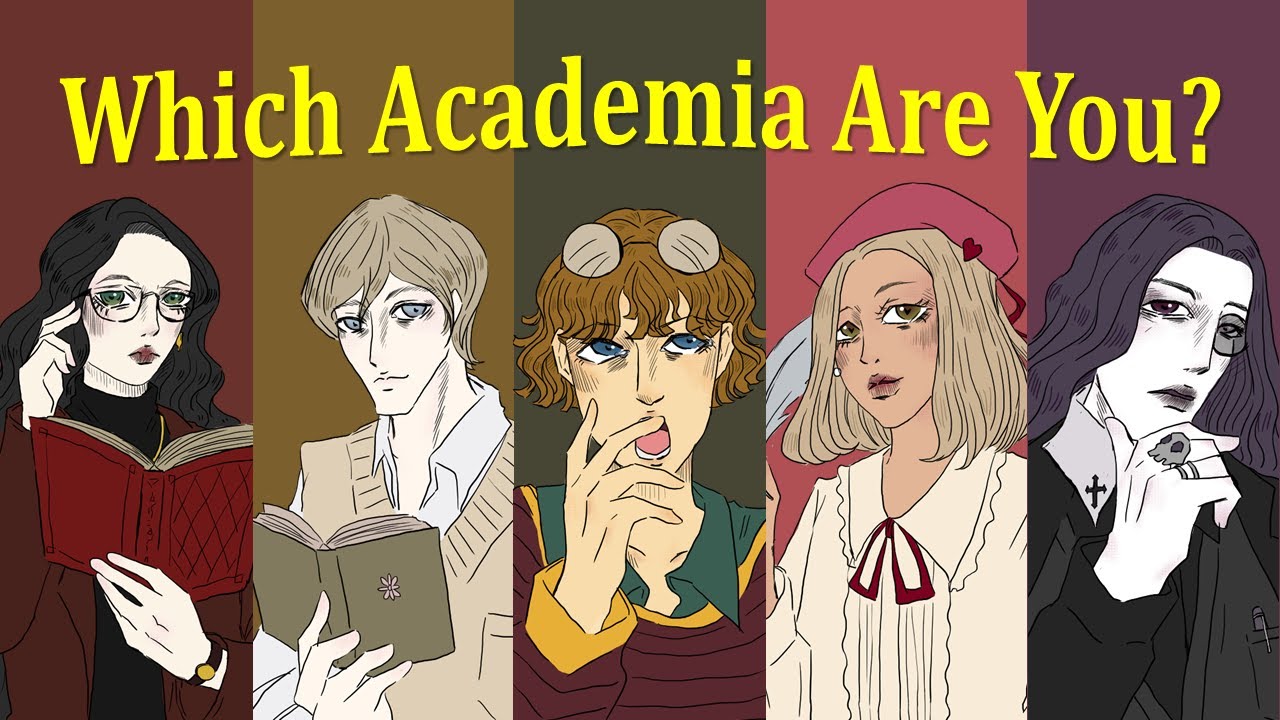
thanks to skillshare for sponsoring this video if you want to learn more about them including the creative writing course that i did this month then stick around to the end of the video for now the first thousand of my subscribers to click the link in the description will get a one month free trial of skillshare so you can start exploring your creativity today i made a video on cottage core last year and didn't really have any immediate plans to talk about another internet aesthetic on this channel again but the more i saw of it online the more dark academia seemed to cool to me specifically because of this weird connection i have to it it's not that i have some secret dark academia tumblr account or consider myself part of the community but because i lived in the supposed heart of this aesthetic this lifestyle for three years when i was 18 and i saw the current criticisms of dark academia as an aesthetic play out in real time with real consequences i studied english literature at durham a university which is almost 200 years old it's situated in the small medieval city built around a castle and cathedral both nearly a thousand years old it's a world heritage site and it looks like it it's featured in countless dark academia mood boards and tick tocks this kind of romanticized world of downs and cobblestones and old library books but there's definitely a gap between fantasy and reality that's what i want to talk about today to be clear this video isn't about saying that liking dark academia is bad or that you shouldn't be into it but if your chosen aesthetic is based around reading and learning and critical analysis maybe actually thinking about the history potential criticisms and reality of it is itself dark academia in action first i think it's useful to look at what exactly this internet aesthetic is so an internet aesthetic is a reasonably new phenomenon originally users of visual sites and apps like tumblr instagram and pinterest would rely on descriptive tags to find the kind of imagery that resonated with them words or phrases that very literally described what they wanted to see maybe new cultural descriptors like hipster or colour palettes like pastel or even existing subcultures like goth people would tag their post with these words to help other people find them but that obviously gets messy when people start adding more and more tags that they're only a passing resemblance to the content to try to reach a wider audience or when they don't seem to fully describe a more specific vibe you're interested in although these more generic tags are still used eventually more cohesive and named aesthetics began to pop up in these spaces for a number of reasons including ease of finding specific types of visuals that you wanted or seeking a community of people with a similar style interest or outlook to you internet aesthetics are essentially a visual heavy concept that is grouped around things like consistent themes repeated imagery and a particular color palette and might show up in things like fashion choices tumblr photo sets or even offline pastimes which are then recorded and displayed back online uniting visual disparate ideas into a cohesive aesthetic is usually not the work of an individual but a collective process that might combine ideas and posts across mediums there is almost certainly not a central document or set of tenets that everyone in that aesthetic needs to have read or even be aware of this separates them from the kind of subcultures and countercultures that had their origins in the second half of the 20th century like punks goths and hippies these communities often sprang from a small number of voices of authority in their subculture for example a musician or band or a specialist magazine or publication they were often deliberately in opposition to the mainstream and the case of aesthetic was as much a political statement as it was about the visual itself they might expand and diversify but the core of the subculture was in some way articulated and agreed upon what is dark academia dark academia is an internet aesthetic that is preoccupied with the romanticism of classic particularly ancient greek and roman literature and poetry the pursuit of knowledge and the style similar to that of the 19th and 20th century prep school uniforms i've seen two connected but distinct versions of this aesthetic pop-up online the first is a version smoothed over with effortless chic this often springs from star-related content the image of the natural intellectual dress like a stylish vintage librarian they seem unruffled as they read complex poetry or discuss classics at length the second is focused around a kind of chaotic energy as if powered by a frantic drive for learning it's too many cups of black coffee and pulling all nighters because you just love the topic you're reading about so much both of these angles to dark academia have a basis and similar elements so let's break them down before you discuss the criticisms around them fashion and style the style is based around the traditional idea of what an academic would wear tweed trousers black turtleneck blazers and waistcoats woolen cardigans leather brogues and minimal delicate jewellery dark academia often uses a color palette of dark and neutral shades like brown gray and black with the occasional white cream or ivory elements it is let's say running parallel to the kind of clothing that we in the uk were considered to be quintessentially tory it might feel very nostalgic and quaint and vintage but it's mostly worn by rich conservative people in the countryside activities dark academia activities might include reading analyzing and discussing literary texts listening to classical music visiting museums and galleries particularly older ones calligraphy or letter writing playing games like chess or backgammon practicing a classical instrument but his connection with the aesthetics of prep schools and prestigious universities mean that other activities not strictly based on the pursuit of knowledge including sports like rowing polo or rugby are also included in many people's descriptions of the aesthetic similarly the romanticization that is key to the aesthetic means that things like daydreaming often are listed as part of the quintessential pastimes of dark academia but it's specifically a kind of consciously tragic romanticism in a lot of cases a kind of melancholy that feels very much in line with the idea of the suffering artist or the depressed poet cultural touchstones donates the secret history a novel which centers around a group of classic students at a small elite liberal arts college located in vermont who murder one of their classmates is generally cited as the starting inspiration for the aesthetic itself obviously people were doing these activities and wearing this style before the book came along but the naming of it as a deliberate aesthetic to be engaged in came much more recently in the late 2010s gaining full prominence in 2020.
this quote from the book sums up the vibe of dark academia pretty damn well though not untidy exactly it verged on being so books were stacked on every available surface the tables were cluttered with papers ashtrays bottles of whiskey boxes of chocolates umbrellas and galoshes made passage difficult in the narrow hall camilla's night table was littered with empty teacups leaky pens dead marigolds and a water glass and at the foot of her bed was a half-played game of solitaire everywhere i looked with some fresh oddity other pieces of media cited as inspirations include the movie's kill your darlings about famous beat poets while at college in the 1940s and their poets society about an inspiring teacher at an elite boy's boarding school in 1959. both of these movies deal heavily with the themes of literature self-discovery and death making them perfect matches for dark academia other books films and writers i've seen mentioned as inspiration include picture of dorian gray and oscar wilde the iliad and the odyssey maurice atonement the riot club and brideshead revisited in her refinery 29 article on the aesthetic amal abdi described it as a kind of nostalgia for a life which is yet to be lived dreams of being an art history student at oxbridge or studying classical literature at harvard and i think this concept of a wishful kind of sentimentality created from second-hand experiences and expectations is a key reason for dark academia's growing popularity right now the trigger cause covert 19. you can see on google trends that the sharp increase in interest around dark academia coincides with the initial lockdowns in the spring of 2020 this is pretty understandable the idealized vision of yourself on an autumnal campus with a cloth-bound copy of a classic novel in your hands has a uniquely heady appeal if you're anticipating months of learning from your childhood bedroom over zoom the poetic on we of a misunderstood artist has a great appeal during the collective dread and very real dangers of a modern global pandemic plus in a time when so many people are finding it hard to motivate themselves to get through the day it's a pretty useful aesthetic for students who are already literally required to do these kind of studious tasks for their classes this detachment from reality is a big part of its appeal in many ways even as it's incorporated into someone's everyday life you have to start romanticizing your life with a touch of existential dread looking at interviews and posts for young people engaged with dark academia the massive appeal for them seems to be specifically the way it allows them to insert fleeting moments of air into everyday experiences to elevate them one tumbler user the wild club said i love romanticizing a meal i'll make a decadent bowl of pasta paired with crisp white wine and a crystal glass that i got from a thrift store for a dollar and my desk is covered in candles ink bottles and scraps of paper i have power over the beauty of it and thus fill a sense of control over beauty i think that that feeling of powerlessness of your own life has always been a hallmark of the youth experience you gain a sense of self but are still stuck at home with parents or in a rigid academic institution or in entry-level jobs with little to no respect or autonomy you probably don't have a great deal of financial freedom and are also increasingly aware of the large political economic and social norms that have a clear level of control over society and you in many ways it makes complete sense to me that seeking out a way of romanticizing the tasks that you have little control over could be appealing and that's especially true during the last couple of years when there has been the added monotony of being forced you quite literally be in one place the whole time it might seem counter-intuitive when school is such a place of conformity and control that something like dark academia with its focus on education will become popular however knowledge versus education the dark academia aesthetic is both inspired by and reliant on the aesthetics of real and fictional academic institutions but people deliberately separate these fantastical and idealized places from their experiences of learning in regular high schools and colleges those are places that they're forced to go and learn what's dictated by a statewide or national curriculum or by a particular faculty or professor even though in reality these institutions of learning like prep schools or elite universities essentially offer the same experience of a controlled education the ascetic creates a romanticized version in denial of this reality dark academia focuses in part on the pursuit of knowledge for knowledge's sake the idea of picking subjects you're obsessed with and then living with them for years it's tied to a passion for learning over formal education of emotional gratification for knowledge rather than external success something i'm sure that anyone who has been to one of these elite institutions can attest is sadly not the reality moreover dark academia isn't necessarily a healthy more relaxed version of the hectic pressurized world of the education system indeed this post from reddit user cj leviticus expresses much the opposite sentiment dark academia is a byproduct of a lifestyle it's what occurs when you value knowledge and expression so much that you almost can't contain it it's the journal pages filled with hastily written chicken scratch that you just couldn't write fast enough to express it's the countless sketches of that one idea for a painting you have in your head that you just can't shake until it's out there the passion for culture and knowledge is what really matters the unkempt hair the tired eyes the messy desk full of papers the cluttered shelf of curiosities these are all just things that accumulate because of that underlying passion accessibility there is something to be said about the accessibility of much of the aesthetic on the surface level it doesn't take a lot of resources or money to buy a cheap secondhand copy of a classic novel or a thrifted blazer it invokes activities that can be done and often are from your own room reading a book with a steamy cup of tea an everyday task for many is an image to be captured and shared creating the mundane through a cpr lens gives it a kind of reverence the androgynous nature of the dark academia style also gives it an air of openness that thrifted blazer could be worn by anyone regardless of gender the school uniform was traditionally heavily gendered in the early 20th century but this boys versus girls split seems to be rejected by dark academia itself although i will say this appeal to androgyny feels at times a more slightly old-fashioned version of the concept centered around the concept that girls can wear trousers but i've seen almost no dark academia imagery for example of boys and skirts the idea that androgyny is genderless or a mixed masculine and feminine only so far as it lets women dress across gendered clothing expressions the perceived importance of the humanities the subject focuses of dark academia are mainly areas like art history literature philosophy history and the classics the ascetic views them as sophisticated and intellectual pastimes deep dives into the human experience i think the appeal of this attitude is particularly poignant at a time when arts and humanity is often perceived as less important than stem subjects in a capitalist society preoccupied with you know what earns the most money or what is the most productive an aesthetic that explicitly celebrates the kind of learning that goes against that feels like a version of defiance it says no these subjects aren't irrelevant or useless they mean something they can teach us about ourselves and there is value in that beyond high paid careers i have seen some posts that attempt to bring stem subjects into the aesthetic but the nature of science and technology is that it quickly becomes irrelevant as new ideas are discovered when an aesthetic is based so much on vintage imagery it doesn't quite fit to have you know vintage tech or diagrams of scientific concepts that are now outdated chalkboards might feel in line with discussing literature but interactive whiteboards and state-of-the-art labs are much more useful in stem subjects relatability one of the reasons humanity subjects are so beloved by so many and continue in their relevance even as hundreds of years go by is that they often say something about the elements of human experience that are fundamentally timeless emotions and conflicts that persist over generations or offer a snapshot into a particular cultural moment dark academia is appealing to many people who are already naturally interested in what is preoccupied with arguably you could view it as people wanting to feel outwardly validated in an existing interest that they have not just accepted but making it curatable and aesthetic making it shareable it isn't enough to just like the thing privately but as a ready user gallery expresso explains even on a day when i'm in a hoodie and joggers i feel no less da as a result because in the end i'm still reading aristotle in a cafe or listening to lists on a walk it's who i am and my clothes aren't going to change that this is something they will be doing regardless dark academia has just given them a name for it and they don't feel obligated to fulfill all visual and active aspects of the ascetic devil included although many people are creating and sharing content there are many more who are consuming and living it without sharing that experience publicly beyond how they just exist in the world in front of other people where did it come from much like cottage core dark academia definitely has its roots in a pre-internet era the most commonly cited is the romantic literary and artistic movement of the late 18th and early 19th centuries a period that came after the rationality-focused worldview of the enlightenment which based itself on the superiority of reason romanticism focused on elements including nature the individual isolation and melancholy subjectivity and emotional sensitivity and the imagination writers of the period include wordsworth coleridge blake byron keats wollstonecraft and the two shelleys it wasn't so much a deliberate and cohesive movement at the time but was later looked back on and referred to as romanticism the encyclopedia britannica says of the era's attitude to writers the poet was seen as an individual distinguished from his fellows by the intensity of his perceptions taking as his basic subject matter the workings of his own mind poetry was regarded as conveying its own truth sincerity was a criterion by which it was to be judged this sense of self-importance and unique insight is not uncommon in the perception of people who consider themselves part of the dark academia aesthetic a lot of people looking in at the community feel a sense of a group of young people taking themselves very seriously with more than a little sense of pretension what are the criticisms as i explained earlier because dark academia is an internet aesthetic and not some kind of centralized subculture looking criticisms of it is complex because it's impossible to critique a comprehensive list of exactly what it stands for what it means because that list doesn't exist but there are elements that are widespread or popular enough to warrant closer examination i think this isn't to say that these issues are problems for every individual person engaged with the aesthetic or that there aren't people actively trying to combat them but i still think they're worth thinking about especially as i mentioned earlier for an aesthetic that is so often holding itself up as being interested in self-examination and education because of dark academia's relationship to elite colleges and traditional ideas of literary merit it's inevitable that some of the same criticisms leveled at these institutions will end up applying to dark academia too i see many of the same issues that played out at durham reflected back in the content and attitudes of dark academia online the unbearable whiteness of academia even just with a cursory glance the ascetic reliance on old clothbound books and oxbridge educations ensures a preoccupation with historic western texts with little to no diversity especially in authorship white supremacy and western nationalistic sentiments across the centuries of recorded literature mean that what is considered classic influential or worth studying is overwhelmingly white in the uk at gcc in a level many young people literally never study a single novelist of color in their english classes the concept of the literary canon those books and authors deemed worthy of an elevated status of being studied of being called classics is overwhelmingly informed by this biased world view and this world view through history has only doubled down on the problem the canon is mostly sequential what is deemed worthy at the time informs and impacts what comes afterwards following literary movements for much of history the worthy and influential works were written by men mostly middle class and assumed to be straight and almost definitely white this preoccupation with whiteness is pretty obvious if we look at that list of works that inspire dark academia again the secret history kill your darlings the poet society picture of dorian gray maurice atonement the riot club brighthead revisited and the romantics wordsworth coleridge blake byron keats wollstonecraft and the two shelleys looking a popular post on social media of dark academia sources of inspiration the pattern is pretty common like this list of dark academia songs a number of more modern books that fit into the dark academia aesthetic have had their centering of whiteness leveled as criticism against them in recent years the invisible life of adelaide for example is a novel which focuses on an immortal french girl who has lived over 300 years yet only seems to have traveled in the u.s and europe a deadly education came under fire for the author's description of lox and had to have the paragraph edited out of reprints there has definitely been support for newly released books around dark academia that include more diversity like ninth house or eights of spades there's a difference between books inspired by dark academia and the books that inspired and inform it in the first place writer tambi krishna kumar explains you could search for cultural dark academia to find non-white narratives but the lists are few and far between besides most of them are works that are written primarily for a white audience even if they are by non-white authors criticisms that are made of books like the god of small things and white tiger as well as movies like slumdog millionaire all of which frequent these lists far too often the fact you have to search for an alternate or niche genre cultural dark academia to find such inclusions shows how lacking they are from the aesthetic at large if we look at the supposed meaning behind the aesthetic a passion for learning and an exploration of the themes of romanticism there is no inherent link to the eurocentric sources and visuals the texts considered to be classics in asian or african countries are equally worthy of study if indeed one is a passion for learning why some of the socially constructed classics being spoon fed to you by archaic institutions whenever i see those roman or greek white marble statues in pretty much every dark academia mood board it always makes me laugh because it's clearly included for the aesthetic value it gives off the creamy white color but also the links to antiquity they are the very definition of like culture sophistication the statues in reality in their original state looked completely different they were painted bright even garish colors a reality totally at odds with the dark academia vibes i imagine no one would be including accurate portrayals of these statues in their aesthetic content and that sums up a lot of people's feelings towards dark academia that is a kind of visual pretension that claims to be invested in knowledge and education but which prioritizes looks over actual in-depth analysis a thirst for knowledge is in no way inherently linked to the tweed wool and leather look of the 1930s and 40s and the choice to make that link when that period was so mired in issues of racism sexism classism homophobia and more is an interesting one there is a phrase in the vintage community at large vintage style not vintage values the idea that you can like the 1950s aesthetic for example without subscribing to the belief systems of the time but much of dark academia actively portrays itself as being about more than the style alone it is engaged in the literature of that time which in turn is absolutely entrenched in those beliefs i've seen movies and tv series like mona lisa smile and the queen's gambit suggested as female-driven narratives to balance the plethora of male-oriented source materials but these also are overwhelmingly white and by their nature as historic fiction revolve around women's place beneath men in that time period these women are preoccupied with difficulties of being women in contrast to the more individualistic character arcs of the boys and men in material like depot society it is of course possible for people of color interested in the aesthetic to bring their own cultural texts and writers into their experience of it but as of right now the impetus is on them to do so because they are by design not part of the central framework or references when looking at my old university for example i genuinely don't think i studied an author who wasn't white in the majority of my modules the last year of student demographics i could find for durham show half the amount of black students you'd expect based on the national population which is of course way under what you'd expect for looking specifically at the youth breakdown the centering of whiteness in the academic institution is inevitably replicated by dark academia and as a conscious and concerted effort is made to change that the issues of academia in general will always be seen in the ascetic so long as it romanticizes the institutions of learning which are steeped in these biases and blind spots elitism the elitism in the education system is undeniable things like dedicated oxbridge application classes in private schools the concept of family legacies and american colleges and the recent college admissions scandal these cycles of power and privilege perpetuate themselves if you're already part of the elite it's easy to stay there the kinds of schools and universities uplifted by dark academia are absolutely within the elite when i was 18 i interviewed for an undergraduate place at oxford on the english course the entrance test and interview centered around a group of poetic and pro sources about specific pieces of renaissance art one of the guys i interviewed alongside came out of his interview or smug saying mommy and daddy took me to see half of these in italy last year i knew what they were immediately it relied on you not just being able to analyze the sources but also a familiarity with the kind of secondary subjects that favored families able to travel abroad and see such sites dark academia puts his emphasis on subjects like ancient greek and latin or classics courses offered mainly at elite secondary schools in the uk whether conscious of it or not there's a specific validation given to these subjects which are favored by the privileged view looking specifically at durham as of a few years ago it had the third lowest proportion of state school educated students starting courses it consistently has one of the highest number of students from middle class backgrounds in the country with the percentage of students coming from private schools being over six times what you would expect based on the national average there is also a massive disconnect between the town and gown populations at many university cities but particularly durham county durham is a working-class northern area in fact it's one of the top 10 most working class areas in england with a local population that lives and works there all year round whereas the university population is made up of often middle class southern students who come for term time for three or four years and then leave often having never really interacted with the locals at all during their time there working-class students often report experiencing classism from fellow students as well as a lack of understanding from the university itself about what would make that experience truly accessible to them access to these universities is mired in class divides in the uk universal free access to higher education ended in the late 90s since then these fees have risen from 1000 to over 9 000 pounds a year and continue to rise the average student now leaves university with around 50 000 pounds worth of debt we do have a system that utilizes student loans that are paid back via what is essentially a graduate tax rather than set lump payments these loans cover the whole amount of your tuition but often don't cover what you need for living expenses if you don't have family members able to subsidize your time there you can find yourself in much more debt eating into your overdraft and constantly worried about money this doesn't just affect the experience of university for working class students but can put them off applying all together the situation is obviously much more intense in america with a much higher set of college fees in most cases and a very different loan system i think there's a kind of irony that the source material and inspiration behind dark academia are books and movies which are often literally about elitism and specifically a satirization and criticism of it but i've not really seen a lot of engagement with that criticism within the dark academia community they wear the style of the elite and valorize the subjects of those institutions but the long tradition of student protests and political engagement seems missing in a lot of cases education versus learning university is not just learning for learning's sake it's exams and marked essays and being limited by the timetable in the modules that you can decide to do sometimes that were created decades ago it's a dissertation advisor who is totally uninterested in you and the subject you're passionate about i talked earlier about the two types of dark academia i'd seen the first being the polished sophisticated style-based version this kind of innocent naivety of dark academia is so enviable to me i wish academia was like that but it kind of really isn't this in and of itself it's not really a particularly damning criticism of the ascetic these things often not meant to be realistic people who are fans of cottage core don't necessarily want to go live in the countryside for example but this is an aesthetic that is specifically presenting itself as being about academia about in-depth analysis and it just feels like it could and maybe should absolutely be part of dark academia to engage with these issues if the aesthetic is an attempt to romanticize the experience that is now taking place via zoom in people's childhood bedrooms is it just meaningless escapism when it ignores these real issues if someone claims to love learning and academia should there not be a place in dark academia for actions to improve that reality i don't think i've ever seen a dark academia tick tock talk about lecturer or cleaner strikes at universities surface level aesthetics allow you to ignore the problems but should you be aware of some of these issues if you are participating in an aesthetic that is centered around that world or are internet aesthetics entirely divorced from the political grounding of previous generation subcultures romanticization of mental illness the second kind of dark academia i mentioned at the start of this video was the more chaotic one dark bags under your eyes you know pots of black coffee pulling all-nighters it's seen by many as admirable to be so into what you're researching that you forget to eat or sleep it's essentially making an aesthetic of many elements of mental illness that manifest at university idealizing this anxious highly strong energy as an inevitable part of a love of learning this isn't unique to dark academia i think there's this general idea of like the torture genius the depressed writer unwashed ink stained hands and untidy room that fits with our image of the literary or artistic talent but in reality mental illness is the opposite of creative freedom and energy it's in fact an issue that permeates the academic setting that inspires this aesthetic in a very real and worrying way this feels kind of sad to me because it is such a reality in university life i know more people who had some kind of mental health crisis or breakdown at university than those who didn't i myself had to drop out for a while in my second year and defer my exams because i basically had a mental breakdown and this is evident across the country tens of thousands of students drop out in their first year that number seems to keep going up budget cuts to local mental health services mean young people may have difficulty getting help as teens before they arrive at university and are then thrust into this world of independence and pressure with no support the difficulties of navigating the gps both in your hometown and your university area often present a practical challenge that creates a further barrier to help for those already struggling an emphasis on preparing students for the job market and monetary success later in life also creates an environment that sucks the joy of study for many this is absolutely linked to the other issues i've just talked about in the uk a recent survey found that 73 of students are concerned about how they're going to manage financially and 9 had needed to access food banks a survey of cambridge students one of those universities that always makes it onto the list of dark academia inspiration found that 21 had a diagnosis of depression compared to current estimates of national depression levels which sits at 7.8 in the article how cambridge university almost killed me when wenner jones explains for a year and a half i had felt completely out of my depth and finally cracked no longer was i thought talented or gifted because i could work for eight hours or read an 800 page novel in a day at cambridge everyone i knew could do that i was no longer special when my parents collected me i hadn't left my room in two weeks for two years i had been killing myself in the name of perfection unable to enjoy being anything less than the best as a result i developed depression alongside severe bulimia at oxbridge according to a huffington post article by tanner spielman sleep deprivation high stress levels and an almost unmanageable workload are normalized it feels so similar to the descriptions and images of this more chaotic version of dark academia but where these are presented in the article as negative and damaging elements of the education system they're seen as valid and understandable side effects of a love of learning by many in the dark academia community it's something i think a lot of students at large feel when they first enter this world too like when you feel the sting of antiseptic on a wound so you know it's working if i'm stressed and i'm working so hard i don't sleep i'm earning it right i totally get the feeling that sometimes thinking critically about everything we do consume and enjoy can be soul-sucking and exhausting sometimes you just want to enjoy a thing and romanticize your life but to me the kind of people who are enjoying dark academia are very capable of this kind of critical thinking and introspection shifting the practice of the aesthetic to be more conscious of its biases wouldn't fundamentally change what is important or enjoyable about it it might include diversifying the books that you're reading and recommending in the community or looking into the organizations that help break down barriers to entry for higher education it could mean joining protests to abolish university fees or volunteering with mental health initiatives on campus ultimately i think addressing these kinds of gatekeeping elements the education system and dark academia in turn will allow it to become enjoyable and fulfilling for everyone so last time skillshare sponsored a video i told you the classes i thought some queer characters would take if they had a membership or you know a free one-month trial link in the description so i thought i'd do that again if i was picking a class for newly revealed to be bisexual loki i would get him to take a magic class i know he's already like a space witch he just strikes me as the kind of character who can do actual magic but would still learn stage magic for the rna or amanita from sense8 who works in a bookstore and has had a wild life in the middle of a sci-fi epic i'd probably recommend a class that encourages her to write about her experiences and her views because i would love to read anything she writes or katie from the mitchells versus the machines who's an aspiring director so of course i'd suggest some kind of filmmaking course maybe one focused on graphics or effects to bring her adventures to life or elena alvarez from one day at a time who is a massive nerd who has seen cosplaying on the show so i think she'd appreciate a class on making her own clothes that she'd be able to make a costume for whatever character she wanted to try next i just took lisa code's class writing fiction five exercises to craft a compelling plot which is honestly the perfect balance of information examples and activities to go from starting idea to full plot outline plus the course area lets you upload your work for other classmates to see and that was full of inspiration and examples too whatever your experience or skill level they'll have classes that suit your creative interests skillshare is designed to give you the best learning experience so there are no ads you can watch on the go with the app and they're always adding new premium classes they also now offer live classes with popular teachers that you can join in real time so you can get inspired alongside other members if you're looking to try new things or dig deep into your current interests skillshare is a great place to connect with the support of fellow creatives and find a community of encouragement communication and inspiration
Up Next

10:18
Babel by R.F. Kuang: A Dark Academia Masterpiece Review
@PetrikLeo
9.4K views•2022-06-03

12:54
Triumph of Orthodoxy Icon: Byzantine Art & History Explained
@BenCallan
2.1K views•2024-08-06

9:49
FastAPI vs Flask vs Django: Choosing the Right Python Web Framework
@TechWithTim
302.5K views•2024-05-26

1:42
Game of Thrones Opening Credits: A Cinematic Analysis
@gameofthrones
46.3M views•2011-04-18
Related Study Plans & Knowledge Roadmaps
Structured learning paths in General & Interdisciplinary Studies
general-studies
Elevator Engineering: History, Physics & Cities
01From Hoists to Safety Brakes: The Dawn of Vertical Lift
02Hydraulic vs. Traction: The Engineering Physics of Elevators
03Modern Speed, Safety, and Algorithms
+ 2 more learning modules
12h5 modules
Explore Roadmap
general-studies
Rubber: Material Science, History & Geopolitics
01Origins of Natural Rubber & Mesoamerican History
02The Chemistry of Natural Rubber & Vulcanization
03The Geopolitics of the Rubber Boom & Colonization
+ 2 more learning modules
12h5 modules
Explore Roadmap
general-studies
Containerization: Evolution, Logistics & Trade
01Ancient Trade & Bulk Cargo: Amphorae to Barrels
02The Industrial Revolution & Cardboard Packaging
03The Containerization Revolution: Malcom McLean
+ 2 more learning modules
12h5 modules
Explore Roadmap
general-studies
Textile Tech: Evolution, Labor & Global Impact
01Pre-Industrial Textiles: Handloom & Cottage Industry
02Mechanization: The Spinning Jenny to the Power Loom
03The Factory System & Global Labor Transformation
+ 2 more learning modules
10h5 modules
Explore Roadmap