




















The Literature in English Paper One (P208) consists of Section A with four compulsory items (each worth 6 marks) based on a context extract from poetry, drama, or prose, and Section B with two optional items (choose one worth 6 marks) based on set books. Each item in Section A carries equal weight with 3 marks for identifying the required element and 3 marks for providing evidence/illustration. Students must write in present simple tense, use correct spellings, and apply appropriate literary techniques for each genre (poetry, drama, prose). The exam lasts 2 hours and 30 minutes, with Section A carrying 24 marks and Section B carrying 6 marks.
Literature Paper 1: Format, Scoring & Answering Guide (S.4) by Dinah Grace Anyait [WTLS] — 60 chars via descriptive guarantee
Added:Familiarity with the S.4 Literature in English syllabus and the specific set play, novel, and poetry texts prescribed for the exam.
Basic understanding of core literary elements such as theme, characterization, plot structure, and setting.
Fundamental essay-writing skills, including how to structure arguments using introductions, body paragraphs, and conclusions.
Awareness of common literary devices (e.g., metaphor, irony, symbolism, and imagery) and how authors use them to convey meaning.
Practicing timed essay writing using past Literature Paper 1 exam papers to build speed and precision.
Analyzing official marking guides and examiner reports to understand how marks are awarded for expression, organization, and mechanical accuracy.
Mastering Literature Paper 2 format, scoring guides, and answering techniques, which typically cover poetry and alternative set books.
Developing self-assessment and peer-review techniques to critique essay drafts based on the scoring criteria learned.
2.3K views39likes2:15:32Original Release: 2025-07-22
And we thank you as we coming for this meeting. We pray that may you be with us as we start and we pray that may you also end with us as we shall end. May you give us all the knowledge to understand whatever is going to be us through Christ our Lord.
>> Okay. Uh thank you so much uh St. Mary Ze and we want to welcome all schools that have joined in. Thank you so much for joining. So I'll leave the I will leave you with an opportunity to unmute yourself but I do request that the teachers uh to have a quiet environment such that we are not easily uh distracted. But in case uh the distractions come in then we shall disable such that you cannot be able to unmute yourself. At this point allow me to welcome our facilitator uh of the day. Our facilitator is a literature teacher. She has been teaching this curriculum uh for some good time and she has facilitated uh this paper. So for any questions you do have about the subject she'll be able to handle in case you have any burning question we shall utilize the chat but I know at one point she's going to give us an opportunity to ask our question so shall be able to raise our hands and then she'll be able to respond. Allow me now to welcome teacher dinner to take us through the presentation. Teacher Dina you're most welcome.
All right. Uh, thank you Mr. Kaziba.
>> Good afternoon teachers and students.
It is a beautiful afternoon and I believe that we are going to have an amazing time together.
My name is Dina Graite and I'm a teacher of English language and literature.
Mr. has told me that we are going to be sharing for 2 hours. We've already used about a quarter of an hour. So, we shall see how to bring it to an end before those two hours elapse. I'll appreciate that you let me know when we lose each other because sometimes network is a challenge.
I'm also going to unmute my video so that you don't keep double guessing where the voice is coming from. You should be in position to attach a face to that voice. So I'm going to show myself for a minute then I will mute the video again so that you know when teacher Kazba says we have teacher dinner a teacher of English language and literature you know how exactly the person looks like.
Oh, the host does not want us to use video, but he's going to allow us use it for a minute so that you're able to attach a face to the person. Mr. Kaz, were you able to see my face?
>> Not really. I think we need to have the camera. I'm only seeing the dark sink.
>> Okay, so we've missed the opportunity.
Maybe next time the next time we meet you'll be able to to see the person behind the voice. All right, let me sub mute the video then we make a formal start. That's my name.
I've already introduced myself and in a special way I would like to welcome each one of you to the literature class. Uh usually people who love life choose literature. I don't know how others manage life without literature. It is a beautiful subject. It is life in itself.
So you must be very lucky people to be taking literature. So uh Mr. Kazba gave me some expectations that I must fulfill at the end of the day and kindly allow me share my slides here and we see how to fly.
Okay. So the very first slide gives us the paper code.
So our literature in English and they will also tell you that it is paper one literature only has one paper and it is paper one.
So when you go for that exam and there is paper one I don't want you to get confused. Now they are calling it paper one. Do we also have paper two and paper three? No, it is basically paper one.
And the paper code is P 208 stroke one.
And you now know my name. If you don't mind, you can write it somewhere so that you don't forget at any opportune time.
Now we need to know because I know you've been taught you've studied literature from senior 3. Now you were in senior 4 you've been interacting with literature all along the way. So what is assessed and how is it assessed? Of course I appreciate that we are doing different set books especially for item two and three which is section B. So some of you could have studied William Shakespeare's the merchant of Venice. Others have studied Francis Ibugas the return of Engu. Some people may have done John Stainb's the pearl. Others are doing Lawrence Dammani's brief child.
Some people have done Sylvester the heart sthers. Who knows there maybe even those doing the voice of the people by some like those I've taught have done the shadows of time by Victor others have done things fall apart by Chinoa a few may have done me by Daniel Mangera then for the poetry I know most schools took up growing up with poetry by David Robert then a handful may have braved an anthology of East African poetry. So having studied that I know we have plenty of knowledge. How is that knowledge assessed? This is the screen we are looking at. So the exam you will sit and I know you've done the standard exams already will have uh section A and when you look at section A this task paper will have four different items falling under section A.
Then you will also have section B which will have two items.
So those will give you four of section A plus two of section B will give you in literal sense six items. But then here looking at it in the literature where we call them a total of three items but as we dive deeper into the content you will realize that they are actually more than three.
So now item one that is section A what is it? So item one has four sub items and this item is based on a context extract and that extract may come either from poetry, it may come from drama or pros.
So you do not have the liberty to say let me prepare for poetry very well and ignore a drama and pros because you do not know where it will come from. So the examiner can choose to make that compulsory section poetry.
They can also choose to pick an extract from a play or they will pick a pros passage. So you must be adequately prepared for those three genres of literature.
Now what do they ask in that section A?
Each of the sub items in section A carries six scores. So now when you have section A, you will have section A, part A, B, C and D. Those are four parts and each of them is scored out of six. That means each item carries the same weight. So when you are attempting them, you want to give them the same quality time, same concentration, same indepth writing because they carry the same weight.
I will read this so that um we don't miss out anything. I'm also positive that you're able to see the screen. So you're following up. If the font is not friendly to your eyes, feel free to let Mr. Kazib know.
>> So each of the sub items in section A carries six scores.
three you'll be given three three scores for the ideas you have presented and three for the illustration.
So say for example if part A is asking you for the issues and when I mention issues you appreciate that this could be the themes it could be the problems it could be the conflicts it could be anything in that area. That means once you identify that there is for example grief in the given passage you will get your one point there but then you must explain where is that grief is there a proof in the given passage that there is I mean there is that grief when you say for example there is suffering in the passage you have identified your idea is suffering uffering you must go ahead to really give evidence that there is suffering in a given passage.
So you will have three scores for identifying whatever you have been asked to identify. Then you will also have three for illustrating or for giving evidence that what you are talking about actually exists. You're not forging out things because you got stranded somewhere.
What about section B? What do we have in section B?
Section B carries the same weight as a single item in section A.
I will say this again. Section A, one item has four parts. A B C D and each of those parts is scored out of six.
In section B, you will choose one item, but that item carries six scores, the same as those in section A. So you will realize that the same content I mean the the quantity of what you write for one section of section A is the same you will do for section B.
So for section A the two items in section B from which you are supposed to choose only one as SC tasks on the set books that you have studied. I mentioned the set books at the beginning. So all the set books you have studied will appear in this section. So you will choose one task out of the two and each task is based on the elements of literature and by now I know you've studied all these elements of literature and just like we do it in section A you will be given three for identifying the element of literature that has been asked. For example, if you're being asked about lessons learned from a given text, you're being asked about the relevance of the text to your contemporary society, you're being asked about the issues in a given text.
when you say let's take it like um the text is talking about um relevance to contemporary society and you have chosen to take grief child as an example and you will agree that the text is relevant I mean is relevant to your society you're going to identify an issue in the text say for example there is um we have death. Someone loses their parents and they are forced to move and stay with a relative which relative is not very friendly to this person. You say okay Adu loses both his parents and is forced to move into stay with his auntie Koma and we find that he's terribly or brutally mistreated by his auntie. Now you will have to bring that situation. You have identified you'll get your score for identifying that relevance. Now you will have to bring it down to your society that even in my society they are children who have been offended. They have lost their parents say in road accidents or even in epidemics and they have no choice but to move on to stay with other relatives and these relatives have mistreated these children. Now for giving that illustration you will also get the other score that is for section B.
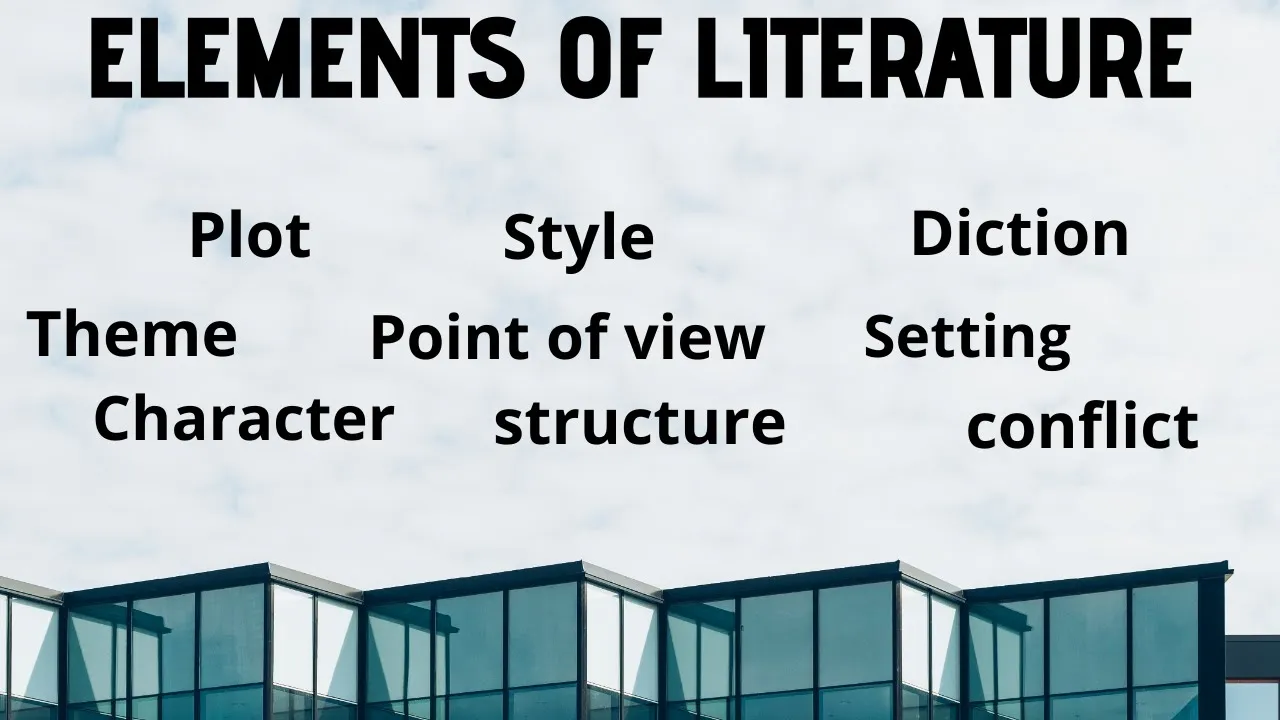
Now section B tests you on elements of literature. What are those elements that you'll be tested on?
One, we have the title. What may you be asked about the title? They could ask you for the meaning of the title.
What is the relevance of that title and the atmosphere created by the title? You must appreciate that there are texts that have titles and when you read the text there is nothing that I mean there is nothing that relates to the title. So they may ask you to read I mean to comment on the relevance of the title to what is happening in the text. They may also ask you for the meaning of the title. We are talking about the heart soothers. What is the meaning of that text? Who is a heart soother in for starters? So for every text if you're doing say the heart soothers you must understand the meaning of the title you are doing the merchant of Venice take interest in finding out what does this title mean is the title relevant to what happens in the play you're doing grief child what is the meaning of this title the return of the voice of the people what does that title mean so that when you delve into reading Does it reflect? Does the content reflect the title or does the title give you an insight about what happens in the text?
What is the other thing they will ask you for? Setting setting of the text. And now for setting I know we are very very conversant with the physical setting which is the place you're so well versed with the time setting cuz you will say uh we were in this school at this time and often times we do that extremely well. But then it is also important for us to know the social setting. And what do we mean by the social setting? Sometimes you read a text and it describes the kind of area where people are is it um an area where where we have youth? Is it the old people who are there? Is it the rich? Is it the poor?
I mean what category of people if it is a school is it a primary school is it a secondary school is it a university that is social setting then the other one I don't want you to only analyze the time the place the social there is also what we call micro setting mic Micro setting. And now what is micro setting?
Micro setting majorly appeals to our five senses.
Anything in a given passage that appeals to our five senses. So we can't see, we can't smell, we can't taste, we can't touch. That qualifies to be micro setting. For example, when you meet somebody wearing school uniform like you are wearing now and you asked about micro setting. When you see someone in uniform quickly you will think about a school. It is in a school where people wear uniform. Of course there also other workplaces where people have uniform but uniform is majorly for school and the uniform will give you an idea of the setting. If you see people with police uniform you'll quickly conclude police.
If they wearing the medical uniform you'll think about a hospital and that is our setting.
If you moved out of your school and you found a border border riding and carrying a coffin, you're very much likely to think about a grave. Now that grave becomes our micro setting because you're sure that coffin is going to be put in the ground somewhere and that ground is our setting, our micro setting.
Hopefully that is clear.
Then the other element of construct that you'll be examined on is plot and the story. So you need to be able to align the events presented chronologically.
You know this comes then followed by this and if given chance to do that for all the texts you have covered I'm very sure you will do it pretty well. Then the other element is to do with characters and characterization.
I know for all the texts you have studied and even those you have not studied when you're given a passage to read you'll be able to identify the characters.
And now under that aspect of characters you'll be required to identify the character trait you'll say yes I've identified Steven. My passage has a character called Steven and I will go deeper to give that character traits.
Say the character is selfless and you must get proof to convince the person looking at your work that Steven is actually selfless. What makes you think that he is selfless? Yes, he has gone an extra mile and identified a need for people to learn and he says no I'm going to create a forum to have these children learn. So he's not looking at his comfort that it is 4:00 I would now be running home to do other things. He's thinking about other people. So you will consider that character selfless. That is one, a trait, a character trait, a characteristic. And usually you get those traits from what the character says, what a character does, and what other characters say about that character.
Then we also have a character role.
Sometimes may not give you the word role. They may give you importance.
character importance or character significance. When you're looking at a character role, you want to be sure to find out what would I miss if this character was not in this particular text or in this particular passage.
For example, you will say, "What would we miss if GMA was not in grave child?"
What would we miss if Nas Roomi was not in the voice of the people? What would we miss if Jimmy was not in the heart soothers?
So what are those things you would miss if those characters were left out? Now when you're looking at character importance, character role, character significance, you will look at the contribution of this character to plot development and say this character enhances the plot that yes, how does GMA enhance the plot in griefchild? GMA comes to bury the brother and she cannot leave the brother's child alone without any adult to take care of him. Consequently, she has got to move with Adu to Bama and when they get to Bama, Adu must go to school. That is where he meets Mr. For and Miss Becky.
That is plot. A character leads us to one event and takes us to another.
You'll also appreciate that the character will reveal certain thematic concerns.
For example, if we are to still use GMA that how does GMA become an important character? She brings out themes in our novel Grave Child. So what themes does GMA bring out? grief every time she pounds at even you as a reader you feel the pain that time when Siaka's mother I think yes it's Saka's mother who brings a token given that Adu has saved the son and Adu says no my father told me you cannot receive payment for something that we received free of charge from God the way she pounds the boy we also feel the grief. So we get that grief through GMA.
Then we will also talk about um some characters may play a symbolic role.
>> For example, you should know that GMA is the epidome of evil in this novel. from what she does, what she says and even how she does it. You see evil itself.
Then also when still looking at character importance oral, you will also look at the relevance of that character to your contemporary society and of course there are lessons we learn from those characters. So character role has to do with their contribution to plot enhancement.
It may also have um thematic development. They may teach us something about another character.
Uh they may teach us lessons.
They may bring a relevance to real life and we may also draw some inspiration from a given character. So that is character significance. Then you may also be asked about character relationships.
Say what is the relationship between y and her son Jimmy? You should be able to describe that maybe this is father I mean mother and son when they ask you for a relationship some people are related by blood. For example yeah and Jimmy some may have another kind of relationship. When you look at Jimmy and Minnie, how would you describe that relationship?
They they are a couple.
They begin as boyfriend, girlfriend.
Before you know it, somebody's a fiance being brought home to meet their mother.
And as as they dig get deeper into their relationship, they start getting some problems. They become more of strangers in that relationship. that that is when everyone is trying to do their own things and hiding from the other. Yes, Jimmy gets into another relationship and does not want Minnie to know. Before we know it, Minnie is also in another relationship with uh Jo and does not want Jimmy to know. So that relationship becomes strained at some point. So relationships are also examinable. Then you have character appeal.
Character appeal um character appeal basically has to do with how you feel about a given character. I mean there are characters you look at and you just like them. And there are characters you will look at you don't like them. How do they appeal to you? Are they likable characters? And when a character is a good character, you're most likely to like them. Just give me a minute.
All right. Thank you. So, we're talking about uh we're talking about character appeal. So, it is a general impression created of a character by the author.
And now this by the way your liking or disliking of a character is forced onto you by the author. They are characters who just appear. They have not done anything and you feel you like them. And it is a normal thing even with people we deal with. They are people you look at and you automatically fall in love with them. They are likable. And there are people you meet, they have not done anything to you, but you don't like them. You just you see them and you get angry.
That has to do with character appeal. So we like the good characters and that likeness may depend on their physical appearance, how they are described. you will like them. Now, sometimes we confuse character appeal with dramatic appeal. When you asked which character appeals to you, ladies and gentlemen, this is a good character that you will say Adu is appealing to you. Why? Adu is a good character. But if they ask you for dramatic appeal in the book grief child and you mention Adu, it will not go well. So when they ask you for dramatic appeal, you must look at the character who makes many things happen.
Now you will automatically choose GMA that yes steals a child and this man is left very miserable disturbed for many years having lost his wife. He does not know where his daughter is.
That is GMA. When she takes Adu she makes his life very very miserable.
So this character has dramatic appeal.
She is a bad character. But when it is dramatic appeal, this character carries more weight than a good character. She moves the plot, reveals about other characters, bring out themes, teaches us lessons, gives us relevance to society, plays a symbolic role and so on. So we need to note character appeal. And of course, you may also be asked about themes.
Sometimes they may not directly tell you that what themes are brought out in this text. They may call them issues. They may be called conflicts. They may be called challenges. They may be called problems. So it is just a change in language. Do not get stuck and say we went to this paper and they were asking about issues and our teacher did not tell us issues in this text and so on.
We have failed. It is just the language that differs or it is the same thing they are asking you about. Remember that we are still looking at um the elements of construct. Where do we get this uh tasks from they all rotate around these issues we are talking about. Then of course we'll also be asked about language and style.
As we proceed, we shall appreciate that poetry has its own unique language and style. Drama also has its own unique language and style. And same for pros.
There will be things that cut across, but there are those that are specific for a particular genre of literature.
Then you may also be asked about uh feelings. Feelings. What feelings are aroused in you? What feelings are aroused in you? I see both boys and girls in attendance. Uh when a boy is in love with a girl, they are going to walk to this girl if they are very confident and they'll tell the girl I love you.
Those who are not very confident will write a letter and they will say I love you. in that letter. They are not going to beat about the bush that you go and get a beautiful girl and tell them now you know you see I feel like I love you.
They will not say that. They will hit the nail on the head. And that is the same way we address feelings in any given piece of literature.
When you look at a character who is basically a bad character, you're going to dislike them. I dislike this character. I hold this character with content. I hate this character. I sympathize with this character. When a character does something outstanding, you're going to admire. So, you're going to say, "I admire this character." When you are looking at poetry, say for example the laabi by echan you will have feelings of admiration for the baby that is being talked about in the poem. You admire the baby that much as the mother is poor. I mean she cannot afford losing her child.
She you admire the way this child is loved that I do not have a camel blanket or what but I love to treat this child >> the way I can feelings do not sugarcoat them mention them I admire I sympathize I detest and so on all right then there will also be application questions and the application questions you'll be asked about the relevance of whatever aspect you're being asked for to contemporary society and at our level every text is relevant to our society.
Then you will also be asked about the lessons that you learn from a given text. Those are still under elements of construct or the sources of our items.
So our items will rotate about the things you've just taken note of.
Now in literature spellings are very very important.
Once you get the spelling wrong no one is going to give you a score for writing something incorrectly.
That means yes we have spelling problems. Sometimes you will have to practice to perfect so that when you get to write an essay, when you get to do something, you are very sure about your spellings. And sometimes there are those common errors we make. Homophones for example, the words have a similar sound but the spellings are different. For example, principal meaning a school principal then also they are principles of agriculture.
So you may want to talk about a school principal then you end up writing the one with pl e as a person marking your work. I will understand what you are talking about but I will not give you credit for giving me a wrong spelling.
You may also have uh something like um leave to leave a place to go somewhere else then to leave I live in Campala.
Once you interchange them you're going to get yourself penalized. You should also pay attentions to homonyms. The words have similar spellings and pronunciations but the meanings are different. You have a cup for taking tea. You also have cup the one people mispronounce as cape. The one we put on our heads. Someone has decided to change their nectar into a cup. So you need to know which one you are exactly talking about.
Then also the jargon the technical words borrowed from the different professions.
You have things like therapy, architecture and so on. You want to be very sure about their spellings.
So work on your spellings because literature is very easy to score highly yet sometimes because of the very minor mistakes we make those mistakes cost us.
So pay attention to your spellings.
Ah then response to literature items is done strictly strictly in the present simple tense.
Literature does not die. So you don't want to be the one to murder literature.
So you will not say ah GMA brutally punished Adu. You're going to say GMA brutally punishes Adu for every small thing he does. The tense is very important. Kino finally loses the pal.
You're not going to say he lost the pal.
No, stick to the present simple tense.
Very important. If you've been used to the past tense, you can practice and you will get better. We've always said that practice makes perfect. So become deliberate about it.
Um then you it's also important that you get the literary techniques, stylistic devices and all those features, establish their right meanings and do a bit of practice about each one of them.
And now you will have to be deliberate about differentiating which techniques are unique to poetry, which ones are unique to drama, which ones are unique to pros. Imagine someone talking about narration that they are narrative techniques in the heart soothers. They are narrative techniques in the merchant of Venice. The examiner will be quick to identify that this person is gambling. They do not know what they are talking about. So go through them. You've been given a context which is from a a play. Then you say your persona says ABC. We only have persona in poetry. So you need to get the difference what fits in which genre of literature.
Also be reminded that for any task on literary techniques, you must be keen that every response must automatically address the three aspects.
And what are those aspects? You are going to identify a technique. Say for example, you've identified a metaphor, a similing, a symbol, an ironic situation depending on what passage you are dealing with. You want to give evidence that it actually what you have identified actually exists in whatever passage you are talking about. Then when a when say a cook in your school chooses to put royo in the beans, there is something they intend to achieve at the end of the day. It is the same with authors when they choose to use a given technique. There is something they expect to achieve at the end of the day. G girls sometimes love gossip. When they two they see two friends doing things together, they are happy together. One girl will create some gossip that will separate those two. And indeed when the gossip comes out and the two separate that is now the effect of the gossip. Now if we are to bring it back to our literary techniques when uh an author uses say a metaphor there is something he intends to create in you the reader at the end of the day.
Does he want to amuse you by bringing in humor? Is there something he wants to discourage his audience from doing it? is that I mean there is always something is there a lesson this author wants to teach his readers by bringing in that particular technique. So you must identify the technique you will also identify proof or the illustration from that technique. Then you will give the effect or the effectiveness of a given technique that is on literary techniques. Now I mentioned that we must be aware of which techniques fall under which genre of literature. I have given you some here.
I've given you what is unique to poetry, what is unique to drama, what is unique to pros. We also have those that cut across.
I may give you a minute to look into them and also to copy them All right.
Um so we have poetry in the very first column and poetry usually takes a poetic structure and u it may have a poetic title. A poem will have a persona or the speaker.
A poem will have a subject matter.
It will have rhyme. It will have rhythm.
It will have alteration.
It will have consonants, asentence, repetition and so on. You're going to put the things down and you will look into them in your research time because we can't go through each one of them individually. But you're going to note them. Then in your research you'll find out say for example what is alteration in poetry. What is rhyme?
For whatever is not familiar you're going to look into them in your free time. Then for drama it takes a dramatic structure. So in drama you will find stage directions and for every play that you have read you have seen stage directions in them. dramatic setting and that setting is almost descri almost almost always described using the stage directions even props the props are described using the stage directions that comes back from the garden she's holding vegetables and so on they describe then of course costumes we have aides we have mime we have monologues As you advance in literature, you will also find solo keys where a character is talking alone. A monologue, you have more than one character on stage, but one character is dominating the talking. There's also lighting effects, sound effects. Those are all in drama. Then when you go to pros there is vivid desript I mean narrative pros takes a narrative structure then there is vivid description pictures are painted using words they narrate whatever is happening clearly that is why you're able to see the badness say of flora in the shadows of time the Sadness of GMA in grief child.
It is because the author has described clearly using the simplest language possible. Then there may also be suspense in pros, omnisient narrator, third person narrator, a neot and so on.
And there will be techniques that cut across all the three genres.
These ones now can appear in poetry, drama and roles. Say imagery.
It cuts across simileies, metaphors, personification, euphemism, euphemism.
Someone in front of me is asking what is euphemism?
Euphemism is basically in simple terms you'll say innocent language to cover up a bad language.
Innocent language to cover up bad language.
For example, instead of saying last and the air was extremely polluted, you can just say he spoiled the air. You don't have to let everyone know that someone farted and it was too loud and smelly. You just say he spoiled the hair, I mean the air. Um the teachers of English have been accused of always getting pregnant. Every term a teacher of English is going on leave and people these women are always getting pregnant.
Where do they rest? So instead of joining those children who don't do literature, you could say oh madame is again on her family way.
Madame is again on her family way. That is euphemism.
Some of you may have girls who help you with the housework at home. We don't have to call them house girls. So you could call them domestic engineers. That is euphemism, innocent language. So it cuts across.
Then we have uh nomenclature.
Some people are still writing. Let me give you a minute to finish the writing so that when we are talking about it, everyone is paying attention. Let me give you 2 minutes.
All right, I think uh the last person has written to. So we're moving to nomenclature.
Sometimes they may not give you the word nomenclature but they'll give you uh stock name. That will mean the same thing stock name. S T A L K. Stock names. So some authors may use nomenclature or stock names. What is nomenclature?
Some names communicate.
Have you seen children that are called bright and they are actually bright in class? Or even those that are called bright and they are not bright in class.
You'll find someone called brown and they are brown in skin conf uh in their skin color. So those called brown then when you look at the person you're like but how how my name is my surname is grass and we know grass is sometimes very tiny. So if you meet teacher any and she's actually tiny that will be nomenclature.
Then of course we have those flashbacks.
You've used those before. We have mood, hyperbole and contrast, irony, prologue and epilogue.
Those are all aspects that cut across all the three genres of literature.
They do cut across. Now we want to look at an example of um a paper. How uh how is it said? How should you respond to it? I mean how many points must you write for each?
How are you most likely to score in it?
We want to look at it practically so that we are not taken unawares. we know what to do. Then I will also after looking at that paper we may have a few questions asked then we call it again.
Okay, let me just stop the screen then I share the other Okay.
So, this is our paper.
I've decided to share it in a word form.
Oh, someone has a question from St. Bridget girls why not you may unmute and ask St. Bridget, please unmute.
>> Thank you. Madam won't ask that imagery runs across does it run across >> the other techniques >> the pros and the drama are written in imaginations already. So is imag technique.
>> Is this the question?
>> Okay. Thank you very much.
Uh the question we have there that does imagery really cut across uh the three genres of uh literature.
Maybe we may get back to and what is imagery that is um visually descriptive or figurative language visual images.
Does this cut across? Yes, it does cut across. When you look at um poetry, you will find an aspect that is desri and you can actually see the description. It creates an image in your mind when they describe describe sound. For example, if I'm to take um a poem from growing up with poetry, an African thunderstorm, you can hear the storm. You can see the storm. When they describe women running with their blouses that are not so tight and some without buttons and their breasts slapping here and there, you can actually see it. That is imagery. Same when you come to drama when they describe the image of year after the breaking of her port the way she even describes how dear this port is you can't see the port that image is created when they describe how terrible GMA is in pros you can see this evil GMA woman so imagery cards are cross so imagery is the visual the visual images created in your mind.
It cuts across. Thank you for that.
Hopefully the explanation is satisfactory.
If there are no more questions, let's now run through this sample paper and see where we can improve, where we have done well and where we can do better.
Okay. So I gave you the paper code already. Paper 208 stroke one literature in English Uganda certificate of education.
Paper one. The paper will take you 2 hours and 30 minutes and you will have those instructions.
They will not change. They will appear the way they are. Answer two items in all. Item one in section A is compulsory.
Select one other item from section B.
Any additional items answered will not be scored.
Mhm. Give me another 1 Perfect.
>> All right. So now this section that you're looking at is a compulsory section.
Whether you have understood or you have not understood, you will have to do it.
That is section A. And now here we have a pros passage. Like I said at the beginning, this section can have a pros passage. It can have a a piece from a play. It can also have a poem. So you must prepare for all the three genres because you do not know which one will come.
And now one thing you must bear in mind is in this section you will not find a passage you are familiar with because we shall not set from um a text that you have studied. Uh someone from Lango College has a question you may unmute and ask.
No, it is not a question but I was like maybe first increase the the font size or the document because some of us are not seeing it well.
>> Oh, you are unable to see the document.
So, you're requesting that I share it.
>> Yeah, you share.
>> Okay. Uh, type it in the messages so that Mr. Kaziba sees and he shares because he has a copy. He may also share the slides so that um you can revisit them. We must excel together. No one should fail literature in the 21st century. Thank you. So Mr. Kaza, kindly share this question with the students so that they are able to follow through.
So we have this item one. read the extract below and then answer all the tasks that follow it. Ladies and gentlemen, you must read this task and understand and make sure you write like you've never written before. Why is it important you write as much as possible?
because this one item carries 24 scores.
Section A carries 24 scores and that leaves just four for section B. So you must maximize and make sure if the ancestors are not very happy with you that means you are getting at worst 20 out of 24 from this section. We are going to read that passage together. No worries. Then now see we have part A, B, C and D.
And now you will move to section B. Oh, we first have the scoring here. That's the scoring you will have a total of 30 scores.
And how do we get those 30? You must score 24 from section A and then six from section B. You're going to have that shared with you. So it is okay. Mr. Kaziba will share it so that um no one is left behind.
Please confirm that that is better.
Is that better? Are you able to view now?
Oh, no one is responding.
Yes, Samuel, you may unmute and make your concern known.
Yes, Samuel.
Okay, Samuel is not responding. Perhaps his issue has been addressed.
Rafiki SS, you would like to inquire.
Please go right ahead and mute.
Okay, I'm unable to hear those people. When you're able, let me know and I will allow you to ask be them questions. You will ask them. Be it as an addition, that will still be fine. Now, we are going to look at this passage together.
I don't know if there is someone who can volunteer to read it aloud because we must read this passage and we want to get 24 out of 24 from this passage.
Ladies and gentlemen, their hands up.
Kindly unmute.
You have unmuted. We are now waiting to hear.
>> It was only two days after the campaign while had been feeling invigorated since that day.
>> He was full of hope and energy. Now he knew >> could you start a fresh start a fresh so that we have everyone follow through.
Thank you very much.
>> It was only 2 days after the campaign where Yuda had exposed Swingla's corruption scandal to the crowd.
Uda had been feeling invigorated since that day. He was full of hope and energy now. He knew he had a chance of free his people from this crook.
He red his efforts at campaigns because he did not have enough money to set up grand campaigns events to make speeches.
He took the grassroot approach. He woke up and down Cavio all day and deep in the night meeting the people where they were and talking to them about his message. He would meet them at the markets >> in fields in the trading center even in their bus. Even in their bus where they gathered after a long day's work to relax >> and that is when SW struck as he dragged his weary foot pit along a narrow path after the end of his last campaign of the night. The moon cast weak light just enough for him to see the path. But there were many bushes ahead which cast shadows along the path.
Uda was so tired he didn't even look closely or he would have seen the fig of men hiding behind them. No sooner had he reached the bushes than they leaped out and grabbed him and threw him right to the ground.
They hit him mercilessly with their fists and laps. They punched him and left and left and right. When he felt a tip over his throat, he knew his time and and come to die.
>> His time had passed.
>> He knew his time had come to die. There was nobody to save him. It was just and the four a silent swoop kicked and punched him.
He could not even scream because of the tight grip on his throat with the only breath he had left in his throat. He choked.
Let me give you what you want, but don't kill me. Spare my life. Do you know? Do you have some money with you? The goon who was joking. You asked angrily.
Yes. The man answered in a trembling voice. Even I have it, he sighed. He pulled a clamp of notes of his pocket and threw it the side of the path. He did not even have the strength to hand it to them.
Babe wise tormentors interests now shifted to money. They greedly eyed the eye the paper notes at their feet.
The man who was choking him relaxed his grip and stood up to follow his fellow tags to pick up the not from the ground.
After pocketing it, they turned to you to Udo.
You are lucky. Never again dare insult our MP and minister. He had ordered us to punish you for opposing challenging for opposing challenging and embarrassing him in public.
Road she strangler.
We are going to release you on condition that you will not come back into politics to stand as MP for Cavoyo. Do you hear you fool?
>> Yuda could barely speak. He was painting. He was punching with and pain.
His whole body was covered in breezes.
He had he had thought these men were just robbers.
They had been sent by a swindler.
He could only shut his eyes and breathe deeply. The goons vanished and Judah lost consciousness.
Yuda spent a whole week recovering from his beating. His wife and children around him all day and night tending to his wounds. He had been beaten.
His wife, Mrs. Gua could not stop crying all day after the attack when he regained consciousness and found himself in bed with her standing over him.
[Music] >> Uda, what happened? They found you lying in the middle of nowhere, bleeding and covered in bruises.
Who did Who did this to you? She had so unable to keep the cheese back. She could barely stand to see him in such pain. Uda could barely speak. On his part, he tried to tell her what happened.
But his mouth was swollen from the beach. For the next few days, Mr. Kanga spent every minute at his bedside.
Tending to his wounds, feeding him and nursing him. As he got better and told her the story, she shook her head.
extracted from a season of scandals by Gideon.
>> That's >> beautifully beautifully read. Thank you very much and you're such a good reader.
It was a long passage and you have done it justice. Okay. So that is our passage section A. Now you have four tasks to answer and we are drawing our responses from that long passage. Sometimes the passages are shorter. We are lucky that this one is quite elaborate and so we shall be able to draw all the responses.
Now task a setting is very important in pros because it gives meaning and color to the narrative.
It is the scenario in the background upon which the events are developed.
Refer to the extract and explain how the setting contributes to the unfolding events. Now part A is asking you about setting. Ladies and gentlemen, if you're completely stuck, then write one full page. you like all the English has disappeared and the worst or the best I can do is one page but if someone can write two pages well and good just to address that part A and you'll do the same for part B the same for part C and the same for part D.
So for very serious people only part A, B, C, D, you will have your eight pages because you're going to write elaboratively.
You want to be exhaustive in your writing. You're going to identify the aspect of setting. You're going to explain what happens in that setting that you have identified. Then B themes in the literary works are developed through character actions and experiences from authoral intrusion and from the plot. On the other hand, themes are issues, challenges, problems or conflicts that affect many people in a locality at the very same time.
Referring to the extract above, explain the themes that the author exposes.
That is B. See, in pros, it is possible to establish the character's traits by what the character says, does, and what other characters say about that particular character. The traits are also shown by how the character relates to other characters and how the author presents that character to the audience. Against this background, refer to the extract above and describe the character of Yoda Bea as presented in the extract. And finally, what makes the story in this extract interesting to read is the fact that the authors purposely spiced it with certain narrative techniques intended to create an effect on the reader. Study the extract closely and explain what makes it attractive. Read that is the royal that your mommy at home uses.
The same pilaw masala that your chef at school uses to make the pilaw pala table.
Okay. So let's see how we can answer and see how much should you write. This is now our scoring guide. We are targeting to score 24 out of 24 from section A.
So our very first task was to do with setting.
Um so we shall have to identify all those forms of setting that we mentioned in the slides. Remember we talked about the physical which is place. We also talked about uh the time setting. We talked about the social setting. We talked about the micro setting.
So you want to be in the lookout to see anything that is close to that, right?
Yours is to write. Let the examiner do the sorting. Do not limit yourself by saying this is wrong, this is ABC. Leave that to the examiner. Leave that to your teachers to do for you. Write your heart out. So basis of evaluation you have identified that is the first step and after identifying you want to illustrate or explain how each of them affects the plot of the story or even for this particular case where does it happen.
Now in this passage that we have been looking at beautifully read by a very very sweet voice we are in a rural or village setting around the locality of cavio cavio I don't know if you know any part of the city which has the name cavo of course not social setting it is a political season there are campaigns And now still on settings there is a mention of market places because this man has gone even to the markets campaigning.
We also have fields mentioned on farmlands.
We have a trading center.
Then we have a narrow village path with many bushes that cast shadows along the path.
That is now where our protagonist is walking. He's passing there to go home.
A narrow village path with many bushes.
Then what time is it? It is night time.
How do we know it is the night? We have the moon casting weak light.
That means the the this Judah Yuda is not even able to see properly. Why? The light is just enough for one to see the path.
Then where else do we go in terms of setting? Wherever was home on a bed where his wounds are nursed by his wife.
Those are all aspects of setting. And look at that last comment.
All this hive of political activity in a sparsely populated bushy rural area heightens the atmosphere for political opportunism, crime, jealousy, lawlessness and despair.
And how handy this passage is given that we are getting into a political season.
I know in your schools there are going to be campaigns for change of prefects in the country. We are going to have campaigns for change of leadership.
Who knows maybe the things we have just looked at in the passage may recur.
So take count of how many things have been mentioned here. We have one a rural setting, two political season, three the markets, four the fields, five at Reading Center, six a narrow village path, seven nighttime, eight, bears hall.
So each of those aspects you're going to address them in its own paragraph.
So you'll notice that these are eight paragraphs.
You may ask teacher now you say the two pages. Where are we getting the words to fill the two pages? If you don't have something to write, find something to write. So each point on its own paragraph that is our part a setting.
I'll not wait for you to write everything down because you're going to have this shared with you. Perhaps the teachers will print for you so that um you're able to keep referring. Now those are eight points. How are you going to get the 24 out of 24? Now if you have identified five aspects of setting five and above, you'll be given three points or three scores for identifying.
Now where are you getting the other three from illustrating?
So three for identifying five to whatever number you may want to give five and above you'll be given three.
If you only identify three to four you'll be given two. If you identify one to two you'll be given just one.
I love beautiful things. So I'm going to take the example of someone who has given five. They have identified five settings and also they have illustrated or explained all the five properly. So you will have your three for ID that is identification and you will also have your three for I am illustration that will be six out of six for part A.
Six out of six for part A. Then we move to part B.
Ladies and gentlemen, part B asked us for themes, ideas, conflicts, issues, problems, challenges.
That is what part B is asking about. We are going to use the same approach that we used for part A. We shall identify a theme and we shall explain a theme. So we have some examples here.
Political hypocrisy, betrayal, crime, moral degeneration, greed, marital affection or love.
He will say someone is beaten here at the roadside. Where is the love? Towards the end, we see the wife at his bedside.
Even when the mouth has been beaten and is swollen, he can't talk properly. The wife does not run away. She's there like we are in this together and we are forever in it. That is love.
We also have development stroke and development. Now you must go back to the passage and see where is the evidence to support each one of them.
For people who will have five and above, you will have three for ID for identifying the points. Then you'll also have three for I am for illustrating those points.
Okay, that is another six out of six for part B. Then we go to part C.
In pros, it is possible to establish the character traits by what the character says, does what other characters say about that particular character. The traits also shown it see. Now what do they want us to do? Describe the character of Yuda as presented in that passage. Ladies and gentlemen, same approach. Identify the character trait and give evidence that the trait is in existence. Look at those ones there.
Have you seen our Yoda described as being courageous or brave? He's running against a minister, a member of parliament, an incumbent, and he's not intimidated by the fact that I mean this is a big man he's running against. That takes courage, forsighted, eloquent or outspoken, selfless.
Uh I know people who have been attacked by thieves and even when the thieves ask for money they they don't want to release the money and they end up losing their lives. See how Yoda is quick to say take it. The money is there.
So it is better you take the money and spare my life. He's also ambitious. He wants to lead. He's very intelligent.
He is resilient or enduring.
He is truthful, developmental given the ideas he gives in his campaign.
So from this many of course there are others that you may come across from the same passage. This is not a Bible. So we cannot say that these are the only correct responses. There are others that you may see from the passage and we can add them.
But now when you get five and above you will still be given three for identifying the five.
Then when you illustrate each one of them properly you will be given three that will give us another six.
So six out of six for this part two.
Then we go to our last our last part.
Okay.
What makes the story in this extract interesting to read is the fact that the author has purposely spiced it with the with certain rel I mean narrative techniques intended to create an effect on the reader. Study the extract closely and explain what makes it attractive to read. Ladies and gentlemen, every time you're looking at these tasks, it is important to revisit the passage. The first time you were reading, you were looking just for general information.
Now, when you get to answer the questions or rather the tasks, you're looking for particular information.
When you were in part A, you're basically looking for setting. You go to part B, you again focus on ideas. You go to part C, you're focusing on character.
Now you come to part D. You're looking at the narrative techniques.
So we shall follow the same approach.
Identify and illustrate.
Same approach.
And we looked at these ones on the table. So it is easy for us to now relate. And sometimes you may read the passage and you cannot identify any technique that has been used. In that case feel free on your rough copy outline the techniques that you know the narrative techniques. Then after you're going to see so of these techniques which one is existent in the given passage. Mommy. Mommy. Just give me a minute. Sing a speech.
>> Just give me a minute. And I >> singing a speech.
Now I am.
Okay. So now uh sorry about that interruption. I just said that sometimes you look at a passage and you get stuck.
You do not see any technique.
uh you do not see any technique in that passage in that case it is important that you outline all the techniques that you know then after outlining them you're going to see ah now I've seen metaphors here are they existent in the passage I've seen simileies are they in the passage I've seen say vivid description Is it in the passage? Then you will be able to after I say there is a technique called symbolism. Do I have it in the passage and so on.
Okay. So from this we have these examples identified that we have a third a third person narrative omniscient narrator. We have suspense. We have vivid description and what is described for us here the scenes the way this man is beaten his wife on his bedside.
We also have people described. We have places described.
Then we have nomenclature.
See how swindler who is a swindler? You have used the word swindler before. So that is nomencle. Someone is named basing on what he does. Then we also have this place called Cababio. And actually you see Kabio happening in this place right from the campaigns up to our Yuda being beaten.
Then you have contrast or just position.
Two characters are contrasted. We have this one who's offering a better leadership. Then we have the other one who does not want any opposition.
Then of course the language is very simple our everyday language. So the authors used very simple language and for these literary aspects they are effectively used. The simple language makes it easy for us to understand what is being communicated to us in the passage.
Okay, I'm follow I'm failing to follow up with the messages.
I'm failing to balance but let's see how it goes.
Uh the beauty is that teacher Steven shared this paper. So even if we move hurriedly, I'm sure we are not leaving anyone behind. So that is our section A.
Our item 24 out of 24 is the target and when the worst comes let it be 20 out of 24.
So you realize that every item every task in this section must be given the same seriousness that section B is given. Why? Six scores per item.
Identify. Illustrate.
Identify. Illustrate. Aim at getting maximum scores if you want that A to come. And why not?
The A must come.
Okay. The scoring we already familiar with it. Let's run to section B quickly.
Section B, you have the set books and you know the ones you have done in your particular schools. So you have the merchant of Venice, the return of ingu, the pearl, drift child, the heart soothers, voice of the people, shadows of time, things fall apart, me growing up with poetry and an anthology of East African poetry.
Now in this section you are given two items and you are required to choose one item.
Dear students when choosing please choose the simplest.
Choose the simplest item. There are no medals for people who choose the difficult items. No.
Choose what is going to be easy for you to score. Six out of six.
Now, item two.
In literature, text titles are considered very important because they are the content label on the literary works. They are the necessary keys to unlock the content of a text with regard to the themes, the characters, the setting and the plot of the narrative. Refer to any set book and discuss the relevance of the title to the text that is the either what is the or part of the question so that we can know which one should we take.
A literature text is a systematic build up of individual episodes into a chronological order referred to as a story and a logical order which is the plot. However, for various reasons, some events in the text tend to be more memorable to the reader than others.
Refer to any set book you have studied and describe any episode, event or occurrence you find either most interesting or most memorable.
Those are our two items.
Ladies and gentlemen, item three might be more friendly than item two.
Item two has to do with the setting.
Item three is asking you for that episode in any text that you have studied that you find memorable or interesting. But now let's just look at the question approach for this two.
Let's start with item two.
You're going to start by selecting your set book and explain the meaning of the title by paraphrasing, interpreting, and simply explaining depending on the text. Then you'll have to site the specific elements of the text that the title describes. You're talking about Shakespeare as the merchant of Venice. You have chosen The Merchant of Venice by William Shakespeare.
You're going to now start by explaining the meaning of the title merchant. Who is a merchant?
So, you must be in the know. So, you're going back to look at your texts and make sure you specifically look at the title. What does it mean?
What is your interpretation?
Then you cite the element. Then of course you'll still illustrate because the ideal our approach remains the same. Identify, illustrate.
Now when looking at the title, you're of course going to refer to the themes.
You'll refer to the characters. You will refer to setting. You will talk about plot.
and so on. All those must be addressed.
I'm trying to rush so that we don't go past the time I was allotted. I don't want teacher Steven to fire me in the pretext that I don't manage time. Then the all part item three has to do with an episode you have enjoyed, what you found interesting, what stood out, what is memorable.
Of course, when you're choosing that part, you want to choose a heated up section of whichever text you have chosen. So, you're going to select a book that you have studied. Do not select a book that a friend has narrated to you. You will not be able to give details. So it should be the one you have read, studied, analyzed cuz you will be able to write so much on it.
Then you will cite the literary attributes that make the episode you have chosen interesting.
Say for example you have chosen the episode where Adu tells Amma that GMA is not her mother.
The way Amma runs to Mansa then runs back to the mother to find out from her is it true that you are not my mother.
You cite that episode then now you want to find what makes it interesting, what makes it memorable.
You might want to say let me take the heart soothers the scene where say Jess brings in J to the house.
If not that, you could even choose the scene where Minnie brings in Jo and Jimmy comes back abruptly.
There is a bit of scuffle there seeing a man wearing a dress and acting to be another teacher, female teacher.
So, you want to choose a section that stands out. Then you'll of course um comment on these other attributes.
Thematic concerns, characters, setting, plot, symbolic attributes, a source of effect, lessons, relevance to society and so on. This has been shared and we can have copies if we can have access cuz Mr. Kaz has already shared.
No wonder I had to run through it.
Ladies and gentlemen, we have 9 minutes to the top of the hour. I am ready to take any questions that may arise. I'm also going to stop sharing.
So, do we have uh questions that you want us to address before we call it an evening?
The questions may cut across. They could be about the general information that we shared at the beginning. It could be about section A that is item one which is compulsory. They could also be about item B I mean item two or three which is section B.
All right Samuel you may unmute and after Samuel we shall go to St. Bridget.
Manuel, we can't hear you.
We didn't hear you. Maybe we shall give you another chance. Let's quickly move to St. Bridget.
Thank you madam. We would like to have more explanation on justification and then >> we also want to know more about the poetic devices.
>> Thank you.
>> And the character traits.
>> Thank you madam.
>> Okay maybe I'll be responding uh so that we get some things out of the way now.
Um they would like to know more about the poetic devices.
I should have missed some part.
Now poetic devices when you read a poem there are things that stand out and I didn't explain any poetic device and I requested you to go and read about them. Why? When you read about them, they stick more than when I tell you that now you know the persona is the speaking voice in the poem. For every poem you read, there is a voice that is speaking to you in that poem. It will carry more weight when you read about them. So you have the elements there and they are not exhaustive. There are others that are not mentioned there. You're going to read about them.
I can't remember the other question. Do you mind repeating it?
St. Bridget, I lost your other question.
We were we were requesting to be explained about justification and significance.
>> Yes sir.
>> Then and character traits >> attitude >> how attitudes are also attitudes also techniques.
>> No.
>> Okay. Significance of a character.
Importance of a character, a role of a character.
I said um there are things you must bear in mind when looking at the importance of a character. When you look at a home, every child is important to a home.
There are children who are very lazy in homes. But it doesn't mean that they are useless in that home because sometimes because they are less they don't go to the garden they remain at home and when they are at home thieves will not come because they know someone is home. That means that child is important to that home. Why are they important? They protect the whole. Now characters are important.
They play a role, a significant role in a given text. And how important are they? They are important because they contribute to plot development. Two, they bring out themes. Three, they teach us about other characters.
Four, they teach us lessons.
>> Five, they may play a symbolic role.
Now, it is difficult to tell which text is done by all schools so that we could use that text to draw examples practically from.
But let me choose to use grief child. I know many schools do grief child. When we say what is the significance of GMA in the novel grief child we shall say GMA advances the plot or GMA enhances the plot of the novel Driftch child. How does she advance the plot? How does she enhance the plot?
>> What does she do? She steals a child and after stealing a child, she changes location.
What happens in the absence of that child? We see Yabbora, the owner of the child suffer.
You have lost your wife, Susa. The child has vanished. He's supposed to make conclusions that the child also passed on.
That is a plot. Adu's children, I mean Adu's parents pass on. GMA comes and takes up the brother's child. He she takes the child to Bama. What happens when she takes the child to Bama? The child is taken to school.
When the child goes to school, the child meets other children. He also makes friends which friends some happen to be teachers. But it is because GMA has picked this child from Susa that we go up to Bama. That means without GMA we would have no business in Bama.
That is on plot. Now what themes would we have missed if GMA was not in this novel?
You when I talk about grief you will say but whether GMA is there or not this boy would have grief because his parents are dead. But GMA escalates that grief. Remember the beginning of this grief, Adu has a a dream and when you analyze that dream properly, you will see a GMA in it. When we talk about suffering as a theme, GMA inflicts suffering in Adu.
How? What she tells her, what I mean what she tells him, what she makes him to do.
And even the beating in itself brings out that suffering and so on. We may not exhaust everything.
They are also characters that we learn about through GMA. Say for example, Mansa. What do we learn about Mansa?
Through GMA. We learn that mansa is secretive.
Mana is secretive. How do we know that she is secretive?
When now the truth about Amma comes out, we get to know that Mansa has this information all along. But because GMA has paid her to buy her silence, she does not say anything about it. We may also say that she's corrupt because her silence is bold. She does not just offer to keep the secret for free. Bulma bribes her to keep the secret.
But also we this not only mana that we learn about through we also know that Adu is brave.
He is daring. How do we know that? We learned this from GMA. When Mansa brings a token of appreciation, he refuses.
Even knowing how tough the auntie is, he says, "We are not going to take it. Me, I'm washing my hands clean. You let it be on you. My father told me and so on."
So that is bravery. Knowing the kind of auntie he has, he would not open his mouth to refuse the gift. Would just say, "Okay, that is my auntie. It is on you in his heart." But he comes up and talks about it. That is her contribution to other characters.
Then we draw lessons through GMA.
What lessons do we learn through GMA?
For we always say blood is thicker than water.
So we would expect GMA to look at her brother's child with all the love the world can offer. If this poem is to be ad mistrated, it should come very far maybe from the teachers. But GMA does not walk the proverb that's bloody thicker than water.
What kills the king is not far from the courtyard.
What kills a king is not far from his courtyard. How can we have Adu's auntie mistreating him? The auntie who should be protecting him. How can that be happening and so on? I'm just giving one example to have that answered and I think that can suffice for now. Let's have uh Africana. High School Africana. Kindly unmute and you ask your question.
Madam, we would we would like to request for the guide.
>> We would like for the marking guide.
>> All right. Thank you, Africana. Mr. Kazuba has already shared this document.
It has the passage then the sample responses and how those responses are scored. You have that you can access through your teacher. Thank you Africana. Uh let's hear from St. Mary's >> okay madam thank you for this opportunity I just wanted to know the difference about answering the relationships for example when they ask about the relationship between adan woman. Is it right when you say they bonded by hatred?
>> Okay. The relationship. How do we describe relationships?
aunt.
>> Okay, thank you very much. So, first you will acknowledge the fact that GMA is Adu's aunt.
Yes, she is a sister to Adu's father. So that is the first aspect you're going to mention of their relationship.
Then you said they are bonded by hate.
It's not a bond. Hatred is not a bond.
So the relationship is characterized by hatred. When AD gets tired of the beating, the mistreatment, he gets to hate his auntie.
I mean at some point you even witness him contemplating suicide. Why? He now hates the person that he should be calling auntie.
At some point the relationship becomes violent where a GMA becomes rough and every opportunity he she gets she wants to beat Adu. The relationship becomes uh violent and so on. You will ask you will add the other but start when we have an open relationship like we do that now GMA is an auntie to add you start with it. Then you mention what characterizes the relationship. Yes, the relationship behs to be hateful at some point. You beat me, I have no business loving you. You mistreat me, I have no business loving you. Uh you beat me, you become violent towards me. I mean so forced to resent you. So you can even characterize that relationship as resentful. That is why even when Adu is now of age and teacher of asks him to come back to apologize to his auntie, he's skeptical because he feels he still resents the auntie.
Thank you for that. Let's quickly have Isaac.
Then the other question is that how can we get to know right time for the paper because we saw the we saw the draft for the what we saw the draft for for your neighbor and it was having 2 hours and now the paper you have given us it is for 2 hours and 30 minutes. Then the third one is when we are giving the relevancy should we write the exact community that we are talking about for the example masaka instead of saying that this is relevant to our contemporary society.
Thank you.
>> Second.
>> All right. Thank you very much. But I missed the first part of the question.
Do you mind repeating it?
How can we find the subject matter?
All right. Thank you very much. So, how do we define subject matter? And of course, that is unique to poetry.
What is subject matter in poetry?
What is the poem talking about?
That is basically subject matter. The gist of the poem when you look at the poem once upon a time, what is that poem talking about? That is the subject matter. What is this grandpa or what is this old man telling us in the poem that what was happening in the past and what is now happening in the current situation what has changed how does he feel about the things that have changed that is what is the poem is about h you've talked also about um the time for the paper I will double check it and confirm whether it is 2 hours or two and a half then your the third question was to do with relevance. Now when you choose to do a question on relevance be sure that you are up to speed with current affairs.
That means you can refer to newspaper reports and you can refer to television programs or even radio shows. You have current affairs on your fingertips.
So a question asking you for relevance is asking for real life similarities or the likeness between what is happening in the text and what is happening in your society. If you're not up to date with current affairs that is not a question for you. And now you can site examples from anywhere in the world. You are not restricted.
But then when you site examples, you want to be very particular.
You want to be very specific. Maybe the other thing I must mention when you're looking at a question on relevant you might have a likeness in terms of themes that you have poverty in a given text and you also have poverty in your society and you mention your society and where in particular we have that poverty. It may also have a likeness in terms of characters that you have a character who is so traditional like yeah in the heart soothers who feels the son must marry a girl that is well known for good discipline good repute very hardworking because there is evidence in her lineage that even the mother has many children and so on. So you will mention even in my community in mass mention where in mass and mention the names of the characters involved.
Now you are going to say what if I do not know you are going to create those characters because no one is going to leave the marking center to come and visit Masaka to say now this boy has mentioned Mr. in Masakat trading center who does what who say for example mistreats the orphans that are put under his care no one is going to look for Mr. But what we are looking for is that do you have the skill? Do you have what do you know what is expected of you when they ask you a question on relevance.
So you will mention that here in Kachumbala we also have a man who is very unfaithful to his wife just like Jimmy.
that first we have marriages and we have people cohabiting before getting married officially just like Jimmy and Minnie even here in Bukadia district in Kachumbala sub county in particular Mr. Oko has just brought in a university girl called Grace.
So you want to be very specific. You want the examiner to know that you know and there are those those issues that are reported on the media say the new vision of March 2025 on page three reported an incident where a government official stole ABC.
So you want to site examples that you can be able to defend. Thank you. I think that has been answered. Uh let's hear from Kanyo.
Forgive me if I don't pronounce the names well.
Thank you madame. I would like to know about section B. You explained to us that we give out the characters, lessons and actions. Can we answer in can we separate them or we mix them in one paragraph or we separate them lessons in one par in other paragraphs and actions in other paragraphs. Thank you.
>> All right. Uh thank you for that. Uh just like I told you for section A, say for example you talking about a character and you're discussing character traits. Every trait must be on its own paragraph. Every idea should be well written about on its own paragraph.
Same for section B. Any aspect you are addressing must stand on their own paragraph.
Sometimes when uh my students write for me different things in one paragraph, I I tell them that you cannot get milk tea.
Then you get a donut and put it in the cup of milk.
No, it will not work. Some donuts are maybe using salt. So the milk will go bad and you'll not be able to enjoy that cup of tea. Same for writing. When you bring two things that are not connected and put them in the same paragraph, you will distort it. You will spoil it.
I mean, and you know this writing, this literature is about the impression you make. You want to make that beautiful impression. So different paragraphs.
All right, let's hear from Rafiki quickly. We must bring this to an end otherwise Mr. Kaziba will fire me.
>> Yes, thank you madam. Our question is from section B. When writing the essay, do we write a full essay with a title, introduction, board, and conclusion?
And how can we phrase the title?
Thank you.
Okay, thank you for that question. Now, when you're writing an essay, yes, an essay must begin with an introduction and it must end with a conclusion.
Now, must that essay have a title? No.
Now, let me give you a question.
For example, uh many works of literature are a result of the writer's imagination that relate to real life.
Then they will ask you using one of the set books you have studied.
Show how that text relates to your own society.
You are going to choose a text that you will use say the shadows of time and you will say give me briefly what happens in shadows of time. Tell me you have a character called Flora who is a teenager who is awaiting her level final examination.
This character is not happy because all her friends have boyfriends and she is a beautiful girl but it seems men are not attracted to her and she chooses to do what should not be acceptable.
That is basically shadows of time in brief and you're going to say this text is relevant to your society.
Flora sleeps with a number of men because this men promise her jobs but after sleeping with them they do not give her the jobs. Now you're going to say this is relevant to my society.
Identify the society you are talking about.
Say you're talking about your society which is Kala citizen. Mention which place in Campala. And you have someone who has slept with people who have promised her a job and these people have not given her a job. Sometimes you may not have any example but you are going to fall.
>> Excuse us. We are not hearing.
We don't know if you guys are hearing us but you're not hearing.
>> Oh my. I can't hear you. I do not know what the problem is. Mr. I don't know if you can perform any magic there so that these people are able to hear us.
Barad addressed the question on relevance. So you must identify an incident in the text we have exploitation say in a given book. You also go back soiety.
>> Is something wrong with our PC or cuz you're hearing nothing.
>> Is it the same for other schools?
St. Mary's, are you able to hear us?
>> Yes. Yes, we can hear you properly.
>> All right. Royal College, are you able to hear us?
Royal College are you able?
>> We can hear you.
>> Okay. So, St. Mary's may need some teacher supervision so that we are at par. Okay. So, we've just said for relevance identify something in the text and also pick an incident in your society. And I was just making a point that yes sometimes you may not have witnessed you you've not heard but you must make your work believable. You are going to forge making sure that you're not caught in your forgery. It is the same thing you do in the English language when you're writing your creative story. There are things you write about that you have not experienced but you just want to be sure that you're not caught in your life.
Ladies and gentlemen, I beg that we end it here for today. We look forward to another time when we shall interact.
Literature is about [Music] >> St. Mary's you Mr. >> Are you all boys?
Yes, they hearing.
>> It's a single one.
[Music] St. >> Internet is very poor.
This is a girl. This one with a >> but this one looks like a boy.
Yeah, it's for you.
[Applause] like boys.
>> So, so you're showing us windows.
>> You're showing us windows.
is teacher still there.
>> Maybe thereaction time >> even teacher.
>> Okay. Thank you so much teacher dinner >> for the facilitation.
Uh thank you so much all the schools. We shall be sharing the recording uh for this session and we shall share also uh the uh the presentations such that you can go through as you prepare yourselves for the mock exams. Thank you so much once again our facilitator teacher dinner and all the teachers that have been on the call. We shall meet again in third term uh to finetune uh the rest of the things. But in case of any questions, feel free to reach out to teacher dinner for more support. Uh thank you so much and have a lovely evening.
Up Next

22:05
Book Review: The Secret History by Donna Tartt — Spoiler-Filled Analysis
@ashleyslittlelibrary
20.1K views•2024-04-14

12:54
Triumph of Orthodoxy Icon: Byzantine Art & History Explained
@BenCallan
2.1K views•2024-08-06

9:49
FastAPI vs Flask vs Django: Choosing the Right Python Web Framework
@TechWithTim
302.5K views•2024-05-26

1:42
Game of Thrones Opening Credits: A Cinematic Analysis
@gameofthrones
46.3M views•2011-04-18
Related Study Plans & Knowledge Roadmaps
Structured learning paths in General & Interdisciplinary Studies
general-studies
Elevator Engineering: History, Physics & Cities
01From Hoists to Safety Brakes: The Dawn of Vertical Lift
02Hydraulic vs. Traction: The Engineering Physics of Elevators
03Modern Speed, Safety, and Algorithms
+ 2 more learning modules
12h5 modules
Explore Roadmap
general-studies
Rubber: Material Science, History & Geopolitics
01Origins of Natural Rubber & Mesoamerican History
02The Chemistry of Natural Rubber & Vulcanization
03The Geopolitics of the Rubber Boom & Colonization
+ 2 more learning modules
12h5 modules
Explore Roadmap
general-studies
Containerization: Evolution, Logistics & Trade
01Ancient Trade & Bulk Cargo: Amphorae to Barrels
02The Industrial Revolution & Cardboard Packaging
03The Containerization Revolution: Malcom McLean
+ 2 more learning modules
12h5 modules
Explore Roadmap
general-studies
Textile Tech: Evolution, Labor & Global Impact
01Pre-Industrial Textiles: Handloom & Cottage Industry
02Mechanization: The Spinning Jenny to the Power Loom
03The Factory System & Global Labor Transformation
+ 2 more learning modules
10h5 modules
Explore Roadmap