An unreliable narrator is a storytelling device where the main character's perspective is compromised, causing the audience to question the truth of the story; this concept was coined by Wayne C. Booth in 1961 and includes five main types: the madman (suffering from mental disorders, like in The Cabinet of Dr. Caligari), the picaro (exaggerating elements, like in 300), the clown (knowingly manipulating the narrative, like Ferris Bueller), the naive (limited worldview, like Forrest Gump), and the liar (misrepresenting themselves, like Keyser Söze in The Usual Suspects).
The Unreliable Narrator: Types, Origins, and Film History
Added:Deep Dive
Understanding of basic narrative theory, including the differences between first-person, second-person, and third-person points of view.
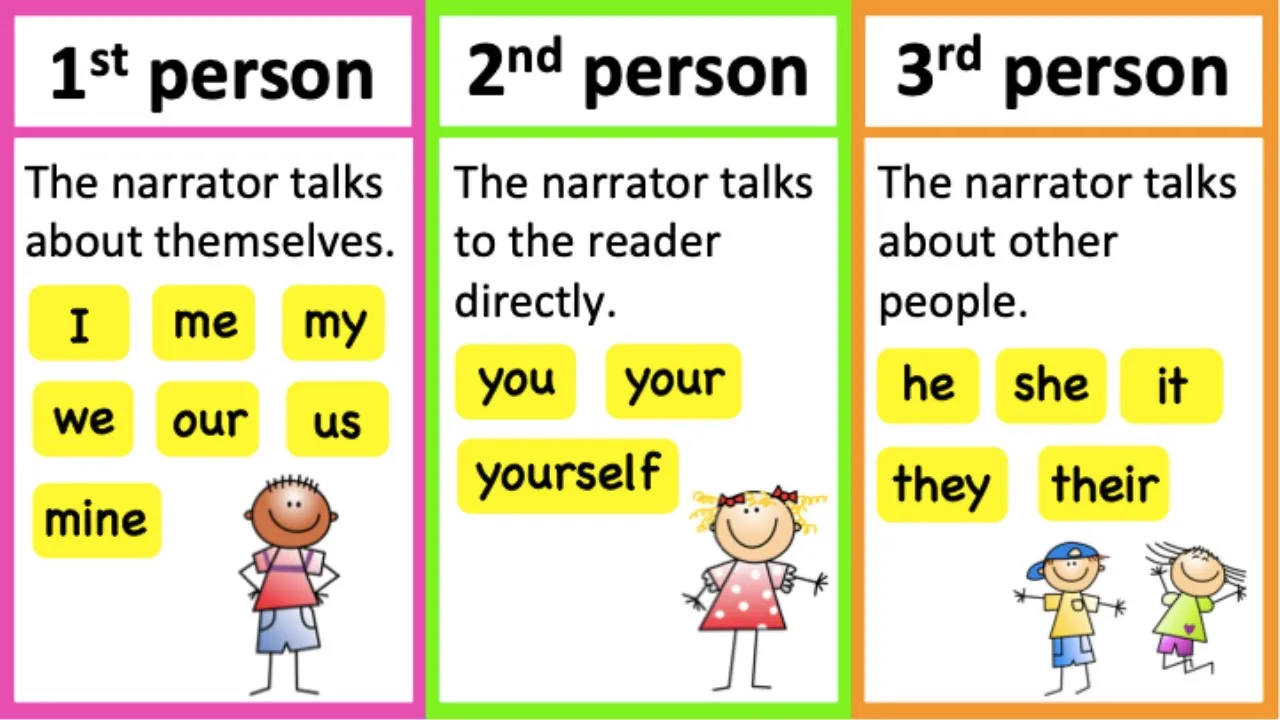
POINT OF VIEW 🤔| First person, Second person & Third person | Learn with examples | Types of stories
470.3K
Narrative point of view determines how a story is told through three main perspectives: First person uses 'I', 'me', 'my', and 'we' to show the narrator's personal thoughts and experiences; Second person uses 'you' to directly address the reader, though it is rarely used in fiction; Third person uses 'he', 'she', 'it', 'they', and 'there' to describe characters and events from an external perspective, where the narrator may or may not know the characters' inner thoughts.
Click to watch →
First person vs. Second person vs. Third person - Rebekah Bergman
1.3M
This section introduces the three primary narrative perspectives that shape storytelling. Third person narration positions the narrator outside the story, offering an objective viewpoint that can range from limited focus on a single character to omniscient awareness of all characters. First person narration immerses readers directly in a character's consciousness through 'I' statements, creating intimacy but restricting knowledge to that character's experiences. Second person narration addresses readers directly as 'you,' placing them inside the story's events. Each perspective transforms how stories are experienced, with examples drawn from classic literature including Ellison, Woolf, and Calvino. The section demonstrates how the same narrative can be dramatically altered by changing which character tells the story.
Click to watch →
Diferença entre primeira, segunda e terceira pessoa na escrita
592
Narrative point of view determines whose perspective the story is told from. First person uses 'I' to share personal experiences. Second person uses 'you' to address the reader directly, creating rare but powerful immersive experiences. Third person uses names and pronouns to describe characters objectively. The omniscient narrator functions like a god, knowing all characters' thoughts and events simultaneously. Each perspective creates distinct reader experiences and emotional impacts.
Click to watch →

English 9 Unit 3 Point of Views Lecture 4
414
There are three main points of view in narrative writing: first person, second person, and third person. First person uses pronouns like 'I', 'me', 'we', or 'us' and involves the narrator as a character in the story. Second person addresses the reader directly using 'you', making the reader feel part of the story. Third person uses pronouns like 'he', 'she', 'they', or 'it' and involves an outside observer telling the story. Third person is further divided into three categories: limited, omniscient, and objective.
Click to watch →

5th grade- RL5.6- Point of View.webm
393
Point of view refers to the perspective from which a story is told. First-person point of view uses pronouns like 'I', 'me', 'we', and 'our' when the narrator is a character in the story. Second-person point of view uses 'you' and 'your' to place the reader directly in the story, often giving commands. Third-person point of view uses 'he', 'she', 'they', 'him', 'her', and 'his' when the narrator is an outsider telling the story about characters. Understanding these perspectives helps readers analyze how authors present information and shape reader experience.
Click to watch →
Deep Dive
Familiarity with foundational film terminology, particularly concepts like point-of-view (POV) shots, voiceover narration, and subjective camera techniques.
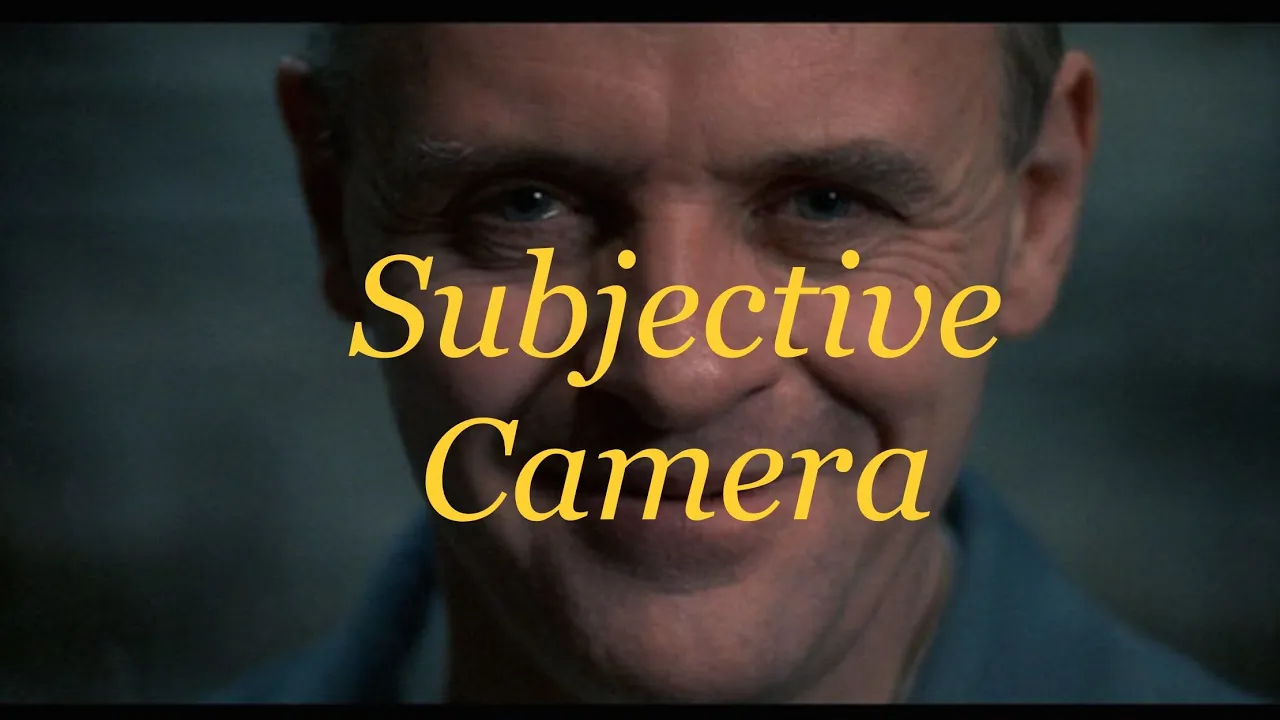
Subjective Camera
9.8K
This section establishes the core concepts of subjective point of view in filmmaking. It distinguishes between objective POV (providing factual information without emotion) and subjective POV (placing the audience inside a character's mindset). The video explains that POV shots show exactly what a character sees, literally putting viewers in their head. Using 'Silence of the Lambs' as an example, it demonstrates how directors like Jonathan Demme use beautiful close-ups for POV shots. The section emphasizes that directors must ease audiences into subjective camera gradually, starting with wide shots and progressively getting closer, rather than dropping viewers abruptly into someone's head without preparation.
Click to watch →

Adaptation #1: Point-of-view camera shots
23.5K
Point-of-view (POV) or subjective camera shots place the audience inside a character's eyes and perspective, similar to first-person narration in literature; effective use requires careful shot composition and editing to avoid confusion, as demonstrated by Alfred Hitchcock's Vertigo which successfully alternates between character shots and what they observe, while The Great Gatsby's attempt to use multiple conflicting POV shots creates a muddled viewing experience.
Click to watch →

POV Shots Se Film Cinematic Kaise Lagti Hai?” | FILMMAKING |SUBJECTIVE & OBJECTIVE
1.4K
Filmmaking involves two fundamental types of viewpoint shots: objective and subjective. Objective shots capture what the audience sees on screen from a general perspective, including close-ups and wide shots. Subjective shots show what a character experiences from their perspective within a scene. The filmmaking process requires dividing a story into short scenes, then deciding which shots will be objective or subjective. This systematic approach helps filmmakers structure their narrative effectively.
Click to watch →

L10 – FIL2461C_Coverage & Shooting for the Edit
305
A POV (Point of View) shot shows what a character is looking at, representing their subjective experience. In Captain America: The Winter Soldier, the camera shows what Captain America sees when he spots danger. POV shots can be brief or extended, as in Hardcore Henry where the entire film is from the protagonist's perspective. These shots create audience identification with the character's experience.
Click to watch →

Как использовать субъективный кадр. Лучшие примеры из кино
2.9K
Subjective camera shots (POV - Point of View) are filmed from a character's perspective, allowing audiences to experience the world through that character's eyes, which creates powerful emotional connections, builds tension, and enhances storytelling; however, filmmakers must use them carefully, especially during dialogue, to avoid breaking the fourth wall and disrupting the illusion of reality.
Click to watch →
Deep Dive
Awareness of the distinction between objective reality and subjective perception within a story's world.

مفاهيم || النسبية المطلقة - حلقة كاملة - 8
113
There is a fundamental difference between the objective existence of things and our subjective perception of them. For example, a production team exists objectively regardless of whether viewers can see them. The difference between what one person perceives and what another does not perceive lies in their cognitive awareness, not in the actual existence of the object.
Click to watch →
![•[🍒]•DC SuperHero Girls reagindo a história de Into The Pit •[🍒]•](https://i.ytimg.com/vi/tv1q3eO2Yac/sddefault.jpg?sqp=-oaymwEmCIAFEOAD8quKqQMa8AEB-AHUBoAC3gOKAgwIABABGGUgSihAMA8=&rs=AOn4CLAyGPwk0A4n5PYsxEYQcTpyVcB0bQ)
•[🍒]•DC SuperHero Girls reagindo a história de Into The Pit •[🍒]•
248.7K
The story explores the concept of subjective versus objective reality through the lens of Osvaldo's experience. While everyone else perceives Spring Bonnie as Osvaldo's father, Osvaldo knows the truth. This creates a psychological burden for Osvaldo, who must pretend that the animatronic is his father while internally knowing the truth. The story demonstrates how perception can be shaped by individual experience and how objective reality may differ from subjective experience, raising questions about the nature of truth and reality.
Click to watch →

11 Trance, Mistificación y Rapto Perceptivo. Curso de inteligencia emocional. Clase #11
463
This segment establishes the foundational distinction between objective reality and subjective perception. Objective reality consists of all events, circumstances, and facts that have occurred in the past and are occurring in the present—facts that cannot be changed or undone. Subjective perception is the process of receiving objective reality through our senses, passing it through our intelligence and filters, and forming a specific vision in our interior. This perception may align with or differ significantly from objective reality. The key insight is that objective reality exists independently of individual perception, regardless of how anyone experiences it.
Click to watch →

Что такое субъективное и объективное
8K
The boundary between subjectivity and objectivity lies not in objective reality but in subjective reality itself. In the ignorant state, everything is divided: there is an objective world, relationships between self and world, and mutual influence. To work with objective reality, one must work with oneself as the subject. This requires opening the reality at the foundation of the subject by investigating one's subjective world. Through this investigation, one discovers that thoughts and feelings are manifestations of consciousness, revealing that all subjective reality is pure consciousness expressing itself through various levels of manifestation.
Click to watch →

Maladies | Full Movie | Drama
1.5K
The distinction between objective reality and subjective perception. James demonstrates how reality can feel uncertain and shifting from an individual's perspective, where even basic questions about location, time, and physical presence become unclear or contested. This highlights the gap between external observation and internal experience.
Click to watch →
Deep Dive
A general introduction to literary modernism and how it shifted focus from external events to internal psychological states.
Literary Modernism
63.8K
Literary modernism, exemplified by Virginia Woolf's work, fundamentally transformed the novel by replacing the Victorian convention of omniscient narration with sustained interior monologue that captures the ordinary mind on an ordinary day; this approach emphasizes the drama of everyday moments over conventional plot, reframes importance through consciousness and perception rather than external events, and uses symbolism and fragmented structure to explore the interaction between conscious and unconscious mind, thereby challenging readers to experience the subjective reality of being alive rather than following traditional narrative arcs.
Click to watch →

Introduction to Literary Modernism
2.6K
Literary Modernism is a movement in literature and the arts dating from 1913 to 1945, characterized by the exploration of psychological states of mind, alienation, and social rupture; it began in 1913 due to three key events—the publication of Imagist poetry by Ezra Pound and H.D., the Armory Show in New York City featuring European modernist paintings, and Igor Stravinsky's controversial ballet 'The Rite of Spring' in Paris—which collectively signaled the emergence of modernist aesthetics across multiple art forms.
Click to watch →

English Literature | Modernism: historical/cultural background and new literary techniques
64.6K
Modernist literature fundamentally shifted focus from external plot to internal psychological experience. Traditional narratives emphasizing action, chronology, and logical progression gave way to exploration of individual consciousness. Authors abandoned linear storytelling, prioritizing instead the chaotic flow of thoughts, memories, and emotions. This shift drew directly from Freudian psychoanalysis, which revealed the unconscious as a powerful force shaping human behavior. Literature became a means to map the uncharted territories of the mind, capturing the fragmented, non-linear nature of human experience.
Click to watch →
20世紀の欧米文学
22K
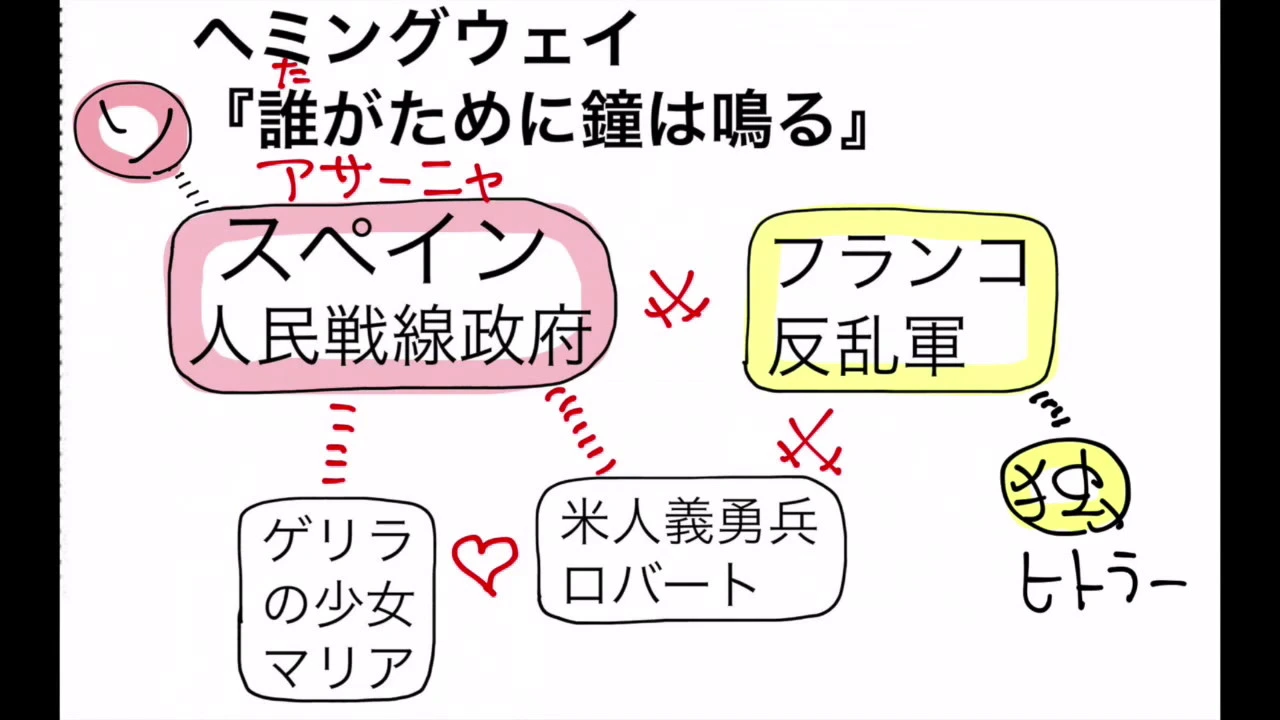
20th century modernist literature shifted focus from external reality to the interior lives of individuals. Proust's 'In Search of Lost Time' explored memory and consciousness through the famous madeleine episode. Joyce's 'Ulysses' used stream of consciousness to depict ordinary people's thoughts over a single day. Kafka's 'The Metamorphosis' and 'The Trial' depicted absurd situations that challenged rational explanation, representing the absurdist movement. These works explored how memory shapes identity, how consciousness operates, and how human existence lacks inherent meaning. The shift from external realism to internal exploration reflects broader philosophical changes in understanding human nature.
Click to watch →
Modernism in Hindi / Urdu | Modern Literature | 20th Century English Literature
586
Modernism is characterized by pervasive disillusionment, where writers felt both past and future held no meaning. T.S. Eliot's 'The Waste Land' exemplifies this theme, depicting Western civilization as a barren wasteland where traditional values have collapsed. The movement shifted focus from external events to internal psychological states, as Sigmund Freud and other psychologists became prominent figures. The world became 'internalized,' with literature exploring complex psychological landscapes. Modernist writers adopted the 'stream of consciousness' technique, pioneered by Carl Jung, to represent the chaotic, non-linear nature of human thought. Unlike traditional linear narratives, this technique presents characters' minds as constantly shifting between memories, present thoughts, and subconscious associations, creating fragmented narrative structures that mirror the modern psychological experience.
Click to watch →
Prerequisite Knowledge
- Concept 01Understanding of basic narrative theory, including the differences between first-person, second-person, and third-person points of view.
- Concept 02Familiarity with foundational film terminology, particularly concepts like point-of-view (POV) shots, voiceover narration, and subjective camera techniques.
- Concept 03Awareness of the distinction between objective reality and subjective perception within a story's world.
- Concept 04A general introduction to literary modernism and how it shifted focus from external events to internal psychological states.
Subsequent Learning
- Step 01In-depth analysis of landmark films utilizing unreliable narration, such as Akira Kurosawa's 'Rashomon', David Fincher's 'Fight Club', or Christopher Nolan's 'Memento'.
- Step 02Study of advanced screenwriting techniques for crafting a compelling plot twist or unreliable perspective without alienating the audience.
- Step 03Exploration of viewer psychology, focusing on how cognitive biases and the 'suspension of disbelief' allow audiences to be misled by narrative framing.
- Step 04An examination of interactive unreliability in digital media, such as how modern video games manipulate player choice and narrative truth.
Unreliable Narrator
Narrator Types
Unreliable Narrator
0:00Playing Section
- 1
Defines the concept of an unreliable narrator, originating in 1961.
- 2
Uses cafe scene to illustrate a narrator's distorted perception.
- 3
Highlights the 1920 film 'Cabinet of Dr. Caligari' as a classic example.
The Medium-Specific Critique: Focalization vs. Unreliability
While literary theory easily accommodates the 'unreliable narrator,' several film theorists argue that applying this concept to cinema is a category mistake. This counterpoint posits that because film is a visual medium relying on a camera rather than a singular speaking voice, true 'unreliability' rarely exists in cinema. Instead, what is often classified as an unreliable narrator is actually a device of 'restricted focalization' or 'subjective shot-making.' Critics argue that the cinematic apparatus is inherently objective, and departures from truth are simply representations of a character's internal state (dreams, hallucinations, or memories) rather than a deceptive act of narration. By forcing film into literary typologies (like the liar or the madman), analysis overlooks how the medium naturally manipulates spectator perspective through editing and framing, rather than linguistic deceit.
Deep Dive
In-depth analysis of landmark films utilizing unreliable narration, such as Akira Kurosawa's 'Rashomon', David Fincher's 'Fight Club', or Christopher Nolan's 'Memento'.
Les Narrateurs et leurs Secrets
38K
The unreliable narrator concept emerged with 1950's Rashomon, where Akira Kurosawa told a crime through four contradictory testimonies, each preserving witness honor. The Rashomon Effect describes films playing with perception subjectivity to create later revelations challenging initial perceptions. Memento alternates chronologies to create memory loss sensations. The Killer demonstrates subtle unreliable narration through ironic contrast between narrator's confident voice and character's clumsy failures. Narrators can add conflict, subtext, and new reading paths. When narrators question their own integrity, audiences expect distortion. Characters with agency can embellish, forget, or lie about events, creating narrative complexity.
Click to watch →

A Brief History of Time in Christopher Nolan Movies
48.7K
'Memento' (2000) is Nolan's most thorough exploration of an unreliable narrator. The film plays with time to put viewers in the protagonist Leonard's shoes, experiencing the same disorientation. Viewers only know what's happening but not what just happened, and are unsure of everyone's motives. The film's structure—moving backward in time—creates a shaky-step experience that mirrors Leonard's condition of not remembering recent events.
Click to watch →

Как Нолан пишет сценарии
189.3K
In 'Memento,' Nolan pioneered reverse narrative structure, showing the main story in reverse order while black-and-white scenes appear chronologically. This creates a narrative arc where the finale represents the maximum point of the arc. The unreliable narrator technique maintains intrigue through constant time jumps, with each episode ending in a twist. Visual markers like photographs with warnings about untrustworthy characters help build suspense. The color palette becomes more chaotic as the story progresses, showing that Leonard's memory system creates self-deception rather than helping him live. This technique of framed narrative becomes one of Nolan's favorite tools, appearing in every subsequent film.
Click to watch →

Clube da Luta - A Loucura dos Personagens! (Com Spoilers)
40.8K
In Fight Club, the film employs an unreliable narrator technique where Edward Norton's character (the Narrator) is delirious throughout the story, meaning everything the audience sees is filtered through his distorted perception; this creates a narrative where the apparent two protagonists (Tyler Durden and the Narrator) are actually one person, with the Narrator being the true protagonist who undergoes a complete transformation from a consumerist, isolated individual to someone who accepts his identity as Tyler Durden, while Brad Pitt's character serves only as a catalyst for this transformation without undergoing any personal change.
Click to watch →
Rashomon (1950) - Análisis y Reseña
6.9K
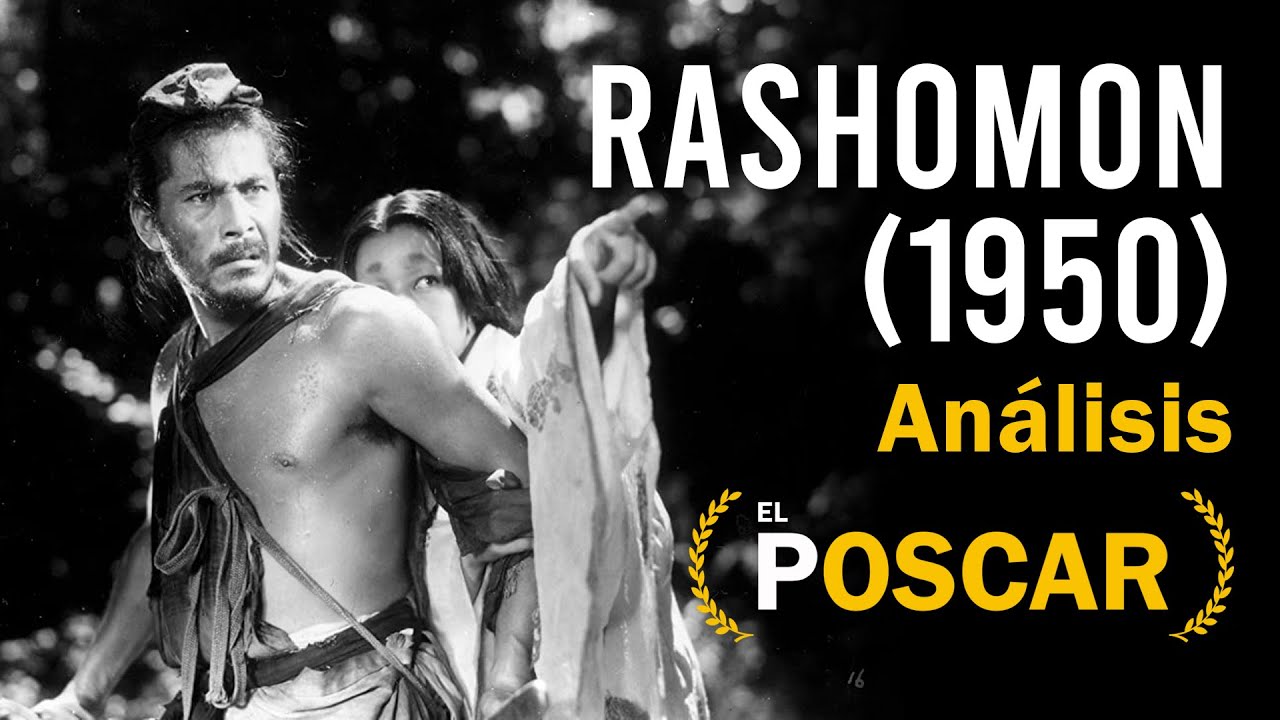
Rashomon (1950) directed by Akira Kurosawa is a groundbreaking film that broke cinematic paradigms and became the first foreign film to win the Oscar for Best Foreign Language Film. The film presents a case where a woman is sexually abused by a bandit and her husband is killed, with three characters providing different versions of the story. The narrative structure uses flashbacks during a trial, with the woodcutter and priest as witnesses and a cynical third character. The film features six characters divided into secondary and main characters. The bandit symbolizes humanity's savage side, while the samurai and wife represent more controlled aspects. As characters recount events, their self-images progressively break down, revealing the gap between self-perception and reality. The film presents four completely different versions of the same events, exploring how truth has power and how we create illusions about reality through self-deception. Each character glorifies or justifies their actions differently. The woodcutter's supposedly objective version is also questionable because he lies to avoid revealing he stole the dagger. Kurosawa uses visual techniques including direct shots toward the sun, handheld camera work, and obscured views through branches to reflect moral uncertainty. The black-and-white cinematography symbolizes that the world is gray, not just black and white. The final scene where the woodcutter adopts the abandoned child represents redemption and restores faith in humanity. The Rashomon Effect is the concept that for any piece of art or event, there exist millions of different perspectives because each person has their own internal world. This concept applies not only to art but to all aspects of life, demonstrating that we all perceive reality differently.
Click to watch →
Deep Dive
Study of advanced screenwriting techniques for crafting a compelling plot twist or unreliable perspective without alienating the audience.

أنواع البلوت تويست || Types of Plot Twists
144.8K
The unreliable narrator is a plot twist technique where the shock comes not from the protagonist's ignorance but from their deliberate concealment of information. The narrator provides a distorted version of events for various reasons, such as being a liar, suffering from mental illness or hallucinations, or experiencing memory loss. Unlike other plot twists, the audience has no reason to doubt the events they see on screen, but in this case, they are seeing events through the unreliable protagonist's perspective.
Click to watch →

NOVEMBER 9 is worse than UGLY LOVE
77.7K
Using unreliable narrator techniques cheaply involves making characters aloof or mysterious without providing meaningful clues or motivation for their behavior. The reviewer criticizes November 9 for suddenly making Ben aloof and using unreliable narrator techniques in a cheap way to prolong the reveal. This approach feels unearned and frustrating to readers because it doesn't provide any logical reason for the character's behavior, making the narrative feel manipulative rather than suspenseful.
Click to watch →
The Secret to Writing Compelling Plot Twists — The Art of Misdirection Explained
441.5K
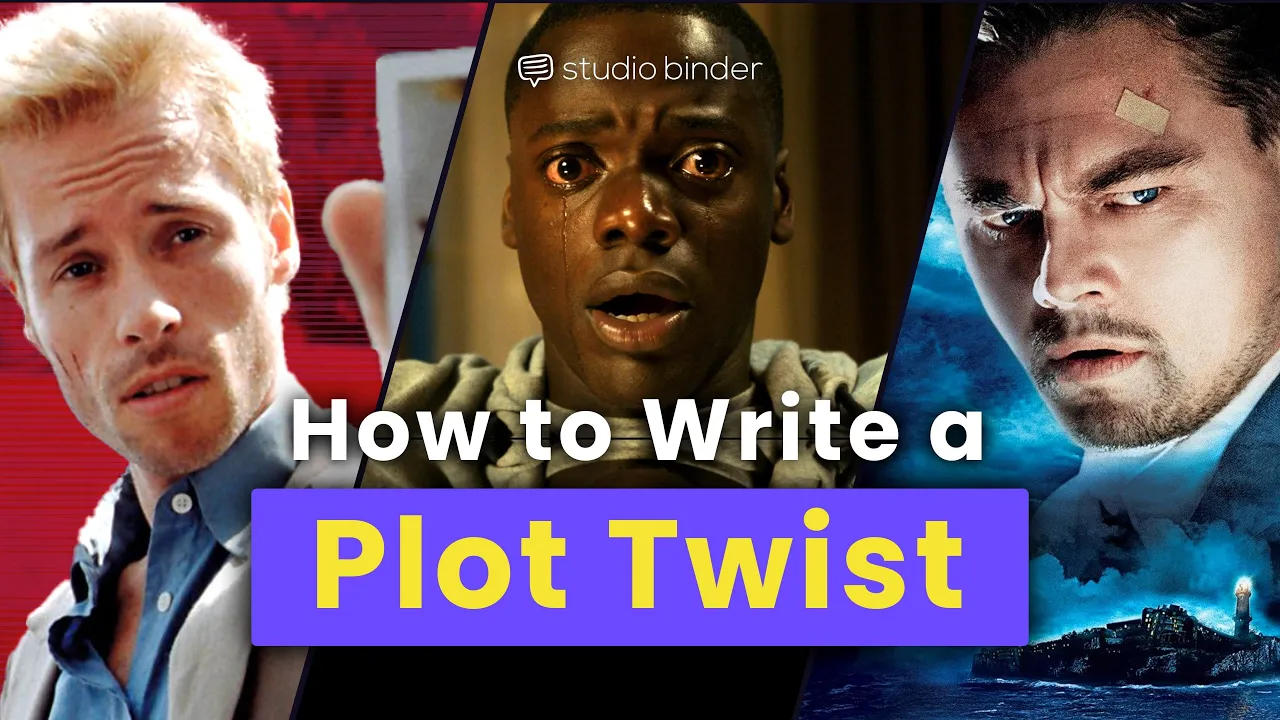
A plot twist is an unexpected development that radically changes a story's outcome, described by John Truby as 'reversals' that turn audience understanding upside down. Effective plot twists require three essential elements: misdirection to lead audiences toward wrong conclusions, breadcrumbs (subtle clues) that viewers catch on second viewing, and strategic placement within the story structure. Techniques include unreliable narrators (as in 'Memento'), meta-horror tropes (as in 'Scream'), dialogue-based clues ('The Sixth Sense'), and action-based foreshadowing ('Shutter Island'). Writers must plan extensively, examining how every script element changes based on the twist, ensuring twists feel earned rather than cheap shocks.
Click to watch →

APA ITU PLOT TWIST, PLOT ARMOR, & PLOT HOLE DALAM FILM⁉️
12.9K
Plot twist is a narrative technique that creates sudden changes in story perspective. Three main types include: Red Herring (misleading the audience toward a false storyline, as in Shutter Island where Teddy Daniels appears to be investigating but is actually the murderer), Unreliable Narrator (where the narrator cannot be trusted, as in Gun Girl where Amy is revealed as the mastermind), and Chekhov's Gun (a small detail placed early that becomes crucial later, like the red beret in Gadis Kretek). These techniques elevate storytelling by creating surprise and recontextualizing the narrative.
Click to watch →

Fight Club: An Analysis of the Twist Film Analysis
2M
An unreliable narrator is a storytelling technique where the character telling the story cannot be trusted to present accurate information. In Fight Club, the narrator (Jack) is unreliable because he is mentally ill and hallucinating. The video explains that everything we see is Jack telling us a story, which we can prove is only happening inside his mind. This technique creates dramatic irony where the audience knows the truth while the narrator does not.
Click to watch →
Deep Dive
Exploration of viewer psychology, focusing on how cognitive biases and the 'suspension of disbelief' allow audiences to be misled by narrative framing.

How Undertale Put Sans "Over"
138.5K
This section explores two fundamental psychological principles that shape how audiences perceive fictional narratives. First, suspension of disbelief requires audiences to accept that real people are playing fictional roles, whether wrestlers portraying enemies or actors playing superheroes. Performers maintain this illusion through 'selling'—demonstrating moves as painful or impactful even when they're only uncomfortable. Second, anchoring bias, first identified by Kahneman and Tversky in the 1970s, describes how initial numbers or values unconsciously influence subsequent judgments. These principles explain why audiences accept fictional narratives as real and why initial information disproportionately affects final decisions.
Click to watch →
Suspension Of Disbelief: How Movies & TV Become Unbelievable
335.3K
Suspension of disbelief is the audience's willingness to temporarily accept fictional premises, and when media violates this trust through incongruent tone, technical shortcomings, or narrative flaws that exceed audience expectations, it 'jumps the shark' and loses viewer engagement; this phenomenon varies by genre, with serious dramas requiring more consistent believability than comedies, and long-running series particularly vulnerable as they accumulate plot inconsistencies over time.
Click to watch →

The willing suspension of disbelief | Tom Bartlett | TEDxJIS
9.2K
Mirror neurons enable empathy by firing both when performing actions and observing others perform them. Christian Keysers' research shows identical brain activation when experiencing or witnessing emotions like disgust. This explains audience connection to performers. However, our powerful disposition for inattentional blindness—demonstrated by the invisible gorilla experiment—causes us to miss obvious stimuli when focused. This cognitive limitation paradoxically enables story immersion. Magicians and directors use misdirection to control attention, balancing predictability and chaos. The optimal craft lies between boredom (too much predictability) and confusion (too little), allowing audiences to willingly suspend disbelief even for implausible moments like 'thumb of death.'
Click to watch →
How To Engage The Audience Immediately - Margaret Kerrison
30.3K
Suspension of disbelief is the psychological process by which audiences willingly accept fictional premises and become immersed in a story world. In immersive storytelling, this suspension begins from the very first moment of the experience - from the moment visitors walk down a path, open a door, or meet a greeter. Every single detail and element that leads to the main experience contributes to creating this suspension. The creator must think about how to create an immersive environment that makes the audience believe they are in a different place, using all sensory elements to transport them into another reality. Humans are natural pattern recognizers, so maintaining consistent patterns across all elements is crucial because any inconsistency will immediately break the illusion. For example, if an experience is set in the 1800s but contains modern technology, the audience will be pulled out of the experience. The better you can create that sense of place and make it seamless and consistent, the more effectively you suspend disbelief and engage your audience.
Click to watch →

Flat Earther Hilariously Tries to Use Illusions to Debunk the Globe
69.3K
Suspension of disbelief is a psychological trick where people choose to overlook what they know for the sake of following a story. When watching a movie, you know it's a two-dimensional image on a screen, but if the story is convincing enough, you will forget all that and be swept up in the moment. This is voluntary and emotional. Science on the other hand does not suspend belief; it tests, measures, and repeats.
Click to watch →
Deep Dive
An examination of interactive unreliability in digital media, such as how modern video games manipulate player choice and narrative truth.
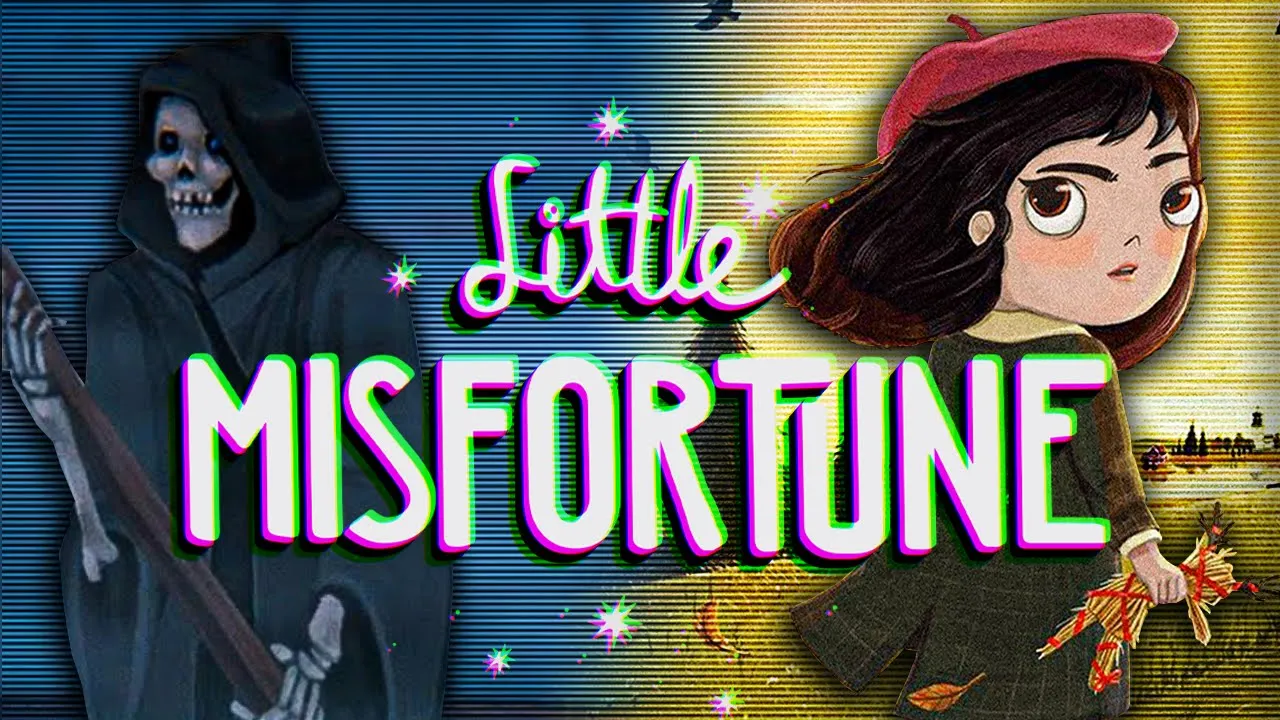
The World's Unluckiest Girl...
292.6K
In interactive media like video games, unreliable narrators can create complex narratives where the apparent truth is deliberately misleading, requiring players to critically analyze information and question the source of guidance, as demonstrated in Little Misfortune where the narrator's promise of 'Eternal happiness' and guidance about the fox were revealed to be manipulative lies designed to control the player's experience.
Click to watch →
![EDDIE SHOWED US THE REASON HE CAME TO SILENT HILL & ITS DISTURBING | Silent Hill 2 Remake [6]](https://i.ytimg.com/vi/-moz3EtiE3w/maxresdefault.jpg)
EDDIE SHOWED US THE REASON HE CAME TO SILENT HILL & ITS DISTURBING | Silent Hill 2 Remake [6]
310.6K
Interactive media explores narrative reliability by presenting conflicting information that forces players to question character trustworthiness. In Silent Hill 2, Mary's letter dated a week ago contradicts James's claim that she died 3 years ago, suggesting someone is lying. This creates narrative tension and forces players to question which character is trustworthy. The game uses environmental storytelling through letters, keys, and environmental details to reveal character backstories. This demonstrates how interactive media creates complex moral and narrative dilemmas that engage players intellectually, forcing them to piece together truth from fragmented information and question the reliability of information presented.
Click to watch →
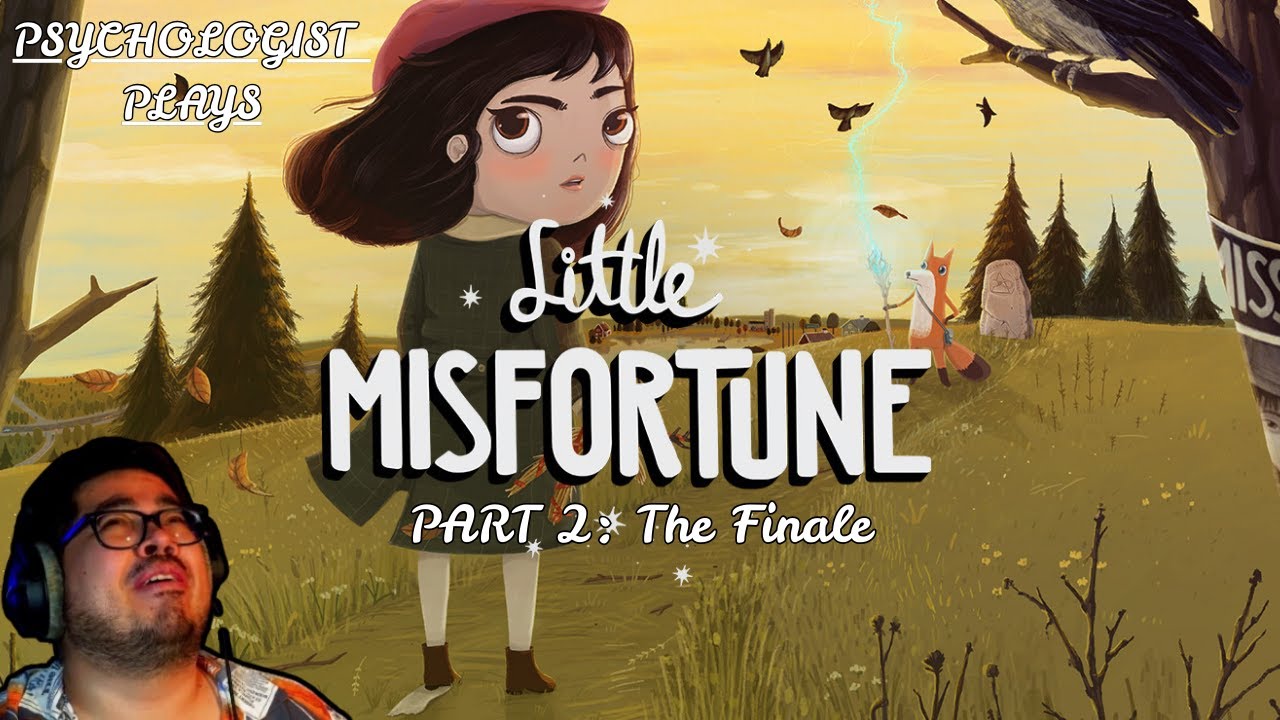
Little Misfortune "The Finale" Psychologist First Time Experiencing This Masterpiece
9.5K
Games can explore psychological themes and philosophical questions about existence. The narrator suggests that Benjamin might be a 'guiding Spirit' and that the player might already be dead, demonstrating how games can explore psychological themes. The game also employs unreliable narrators who may be leading players toward harmful outcomes, with the narrator questioning whether they are 'leading us to this right to me Misfortune' and suggesting they might be 'making us go through cycles of pain and our death.'
Click to watch →

Why Bastion Lies to You
189.3K
Unreliable narration is a literary device where the narrator conceals, distorts, or omits information. In video games, this becomes more complex because players are co-authors of the experience—they press buttons and make choices. The tension between player agency and narrative control creates unique storytelling possibilities. Unlike books where readers passively receive text, games require writers to either reduce, ignore, or exacerbate this disparity, adding layers of meaning absent in film or literature. The narrator's deception becomes tactile and real because there is actual push and pull between player and game.
Click to watch →

Jugué BAD PARENTING y me Traumó 😔
37.8K
Narrative unreliability is a storytelling technique where the narrator or protagonist may not be telling the truth. In this game, the player's mother claims the player has mental health issues and is hallucinating, while the player believes the supernatural events are real. This creates tension between the player's perception and the game's narrative, demonstrating how games can use unreliable narrators to create complex and thought-provoking stories.
Click to watch →
Unreliable Narrator
Narrator Types
Unreliable Narrator
0:00- 1
Defines the concept of an unreliable narrator, originating in 1961.
- 2
Uses cafe scene to illustrate a narrator's distorted perception.
- 3
Highlights the 1920 film 'Cabinet of Dr. Caligari' as a classic example.
The Medium-Specific Critique: Focalization vs. Unreliability
While literary theory easily accommodates the 'unreliable narrator,' several film theorists argue that applying this concept to cinema is a category mistake. This counterpoint posits that because film is a visual medium relying on a camera rather than a singular speaking voice, true 'unreliability' rarely exists in cinema. Instead, what is often classified as an unreliable narrator is actually a device of 'restricted focalization' or 'subjective shot-making.' Critics argue that the cinematic apparatus is inherently objective, and departures from truth are simply representations of a character's internal state (dreams, hallucinations, or memories) rather than a deceptive act of narration. By forcing film into literary typologies (like the liar or the madman), analysis overlooks how the medium naturally manipulates spectator perspective through editing and framing, rather than linguistic deceit.
Understanding of basic narrative theory, including the differences between first-person, second-person, and third-person points of view.
Familiarity with foundational film terminology, particularly concepts like point-of-view (POV) shots, voiceover narration, and subjective camera techniques.
Awareness of the distinction between objective reality and subjective perception within a story's world.
A general introduction to literary modernism and how it shifted focus from external events to internal psychological states.
In-depth analysis of landmark films utilizing unreliable narration, such as Akira Kurosawa's 'Rashomon', David Fincher's 'Fight Club', or Christopher Nolan's 'Memento'.
Study of advanced screenwriting techniques for crafting a compelling plot twist or unreliable perspective without alienating the audience.
Exploration of viewer psychology, focusing on how cognitive biases and the 'suspension of disbelief' allow audiences to be misled by narrative framing.
An examination of interactive unreliability in digital media, such as how modern video games manipulate player choice and narrative truth.
237 views11likes3:08@LosteFilmsOriginal Release: 2017-08-15
hi I'm Adrian Elledge with Parthian enterprises and today we question everything so the main character is sitting in a cafe let's say our name is Rudy she is anxious not trusting anybody around her they're all staring at whispering her name they are all there to kill her it's impossible but it's happening right before our eyes or is it the waitress steps in and asks if she want some more coffee Ruby snaps out of our days and looks around everybody in the cafe is going about their business not paying any mind or Ruby is what we call an unreliable narrator the term unreliable narrator was coined by writer Wayne C booth in 1961 in his book the rhetoric of fiction food stated I have called a narrator reliable when he speaks four or acts in accordance with the norms of the work and unreliable when he does not the earliest known example of an unreliable narrator in film is the 1920 German film the cabinet of dr. Caligari in which the entire film is told through the main character Francis's point of view but in the epilogue the viewers learn that Frances is in a mental asylum and the entire story was in his head sound familiar this is an example of the type of unreliable narrator referred to as the madman there are five types of unreliable narrators the madman the Picaro the clown the naive and the liar the madman is the narrator that suffers from a mental disorder which prevents them from providing a sound narrative much like the narrator in Fight Club the Picaro is where certain elements of the story are exaggerated like in 300 where the Persians are given in human qualities to exaggerate the intimidating nature of the army the clown knows that he's the narrator and does not take it seriously so he toys with the readers / viewer and the norms of narration much like Ferris Bueller and Frank Underwood the naive is a narrator that has a limited view of the world usually because they're young or childish in nature the classic example of this is of course Forrest Gump the liar is one who tells the story in a way that misrepresents him or herself usually to prove innocence this is like Keyser söze in the usual suspects as you can see there are a lot of unreliable narrators in the film now that you know what the different types are keep on the lookout story you've been following could all be a carefully crafted lie thanks to your unreliable narrator if you have any questions leave them in a comment below I'm Adrian eledge with Parthian enterprises thanks for watching you
Up Next

21:41
Batman Fortnite Zero Point: A Comic Analysis & Story Recap
@Mulletman_Comics
239.7K views•2024-02-26

12:54
Triumph of Orthodoxy Icon: Byzantine Art & History Explained
@BenCallan
2.1K views•2024-08-06

9:49
FastAPI vs Flask vs Django: Choosing the Right Python Web Framework
@TechWithTim
302.5K views•2024-05-26

1:42
Game of Thrones Opening Credits: A Cinematic Analysis
@gameofthrones
46.3M views•2011-04-18
Related Study Plans & Knowledge Roadmaps
Structured learning paths in General & Interdisciplinary Studies
general-studies
Elevator Engineering: History, Physics & Cities
01From Hoists to Safety Brakes: The Dawn of Vertical Lift
02Hydraulic vs. Traction: The Engineering Physics of Elevators
03Modern Speed, Safety, and Algorithms
+ 2 more learning modules
12h5 modules
Explore Roadmap
general-studies
Rubber: Material Science, History & Geopolitics
01Origins of Natural Rubber & Mesoamerican History
02The Chemistry of Natural Rubber & Vulcanization
03The Geopolitics of the Rubber Boom & Colonization
+ 2 more learning modules
12h5 modules
Explore Roadmap
general-studies
Containerization: Evolution, Logistics & Trade
01Ancient Trade & Bulk Cargo: Amphorae to Barrels
02The Industrial Revolution & Cardboard Packaging
03The Containerization Revolution: Malcom McLean
+ 2 more learning modules
12h5 modules
Explore Roadmap
general-studies
Textile Tech: Evolution, Labor & Global Impact
01Pre-Industrial Textiles: Handloom & Cottage Industry
02Mechanization: The Spinning Jenny to the Power Loom
03The Factory System & Global Labor Transformation
+ 2 more learning modules
10h5 modules
Explore Roadmap