![Fight Club [1999] Lou's Place (HD) | Lou'nun Yeri | Türkçe Altyazılı](https://i.ytimg.com/vi_webp/WiGIyeIm-Xo/maxresdefault.webp)




























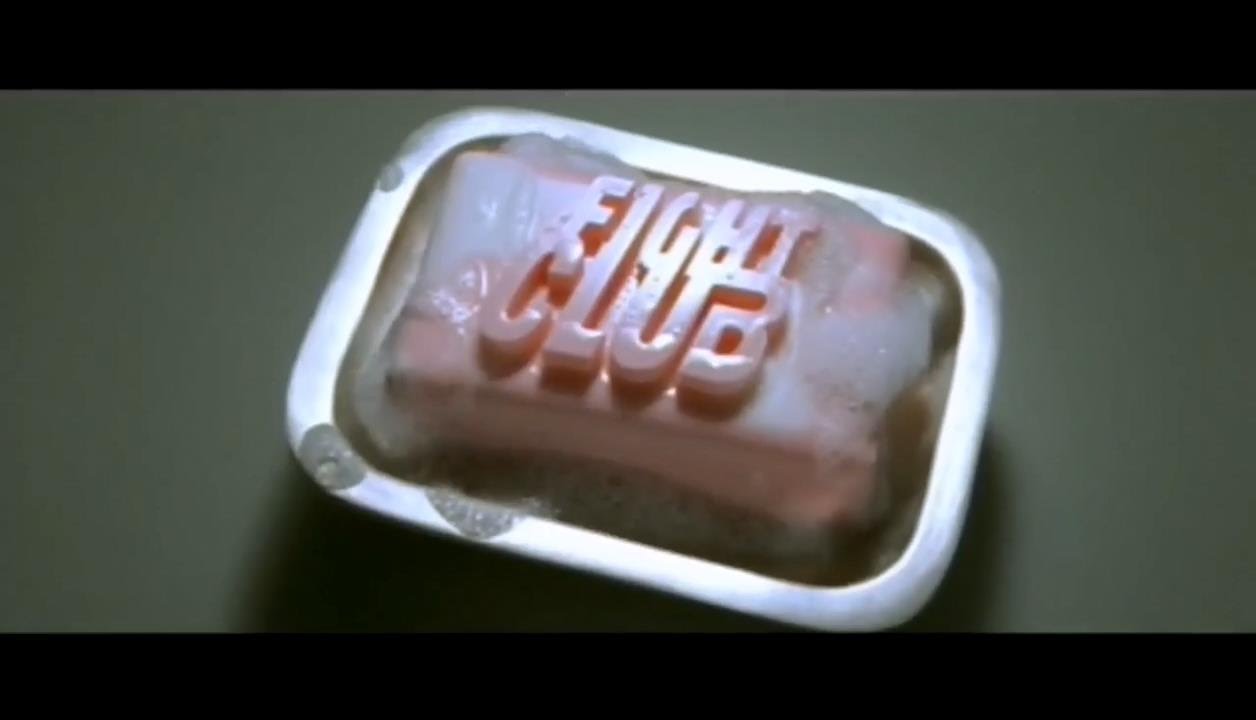
Fight Club's most significant twist is not merely that Tyler Durden is imaginary, but that the entire narrative—including Marla Singer, Bob, Fight Club, Project Mayhem, and the house on Paper Street—exists only in Jack's mind as a manifestation of dissociative identity disorder caused by his testicular cancer diagnosis; this psychological twist reveals that Jack created these alternate personalities as coping mechanisms to avoid facing reality, with Tyler representing his hyper-masculine desire to reject modern society and Marla representing his acceptance of vulnerability, ultimately demonstrating that true masculinity involves productive self-improvement rather than destructive rebellion.
Fight Club: An Analysis of the Twist Film Analysis
Added:Familiarity with the plot, characters, and major twist of the 1999 film 'Fight Club' directed by David Fincher.
The literary and cinematic concept of the 'unreliable narrator' and how it shapes audience perception.
A basic understanding of psychological concepts like dissociation and defense mechanisms as narrative devices.
Contextual awareness of late-20th-century themes of consumerism, alienation, and the crisis of masculinity.
Comparative analysis of other 'unreliable narrator' films (e.g., 'Memento', 'Shutter Island') to study diverse twist execution.
Application of Psychoanalytic Film Theory, specifically Freudian concepts of the Id, Ego, and Superego, to the Narrator and Tyler Durden.
Advanced screenwriting techniques for planting visual and textual foreshadowing that sustain rewatchability.
Sociological examination of 'Fight Club's' cultural legacy, including its influence on modern internet subcultures and political discourse.
2M views87.3Klikes21:19Original Release: 2023-02-04
[Music] thank you what is the best cinematic twist ever gone girl Planet of the Apes The Usual Suspects psycho or maybe Shutter Island a lot of people still think the Sixth Sense is the greatest twist ever even though Shyamalan had to lie in order to keep the twist a secret so I personally don't even consider it a real twist now I always thought a really underrated movie called The Others had the best twist but I have to put it at number two because Fight Club has a Twist that's so good that after almost 25 years no one even knows what the real twist is so much attention is focused on what Fight Club means that very few people pay attention to the actual narrative everyone's so obsessed with the philosophical aspects of it that they didn't realize Tyler Durden being imaginary is only one part of a much deeper twist a Twist that completely changes everything about this film a Twist that everyone missed what do you mean everyone everyone now before we start I gotta address the well actually people in the comments we're gonna try to lecture me about the book or what everyone wants this movie to mean and I understand the point of the book was to be a commentary on the emasculation of men in Western culture and even on the surface the movie does address this issue it tells a completely different story than the book does I'm going to show you all the details you missed improve you've been watching this movie the wrong way the entire time what is Fight Club about Fight Club is about a man who struggles to find meaning in the monotony of his day-to-day life so he starts going to terminal illness support groups so he can emotionally decompress enough to sleep at night one day he meets a charismatic soap maker who convinces him to regain his masculinity by rejecting all of the expectations and Comforts of a modern society and after his apartment mysteriously blows up he goes on a journey of self-discovery by starting a fight club becoming an urban terrorist and influencing other men to join him by redefining what it means to be a man in a modern world his sanity starts to unravel in the end and he learns that his best friend and inspiration Tyler Durden was only a figment of his imagination and never actually existed what is Fight Club really about Fight Club is about a man that's been diagnosed with testicular cancer and to cope with the idea of potentially having his testicles removed his mind fractures and creates two different personas with two conflicting personalities one masculine and one feminine Tyler is a sight of him that wants to reject the reality of his situation by embracing a hyper masculinity and Marla is the sign that encourages them to accept the removal of his balls and to embrace a less masculine lifestyle going forward so the real twist isn't that Tyler is imaginary The Twist is that Marla Bob Fight Club Project Mayhem and even the house on paper Street only exist in Jack's mind come on dog come on man oh yeah I'm gonna be calling him jack because I don't want to have to keep saying the narrator the whole time even though his real name is actually Tyler Durden yeah that's right Ed Norton's real name is Tyler dirt say my name Tyler Durden Tyler Durden you [ __ ] just think about this when Ed Norton discovers that Brad Pitt isn't real we see plane tickets with Tyler durden's name on them now you can't just walk up to check in with a ticket that doesn't have your name on it you need an ID to get a boarding pass to fly and remember these tickets were given to him by his job weekly paychecks and 48 Airline flight coupons so why would his job give him tickets with someone else's name on him or even if he could pick a name why would he pick a name that he didn't have an ID for Jack has never given a real name and he's only credited as the narrator because everything we see is him telling us a story a story that I can prove is only happening inside of his mind just think about the very first thing that Jack tells us people are always asking me if I know Tyler Durden all of this the gun the bombs the revolution has got something to do with a girl named Marla singer both of these things are objectively false because the only person that ever asked him about Tyler is Bob and Marla has nothing to do with project man so that was a [ __ ] lie before we officially meet Tyler we see a single frame image of him pop-up four different times and these are the first clues that expose when Jack is imagining something that isn't happening the way we're seeing it we see him at Jack's job when he's talking about insomnia and again when he first sees Marla outside of the support groups we see him right before the first time he meets Bob and we see him when he's at the doctor's office the other visual clue that tells us something is only happening in Jack's mind is a simple slow zoom into Jack's face for a mid shot with Jack at the center of the frame now this technique is used many times but a few of the most obvious ones are when he's Imagining the plane crashing when he's watching Tyler at Fight Club we see the slow Zoom technique used when Tyler calls the pay phone and we also see it when he's talking to the doctor one of the first times we see Tyler is when Jack is talking to his doctor about insomnia and after he refuses to prescribe him medication to help him sleep he tells him to go to terminal illness support groups if he wants to see people suffering now this entire scene feels strange because there's no reason why a doctor wouldn't give him sleeping pills or white would tell him to go see people with terminal illnesses so stop complaining about not being able to sleep now the reason this scene feels so strange is because Jack isn't talking about insomnia he's asking his doctor for pills to help with anxiety about having cancer I'll explain more in a minute but Jack and Marla are the same person and this is why we see her with a prescription for Xanax the exact thing Jack was asking his doctor for Jack is suffering from something called disassociative identity disorder or multiple personality disorder he's also suffering from some schizophrenia anxiety and depression too but the did is the main thing that's causing him to hallucinate did is typically caused by severe trauma or anxiety and even though Jack's life kind of sucks there's nothing that happens to him that I would consider traumatic the only real thing we see that can cause a mental breakdown like this is a cancer diagnosis now we don't actually see him get diagnosed with cancer but cancer comes up way too many times not to mean anything and since the entire point of this movie is to show that Jack is avoiding Reality by creating his own it's easy to connect the two and see what's really happening if there's a lump in my breast this was a support group for men with testicular cancer there's not a lot of breast cancer in the men in my family check your prostate I get cancer I killed Jack see the guys with testicular cancer this is also the reason why Marla and Tyler are always smoking they're both alternate personalities that Jack made up to help him cope and they both smoke all the time because cancer is constantly on his mind now the point I'm trying to get across is that we can't really trust anything we see especially because the entire story is being told to us by an unreliable narrator [Music] we see Tyler again right before he meets Bob but Bob is just another character that Jack created to help him cope notice how everyone ignores him like he doesn't even exist and the fact that he's just a collection of different things Jack sees in his everyday life Bob had been a champion bodybuilder you know that chest expansion program you see on late night TV that was his idea [Music] the father must have been used you see where the fats burned and see but the biggest thing that proves Bob isn't real is his death that motherfucker's dead Bob gets shot in the head and the Project Mayhem guys bring him back to the house on paper street but how did they get his dead body back when they were all running for their lives and one of the guys was shot in the leg and couldn't even walk without help and notice that Bob and Tyler die in the exact same way two people that only exist in Jack's head both being shot in the head the fight clubs in other cities don't know about each other and the only Project Mayhem is in the city Jack lives in so why were these guys chanting his name his name name is Robert Olson how did they know about his death anyway the reason they know about Bob and his death is because they only exist in Jack's mind just look at this scene Jack walks past the bar and there's nobody behind it then a second later the bartender magically appears where did this guy come from it's not a door behind the bar that he could have entered from and he damn sure can't move very fast with a neck injury like this this place is obviously closed the lights are out the chairs are on the table and there's no customers so why are there so many employees here right now this entire scene is just another hallucination and Jack is standing in an empty bar talking to nobody Project Mayhem and Fight Club are just another figment of Jack's imagination a fractured mind so desperate to avoid reality that it creates its own and all these guys are nothing more than Jack's subconscious producing more alternate personalities to validate Tyler's perspective this is similar to a concept from inception where we see the subconscious represented as a bunch of random people who don't exist but they behave in a way that protects the Mind from realizing what it's experiencing isn't actually happening just think about this why would ichigai wait on the porch for three days without knowing how long he had to stand there three days is a long time and I'm assuming they didn't all just quit their jobs to come join Project Mayhem something they wouldn't even know about anyway when they did it now they all have shitty low-level jobs so they can't just go missing for three days and why are a hundred percent of the blue collar workers in every city a part of Fight Club none of this makes any sense even the detectives are part of Project Mayhem even though being a detective isn't a job with no purpose and just think about how Fight Club started in the first place jack was in the parking lot fighting an imaginary person and some guy saw him and wanted to be a part of it now we saw him fighting Tyler but what everyone in the movie Saw was the guy beating himself up why would anyone see this and asked to join in what were these guys attracted to now it makes sense for people to follow Tyler but Tyler isn't real so why would anyone follow or be inspired by Jack Tyler is handsome in great shape he's cool charismatic rebellious and he's literally what Jack imagines the perfect man would look and act like but Jack is the only one that sees Tyler so everyone is actually just following him we all know Jack imagines himself as an inspirational Freedom Fighter so why would he also Imagine an army of men to support that fantasy the whole point of creating Tyler whistle Jack could Escape reality and the only way Tyler could be validated is for him to also have a group of men that follow him too the first time we see Tyler is in the scene where Jack is talking about his insomnia and the thing that stands out in this scene is the excessive amounts of coffee Starbucks Coffee to be exact now you might think this is just heavy-handed product placement or a visual commentary on obsessive consumerism but the coffee is actually the first clue that Marla isn't real just like Tyler we never see Jack drink coffee but we do see Marla drinking it and she even says it's one of the benefits to going to the supporters God why are you doing this it's cheaper than a movie in this free coffee if coffee was meant to be a commentary on consumerism or possibly even product placement then why is Marla drinking regular coffee that's not from Starbucks what's the point bringing attention to it if it's just regular coffee she could have easily just showed up to the support groups with the Starbucks cup but she never did the point of the coffee is to tell us that Jack doesn't have insomnia and his problem is that he's really outliving a double life is Marla and drinking coffee to stay up all night so the reason he can sleep after going to the support groups is because he's just being himself after work and he's not drinking coffee all night as Marla this is also why his insomnia comes back when Marla shows up she's imaginary just like Tyler is and he's watching her in third person but he's actually acting out what he sees just like he is with Tyler in a fight club when we find out that Tyler isn't real we're supposed to assume that Jack was really working all these jobs we hear about in his backstory but if he was working a nine to five with two part-time jobs and selling soap on the side he would notice all that extra money in his bank account in that would have made him ask questions and that would have exposed Tyler is not being real before the movie even started these jobs are made up just like Tyler is and we even see a man that looks exactly like him in a commercial for a hotel restaurant Jack staying at and this is where he got the idea for Tyler's backstory we're supposed to think that Jack was staying up all night as Tyler but he was really staying up as Marla and he didn't start living life as Tyler until we met him on the plane the next time we see Tyler's when Jack first tries to talk to Marla Marla singer is one of Jack's made-up personalities but she's different from Bob and the guys from Fight Club because Jack actually pretends to be her just like he does with Tyler we know that Jack interacts with Tyler in three different ways sometimes he imagines Tyler is a person that he's hanging out with like when he's at the paper Street house other times he becomes Tyler without knowing it like when he flies to different cities to start other fight clubs and other times he becomes Tyler and thinks he's watching him in third person like when he's talking to people in Fight Club or Project Mayhem this is exactly how he interacts with Marla too sometimes he imagines her as a person that he's interacting with like when he's on the phone or in his kitchen after she has sex with Tyler other times he becomes her without knowing it like when he's at the hotel and other times he becomes her and is watching her in third person like when he's at the support groups and I know the will actually gang is probably typing away right now because we see people in the support groups react to Marla but can we really trust this as proof of her existence when we see a guy on the bus physically touch Tyler when he walks by we never actually see a single person interact with Marla and the few times she's even around other people they never address her directly she moves around like a ghost walking through traffic stealing food from trucks and no one says anything to her even when she shows up to an all-male cancer support group smoking cigarettes no one says anything Marla isn't a real person and Jack created her because she represents his feelings of being literally feminized by the prospect of losing his balls everyone remembers how Tyler makes his soap right he uses fat that he steals from a liposuction clinic in the scene where they go to steal some fat they hide from a security guard behind a dumpster labeled infectious waste to be more specific the contents of the dumpsters are literally infectious human waste when Tyler goes to save Marla after she overdoses she tells the paramedics that the woman living in the room is she uses this term because Tyler and Jack know this so she knows this what are the odds that if Marla was a real person she would use these words to describe herself when we know that Jack and Tyler literally use infectious human ways to make soap Jack Tyler and Marla are all the same person so this is actually just Jack walking alone down the hall talking about Marla this is also why Tyler wears rubber gloves when he has sex with her the same way he does when he's using fat to make soap now you all remember when Tyler said this right self-improvement is masturbation now you might think this is just Tyler's justification for fight club or destroying things around the city but it's actually more proof that Marla isn't real there's a few scenes when Tyler and Marla are having sex and they're always shot in this strange dreamlike Matrix bullet time now I can be shot this way to show that Jack is partially remembering what he's doing as Tyler but he never remembers anything else like this so it has to mean something else what is Jack always doing when Tyler and Marla are having sex he's doing things like reading and exercising so if self-improvement is masturbation and if Marla Tyler and Jack are all the same person then Jack is actually masturbating during these scenes this is why the sex scenes are always shot like this because his two alternate personalities are interacting with each other and he's literally having sex with himself remember when Jack and Tyler leave the bar and Jack says he needs to find a hotel we should find a hotel and even though we see him follow Tyler to the house on paper Street he actually did go get a hotel because the house on paper Street doesn't exist if you look up the definition of paper Street it's a street that developers plan to build but it only appears on a map and it doesn't physically exist when Jack first meets Tyler on the plane he hands him a business card that says paper Street Soap Company this is the name of his Soap Company because he lives on paper street but Tyler isn't a real person so he doesn't technically live anywhere because this is the first time Jack is meeting him this business card only exists in his mind so how would Jack know about paper Street at this point if he's never actually been there the house on paper Street isn't a real place and it's actually Jack's safe space remember when Jack was at one of the support groups and he was told to go into his inner cave and find his power animal and he imagined an ice cave with a Talking Penguin in it forward and into your cave this was his mental safe space before he created those on paper Street the paper Street house isn't a real place and Jack actually lives in the hotel he thinks Marla lives in and yes this is a hotel not an apartment there's a struggle between Marla and Tyler and they're both fighting for control over Jack's mind this is why Tyler tells Jack that a woman isn't the answer to his problems I'm wondering if another woman is really the answer we need he's trying to convince Jack that his hyper masculine approach is the best way to cope with his cancer Marley is gradually invading the mental safe spaces he considers safe she invaded my support groups now she'd invaded my home this is why Jack doesn't like Marla spending so much time at the paper Street house and why Tyler and Marla can't be in the same room together with Jack he needs two separate places for his two alternate personalities and because they're both fighting for control over his mind he can't interact with both of them at the same time or they'll expose each other as being imaginary if Marla was real Jack could easily just act like Tyler until she leaves but she's not a real person and the only time her and Tyler can interact is when Jack is masturbating Jack is unaware that both of them are imaginary so he has to interact with them separately so he never realizes they're fake don't you think it's strange that Marley would never call Jack by his name when we know she thinks his name is Tyler she never says see you later Tyler or why do you treat me like this Tyler she can't expose Tyler because Jack's mind doesn't want it exposed so he never imagines her calling him anything else until he's ready to know the truth and he directly asks her this part about this idea is that if you accept even one of these theories you automatically have to accept all of them if Bob isn't real then the guys from Project Mayhem aren't real either because they all interact with him if the house on paper Street isn't real then you also have to accept that Bob Project Mayhem and Marla aren't real because they all come inside of the house all of these details are connected so even something simple like the phone in the paper Street house exposes that the house and Marla don't actually exist when Jack talked to Tyler for the first time Tyler called him on a pay phone that doesn't accept incoming calls now it's obvious that this call never happened because Tyler isn't real but the phone number that Jack called can't be real either when Jack and Marley exchanged numbers he writes his home number on the back of his business card and she writes her number on his hand but after his apartment explodes he finds her number written on a small piece of paper now I know this was 19.99 before everyone had a cell phone so writing numbers down was the only way to save a number but the writing seemed a little too feminine to be Jacks and why would he write her number on a small piece of paper like this Marla lives in a hotel not an apartment so why would she have a private number anyway Marla isn't real her phone number isn't real and the paper Street house phone isn't real either now some of you might think that Jack was already living in the paper Street house as Tyler before we met him on the plane and that's how he got a working phone line in the house but I don't think a phone company would install a phone line in an abandoned house Fight Club is easily one of the best movies ever made and even though so many people find this movie relevant and probably more relevant today than it's ever been it's not actually about men regaining their masculinity it's about men rejecting it at the end of the story Jack ends up losing his pants pants being a symbol of masculinity and we actually saw this happen early on with Marlon when she takes jeans from the laundromat and sells them before grabbing Jack by the balls as a show of control over this entire scene is showing how she's stripping him of his masculinity and this is why we see that Jack and Marla look almost identical in the final scene Jack created Bob then Marla then Tyler then he killed Bob and Tyler to accept his emasculated self by choosing to keep Marla as his main personality Tyler is supposed to be the manifestation of manhood masculinity and Rebellion but he's really not a good example of masculinity because everything he does is juvenile and immature Tyler is the manifestation of a man-child throwing a tantrum a man that's unwilling to grow up and instead of finding an actual purpose he decides to just knock all the pieces off the chessboard because he doesn't like the rules of the game what's the benefit of pissing in the soup or destroying private property or even showing naked pictures to kids which is crazy illegal by the way everything Jack and Tyler do is unproductive and their behavior is a sign of a person that isn't emotionally mature now I agree that men have become lost and unproductive and all the instincts and responsibilities they've had for thousands of years have suddenly been Stripped Away they feel domesticated and abandoned by modern society but masculinity is about using the frustration and energy to be productive and not just giving in to all your hedonistic desires foreign [Music]
Up Next
9:48
Fractured (2019) Ending Explained: Psychological Analysis
@heavyspoilers
473.6K views•2019-10-14

23:14
Visual Analysis Essay: How to Analyze Graphic Novels in College Writing
@nataliepleimann5941
1K views•2020-10-14
4:55
Film Blocking Techniques for Directors: Space, Shapes, Lines
@StudioBinder
1.9M views•2018-07-23

4:00
Evolution of Darth Vader: Anakin Skywalker's Animated Journey Across Star Wars Films
@TellItAnimated
13.4M views•2019-03-30
Related Study Plans & Knowledge Roadmaps
Structured learning paths in Film Analysis
film-analysis
Sensory Cinema: Foley, Haptic Sound & Texture
01Introduction to Film Sound and Foley Artistry
02Micro-Sounds, Textures, and Extreme Amplification
03Haptic Audition and Film Phenomenology
+ 1 more learning modules
12h4 modules
Explore Roadmap
film-analysis
Breaking the Fourth Wall: Mockumentary & Satire
01The Invisible Wall: Basics of Cinematic Illusion
02Looking at the Lens: Direct Address & Character Glances
03The Mockumentary: Satire, Realism, and Complicity
+ 2 more learning modules
12h5 modules
Explore Roadmap
film-analysis
Analyzing the Long Take: Cinema, Space & Ethics
01Foundations of Film Grammar: Montage vs. The Long Take
02Choreography and Mechanics of the Simulated One-Shot
03Phenomenology of Film: Real-Time Spatial Continuity
+ 1 more learning modules
14h4 modules
Explore Roadmap
film-analysis
Anachronistic Music: Period Drama & Subversion
01Foundations of Film Sound and the 'Needle Drop'
02Traditional Authenticity vs. Revisionist History
03The Rise of the Anachronistic Soundtrack
+ 2 more learning modules
12h5 modules
Explore Roadmap