
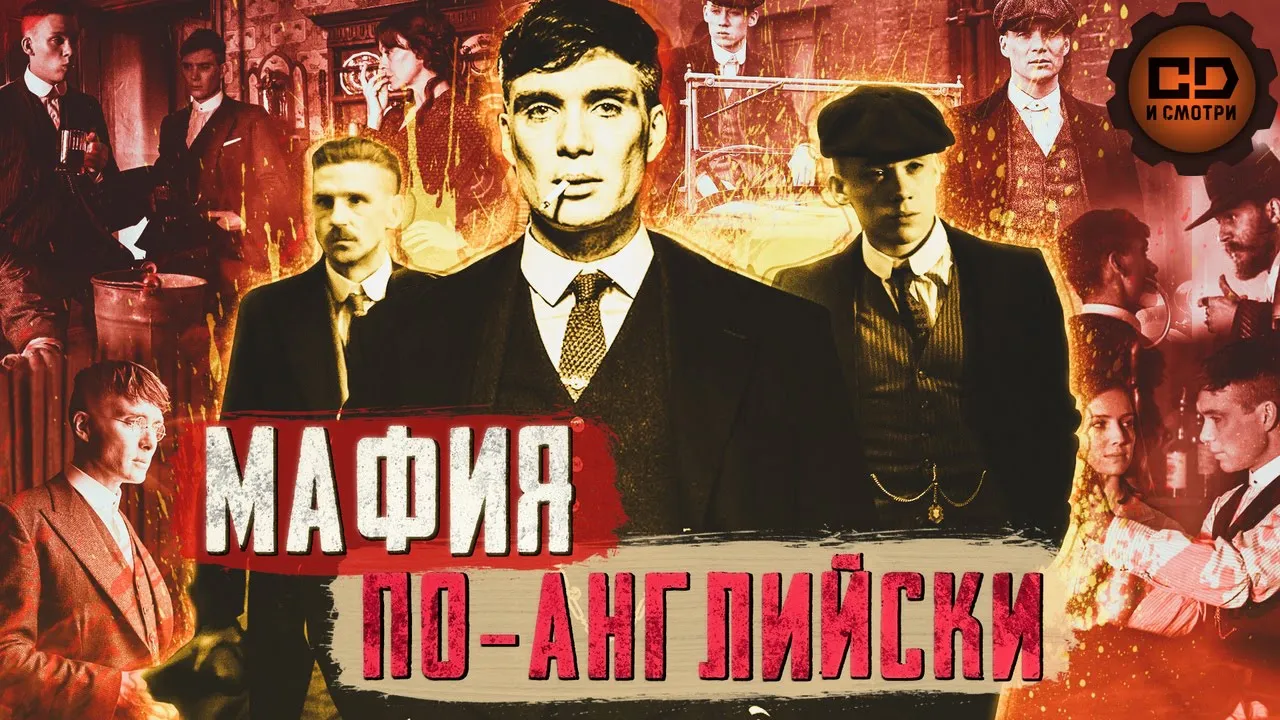
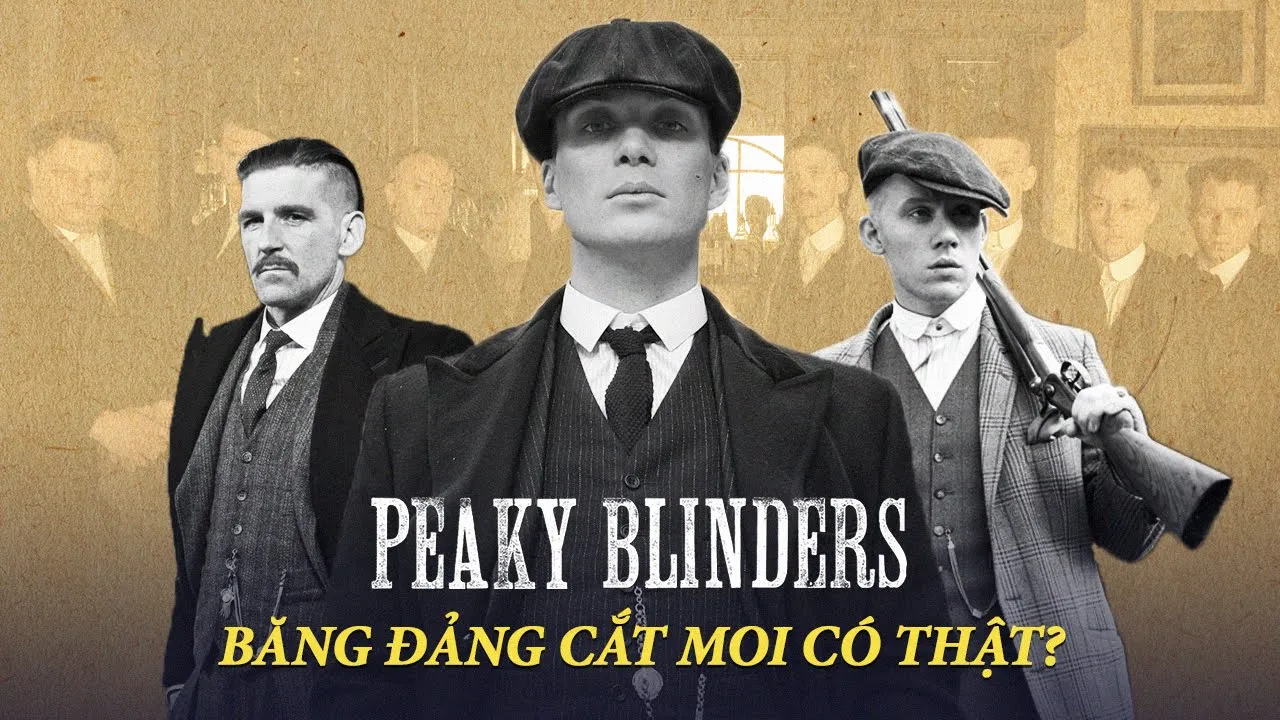


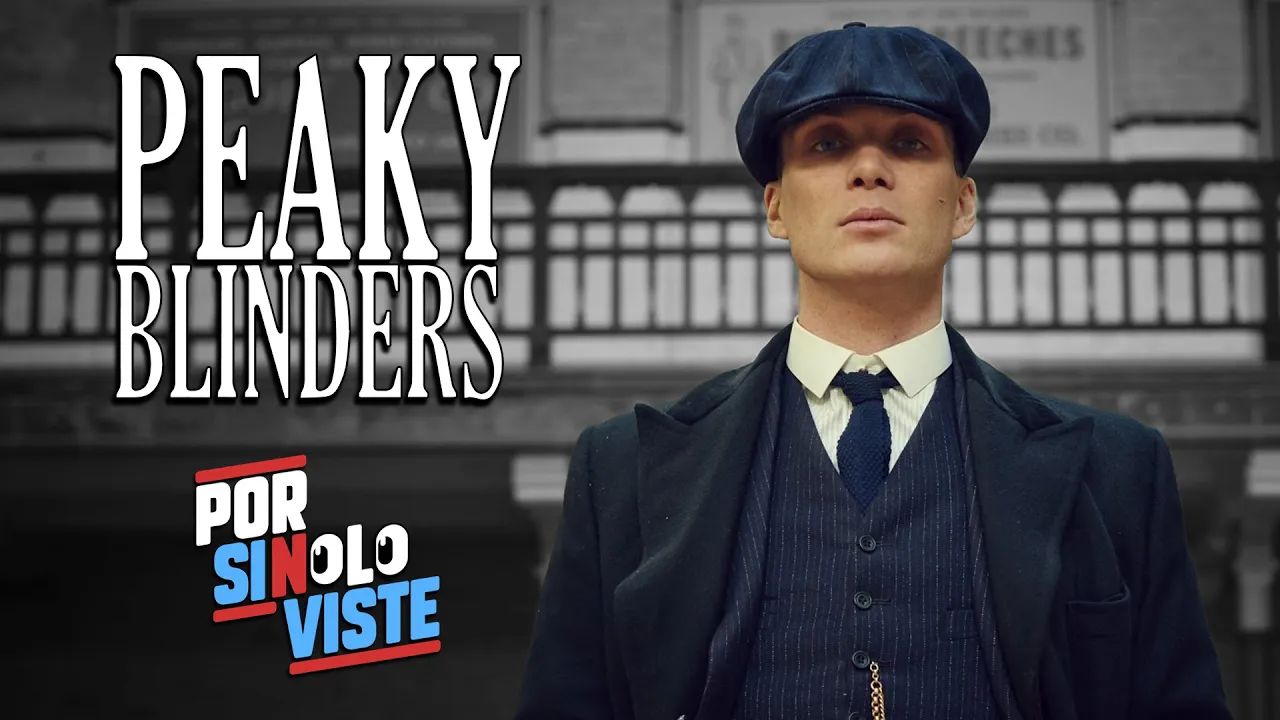










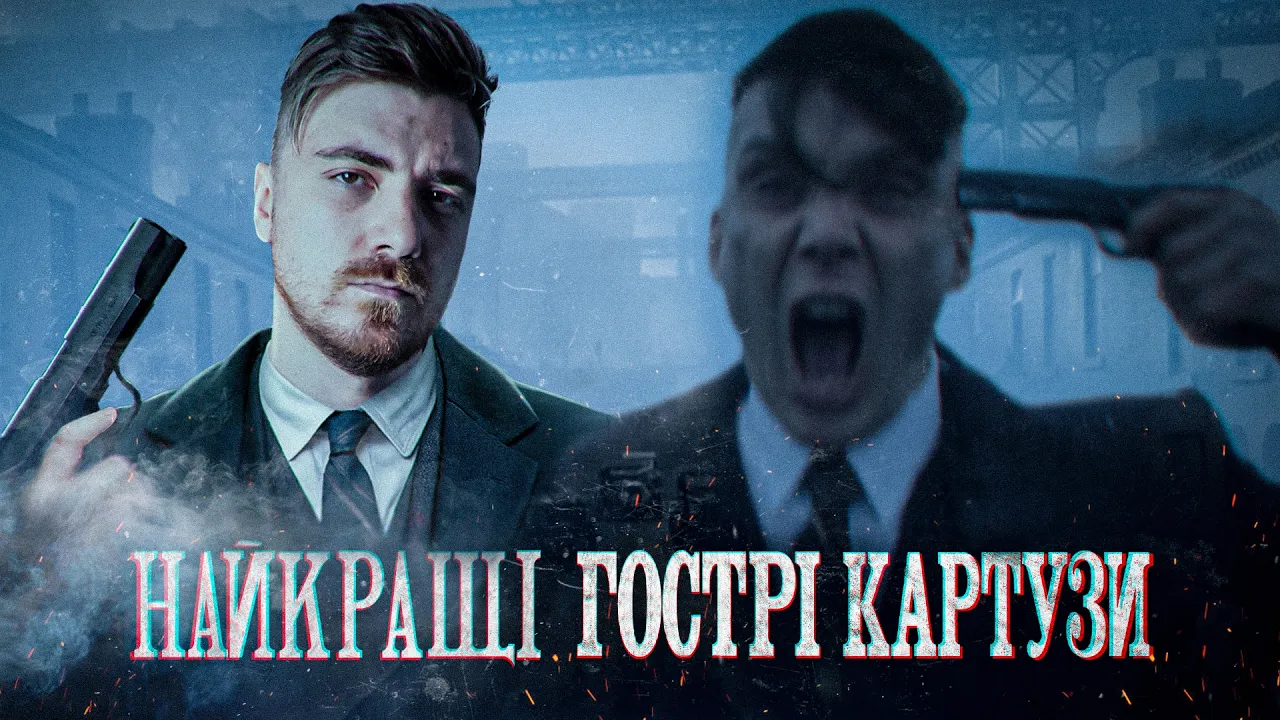


In 'Peaky Blinders,' the symbolic journey of Tommy Shelby riding in on a black horse and leaving on a white horse represents his transformation from a war-torn, traumatized soldier to a more hopeful version of himself, illustrating how the show uses visual motifs to explore themes of identity, redemption, and the possibility of escaping one's past.
Peaky Blinders: Cast & Creator Analyze Iconic Moments Behind the Scenes
Added:Basic understanding of television production terminology, including mise-en-scène, character arcs, and narrative pacing.
Historical context of post-World War I Britain, particularly the socio-economic conditions of working-class Birmingham in the 1920s.
Familiarity with the plot, major characters, and thematic elements of the TV series 'Peaky Blinders'.
An understanding of the collaborative roles in filmmaking, specifically the relationship between a showrunner/writer (Steven Knight) and lead actors.
Advanced analysis of screenwriting techniques, specifically the use of subtext, regional dialects, and tension in dramatic dialogue.
Study of cinematography and color grading techniques used in neo-noir period dramas to establish mood and atmosphere.
Exploration of sound design and anachronistic music choices (using modern rock in a historical setting) to influence audience reception.
Comparative analysis of the gangster genre across different eras of television and film, examining how 'Peaky Blinders' subverts traditional tropes.
245.8K views7.5Klikes24:26Original Release: 2026-03-03
Early on, you and Benjamin were sitting there and you said to him, "What do you think about Birmingham gangsters 1920s?
I don't think it's going to work." And then they sort of went off and did their bit.
>> Hi, I'm Killy and I play Tommy.
>> Hi, I'm Sophie Rundle and I play Ada.
>> Hello, I'm Steven Knight. I'm the writer of Peiquey Blinders and today we're going to be breaking down some of the biggest moments of the series.
>> Opening credits.
He's a god. He's a man. He's a cool.
The one microscopic cog in his catastrophic plan and directed by its rage right >> iconic >> Steve tell us about writing that then.
>> Uh I just wanted it to start in a way that no one was expecting. Uh, I wanted the whole thing to sort of be a bit of a western set in Birmingham. So, here is someone riding into town like they do in a western and you've never seen anyone like this and you've never seen a story like this. So, then it cuts to people speaking in Chinese and the caption says Birmingham 1919. So, the whole thing was to try and shake things up a bit for >> Tommy Shelby to look the part.
>> We took Killian to a gypsy camp. Do you remember that?
>> Yeah. You and me.
We went to a my brother shoes also this of some people in the camp and and they had a 12-year-old son who taught Killian how to ride like a gypsy like leaning back.
>> Oh no.
>> Yeah. We we we saw this kid jump up on the horse like bear back and then ride the horse and it was the ease and the effortlessness of the kid. But I remember doing that and it was a there was a big huge camera truck driving in front of me and behind me and then you had all these flames and at one point the horse had done it loads of times but at one point there was this and the horse spooked >> and like did not like the >> the fire explosions.
>> Did you stay out?
>> Yeah. I mean it's that take that's in there I think. And yeah behind me I think so my face is like ashened and terrified.
>> You don't see it.
When did the music come into it? Was that always the plan? Cuz like never has it suited world so much. A piece of music.
>> I I I don't know. But I I remember thinking it was a terrible idea to put >> Oh, no. Don't >> put contemporary music with it. But I think with then all of a sudden that Nick Cave tune went on there.
>> Yes. And I think a lot of it there was in the edit the people who were editing were using contemporary music >> and then it was like why why not do >> and then you began writing the tune >> I always think if the music is contemporary it's like a direct bridge to the emotion of the audience because they get what that means and you get what red right hand is about.
>> Yeah.
>> Why was it so important to introduce Tommy Shelby without dialogue?
>> I wasn't sure about Killian with dialogue guys. my Brummy accent.
>> It looks okay, but you'll need a liver line.
>> Yeah, exactly. Looks good on a um No, I think it needed that. You know, it's it's that classic western thing, the the mysterious rider riding into town, and you don't want to give away too much.
>> Adah stepping into no man's land.
>> What are you doing?
>> I believe you boys call this no man's land.
>> Asa, >> shut up and listen.
>> HAVE YOU LOST YOUR MIND?
>> I SAID SHUT UP.
NOW, most of you are in France, so you all know what happens next.
I've got brothers and a husband here, but you've all got somebody waiting for you. Now, I'm wearing black in preparation.
I want you to look at me. That's so weird cuz I was so young then. It was like my first job. I sort of cringe when I look back, but I was I That's one of the scariest things I've ever had to do.
It came in quite late, I think, that didn't it. It was a kind of like a last >> There was there was a reason for that.
>> Yeah. Oh, really? What was it?
>> No, but we I wrote it in a location to be shot in a location, but they said, >> it worked better where where it ended up, but I mean, you were if you were young and nervous, it didn't show you. I just remember someone saying, "You're going to, by the way, you're just going to go in between them and then you have this speech and it'll be fine." I was like, "What? What?"
>> And and I remember that idea did come in quite late and it was just genius.
>> And then you nailed it. But like it's when you're not overthinking it. You're just doing it because you have to finish the show. You're running out of money.
You got to do it. And and and sometimes those limitations create great work.
>> But but I think that's absolutely the case throughout. And that is a great example because obviously we've been building up all the way through the series that the Kimber gang and the peaks are going to fight. So I think I originally wrote it was like a shooter.
>> You know there's people getting shot and falling off you know the way you would do it if you had the budget to >> and cuz you don't have the budget to do.
You think well how am I they're going to walk towards each other with guns.
>> Yeah.
>> How are we going to stop that breaking out? Then that's when I thought well if you walk in with the pram end off. And it speaks to that whole that history of westerns, you know, that storytelling.
It's like the women in these communities and they have no other way of exerting change or control. So what can they do?
When you've seen someone in childhood, it's a dynamic that you can't replicate with any other relationship, I think.
Um, which is just adds such foder for drama, isn't it? Who's this man that everyone is terrified of or little sister's not scared of you? That's just cool, isn't it? And that's just so interesting. And I think that's a huge part of why people come to the show and relate to it. That kind of family saga, it does translate, doesn't it?
>> Yeah. It's completely universal. Yeah.
If you put Peiquey Blinders into the internet back then, there was one hit.
>> It was like one.
>> Yeah. You have to scroll scroll. And um >> so nobody knew. So we were just making this show. we all knew was excellent writing and great actors and but no one no one had the sort of awareness that it was going to turn into this thing. So I think that if you had have told us during that scene it was going to become this kind of iconic scene. You would have >> messed it up probably.
>> One of the people I was just speaking to said you know if you could go back in time and talk to yourself what would you say? And they think nothing. They think it would have been awful to have known >> what this was. There's a freedom >> the kind of like fun punk spirit it has cuz everyone was a bit like I don't know.
>> That was one of the first scenes that got picked up by fans who then started turning it into their own videos.
>> You know, the shooting of Kim Billy Kimber is in virtually every single one when you see somebody putting a music track and images.
>> Yeah. There's loads of stuff from that scene that featuring that. And when people started doing that, that was >> incredible. They were just doing it themselves. They were promoting the thing. Billy Kimber's based on a real person who was called Billy Kimber, who was a Birmingham gangster >> who didn't get killed. Um, he actually went off, believe it or not, and became Charlie Chaplan's bodyguard in Los Angeles. Yeah, >> that's amazing.
I could bore you for for ages on this.
Charlie Chaplan was born in Birmingham on a gypsy site, >> really, >> which is not commonly known, but he was and he knew Billy Kimber and he knew the Sheldons who were the original Shelby.
>> He appears in one of his films.
>> No way. Billy Kimber walks through shop >> and then doesn't Charlie Chaplan appear in one of the episodes kind of in >> that's why that's why one man campaign to get it acknowledged that Charlie Chaplan is from Birmingham which he is >> now you've done it >> yeah he is >> Arthur taking over the club let's go sort of the first time, you know, all the way through Pey wanted to escalate and escalate and escalate. So, this is them breaking into London, going into the Eden Club and causing chaos and um starting a fight and winning the fight most importantly. And then Arthur goes up, attacks the MC, takes over the microphone and says, >> "THIS PLACE IS UNDER NEW MANAGEMENT."
>> By order of the peak life.
>> A lot of people remember it. A lot of people refer to it. Again, it's used in a lot of uh videos that people make themselves. I think it's Arthur being his most Arthur. There's a scene where Arthur gets hold of a completely innocent Quaker >> and then attacks him with a razor blade.
I watched that with someone and I and she said, "Poor Arthur."
>> No, >> I know. And that's the thing about the the characters that I think is great is that they do these bad things, but they seem they carry the empathy with them.
And this is one of those moments, I think.
>> Yeah. What I love about that sequence is, yeah, Paul is incredible in it, but also the big huge fight. We wanted to make it as nasty and as messy so it's ugly, you know, and and and that's another thing about the violence in the show, I think, like it there's consequences.
>> Yeah. Exactly. From from it, you know, and you see people getting cut and then recovering and like that time gets really really badly. Well, a few of them, >> but but it's that horrible violence that you see sometimes on the street and he gives you the shakes and the shivers cuz it's nasty. Like for them they get come from the first world war and that's all they know.
>> Yeah.
>> So to them it's their it's like a form of expression but >> but to watch it it's nasty and ugly and um really not glorious.
>> Mhm. Was that the first time it said by order of the peak mind?
>> No. The first time was series one when the first time I wrote it um and thought this works was when the guns have been stolen the series one.
>> Oh yeah. And you say to Charlie who's to saying just give the guns back. Give it back. Don't do anything with these guns that are stolen from the gun factory.
And you say you take out a set of keys and say >> the tobacco warf by order of the peaky blinders.
>> Tommy's execution.
Comrade, we have our orders.
You know why it is.
I know.
This is my favorite scene of the whole thing. You know, all the way through the series. I wanted Tommy to be, in the words of Keats, half in love with easeful death. You know, he sort of wants to to be dead because it's so painful to live. And here is this graphic uh evocation of death and somebody's dug his grave. Uh he goes into it and then gets out of it. I've written it so that Tommy has been taken by three UVF >> Yeah.
>> or UDA men and they've got him and they've got guns and he hasn't. and there's a grave dug and they're going to shoot him. And I just thought, what am I going to do? How is he going to get out of this? And then I thought, well, maybe one of them is actually working for Church and then he shoots the other two.
>> At some point in the near future, Mr. Churchill will want to speak to you in person, Mr. Shelby.
>> You're sucking.
>> But that was that was a consequence of It's like when you paint yourself into a corner. I thought, well, I don't know how I'm going to get out of this.
And the actor who played the get out of your grave.
>> Oh, it was brilliant. Yeah.
>> Yeah. I remember that's one of those uh incidences in the over the years where reading that and going, "Well, that's the end.
>> That that's there. There you go. Tommy's dead." I remember I was reading it in the bath. I remember going, "Well, that's it. That was a good run." And then turning the page and going, "Oh, That's how we did it." Nearly got everything.
>> I nearly had effing everything is one of the lines that people have.
>> Yeah, that's another one of those. Yeah, >> I think Tommy was ready. He was ready to absolutely he was ready to go then, you know, and there's been several times throughout the show that he's been ready to >> to to have peace and >> and then it's taken away from him and and as he walks towards the camera and he's stumbling across the field. There's all that magnitude of what's just happened. He has to keep going and it's just excellent writing and excellently executed.
>> But that as I recalling the direction was to make it look like the fields of Flanders.
>> Yes. So, you know, he's destined to die in a in a field of mud.
>> Yes.
>> In a hole in the ground >> where he should have died.
>> Yes. Exactly. Escaped Flanders, but now it's going to happen to him.
>> Tommy and Grace's wedding >> today.
This is my wedding day.
No fighting. No fighting. No fighting.
No fighting.
Good.
Get the >> That is the one I get shouted at on the street from you.
>> No fighting. No fight. I'm just trying to go and buy some milk. You >> I'm not I'm just Or maybe some eggs.
There's no chance of a fight.
>> There's so many memes on the internet of like moms. So you saying that to their children?
>> So true.
>> I always remember in the stage direction that you wrote. I remember with that script. It said uh this is the angriest we have ever seen Tommy Shelby and it was such a great gift to give to an actor and he says no fighting that he shoves the guy.
>> Was that in the script? That was >> I can't remember. I think that happened.
Yeah, that did happen because somebody walked past and yeah, >> Birmingham weddings. Um, you know, the the the first rule, the thing that has to be says is don't don't start fighting because often the BS from one side of the family and the other side of the family have a drink and >> Yeah. Yeah. Yeah. Yeah.
>> I think you're right. It's it's like anything. It's like war or any any extreme situations. There's always humor in there.
>> Yeah.
>> It just is. It's just happens, you know.
>> Especially when it's family. That's what again it all comes back to, isn't it?
This isn't an army. This is >> Yeah.
>> Your annoying family.
>> It was all the workingass grummy lads and you know we can't show ourselves up >> by and it was brilliant. Yeah.
>> Grace gets shot.
>> Should I go inside?
>> Yeah.
>> Oh, I need you.
That's rather a simple way.
I didn't realize at the time, but the relationship between Tommy and Grace actually really stuck >> with the audience.
>> They really went for that. One of the reasons is because she got shot.
>> You know, if they carried on and and started to bicker, >> you know, then it probably wouldn't have worked. It was a fitting end to that relationship. The what I wanted to do is that Tommy has switched off all his emotions after the war because he's seen human beings broken up into their component parts.
So, how can you love that, you know? And then when he meets Grace, he he allows himself to feel something.
He allows himself to fall in love with someone. Bang. Almost immediately, she's gone. So, that's when he goes back to what he was.
>> Like all the trauma and everything that he's been through. And then when he thinks he's found something pure, >> it's just gone. And it's an amazing story engine for a character. Like how the hell does he come back from that?
And >> and he and he never does really recover.
I think throughout the rest of the show, he's still >> broken from that.
>> I really wanted it to be that he felt it was his fault because he gave he he gave her the the sapphire which is cursed.
>> Yeah.
>> And by doing that, a gift of love, >> that's what killed it. But I mean obviously if you don't believe in curses then it's not and it's ridiculous but he does.
>> Yeah. But he's the curse. Yeah. Yeah.
Yeah.
>> Luca's introduction.
>> None of you will survive.
Your level of security is pitiful.
And we are an organization on a different dimension.
I could have killed you when I walked through the door.
But you see, I want you to be the last. Adrien Broady, he comes in as almost like this is a provincial local English gangster. I'm the real thing. I'm the mafia. I'm from New York. Uh, and he played it like that.
>> Yeah.
>> He sort of really played it as the I'm the real deal. It was an important scene. It involve bullets rolling on tables. It's always good.
>> Um, >> all coming back.
>> Yeah.
>> Yeah. Coming back.
>> Yeah. And you know, I think that every series had its villain and I think this was really strong with Luca.
>> Yeah. like it was an amazing coup to get Adrian Rody in the show and he he absolutely smashes it in that scene. And you know the the brilliant thing about Pey and your writing is is the these wonderful huge chunky two-handers that you get throughout the the series between incredible actors and that was one of them and it was a real kind of tetat between the two of them that continues all the way through that series. It was just such a gift for us to like >> every season have these amazing actors come in and play opposite.
>> That was like one of the first times I realized quite what the show was doing.
Do you know what I mean? You like you don't go on that kind of season 2 3 4 and it's getting smaller. It was getting bigger >> and being like Adrien Brody's coming to do he's in that trailer. That's crazy.
It the scale kind of went international then. The show as well is it's Tommy I think. But when you think now that's two Oscar winners facing off.
>> My god. Oscar's everywhere.
>> I know.
>> Ada can stand up for herself.
>> You're the sister.
>> Yes, it seems I am indeed the sister.
>> I did some research. You're communist once, but diamonds and lipstick now.
>> Actually, I'm a socialist.
>> Men bore me. Ada, do you have a man? My husband died, but of course we speak often. That's one of the coolest lines I've ever been given, which is my husband is dead, but we still speak often. It's so cool. But uh I mean, I just had a baby, so I remember very little of that. I think my baby was 4 weeks old and in another room, I think, there. So, it's it's crazy to look back.
>> God, but I mean, the context that was that I can't remember why, but suddenly Polly was saying to Ed, you've got to represent the family.
>> Yeah. and she really steps up and you think maybe she's not going to do this >> but she absolutely nails it and and really does give as good as she gets to these people >> and it's a great culmination cuz so much of her journey has been like I'm not a Shelby I'm not part of this and that amazing thing of like you just can't escape who you are and where you've come from and I think it's her really embracing it.
>> She said the Shelby family are all witches and sorcerers who speak freely with the dead. So who here is a Shelby?
I wanted the whole series to be about can you escape where you're from.
>> Tommy sort of proves you can but also proves that you can't. It's always drawing him back. But the supernatural thing, you know, something I sort of grew up with where certain things my dad would bring stuff back and my mom were going to don't put that in the ass.
>> Really?
>> Yeah. Yeah. Just straight away.
>> She'd feel it.
>> Oh, I love that.
>> Yeah. And that sapphire you mentioned that runs all the way through the show like all the way through which is brilliant.
>> Mhm. Well, I think she she grows up. I grew up. It was How long have we done it for like 13 years? You know, I was a different person.
>> I think it's a reflection that when you're young, everything's possible.
>> Yeah.
>> Because there's so many options. As you're getting older, less and less and less possible, and you start to accept stuff.
>> Yeah. There isn't anything else like that. She's impervious to any kind of charm. I mean, there isn't that element, which is important, >> and she's not intimidated by him. So, there is only the truth. Yeah.
>> And that's a really valuable commodity.
>> Yeah. It's a good line.
There is only the truth and it's a really valuable line. That's really good.
>> Tommy on a white horse in the sun. How am I supposed to get any writing done?
>> So he he rides in on a black horse and then he leaves on a white horse. I felt it was such an elegant >> deliberate. I know, but a a beautiful beautiful ending kind of book ending to the to the TV part of the story. The Vardo has been burnt >> and he heads off on a horse cuz he loves horses and perhaps he's heading off to the version of himself that existed prior to the First World War.
>> You know, you hear accounts of him being a completely different man. And I think it was really mythic and and and amazing. And it and and and it kind of left the story open >> for us to go and make the the film.
>> Yeah.
>> That was kind of quite emotional doing that.
>> I mean the the imagery of the burning wagon is traditionally a gypsy funeral will be everything that belongs to that person will be burnt everything. So it's all gone and that person will never be mentioned again.
>> It is his funeral but he's still alive >> and he's on a white horse as he learned maybe bad has gone good. Before the first world war, people had believed really believed that technology was just making everything better. And it was, you know, there was people getting cured of disease they didn't get cured for before. And then 1914, the same technology is blowing everything to pieces.
>> And it's like, okay. And then we've lost the innocence. The innocence has gone.
And that's who Tommy is when he comes back. You know, he's this damaged soldier.
>> Um, and at the end I wanted him to go off into back hopefully into nature.
>> Yeah.
>> Then the film happens and we find out what really happened.
>> Yeah. Which is much more human. Yeah.
Yeah. Yeah.
>> Thank you for hearing our thoughts on some of the Peiquey Blinders biggest moments.
>> Yeah. Not so easy, is it? E. That's why you were all that many. No, you've got to say it. Yeah. Yeah.
Up Next
11:24
WandaVision and the Theater of the Absurd: A Trauma Analysis
@WisecrackEDU
179.4K views•2021-05-03

20:12
Unfriended (2014) Screenlife Horror Film Analysis and Review
@theboredcyborg
372 views•2019-08-20
4:55
Film Blocking Techniques for Directors: Space, Shapes, Lines
@StudioBinder
1.9M views•2018-07-23

4:00
Evolution of Darth Vader: Anakin Skywalker's Animated Journey Across Star Wars Films
@TellItAnimated
13.4M views•2019-03-30
Related Study Plans & Knowledge Roadmaps
Structured learning paths in Film Analysis
film-analysis
Sensory Cinema: Foley, Haptic Sound & Texture
01Introduction to Film Sound and Foley Artistry
02Micro-Sounds, Textures, and Extreme Amplification
03Haptic Audition and Film Phenomenology
+ 1 more learning modules
12h4 modules
Explore Roadmap
film-analysis
Breaking the Fourth Wall: Mockumentary & Satire
01The Invisible Wall: Basics of Cinematic Illusion
02Looking at the Lens: Direct Address & Character Glances
03The Mockumentary: Satire, Realism, and Complicity
+ 2 more learning modules
12h5 modules
Explore Roadmap
film-analysis
Analyzing the Long Take: Cinema, Space & Ethics
01Foundations of Film Grammar: Montage vs. The Long Take
02Choreography and Mechanics of the Simulated One-Shot
03Phenomenology of Film: Real-Time Spatial Continuity
+ 1 more learning modules
14h4 modules
Explore Roadmap
film-analysis
Anachronistic Music: Period Drama & Subversion
01Foundations of Film Sound and the 'Needle Drop'
02Traditional Authenticity vs. Revisionist History
03The Rise of the Anachronistic Soundtrack
+ 2 more learning modules
12h5 modules
Explore Roadmap