
























In psychological thrillers, an unreliable narrator creates narrative ambiguity by presenting events from a perspective that cannot be fully trusted, forcing audiences to question reality; this technique, exemplified in 'Fractured' where protagonist Ray constructs an alternate reality to cope with guilt over accidentally killing his family, demonstrates how psychological trauma can distort perception and how filmmakers use visual cues (such as disappearing queues, inconsistent character details, and contradictory testimonies) to foreshadow the eventual revelation that the protagonist's experiences were hallucinations rather than objective reality.
Fractured (2019) Ending Explained: Psychological Analysis
Added:The literary and cinematic concept of the 'unreliable narrator' and how subjective perspective shapes a story.
Basic psychological defense mechanisms, specifically dissociation, denial, and delusion as coping strategies for trauma.
The concept of cognitive dissonance and how the human mind resolves conflicting realities to protect itself.
Common narrative conventions and tropes of the psychological thriller genre, such as red herrings and gaslighting.
The clinical study of Dissociative Fugue and PTSD-induced psychosis compared to their dramatic portrayals in cinema.
Advanced film theory on how cinematography, color theory, and sound design are used to visually represent a character's deteriorating mental state.
Critical analysis of mental health representation in media, evaluating the ethical implications of using psychiatric disorders as plot twists.
Comparative cinema studies analyzing similar narrative structures in films like 'Shutter Island', 'Memento', and 'The Machinist'.
473.6K views7.4Klikes9:48Original Release: 2019-10-14
Welcome to the Heavy Spoilers Show. I'm your host, Definition. And if the mindbending ending of Fractured left you asking a few questions, then don't worry because we have the answers. Fractured is directed from the same mind that brought us The Machinist. And similar to that film, not everything is as it seems. Throughout this video, I'll be breaking down everything that you need to know about the film, as well as its ending and what it means. There will be heavy spoilers here, so if you haven't had a chance to watch the movie yet and don't want to know what happens, then I highly suggest that you turn off now.
Make sure you stick around until the end for my review. But with that out of the way, I just want to give a huge thank you for clicking this video. Now, let's get into our breakdown of Fractured.
Fractured follows Rey and his family as they come from Thanksgiving. Everything seems pretty mundane, but as we follow Ray's journey, things begin to splinter, and the events of the movie are difficult to fully discern without closer examination. Ry is an unreliable narrator that suffers from alcoholism and after his daughter Perry falls into a construction site, he rushes her to the hospital along with his wife Joe.
Passing out from exhaustion and a head injury gained from diving in after Perry, Ry awakens to find his family completely gone. With the hospital staff unaware that they ever came in, the last thing he remembers is sending Perry and Joe down in the elevator to head for a scan. And from there, the tension ramps up from beginning to end. Instantly, the movie gripped me. And this plot aesthetic is awesome to watch play out throughout the duration of the film. We really are as lost as Rey, desperate to learn the truth behind exactly what happened to his family, and for a lack of a better term, just how fractured Ry really is. Seeing how reckless he acts makes it a nail-biting 90 minutes, and you really don't know what the character will do next. After a slight fall from stardom, Sam Worththington has really found his niche with projects like this and Manhunter Uni Bomber. and he masterfully portrays the extreme pressure that he's under in just trying to get to the bottom of exactly what's happened. He also perfectly portrays just how unbalanced he is as a character. And the film is masterfully edited to let us know that not everything is as it seems. You really get the stress that Ray is under though and there's so many possibilities of what could be going on that your mind will be racing throughout the film desperately trying to understand what happened. This is like a movie version of the Twilight Zone. And Ry is pushed to the brink of insanity trying to discover what's been going on. He witnesses body parts getting dumped into a skip, doctors that deny his version of events, and there just seems to be something wrong about the entire place.
It could also be Ray's head wound, which he seemingly came into hospital for. And throughout, I was secondguing whether he was crazy or if there was more than met the eye about the location. After there's no answers, he acts I wraith and gets sedated and dragged away by doctors to a room that he's locked into. He breaks out of his holding and from here manages to get the attention of police.
They believe Ry and go into the hospital, but the seniors and Dr. Bertram deny that Ry came in with anyone else. And the whole struggle with the character sort of feels a bit like Groundhog Day. Wait, where do I know Dr. Bertram from? Oh, Ned Ryerson. Bing.
CCTV footage seems to show that Ry is crazy and there's lip service paid to the fact that Ry had his previous wife and their unborn child die due to his carelessness. However, after he finds Perry's scarf under a bed, a psychiatrist decides to go with him, leading the police to the scene of the fall. Here, they discover far more blood than there could be from Ray's head wound and accuse him of killing the two.
The psychiatrist says that Ray made up the dog, and as he's already lost his family before, he created an alternate reality in order to shield himself from the truth. Ry seemingly got angry due to the argument at the start of the film and accidentally killed his daughter and then wife in a rage, and this has all been a delusion. He gets arrested, but when a stray dog appears, it confirms that Ry may not have been making this up, and he grabs a gun from policemen and locks the cops and psychiatrist away. Ray heads back to the hospital, armed and ready to go or Last of Us on the entire place. Now, at this point, I was massively on board. And though I was probably 70% in the camp that Ry was crazy, there was still a lot of doubt in my mind as to whether this or may be a conspiracy to hide the truth from the character. It really can't be overstated how atmospheric Fractured is. And this style throughout the film will have you just as invested in Ry as he is in his family. Upon arriving at the hospital, Ry goes undercover, kills the security guard, and takes the elevator down that we last saw his wife and daughter get into. He discovers that the location has been harvesting organs from people brought in, and finds Joe in a wheelchair and Perry about to be operated on by doctors who say he's not seeing things clearly. They try to sedate him, but after bursting a gas pipe and igniting it by shooting a hospital light, he's able to get his family out and escape with them. Ry gets away with his family, and they all lived happily ever after. Oh, wait. After hallucinating that they're in the back seat, we see that Rey actually kidnapped someone who was in the middle of surgery. As the psychiatrist said earlier, Ry had indeed killed his family and constructed the events of the film in his mind in order to shield himself from the truth. Their bodies are in the backseat of his Jeep and have been there the entire time. Now, throughout the film, the signs are there, literally, because we see a magazine article that says the signs are there. This includes a queue that seems to disappear in the waiting room, which forces Ray to pace up and down it. The fact that Ray's wife doesn't know his daughter's blood type when they're asked for it, probably because Ry doesn't know it either, and Perry saying, "My head is killing me."
When re-watching the film, every medical professional in it should be taken at their word as they outright tell the true events of the film, which is that Ry came in with a head trauma by himself, began acting erratic, and then showed up once more the next day, accusing them of kidnapping his daughter. We can take from the death of Ray's prior family that they died due to Ray's drunk driving, and his alcoholism returns at the start of the film when he buys two miniature bottles of whiskey.
This may not have been enough to make him go all Jack Torrance in The Shining.
But however, it did push him over the edge. And we see from the beginning when driving Perry to the hospital that Rey again is acting reckless, endangering others. And this is likely the same sort of scenario that caused the death of his previous wife. Rey is a really fractured and broken man. And clearly, he was sent over the edge by the shock of Perry's fall, which we learn was caused by his outburst. Feeling like he was trapped once more in a living hell that would see those around him fall victim due to his irresponsibility, Ray silenced Joe and then created a reality that he could live in in his mind. However, his guilt simply became too much and thus it all came crumbling down to some degree. That doesn't mean that Ry has escaped the fantasy though, and it looks like the character will continue to believe that his wife and daughter are alive in order to spare himself some pain. He heads off into the night, leaving the crime scene with a hostage and onto whatever fantasy his mind takes him, which ends the film.
But what did I think of the movie overall? Well, Fractured is a really tense and personal story that is propped up massively by its performances. Whilst the twist is slightly predictable purely because of how similar it is to The Machinist, the director's most famous film, that doesn't mean that the ride isn't enjoyable. Worthington may not pull off the performance that Bale did with his extreme weight loss, but instead he paints out a grounded father struggling to deal with the situation that is going on around him and living life on the edge. This is Fractured's main selling point. And couple that with the eerie atmosphere, color tone to the whole film, and dark and lingering shadows, and you have a film that's an enjoyable watch for fans of psychological thrillers. Whilst the twist may not be as groundbreaking as it could have been, say before the rise of films like Fight Club, that doesn't still mean that it's unearned. It doesn't feel completely cheap or out of nowhere. It feels real, enthralling, and ultimately it leads to it being a movie that's worth watching a second time just to see if you can pick up all of the clues and signifiers, of which there are many. In the end, I did enjoy Fractured.
And whilst I would still probably choose Al Camino to watch over this if you're stuck between the two, that doesn't mean that it's not worth giving this a go if you're looking for other films with high production qualities and great acting.
Fractured, unlike its name, is a solid movie. And that's why it gets an 8 out of 10.
Now, obviously, I'd love to hear your thoughts on Fractured and what you took from the ending. Comment below and let me know. And if you enjoyed this video, then please like it. And make sure you check out my breakdown of this weekend's other big Netflix release, Al Camino, which will be linked at the end. We've got a spoiler review and also a breakdown of what was in Jesse's Letter.
So, it's definitely worth checking out if you want to know more. If you want to come chat to me on Twitter, then make sure you follow me at Definition YT. And if you want to join my Discord, then make sure you click the link in the description below. We've got an awesome community that's made up of people just like you, and it's the best way to stay up to date with the channel. Also, just want to let you know that we're currently giving away a free copy of Spider-Man: Far From Home on Blu-ray.
And all you have to do to be in with a chance of winning is to like this video, make sure that you subscribe to the channel, and leave your thoughts on Fractured in the comment section below.
The winner is going to be chosen tomorrow on October the 15th. So, this is your last chance to take part. Now, best of luck, and I'll see you next time.
This is a channel for people who are mad into movies. So, if that's the kind of thing you like, hit subscribe. Thanks again for taking the time to watch this.
I've been definition. You've been the best and I'll see you next time. Take care. Peace.
[Music] Heat. Heat. N.
[Music]
Up Next
3:27
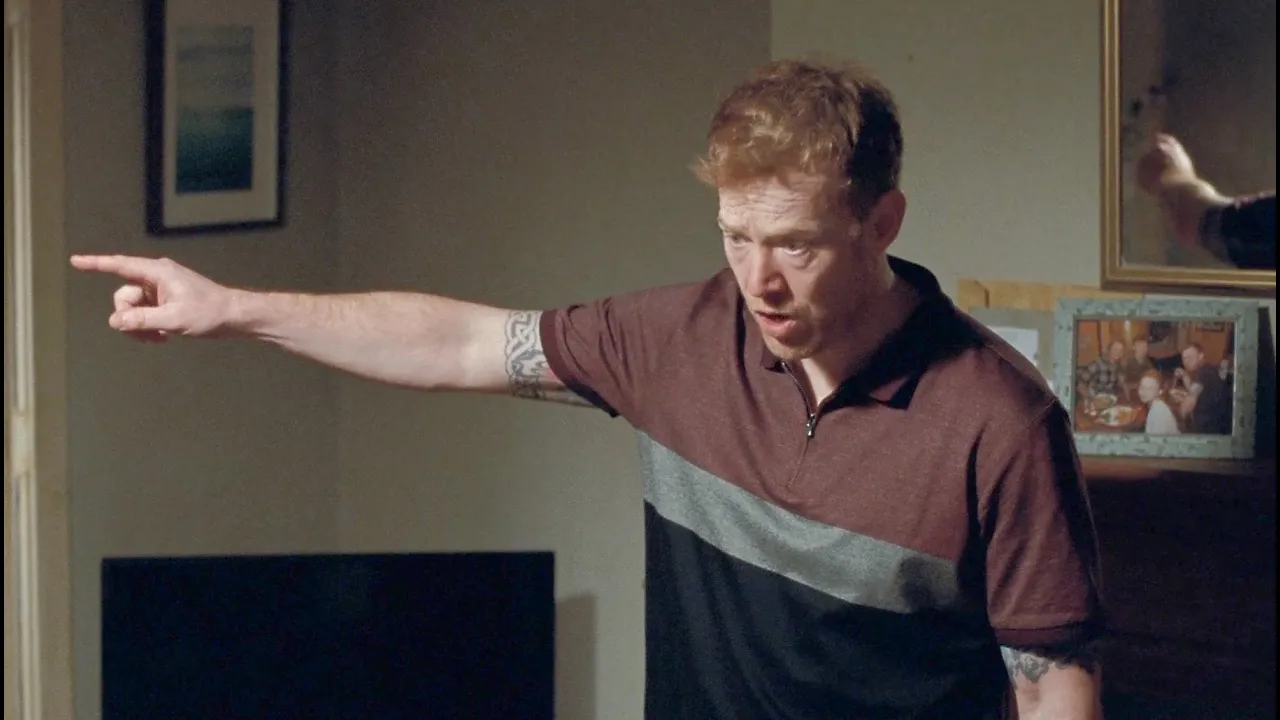
Ken Loach's Sorry We Missed You: Cannes Film Festival Clip Analysis
@theupcomingmagazine
59.5K views•2019-05-14

23:14
Visual Analysis Essay: How to Analyze Graphic Novels in College Writing
@nataliepleimann5941
1K views•2020-10-14
48:55
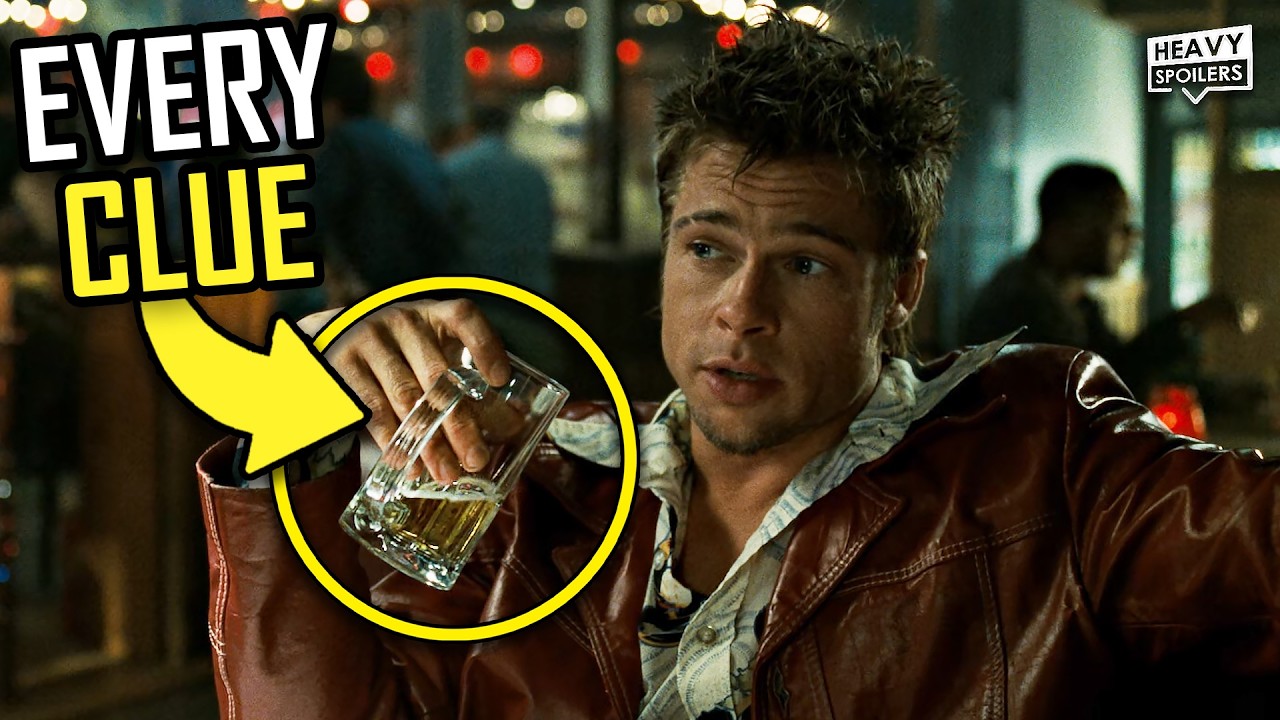
Fight Club (1999) Film Analysis: Hidden Details & Ending Explained
@heavyspoilers
1M views•2025-01-04

4:00
Evolution of Darth Vader: Anakin Skywalker's Animated Journey Across Star Wars Films
@TellItAnimated
13.4M views•2019-03-30
Related Study Plans & Knowledge Roadmaps
Structured learning paths in Film Analysis
film-analysis
Sensory Cinema: Foley, Haptic Sound & Texture
01Introduction to Film Sound and Foley Artistry
02Micro-Sounds, Textures, and Extreme Amplification
03Haptic Audition and Film Phenomenology
+ 1 more learning modules
12h4 modules
Explore Roadmap
film-analysis
Breaking the Fourth Wall: Mockumentary & Satire
01The Invisible Wall: Basics of Cinematic Illusion
02Looking at the Lens: Direct Address & Character Glances
03The Mockumentary: Satire, Realism, and Complicity
+ 2 more learning modules
12h5 modules
Explore Roadmap
film-analysis
Analyzing the Long Take: Cinema, Space & Ethics
01Foundations of Film Grammar: Montage vs. The Long Take
02Choreography and Mechanics of the Simulated One-Shot
03Phenomenology of Film: Real-Time Spatial Continuity
+ 1 more learning modules
14h4 modules
Explore Roadmap
film-analysis
Anachronistic Music: Period Drama & Subversion
01Foundations of Film Sound and the 'Needle Drop'
02Traditional Authenticity vs. Revisionist History
03The Rise of the Anachronistic Soundtrack
+ 2 more learning modules
12h5 modules
Explore Roadmap