









![[Devenir Ecrivain] Donne-t-on trop d'importance au narrateur ?](https://i.ytimg.com/vi/TEFTOONX3JE/hqdefault.jpg)



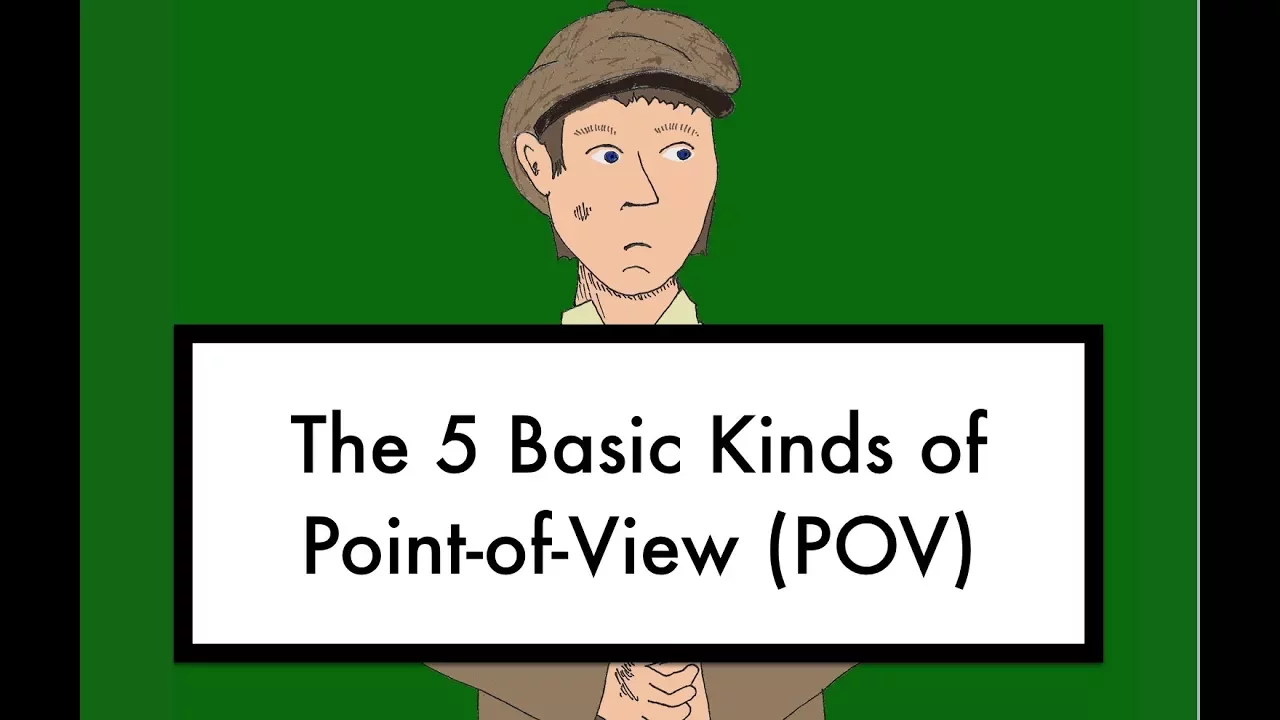
Point of view in literature determines who tells the story and how much the narrator knows about characters; first person uses pronouns like I, me, we, and us to show the main character's internal thoughts, third person limited follows one character using he, she, him, her, and them while restricting access to other characters' perspectives, and third person omniscient provides access to multiple characters' thoughts and locations simultaneously.
Point of View in Narration: First, Third Limited & Omniscient
Added:Basic grammatical understanding of personal pronouns (e.g., I, me, we, he, she, they) and how they function in sentences.
The conceptual distinction between the author of a text (the real-world creator) and the narrator (the internal voice telling the story).
Familiarity with foundational narrative elements, such as character, dialogue, plot, and setting.
The concept of the 'Unreliable Narrator,' exploring how a narrator's bias, ignorance, or intent can distort the truth of a story.
The rare but distinct Second-Person Point of View ('you') and its application in interactive fiction and specific literary works.
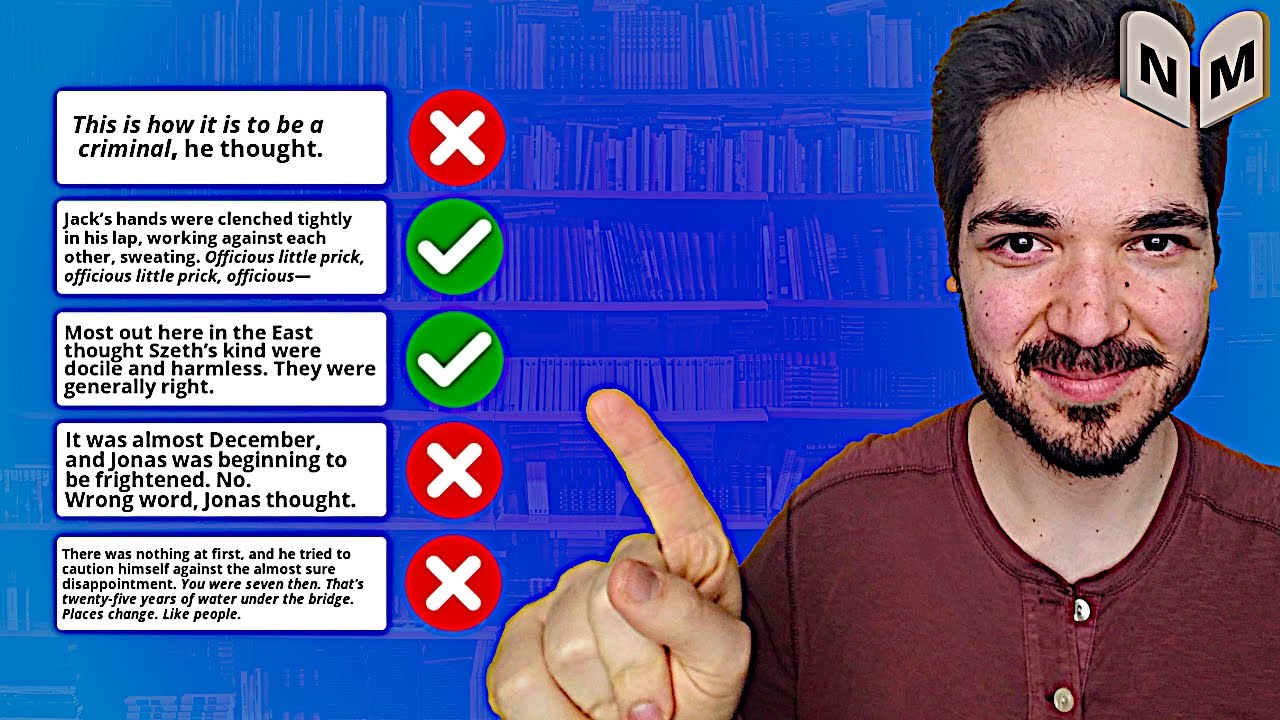
Understanding 'psychic distance' (narrative distance), which measures how closely a third-person narrator accesses a character's internal thoughts and feelings.
Analyzing how an author's choice of point of view shapes reader empathy, suspense, thematic delivery, and dramatic irony.
Examining complex narrative structures, such as multi-perspective (shifting) narration or frame narratives.
235.5K views712likes5:05Original Release: 2014-04-25
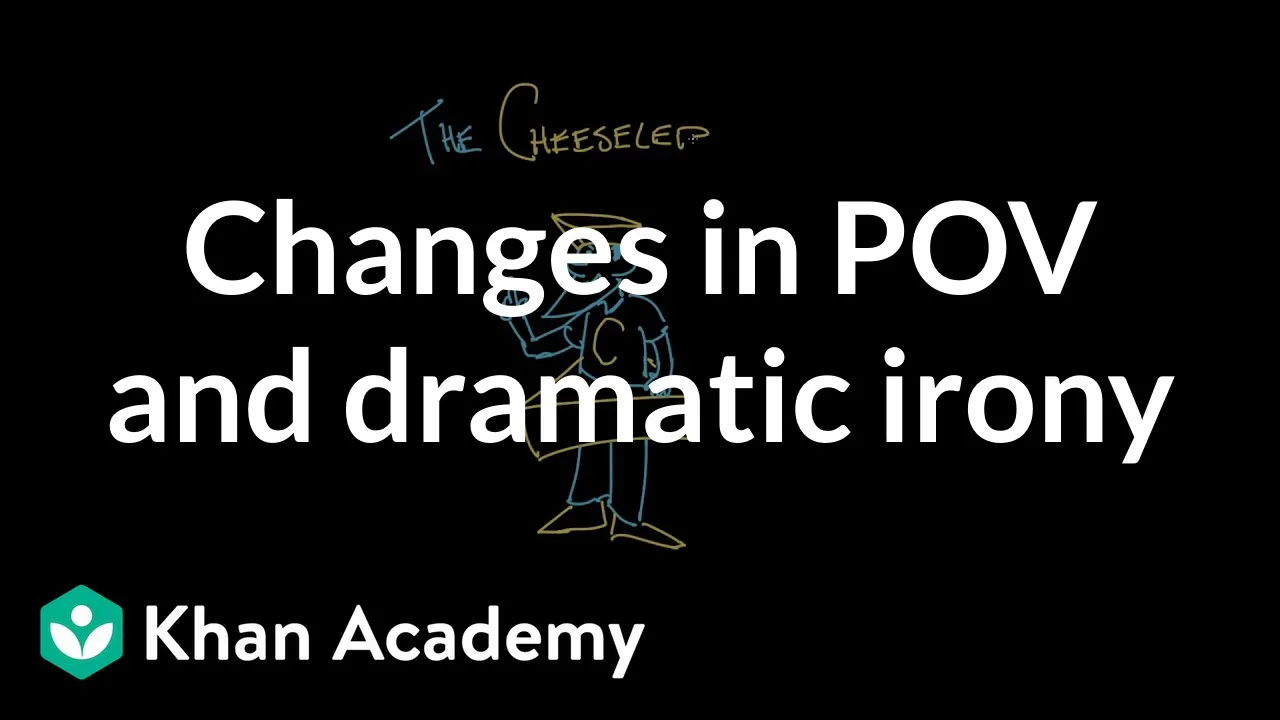
today we're going to be talking about point of view point of view is all about who is telling the story when an author sits down to write a book or short story the author has to decide who will tell the story and how much he or she will know about the characters there are three main points of view that we see in narratives the first type is first person this is when the major character tells the story when in this case we may never know the name of that main character pronouns you want to look for include I me we and US you'll also find my Mine and Ours we live in a life of first person point of view we can only see from the inside of our own heads that's why when we speak we say things like I'm going to the gym or I am flying or I'm going to play a Justin Bieber song just kidding I wouldn't do that to you to find out point of view in a story we look for code words here's an example I knew I shouldn't have let my grandma go down down there she isn't too steady on her feet to start with and then she gets those dizzy spells but she insisted and the next thing I know she's tumbling down those stairs like a gymnast to help us identify the narrator and some plot elements we want to code the story to start we identify the pronouns used here we see the pronoun I this immediately tells us that the story is in first person point of view then we look at plot elements like she's not steady on her feet she insisted she's tumbling down the those stairs and from this we learn the conflict the next type of point of view is third person limited there is a narrator and here she only knows about one major character we don't get to go to places the main character doesn't go the pronouns you want to look for are he she him her and they them imagine you're reading a story about a character named Dominic a teen with an obsession for pandas Dominic takes his friend Aaron to the zoo Dominic heads straight to the panda cages but after they have been there for 20 minutes Aaron is ready to go Dominic stays and Aaron walks away but we are forced to stay with Dominic and his thoughts because our narrator is only allowed to stay with Dominic hope you like pandas now let's look at our example text again John stood next to his grandmother he knew he shouldn't allow her to go down the stairs alone she wasn't steady on her feet JN had seen her grab the nearest object when dizziness overwhelmed her John was afraid that he wouldn't be able to help her first let's identify the pronoun codes in this case our main character is actually given a name John then the pronouns our narrator uses are his he her and she we know that this has to be third person we have the same conflict going on here as we did in the first text John's grandma is walking somewhere by herself but we know it's limited because we only know what JN is thinking and doing the final type of point of view is third person omniscient in the case in this case the narrator tells a story about more than one character at least two major characters the reader gets to go everywhere even when some of the characters are not there but the pronouns to look for are also he she him her and they them have you seen the movie Finding Nemo if so this movie is a great example of third person omniscient Nemo one of our main characters is lost out at Sea and his father Marlin and his friend Dory are searching for him the narrator jumps back and forth between Nemo's story and Marlin and dory's story now let's look at our example text again John stood next to his grandmother he wanted to help her down the stairs he was very protective of his grandmother he remembered the last time she had fallen down Mrs Smith looked at her grandson and she moved a strand of hair from her face she was determined to do this on her own to prove she wasn't a helpless old lady let's look at the pronoun codes again we have the same pronouns as before his he her and she and we know what John is thinking here he is very protective of his grandmother but there's a change when we read Mrs Smith looked at her grandson the narrator tells us what Mrs Smith is doing and thinking we know that this has to be third person omnicient now it's time for us to practice identifying point of view I want you to use your notability app as a whiteboard for this so turn your iPads up and open up keynote create a new note page and write this key a is first person B is third person limited and C is third person omniscient now make sure you pause this part of the video and read the text and Mark your answer in your notability finally here's your mission log in to our collabor classroom site and respond to the questions completely make sure you complete the entire assignment as this is a mini quiz and will be graded for completeness and ideas good luck created using pun
Up Next

22:40
Narrative Distance in Fiction: The Writer's Ultimate Tool
@mechanicsoffiction
1.8K views•2020-11-19

13:43
Formalism in Literary Criticism: An Academic Lecture Overview
@mattalberhasky9952
39.1K views•2015-08-05

6:08
Point of View in Fiction: First Person vs. Third Person
@magicalthriftyteacher
153.8K views•2014-03-31

15:25
1984: Orwell's Dystopian World and the Mechanisms of Totalitarianism
@AlternateHistoryHub
7M views•2017-03-04
Related Study Plans & Knowledge Roadmaps
Structured learning paths in Literature
literature
Graphic Memoirs: Visual Art, Trauma & History
01Foundations of Sequential Art and Visual Language
02Autographics and Processing Historical Trauma
03Visualizing Personal Trauma, Grief, and Graphic Medicine
+ 2 more learning modules
14h5 modules
Explore Roadmap
literature
Campus Novels: Evolution, Themes & Critique
01Introduction to the Campus Novel Genre
02Mid-Century Satire and the Post-War Academy
03Dark Academia and the Critique of Privilege
+ 2 more learning modules
14h5 modules
Explore Roadmap
literature
Theater of the Absurd: Philosophy & Plays
01Postwar Existentialism & Historical Roots
02Dismantling Narrative: Esslin & Absurdist Conventions
03Samuel Beckett and Tragicomic Existentialism
+ 2 more learning modules
12h5 modules
Explore Roadmap
literature
Revenge Tragedy: Justice, Madness & State
01Foundations of Early Modern English Theatre
02Anatomy of Revenge: Structural Conventions
03Psychological Complexity: Madness and Melancholy
+ 2 more learning modules
15h5 modules
Explore Roadmap