








![Psicoanálisis 🧠 Psicología [CICLO FREE]](https://i.ytimg.com/vi/X-MHLe1LPBE/maxresdefault.jpg)







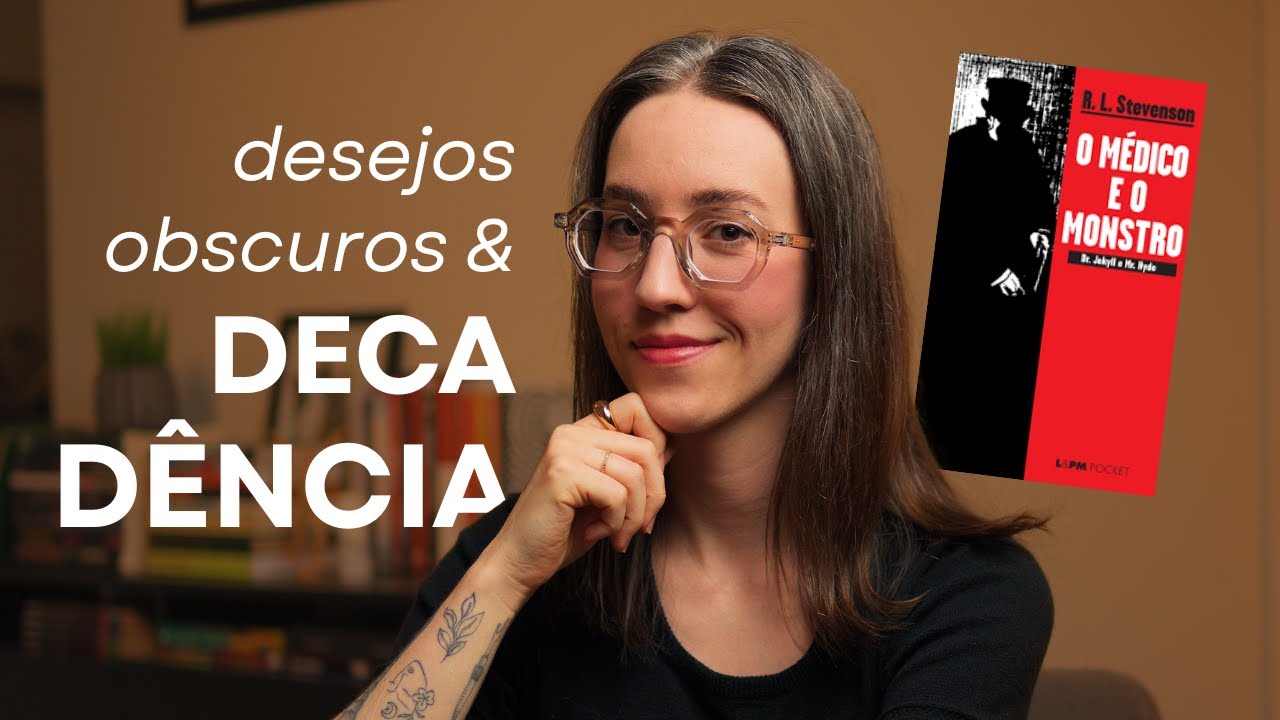
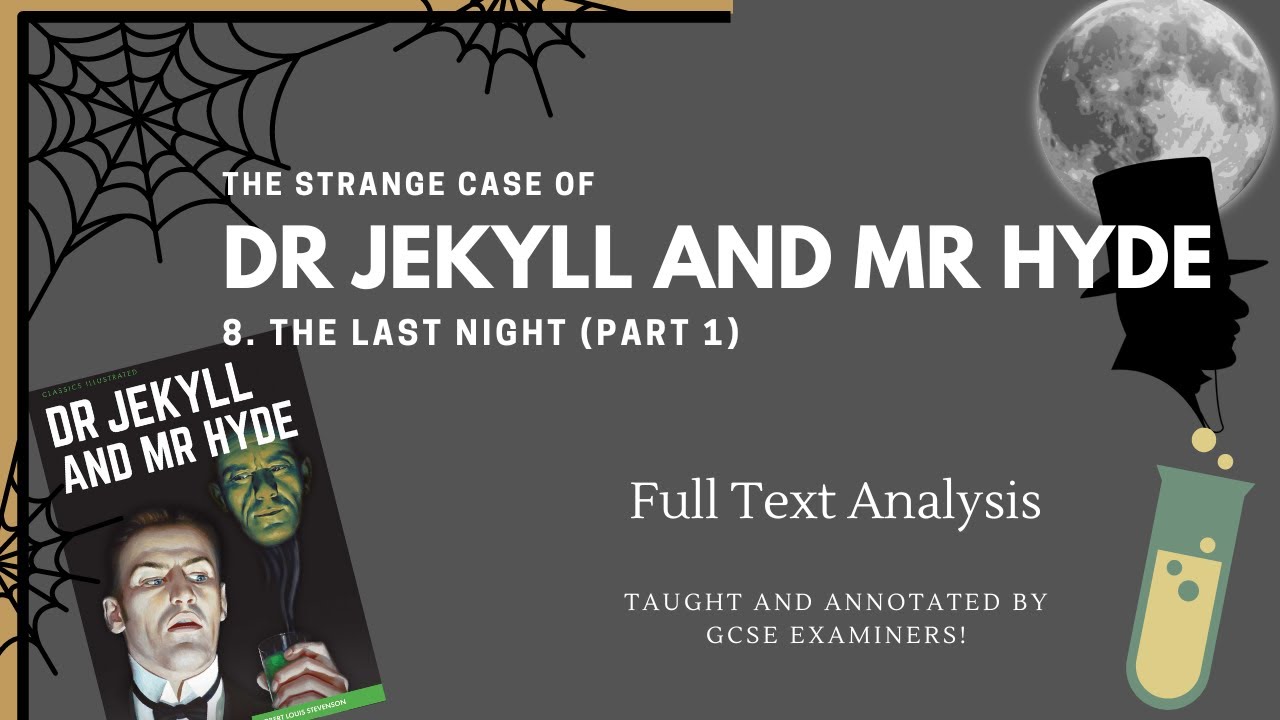
Robert Louis Stevenson's 'The Strange Case of Dr. Jekyll and Mr. Hyde' is fundamentally about a man's internal struggle with his own dark impulses, not about split personalities; Dr. Jekyll, a respected physician, creates a potion to separate his good and evil sides, but as he indulges his evil alter ego Mr. Hyde, he loses control of his transformations, demonstrating that repressed desires cannot be safely contained through chemical means.
Dr. Jekyll and Mr. Hyde: The True Horror of Victorian Repression
Added:Familiarity with the basic plot and characters of Robert Louis Stevenson's 1886 novella, 'Strange Case of Dr. Jekyll and Mr. Hyde'.
An understanding of Victorian social codes, specifically the intense societal pressure to maintain outward respectability, moral purity, and high social standing.
The literary concept of the 'Doppelgänger' or the double, which represents the dual nature of human consciousness.
Basic knowledge of late 19th-century scientific anxieties, such as Darwinian evolution and the fear of evolutionary 'degeneration' or regressing to a beast-like state.
An exploration of Sigmund Freud's psychoanalytic theories of the Id, Ego, and Superego, and how they map onto the characters of Jekyll and Hyde.
A comparative analysis of other late-Victorian Gothic literature dealing with double lives, such as Oscar Wilde's 'The Picture of Dorian Gray'.
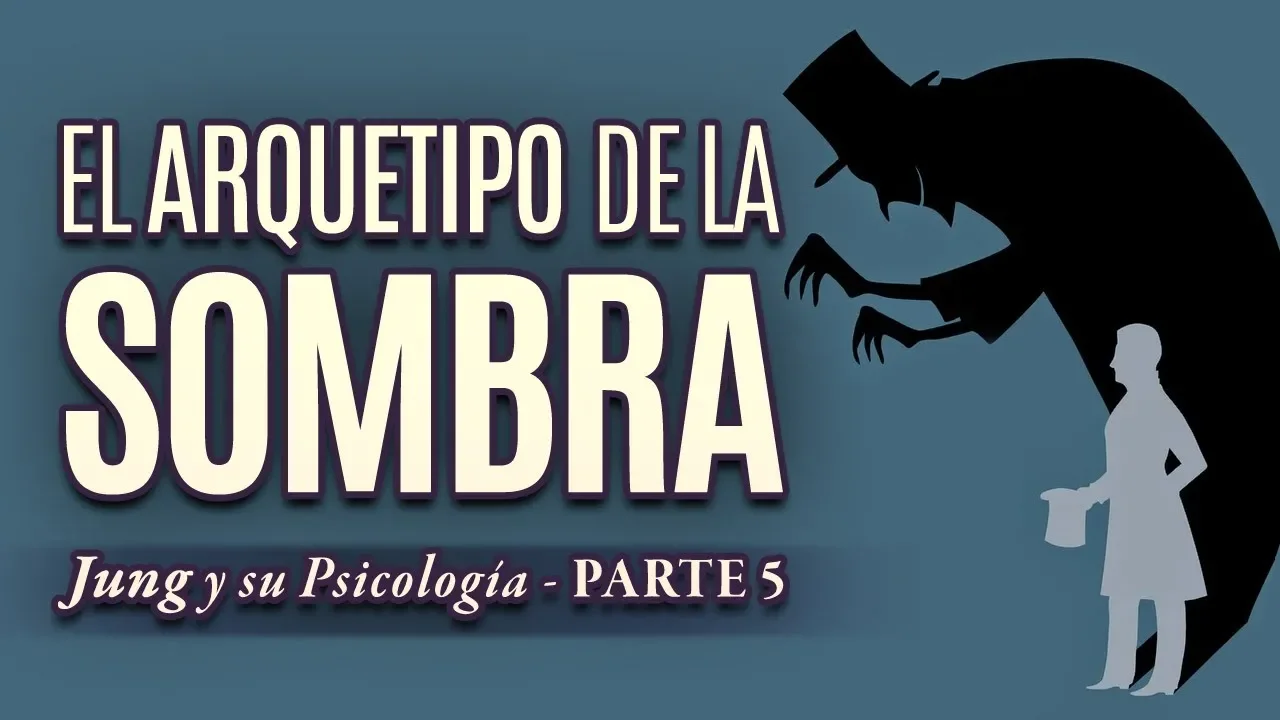
An introduction to Carl Jung's psychological archetype of 'The Shadow' and the dangers of failing to integrate one's darker impulses.
An investigation into how the physical geography of Victorian London (the divide between the wealthy West End and the impoverished East End) reflected the psychological duality of its citizens.
4M views126Klikes13:07Original Release: 2019-10-31
I've noticed a bit of a theme in these Halloween episodes.
Whenever I examine one of these cultural touchstones in the context of the impact they've had on the horror genre, it always seems like the actual core story is almost completely unrecognizable compared to their pop-culture impact.
Dracula's a grody old man with a very unsexy case of vampirism.
Van Helsing's a total goofball.
Frankenstein's monster is an articulate, scientifically minded genius.
Lovecraft's iconic pantheon of brain-melting nightmare gods frequently take a backseat to his own racist neuroses.
Victor Frankenstein's not even a doctor!
It's ridiculous.
Pop culture takes some names, some concepts, and some special effects and leaves behind everything that actually makes the story what it is.
And that's not always a bad thing.
But what about those horror icons? Dr. Jekyll and Mr. Hyde?
Surely pop culture wouldn't lead us astray with something as simple as a split personality.
Well... uh... Let's start with a little context. Like many horror stories of this era, The Strange Case of Dr. Jekyll and Mr. Hyde takes the audience through a slow buildup of increasingly mysterious and unsettling events until the big twist is finally revealed all at once in the end, explaining the true horror behind the mystery and tying the story together.
This is unfortunate, because thanks to pop culture osmosis, EVERYBODY knows the big twist.
Jekyll and Hyde is straight-up synonymous with split personalities these days, and every modern reader thus already knows what connects the respected Dr. Jekyll with the mysterious Mr. Hyde.
But this foreknowledge is actually a little misleading and the actual story is honestly much more interesting than one might expect from the pop culture impact.
So let's take a look.
Our POV character isn't the titular good doctor himself and is instead a dude named Gabriel John Utterson, whose primary defining characteristic is that he is extremely boring.
He likes taking weekly walks with his equally boring cousin, one Richard Enfield and it's on one of these walks that Enfield breaks their comfortable miasma of boredom by recounting an interesting anecdote that happened at a nearby house.
See, Enfield was walking home very late one night when he spotted two other pedestrians on a collision course - a little girl running and a man walking.
The girl runs into the man and the man bowls her over and keeps walking, prompting some very respectable outrage from Enfield.
Enfield keeps the man from leaving the scene of the crime and the girl's family pop out to see if she's okay, along with a local doctor.
The girl is basically fine, just really freaked out, but the weird thing is that everyone at the scene reflexively hates the guy who ran her over.
Like, obviously he's an asshole for trampling a little girl, but like they REALLY hate him.
Guess he's just got one of those faces.
Also this charming gentleman is Mr. Hyde, in case you haven't guessed.
So while the ladies of the family barely resist the urge to go all maenad on him, Enfield and the doctor carefully suggest that maybe Hyde can pay the family a healthy sum to forget this ever happened.
He begrudgingly agrees and dips into the house, returning 10 minutes later with a check written and signed not by him, but by a very respected member of the community.
Enfield is shocked to find the check is genuine, and says he's worried that Mr. Hyde might be blackmailing this upstanding pillar of the community into paying to cover his crimes.
Enfield also mentions that it's really weird because he could swear that Hyde had some kind of messed-up quality to his appearance, like a deformity or something, but he can't pin down anything that was actually wrong.
He can't even really remember what Hyde looks like.
I guess Hyde is a proud citizen of the uncanny valley.
Anyway, it turns out Utterson actually already knows which pillar of the community Hyde might be blackmailing because he's the lawyer in charge of the finances of one Dr. Jekyll, and Dr. Jekyll recently made Mr. Hyde his sole beneficiary in his will, and specified in it that if Dr. Jekyll disappeared under mysterious circumstances for more than three months Mr. Hyde should be given all of his stuff, no questions asked.
Utterson obviously finds this extremely suspicious, and worries that Hyde is blackmailing Jekyll and is planning to kill him for his money.
So Utterson decides to investigate what's up with Dr. Jekyll and starts with a mutual friend of theirs - one Dr. Lanyon, a very dapper and jovial gentleman who unfortunately says he hasn't been very close with Jekyll for close on 10 years, not since Jekyll started getting into... Dark Science.
So that's a dead end, and Utterson starts trying to look into Mr. Hyde instead, with the strange feeling that if he could just get a look at his face, everything would make sense.
Utterson stakes out the house where Enfield saw Hyde and eventually manages to catch him, but seeing his face does nothing to help and he's just more confused. Cool.
Utterson finally decides to just talk to Dr. Jekyll about it, but unfortunately, he's not at home so he talks to his servants (Poole) instead, who mention that Jekyll gave them special orders to do whatever Mr. Hyde says, and to give him the run of the place if he shows up.
Utterson concludes that Mr. Hyde must have some serious dirt on Jekyll, and is very worried about what that dastardly Mr. Hyde might do to him.
But as luck would have it, Dr. Jekyll hosts a dinner party two weeks later, and we finally get to actually see our focal character.
He's a very nice older man in his 50s.
Utterson sticks around after dinner to have a little chat with him, and expresses his concerns about this Mr. Hyde, but Jekyll is very uncomfortable talking about him, and tells Utterson that Hyde isn't a problem and he can get rid of him whenever he wants.
So that's reassuring.
The next thing that happens is a murder.
A saintly older gentleman (Danvers Carew) is out taking a walk late one night when he bumps into Mr. Hyde, asks him for directions, and is immediately murdered.
A maid witnesses the murder and calls the cops, and upon investigation, Utterson realizes that the cane used to kill the old man belongs to Dr. Jekyll.
Investigating Hyde's personal address, they find some servants, some nice furniture, and the other half of the murder weapon.
And when Utterson goes to check in on Jekyll, he finds the good doctor is almost hysterical, saying he's done with Hyde for good.
He also gives Utterson a letter written by Hyde to Jekyll, apologizing for all the trouble and reassuring him that he has the perfect means of escape and will never bother him again.
Utterson is reassured, and tells Jekyll he really dodged a bullet because Hyde clearly intended to kill him.
But that reassurance cracks a little when on the way out, a servant (Poole again) tells him no messenger came by the house, so Hyde couldn't have had this letter delivered.
Utterson is worried and has his clerk look over the letter and coincidentally receives a letter from Jekyll inviting him to dinner around the same time.
But the clerk compares the letters and concludes they were written by the same person.
Utterson is very concerned, because now it looks like Dr. Jekyll is covering for Mr. Hyde, who's, you know, a murderer.
But he keeps his concerns to himself, because for all the police investigations, there is no sign of Mr. Hyde, like he's just vanished into thin air.
Coincidentally, Dr. Jekyll seems to be doing much better until he suddenly isn't, confines himself to his house and refuses all visitors.
Very concerned, Utterson tries to visit Dr. Lanyon again, but finds that Lanyon has also fallen very ill and probably only has weeks to live.
Lanyon says he's had a horrible shock and is sure he'll never recover, and when Utterson mentions that Jekyll is also ill, Lanyon freaks out and tells him not to speak his name.
Jekyll is officially dead to him for crimes against science.
So Utterson sends a letter to Jekyll asking what happened and what's wrong, and Jekyll writes back to say he's sorry, his friendship with Lanyon can never be repaired, he needs to seclude himself for the rest of his life, it's entirely his own fault and everything sucks.
Lanyon dies shortly thereafter, but leaves a sealed note for Utterson with the instructions that he should only open it if Jekyll dies or disappears.
Utterson keeps trying to see Jekyll, and during one of his customary walks with Enfield, they pass by Jekyll's house and briefly chat with him through a window, until Jekyll dips out mid-sentence and slams it shut.
Things just keep getting more ominous and weird, and then one day, one of Jekyll's servants (Poole yet again) comes to Utterson's door, scared out of his mind.
He says they've been terrified for over a week and they think there might have been some foul play.
The servant brings Utterson to Jekyll's estate, where he sees all of Jekyll's servants huddled in the entryway really freaked out.
The servant very quietly brings Utterson to Jekyll's lab, which is locked and barricaded from the inside, and when the servant calls in that Utterson is there to visit, the voice that tells him to go away isn't Jekyll-- and it hasn't been Jekyll for eight days.
The servant privately tells Utterson that whoever's in the lab, they've had him running around town like a madman, trying to get a very specific chemical salt that never seems to be the one he wants.
They both agree that the voice inside the lab sounded like Mr. Hyde, and they decide to break down the door.
As they batter down the door, Hyde pleads for mercy and then shoots himself just as they break in.
They find him wearing Jekyll's clothes, but there's no sign of Jekyll himself. How mysterious.
And they also find a note from Jekyll, telling Utterson that he's revised his will to leave everything to Utterson, and also telling him to read Lanyon's note before Jekyll's note, and that together, they'll explain everything.
* Africa by Toto plays * So Lanyon's note explains that he'd received an urgent letter from Jekyll, directing him to break into his lab with his servants' help, retrieve a very specific drawer and hand it off to a man who would come for it at midnight, that he can't explain why right now but it's vitally important he do so, and if he wants, Jekyll can explain everything afterwards.
Lanyon is very suspicious, but agrees, and examines the contents of the drawer after retrieving it.
It's some chemical salts, a flask with a liquid in it, and a notebook with a list of dates and the occasional note like "double" or "total failure".
Lanyon concludes that one of Jekyll's mad science projects must have gone wrong, but he doesn't understand why this would possibly pose a danger to Jekyll's life, so while he plays along, he's still very suspicious.
At midnight, a small creepy man he's never met comes for the drawer and mixes some stuff together, producing a color-changing concoction that looks and smells terrible.
Then he asks if Lanyon really wants to know what's going on, warning that once he learns it, he won't be able to unlearn it.
He's too curious at this point to say no, so the small man drinks the chemical and lo and behold, he gruesomely transforms into none other than Dr. Jekyll.
Lanyon is too busy describing how shocked and horrified he is to communicate what exactly Jekyll says when he explains how the potion works, but he's sure to note that Jekyll tells him his small creepy alter-ego was, of course, Mr. Hyde.
So Utterson turns to Jekyll's notes, and we get a very interesting snapshot of the man behind the mad science.
See, while pop culture loves the idea of Mr. Hyde as a kind of super-powered evil split personality, like, the Hulk but short, the truth is actually more unsettling.
Dr. Jekyll is rich, smart, cultured, healthy and well respected, but all his life he has struggled with nebulous and unspecified base urges.
What exactly these base urges are is literally never described, but given Victorian standards of decency, it could be anything from cannibalizing orphans to doing drag.
Let's not get too speculative here.
The bottom line is that Jekyll has a part of himself that he's deeply ashamed of, and by the time he's made something of himself, he's gotten very used to burying these eccentricities under a thick blanket of shame.
Victorians. Am I right?
Anyway, because of this, Jekyll starts dividing his perception of himself along strictly moral lines, seeing the good doctor and pillar of the community as his 'good side' and all those unspecified base urges as his 'evil side', and so he begins researching ways to make this split a little more literal.
In the end, he comes up with a chemical concoction capable of transforming his body to reflect this other side of himself.
It's really worth noting that Jekyll and Hyde are not two different people or personalities.
Jekyll is the name he gives his good, socially acceptable qualities, while Hyde is the name he gives his evil, shameful ones.
When he transforms his body, he doesn't change his mind, he just drops his inhibitions.
Transformed into Mr. Hyde, he feels younger, freer.
He even theorizes that his evil body is physically younger because he spent so little time being evil compared to being good.
So the good Dr. Jekyll is pushing 50, but the evil Mr. Hyde is maybe in his 20s.
Whatever, this thing is basically a magic potion anyway, let's not get all scientific here.
So now that he doesn't have to keep up appearances all the time, Jekyll, as Hyde, goes out and does whatever he wants - whatever that is.
In essence, he's given himself a chemical secret identity.
Feels like a domino mask could have had the same effect, but hey, I'm not the mad scientist here.
Anyway, he sets up his secret identity, Hyde, with a swanky house and some servants, and modifies his will to guarantee he'll be in a good position even if something goes wrong.
But something does go wrong-- the more he indulges his unspecified base desires, the more he wants to.
His impulses get nastier and nastier and while he's still having a good time, things are getting riskier as his activities escalate.
As Hyde, he does whatever he wants with impunity, and as Jekyll, he cleans up the mess and indulges in a cleansing dose of shame for his sins.
* Sigh * Victorians, man.
But he starts getting careless and dangerous.
By indulging his every desire, he starts attracting attention.
He narrowly escapes consequences when he tramples that child, and takes some precautions to avoid having to attach Jekyll's name to Hyde's finances.
And then one day, he goes to bed as Jekyll and wakes up as Hyde.
He really freaks out at this-- if he starts changing without the chemical, will he reach the point where the chemical doesn't work to change him back?
Jekyll plays a vital role as his safe identity-- if he loses that, he'll be stuck dealing with the consequences for Hyde's actions.
This is the wake-up call he needed. and he decides he has to choose which of his identities to keep-- the friendless and despicable Hyde, or the respectable but repressed Jekyll.
So he decides to stay as Jekyll, and goes cold turkey for a good two months, but having known the freedom of the anonymity of Hyde, Jekyll can no longer stand to stay in his restrictive respectable lifestyle, so he just does a little hit and immediately murders an old man.
Oops. The problem is, killing this guy has actual serious consequences.
Hyde is no longer a convenient anonymizing mask for Jekyll, he's a wanted criminal.
Jekyll freaks out and scrambles to cover his tracks, but in a way is kind of relieved.
Without Hyde as an option, it will be easier for him psychologically to stay as Jekyll.
So he moves on with his life and indulges in the occasional unspecified base urge, no chemical enhancement this time, just the same way any wealthy upper-class man indulges his shameful secret hobbies.
But unfortunately, even without using the chemical, this still feeds his evil side enough that it starts to trigger the transformation all on its own.
This leads to an incident where he transforms outside the safety of his lab and has to conscript Lanyon's help to transform back.
But for all the work they put into that, Jekyll keeps changing involuntarily.
He hides in his lab to avoid tipping off his servants, and despite his best efforts, whenever he goes to sleep, he wakes up as Hyde.
And then things get worse somehow when he runs out of the chemical salt he needs for the potion.
He sends his servant out to get some, but the new batches aren't working.
He suspects there must have been some unknown impurity in the first batch and without it, the potion has no effect.
With no way to change back, he barricades himself in the lab and deteriorates.
By this point, he is almost describing Jekyll and Hyde as two separate personalities, with Hyde desperate and furious, and Jekyll resigned to his fate.
He closes out the note by saying he's all out of the chemical and the next time he transforms will be the last, which means he's basically already dead, so he might as well make it official.
And on that cheerful note, the story comes to a close.
I think if there's one takeaway we can get from this, it's that Dr. Jekyll is a much better mad scientist archetype than Victor Frankenstein.
An actual doctor who keeps rigorous notes on his unethical experiments, takes responsibility for the consequences of his dark science, and uses himself as a test subject because he's not a coward?
Much better mad science role model than a college dropout who ditched his first experiment for having the wrong eye color.
No more, Mr. Nice Guy No more, Mr. Clean No more Mr. Nice Guy They say I'm sick, I'm obscene
Up Next
13:35
The Yellow Wallpaper: A Feminist Analysis | Crash Course Literature 407
@crashcourse
1M views•2018-01-10

13:43
Formalism in Literary Criticism: An Academic Lecture Overview
@mattalberhasky9952
39.1K views•2015-08-05
14:11
Understanding Unreliable Narrators in Storytelling
@OverlySarcasticProductions
852K views•2023-07-28

15:25
1984: Orwell's Dystopian World and the Mechanisms of Totalitarianism
@AlternateHistoryHub
7M views•2017-03-04
Related Study Plans & Knowledge Roadmaps
Structured learning paths in Literature
literature
Graphic Memoirs: Visual Art, Trauma & History
01Foundations of Sequential Art and Visual Language
02Autographics and Processing Historical Trauma
03Visualizing Personal Trauma, Grief, and Graphic Medicine
+ 2 more learning modules
14h5 modules
Explore Roadmap
literature
Campus Novels: Evolution, Themes & Critique
01Introduction to the Campus Novel Genre
02Mid-Century Satire and the Post-War Academy
03Dark Academia and the Critique of Privilege
+ 2 more learning modules
14h5 modules
Explore Roadmap
literature
Theater of the Absurd: Philosophy & Plays
01Postwar Existentialism & Historical Roots
02Dismantling Narrative: Esslin & Absurdist Conventions
03Samuel Beckett and Tragicomic Existentialism
+ 2 more learning modules
12h5 modules
Explore Roadmap
literature
Revenge Tragedy: Justice, Madness & State
01Foundations of Early Modern English Theatre
02Anatomy of Revenge: Structural Conventions
03Psychological Complexity: Madness and Melancholy
+ 2 more learning modules
15h5 modules
Explore Roadmap