

















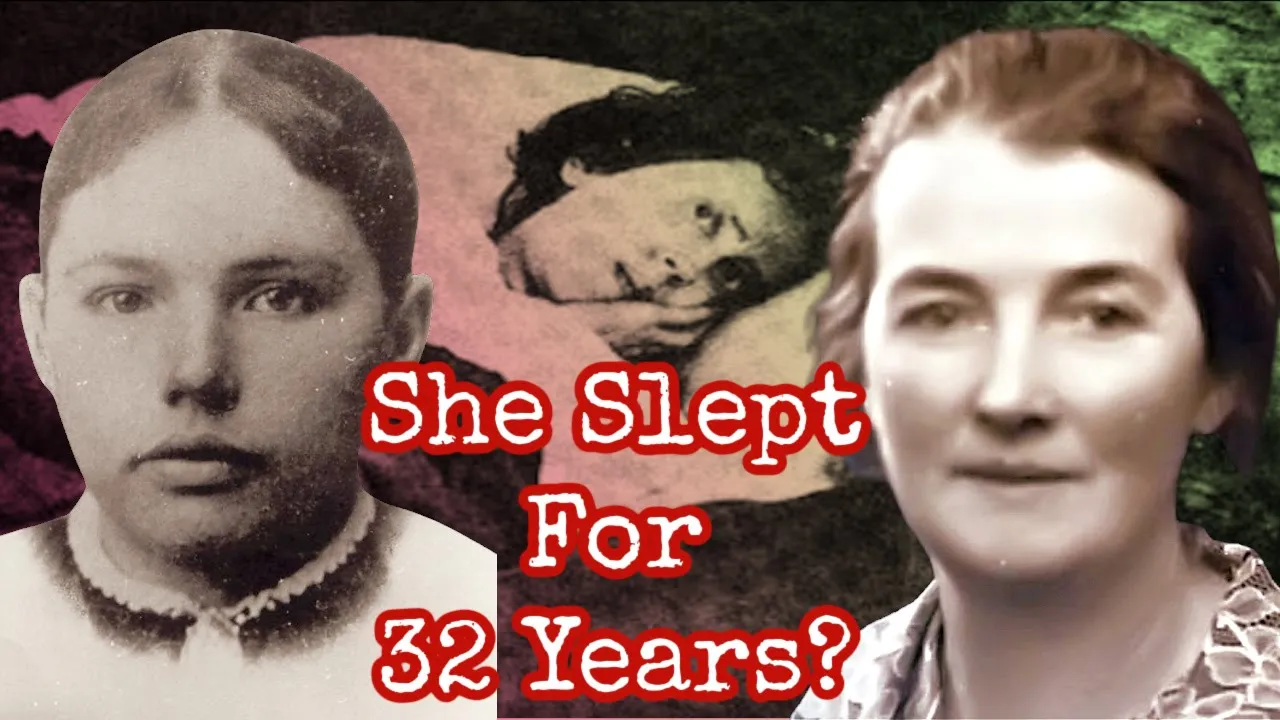




Charlotte Perkins Gilman's 1892 short story 'The Yellow Wallpaper' is a first-person narrative exploring postpartum mental illness through the lens of a woman confined to a room by her physician husband, who prescribes the harmful 'rest cure' treatment that exacerbates her condition; the story uses the oppressive yellow wallpaper as a powerful symbol of the narrator's psychological imprisonment and serves as a call to action against the dehumanizing treatment of women with mental health disorders, ultimately inspiring real-world changes in medical practices.
The Yellow Wallpaper: A Feminist Analysis | Crash Course Literature 407
Added:Familiarity with the plot, characters, and setting of Charlotte Perkins Gilman's 1892 short story, 'The Yellow Wallpaper'.
An understanding of late 19th-century gender roles, specifically Victorian domestic expectations and the concept of 'separate spheres' for men and women.
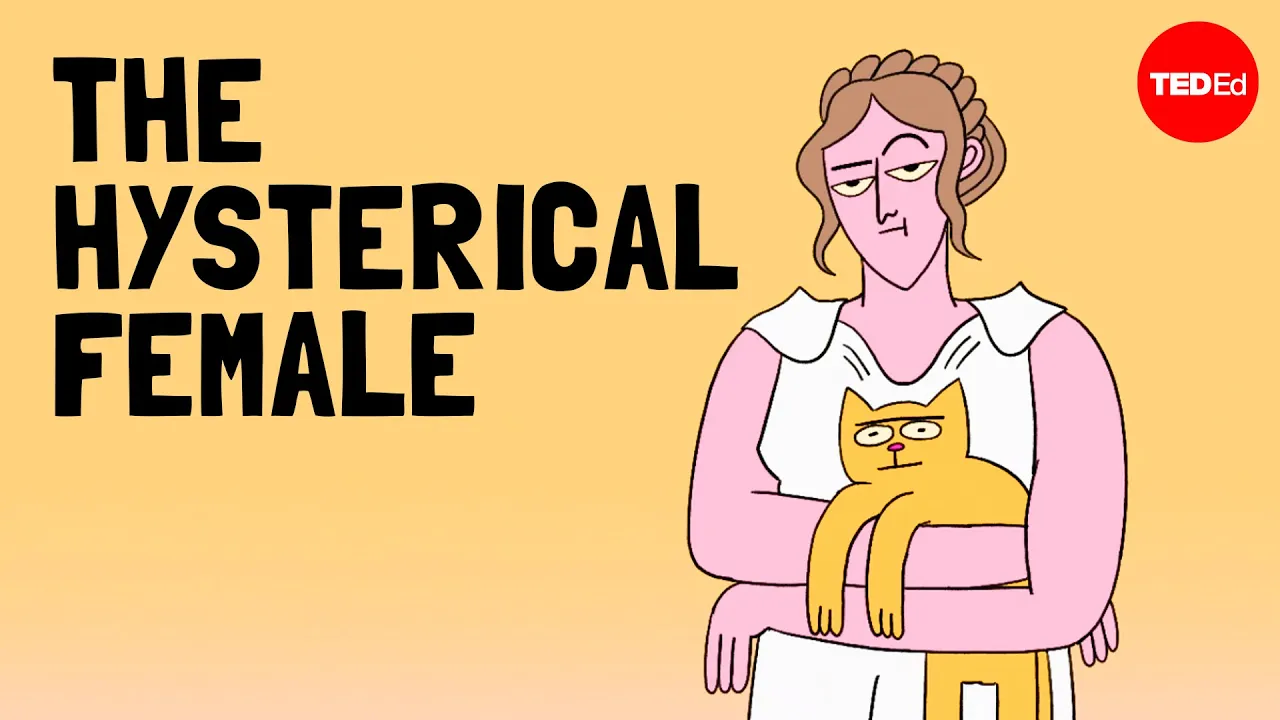
Basic knowledge of the historical medical treatment of women's mental health in the 19th century, including the diagnosis of 'hysteria' and Silas Weir Mitchell's 'rest cure'.
Introductory concepts of feminist literary theory, specifically how literature can reflect, reinforce, or challenge patriarchal power dynamics.
Comparative analysis of 'The Yellow Wallpaper' with other seminal feminist works of the late 19th and early 20th centuries, such as Kate Chopin's 'The Awakening'.
Exploration of Charlotte Perkins Gilman's wider bibliography and social philosophy, including her utopian novel 'Herland' and her non-fiction treatise 'Women and Economics'.
An investigation into the history of psychiatry, tracing how diagnoses of female mental illness evolved from 19th-century 'hysteria' to modern psychiatric standards.
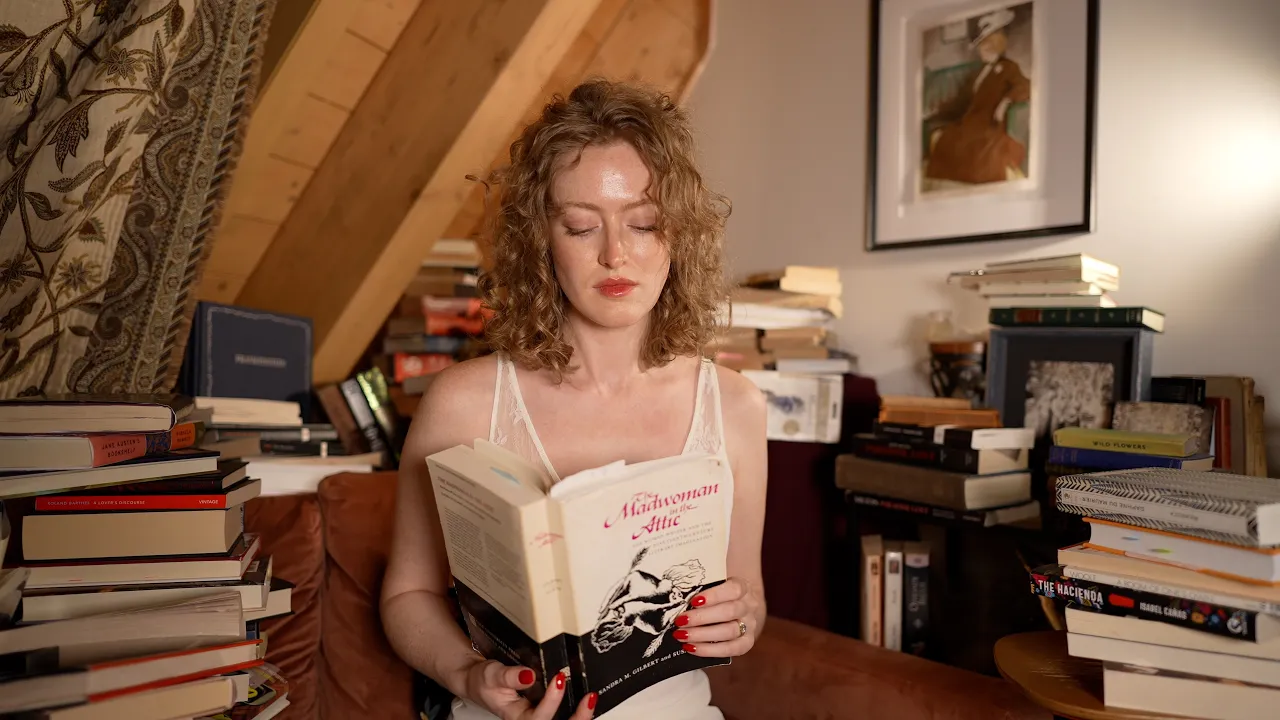
Advanced literary analysis of gothic elements and motifs in the text, such as spatial confinement, the domestic sphere as a site of horror, and the 'madwoman in the attic' archetype.
1M views25.6Klikes13:35Original Release: 2018-01-10
Hi, I'm John Green and this is Crash Course Literature.
So for the last few weeks, we've been talking a lot about Dystopias, imaginary societies gone wrong.
Like George Orwell's "1984" is a world of war, surveillance, and mind control.
"The Handmaid's Tale" portrays a toxic landscape in which healthy women are forced to produce offspring for the ruling class.
"Candide" showed us the best of all possible worlds, which was terrible.
And "Parable of the Sower" takes place in an alternate universe where a sloganeering, strongman president presides over a country, experiencing intense social disorder thanks to climate change. Fortunately none of that stuff has happened, yet, But today we're gonna talk about our final dystopia of the series, "The Yellow Wallpaper" by Charlotte Perkins Gilman And it's about a dystopia that already happened.
First published in 1892 in the New England magazine, this story is less of a "what-if" dystopia then a "this is happening to me" call to action.
So at first glance the life that Gilman describes in this story might not seem that bad, a young woman is married to a doctor and spends all of her time in a country mansion, and I mean all of her time.
But make no mistake about it. The social order in this story is in some ways as oppressive as the others that we've examined.
Gilman's narrator is imprisoned within her marriage and her social order and also her house.
And she eventually goes insane trying to preserve her perspective. Today I want to talk about Gilman who was a feminist, humanist, sociologist, novelist, poet, and essayist.
I also want to talk about perspectives on mental health, and how they've changed between Gilman's era and ours, and of course I'm gonna talk about yellow wallpaper. Soon enough you're gonna see it everywhere.
(Intro music plays) (music fades) So Charlotte Perkins Gilman had a fascinating life.
She was born in Hartford, Connecticut in 1860 and she lived with her mother and brother, after her father abandoned the family, and although she moved from school to school her childhood was really intellectually rich, largely because of her three brilliant and famous aunts: Isabella Beecher Hooker, suffragist and abolitionist, Harriet Beecher Stowe, best-selling author of Uncle Tom's Cabin, and Katharine Beecher, education reformer and advocate for Native American rights. With some financial help from her Ne'er-do-well father, Charlotte enrolled in design school. Later she supported herself by illustrating advertising cards and tutoring so, you know, she did know something about wallpaper patterns. In 1884 she married Charles Walter Stetson and gave birth to a daughter, Katherine, and in the years after her daughter's birth Charlotte experienced a series of what were called at the time "Nervous-Disorders". In 1887 she visited a specialist who encouraged her to try a "rest cure", and this involved living as domestic a life as far as possible having But two hours intellectual life a day, and never touching pen, brush, or pencil again. After three months of this so-called treatment she quote "came so near to the borderline of utter mental ruin, that I could see over."
Gilman wanted to warn others of the dangers of this rest cure and her story she explains was not intended to drive people crazy, but to save people from being driven crazy, and it worked.
We'll get to that working bit in a second, but back to her life. So in 1888, Charlotte left her husband and took Katherine with her to Pasadena, California. Her professional life flourished. She organized social reform movements. She represented California at the suffrage convention in Washington DC.
She became a lecturer and edited a series of magazines. She also wrote essays, poems, a novella, and by far her most famous story, "The Yellow Wallpaper."
Much of her work focused on women's unequal status in marriage and their need for financial independence.
And she achieved financial independence and also an equal marriage in her second marriage.
Eventually she was diagnosed with breast cancer and as she had lived on her own terms, she also died on her own terms.
She was an advocate of euthanasia, and she chose chloroform over cancer, committing suicide in 1935.
I wanted to focus a little on Gilman's life story to emphasize that this was a person who experienced severe, disabling mental illness and whose treatment ended up making it much worse and yet who still went on to live a long, fulfilling, and productive life.
I think it's really helpful to read "The Yellow Wallpaper" with that background. As for the story itself, well, Let's go to the thought-bubble. "The Yellow Wallpaper" is the first-person narrative of a 19th century woman suffering from a mental breakdown after giving birth. In a secret diary this narrator describes her setting,"a colonial mansion, a hereditary estate, I would say a haunted house, and reach the height of romantic felicity-- But that would be asking too much of fate!" This narrator is confined to a room with barred windows.
It's possible that she's in an asylum, But the physical setting is less important than another landscape, the shifting consciousness of her mind.
The narrator knows that she perceives reality differently from her husband, who is also her doctor. At first She chalks this up to the expected difficulties of male-female relations. "John," she writes, "laughs at me of course, But one expects that in marriage." This expectation of marriage is of course troubling in its own right, But there's an even darker side to their dynamic, John has almost complete control over his wife's body. The narrator's descriptions may be at times Unreliable, but there are a few things we do know: she recently had a baby, She recognizes that she is sick, John belittles her saying that she suffers from a temporary nervous depression, a slight hysterical tendency. Meanwhile he prescribes her a scheduled prescription for each hour in the day of phosphates or Phosphites, the narrator doesn't know which, and a regime of tonics, and journeys, and air, and exercise.
Also, John forbids his wife from writing, Working, or socializing and it quickly becomes clear that these so-called cures are Exacerbating the narrator's condition as she is left with very little to do except stare at the yellow wallpaper.
Thanks thought-bubble. So today We would probably say that the narrator is experiencing postpartum depression and/or postpartum psychosis.
These are conditions that can result from a drop in hormones like estrogen and progesterone and are intensified by the two central experiences of new parenthood, sleep deprivation and anxiety. Postpartum psychosis can include the depressive symptoms of postpartum depression along with confusion, disorientation, Hallucinations, and paranoia. Today these conditions would be treated with medication and therapy and other medical interventions, But whatever treatment John gives his wife in "The Yellow Wallpaper" Definitely does not work. If Gilman's story were an argument this line from it would be its thesis, "John is a physician, Perhaps that is one reason I do not get well faster."
Admittedly the 19th century wasn't a golden age for psychiatry, But even so, John is exceptionally bad at treating mental illness. At the start of the story Gilman's narrator craves more society and Stimulus. She writes that she must say what I feel and think in some way.
Forbidden from communicating with a living soul she secretly Confesses her thoughts to dead paper in a journal and in her writing She projects her mental disintegration onto the patterns that she sees on the walls.
"I never saw worse paper in my life," She writes, explaining that it contains "one of those sprawling Flamboyant patterns committing every artistic sin." Still she finds this pattern compelling: "it is dull enough to confuse the eye and following, Pronounced enough to constantly irritate and provoke study... And when you follow the lame uncertain curves for a little distance They suddenly commit suicide -- plunge off at outrageous angles, destroy themselves in unheard of Contradictions." Of course this also describes the narrator's interior landscape But it also describes the story, right? Like initially her narrative seems dull.
I mean plot summary woman stares at wall. But then it becomes confusing the wallpaper seems to be moving We aren't sure where this narrator is or if we can trust her and then something becomes Pronounced enough to provoke our further study. Are these romantic descriptions of a house, a delicious garden, Or it's tattered decor? Are they intimate descriptions of a failing marriage, the desire for connection, or are they veiled Suicidal musings, or maybe they're attempts to find a meaning in an extremely limited Experience, like Offred opening her hand in the sunlight in "The Handmaid's Tale."
I've always been fascinated by how the narrator tries to understand her situation in terms of principles of design, Like after she studies one breath or strip of wallpaper she concludes that its pattern is "not arranged on any laws of radiation, or alternation, or repetition, or symmetry, or Anything else that I ever heard of." I think anybody who's experienced mental illness can relate to that. For her each of these breaths Exists as an isolated column of fatuity, in other words It's meaningless. A pattern only emerges when she considers the strips next to one another Dim shapes appear to resemble a woman stooping down and creeping about behind that pattern. The wallpaper also Changes as the light changes. At night the woman in the wallpapers captivity behind bars becomes as plain as can be, So of course does the narrator's own captivity. And also wait hold on full disclosure I'm about to go full Freudian which I know is like a Frustration and annoyance to many of you who are not like hardcore lit crit people But just walk with me on this one. So the paper has this Peculiar odor that creeps all over the house and is stronger after a week of fog and rain.
Her husband might explain it as a combination of glue and mold intensified by humidity But smells travel through the olfactory bulb closely connected to the regions of the brain that handle memory and emotion.
That's why smells always remind us of moments from our past.
And it seems to me the narrator's fixation on this smell could be what Freud called the return of the repressed, or unconscious material rising to the surface.
And maybe that's part of why the narrator becomes determined that nobody discovered the wallpapers meaning except herself, although She had initially craved conversation, She decides that it does not do to trust people too much, especially with her most frightening thoughts.
I mean after all having previously trusted people with her frightening thoughts has landed her in this situation Where she has to stare at yellow wallpaper all day.
And then eventually the narrator begins to suspect that many women are trapped inside this paper: "I think there are great many women behind, and sometimes only one, and she crawls around fast, and her crawling shakes it all over." The Narrator longs to free this woman or women. On her last day in the house She locks her door, throws the key into the garden, and tethers herself to the bed which she also bites.
She rips at the wallpaper and thinks that it would be an admirable exercise to throw herself out the window. Then she wedges her shoulder into a smudge that runs along the lower part of the wall and walks hunched over along the periphery of the room, a kind of Reenactment of the woman stuck behind the wallpaper. John enters the room at last and then faints at the sight of his wife, yet She continues her laps crawling over the body of the man who had oppressed her.
"I've got out at last," she announces, "in spite of you and Jane?" Getting out at last involves rejecting societal norms and defying John and breaking free of Jane, a character not mentioned until this point who may be herself?
But then comes this question mark which complicates everything and makes it ambiguous. Charlotte Perkins Gilman Transformed her experience of enduring this rest cure into a story that invites us to reconsider gender dynamics And the treatment of mental health disorders.
At the time of its publication the story may have inspired concrete change too. In an article published in 1913 Gilman claims that her story quote "has to my knowledge, saved one woman from a similar fate -- So terrifying her family that they let her out into normal activity and she recovered. But the best result is this. Many years later I was told that my own doctor had admitted to friends of his that he had altered his treatment of neurasthenia since reading The Yellow Wallpaper." stories affect the world in mysterious ways and if "The Yellow Wallpaper" Helped end the practice of separating the sick from the world then I am grateful.
But I think the story has served another far more personal function. It has given form and expression to many people's Experiences with mental illness including, I have to say, mine.
It's a story that explores the ways that physiological brain disorders can be hurt or Helped by treatments and by the way the social order imagines and talks about mental illness. And although we no longer Embrace rest cures we still have a long way to go when it comes to talking about mental illness without the stigmatization that can worsen Suffering. But then also mental illness and the way it's discussed isn't the only Yellow Wallpaper Out there. I wonder What is the wallpaper That constrains you and who else do you feel might be imprisoned by its pattern?
How might you escape, how might you tell your story to Influence others? Those questions haunted me when I first read Gilman's story in high school And they shaped a lot of the ways that I think about writing today. More than 20 years later I'm still asking them.
Thanks for watching I'll see you next time. Crash Course is filmed here in the Chad and Stacey Emigholz studio in Indianapolis and it's made possible by your support at Patreon. Patreon is a voluntary subscription service where you can support Crash Course directly through a monthly donation To help us keep it free for everyone forever. We make Crash Course with Adobe Creative Cloud.
You can get a free trial at a link in the description.
Thanks to everyone who supports us on Patreon and to all of you for watching and as we say in my hometown don't Forget to be awesome.
Up Next

4:51
Stream of Consciousness: Woolf & Joyce Examples
@DepartmentOfEnglish
271 views•2025-05-08

13:43
Formalism in Literary Criticism: An Academic Lecture Overview
@mattalberhasky9952
39.1K views•2015-08-05
12:38
Frankenstein, Part 2: Romanticism and Critical Readings
@crashcourse
1.1M views•2014-04-03

15:25
1984: Orwell's Dystopian World and the Mechanisms of Totalitarianism
@AlternateHistoryHub
7M views•2017-03-04
Related Study Plans & Knowledge Roadmaps
Structured learning paths in Literature
literature
Graphic Memoirs: Visual Art, Trauma & History
01Foundations of Sequential Art and Visual Language
02Autographics and Processing Historical Trauma
03Visualizing Personal Trauma, Grief, and Graphic Medicine
+ 2 more learning modules
14h5 modules
Explore Roadmap
literature
Campus Novels: Evolution, Themes & Critique
01Introduction to the Campus Novel Genre
02Mid-Century Satire and the Post-War Academy
03Dark Academia and the Critique of Privilege
+ 2 more learning modules
14h5 modules
Explore Roadmap
literature
Theater of the Absurd: Philosophy & Plays
01Postwar Existentialism & Historical Roots
02Dismantling Narrative: Esslin & Absurdist Conventions
03Samuel Beckett and Tragicomic Existentialism
+ 2 more learning modules
12h5 modules
Explore Roadmap
literature
Revenge Tragedy: Justice, Madness & State
01Foundations of Early Modern English Theatre
02Anatomy of Revenge: Structural Conventions
03Psychological Complexity: Madness and Melancholy
+ 2 more learning modules
15h5 modules
Explore Roadmap