



















Princess Diana's public narrative evolved from a fairy tale princess to a Gothic heroine through literary tropes including isolation in oppressive settings (like Sandringham castle), entrapment in loveless marriages, and descent into madness, drawing parallels to Gothic heroines like Emily from Radcliffe's 'The Mysteries of Udolpho' and Orra from Baillie's plays, while also reflecting the 'mad woman in the attic' trope from 'Jane Eyre' and 'The Yellow Wallpaper'; this transformation demonstrates how cultural mythology and literary tradition shape collective memory, with Diana becoming a vessel onto which society projects its desires, fears, and critiques of patriarchal systems.
Princess Diana as Gothic Heroine: Literature to Film Analysis
Added:Familiarity with the core tropes of 18th and 19th-century Gothic literature, such as the sublime, psychological entrapment, and the haunted estate.
An understanding of the 'Female Gothic' subgenre, particularly the pioneering literary contributions of Ann Radcliffe and Joanna Baillie.
Basic historical context of Princess Diana's biography, her public persona, and her isolated relationship with the British Royal Family.
Fundamentals of film analysis, specifically how filmmakers use mise-en-scène, subjective cinematography, and non-linear narrative to represent internal psychological states.
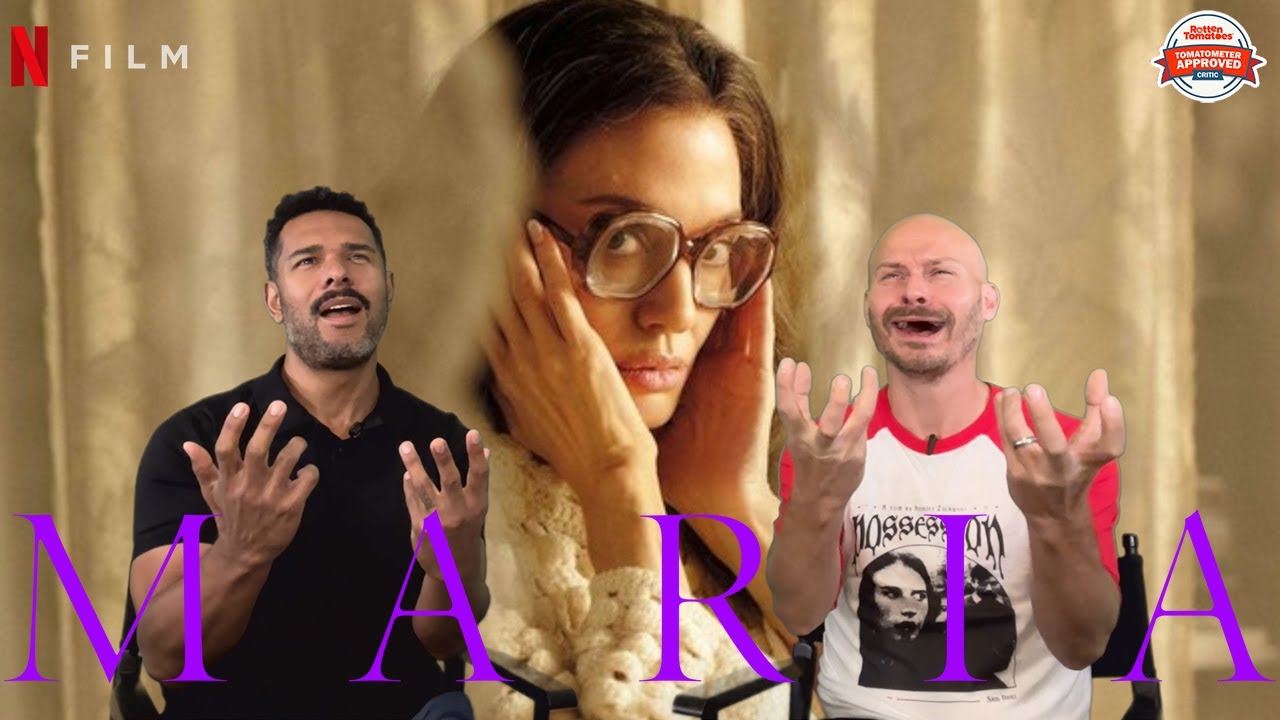
A comparative analysis of filmmaker Pablo Larraín's portrait trilogy ('Spencer', 'Jackie', and 'Maria') to study his unique approach to historical biopics.
Advanced exploration of psychoanalytic film theory, focusing on how concepts of trauma, hysteria, and the 'uncanny' (das Unheimliche) manifest in cinematic spaces.
Research into 'Neo-Gothic' cinema and how contemporary directors adapt classical Gothic tropes to critique modern patriarchy, class structures, and institutional power.
Applying literary adaptation theory to examine how historical figures are mythologized and reinterpreted through the lens of specific literary genres.
54.5K views3.5Klikes26:06Original Release: 2023-11-15
Princess Diana is the archetypal Gothic heroine.
At least that’s the narrative adopted by Pablo Larraín's 2021 film, Spencer.
Kristen Stewart’s Diana is isolated, angry, and confused; she experiences the onset of madness that comes from being trapped in a giant, lonely castle, and sees ghosts around every corner. But this portrayal of the people’s princess is a little surprising, is it not? It contradicts the familiar narrative, peddled to us for years, that Diana is the ultimate fairytale princess turned tragic saint. Since when is she a doomed Gothic heroine? How did she go from this - to this? These depictions are worlds apart... or are they?
To answer that question, we’re turning to 18th & 19th-century Gothic literature to pin down exactly what we mean when we say Gothic heroine. We’re going to ask ourselves how different fairy tales actually are from terrifying Gothic novels. We’re going to examine Larrain’s film in detail and compare it to tropes from 200 year old texts to figure out just how Gothic it really is. And we’re going to examine how Princess Diana’s narrative has evolved in our collective imaginations - from hopeful fairy tale icon to ‘mad woman in the attic’.
But first, hello and welcome to the video - if you’re new here I’m Dr Rosie Whitcombe, this is Mouse the cat, and we make videos on all things literary and creepy, so if that’s your jam, hit that subscribe button.
Now, I want to preface all this by saying that this is not going to be a video that engages in conspiracy theories; it will not be an assessment of the royal family’s inherent worth, nor will it suggest that any of the narratives discussed are factual representations of who Diana actually was. We don’t know her, so we’re not going to speculate and pretend that we do.
What we study on this channel is story-telling, and the story that shapes Diana into a pearl-eating, curtain-ripping, self-harming Gothic heroine begins in literature written by candlelight in centuries past.
But first, to really understand how Diana has become the archetypal Gothic heroine, we need to get to grips with what a Gothic heroine actually is, and to do that, we must turn back the clock a few hundred years, and examine how this character type took shape in the golden age of Gothic literature.
Now, if you’re new to this channel, you won’t yet be familiar with my love for Gothic writer, Ann Radcliffe, who was the most popular, well-paid, and influential writer of the 1790s.
Radcliffe wrote fascinating, complex, and powerful Gothic heroines. Take Emily, from her 1795 novel, The Mysteries of Udolpho. Emily is brave, kind, and intelligent; she feels deeply and gets overwhelmed while also using her rationality and reason to deal with difficult circumstances. But what I want to really stress here is that Emily is, perhaps above all else, good. She’s a virtuous character, and it’s this virtue that seems to guide her through trial after terrifying trial. Yes, she falters, yes, she needs rescuing, but ultimately her virtue means she sees her way through the darkness and gets her happy ending. The terror she experiences is all without, and she follows the chaste light of goodness, shining from within.
But Radcliffe’s weren’t the only Gothic heroines kicking around at the turn of the 19th century.
Not all writers subscribed to this idea that virtue wins the day, and not all Gothic heroines experience terror from without; some find it lurking within, and rather than remaining constant in the search for their happily-ever-afters, find only madness at the end of the page.
Allow me to introduce to you to Scottish poet and playwright, Joanna Baillie, who in 1798 published the first volume of her Plays on the Passions. Baillie was a contemporary of Radcliffe and actually features in one of the few anecdotes we have of Radcliffe’s life. Upon the publication of Volume 1 of Plays on the Passions, a rumour circulated that Radcliffe was in fact the author, and Radcliffe was extremely embarrassed, nay ‘mortified’ by this; she didn’t want to be mistakenly identified as the author of Baillie’s sensational plays.
Now, reading Radcliffe and Baillie side-by-side you might think ‘what has Radcliffe got to be embarrassed about? Yeah Baillie’s plays explore intense passion and emotion, but so do Radcliffe's novels - why was she so humiliated, offended, by the association?’ And indeed there are a lot of similarities between the two writers. But there are also some crucial differences that shouldn’t be glossed over, and one of those differences is in the way they each depict the Gothic heroine.
In Baillie’s 1812 play, Orra, published in the third volume of Plays on the Passions, the eponymous heroine is, like Radcliffe’s Emily, inherently good - she doesn’t harm anyone, she pictures a future for herself in which she will work to ‘Improve the low condition of my peasants’. Both Emily and Orra have to deal with the prospect of being forced into marriage, and both suffer at the hands of a cruel patriarch. But where Emily eventually gets away and marries the man she loves, Orra descends into a fear-induced madness from which she does not return.
Now, in a nutshell, the plot of Orra goes something like this: Orra is a young woman who, among other things, has a fascination with ghost stories - she loves frightening herself with a scary tale, like many of us do. She refuses to marry her suitor, Glottenbal, so under the suggestion of the scheming Rudigere, Glottenbal's father, Hughobert, kidnaps her and locks her in a castle in an attempt to force her to change her mind. Rudigere is Orra’s minder while she’s imprisoned - but he has an ulterior motive: to seduce Orra and have her for himself. Now, another suitor of Orra’s, Theobald, decides to go and rescue her. Orra, meanwhile, has been scared into thinking that the castle she’s imprisoned within is haunted, so when Theobald bursts into her rooms to rescue her, she thinks he’s a ghost, and faints. When she wakes up, she has entirely lost her mind - and it’s this ending that I want to focus on here.
So Orra has lost the plot, and Rudigere has killed himself and Glottenbal.
Hughobert, Glottenbal’s father, hears this news, and laments his son’s death: [...] oh! he was my son!—my only son: My child—the thing that from his cradle grew, And was before me still.—Oh, oh! Oh, oh! [Beating his breast and groaning deeply].
To which Orra replies: [running up to him] Ha! dost thou groan, old man? art thou in trouble?
Out on it! though they lay him in the mould, He's near thee still.—I'll tell thee how it is: A hideous burst hath been: the damn'd and holy, The living and the dead, together are In horrid neighbourship— [...] See! from all points they come; earth casts them up! In grave-clothes swath'd are those but new in death; And there be some half bone, half cased in shreds Of that which flesh hath been; and there be some With wicker'd ribs, through which the darkness scowls. Back, back!—They close upon us.—Oh! the void Of hollow unball'd sockets staring grimly, And lipless jaws that move and clatter round us In mockery of speech!—Back, back, I say! Back, back!
[Catching hold of Hughobert and Theobald, and dragging them back with her in all the wild strength of frantic horror, whilst the curtain drops].
You’ll have to forgive my macabre sensibilities for kind of loving this for Orra - she’s just gone fully Gothic, she sees ghosts at every turn, has no sympathy for Hugobert, is absolutely down-in-the-grave-dirt grisly in her descriptions. Gone is any shred of feminine decency, morality, or composure, and that I enjoy. What I don’t enjoy is how Orra fully succumbs to her madness and fear, and suffers for it. Feverishly, she begs the ghosts to move back, back! She's terrified. The actions of the other characters in the play have driven her to a miserable, painful conclusion.
I can’t help but be reminded of ‘The Yellow Wallpaper’, by Charlotte Perkins Gilman, a much later expose of a woman pushed to madness by patriarchal order, and which you can learn more about in our video on the subject, see the link in the description. In both narratives, women are driven to madness as a final means of defiance. But what's most interesting to me is that it’s not just Orra who suffers by the play's end. The very last stage direction has Orra dragging away Hughobert and Theobald with ‘wild strength’ before the curtain falls. So they’re off who knows where, two of her other suitors are dead. It seems to me that Baillie is showing us what happens when women are manipulated, abused, and forced into submission: everything goes wrong, the entire society within the play crumbles. The patriarchy can’t withstand Orra’s madness. But what do you think? What’s your interpretation of the play’s ending? Let me know in the comments below.
Baillie’s Gothic heroine is very different to Radcliffe’s, and we can perhaps now see why Radcliffe was embarrassed to be associated with a playwright capable of producing something so tragic and unapologetic as Orra. Orra asks what happens to those women who don’t fit into the Radcliffean narrative, who refuse all their suitors and insist on their independence, and who can't rely on their inherent goodness to guide them to a happy ending. We’ve also got this contrast between Radcliffe’s heroines who are frightened by things without, things outside themselves, and call on their reason and common sense and virtue to overcome them, and Orra who succumbs to her own internal fear. As Nathan Elliot argues, where ‘Radcliffe’s heroines are rescued by reality, [by the play’s end] Orra’s subjective reality is still gothic’. Baillie’s Gothic mode is all about interiority - and after all, we might ask, what’s scarier, what’s harder to face, than the fear that comes from within?
But how exactly, I hear you ask, does all this relate to Princess Diana? We’ve compared these two different 200 year old Gothic heroines - which one does Diana most closely resemble? Well, I would argue, she is both. And not only is she both, she is all - Diana takes on every narrative we impose upon her, from fairy tale princess to tragic icon to mad, Gothic heroine.
Hilary Mantel writes that ‘The princess we invented to fill a vacancy had little to do with any actual person. Even at the beginning she was only loosely based on the young woman born Diana Spencer’. Diana was a blank canvas, a blank body onto which people projected themselves; a vessel to fill, with our wants, needs, and desires. This is made abundantly clear in this article by Mary Kenny, written just after the royal wedding in 1981. Kenny writes that the royal family, as a whole, ‘act out for us a mythological role which is part of our deepest longings. Most of us ordinary women are not pure and good and chaste and sweetly bashful: but we are glad that the Lady Diana was all those things on our behalf’. Right from the off, Diana is entered into a cultural mythology. She becomes what we want her to become.
For Kenny, and for many others, what she became in 1981 was a fairy tale princess. She leapt on to the front page and into the nation’s hearts when she married her prince charming. Headline after headline pushed this ideal, pitching the marriage of Diana and Charles as the ultimate happily-ever-after. This was, of course, far from the truth. As Mantel puts it, once her marriage began to fall apart, ‘Another story had begun to tell Diana. Cut loose, she opened the doors of her identity and all the dead princesses floated in, those deposed and exiled, beheaded and shot’.
Now, I’m not going to take you through the entire trajectory of Diana’s treatment in the press - there are plenty of readily available sources that can help you with that, heck you can get a lot of what you need just from looking at her People Magazine covers from over the years. Most of us have watched this interview, most of us have seen at least one dramatic portrayal of her life. Most of us are at least vaguely aware of the narrative that takes us from hopeful romance, to motherhood, to a fractious marriage, eating disorders, affairs, divorce, and, eventually, death.
And even if, even if we know nothing of the particulars, the one thing we’re all likely aware of, is that there’s no happily ever after here: the ending to this fairytale is closer to Orra than Cinderella. And perhaps, that’s because the fairytale and the Gothic aren’t really that far apart after all.
When I hear the word fairytale today, mid-century Disney is what springs to my mind. We’ve got the princess, who goes through some hardship but is ultimately saved by the handsome prince. But that refrain of romance and rescue is not representative of more traditional kinds of fairy tales. Look no further than Hans Christian Anderson’s little mermaid who contemplates a murder-suicide, or Rapunzel, as told by the Brothers Grimm, whose handsome prince falls into a thorn bush that plucks out his eyes: you’ll find that the macabre is working just behind the scenes of your favourite Disney classics.
Fairytales are entrenched in folklore and overlap with terrifying trappings that might feel better suited to Gothic literature, and nowhere do we see this overlap more clearly than in the delicious fairy tales of Angela Carter (whose incredible collection of short stories, The Bloody Chamber, I’ve made several videos about so be sure to check those out next). Carter’s Little Red Riding Hood explores carnal desire with the wolf and kills her grandmother, her Snow White is violently ravished and disposed of (and that’s putting it mildly). Now, Carter is perhaps an extreme example of fairy tales-gone-Gothic, but is that because she’s extra spooky, or is it because fairy tales are already Gothic by their very nature? I say the latter, and with that in mind, it’s perhaps not surprising that a story like that of Princess Diana - one that was pegged time and time again as the ultimate fairy tale - should have been Gothic all along.
Turning once more to the inimitable Hilary Mantel: 'When people described Diana as a “fairytale princess”, were they thinking of the cleaned-up versions? Fairytales are not about gauzy frocks and ego gratification. They are about child murder, cannibalism, starvation, deformity, desperate human creatures cast into the form of beasts, or chained by spells, or immured alive in thorns. The caged child is milk-fed, finger felt for plumpness by the witch, and if there is a happy-ever-after, it is usually written on someone’s skin.'
As a fairytale princess, Diana is entrenched in a literary tradition that deals in dark narratives and unhappy endings of mutilation, mistreatment, and malignity. Through this narrative she has become part of the folklore of the country; you get the sense that everyone knows her tale, everyone builds on it just a little when they pass it down. And interestingly, it's this tradition Larrain buys into in Spencer. The film opens with the line, ‘a fable from a true tragedy’. A fable is a stone's throw from a fairy tale, from folklore - and this fable, and the moral it contains, should you choose to hear it, is a dark one. Larrain bypasses any shred of Disney and enters his heroine, Diana, into the underbelly of the Gothic.
How does Diana’s story change under the hands of Kristen Stewart and Pablo Larraín?
How does she go from this to this?
"Tell them I'm not at all well!"
In Spencer, Diana is embedded in a rich Gothic tableaux of dark rooms, winding corridors, lonely chambers, and fearsome antagonists. Sandringham is Diana’s dark and sprawling castle of Udolpho or Orra’s haunted prison; and Diana, like Emily and Orra, is held there against her will. She is also, no surprise, in a loveless marriage - now, Emily and Orra aren’t married, but they’re certainly threatened with the prospect of a forced union, judged by their value on the marriage market, dehumanised and objectified as possessions to barter with. In Spencer, we rarely see Diana and Charles together, and when we do it’s fraught as f***; there’s no affection between them. In all three narratives then, marriage is a major catalyst for the heroine’s suffering; Emily, Orra, and Diana are continually haunted by the entrapment marriage comes to represent.
And what does this entrapment lead to in Spencer? Well, much like Orra, Diana's isolation and imprisonment impacts on her sanity. The film enters Diana into the literary tradition of ‘the mad woman in the attic’, a concept written about in detail by Sandra Gilbert and Susan Gubar in their 1979 book of the same name. The ‘mad woman in the attic’ trope is just that: a female character, locked away to spare the world her mental illness, the famous example being Bertha Rochester from the novel Jane Eyre, Mr. Rochester’s secret first wife, imprisoned at Thornfield Hall and hidden from the unwitting Jane. We get a similar portrayal of the mad woman in ‘The Yellow Wallpaper’: the female protagonist is locked away by her husband in a misguided attempt to cure her mental illness.
‘The mad woman in the attic’ draws on elements of the Gothic literary tradition. She’s often a young woman, taken to an unfamiliar, unwelcoming abode of some kind, by a man who behaves cruelly and worsens her condition. We see this played out in The Mysteries of Udolpho and Orra, and we get the same thing in Spencer. As Mattie Kahn writes, ‘our princess is locked not just in the castle, but in the prison of her own mind’. Diana doesn’t want to be there, doesn’t want to join in with the bizarre Christmas traditions, like being weighed on entry to Sandringham. She, like Bertha from Jane Eyre, the unnamed protagonist from ‘The Yellow Wallpaper’, Emily, and Orra, is often alone, with few allies. She endures repeated violations to her privacy and any time she attempts to implement a new coping strategy, she is lambasted by the antagonist’s scheming.
Where's Maggie?
I believe Major Gregory sent her back to London.
And speaking of the antagonist, he too is vested in the Gothic tradition. Now, we might guess the antagonist in Spencer is the royal family as a collective, spearheaded, perhaps, by Charles; but the most sinister character, and the one who seems to really hound Diana, popping up when she’s trying to eat or indulge in a moment of solitude, is this guy, Major Gregory. Diana often goes toe-to-toe with Gregory, who fits the archetypal villain role. Like Radcliffe’s Montoni, he is threatening, spectral, and without sympathy.
So, with all that said, is it surprising that she struggles? Would you remain sane in the same situation? Under endless observation, faced with cold and unfeeling relatives, her curtains sewn shut, her allies removed from her side, and the spectral shadow of her childhood home over the hedgerows, Diana is the mad woman, haunted by her marriage, subject to scrutiny, isolated “for her own good”.
And speaking of haunting, that brings us to one of my favourite Gothicisms to feature in Spencer, one that we get in both The Mysteries of Udolpho and Orra: the Gothic heroine’s interaction with the supernatural. Now, as I’ve already touched on, Orra is very fond of ghost stories, and it’s her love of terror that, in part, leads to her snapping, after which she is subsumed into a reality where the dead surround her.
Emily, by contrast, resists the supernatural as much as she can, but she also spends some time in the novel convinced she’s seen a ghost - though by the end Radcliffe offers a rational explanation for this spooky sighting. In Spencer, Diana also sees a ghost.
But while in Baillie and Radcliffe the ghosts are indiscriminate set pieces, by which I mean they’re not the ghosts of specific people, Diana’s ghost takes the form of one person in particular.
Throughout the film, Diana encounters the ghost of another ill-fated female royal whose proximity to the crown portended her doom: Anne Boelyn.
If you need a quick history refresher, Anne Boleyn was Henry VIII’s second wife, the woman he broke with Rome and the Catholic church to marry, only to murder by beheading for allegedly having an affair.
Sour marriages, unfeeling courtiers, premature death: Larrain’s comparison highlights the shared victimhood of both women and the striking parallels between their positions in the royal family. One thing that isn’t directly touched on in the film, but that I can’t stop thinking about, is how Diana and Anne Boelyn were also both victims of a ruthless propaganda machine.
It’s no secret that Diana was hounded by the press, lavished with praise, pity, scorn, suspicion, the list goes on. Right from the beginning, when the news first leaked that she was to marry into the royal family, she was a prime target. As Mantel writes, in this photo shoot, ‘they induced her to stand against the light, so in the resulting photograph the nation could see straight through her skirt. A sort of licentiousness took hold, a national lip-smacking. Those gangling limbs were artlessly exposed, without her permission. It was the first violation’.
While in the 1530s the press wasn’t the press of the 1980s and 90s, Anne Boelyn, and indeed all of Henry’s wives, were subject to similar violations, to the machinations of the story he, as King, wanted to spin. The evidence of this lies in our well-worn primary-school-level understanding of their characters. Anne Boelyn is the wily, ambitious mistress; Anne of Cleves is the ugly one; Catherine Parr the saint. But these familiar notions are the result of Henry’s centuries old and still enormously effective rumour mill. Take Anne of Cleves: the story goes that Henry tried to surprise her when they first met, and she didn’t appreciate it, causing him great offense. Due to diplomatic complexities they still married, but the King wasn’t able to consummate their marriage.
Now, it’s probable that he was unable to do so because of his age, poor health, and possible impotence - but he couldn’t have everyone at court thinking that, so he got his doctor to spread rumours that Anne must be the problem. The King sleeps with all his mistresses and has wet dreams still, so Anne must be too ugly for him to do the deed. We don’t have any actual evidence that Anne was so ugly as to be justifiably dubbed ‘the Flanders mare’; in fact there are multiple contemporary sources that say she was attractive. It seems to me most likely that she never got on with the King, she wasn’t attracted to him either, so he lashed out by attacking her looks; and she acquired a sound divorce settlement from him, so maybe he was bitter about that, too.
Maybe Anne Boelyn had an affair; or maybe it was all part of Henry’s tall tale, designed to discredit his wife and get rid of her so he could marry someone else.
As Larrain writes her, Anne Boelyn is one of Diana’s few allies in Spencer. And unlike Emily and Orra, Diana isn't scared of the ghost that haunts her. Anne Boelyn gives her the strength to refrain from throwing herself down the stairs of her childhood home in a fit of despair, and encourages her to run.
Go.
Run.
And run she does. The final scene shows Diana and her children in Central London eating KFC. She’s escaped the haunted and oppressive Sandringham, with its decadent, otherworldly feasts and cruel rituals, and has found something incredibly, relievingly normal. She’s free. Or is she?
Now this ending is interesting. If we've got Emily running off into the sunset and Orra descending into a pit of despair, how does Diana's ending fit the Gothic narrative?
I think it's left deliberately unclear. One interpretation is certainly that she has escaped with her children in a whirl of ecstasy and possibility, with a new romance on the horizon. But the film’s final frame is of Diana looking out towards Tower Bridge that leads to the Tower of London. This is where Queen Anne Boelyn spent her final days and was executed.
So another reading could be that even though she has left the house of Christmas horrors, Diana can never really be free. She's still consumed by the threatening potential of what her rebelliousness could lead to; she could still suffer, and pay the ultimate price, just like Anne Boelyn. The film is set at Christmas 1992. We, as viewers, know that in a few short years Diana would be dead, so perhaps this final shot is indeed one of foreboding that relies on the viewer's contextual understanding. But yet another reading could be that, in this shot, Diana is having a moment of reverence for Anne Boelyn, her helpmate, her ancestor; or perhaps she’s looking over the river and thinking, “your fate won’t be mine”. For all its heavy metaphors, the film’s conclusion is gloriously open-ended; and so is the narrative of Princess Diana. She is talked about and reimagined endlessly, as though what happened to her is happening right now.
What Mantel writes about Anne Boelyn is equally applicable to Diana; that 'Her real self is hidden within the dramas into which we co-opt her'. Our collective fascination with her shows no signs of slowing down, so it’s likely that the future holds more adaptations, in literature and media, that rewrite and rewrite her story to suit our changing views, politics, and sensibilities.
I turn, for one final time, to Mantel: ‘[Diana] is like John Keats, but more photogenic: “Here lies one whose name was writ in water.” If Diana is present now, it is in what flows and is mutable, what waxes and wanes, what cannot be fixed, measured, confined, is not time-bound and so renders anniversaries obsolete: and therefore, possibly, not dead at all, but slid into the Alma tunnel to re-emerge in the autumn of 1997, collar turned up, long feet like blades carving through the rain’.
Mantel's absolutely gorgeous prose shows us how uncertainty and mystery and mutability are at the core of Diana's story; here and not here, she becomes a ghost herself. She's not just the haunted Gothic heroine; she does her share of the haunting.
But if Diana has been rewritten as a Gothic heroine, what does that tell us about the world we’re living in now? Well, the Gothic, I would argue, is - at its core - about rebellion, subversiveness, a challenge to authority. Gothic heroines often represent a threat to order, and the way they suffer highlights the entrenched inner-workings of the political and social structures that repress them. Whether a Gothic heroine finds peace, madness, or something a little less certain, she makes crystal clear the horrors of the system that entraps her, the patriarchy that devours her - and perhaps, by being made aware of this, we’re more likely to challenge those systems ourselves.
One story goes that Diana’s separation from the royal family removed all her protections. This is precisely what happens to the countess in Angela Carter's disturbing and very short short story, 'The Snow Child'. To learn more about this shocking tale, and its counterparts in Carter’s collection The Bloody Chamber, click here next.
Up Next

40:49
December Book Haul: History & Fiction Purchases
@TheHistoryShelf
990 views•2023-01-06

13:43
Formalism in Literary Criticism: An Academic Lecture Overview
@mattalberhasky9952
39.1K views•2015-08-05

6:08
Point of View in Fiction: First Person vs. Third Person
@magicalthriftyteacher
153.8K views•2014-03-31

15:25
1984: Orwell's Dystopian World and the Mechanisms of Totalitarianism
@AlternateHistoryHub
7M views•2017-03-04
Related Study Plans & Knowledge Roadmaps
Structured learning paths in Literature
literature
Graphic Memoirs: Visual Art, Trauma & History
01Foundations of Sequential Art and Visual Language
02Autographics and Processing Historical Trauma
03Visualizing Personal Trauma, Grief, and Graphic Medicine
+ 2 more learning modules
14h5 modules
Explore Roadmap
literature
Campus Novels: Evolution, Themes & Critique
01Introduction to the Campus Novel Genre
02Mid-Century Satire and the Post-War Academy
03Dark Academia and the Critique of Privilege
+ 2 more learning modules
14h5 modules
Explore Roadmap
literature
Theater of the Absurd: Philosophy & Plays
01Postwar Existentialism & Historical Roots
02Dismantling Narrative: Esslin & Absurdist Conventions
03Samuel Beckett and Tragicomic Existentialism
+ 2 more learning modules
12h5 modules
Explore Roadmap
literature
Revenge Tragedy: Justice, Madness & State
01Foundations of Early Modern English Theatre
02Anatomy of Revenge: Structural Conventions
03Psychological Complexity: Madness and Melancholy
+ 2 more learning modules
15h5 modules
Explore Roadmap