







![ВИРДЖИНИЯ ВУЛФ. Лучшие книги: ТОП-5 [ погружение ]](https://i.ytimg.com/vi_webp/zSiVNDb6j0k/maxresdefault.webp)













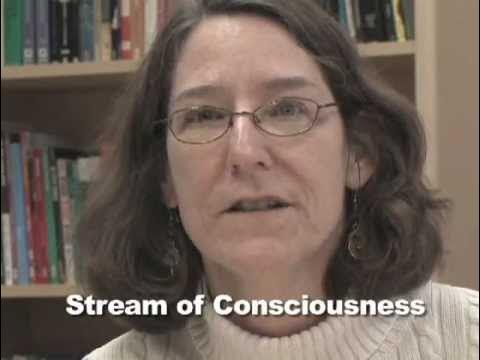
Stream of consciousness is a literary technique that captures the continuous flow of thoughts, feelings, memories, and sensory impressions inside a character's mind, characterized by long flowing sentences, sudden switches between past and present, inner monologue, and minimal punctuation; this technique originated from philosopher William James's concept of thoughts as a flowing river and was developed by modernist writers like Virginia Woolf (in 'Mrs. Dalloway') and James Joyce (in 'Ulysses') to provide direct access to characters' inner worlds and honestly express the confusion of modern life.
Stream of Consciousness: Woolf & Joyce Examples
Added:An understanding of literary Modernism, specifically its early 20th-century historical context and its break from traditional Victorian narrative structures.
Familiarity with standard narrative perspectives, such as first-person and third-person omniscient, to recognize how stream of consciousness departs from conventional storytelling.
William James's psychological concept of the 'stream of thought,' which originally defined how human consciousness flows continuously rather than being chopped up in bits.
A basic familiarity with the major works of Virginia Woolf (e.g., 'Mrs. Dalloway') and James Joyce (e.g., 'Ulysses' or 'A Portrait of the Artist as a Young Man').
Comparative analysis of the distinct styles of stream of consciousness, contrasting Woolf's associative, poetic flow with Joyce's linguistic experimentation and interior monologue.
Exploration of how the stream of consciousness technique evolved in Postmodern and contemporary literature (e.g., works by William Faulkner, Samuel Beckett, or Toni Morrison).
Application of psychoanalytic literary theory (such as Freudian theories of the unconscious) to analyze the repressed thoughts and desires depicted in modernist interior monologues.
Creative writing exercises aimed at capturing characters' raw, unfiltered sensory perceptions and cognitive processes to build psychological depth.
271 views4likes4:51Original Release: 2025-05-08
Dream of consciousness explained with examples from Virginia Wolf and James Joyce. Have you ever tried to write down your thoughts exactly as they come without editing or organizing them?
That's called stream of consciousness.
It's one of the most unique and powerful techniques in modern literature. Brain one. What is stream of consciousness? The term stream of consciousness refers to a style of writing that tries to capture the continuous flow of thoughts, feelings, memories, and sensory impressions inside a character's mind. It doesn't always follow clear grammar or logic. Instead, it mirrors the way we actually think, jumping from one thought to another, often without warning.
Key features: long flowing sentences, sudden switches between past and present, inner monologue, no clear structure or punctuation. Two, where did it come from? The term was first used by philosopher William James in the 1890s to describe how human thoughts are like a flowing river, not broken into neat parts. Later modernist writers in the early 20th century used this idea in fiction. Writers like James Joyce Ireland, Virginia Wolf, England, William Faulner, USA. They wanted to explore the inner world of the human mind rather than just the outside world. Three, Virginia Wolf, Mrs. Doway.
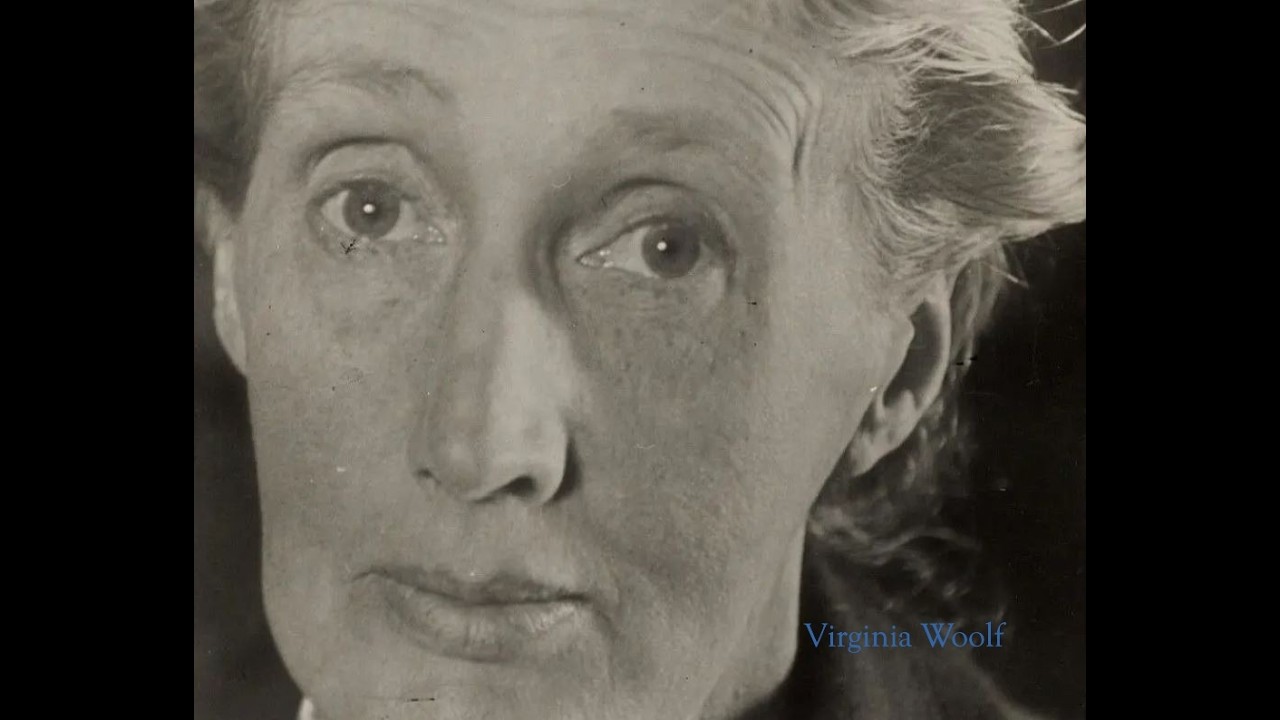
Let's look at how Virginia Wolf uses stream of consciousness in her famous novel Mrs. Doway 1925. The novel follows one single day in the life of Clarissa Doway as she prepares for a party, but most of the story happens inside her mind. Example, Clarissa walks through London and sees people, hears sounds, remembers her youth, wonders about love and time.
There's no chapter break, only her flowing thoughts. What a lark. What a plunge.
For so it had always seemed to her. Wolf also shows the mind of Septimus, a war veteran suffering from PTSD. His thoughts are chaotic, full of fear and hallucination. The stream of consciousness helps us enter the private emotional world of characters. Not just what they say, but what they silently feel. Four, James Joyce, Ulyses. Joyce's Ulisses, 1922 is one of the boldest examples of this style. The book follows Leopold Bloom on a single day in Dublin, but it dives deep into his thoughts at every moment. The most famous part is the final chapter, which is just the inner monologue of Molly Bloom, 40 pages with no punctuation. Yes, I said yes, I will.
Yes. Here, Joyce shows how language can break rules to become more lifelike, more like the actual voice in our heads.
Five. Why is this style important? It gives us direct access to characters minds. It breaks the boundary between reader and character. It challenges traditional storytelling. It reflects the chaos of modern life. In the modern world full of war, change and doubt, people felt confused inside.
stream of consciousness expressed that confusion honestly. Six, how you can spot it for exams or analysis. Ask these questions.
Is the narration jumping around without clear order? Are we inside the mind of the character? Is there little or no punctuation? Are memories and present thoughts mixed together? If yes, you are probably reading a stream of consciousness. Conclusion: Stream of consciousness isn't just a technique.
It's a journey into the human soul.
Writers like Wolf and Joyce used it to show life as it truly feels inside the mind, flowing, messy, and real.
Up Next

43:09
Hemingway, Fitzgerald & Faulkner on War and Modernism | Yale Lecture 1
@YaleCourses
110.4K views•2012-04-05

13:43
Formalism in Literary Criticism: An Academic Lecture Overview
@mattalberhasky9952
39.1K views•2015-08-05

6:08
Point of View in Fiction: First Person vs. Third Person
@magicalthriftyteacher
153.8K views•2014-03-31

15:25
1984: Orwell's Dystopian World and the Mechanisms of Totalitarianism
@AlternateHistoryHub
7M views•2017-03-04
Related Study Plans & Knowledge Roadmaps
Structured learning paths in Literature
literature
Graphic Memoirs: Visual Art, Trauma & History
01Foundations of Sequential Art and Visual Language
02Autographics and Processing Historical Trauma
03Visualizing Personal Trauma, Grief, and Graphic Medicine
+ 2 more learning modules
14h5 modules
Explore Roadmap
literature
Campus Novels: Evolution, Themes & Critique
01Introduction to the Campus Novel Genre
02Mid-Century Satire and the Post-War Academy
03Dark Academia and the Critique of Privilege
+ 2 more learning modules
14h5 modules
Explore Roadmap
literature
Theater of the Absurd: Philosophy & Plays
01Postwar Existentialism & Historical Roots
02Dismantling Narrative: Esslin & Absurdist Conventions
03Samuel Beckett and Tragicomic Existentialism
+ 2 more learning modules
12h5 modules
Explore Roadmap
literature
Revenge Tragedy: Justice, Madness & State
01Foundations of Early Modern English Theatre
02Anatomy of Revenge: Structural Conventions
03Psychological Complexity: Madness and Melancholy
+ 2 more learning modules
15h5 modules
Explore Roadmap