






















![А. Аствацатуров - Уильям Фолкнер. Романы. Поэтика. Биография. Южный Миф [журфак-2006]](https://i.ytimg.com/vi/6KTOMMuNKjc/maxresdefault.jpg)






To read William Faulkner's The Sound and the Fury effectively, readers must embrace its deliberate difficulty and understand that the novel's four interwoven perspectives (Benji, Quentin, Jason, and Dilsey) each present the same story through unique stylistic approaches—Benji's stream-of-consciousness section requires patience and rereading, Quentin's philosophical musings explore time and honor, Jason's section offers clear but unpleasant narrative, and Dilsey's third-person perspective provides clarity. Faulkner's modernist innovations, including nonlinear storytelling and dense prose, reflect his exploration of time, memory, and the human condition, particularly examining how the past haunts the present and how identity is shaped by temporal experience.
How to Read William Faulkner's The Sound and the Fury
Added:The Sound and the Fury by William Fulner is an astonishing masterpiece of modernist literature and a novel that powerfully changed the landscape of the southern Gothic genre forever. It is also one of the most difficult works of the 20th century. Its challenges are cognitive, aesthetic, and emotional. And Fulner's pros is densely poetic, philosophically heavy, and stylistically complex. And indeed, we can see William Fulner taking language to its breaking point in his works. This book contains fractured meditations on some of the most profound themes of the human condition. We're talking about memory, loss, race, sexuality, class, obsessive love, and moral decay. Meditations that are alternately tragic and heartbreakingly beautiful, compelling and moving and disturbing. And if you know your Shakespeare, you'll know that you're in for a challenging and intense experience right from the title, which is an illusion to one of the most bleak and nihilistic speeches in all of literary history. It comes from a speech uttered by McBth at his most desparing, and it goes like this. Life's but a walking shadow. A poor player that struts and frets his hour upon the stage and then is heard no more. It is a tale told by an idiot full of sound and fury signifying nothing. The Sound and the Fury, published in 1929, follows the tragic saga of the Thompsons, a family of once prosperous aristocratic plantation owners who are now in severe decline, decay, and ruin.
The story takes place in Fulner's imaginative heterocapa county, Mississippi. Though indeed the insights coming out of the deep south of America apply universally to all times, all places, and all peoples. And the story is told through four interwoven and disorienting perspectives that bounce backwards and forwards in time and in stream of consciousness style. The Sound and the Fury was Fulner's fourth novel and though not an immediate commercial success, it is without a doubt his first great novel and would usher in a period of unbelievable creativity, rarely matched anywhere in all of world literature in which he produced masterpiece after masterpiece with novels like As I Lay Dying, Sanctuary, Light in August and Absilum Absilon.
Thus cementing himself as one of the greatest writers in the American cannon right alongside the likes of Herman Melville, Mark Twain, Walt Whitman, and Emily Dickinson. And in the almost 100 years since it was published, this novel would prove to be one of his most influential and enduring. And indeed, Faulner will continue to endure. His influence is wide and deep and can be felt in the stories of great writers like Tony Morrison, Ralph Ellison, and Cormick McCarthy. But the fact remains that one of the most defining traits of Fulner's writing is his sheer difficulty, which makes this novel in particular one of the most abandoned works. This is one of those novels that readers most put down after having only read a few pages. And readers put this one down because Fulner does not ease you into it. He hits you with his near impenetrability right from the very start and he frontloads the demands he makes of you. And all of the demands that he makes if met are rewarded enormously. But you have to bring yourself to him. You have to bring your whole self to him. And Fulner was famously asked in interview, "Some people say that they can't understand your writing even after they read it two or three times. What approach would you suggest for them?" To which Fulner replied, "Read it four times." And that's exactly the kind of care, attention, perseverance, and dedication we're going to bring to this masterpiece at the Hardcore Literature Book Club at patreon.com/h hardcore literature.
Because at time of recording, we are just now kicking off a brand new and exclusive lecture series and readthrough for The Sound and the Fury. And this read through is going to take us through this notoriously difficult work. And we're going to make The Sound and The Fury not only accessible and understandable, but we're going to make it into a novel that you appreciate and value on a deep human level. And so today, let's talk about how to read The Sound and the Fury. If ever a book were in need of a how to read, it's this one.
And by the end of this video, you will be equipped with the tools and context you need to suck the marrow out of high fularian pros poetry. We've got a lot to cover today. We're going to be talking about markers of modernism and the southern gothic. We're going to talk about the structure of the novel and Fulner's nonlinear storytelling. We're going to talk about the book's themes and how Fulner renders and distorts temporality and also meditates upon the nightmare of history, the nightmare of the past. We'll talk about the great writer's life at time of writing. And we will also pull some of his pros apart and appreciate it. But we have to begin with a spoiler-free summary of the work.
And to do that necessitates us analyzing the structure of the book simultaneously. In great literature, there is a symbiotic relationship between style and substance. And this is particularly true when it comes to Fulner. The style informs the story and vice versa. And if we spend 10 minutes now talking about what the book is about and how the story is conveyed, then that will be the most leveraged move for getting the most out of this book.
Because I really do believe the greatest hindrance when it comes to appreciating the sound and the fury is simply not knowing what the heck is going on and finding the structure and the way the narrative is told baffling. So knowing about the story, knowing who the characters are, and simply knowing the rationale as to why the story is being told in this way, all of this will be a huge help and will greatly reduce the difficulty diving in. And don't let the slim size fool you. This truly is one of the most abandoned works abandoned after the first page or two. And we've read a lot of really difficult works together at the Hardcore Literature Book Club. We've read James Joyce's Ulyses. We've read Thomas Pinchin's Gravity's Rainbow, David Foster Wallace's Infinite Jest.
All lectures for those books are still available in the back catalog. And I have to say that this one ranks right alongside them for difficulty. But as readers have said before, yes, some of these names coming to them for the first time, some of these names are really daunting. Fulner is a daunting name in the same way that Joyce is a daunting name. But the most common report that I hear back is that when readers apply themselves to these writers and make an effort to meet them, they find out that they're not quite as difficult as their reputation led them to believe. And they are readable. We're going to find that together. But why read it? Why read this book? Well, as well as being Fulner's first masterpiece, it truly is the first great novel he wrote. And it's here that we see Fulner becomes Fulner, it's also, I think, the greatest entrance to Yaknapa County. Now, there are short stories that can get you into his fictional world, too. But I think this is a really good one to begin with. It's definitely not his most accessible, mind you, and works like Light in August, As I Lay Dying, and Sanctuary are often seen as starter forkners. But it's a great entrance because it has such an intense and pure distillation of his world's themes. Not only that, but The Sound and the Fury is actually the great writer's own favorite work from everything he produced. He loved this one the most and it's not hard to see why. Falconer was 31 years old at time of writing and he was getting really tired with writing with his eye on the commercial market and still not seeing much success. He wasn't writing the stories that he wanted to write and he definitely wasn't writing them the way he wanted to. And so when he sat down to write this one, he said to himself, "All bets are off." He accepted the fact that he was unpublishable. That's what he said to himself. And so that meant he was freed. Free to dare to write exactly the kind of book he truly wanted to write. A story that he himself would love that burns within him, burned to be told and in the exact way he wanted to with unconventional punctuation and all which he would tell his publisher to leave in. Don't correct anything. And that authenticity comes through. You can really feel the artist taking off and coming into his own his own skin, his own style, and just loving what he's doing and really playing at this book.
On top of that, the sound and the fury is also quite simply along with as I lay dying the most read and the most reviewed of his works. And this is the Fulner work that seems to have the most profound and widespread influence. And this certainly had a huge influence on me. I first picked this one up as a young teenager. I found it in the school library. And it was the same day that I discovered James Joyce's Ulyses and I read them both back to back and I was absolutely astonished at what I found between the covers, what I found on the page. I couldn't believe it. novels could do this. I didn't know novels could do this. Having said that, however, I did put it down, and I was one of those readers that abandoned it due to its difficulty. I didn't get past the first section. What I did next was I went to As I Lay Dying, and that one really hooked me. That one pulled me in, and I inhaled it. I stayed up all night reading that one and it was one of the few books that I chose to take with me to interview when I went to university cuz I absolutely adored it. After falling in love with As I Lay Dying, I went back to The Sound and the Fury and my mind was blown and I was a Falconer fan through and through for life. And I found that when I put the labor in, the rewards were immense. And if you can wrestle with this one, then you can read anything Falconer wrote and you can read any difficult work of literature. So it's a great one to cut your teeth on.
And bear in mind time and again with difficult books, it is your mindset that makes the experience. You want to go into difficult works expecting and anticipating confusion, disorientation, and frustration just as you would when you learn any new skill. And you should learn to enjoy the feeling of frustration because it is a sign of growth. Discomfort prefaces ease. And confusion is prologue to clarity. You have to have that feeling of confusion in order to get a moment of insight. You don't have an insight without having that first initial difficulty. And insights are all the more profound when you have worked for them. We spoke about this when we read David Foster Wallace together. We live in an instant gratification culture that does not gratify. It does not satisfy us. And we only appreciate things when we've worked for them, when we've sweated and toiled for them. Once you have worked through this book and you've found something of a foothold, Fulner then rewards you with some of the most sublime pros poetry and the most intoxicating lexical compounds you've ever come across and some really profound philosophical ideas that you will never stop thinking about. So, all that being said, let's explain the story and the structure right now. I do not normally do this with more straightforward novels, but with this one, I think it's a necessary requirement. I will still be staying away from spoilers because this novel is a puzzle and the rewards come from piecing things together and having those revelation moments. And of course, we'll be explaining everything during the Hardcore Literature Book Club lecture series as we go through. More on that at the end of this video. And if you're following along with those lectures, it's up to you whether you want to give the reading assignment a go first and then enjoy the lecture or enjoy the lecture first and then go to the book.
Totally up to you. Both approaches will be rewarding. Or you could use a hybrid.
And one more thing I would say if this is your first reading of the sound and the fury and if you have a copy of the book to hand right now, you may wish to have a little pause and go and read some of that opening. Go and read that very first page at least or the first few pages. Read it slowly. Mull it over. Let yourself be confronted by its deliberate difficulty and then tell us what you think is going on and how you found that reading experience. You're supposed to find it difficult. So, what's the story about? The overarching story of the sound and the fury is about the downfall of the Thompson family who were once part of the southern aristocracy but are now struggling with both financial ruin and moral decay. and yet still tragically cling to old southern ideals.
And they are representative of a much wider set of societal concerns that Fulner is exploring. Concerns about the deep south, the American states where wealth was tied up with cotton plantations and slavery before the Civil War. We'll get to that more in a moment.
The most significant characters in this novel are the three Comp Thompson boys.
You've got Benji, Quentin, and Jason.
This is very Dostyian, isn't it? Three brothers. We meet their parents, too, father and mother. Their father is an alcoholic nihilist, and their mother is a hypocchondric narcissist. We meet the African-American servants in their employ, including the head housemmaid, Dily, in whom Falconer places his sense of hope for the South. But at the very heart of the story is the character of Caddy Thompson. She is the emotional center. She's the sister of the boys who defiantly rebelss against social expectations for women at the time.
White women of her class. Her sexual promiscuity and her becoming pregnant out of wedlock and marrying another man in haste leads to her being disowned by the family. She's exiled from the Thompson family and she is seen as the catalyst for the family breaking down.
Though indeed her so-called fool actually just exposes the breakdown that was already taking place. The story is told through multiple perspectives and we get to see how the different male siblings of the Thompson family respond to their sisters actions. So Benji, for example, finds the situation with Caddy confusing, but his sister is a source of comfort. Ultimately, she's a source of maternal affection and protection. For Quinton, he's obsessed with his sister's sullied honor, and he sees that as leading to the family's loss of honor.
And then you've got Jason who feels like Caddy has betrayed them and he has a very cruel attitude towards her. And because the four sections are from different perspectives, what we have in each is a wildly different style. And each section has its own unique challenges and therefore its own unique rewards. And we get to see how the world so often is what it is by virtue of who's viewing it. The world is a reflection of who we are. And learning to read the different sections is ultimately learning to see the world through the eyes of others hopefully ultimately in service of gaining a greater more comprehensive and sympathetic view of things. Now, as I said, Fulner throws us right in at the deep end from the very beginning. And how to read The Sound and the Fury could well be reduced down to learning how to read the opening section. Section one takes place on April 7th, 1928. And this is around the time that Fulner is actually writing the novel. So, it's taking place in the present day. This is Benji's section or Benjamin, though indeed that wasn't his original name.
April 7th is Benji's birthday. He is 33 years old. And this section is told from Benji's point of view. And it's difficult to read because Benji is an intellectually disabled man. He is mentally handicapped. And such is the difficulty of this section that reviewers have long recommended actually skipping the opening 62 pages, going straight to the next section, reading it all the way through to the end, and then reading the first section last. And you can do that. But it's worth bearing in mind that Falkner laid it out in this fashion, in this progression, this sequence for a reason. Many have disputed his reasoning, but it's there to create a deliberate effect. So, you should read it first. Kenneth Brooks says that the effect is this. The reader's movement through the book is a progression from murkiness to increasing enlightenment.
Fulner was struck with the idea for a very long time of telling a tale from the point of view of an idiot. Of course, these aren't politically correct terms. We're talking about the 1920s here. Thus, the Shakespeare illusion in the title. Life is a tale told by an idiot full of sound and fury. He wanted to know what would it be like to inhabit the mind of someone like Benji. Benji can only record impressions around him.
He's like a camera eye. He can see things, but he cannot interpret what's happening. And that means the interpretation is up to us. Something that we cannot hope to do properly until the very end of the book. And the difficulty is heightened by Falkner's stream of consciousness style. This is a very modernist narrative style that we see in James Joyce and Virginia Wolf.
Stream of consciousness gives us the experience of the world from a specific person's point of view as it occurs.
Psychologist William James, brother to Henry James, would describe our consciousness not as appearing in chopped up bits but flowing like a river or like a stream. And so we see that one impression flows into another. And therefore we get the subjective experience of an individual's reality, their experience of time and the world around them. What increases the difficulty with this section is the fact that Benji experiences time all at once.
He cannot distinguish between memories and ongoing experience. And so the past intrudes into the present. And the feeling of frustration that you'll get from reading this section is necessary for Fulner's effect. He is mirroring and replicating the cognitive challenge of being a mentally disabled man. And that is how we feel as we read this book. Or at least that's the aim he's going after. Benji doesn't understand much of the world around him. And so he is frequently howling and crying and moaning in despair, much to the despair of everyone around him too. Though the narrative is centered on that one day in April, Benji roams about significantly in his mind temporally. We suddenly find ourselves in memories from 1912 to 1898 to 1910 to 1908 and so on without much warning or delineation. Although here's an important tip to bear in mind as you read. You can identify time shifts when Fulner uses italics, when he italicizes his pros. So, keep a lookout for them.
It will help things to be slightly less confusing. Even if you don't know what's going on, at least knowing that you're in a different time space, that will be hugely helpful. And Benji's memories are triggered by sensory cues, different smells. His memories are triggered by different sounds and smells and so on.
So focus on symbols and focus on the repeated words and phrases, how it's patterned, and look for clues in the repetition and just accept the fact that this section is not going to be clear immediately. You really do need to reread this book. You can't just read it through and be done. I've read that book. No, this is a book that needs rereading. And where are we? Right at the beginning. Let's have a very quick read. Through the fence, the book begins between the curling flower spaces. I could see them hitting. They were coming toward where the flag was, and I went along the fence. Luster was hunting in the grass by the flower tree. They took the flag out and they were hitting. Then they put the flag back and they went onto the table and he hit and the other hit. Then they went on and I went along the fence. It's very stylistically simple. There's a lot of simple repetition, but we also don't know where we are exactly. The pronouns are not qualified. They, he, who's hitting, hitting what. At the very beginning, we are with Benji looking through a fence at the golf course that used to be part of the Thompson family's land and was his favorite pasture. So, it's like looking into a lost world or a prefall world. They had to sell it to pay for Quentin's Harvard education. And that's whose point of view we get in the very next section. Quentyn Thompson, brother to Benji. And section two gives us our first significant reward for our perseverance. I do believe there will be a moment about 30 or so pages into Benji's section where you do finally settle in to his world. You kind of start to inhabit it with more ease and more comfort. It's not that difficult if you persevere. you won't know everything that's going on. Of course, it is difficult, but you'll kind of get used to it. But when we get to the next section, the pros is a bit more clear.
That's not to say it is clear, but it's a bit more clear and it actually becomes more poetic, really densely poetic, and it becomes very philosophical. This is a very heavy and complex section both stylistically and thematically, but it is still a reward for making it through Benji's tale of sound and fury. Section 2 takes place on the 2nd of June in 1910. So, we're leaping backwards in time almost two decades from 1928 to 1910. And Quinton as a character has a lot of Fulner himself in him of what he feared he might be and he's also got a Hamletian streak in him. He's very Hamletike and he couldn't be more different than Benji. Fulner would say Ishmael is the witness in Moby Dick as I am Quentin in the sound and the fury. If you want to understand the Falconarian sublime, read Melville. Moby Dick was one of the most profound influences on Forner. And Quentin is one of Falconer's best characters. And indeed, we see him again in my personal favorite Faulner novel, Absilon Absilon. And we see that this Harvard student is absolutely obsessed with time. And he is haunted by his sister Cadd's loss of honor, as we said. and he has something of an incestuous obsession with her sexual purity or indeed lack of Quentyn is struggling with the fact that the southern bell mythology is not real life. That doesn't hold up with reality.
That's the idea that a woman like Caddy should be pure and submissive and she is either when seen through male eyes completely virtuous or a ruined fallen woman. We've said before in our discussions that the archetype of Madonna and [ __ ] are two sides of the same male cast coin. Quentyn's section is the only section that overtly takes place in 1910. The others take place in 1928. And so something important must have happened in this year and on this day, right? That's for you to find out and we will find out together at the Hardcore Literature Book Club. I'll say no more on that today. And again, in this section, we get a dramatic inner monologue and a stream of consciousness style. And we see Quentin lingering over philosophical conversations that he had with his father. And the narrative gear shift really is striking and startlingly obvious right from the very start. This section begins when the shadow of the sash appeared on the curtains. It was between 7 and 8:00. And then I was in time again hearing the watch. It was grandfather's. And when father gave it to me, he said, "Centin, I give you the mossium of all hope and desire. It's rather excruciatingly apt that you will use it to gain the reductto absurdum of all human experience, which can fit your individual needs no better than it fitted his or his father's." So his father is giving him a watch, his grandfather's watch, and he says, "I give it to you, not that you may remember time, but that you might forget it now and then for a moment and not spend all your breath trying to conquer it." Because no battle is ever won, he said. They are not even fought. The field only reveals to man his own folly and despair. And victory is an illusion of philosophers and fools. Isn't that great? Isn't that fantastic? Pros. And then section 3 takes place on April 6th, the same day that this video is going live. April 6th, 1928. So we've gone to 1910 and now we're yanked back to the present. The present day again. And this section takes place the day before Benji's opening section and on Good Friday. And this is Jason's section, another one of the Thompson siblings.
And Jason is a man full of bitter hatred. He is a cruel, rancid, and worldlo man. He's cruel and venomous and is very much the most villainous character in the novel. He's the antagonist. He, we learn, is charged with distributing money that his sister Caddy, exiled from the family, sends for her bastard daughter, Miss Quentin. He's responsible for dishing that out to her.
But he's a resentful dirt bag. And he steals and withholds much of the money from her. And he treats her abysmally.
He treats everybody with great cruelty.
And we know exactly what kind of person he is right from the get-go, right from the beginning of section three, which begins once a [ __ ] always a [ __ ] What I say. And this section is the easiest one to understand at this point in the novel, but it's perhaps the most unpleasant to read. And then we get to section four. Now, Fulner had originally begun this story as a short story. He got a flash of inspiration one day and suddenly saw the character of Caddy fully realized and he saw her three brothers too. It was all formed in his mind and he got this image of her climbing a tree with soiled pants with her brothers and peering into the window where her grandmother was lying dead her funeral. And he started to write the story under the title Twilight. But then he realized that he couldn't just write 10 pages. He needed to flesh out the 30-year history of the entire Thompson family. And so he began with Benji. Then he realized that even he couldn't decipher what was going on. This was not comprehensible to him. And that meant that the real story and most of the story was in the subtext. It was off the page and not being told. So he started again, this time with Quentin. And he realized he still didn't quite have the story there. So he started again with Jason and when he wrote Jason's section, he realized he still hasn't quite given the story what it needed. And so what does he do with section 4? He pulls back and he doesn't tell this story from first person point of view. He tells it from third person detached omniscient style. And if you read Gustav Flobear with us at the book club, if you read Madame Bovery, you may recognize the Flobertian technique, the over detaching and pulling back. Yeah, the change of perspective. He realized that he needed to write in a way that would give greater clarity to the story. Now, there is a focal point character in section 4, and it's Dily, the black house servant of the Thompson family. Now, we probably expect to hear Cadd's voice, but we don't get her voice. The book is about her absence, and so her absence is a felt presence, and Fulner actually thought her too beautiful a character to reduce her down to telling the story. He thought there would be more passion and impact in seeing her through the eyes of others. So, section four, we follow Dilly. And in the same way that Caddyy Thompson is the emotional center of the novel, Dily is the moral center of the novel. And section 4 gives us a profound payoff for persevering through the novel. And the last section takes place on April 8th, 1928, 2 days after Jason's section, or indeed the day after the opening section. And the day is Easter Sunday. So we think of the passion of Christ, his crucifixion, and then ultimately his resurrection. And so it's worth asking why Fulner has his climax on this religiously meaningful holiday.
And it's worth asking who is the sacrificial scapegoat of the Thompson family. And section four is the most stable and readable of all the sections.
It's a grand reward for having persevered through the first three sections. And it contains the crux of the novel and the climax in one. And it's after this last section that you'll probably want to go back and reread the beginning again. I will say nothing of the details of this section. What we filled in already will be more than enough for you to enjoy the novel and piece things together. And that is my advice to you at this point. Just enjoy it. And this final section is so powerfully written that it has been extracted and anthologized and people have appreciated it as a standalone in its own right. Indeed, that's exactly what Malcolm Cowi did with the portable Fulner. And this is an indispensable volume to have for any Fulner lover.
This is an absolute master work of anthologizing and it's really beautiful.
Cowi had the go-ahad from Falkner himself. he knew him. He was appreciating Fulner whilst he was still writing novels and that meant that he was kind of cutting edge in that regards because Fulner didn't always solicit the most admiration whilst he was still writing. Cowi was a very interesting writer in his own right. He hung out with the beat generation chaps and I think this is a really beautiful entrance to William Falner. You've got some fantastic short stories in here and he also takes some chapters and passages from his novels and it really is fabulous to read. You've also got his Nobel Prize speech at the end. And perhaps most importantly, you've also got the appendix to the sound and the fury because Falconer 15 years later after writing the sound and the fury felt that the story still hadn't been fully told and so he wrote a very short appendix and it is contained in the portable Faulner where we learn a little bit more about the story. Now, one of the keys to unlocking this book is to focus on time. How it's presented. How does Falkner represent the passing of time? Falkner is absolutely fascinated with time, the past, history, and memory in his novels, and he's particularly interested in exploring the relationship between time and identity. So, each of the Thompsons has a unique relation to the experience of time. Benji is outside of time as most experience it because as we've said he experiences past and present simultaneously. Those are the bars that contain him. Yeah. And Quentyn is trapped. He's trapped and imprisoned by time but particularly with the past.
He is utterly obsessed and he cannot accept the past and he cannot live in the present. Now Jason can live in the present. He's representative of the present moment. He lives moment to moment and is concerned only about his own gain or lack of in the here and now.
And then when we get to Dily at the end, Falner would see her as representing the future, standing above the ruins of the Thompson household and looking out ahead. And again, if we return to that Shakespeare illusion in the title briefly, we can see that it's very very apt because Fulner loads this novel down with a sense of determinism and fatalism. And that's what we get in Shakespeare's tragedy. At the end of McBth, the Scottish king would be given news of the death of his wife just as all his evil machinations are coming to nothing. And he likens life to a walking shadow. And the word shadow is a key word in the sound and the fury. It's a motif that recurs. Keep an eye out for it. We might think of the Yunian idea because Jung was writing around the time of Faulner and he had a huge influence just like Freud on the modernists. We might think of the Yunian idea of the shadow as the dark unconscious. Yeah.
The dark side of our psyche. Keep a lookout for it in the book. Life is like a walking shadow. A poor player that struts and frets his hour upon the stage. Shakespeare saw the world the way only a playmaker could see it. All the world's a stage and all the men and women are merely players. We have our exits and our entrances. And it's a brief hour that we're upon this great stage of ours, the Great Globe. And in that same speech, McBth laments tomorrow. And tomorrow and tomorrow creeps in this petty pace from day to day to the last syllable of recorded time. And all our yesterdays have lighted fools the way to dusty death.
Out brief candle. So the future stretches on and on and on and it's never going to be here until it is. And he sees the past as only lighting the way to death. So tomorrow and tomorrow and tomorrow our life goes on. Should it there is no hope because all our yesterdays just led to that final demise in which we are no more. It's a really depressing speech. Shakespeare must have been quite depressed at the time. He wrote four incredible tragedies back to back during Jacabe and lockdown. And we can really tell he put a lot of his own worldw weariness into those works. In the play, McBth has been given a series of prophecies that he took to mean one thing, but have actually come to fruition in a slightly different way against him, not for him. And so, he realizes that his future had been written in the past and was in effect predetermined. And so, he feels trapped in time and desperate to be freed of it.
And it's very fitting that Fulner takes his title from one of the Bard's most visionary plays because indeed this novel is a visionary novel too. And if you want to deep read Shakespeare, which is a really great thing to do to unlock Falkner, read Shakespeare, read the Bible, read Herman Melville's, Moby Dick, read Cvantes. If you want to deep read Shakespeare, you can check out the Shakespeare Project at patreon.com/hardcore literature in which we have lectures for all of the plays and we have read through Shakespeare in chronological order. You can pick and choose. You can check out some of our McBTH lectures or you can go through the entire read through which many readers have told me is the most profound thing they have ever done and I would say I feel exactly the same. It's definitely the greatest reading project I've ever done. The idea of time is so important in this novel because Faulner is making a wider, more symbolic comment on history, particularly southern history, the history of the American South, and how it continues to bear upon the present, which gives way to a really fatalistic atmosphere. And perhaps the most profound example of this is when Quentin's father tells him that was is the saddest word in the language. How Shakespearean is that? Was is the saddest word? Because something that was is fixed and unchangeable. The past is the past forever and cannot be undone.
But Quentin then thinks that actually the word again is the saddest word of all. Why? Because the word again implies that what was has continued to happen and indeed will continue to happen in a futile cycle. And the same mistakes of the past will continue to be replayed forever in perpetuity tomorrow and tomorrow and tomorrow with no hope of release. And this idea is baked into the two broadest literary categories that Falkner falls into. Modernism and the southern Gothic. Let's explain modernism briefly because it is his modernist traits that make Fulner difficult to read. What is modernism? Modernism refers to literature in the first half of the 20th century. And then you've got post-modernism in the second half or from 1960 1965 onwards. And each defining era is a reaction to the era that came before it. The movements that came before it. To understand modernism's difference, we must see it as a swerving from the 19th century. And it's worth bearing in mind that aesthetic shifts aren't drastic. They are gradual evolutions across time. We can actually see the seeds of modernism across the 19th century. We can see it in the pulling away from romanticism and the pivoting into realism. And we can see that many authors actually straddled the two periods. Thomas Hardy for example, he was a Victorian novelist but a modern poet. And Joseph Conrad from whom Fulner learned an enormous amount.
He was both. He was Victorian and modernist. But generally speaking in the 19th century, literature was more traditional and straightforward. It was just straightforward storytelling. Now, you do see Victorian writers like Charles Dickens pushing the bounds of pros, particularly in the mature part of his career. And indeed, I actually see Dickens as something of a proto postmodernist. And he's definitely a modernist precursor, what with his cinematic, his pre-inatic narrative style. But the thing is, simply put, you know exactly what to expect when it comes to 19th century fiction. If you pick up a Victorian novel, you're settling in for a cozy story and you've got a stable of characters. You've got round characters and flat characters as Ian Fster would say. You've got a central protagonist and typically their name is emlazed on the cover. Janeire, David Copperfield, Madame Bovery. All novels that we've read together and lecture series are still available at the Hardcore Literature Book Club.
You've got your familiar narrative arc and you've got cliffhers because indeed much fiction was published serially in serial form in newspapers and the works of writers like Alexander Dumar were the riveting television shows of the day.
We've read the count of Monte Cristo together at the book club. We'll be reading his three musketeers later this year. And writers in the 19th century are concerned with social issues in an overt way. And there is a moralistic dididactic tone and quality to their works. There's a message to be imparted.
And the themes of the era are typically industrialization, class struggles, and gender roles. Now, here's the key. 19th century writers for the most part were not trying to be difficult. Not cognitively. Yes, they may have wanted to challenge you and challenge your thinking when it comes to social issues, but they don't want you squinting at the page unable to even decipher what's going on. And they definitely don't want you flinging the book across the room in frustration. Every book that I have flung across the room has been written in the 20th century. And this is what fiction starts to do in the 20th century. It starts to be deliberately difficult. And that's partly a reaction to the rise of cinema. Interestingly, modernism was reacting against cinema and also being gleefully influenced by it. So you can see that the modernists are filmgoers. So there's that complicated relationship with the rise of film that's really interesting. The same way that we can see impressionism in painting arose largely as a reaction against photography. It was like saying, "Hey, here's something photography can't do." The novel was interested in bending time and space and giving us new perspectives. And in the 20th century, we see writers like James Joyce, Virginia Wolf, Ezra Pound, and TS Elliot. They all want their works to be exclusive and deliberately difficult.
Their difficulty is the hedge that they built around their works so that only a few can access and understand them. Bear in mind that fiction had become commercialized. It had become mass market stuff in the previous century.
Yeah, it was popular fiction. And the novel rose with the railways and industrialization. And suddenly across the course of the 19th century, more people could read. They knew how to read. They could afford literature through serialization and the lending library. And they had more downtime.
They had time to read on their commute and just later in the day from all classes. And so it became popular entertainment. And the 19th century was the last period until quite recently in which we see consistently that high art and best sellers were one and the same thing. Colin Wilson talks about this in the craft of the novel. It's really interesting. We do still see this today, but we can see across the modern era, the early 20th century, a gulf opened up. So you either had fun, fast, pulpy, popular entertainment, or you had refined, cultured, and elevated stuff that only the most elite could appreciate. A golf opened up between them. And it started to be rare that they were one and the same. In the 19th century, they were one and the same.
Charles Dickens, the Bronzy Sisters, and George Elliot, they were popular writers. And so it sounds like there's an academic snobbishness to modernist writers and that can be true. But Falcan is a really interesting special case because that's not so with him. He is an example of how cultured and educated doesn't necessarily mean academic. It doesn't mean formally educated. Fulner is one of the great self-taught writers who abandoned his college education. He didn't have a ton of formal education and he was a normal working man. Though born into an upper middle-class family, one that he said wasn't quite of the old feudal cotton aristocracy. He would take on humble workingclass jobs to support his family. And he still deployed great difficulty in his works. What's he saying? These works are accessible to all who try who try to labor at them. It doesn't matter your background. Now, yes, that's still going to be a small there's going to be a select few people who are going to want to persevere, but you don't have to be from this class or that class. It's open to everybody, but it's also still quite exclusive. Forner, he actually worked for the postal office in Oxford, Mississippi for a time, just like Anthony Trrollop in England, who actually invented the red pillar post boxes. He used to write before he went to work as a postman. Forner worked for the postal office after a brief stint volunteering for the Canadian Air Force during World War I. He couldn't get into the American Air Force, but he quit his postmaster position after being threatened with firing. They said they were going to fire him. Why? Because he was a terrible postmaster. He would sit at the back of the post office on those sacks of letters, busying himself not with work, but with writing his fiction.
So modern literature was difficult and exclusive until we reach the post-modern era where writers like Pinchen, Morrison, McCarthy, Foster Wallace, all writers that we have read and enjoyed together at the book club. They decided to be difficult but inclusive. They wanted to be absurdly challenging but they wanted a wide audience too. And they demanded their large readership to have knowledge both of pop cultural references. We're talking knowledge of films and adverts, music, junk food and all that, and knowledge of ancient literature. So they blended the high and the low together. They wanted to write for connoisseurs and consumers alike.
The most important shaping force when it came to modernism came in the fact that the modernists were writing in the shadow of the most tumultuous, tragic and traumatic events in human history.
There is no century bloodier than the first half of the 20th century. Two world wars that would lapse into a cold war. Millions slaughtered in the most heinenous ways. lingering anxiety of annihilation by atom bomb. Unbelievable hatred and prejudice. So many major revolutions. All of this was going on whilst technology and innovation was exploding and globalism was taking off.
This is something that we spoke about in the book club with our first read of the year with 100 years of solitude. And one of the most profound comments on the modern era comes right bang in the middle of it in 1950 when William Fulner delivers his Nobel Prize speech which was awarded to him in 1949 for his powerful and artistically unique contribution to the modern American novel. Falner would say, "Our tragedy today is a general and universal physical fear so long sustained by now that we can even bear it. There are no longer problems of the spirit. There is only the question, when will I be blown up?" Because of this, the young man or woman writing today has forgotten the problems of the human heart in conflict with itself, which alone can make good writing because only that is worth writing about, worth the agony and the sweat. Fulner would continue in his speech by saying that the basis of all things is to be afraid. And so we need to learn to forget the fear and leave no room for it in our workshops. We just want to confront the old truths of the heart, the old universal truths. And if you don't access those universal truths, then story is ephemeral and doomed.
Isn't that interesting? So he sees his art as lasting, as permanent, as enduring if you hit upon universal themes and truths, which he does. And what are those themes and truths? Love and honor and pity and pride and compassion and sacrifice. And Falconer says that until we learn to forget the fear, we will labor pointlessly. And he also refuses to accept that man's lot is to merely endure. He will prevail, he says. And not only that, but man is immortal. We have a soul. We have a spirit capable of compassion and sacrifice and endurance. And the writer's duty is to write about these things. And it's his privilege to help man endure by lifting his heart, by reminding him of his courage and honor and hope which have been the glory of his past. The poet's voice need not merely be the record of man. It can be one of the props, the pillars to help him endure and prevail out of the rubble of the first half of the 20th century.
Amongst all the existential despair and angst that loomed everywhere that was characteristic of the time, Falkner's voice carries a message of hope. The modernist anxiety is whether we will ever be able to unshackle ourselves from the past. And the best formulation of this and a great quote that sums up the modernist era and ethos comes from Steven Dedilus, the surrogate and alter ego of James Joyce in his monumental Ulyses. And Ulyses is the novel behind practically all great novels of the century. Joyce's deploying of stream of consciousness, his thematic concerns, his epistemological questions, his subjective perspectivizing, his remembered time, fragmented pros and nonlinear storytelling. All of this is there in Falkner. And if you've read Ulyses with us at the book club, or if you've read Virginia Wolf's Orlando, you'll know that the thoughts of Henry Bergson and Albert Einstein exerted a profound influence on the modernists. We have this idea of the relativity of time, which basically posits that an hour spent in the company of the one you love feels like a second, but a second spent with your hand on the stove feels like an eternity. That's the subjective experience of time. James Joyce would say that history is a nightmare from which I am trying to awake. We see that this is not just a Joysician concern and it's not just a fulcrarian concern, but it is a universal concern of the time and continues to be a concern today. And that idea of trying to awake from the nightmare of history leads us profoundly into the southern gothic genre as America would have its own nightmare past to awake from and that is of course the legacy of slavery. Here's another formula to bear in mind for understanding works of Gothic literature which is the generic designation that Falkner falls into and it's a biblical formulation. The sins of the fathers will be visited upon the next generations. What is the southern gothic? It is a subgenre of the Gothic form. And if you've been watching any of my videos, you probably know by now that I personally adore the Gothic and the Southern Gothic. We have a lot of Gothic works in the back catalog at the book club and later this year as part of our reading program we will actually be reading another Gothic work and we will recall Fulner and do a little bit of contrasting and comparing because we have another modern Gothic work a 20th century Gothic work but this time we're reading a book by a woman writer and we are reading British Gothic and we are reading popular entertainment versus Avon Ong guard literature and we're going to see how the form differs with those different conditions when we read Daffhany Dmorier's Rebecca. I'm so excited for that one. It's going to be really fun. And that was published 10 years after The Sound and the Fury.
There are Gothic elements in the oldest stories, but the Gothic properly exploded as a form of popular entertainment in Europe in response to the horrors of the French Revolution and the Reign of Terror. At the end of the 18th century in France, royalist heads were rolling in the streets and the guillotine became a macab icon of the time. And we see that the anion regime, the old structures of absolutist monarchy were being torn down metaphorically and literally. The working classes were tired of starving whilst the aristocrats gluttonously lived it up. And then we see complete carnage and bloodshed broke out until Napoleon came in. He imposed order and he simultaneously put an end to the reign of terror whilst also channeling and harnessing the impulses of the revolution.
Gothic, which itself springs from romance. And I'm not going to go in depth about romance here because we've spoken about it a lot. If you're interested in that, check out our Floair discussions and our latest discussions for the plays of William Shakespeare.
But European Gothic stories take place in crumbling structures, antiquated spaces. You've got castles and crypts and graveyards. And here's the important thing. These old structures and spaces inform the present. The past informs the present, the contemporary. You've also got the supernatural, ghostly, otherworldly, and evil. You've got these forces lurking around these structures and the atrocities committed in the past come back to haunt the successes in the present. You've got really dark themes in the Gothic mode. You've got questioning of old power structures like the church and the aristocracy. Through the representation of deeply disturbing things in Gothic tales, you'll find murder, incest, violence, secrets, and corruption. And you've also got an overpowering sense of the sublime. The sublime is aroused in us. It's a feeling. The sublime is aroused when we know that if we were confronted in real life with what we're reading or what we're viewing, we know that we would be in mortal danger. So, tempestuous storms are sublime. Wild animals are sublime.
Dark forests at night and what they may contain are sublime. Big mountains and the ocean, these are all sublime. And so Gothic works want to arouse a sense of the sublime in us and they also want to make us feel terror. Now Anne Radcliffe, the mother of the Gothic mode and a really sublime author, she would say that there's a difference between horror and terror. Horror is the feeling you get when you're down in the crypt and the monster appears and puts his hand on you and then starts to chase you. That's horror. But terror is the more sublime and sophisticated feeling. That's the feeling you get when you're working your way down into the crypt and you haven't met the monster yet, but you're anticipating it. Terror is the feeling of dread that you get before you come across the corpse. And the southern gothic, just like the European Gothic, has very dark themes, too. We see racism, we see incest, we see suicide and madness and alcoholism and nihilism.
And in the southern Gothic, we also see that same preoccupation with old structures, literal and metaphorical, and this idea of the past bearing upon the present. But instead of the onion regime of France versus post-revolutionary France, we see a tension between preivil war and post civil war era. And you've got the old south versus the new south. And instead of crumbling crypts and abbies, you've got decaying plantations and old aristocratic households that made their generational wealth through slavery but are now falling into ruin. And instead of being set against the lush forestfilled backdrop of provincial France, Germany, or Italy, the southern Gothic is, as the name implies, set in the southern states of the US, often in the states that are part of what is termed the deep south. States like Mississippi, Louisiana, Alabama, and Georgia, to name a few. Novels in the southern gothic genre are set in a claustrophobically small and stifling town where secrets lurk beneath a veneer of respectability. You've got a dark atmosphere of decay which is symbolic of moral decay looming everywhere. And instead of forests as the geographical trope, you've got swamps, bayou, you've got churches. Now, you've got those in the European Gothic, too, but they're of course quite different. You've got shacks and shanties on the roadside, and instead of seeing winding paths up to ancient castles, you've got dusty highways that crooked and criminal individuals roam about on. And in the European Gothic, you've got the recurring character types. You've got types like the villainous count, the corrupt frier. You've got damsels in distress, but you've also got heroins who, unlike in the romance genre from which the Gothic sprang. Heroins who are surprisingly active. In romance, you might see a chivalous knight, make his way up to a castle to save the lady. But in the Gothic, the lady is often trapped in the castle, but makes her way out by herself. She makes her own way to freedom, escaping evil along the way.
But in the southern Gothic, you've got a whole new host of fascinating and grotesque character types. You've got the outsider figure, the drifter, outlaw, fugitive. And if you want a great short story that exemplifies this figure, then read Flannry O' Connor's. A good man is hard to find. Okconor was inspired by Falconer, but also established her own unique representative style. You've got fallen aristocrats who long for the Confederate past. You've got corrupt preachers. And for a film example of this, check out the 1955 Robert Mitchum film, The Night of the Hunter, which is based on a true story. It's about a serial killer posing as a preacher and trying to get hold of some stolen cash. You've also got the type of the doomed or tormented woman.
We see that in Tennessee. Williams is a street car named Desire. If you watch the film version of that, you'll see that Blanch Dubois, who is the southern bell, played by Vivian Lee, she represents the old South, whilst Stanley Kowalsski, played brilliantly by Marlon Brando, represents the new south, and we see the tension play out. In the Southern Gothic, you've also got the holy fool character or the innocent, naive idiot. And in the sound and the fury, Benji fills in that role. And very often in the southern gothic, you see that the town's people on mass, the local itself is kind of like a character in its own right. If you want more examples of southern gothic writers, then you've got Harper Lee. You've got Carson McCullers. We've got Cormick McCarthy. He writes in the mode. You've got Tony Morrison, who we have read together, and she's very much like a fusion of William Forner and Virginia Wolf from an African-American perspective. And as for the time period, where early European Gothic is often set in a vaguely medieval past, and indeed the late Victorian Gothic would be set in the 19th century, and we see evil lurking in the foggy streets of London.
Again, this is something we'll see at the Hardcore Literature Book Club, as later this year, our Halloween read will be Robert Lewis Stevenson's Dr. Jackekal and Mr. Hyde. We see that the southern Gothic is typically set in the early 20th century sometimes in the late 19th century around that period but in the early modern era. Why? Because that gives rise to the tension between the old and the new south. In the sound and the fury, we see time periods ranging from the 1890s to the 1920s with most of the significant events occurring between 1910 and 1928. That means there are still African-Ameans alive at this time who were once slaves. And this is a time period in which Jim Crow laws, which were slavery by another name, sharply segregated the white and black population. And this was a time of intense prejudice against black people and people of color. Though slavery is ostensibly abolished, racial oppression is absolutely not. And there was an unbelievable amount of violence against minorities at this time. And Mississippi, Falconer's home turf, was one of the worst states for that. In fact, I think it was the worst state.
Data of lynchings of black men showed more than 500 extrajudicial acts of violence in Mississippi alone between 1882 and 1930. And they showed more than 3,000 acts across the South. and the Jim Crow laws wouldn't be abolished and segregation wouldn't become illegal until 1964. What with Martin Luther King Jr.
and the Civil Rights Act? And if this is something that you're interested in deep diving into, then I recommend checking out our Tony Morrison lecture series and our Ralph Ellison lecture series at patreon.com/hardcore literature. Indeed, if you've read Invisible Man or Song of Solomon with us, then you're going to find it really rewarding to read Fulner because he exerted such a profound influence on them both. And if you haven't read them, maybe check them out after you read The Sound and the Fury and see if you can identify his influence. It's very rewarding. Now, William Fulner would be one of the most sublime representatives of the southern gothic genre. He's definitely the spark for the global popularity of the genre.
and the southern gothic really seemed to take off with European audiences even before American readership. So there's obviously something universal in these incredibly individual stories. Now Fulconer would construct an entire heteroc, a vividly imagined world for his characters to roam about and for their concerns to be heard. Fulner had a headful of stories and a headful of characters that he carried around with him. And his most astonishing achievement is his Yoknapa County. And let's talk about that because if you know me, you will know that I absolutely adore fictional other worlds where the characters of one novel overlap and appear in other novels. And there's a sense that this universe, a writer's body of work, is actually a real place where people actually live. It's the soap opera effect. An example of a writer who does that marvelously would of course be Thomas Hardy. We've read him together at the book club with his Wessex, which he called part real, part dream country. A contemporary American writer who does this would of course be Stephen King with his main, his castle rock. He sets most of his stories there.
And if you read enough Stephen King, you would think to yourself, "My goodness, I'm never moving there." There's a serial killer one week, vampires the next, or werewolf in another week. And another writer who's comparable would be Bolzac with his Paris in his human comedy. Yokapa County is inspired by Lafayette County, Mississippi. And the word Yoknapa comes from the Chasaw Indian word for river. is actually a compound of two words that Falkner said had the meaning of water flows slow through flat land. And Fulner's fictional town of Jefferson would be inspired by his Oxford where Falkner grew up and lived. And he called Oxford his little postage stamp of native soil.
And the town's people were not amused.
They were not happy when his novels came out because many would say that he had directly lifted them from real people and they weren't happy with the negative and morally decayed representation of what was clearly their hometown. The thing is, Falconer's characters are mostly products of his fertile imagination and are elements of his own psyche, and the world really hadn't seen such an unbelievable outpouring of consistently compelling protagonists since Charles Dickens. The joy of reading Falconer really does come in seeing the interconnectedness of his world. So some of his novels read like sequels or prequels and information from a short story will crop up in more depth in a novel and you really can just simply inhabit his world and live there if you just read through him steadily over the long term. You can see the interconnected Yoknapa novels divided into family saga cycles. You've got the Thompson family saga. You've got the Sarus saga if you read Flags in the Dust. You've got the Snopes family saga.
You can see that in the trilogy that begins with the Hamlet. You've got the massins who we see in the phenomenal Go Down Moses which is a cycle of short stories that actually works as a novel.
You've got the Bundrons. They appear in As I Lay Dying and we get to meet all stratifications of southern society in Faulner's novels. White, black, Indian, upper class, workingclass, old money, new money. Malcolm Cowi puts it best in the portable Fulner when he talks of Fulner's mythmaking in Yoknapa and the legend of the deep south. Fulner's mythical kingdom is a county in northern Mississippi on the border between the sand hills covered with scrubby pine and the black earth of the river bottoms. Except for the storekeepers, mechanics, and professional men who live in Jefferson, the county seat, all the inhabitants are farmers or woodsmen. Except for a little lumber, their only commercial product is bailed cotton for the Memphis market. A few of them live in big plantation houses, the relics of another age. and more of them in substantial wooden farmhouses, but still more of them are tenants, no better housed than slaves on good plantations before the Civil War.
It sometimes seems to me that every house or hovel, has been described in one of Falker's novels, and that all the people of the imaginary county, black and white, townsmen, farmers, and housewives, have played their parts in one connected story. Cowi goes on to say all his books in the Yaknaptoa cycle are part of the same living pattern. And it's this pattern that is Falconer's real achievement. And each novel, each short story seems to reveal more than its states and to have a subject bigger than itself. All the separate works are like blocks of marble from the same quarry. They show the veins and faults of the mother rock. Although the pattern is presented in terms of a single Mississippi county, it can be extended to the deep south as a whole. So it's a microcosm. We've seen that with 100 years of solitude where Mondo is a standin for Colombia or Latin America as a whole. And of course, as we said, Gabriel Garcia Marquez was massively inspired by Fulner. We're creating a chain, a linked chain at the book club this year with Garcia Marquez, Flobear, Fulner. It's going to be really, really exciting to see the interplay. Fulner brooded deeply over a social situation that he's been elaborating in novel after novel until his work has become a myth or a legend. And it's the legend of the south. I call it a legend, Cowie says, because it's obviously no more intended as a historical account of the country south of the Ohio River than Paradise Lost was intended as a factual account of the fall. briefly stated, "The legend might go something like this. The deep south was ruled by planters, some of whom were aristocrats, like the Sarus clan, whilst others were new men like Colonel Sutburn. Both types were determined to establish a lasting order on the land they had seized from the Indians, that is to leave sons behind them. They had the virtue of living single-mindedly by a fixed code.
But there was also an inherent guilt in their design, their way of life. It was slavery that put a curse on the land and brought about the civil war. After the war was lost, partly as a result of the Southerners mad heroism, the Planters tried to restore their design by other methods, but they would find themselves divided in a period of moral confusion and social decay. We get a really unflinching portrayal of race relations in Fulner. Fulner has been seen both as incredibly progressive and also a product of his time. So, we face a complexity when it comes to Fulner in that regards. Ralph Ellison would say that no one in American fiction has done so much to explore African-American identity as Faulner. Though James Baldwin would vehemently disagree with that, Tony Morrison landed somewhere between the two. What's important to note is that Fulner is writing about the South in a way that was considered seriously confronting and critical at the time because his presentation was not the mainstream. Up until the 1920s, there was a seriously romanticized view of the South prior to the Civil War, pre-Ivil War era. And then in the 1920s, several writers began to be very critical of their home states in the South. Writers like TS Stribbling who would show racial prejudice in his native Alabama. Writers like Erskin Caldwell who showed the impoverished side of Georgia and Thomas Wolf in his look home angel. But Fulner was the most daring and he depicted the South in the darkest and most stark and bleak terms.
And again this was not the mainstream up until the 1920s. there was a Hollywoodified view of the southern states. We can see writers trying to reclaim that romanticized view in light of some authors hitting back. We can see that for example in Margaret Mitchell's Gone with the Wind. If you watch the 1939 film starring Clark Gable and Vivian Lee, you'll see what the romanticized notion of the past was like. And Falkner presents a South that is not like that at all. In Falner's writing, we see that the aristocrats are not idealized. They are not chivalous or gentlemanly. And part of their struggle is that they know this and they wish they were. His figures are broken. His families are corrupt. And there is a sense of doomed fatalism in his households. And he also portrays the wistful nostalgia and longing and mourning for the pre-Ivil War era in the South whilst being simultaneously critical of it. Because of course, as is obvious, that ironically would be a longing for a time in which slavery was legal and rampant. The fact of the matter is this really pre-Ivil War was not a time to romanticize. And we see in the south post civil war of course we've got Jim Crow we've got massive prejudice we've got lynchings we've got the rise of the KKK and southern writers like Falconer began to explore the dark side of their home the grotesque savage and violent side that was running under the veneer of respectability which meant that he was very popular with some people but there were a lot of readers that were not happy about that at all.
We see in Falkner's Yoknner Porfa, we see the legacy of the Civil War haunts the entire town. We've got Confederate generals in the families. We've got graveyards full of soldiers. We've got veterans and we've got former slaves.
And during our readrough at the Hardcore Literature Book Club, I will ask you to watch films like Gone with the Wind and to contrast and compare the representation of the South. We'll be watching a few films. will have a film appreciation component because indeed William Forner when he found that writing worldchanging and epochdefining literature wasn't paying the bills.
William Forner actually made money writing for Hollywood. He wrote screenplays for Hemingways to Have and Have Not. Raymond Chandler's The Big Sleep and also for his own books.
Tarnished Angels starring Rock Hudson would be an adaptation of his 1935 novel Pylon. He also wanted to make an adaptation of George Orwell's 1984 which we'll be reading together at the book club as part of our dystopian double bill along with Brave New World by Huxley after we finish with the sound and the fury. But he really wanted to do an orwell adaptation because he had an idea for an ending which would prove the thesis that he's always hammering at. He would say that man is indestructible because of his simple will to freedom.
So, we're just scratching the surface thematically at the moment. But before we end off today, let's talk about the Falconian sublime because no introduction is complete without looking at Fulner's style. And it's his style which offers the most significant barrier to his works. But it's also the thing that readers most appreciate. His style is densely poetic. He has what I would call jagged syntax. Words that have never been put together the way he puts them together before. words piled on top of words. That's what we see.
It's like a beautiful rock formation.
That's what his pros is like. And his syntax is filled with what Shakespeare would call compounds, strange. And often when you read Falconer's novels, you get a sense that you're reading a poem or a mood piece more than a piece of actual pros. And this is the Flobertian condition taken to the absolute extreme.
We saw when we read Madame Bovery that Flobear was hunting after the perfect word and we get that with Falconer as well because his words are all inevitable inevitably and perfectly chosen. But we also get the next logical run-on from Flobear's free indirect discourse. That's when the thoughts of the characters tinge a third person narrative. In Forner the logical run-on and in modernism is first person point of view stream of consciousness which is very very challenging. Not only are you dealing with disorienting viewpoints in his works and nonlinear storytelling and also challenging subject matter, but the lines, the actual sentences are packed furiously with sound and sense and meaning arises across multiple levels because Fulner is deeply elusive. He alludes to Shakespeare and the Bible, but his lines are forged like diamonds.
Essentially, what I'm saying is because his sentences are so tightly packed, you can't really read Fulner swiftly. I I don't think so. Anyway, you should appreciate Fulner the way you might appreciate a fine single malt whiskey.
Roll it around in your mouth. Taste the flavor and all the different notes. You got to read Forner slowly and if you can read him aloud or listen to him being read aloud. At the book club, I'll make a recommendation for an audio book, biographies, documentaries, all that good stuff. Anytime you feel as though meaning has eluded you, which will be frequent, reading Fulner aloud and slowing down will prove to be invaluable. Reading Fulner really is a test in patience and you are rewarded if you seek those difficult pleasures. And when we talk about American literature in the 20th century and when we mention Falkner, many people will also automatically think of Ernest Hemingway.
These seem to be the two most representative American writers of the era because they are so glaringly different. They are polar opposites in style, but they're both incredibly influential. Now, if we had to say who has the most ubiquitous and mainstream influence, then it hands down would be Ernest Hemingway. If we had to say which writer is more cognitively and aesthetically sublime, then it's hands down Faulner. And the two would be at loggerheads throughout their career, both swapping barbs and hooks at each other, both aware that people were pitting their works and their styles against each other. You can often understand and better appreciate a writer's unique style by comparing them with another writer who could not be more different, but you want them on the same plane of influence. So if you want to compare Shakespeare with someone, you would choose Dante, not Thomas Deca. And so Hemingway is a good one to compare with. Hemingway is minimalist. His pros is stripped down, passed back, bare and clean of described emotion. and he worked tirelessly to write one true sentence in pursuit of the iceberg theory of subtext where you just see the little bit poking out of the water and all the meaning is pregnant. The bulk is below the surface and Hemingway really sought after the show don't tell style of storytelling. Now, Falkner does all of this too, but his palette is wider and more extensive, and he has more colors to play with. Fulner was able to consistently write novels that arose out of short stories, whilst Hemingway would be better suited to short stories. He wrote novels, but it was in the short story form that he really was supreme because his persona and style, I think, doesn't quite hold up when you start clocking hundreds of pages. And Hemingway would become something of a parody of himself in later years. And those who fly too close to his macho minimalist style are in danger of sounding like a Hemingway parody as well. If you want to appreciate Hemingway at his peak, then read his short story, Hills Like White Elephants.
And by the way, don't get me wrong, I absolutely do adore Hemingway. I love his short stories. I love his Nick Adams short stories. Hemingway's syntax is deliberately simple. We're talking monoselabic lexis and the same old building block words used over and over again in simple sentences. Fulner, by contrast, utilizes polyelabic lexis.
He's more elusive, elusive, and he has a style that he referred to as words upon words. Let's do a quick contrast and compare so you can see the difference.
and appreciate Fulner. Here's Hemingway.
The hills across the valley of the Abbro were long and white. On this side, there was no shade and no trees, and the station was between two lines of rails in the sun. Close against the side of the station, there was the warm shadow of the building and a curtain made of strings of bamboo beads hung across the open door into the bar to keep out flies. The American and the girl with him sat at a table in the shade outside the building. It was very hot and the express from Barcelona would come in 40 minutes. It stopped at this junction for 2 minutes and went on to Madrid. What should we drink? The girl asked. She had taken off her hat and put it on the table. It's pretty hot, the man said.
Let's drink beer. Do cervesas? The man said into the curtain. Big ones? The woman asked from the doorway. Yes, two big ones. The woman brought two glasses of beer and two felt pads. She put the felt pads and the beer glasses on the table and looked at the man and the girl. The girl was looking off at the line of hills. They were white in the sun and the country was brown and dry.
They look like white elephants, she said. I've never seen one. The man drank his beer. Now connect to the feeling that you had from that story. How do you feel about that? And keep that in mind as we now go into Forner. Let's appreciate Fulner. The day dawned bleak and chill, a moving wall of gray light out of the northeast, which instead of dissolving into moisture, seemed to disintegrate into minute and venomous particles like dust that, when Dily opened the door of the cabin and emerged, needled laterally into her flesh, precipitating not so much a moisture as a substance partaking of the quality of thick th in not quite congealed oil. Look at the complexity of that. It's very heavy and weighted down, isn't it? And you need to slow down because the words are difficult words.
They're polyelabic. They're kind of highuting words and you really need to slow down in order to understand what's being said. Not only that, but this is a really complex syntactical structure.
Again, you need to slow down. What do you normally slow down to read? Poetry.
And what do we feel in the poetry of Fulner? Well, we can hear internal rhyme, asinance, and alliteration. It feels nice to say. Let's read a little bit more. And notice how strikingly visual, colorful, and also inevitable it all feels. It feels like this actually happened. Noticed the poeticism here.
The earth immediately about the door was bare. It had a patina as though from the soles of bare feet in generations, like old silver or the walls of Mexican houses which have been plastered by hand. Beside the house, shading it in summer, stood three mulbury trees, the fledged leaves that would later be broad and placid as the palms of hands, streaming flatly undulant upon the driving air. A pair of jbirds came up from nowhere, whirled up on the blast like gaudy scraps of cloth or paper, and lodged in the mulberries, where they swung in rockous tilts and recover, screaming into the wind that ripped their harsh cries onward and away like scraps of paper or of cloth in turn.
Then three more joined them, and they swung and tilted in the rung branches for a time, screaming. Isn't that absolutely beautiful? Isn't that such a treat? Remember with Falconer to slow down, read him aloud, sub vocalize, hear the poetry, think about what you're reading. If you don't get it immediately, reread the sentences. And above all, going into Falkner, yes, he's difficult. Yes, he's challenging. But first and foremost, go in and have some fun with it. And I'm going to leave it there for today. But our conversation about Falconers, The Sound, and the Fury will continue at the Hardcore Literature book club at patreon.com/hardcore literature. Join our group reading. Read this story with a great community, the greatest community of book lovers in the entire world, in my opinion. We are going to be reading this one across the course of six to seven weeks, which will give us the time needed to read it slowly, to discuss it, to reread as we go, and to explore related areas. Our lectures for Fulner will be coming out on alternating weekends. And to see your reading assignment for the next lecture, please check out the post for this discussion at the Hardcore Literature Book Club.
Now, we're also going to be reading another really challenging work across the course of spring as we're reading Fulner. And with this writer, we're going to get a different kind of challenge, but we're also going to get some lightness, something light and comic to balance out the tragic in Fulner's writing. And we're going to be appreciating together Jeffrey Chaucers's The Canterbury Tales. And this weekend coming, we will have our how to read introductory video for that work for Chorser. And so we're going to go back and forth on alternating weekends.
Forner Chaucser Forner Chaucser. It'll be a really nice and rewarding rhythm.
And so if you're interested in our approach to Chaucser, I will be talking about that this weekend coming in that video. I'll talk about our approach and how we're going to read him together.
I've told book club readers in the meantime to make sure they secure their copies of the Canterbury Tales. You want to get yourself a copy of the original Middle English like in the Penguin version. And you also want to get yourself a modern English retelling or translation in pros style. I recommend Peter Akroyd's version. You want both on hand. And of course, the book club is set up for self-pacing. So if you read slower or you read quicker, that's absolutely fine. And we also have an extensive back catalog for so many great writers. And so you can mix and match and you can choose your own adventure.
You can choose what you want to read right now. You can choose works from writers like Shakespeare, Toltoy, Dosstoyki, the Bronty Sisters, Jane Austin, Charles Dickens, Thomas Hardy, Cervantes, Lady Murasaki, Tony Morrison, Alexander Dumar, James Joyce, Dante Milton, and many, many more. But for now, I want to say a huge thank you for watching today. I appreciate you. I'm so grateful for you keeping great literature alive with me. And please let me know what is your current relationship with William Fulner. Have you read this book before? And if so, what are you expecting and anticipating, dreading, or looking forward to this time? Have you read any of his other works? If this is your first reading, then what are you looking to get out of your reading experience? Let me know.
And once again, thank you so much for being here with me. I appreciate you and I hope you have a wonderful day. Happy reading and bye-bye for
Up Next

As I Lay Dying, Part 56: Vardaman's Narrative | Faulkner Analysis
@Supahmusic_
696 views•2022-01-16

Formalism in Literary Criticism: An Academic Lecture Overview
@mattalberhasky9952
39.1K views•2015-08-05
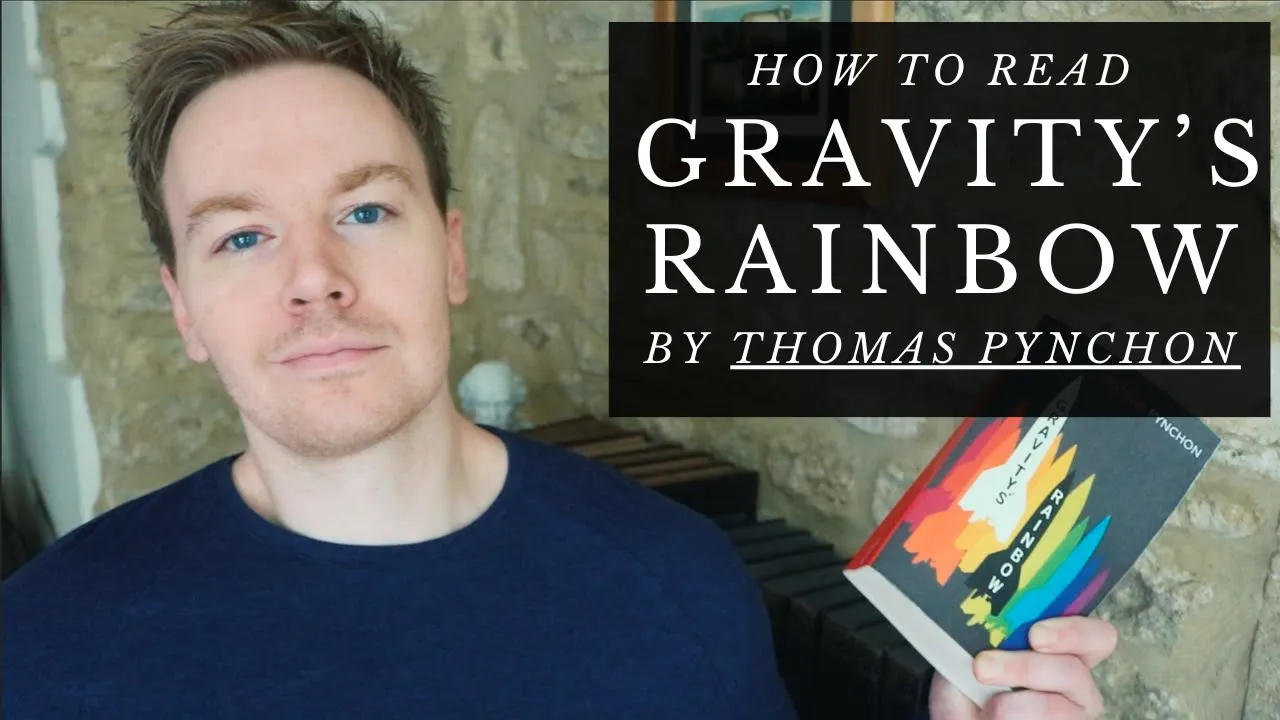
How to Read Gravity's Rainbow: A Pynchon Study Guide
@BenjaminMcEvoy
74.2K views•2023-11-18

1984: Orwell's Dystopian World and the Mechanisms of Totalitarianism
@AlternateHistoryHub
7M views•2017-03-04
Related Study Plans & Knowledge Roadmaps
Structured learning paths in Literature