

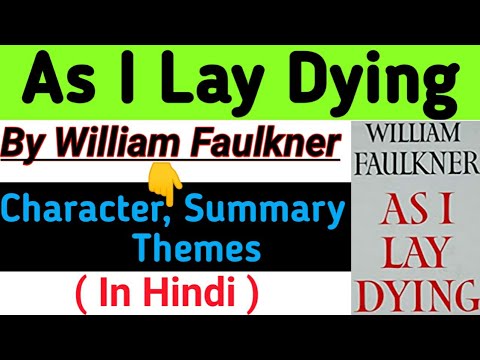















This passage from William Faulkner's 'As I Lay Dying' demonstrates the stream of consciousness narrative technique, where the narrator Vardaman's fragmented, non-linear thoughts reveal his confusion and grief over his brother Darrell's death, illustrating how Faulkner uses disjointed narrative to represent psychological trauma and the breakdown of coherent thought.
As I Lay Dying, Part 56: Vardaman's Narrative | Faulkner Analysis
Added:Familiarity with the plot, characters, and Southern Gothic setting of William Faulkner's novel 'As I Lay Dying'.
Understanding of the 'stream of consciousness' narrative technique and how it differs from traditional omniscient narration.
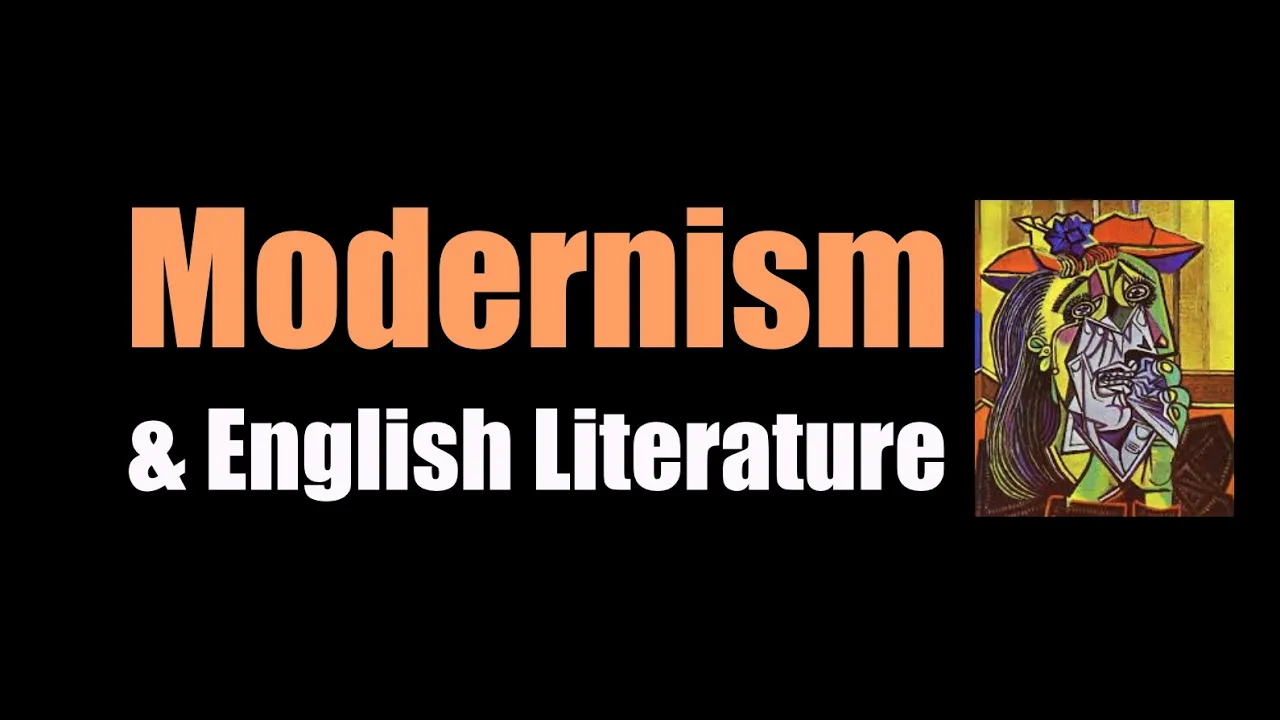
Basic knowledge of Modernist literary characteristics, specifically fragmentation, subjective reality, and non-linear storytelling.
Awareness of Vardaman Bundren's role as the youngest child in the family and his initial reaction to his mother's death (including the 'My mother is a fish' motif).
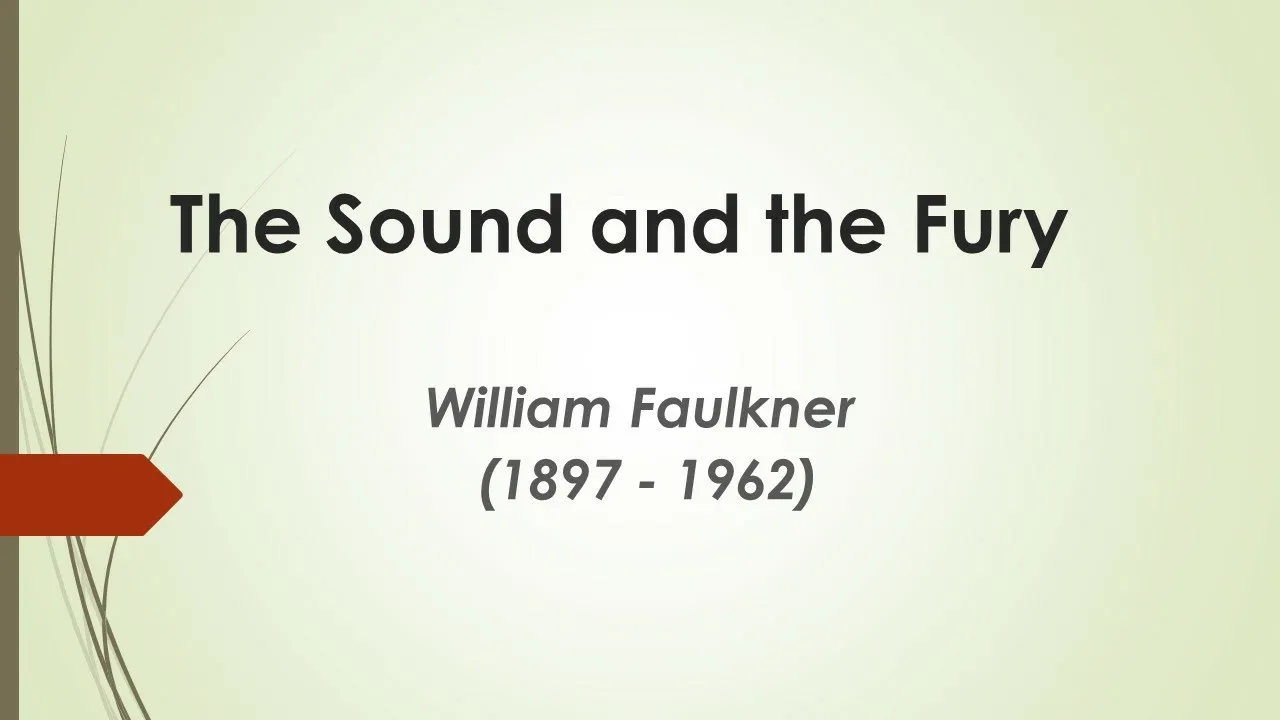
Comparative analysis of Vardaman's narrative style with Benjy Compson's perspective in Faulkner's 'The Sound and the Fury'.
Exploration of trauma theory and child psychology as applied to literary representations of grief and coping mechanisms.
In-depth study of multiperspectivity (polyphony) and how Faulkner uses contrasting narratives to construct a fragmented truth.
Examination of linguistic and stylistic choices in Faulkner's writing, analyzing how syntax and vocabulary reflect a character's cognitive state.
696 views8likes3:29Original Release: 2022-01-16
I have Vardaman.
Now with his wider and lighter, but the stores are dark because they all have they all have gone home. The stores are dark, but the lights pass on the windows when we pass. The lights are in the trees around the courthouse. They roost in the trees, but the courthouse is dark. The clock on it looks four ways because it is not dark. The moon is not dark, too, not very dark. Darrell went to Jackson is my brother.
Or Darrell, he went to Jackson is my brother. Darrell is my brother. Only it was over that way shining on the track.
Let's go that way, Dewey Dell, I say.
Before Dewey Dell says, the track went shining around the window. It read on the track, but she said he would not sell it to the town boys. But it will be their Christmas, Dewey Dell says. You have to wait till then when he brings it back. Darrell went to Jackson. Lots of people didn't go to Jackson. Darrell is my brother. My brother is going to Jackson. While we talked, the lights go around roosting in the trees on all sides. And it is it is the same. They go around the courthouse and then you cannot see them, but you can see them in the in the black windows beyond. They have all gone home to bed except me and Dewey Dell.
Going on the train to Jackson, my brother. There was a light in the store far back in the window. Are two big glasses of soda water, red and green.
Two men cannot drink them. Two mules cannot. Two cows cannot. Darrell. A man comes to the door. He looks at Dewey Dell. You wait out here, Dewey Dell says. Why can't I come in? I say. I want to come in, too. You wait out here, she says. All right, I say. Dewey Dell goes in. Darrell is my brother. Darrell went crazy. The walk is harder than sitting on the ground. He is on the open door.
He's in the open door. He looks at me.
He wants something, he says. His head is slick. Joe's head is slick sometimes.
Cash's head is not slick. Darrell, he went to Jackson, my brother Darrell. In the street, he ate a banana. Wouldn't you rather have bananas, Dewey Dell said. You wait till Christmas. It'll be there then and you can see it. So we are going to have some bananas and we're going to have a bag full, me and Dewey Dell.
He locks the door.
Dewey Dell is inside. Then the light winks out. He went to to He went crazy and went to Jackson. Both. Lots of people didn't go crazy. Paul and Cash and Jewel and Dewey Dell and me didn't go crazy. We never did go crazy. We didn't go to Jackson, either. Darrell.
I hear the cow a long time clopping on the street.
Then she comes into the square. She goes across the square, her head down, clopping. She lows. There was nothing in the square before she lowed, but it was it wasn't empty.
Now it is empty after she lowed. She goes on, clopping. She lows. My brother is Darrell. He went to Jackson on the train. He didn't go on the train to go crazy. He went crazy in a wagon.
Darrell.
She had been in there a long time, and the cow was gone, too, a long time. She had been in there longer than the cow was, but not as long as empty.
Darrell was my brother, my brother Darrell. Dewey Dell comes out. She looks at me. Let's go around that way now, I say. She looks at me. It ain't going to work, she says, that son of a What ain't going to work, Dewey Dell? I just know it won't, she says. She's not looking at anything. I just know it.
I just know it. Let's go that way, I say.
We got to go back to the hotel. It's late. We got to slip back in. Can we go by and see anyway? How do you rather have bananas? How do you rather? All right. My brother, he went crazy and he went to Jackson, too. Jackson is further away than crazy. It won't work, Dewey Dell says. I just know it won't.
What won't work, I say? He had to get on He had to get on the train to go to Jackson. I have not been on the train, but Darrell has been on the train.
Darrell. Darrell was my brother.
Darrell. Darrell.
That was the end of Vardaman. Vardaman.
Vardaman.
Up Next

21:59
Picaresque Novel in English Literature | BA Sem 3 Reading Fiction Lecture 7
@BOSCOCAMPUSVISION
652 views•2020-07-07

40:06
Street Haunting: Virginia Woolf’s London Essay Analysis
@ExtraLiteraryAffairs
146 views•2025-01-24

6:08
Point of View in Fiction: First Person vs. Third Person
@magicalthriftyteacher
153.8K views•2014-03-31

15:25
1984: Orwell's Dystopian World and the Mechanisms of Totalitarianism
@AlternateHistoryHub
7M views•2017-03-04
Related Study Plans & Knowledge Roadmaps
Structured learning paths in Literature
literature
Graphic Memoirs: Visual Art, Trauma & History
01Foundations of Sequential Art and Visual Language
02Autographics and Processing Historical Trauma
03Visualizing Personal Trauma, Grief, and Graphic Medicine
+ 2 more learning modules
14h5 modules
Explore Roadmap
literature
Campus Novels: Evolution, Themes & Critique
01Introduction to the Campus Novel Genre
02Mid-Century Satire and the Post-War Academy
03Dark Academia and the Critique of Privilege
+ 2 more learning modules
14h5 modules
Explore Roadmap
literature
Theater of the Absurd: Philosophy & Plays
01Postwar Existentialism & Historical Roots
02Dismantling Narrative: Esslin & Absurdist Conventions
03Samuel Beckett and Tragicomic Existentialism
+ 2 more learning modules
12h5 modules
Explore Roadmap
literature
Revenge Tragedy: Justice, Madness & State
01Foundations of Early Modern English Theatre
02Anatomy of Revenge: Structural Conventions
03Psychological Complexity: Madness and Melancholy
+ 2 more learning modules
15h5 modules
Explore Roadmap