








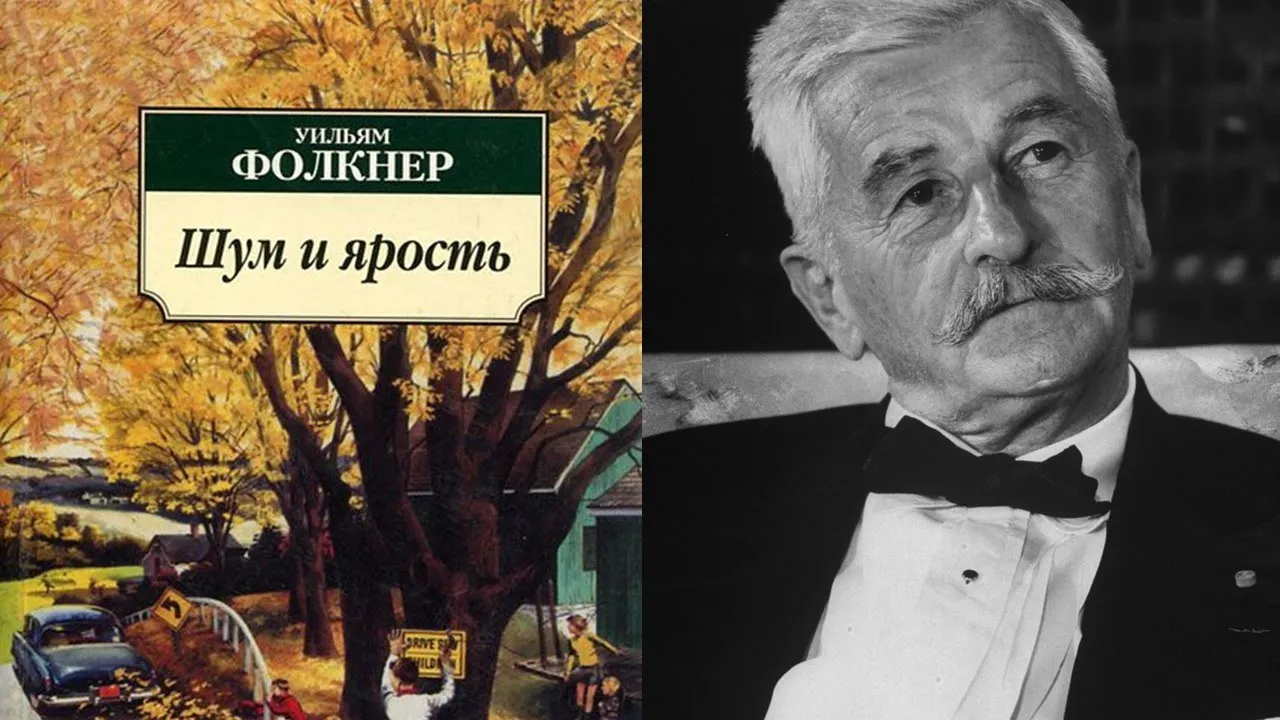

















William Faulkner's The Sound and the Fury employs experimental narrative techniques to explore the theme of lost innocence through Benjy Compson's section, where the mentally retarded narrator experiences time non-linearly and communicates primarily through sensory impressions (particularly smell), allowing Faulkner to shield Benjy from the devastating loss of his sister Caddy's sexual innocence while simultaneously revealing the tragedy of that loss through fragmented syntax and juxtaposed moments.
Faulkner's The Sound and the Fury: Benjy's Narrative & Innocence
Added:Familiarity with the stream-of-consciousness narrative technique and literary Modernism.
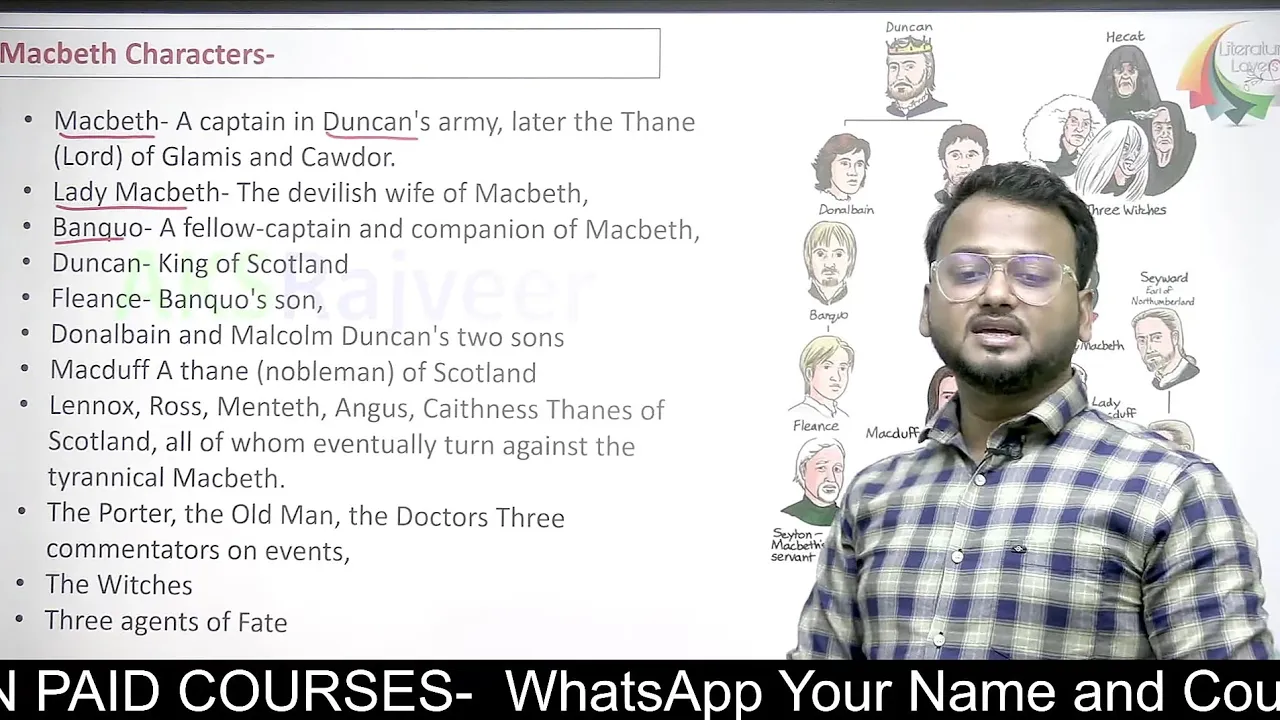
Understanding the origin of the novel's title from Shakespeare's Macbeth ('Tomorrow, and tomorrow, and tomorrow' soliloquy).
A basic overview of the Compson family genealogy and the historical context of the post-Civil War American South.
Comparative analysis of Benjy's section with the subsequent narrative perspectives of Quentin and Jason Compson.
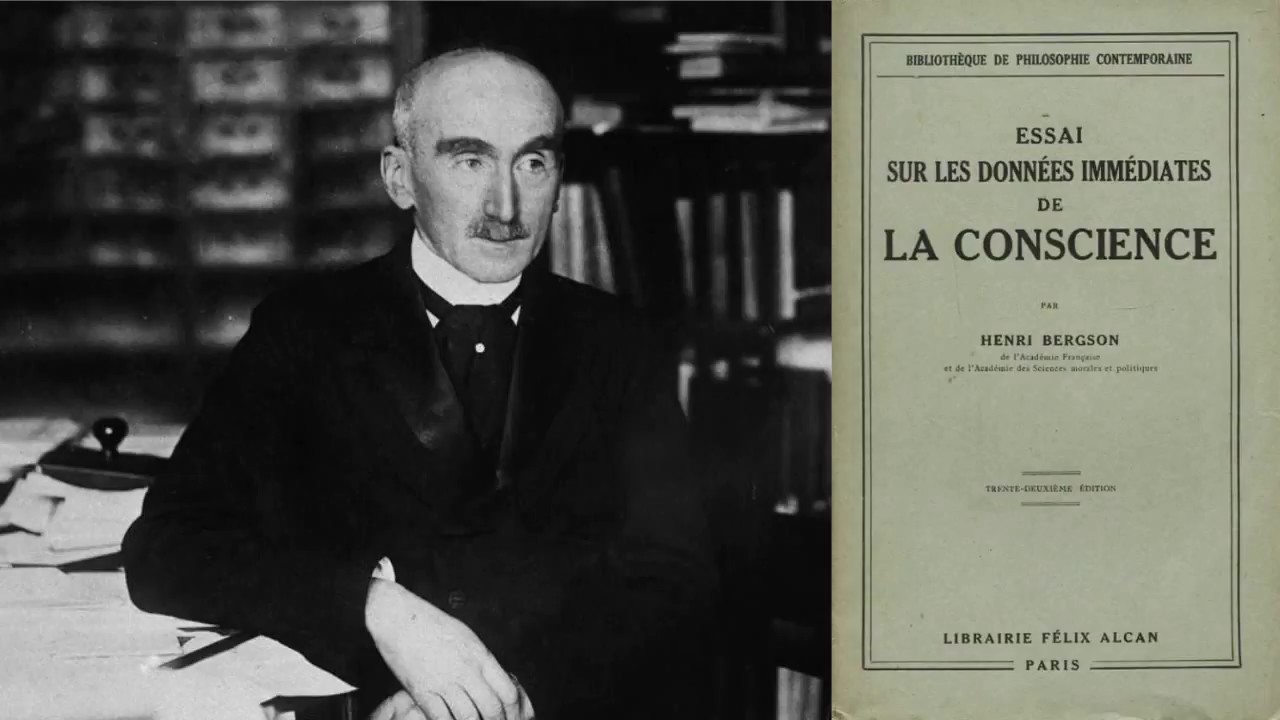
Exploration of Henri Bergson's theories of psychological time and duration as they apply to Faulkner's non-linear chronology.
Study of Southern Gothic themes of decay, guilt, and social decline in Faulkner's other major works, such as 'Absalom, Absalom!'.
Analysis of the literary device of the 'unreliable narrator' or 'innocent eye' in broader 20th-century fiction.
58.1K views0likes50:06Original Release: 2012-04-05
WAI CHEE DIMOCK: So we're getting started on The Sound and the Fury.
And I just want to show you a few images of Faulkner's Oxford, Oxford, Mississippi.
So this is Rowan Oak, Faulkner's house.
And this is actually the old Faulkner family house.
And you notice that actually quite a few American authors changed the spelling of the name.
So Hawthorne used to be H-A-T-H-O-R-N-E, so the W isn't added on.
And likewise, Faulkner used to be spelled F-A-L-K-N-E-R. So it's just an interesting fact.
But this is the Trigg-Doyle-Falkner House in 1904.
And the little boy on the pony, that's actually Faulkner right there.
So this is his statue in the Courthouse Square in Oxford.
And keep this square in mind, because in fact it will come back at the very end of The Sound and the Fury.
The Confederate monument in that square is very important to the plot of The Sound and the Fury.
So it is the most important place in the Central Square in Oxford, so it's very important.
And Faulkner is sitting right there.
And this is an image of him at work.
And you'll see that he was a very bookish author, surrounded by books as he wrote.
And so we have to keep in mind that authors are also readers as well, and what they read makes a difference to how they write.
So both the creator of his own writings but also a reader of other people's writings.
And this is the mythic Yoknapatawpha County-- I always have trouble saying this-- and it's mapped by Faulkner himself.
And it's obviously completely made up but very much based on Oxford.
And this is Jefferson, Mississippi, in Faulkner's works.
So it's just a really interesting fact of Faulkner's writings that he should create not just a mythology but also a whole landscape that goes with that.
And talking about Faulkner as a reader, not just an author but also a reader, "the sound and the fury," the phrase, is taken from Macbeth, Act V, Scene 5.
And it turns out that there's another phrase that's also very important to him as well.
So-- "Tomorrow, and tomorrow, and tomorrow,/ creeps in this petty pace from day to day,/ to the last syllable of recorded time./ And all our yesterdays have lighted fools/ the way to dusty death.
Out, out brief candle!/ Life's but a walking shadow, a poor player,/ that struts and frets his hour upon the stage,/ and then is heard no more.
It is a tale/ told by an idiot, full of sound and fury,/ signifying nothing."
So the title of the novel is taken from the phrase "sound and fury." But today's Benjy section is obviously a tale told by an idiot, and that's really the challenge that Faulkner takes upon himself is to use mental retardation as a constraint on narration and to take up the challenge that comes from that constraint.
And here, I want to read you two accounts of Faulkner's own description of how The Sound and the Fury began.
And one is much less precise than the other.
And I'll say a little bit about your upcoming paper in that context, but first, let's look at the two accounts that Faulkner himself offers.
"That began as a short story.
It was a story without plot, of some children being sent away from the house during the grandmother's funeral.
They were too young to be told what was going on, and they saw things only incidentally to the childish games they were playing."
So this is a fine description.
It's an OK summary of The Sound and the Fury.
It's about children at the beginning of The Sound and the Fury being sent away from the house.
But this strange centrality given to the grandmother's funeral and not being able to figure out what's going on, that is not not in there.
It is very much in there in The Sound and the Fury, but our experience of readingf Benjy's section isn't really revolving around that particular event.
So Faulkner obviously has moved away from that initial account.
So let's look at his second account, much more precise, much closer to what we actually see in the Benjy section.
"And then the idea struck me to see how much more I could have got out of the idea of the blind self-centeredness of innocence typified by children, if one of those children had been truly innocent, that is, an idiot.
So the idiot was born, and then I became interested in the relationship of the idiot to the world that he was in but would never be able to cope with and just where could he get the tenderness, the help, to shield him in his innocence.
I mean 'innocence' in the sense that God had stricken him blind at birth, that is, mindless at birth."
So I'll come back to this particular very precise, very, very good summary of the Benjy section.
But I just wanted to stop for a moment and talk about one strategy to keep in mind as you write your papers, because this is a writing, WR, class.
So I want to emphasize how important it is to know exactly what you're trying to do in a paper.
That is the most important thing.
Knowing what you want to say is just about the most important thing, as important as having something to say.
So that's why there are two assignments that accompany the first paper.
One is the outline in which you name, you itemize, you enumerate all the things that you plan to do in the paper.
That's very important.
And the other is a more unusual requirement.
It's a cover page that accompanies your first paper that will both describe what you're trying to do, the problems that you've run into in the course of writing the paper, and what you would do differently if you have more time.
So it's recognizing the fact that you guys have constraints on you as well, time constraints.
You just have to turn the paper in.
But if you had more time, what else would you do?
What would you do differently?
This is to cultivate a self-consciousness about the paper as a paper, what goes into the paper, what you are free and able to put into the paper at one moment and what future projects, what future versions of the paper you might want to do.
As well as a recognition of what you are trying to do that you haven't quite succeeded in doing.
So that is as important as well is realizing that you're trying to do something, but you haven't quite done it.
But knowing that that's really what you should try to achieve.
So that self-awareness of the slight gap between what you set out to do and what you've actually achieved, the self-awareness of that gap is crucial to you on your way to becoming the writer that you want to be.
So recognizing writing as a process, you can get there maybe 3/5 of the way, still another third or maybe more than that, maybe 3/4 of the way.
But you're not completely there.
But what else do you need to do, in your own estimation, to get to be exactly where you'd like?
So I would just encourage you to give a lot of thought to those two additional requirements of the first writing assignment.
But now let's come back to Faulkner and this very good, very precise account of The Sound and the Fury.
And we notice a number of things.
First of all, that he is defining idiocy in a very peculiar way.
He is defining idiocy as the blind self-centeredness of innocence.
He's not using the word "mental retardation." That's very, very important to keep in mind.
It's not necessarily a simple deficiency.
It is blind, so it has that aspect.
It is self-centered.
And we'll think about what that means for "idiocy" to be a form of self-centeredness.
But also, more than anything else, it is a kind of innocence, which is a good word for most of us.
So what does it mean for "idiocy" to be a kind of innocence?
We'll think about that.
And in fact an argument that I would like to make is that not only is Benjy himself innocent, but innocence is also what he demands from the world.
Innocence is the impossible demand that he puts upon the person that he loves the most, Caddy.
And it is that impossible demand that Caddy is not able to fulfill in the end.
And what Faulkner does about that.
The novel is both about Caddy not being able to supply that requisite, that demanded innocence that is coming from Benjy, the demand made upon her, not being able to fulfill it finally, and Faulkner actually stepping in to supply that lack by his narrative experimentation.
So this is what I'll try to show in the course of this lecture.
But I want to contextualize Faulkner against a number of thinkers who also thought about mental retardation or the various ways of designating that condition.
And one of the most important is the philosopher John Locke.
And this is what he says in a very, very influential-- this is one of the most influential texts written in the end of the 17th century, very, very influential in the 18th century and 19th century as well.
John Locke-- "Herein seems to lie the difference between idiots and madmen, that madmen put wrong ideas together and reason from them, but idiots make very few or no propositions and reason scarce at all."
So we almost recognize something else in what John Locke is describing.
Madmen put wrong ideas together and reason from them.
Actually, he's describing a lot of the characters in Edgar Allen Poe.
So we recognize that.
But idiots-- and this is really a very good description of what Faulkner is trying to create-- idiots put very few or no propositions and reason scarce at all.
So not being able to put the two and two together, not being able to go from point A to point B, that is Benjy's problem.
So point A and point B are always going to be completely separate, discrete, unconnected dots.
He's not able to connect all the dots of the world.
So it really goes back to John Locke in some sense.
And in the 19th century, the institution-- well, it was called a lunatic asylum.
It's not called by that designation now.
"Mental institution" is the word we use.
But when it first started in the mid 19th century, it was called a lunatic asylum.
And this is the one in Jackson, Mississippi.
And Jackson, Mississippi, is very resonant and loaded within Faulkner.
Sending someone to Jackson just means sending him to the lunatic asylum.
And it comes up in The Sound and the Fury.
It comes up in As I Lay Dying.
So this is the large-scale housing concentration of the mentally retarded in just one place.
And as we move on to the early 20th century, we're beginning to get a new kind of taxonomy.
Sciences proceed by way of taxonomy.
So we get this 1910 taxonomy from the American Association on Mental Deficiency.
So we're moving closer and closer to our own time, to mental deficiency.
So there are three ways to categorize or classify mental deficiency.
The most severe form is the word "idiot." So actually Faulkner is taking his word from that classification.
Idiot is development arrested at age two.
"Imbecile" for us is just a word of course, really, that we throw at other people.
It actually has a clinical definition, arrested between two and seven.
And "moron," again, a word that we use without thinking about it, has a clinical definition, arrested between seven and 12.
So as you can see, by the early 20th century, the scientific thinking about mental retardation was moving more and more towards a quantitative approach.
So we see the numbers right there, ages two to seven, and then ages seven and 12 to quantify at what developmental stage it was arrested, your mental capacities were arrested, and how that would correlate with various degrees of mental retardation.
The person who was instrumental, who was probably the most important figure in turning a quantitative approach into standard practice was Henry Goddard.
And his quantitative approach took a number of forms. First of all, he was very important as the director of research at the Vineland Training School for Feeble-Minded Girls and Boys, one of the first and one of the most important for 12 years, 1906 to 1918.
And then, even more important than that, he was actually a pioneer in IQ testing, so the 1908 translation of Binet's intelligence testing.
It was invented by a French psychologist, Binet, and Goddard translated that from the French and was instrumental in getting it to be widely adopted.
So what we know as IQ tests really dated from that time, once again, completely quantitative, numerical measurement.
And then in 1912, he wrote the book called The Kallikak Family and Inheritance of Feeblemindedness.
So this is Goddard's contribution to and widely used understanding of mental retardation.
Faulkner can be seen in many ways as a rejoinder and maybe a dissent, a departure from this quantitative approach.
His is very much a non-quantitative approach.
The quantitative approach not only emphasizes numerical measurement but is very much an objective look at mental retardation from the outside.
It is people who are not retarded looking at people who are retarded and seeing where they're deficient.
So the deficiency index, the numerical index, is a measurement of how deficient they are as defined by people who are not retarded.
Faulkner's tale told by an idiot is very much a tale told from inside the mind of an idiot.
It is not told by someone from the outside looking at Benjy from the outside.
It is told from inside the consciousness of an idiot with the blind self-centeredness of innocence being front and center.
That is the defining ground of Benjy's world.
So what we get is the very recognizable modernist technique, stream of consciousness, and in this case allowing for extreme subjectivity.
So as supposed to the objectivity of the quantitative approach, this is extreme subjectivity.
And we see a number of features associated with this extreme subjectivity.
One is-- we've seen this before, refresh your memory about this-- is that the past and the present are juxtaposed.
And we can call it by a different name, and that is nonlinear chronology.
We've also seen the primacy of smell, and we'll see how that really is the basis on which Faulkner tells the central story in the Benjy section.
And another interesting feature is the incomplete syntax.
I'll talk about all of this.
But first, just this is a passage that we looked at before.
I just want to bring it back.
This is very early in the Benjy section, juxtaposing two moments that might not seem connected to the rest of us, but they are connected in Benjy's mind.
"'Did you come to meet Caddy?' she said, rubbing my hands.
'What is it?
What are you trying to tell Caddy?' Caddy smelled like trees and like when she says we were asleep.
'What are you moaning about?' Luster said.
'You can watch them again when we get to the branch.
Here.
Here's you a jimson weed.'"
So very counter-intuitive yoking together of two experiential moments for Benjy, yoking together one episode having to deal with his sister, Caddy, the young white girl, and the other having to do with Luster, a young black servant.
So those two are connected.
Benjy makes no racial distinctions.
Very important to register this fact, no racial distinction in Benjy's mind.
That might be one way why an idiot might not be completely deficient in Faulkner's estimation.
But in any case, he's not making the usual distinction, but he is making instead a connection through the sense of smell.
So Caddy smelt like trees.
Luster doesn't exactly smell like trees, but he's coming up with a good enough substitute, the jimson weed.
So this is Faulkner's way of substitution.
The logic of substitution is also playing out in Faulkner.
And Luster is almost good enough.
And it's the sense of smell that connects those two moments in Benjy's mind.
So here I want to bring up another psychiatrist, psychologist that you would recognize right away and that in some sense Faulkner is also departing from, and this is Sigmund Freud.
And in his classic on Civilization and Its Discontents, Freud argues that the development of human sexuality makes it less and less dependent on the sense of smell, that the sense of smell becomes less and less central to the demonstration and the articulation of human sexuality.
So this is what Freud says.
"The development of human sexuality seems most likely to be connected with the diminution of the olfactory stimuli by means of which the menstrual process produces an effect on the male psyche.
The role was taken over by visual excitations, which, in contrast to the intermittent olfactory stimuli, were able to have a permanent effect."
So we soon recognize the truth of what Freud is saying, that usually we're not attracted to people because of the way they smell.
Usually, the first thing that gets us is the way they look.
I hope I'm not overly generalizing, but I think that that's probably true of lots of people is that the first factor they register is how that person looks, not the way they smell.
So Freud is not-- this is not untrue.
But the way that he denigrates the importance of the sense of smell is something that one might take issue with.
And it turns out that Faulkner actually is taking issue with that denigration of the sense of smell.
The Sound and the Fury is obviously about hearing-- that's announced in the title of the novel-- but the sense of smell is actually very important.
So what I'd like to do today is to use the sense of smell as the index, as the connecting thread through which Faulkner tells a dramatic story.
And a dramatic story is obviously Caddy's story told through the eyes of her brother, who loves her, but who is completely blind and completely self-centered in his love for Caddy.
So the story goes something like this.
The innocence, sexual innocence of Caddy is threatened, but it's restored.
It's precariously restored twice.
And then it is threatened yet again, and there's no restoration this time.
It is lost. It's gone forever.
And that loss does something to Benjy.
And we see it in the way that his syntax becomes incomplete.
And then there's something else that is lost to Benjy as well.
But Faulkner, knowing that innocence has to be sheltered through acts of tenderness, is able through his narrative to supply that act of tenderness that is not coming anymore from Caddy.
So it's a very complicated story.
It's actually completely-- it makes complete sense, actually, to me.
So in that sense, Faulkner's telling an extremely coherent story through complicated, nonlinear chronology of Benjy's section.
But it is a story that we have to reconstruct by following one particular phrase that has to do with the sense of smell.
So let's go to the first step of innocence becoming dangerously in jeopardy but being restored in the nick of time.
So-- "And Caddy put her arms around me, and her shining veil, and I couldn't smell the trees anymore, and I began to cry.
'Benjy,' Caddy said. 'Benjy.' She put her arms around me again, and I went away.
'What is it, Benjy?' she said.
'Is it this hat?' She took her hat off and came again, and I went away.
'Benjy,' she said. 'What is it, Benjy?
What has Caddy done?' I went to the bathroom door.
I could hear the water.
I listened to the water.
I couldn't hear the water, and Caddy opened the door.
'Why, Benjy?' she said.
She looked at me, and I went, and she put her arms around me.
'Did you find Caddy again?' she said.
'Did you think Caddy had run away?' Caddy smelled like trees."
So that is the phrase that is going to be our guide in the reconstruction of the drama that Faulkner is giving us.
And we notice right away that Caddy is the supplier of tenderness for a good part of Benjy's section.
Her characteristic gesture is putting her arms around Benjy.
And we can think of it both in terms of the physical act of putting her arms around Benjy but also wrapping her mind around Benjy, someone who's not able to tell her what is wrong.
So Caddy is trying to figure out what it is that is making Benjy cry.
And we should remember that all this time when Benjy is crying, it's actually making this incredible noise.
It's this bellowing that's just filling up the whole house, unbearable.
So just like the noise in Hemingway's "Indian Camp," this is unbearable noise coming from Benjy.
So just to stop that noise, Caddy has to figure out what it is that is upsetting Benjy to this extent.
And she tries out a number of explanations.
So is it this hat that I'm wearing that you don't like, that's making you so upset?
Wrong answer.
Caddy figures out the answer, and it has to do with something that requires going to the bathroom and turning on the faucet.
So this is the only thing that Benjy is going to tell us is that Caddy has figured out what it is.
She goes to bathroom.
He hears the water running.
The water runs for a while.
Can't hear the water anymore.
Caddy comes out.
Everything is OK again.
Caddy puts her arm around Benjy.
Caddy smells like trees.
Everything is OK.
Innocence has been restored.
So what is it that was really upsetting Benjy?
We find out very soon-- next page, actually.
Faulkner actually isn't so impossible to read.
This is fairly close cluing in of what exactly was upsetting to Benjy.
"'Dilsey,' Caddy said, 'Benjy's got a present for you.' She stooped down and put the bottle in my hand.
'Hold it up to Dilsey now.' Caddy held my hand, and Dilsey took the bottle.
'Well, I declare,' Dilsey said.
'If my baby ain't give Dilsey a bottle of perfume.
Just look here, Roskus.' Caddy smelled like trees.
'We don't like perfume ourselves,' Caddy said.
She smelled like trees."
So that is what was upsetting Benjy is the use of perfume, a sign that Caddy is on her way to losing her sexual innocence.
And what is really interesting is that on this occasion, Caddy is able to do exactly what is needed.
She gives away the perfume, and she uses the pronoun "we."
We don't like perfume anymore.
There's this fusing of herself and Benjy, even though it really is Benjy who objects to the perfume.
In her act of putting her arm both physically and metaphorically around Benjy, Caddy uses the more encompassing pronoun "we." That is the syntactic equivalent to the physical act of putting her arm around Benjy.
So this is one moment when we can see this clear danger, that the danger has been averted.
Innocence has been restored.
Let's look at one other moment when that happens again.
"It was two now, and then one in the swing.
Caddy came fast, white in the darkness.
'Benjy,' she said, 'how did you slip out?
Where's Versh?' She put her arms around me, and I hushed and held to her dress and tried to pull her away.
Caddy and I ran.
We ran up the kitchen steps, onto the porch, and Caddy knelt down in the dark and held me.
I could hear her and feel her chest. 'I won't,' she said.
'I won't anymore, ever.
Benjy.
Benjy.' Then she was crying, and I cried, and we held each other. 'Hush,' she said. 'Hush.
I won't anymore.' So I hushed, and Caddy got up.
And we went into the kitchen and turned the light on, and Caddy took the kitchen soap and washed her mouth at the sink, hard.
Caddy smelled like trees."
Once again, that very reliable thread that Faulkner is giving us.
So we've just looked at one kind of arithmetic in the earlier use of the pronoun "we." Caddy and Benjy being two different people but being turned into a single unit by that first-person plural, "we." The two of them had become one in that earlier moment.
Here, it's the repetition of that kind of logic, except that it is not Benji who's being fused with Caddy.
"It was two now, and then one in the swing." Caddy and her beau in the swing, the two of them becoming one.
And it is that sight that is unbearable to Benjy, so that's why he's crying.
And Caddy this time doesn't have to guess.
She knows exactly what it is that is upsetting Benjy so much.
So once again, she tries her best to make things OK for Benjy again.
She puts her arm around Benjy.
And then she does what is needed one more time.
And it is within her capacity to do what is needed.
So she goes to the kitchen-- it's not the bathroom, but it's really the equivalent, functional equivalent, of the bathroom-- turns the light on, turns on the faucet one more time, the necessary ingredient-- all those other necessary ingredients to the restoration of innocence-- faucet, soap, and water-- washing out her mouth so that she once again smells like trees.
So we can see that Caddy is doing everything that Benjy is demanding from her, but I think that we can also see how unreasonable Benjy is.
So let's not romanticize Benjy and just call him innocent.
He is innocent, but this is an innocence that is not only blind to the needs of Caddy-- she is going to become a woman.
She's not going to be able to wash herself clean every time with soap and water.
And Benjy simply has no recognition of Caddy as a separate person who has her own developmental path.
She's going to turn from a young girl to a woman.
That's her developmental path.
And because Benjy is arrested at age two, he wants everybody-- or whatever, age two or age four-- because he's arrested at such an early age, he wants everybody to be developmentally arrested at that age as well, with that degree of innocence.
And that, Caddy is not able to to do for him.
So it is a very impossible, very self-centered demand that Benjy is imposing on Caddy, and in that sense, sowing the seed of his own destruction.
It is a demand that Caddy can never meet in the long run.
It's almost like the impossible demand that Gatsby is putting on Daisy.
We're beginning to see actually a pattern of people who love intensely, but in the very intensity of the love, putting an impossible demand on the loved object.
Just no human being is capable of meeting that demand.
So not surprisingly, we see this time Caddy failing Benjy.
And see what's in this passage and what is not in this passage.
"We were in the hall.
Caddy was still looking at me.
Her hand was against her mouth.
She stopped again, against the wall, looking at me, and I cried.
And she went on, and I came on, crying.
And she shrank against the wall, looking at me.
She opened the door to her room, but I pulled at her dress.
And we went to the bathroom, and she stood against the door, looking at me.
Then she put her arm across her face, and I pushed at her, crying."
So the characteristic gesture coming from Caddy putting her arms around Benjy, that is not here in this passage.
And instead, she's putting her arm across her own face.
And she's doing this because Benjy is trying to get her to go to the bathroom to achieve that previously tried solution that worked before.
Benjy thought it would work one more time.
This time, that solution isn't going to work.
So we see it in the nonappearance of that gesture coming from Caddy's arms around Benjy.
She's not able to do that.
And we also see the nonappearance of that phrase, "Caddy smelled like trees." She doesn't smell like trees anymore, and she never will smell like trees again.
So this is Faulkner's way of telling the story of lost sexual innocence completely through the sense of smell and through this very indirect way of channeling it through the mind of someone who's mentally retarded, who can't name their condition, can't really name that loss, but who registers that loss as a sensory loss.
So he's not able to reason, but his senses tell him what actually has happened.
So this is one way in which Benjy actually both knows and not knows.
He knows really in the sense that his reaction says that he knows, but he doesn't know in the sense that he can't give the reason, can't name the condition.
So let's look at the consequences of that loss on Caddy's part.
What happens to Benjy when he loses Caddy in this way?
And the way Faulkner is telling that story is by this technique of Benjy not finishing his sentences.
So let's look at this incomplete syntax all the way through the Benjy section, but especially striking in this moment.
"They came on.
I opened the gate, and they stopped.
turning.
I was trying to say, and I caught her, trying to say.
And she screamed, and I was trying to say and trying.
And the bright shapes began to stop.
And I tried to get up.
I tried to get it off of my face, but the bright shapes were going again.
They were going up the hill to where it fell away, and I tried to cry.
But when I breathed in, I couldn't breathe out again to cry.
And I tried to keep from falling off the hill, and I fell off the hill into the bright, whirling shapes."
So it's told as a jumble of sensations.
This is the only way Benjy can tell the story, but we can know roughly what is going on.
We need more to know that someone had left a gate open.
So some schoolgirls were going by, and Benjy had lost Caddy at this point.
He sees the schoolgirls.
He's always looking for substitutes for Caddy, so he grabs one of those schoolgirls.
"I caught her, trying to say." And we can almost see that this is the consequence of what happens to Benjy when there's not Caddy there to complete his sentences for him.
Caddy putting her arm around Benjy is her way of finishing his sentences, saying what he cannot say for himself.
She's not there to do that for him.
So Benjy's sentences are left hanging incomplete, always "trying to say," without the predicate, without an object, without just this grammatical complement to finishing that sentence.
And that's just how things are going to be for him forever, trying to say something, trying to express himself to the world without the resources of language and without the manual capacity to do so.
So we also know what happens when that really-- this is the moment where Faulkner is actually registering mental deficiency.
Something is lacking, something is missing from Benjy's world.
And something is happening to Benjy as well.
It looks like something is being put on his face, he can't breathe, that he is fighting it, but this thing is happening to him.
So what is it that's happening to Benjy at this moment?
We see the physical manifestation of what's happening to him just a little later.
"I got undressed, and I looked at myself, and I began to cry.
'Hush,' Luster said.
'Looking for them ain't going to do no good.
They're gone.'"
So that is what happens to Benjy.
I think that we know what happens, that people who are mentally retarded, who are a threat to others, get castrated.
This still happens.
So it is a very graphic rendition of the loss that comes to Benjy when he loses Caddy.
But I would say, even though it's a horrible fate, and Benjy can't really bear to look at himself-- so he really has that degree of self-consciousness-- but I have to say that it actually shows some degree of narrative tenderness on the part of Faulkner.
And I really want to emphasize this, because thematically, the tenderness is not going to come from Caddy.
She's lost that ability.
So something else has to supply that tenderness that will shield and shelter Benjy.
And Faulkner is the one who's doing this.
So on the one hand, it is terrible that there should be that loss coming to Benjy, but at the same time, that loss once again establishes a bond between Benjy and Caddy.
They do have something in common, even though Caddy doesn't know it, and Benjy is the last person to be able to say it, to name that condition.
Nonetheless, there is a bond.
It's almost as if Caddy has suffered this terrible thing that she's devastated by.
But this is a point in time where to have that loss is a incredible statement on Caddy, when something ruins her life, and Benjy's life is also ruined, devastated, in a parallel fashion.
So the two of them actually do have-- I wouldn't push this point so far, it's really not a consolation to anyone to have that particular thing in common -- but this is the symmetry that Faulkner is creating for Benjy and Caddy.
We'll look at one other moment-- and this is the very end of the Benjy section-- in which we see maybe a more compelling, more persuasive way in which a shelter could be devised for Benjy without Caddy being physically there.
So this is the very end of the Benjy section.
And I'm telling you what I want to say, but obviously we're back to the experimentation on the part of Faulkner.
But let's just look at his.
"Father went to the door and looked at us again.
Then the dark came back, and he stood black in the door, and then the door turned black again.
Caddy held me, and I could hear us all in the darkness, and something I could smell.
And then I could see the windows, where the trees were buzzing.
Then the dark began to go in smooth, bright shapes, like it always does, even when Caddy says that I have been asleep."
This is coming at the very end of Benjy's section, when he's 33 and he's back again to being the young boy.
So finally it is revealed to us what the nonlinear chronology is doing for Benjy.
Being 33 is no place for Benjy to be.
It's a terrible place.
No one wants in his condition-- of course, the age when Christ was crucified, obviously, that is the reference.
So Benjy is going to be crucified at age 33.
And Faulkner wants that crucification to happen and to be registered.
But he doesn't want that to be the experiential ending for Benjy.
So because he's telling the story in a nonlinear fashion, he can choose to end the story at a much earlier point.
And he can do that because past and present are always juxtaposed in Benjy's mind anyways, and he can't tell the difference between past and present.
So at the very end of Benjy's section, he actually goes back-- there's a bit of time travel for Benjy-- he gets to go back to a very satisfying moment in time.
And let's look at how this moment reconstitutes all those things that are dear to Benjy.
The dark comes back.
The trees are buzzing.
So there's this sight and sound fuse that really is the defining feature of Benjy's world, and of no explanation at all, but very reassuring visual images, the father still alive, black in the door, and then the door turning black.
And that's how Benjy wants it to be, wants to be asleep, wants to be in bed with Caddy holding him.
And he could smell something.
What is really interesting is that there's almost no need to mention that Caddy smells like trees.
And that actually is the best condition.
Even that phrase "Caddy smelled like trees" already suggests that she's in danger of not smelling like trees.
Benjy needs to mention that Caddy smelled like trees when she stopped smelling like trees for a moment.
And so even the appearance of that phrase signals that there's already a danger present.
And maybe it's been averted, but the danger has been there.
Not being able to name that-- and she actually also smells of mud at that point, her muddy drawers.
She was completely muddy from fighting in the water with Quentin.
So he smells trees, he smells mud, the smell of an innocent young girl.
And that is the smell that Benjy wants to die smelling.
So he gets to smell that.
But what is also interesting is that there's a backward reference to the previous traumatic moment, the smooth bright shapes.
If we just go back to that horrible, traumatic moment, those are the bright, whirling shapes that were forced upon Benjy at this moment when he's completely helpless, when he's pinned down when Caddy is nowhere to be seen.
Those bright, whirling shapes at this supremely traumatic moment, those have been reconstituted as comforting shapes that he just doesn't know why they're there, but he's falling asleep.
And Caddy is telling him that he's falling asleep.
He doesn't even have the word to talk about, describe the condition of being asleep, but it's OK.
This is really one moment when not having language is completely OK.
And Faulkner has managed to bring Benjy back to the point where life actually is bearable and in fact satisfying.
Faulkner can't really do more than that.
He can't really bring true happiness, actual objective happiness.
He can't bring objective happiness to Benjy at 33.
The only way he can bring is subjective satisfaction to Benjy at the age 33, acting as if he were much younger and still having Caddy there.
So the narrative experimentation is really completely thematically consequential as well.
And that really is the story that Faulkner's telling.
So we'll move on next time to Quentin's section, section two.
Up Next
35:32
Sound and the Fury Ch.1: Benjy's Narration Explained
@TheCodeXCantina
26.8K views•2020-08-11

13:43
Formalism in Literary Criticism: An Academic Lecture Overview
@mattalberhasky9952
39.1K views•2015-08-05

46:43
Nabokov's Lolita: Censorship, Art, and the Death of Play (Part 3/3)
@YaleCourses
157.9K views•2008-11-21

15:25
1984: Orwell's Dystopian World and the Mechanisms of Totalitarianism
@AlternateHistoryHub
7M views•2017-03-04
Related Study Plans & Knowledge Roadmaps
Structured learning paths in Literature
literature
Graphic Memoirs: Visual Art, Trauma & History
01Foundations of Sequential Art and Visual Language
02Autographics and Processing Historical Trauma
03Visualizing Personal Trauma, Grief, and Graphic Medicine
+ 2 more learning modules
14h5 modules
Explore Roadmap
literature
Campus Novels: Evolution, Themes & Critique
01Introduction to the Campus Novel Genre
02Mid-Century Satire and the Post-War Academy
03Dark Academia and the Critique of Privilege
+ 2 more learning modules
14h5 modules
Explore Roadmap
literature
Theater of the Absurd: Philosophy & Plays
01Postwar Existentialism & Historical Roots
02Dismantling Narrative: Esslin & Absurdist Conventions
03Samuel Beckett and Tragicomic Existentialism
+ 2 more learning modules
12h5 modules
Explore Roadmap
literature
Revenge Tragedy: Justice, Madness & State
01Foundations of Early Modern English Theatre
02Anatomy of Revenge: Structural Conventions
03Psychological Complexity: Madness and Melancholy
+ 2 more learning modules
15h5 modules
Explore Roadmap