

















![O Colecionador - John Fowles [Livro x Filme]](https://i.ytimg.com/vi_webp/leKbWexXSgE/maxresdefault.webp)







In this lecture, Professor Amy Hungerford analyzes Vladimir Nabokov's Lolita through the lens of his philosophical essay 'Good Readers and Good Writers,' examining how artistic originality confronts censorship and the tension between living art and lapidary (stone-like) art. She demonstrates that in the novel's second half, Lolita transforms from victim to artist, using theatrical affectations to manipulate Humbert, while Nabokov employs lapidary imagery—such as the aquamarine chainlet symbolizing the ossification of life—to critique how artistic distillation threatens the vitality of lived experience. The lecture reveals how Nabokov's butterfly motif represents his ideal of living art that 'sprouts wings and grows claws,' contrasting with the gemlike permanence that traps subjects in eternal representation.
Nabokov's Lolita: Censorship, Art, and the Death of Play (Part 3/3)
Added:Professor Amy Hungerford: I want to start my lecture today looking back to that handout I gave you--but didn't give you a discussion of--a couple of days ago, from that essay Good Readers and Good Writers that I quoted at the very beginning of class this term. If you took the time to read that, what you saw is Nabokov meditating on how reader and writers meet, and so I just want to read to you a little bit from that.
If you still have it, you can get it out: The real writer, the fellow who sends planets spinning and models a man asleep and eagerly tampers with the sleeper's rib, that kind of author has no given values at his disposal: he must create them himself.
The art of writing is a very futile business if it does not imply first of all the art of seeing the world as the potentiality of fiction. The material of this world may be real enough (as far as reality goes) but it does not exist at all as an accepted entirety: it is chaos, and to this chaos the author says "go!"
allowing the world to flicker and to fuse.
It is now recombined in its very atoms, not merely in its visible and superficial parts. The writer is the first man to map it and to name the natural objects it contains.
Those berries are edible. That speckled creature that bolted across my path might be tamed.
That lake between those trees will be called Lake Opal or, more artistically, Dishwater Lake.
That mist is a mountain--and that mountain must be conquered.
Up a trackless slope climbs the master artist, and at the top, on a windy ridge, whom do you think he meets? The panting and happy reader, and there they spontaneously embrace and are linked forever if the book lasts forever. So, this is Nabokov's beautiful evocation of how writer and reader meet at the summit of this misty mountain of the imagination.
But, I've been suggesting to you over the course of the lectures so far this term that this is, for many books, a totally idealized sense of how a reader encounters it. And no book demonstrates that in quite the same way on our syllabus as Lolita itself. It's true that Black Boy was censored, even after it was published in its abbreviated form. In the '80s it was censored from high school libraries, but Lolita was censored at the very start in a different way, and completely.
If you read, as I asked you to do, the essay at the back, On a Book Entitled Lolita, you'll see, as Nabokov describes, he circulated it to American publishers, four of them, and it was turned down by everybody, finally published in France by the Olympia Press which had also published other controversial books like Naked Lunch and Lady Chatterley's Lover.
Nabokov cannot meet his reader on the misty mountain because somebody has to agree to publish this book first; it has to exist in the world before that reader can meet it.
And the very fact of censorship--So, the book was published by the Olympia Press, and then it was banned in France and in Britain; it was imported into the United States, and several years later an American publication was made.
And it rocketed to the bestseller list.
So, it was a very popular book in the U.S., but it did have this history of being banned in Europe, and it was certainly controversial here. Therefore, the mark of censorship is actually still on this book.
The essay that you read was produced at the behest of his French publisher. They wanted him to write something that would make people feel better about the book, that would give some account of its origin and give some defense for its publication and its content.
And so, we have it bound with the book, always, now. And so, in a way, you can say that, although it's Nabokov's voice, and it's adding to the novel (nothing was taken away from the novel in the way that half of Black Boy was removed before it was published), it's still deformed in a certain way, or influenced by the history of that censorship.
Now, I think it's worth thinking about what he says in that essay. And I'm especially interested in this passage on 313 about the genre fiction of pornography, so this is 313, if you'll turn to it: In modern times the term 'pornography' connotes mediocrity, commercialism, and certain strict rules of narration. Obscenity must be mated with banality because every kind of aesthetic enjoyment has to be entirely replaced by simple sexual stimulation which demands the traditional word for direct action upon the patient.
Old, rigid rules must be followed by the pornographer in order to have his patient feel the same security of satisfaction as, for example, fans of detective stories feel, stories where if you do not watch out the real murderer may turn out to be, to the fans' disgust, artistic originality.
Who, for instance, would want a detective story without a single dialogue in it? Thus, in pornographic novels action has to be limited to the copulation of clichés. Artistic originality turns out to be the murderer, to the fans' disgust.
Artistic originality here is likened to the murderer of convention. It's originality that destroys convention, and here it's given that frisson of being a criminal too. He's suggesting the criminality of real artistic innovation, and by doing that, by using that language to describe artistic originality, he allies artistic originality with the figure of Humbert.
So, there are multiple ways, at multiple levels, that Nabokov is defending his work in this afterword.
For one thing, he insults the publishers.
He suggests that they didn't finish the manuscript because, when his manuscript turned out not to be pornographic genre fiction, they stopped reading, 'cause that's what they wanted, and they said, "This is terrible," put it down.
So, he insults the people who turned down the book in the United States; he allies originality with criminality, and he suggests that it is the banal attention to convention that is, in fact, what needs to be censored, what needs to be done away with.
He also gives us, if you notice, his little secret map of Lolita, or so it seems as it's presented to us, his secret map of the scenes that delight him in his own novel, and this is on 316: I find it [Lolita] to be a delightful presence now that it quietly hangs about the house like a summer day which one knows to be bright behind the haze.
[There he's playing with the name Haze.]
And when I thus think of Lolita, I seem always to pick out for special delectation such images as Mr. Taxovich, or that class list of Ramsdale School, or Charlotte saying "waterproof," or Lolita in slow motion advancing towards Humbert's gifts, or the pictures decorating the stylized garret of Gaston Godin, or the Kasbeam barber who cost me a month of work, or Lolita playing tennis, or the hospital at Elphinstone, or pale, pregnant, beloved, irretrievable Dolly Schiller dying in Gray Star, the capital town of the book, or the tinkling sounds of the valley town coming up the mountain trail on which I caught the first known female of Lycaeides sublivens--[my Latin is bad] Nabokov These are the nerves of the novel.
These are the secret points, the subliminal coordinates by means of which the book is plotted--although I realize very clearly that these and other scenes will be skimmed over and not noticed, or never even reached, by those who begin reading the book under the impression that it is something along the lines of Memoirs of a Woman of Pleasure. He says these are the scenes, and I want you to keep those scenes in mind.
Some of them we've already talked about.
Andrew talked about the class list and gave you some ways of understanding those pictures in Gaston Godin's apartment.
So, we've talked about those. Today, I'm going to pick up on some of those other scenes that he mentions as his secret points of delight in the novel. What kind of novel do we see if we attend to those scenes? So, what I'm going to do is, I'm going to take that essay--the product of censorship, the response to censorship--and I'm going to use it to read back into the novel.
And I want to work with you to see what we can see, if we use those scenes as our points of reference.
And so, our task today will be to think about that second road trip in the novel--so, this was your reading for today--to begin at that second road trip that Lolita initiates and think about what happens to the novel from there to the end.
Now, the most conspicuous things that happen are an increase in the violence of the novel.
He hits her; he pushes her; he rapes her repeatedly. We see more of those scenes in the second half of the novel. His style becomes more manic.
It gets even funnier. There are many passages of outright comedy in this second half, especially the shooting of Quilty, which is a sort of parody of the climax of a crime movie. So there are all kinds of flourishes in the style, and Humbert presents himself as more and more of a hapless madman.
You can see it in his perceptions.
You can see it in his language. You can see it in the behavior he reports, as when he vomits at the resort in Colorado when he thinks that Lolita has gone away, and then he sees her playing with a dog, and he thinks, "Oh, if only she would play with me; she's playing with a damn dog," and then he's sickened by this idea. You see more of that kind of physical deterioration. He drinks more.
So, he's getting very desperate. Lolita, on the other hand, becomes more calculating, and it's this that I want to focus in on today: what becomes of Lolita in this second part? And I want to suggest, if we turn to page 207 and the beginning of that trip, I want to suggest that in the second half Lolita takes on the role of the artist.
If you'll recall, the two of them have a fight over her participation in the play because he suspects her of deceiving him somehow: either with boys, or, somehow, with someone associated with the play. He doesn't quite suspect the truth yet, that she has met Quilty through that play.
So, they have this big fight. It's raining.
She rides her bicycle away into the rain when the neighbor calls to complain about their yelling at each other.
So this is on 206,207: "In front of the first drugstore I saw with what melody of relief Lolita's fair bicycle waiting for her. I pushed instead of pulling, pulled, pushed, pulled and entered."
Okay. There he is struggling with the door. There is that physical comedy, and I'll suggest to you that in that sentence, the pushing and pulling, you're seeing part of Nabokov's verbal play. It's not just, sort of, physical comedy translated into prose, but there are a host of other moments in the novel where pushing and pulling figure: darkly in one of the rape scenes (he pushes her in to a room); less darkly at the drugstore (the soda jerk pulling on the levers of the dispenser). "Look out!"
Some ten paces away Lolita through a glass at a telephone booth, membranous god still with us, cupping the tube confidentially, hunched over it, slit her eyes at me, turned away with her treasure, hurriedly hang up and walked out with a flourish. So, here now, we move from Humbert's verbal flourish, to Lolita's physical one: "Tried to reach you at home," she said brightly. "A great decision has been made.
But first, buy me a drink, Dad." She watched the listless, pale fountain girl put in the ice, pour in the Coke, add the cherry syrup, and my heart was bursting with love-ache: that childish wrist! My lovely child!
"You have a lovely child, Mr. Humbert. We always admire her as she passes by." Mr. Pim watches Pippa suck the concoction.
J'ai toujours admire la supreme l'oeuvre ormonde du sublime Dublinois. And in the meantime the rain had become a voluptuous shower.
So, here is his verbal ecstasy as he watches her: "Look," she said as she rode the bike beside me, one foot scraping the darkly glistening sidewalk.
"Look. I've decided something.
I want to leave school. I hate that school.
I hate the play. I really do.
Never go back. Find another.
Leave at once. Go for a long trip again, but this time we'll go wherever I want, won't we?"
I nodded. My Lolita.
'I choose; c'est entendu?"
she said, wobbling a little beside me.
Used French only when she was a very good little girl.
"Okay, Entendu. Now hop, hop, hop, Lenore, or you'll get soaked."
A storm of sobs was filling my chest.
She bared her teeth and after her adorable schoolgirl fashion leaned forward, and away she sped, my bird. Miss Lester's finely groomed hand held the porch door open for a wobbling old dog qui prenait son temps. Lo was waiting for me near the ghostly birch tree. "I'm drenched," she declared at the top of her voice. "Are you glad?
To hell with the play! See what I mean?"
An invisible hag's claw slammed down an upper floor window.
In our hallway, ablaze with welcoming lights, my Lolita peeled off her sweater, shook her gemmed hair, stretched towards me two bare arms, raised one knee. "Carry me upstairs, please.
I feel sort of romantic tonight."
She's seducing him in this scene, so the flourish passes from his prose. It's not gone from his prose, but in this scene, very clearly, it passes from his prose into her acting.
And Humbert reflects that her work in the play has trained her into certain affectations. Unfortunately for him, he doesn't exactly spot this one.
She, now, is using the clichés of romance to seduce him into following her map for their second journey, starting out on the second journey by calling forth all his mad love for her, so that he will be, in a sense, blinded by that and not see her machinations.
You see it again on 209, a little later in this scene.
His suspicion is aroused when a car pulls up next to them as they're heading out of town.
It's Edusa Gold driving up next to them, and he's asking who was it exactly that had been impressed by Lolita's acting.
And Lolita takes him to mean, who was the person in the car next to them, not who was the person that the person in the car was referring to.
"I was not referring to her."
"Who, exactly, concocted that play?"
"Oh, yes, of course. Some old woman, Claire something I guess. There was quite a crowd of them there." "So she complimented you."
"Complimented, my eye. She kissed me on my pure brow," and my darling emitted that new yelp of merriment which, perhaps in connection with her theatrical mannerisms, she had lately begun to affect."
And I just want to skip down to the bottom of that paragraph.
He gives her a kind of warning--which I'm going to talk about in a little while--but at the very end he says, "The tour of your thigh, you know, should not exceed seventeen-and-a-half inches." He's warning her not to grow up, essentially: "'More might be fatal.'
I was kidding of course. We are now setting out on a long, happy journey. I remember…."
And then, look at the paragraph break there.
"I remember as a child…" Now, this is not in quotes: I remember as a child in Europe gloating over a map of North America that had Appalachian mountains boldly running from Alabama up to New Brunswick, so that the whole region they spanned, Tennessee to Virginias, Pennsylvania, New York, Vermont, New Hampshire and Maine, appeared to my imagination as a gigantic Switzerland or even Tibet: all mountain, glorious diamond peak upon peak.
This is the realm of that mountain of imagination that I was showing you in the passage from Good Readers and Good Writers. This is Humbert's meditation on looking at a map and seeing a range in which imagination can have pure play. Now, as it turns out, if you keep reading there, he's disappointed to find what the Appalachian mountains actually look like in the United States. He finds them much less romantic, a kind of garbage dump, a very seedy stretch of the world. But what I want you to note is how that chapter break brings us from Lolita's first efforts at motivating the romantic clichés; her first efforts immediately pay off in transporting him into that mountainous imagination. This is how we know that she's got him; she's got him in the imagination. She's not just seduced his lustful body. She has him fully under her power at this point, and it's that chapter break that you can see demonstrating the fact.
Now, I want to look at page 231,232.
This is one of those passages that Nabokov points out as being special to him. This is Lolita playing tennis.
So, 231.
"My Lolita"--this is near the bottom of the page: …had a way of raising her bent left knee at the ample and springy start of the service cycle, when there would develop and hang in the sun for a second a vital web of balance between toed foot, pristine armpit, burnished arm, and far back-flung racket as she smiled up with gleaming teeth at the small globe suspended so high in the zenith of the powerful and graceful cosmos she had created for the express purpose of falling upon it with a clean, resounding crack of her golden whip.
It had that serve of hers beauty, directness, youth, a classical purity of trajectory and was, despite its spanking pace, fairly easy to return, having as it did no twist or sting to its long, elegant hop." And then a little further down the page: "She who was so cruel and crafty in everyday life revealed an innocence of frankness, a kindness of ball playing that permitted a second-rate but determined player, no matter how uncouth and incompetent, to poke and cut his way to victory."
That pose--the pose of tennis service, the raised foot--it's the same pose she uses to seduce him in that scene I just read after their fight: "I feel sort of romantic tonight." She is acting out a form: in the first case the form of romantic fiction, the heroine who swoons back; in this scene the form of the game, the perfect form of tennis.
And he says she did a perfect imitation of top-notch tennis.
This is on 231: "Her form was indeed an absolutely perfect imitation of absolutely top-notch tennis, without any utilitarian results."
It's perfect tennis, but she never wins.
And he reflects on 232: "Had not something within her been broken by me, not that I realized it then, she would have had on top of her perfect form the will to win and would have become a real girl champion."
He reads the non-utilitarian quality of her form as the evidence of her broken nature. But I would like to suggest that it's precisely that non-utilitarian quality that is the mark of her wholeness in a certain way.
If aesthetic bliss is what Nabokov confesses is his ultimate aim for art in the essay On a Book Entitled Lolita, something like that is what Lolita gives us in her perfect tennis form without the will to win: the frankness, beauty, kindness, lack of deception. And, in that sense, it is also a version of play, of children's play--not competitive play, which is a different kind of thing--but pure play. And this gets us back again to that image of the chess problem that I was talking about in my first lecture. The chess problem is not in the middle of a game. It's a puzzle, but it has for its delight a kind of solitary quality, both of the composer and of the solver of the chess problem.
So, it's not in the course of competitive play, and--although he uses the language of competition to describe the relationship between the composer and the solver--it's not in that sense a competitive game, as chess would be: white against black.
This kind of self-absorbed, autonomous play of Lolita's tennis form is the kind of play that children have.
It doesn't have a point. It's all process and form.
If the threat to the work of art, to the novel, is something like convention, I want to think hard about what the threat to this kind of play is in the novel.
And I want to suggest that the threat to this kind of play is parallel to the threat to children.
The threat to children in the novel multiplies.
It is not just Lolita who is threatened, but all sorts of children. So, let's begin with another of those scenes on 213 that Nabokov points out to us, the Kasbeam barber. Why did it take him a month to come up with the Kasbeam barber? What's going on in this tiny snippet that's so important? So here it is.
In Kasbeam, a very old barber gave me a very mediocre haircut. He babbled of a baseball-playing son of his, and at every explodent spat into my neck, and every now and then wiped his glasses on my sheet wrap, or interrupted his tremulous scissor work to produce faded newspaper clippings.
And so inattentive was I, that it came as a shock to realize, as he pointed to an easeled photograph among the ancient gray lotions, that the mustached young ballplayer had been dead for the last thirty years.
So, the barber is speaking about his son in such a way that he seems alive, but, in fact, he's dead. So here is one dead child playing baseball, or the memory of him playing baseball is alive with his father.
If you look down at the very bottom of that page, you see "a young woman far gone in the family way had seated a rapt baby on a swing and was rocking it gently, while a jealous boy of two or three was making a nuisance of himself by trying to push or pull"--there is that word play again coming back to us--"the swing board.
He finally succeeded in getting himself knocked down by it and bawled loudly as he lay supine on the grass while his mother continued to smile gently at neither of her present children." And, if you skip over to 215, this image comes back of this mother: "All cars had disappeared except his station wagon.
His pregnant young wife was now getting into it with her baby and the other more or less canceled child."
So, here are at least three examples of canceled children, and you can use that phrase, I think, to characterize Lolita. She is a canceled child.
Her childhood is stolen from her by Humbert.
In this scene, it is the mother's imaginative preoccupation, in a sense, that cancels her children, and you can ask whether she is preoccupied with the idea of the new child within her.
You get that sense of pregnancy being an inner meaning or an inner significance, and perhaps it's a figure for what preoccupies her, for the world of imagination and possibility. But she has that kind of distant internal smile. This is the same kind of smile that Lolita is said to have--the beautiful passage where Humbert remembers Lolita's famous smile that ranges around the room but doesn't seem to engage anyone. It's as if her smile is the response to an internal imagined life, one that's inaccessible to Humbert. He says of her he does not know what regions there were in her mind, what "dim, adorable regions" there were in her mind, that he would never know, that he was denied access to, as he raped her. And so, children--which have this potential to play--are consistently canceled, over and over again. There are other examples.
On 223 we find out that Mona, Lolita's friend from the play, her baby sibling--we're not told whether it's a boy or girl--dies, and we see it in one of those parentheticals, 223.
This is Mona's letter. "Now that everything is over, school, play, the Roy mess, mother's confinement (our baby, alas, did not live), it all seems a long time ago, though practically I still bear traces of the paint." Again, that parenthetical elides the death of the child. We're reminded in this scene of the death of Lolita's little brother.
Remember, Charlotte Haze speaks in her letter of a lost son who died at the age of two. The bodies of children pile up, but other things happen to children too.
Remember when Lolita and Humbert are partially discovered having sex in a field by a mother and her children gathering flowers. They're described as carved, bluestone children. And think about the name of that town, Elphinstone, of which Nabokov again is proud: Elphinstone, a little child of stone, a small figure of stone. And the elf-like image is something that he applies to Lolita over and over.
So, what you see is children dead, children turned to stone, and this is the dark side of that fairy tale quality that we see in other parts of the novel that's been coming back in our lectures.
These are children turned to stone.
And it suggests, if you go back now to that scene on 207-208, as they set out for the second trip in the middle of the page (actually a little above): " I was toying with the idea of gently trickling across the Mexican border. I was braver now than last year, and there deciding what to do with my little concubine who was now 60 inches tall and weighed 90 pounds."
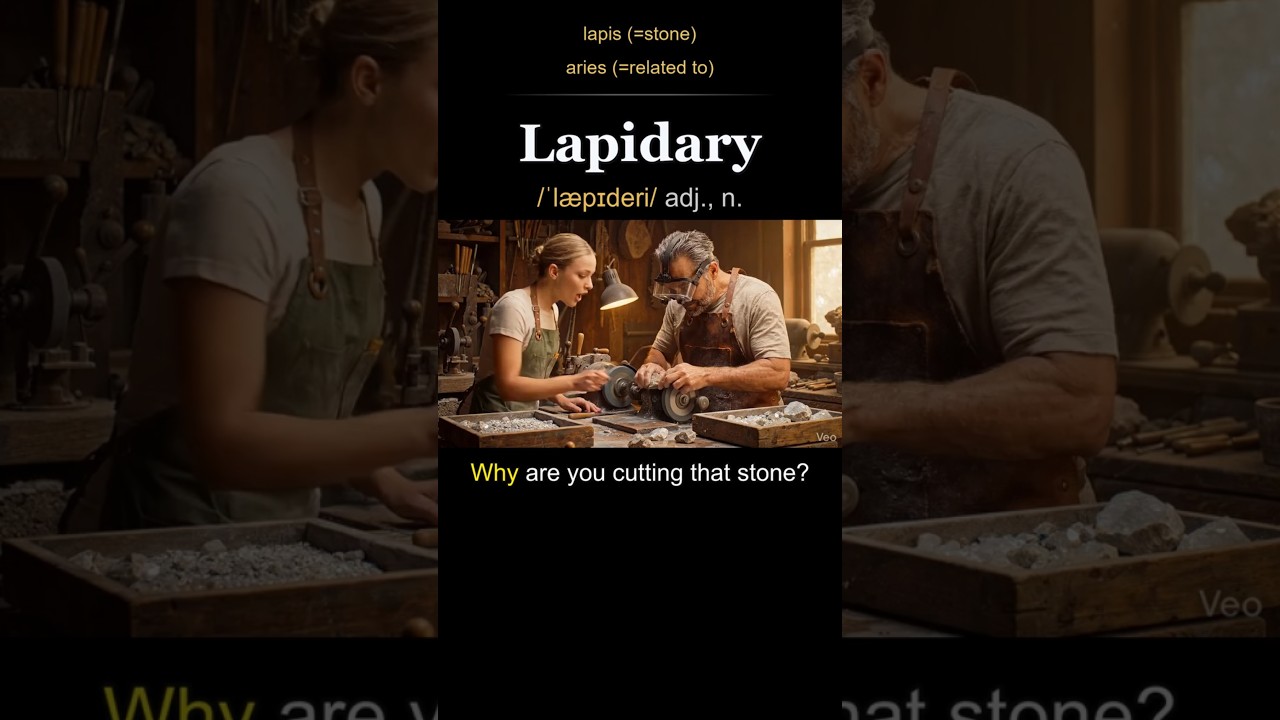
The threat against Lolita is growing with her body; as she gets bigger, so he becomes murderous towards her. And this is allied with his desire, in a sense, to crystalize what he has taken from her. And here in the middle of the page a little ways down: My love's striped black-and-white cotton frock, jaunty blue cap, white socks and brown moccasins were not quite in keeping with the large, beautifully cut aquamarine on a silver chainlet which gemmed her throat, a spring rain gift from me. He has taken summer rain that the page before, we are told, gemmed her hair ("shook her gemmed hair, stretched towards me two bare arms, raised one knee")--"her gemmed hair"--takes that rain, and ossifies it, makes it lapidary, turns it to stone in the aquamarine, and puts it on a chainlet.
And the diminutive "let" at the end of the chain doesn't really cover up the chain itself. It doesn't really mitigate against the confinement he has perpetrated on Lolita.
She is in chains, and just because it's ornamented, just because it has the diminutive, doesn't mean that it's not a chain.
It's around her throat, that vulnerable place.
So, if art as play is something like performance, something like an embodied art, the art of the tennis service, or even the art of theater or film, there is another kind of art that is gemlike, hard, cold, equally formal but dead: "bluestone children." So, this is the other form that the aesthetic can take. And I think that Nabokov is consistently concerned about these two valences of what the aesthetic can look like. So, if it can look like the gem, it can last forever. As Humbert dreams at the very end of the novel, he says, "I am thinking of aurochs and angels, the secret of durable pigments, prophetic sonnets, the refuge of art, as this is the only immortality you and I may share, my Lolita." He thinks of his account as that kind of enduring stone-like object, and it may give immortality, but it traps her there in immortality with him.
He is then as immortal as she is in the pages of this screed.
And so--like the chainlet--it takes that stone-like distillation of life, turning rain to stone, turning life to the representation by your tormentor. It turns into something durable that will outlast them. So, the problem with art is in a sense that it is immortal. That's the problem.
If life is threatened over and over again in this novel by mortality--dead children, Lolita growing up inevitably, painfully, putting her at risk. Her body grows; she can't do anything about it--that's mortality, the passage of time. This difference--between the art that's lapidary and the art that's living--is that the art that's living, by very virtue of being alive, can also die.
So, this is the problem with the autonomous work of art.
If your dream as a writer is to make an autonomous work of art that has, as we say in a very colloquial way, a life of its own, but the problem is that there is something about life that's dependent on the possibility of its negation. That's why on Valentine's Day you might give your lover real flowers rather than plastic ones. It's the very potential to decay that makes them beautiful. And so, the problem here is that Nabokov dreams of an art that's living, something like the butterflies that he was so enchanted with in his life and work outside of fiction.
And the butterfly does appear in just one moment, and it's during the tennis scene.
As Humbert and Lolita play, there is one butterfly that flits between them. It's a mark of their equality as artists in that moment. The butterfly is the perfect work of art because it is both a representation and alive.
It has eyes on its wings. It looks like a leaf.
It is nature in its aesthetic form as imitation of itself, life as an imitation of life.
Can you make a novel, as he says in the essay, that will "sprout wings and grow claws" in secret in his mind? That's an image taken from the metamorphosis of the butterfly within the chrysalis.
He wants his novel to be like that living butterfly, but the threat is always that it will be more like the aquamarine. And I want to suggest to you that the aquamarine has an even darker personal significance to him. When his family fled Russia, the only things of value that they brought with them were some of his mother's jewels. These jewels were hidden in a canister of talcum powder, later buried in the yard under a tree in Europe as they moved from place to place in their exile, and they were gradually sold off one by one to fund their life.
Those jewels, I would suggest to you, carried with them the sense that they were the ossified remains of a radiant Russian life, and so the image of the jewel is a kind of dead childhood, even for him as a writer. So, where is Nabokov in here?
I think that's one of the places where Nabokov is.
It's Nabokov meditating on this problem.
I want to read that last passage on 308 that he mentions in the essay.
Actually, it starts on 307. This is Humbert standing on the lip of a ravine by the side of the road, listening to the sounds of a small town rising up to him: And soon I realized that all of these sounds were of one nature, that no other sounds but these came from the streets of the transparent town, with the women at home and the men away. Reader, what I heard was but the melody of children at play, nothing but that, and so limpid was the air that within this vapor of blended voices majestic and minute, remote and magically near, frank and divinely enigmatic, one could hear now and then, as if released, an almost inarticulate spurt of vivid laughter or the crack of a bat or the clatter of a toy wagon, but it was all really too far for the eye to distinguish any movement in the lightly etched streets. I stood listening to that musical vibration from my lofty slope, to those flashes of separate cries with a kind of demure murmur for background, and then I knew that the hopelessly poignant thing was not Lolita's absence from my side, but the absence of her voice from that concord.
This then is my story. I have reread it.
It has bits of marrow sticking to it.
And blood. And beautiful, bright-green flies. The living voice is missing.
What you get instead is the corpse of the novel, with marrow, and blood, and flies.
Dolly Schiller--aptly named of course for the German Romantic philosopher who advocated play as a mode of the aesthetic, German Romanticist of the nineteenth century--Dolly takes on that identity as the Romantic figure, and she dies giving birth to a girl, to a baby girl; she dies in childbed. Remember I asked you from the preface, John Ray's preface, to figure out who Dolly Schiller is, who dies in childbed.
Well, by now you should know that's Lolita.
So she dies giving birth to a child.
She has taken on the mantle of Romantic artist, but she dies giving birth to a live person: two modes of creativity embodied in Lolita, in that one act, and in that name. She is giving birth to a real, live thing--not a creation that is more like stone, but an actual person. And so, what you see is not just the paradox of wanting your work of art to be a living work of art, to be personified in that way or made animate that then exposes it to mortality--the Woolworth's workers who don't read it and who think no one in the world ever reads it, that kind of risk.
Your book cannot live if it has no reader to meet it at the top of that mountain. But Dolly embodies that other kind of creativeness: human creativity of the literal kind, giving birth to a child. I think it's telling that this kind of creation is a failure; it cannot succeed in the confines of this novel. Nabokov had a way of making an absence at a point of his utmost investment.
For instance, in his autobiography he notes the date of and the phone call that tells his mother that his father has been assassinated. But he doesn't tell you until many pages later what it was that happened on that date.
He says, "On" whatever the date was; I think it was March 22^(nd) "when my mother received a phone call…." And then, it just goes on about something else, doesn't tell you what that phone call was. It was his father's assassination. Like those absences in other parts of his writing, I think this absence, this failure of any birth, it marks a sort of vanishing point of art, that art somehow can't quite compete with the real inventiveness of nature and of human persons. He's going to try.
He's going to try to give us a living prose, but this is the end against which it finds itself pressed.
Next time, we're turning to a very different kind of writing, a writing equally preoccupied with its relationship to the world, to life, but very differently approaching that problem. So, try to think about that as you turn to On the Road.
Up Next

Lolita: An Academic Analysis of Adaptation & Cultural Impact
@LolaSebastian
762.8K views•2019-11-04

Formalism in Literary Criticism: An Academic Lecture Overview
@mattalberhasky9952
39.1K views•2015-08-05

Faulkner's The Sound and the Fury: Benjy's Narrative & Innocence
@YaleCourses
58.1K views•2012-04-05

1984: Orwell's Dystopian World and the Mechanisms of Totalitarianism
@AlternateHistoryHub
7M views•2017-03-04
Related Study Plans & Knowledge Roadmaps
Structured learning paths in Literature