
![DOM CASMURRO - CAPITU TRAIU BENTINHO? [Pablo Jamilk]](https://i.ytimg.com/vi_webp/pzFMizvD9xE/maxresdefault.webp)
















Lolita by Vladimir Nabokov remains a polarizing literary work that challenges readers to confront uncomfortable truths about predation, manipulation, and the unreliable nature of narrative, with its controversial subject matter continuing to spark debate about whether such stories should be adapted to screen in the modern era.
Lolita: An Academic Analysis of Adaptation & Cultural Impact
Added:Familiarity with the plot, themes, and characters of Vladimir Nabokov's 1955 novel 'Lolita'.
Understanding the literary concept of the 'unreliable narrator' and how a narrative can manipulate reader empathy.
Basic knowledge of film adaptation theory, specifically how literary devices are translated into visual and auditory cinematic elements.
An awareness of mid-20th-century censorship standards and the social context in which the novel was published and initially received.
Investigation of the 'Lolita Effect' in media studies, analyzing how pop culture and fashion have historically misinterpreted the novel's tragic victim as a willing seductress.
Advanced study in media ethics, exploring the moral responsibilities of filmmakers and authors when depicting sensitive subjects like grooming and predation.
Comparative analysis of other controversial adaptations (such as Kubrick's 'A Clockwork Orange') to study audience reception and director intent.
Engagement with contemporary feminist literary criticism to understand modern academic re-evaluations of Nabokov's work.
762.8K views37.4Klikes58:44Original Release: 2019-11-04
[Greg] "It's... It's..." [Shiloh] "You know what? No, you're gonna listen to me, you're gonna listen to me "You're gonna listen to me because you're never gonna see me again, so for once in your life you're going to "listen to me. Okay? Look at me."
[Greg] "We broke up."
[Shiloh] "Look at me. Look at me."
"What you have done to me is irreversible - you've destroyed any way "for me to support myself. I have nothing. You have destroyed me."
Greg: "Can you take a step back?" Shiloh: "No." Greg: "I'm backed into a corner."
Shiloh: "Then you have to promise to listen to me."
Greg: "(mumbling) I'm sorry, excuse me..." Shiloh: "You're going to listen to me!"
Greg: "I'll open the door for the police."
various actors shouting "Lolita!"
Narrator: "How did they ever make a movie of Lolita?"
Robert Kelly: "I'm a man. I make mistakes. But I'm not a DEVIL. And by no means am I a MONSTER."
Natalie Portman: "I excitedly opened my first fanmail to find a rape fantasy a man had written about me."
Greg: "What did you say exactly? You said it - you said something - you said you were going to make it look "really BAD or something?"
Shiloh: "I don't care if you record me - you're going to listen to me."
[thunder] "So... Thug Notes already made this joke."
Greg Edwards: "I hope you like R. Kelly cause this week we mackin' jail bate with LOLITA by Vladimir Nabokov."
"How did they ever make a movie of LOLITA?"
These words serve not only as the tagline for Stanley Kubrick's film adaptation of Vladimir Nabokov's 1955 magnum opus, but also a question reverberating within the literary community as of filming. It's a question I don't see dying out anytime soon since we are, unfortunately, just at the beginning of the #MeToo era. LOLITA, the story of the pedophile Humbert Humbert and his obsession with twelve-year-old American girl Dolores Haze, has been adapted not once, but twice to film - by Stanley Kubrick in 1962, and by Adrian line in 1997. It was also made into a stage musical, a ballet, a play, and an opera, as well as inspiring scores of derivative and transtextual writings, such as Azar Nafisi's memoir, READINGS LOLITA IN TEHRAN, and Paula Vogel's Pulitzer Prize-winning play, HOW I LEARNED TO DRIVE.
Somehow, despite its subject matter, LOLITA's grip on pop culture is still going strong over half a century since it was first published, controversy be damned.
Greg: "it's not bad to sleep with your daddy so long as he's not biologically related to you and it's totally legal and it's a kink."
[SIRENS] Yet, as we enter a world supposedly more aware of sexual predators than ever before, will another LOLITA movie ever happen?
And perhaps, more importantly, SHOULD another LOLITA movie ever happen?
These aren't easy questions to answer as the novel remains a polarizing work - even in literary circles who despair the fate of the novel as we cross over into a Fully Digital Age™. Today, as in 1955, predatory men take advantage of social structures and employ charm to elicit sympathy with the intention of hurting women and girls.
Greg: "They say sociopaths try to imitate normal human behavior so they fit in.
"How am I doing? [laughs] Being someone who is interested in the public sphere of knowledge, reaching outside the realm of academia and into public perception and widespread critical thinking, I admire YouTube's criticism, but I struggle with it.
To borrow from Lindsay Ellis, I think YouTube often falls into the trap of talking about Thing Bad or Thing Good, and especially trusted or persuasive opinions tend to get perpetuated. For example, let's look back at my Channel Awesome fandom days - my teenagehood. What's more likely: That I'll someday decide to watch Battlefield Earth and examine its intricacies, or that I'll take Doug Walker's advice and believe that it's a bad film? But to be fair, the cards were stacked. Internet personalities often talk about works of fiction that are easier to tackle - which is perfectly fine, of course, because it's fun to look at THE ROOM or JUNIOR or ROVER DANGERFIELD and see its flaws - these are films that are fun to make fun of. But Doug fell apart when examining works that couldn't be tightly wrapped up this way. He never had many insightful things to say about artful but flawed works like MOULIN ROUGE!, Disney's HERCULES, or THE CELL beyond his own emotional responses or nitpicks.
"The suit looks like licorice." "The pacing is fast." "It's too referential."
And often reviewers will criticize things that the source material clearly wants you to ponder.
In relation to MOULIN ROUGE!, for example, the songs are well-known and the film doesn't define love outright because the film employs the audience to think about what love means to them. Is love jealous, proud, or materialistic?
Or is love, as Nature Boy would say, "the greatest thing you'll ever learn?"
MOULIN ROUGE! is a flawed film and many would say it is not a good one. But what art is trying to say and how effective it is in its messaging cannot consistently be measured by logic and initial reactions. And emotional responses are an important part of art in its evaluation - but that doesn't account, of course, for Manipulation.
So, why LOLITA? Why is my first in-depth video about a book so controversial, so upsetting? Isn't that just poking the hornet's nest?
Well, here's why: LOLITA is one of those pieces of art that lives in a state of liminality.
It is infuriatingly ambiguous. To say "LOLITA Good" or "LOLITA Bad" is not enough, because it forces us to challenge our preconceived notions about what predation is and looks like. LOLITA is a deeply personal book, and it's one that employs perhaps the most infamous unreliable narrator of all time - and therefore, I think it's the perfect story to examine within the context of our world and the monsters we face every day. And while Vladimir Nabokov presented himself as an apolitical figure, we can examine his texts to decipher intended meaning. I think Azar Nafisi hits the nail on the head in this regard.
Nafisi: Nabokov was very sly. I think he was far more political than he let on.
Reading LOLITA, the political matters that come out there are existential. The more a work of literature was faithful to itself the more subversive, it will become of society. It is books without messages that genuinely subvert you and make you think about politics."
Humbert begins the book with the story of his tragic childhood and lost teenage love.
He sprinkles humor and poetry to make us relate to him. Then, he continues not with a cut-and-dry confession of his pedophilic intention, but by letting the reader in on what he FRAMES to be a new and daring academic hypothesis Hey folks! I'm editing right now and I have the Jeremy Irons audiobook but I also unfortunately have technical problems. Not to worry, the very talented voice actor Jacob Martin is stepping in to read those bits of dialogue.
Humbert: It is only near the end of the novel that he begins to understand the young girl he's been obsessed with and his own behavior regarding her, including outbursts of emotional manipulation. Only then does he, for the first time, identify himself as the true Pentapod Monster. In this way, the novel has been and continues to be a highly compelling and relevant portrait of abuse.
Humbert: For example, comparisons can certainly be drawn between the predators in LOLITA and R. Kelly, the longtime Pied Piper of R&B. Kelly's long legal and personal history recently came to a head over allegations that stretch over a 25-year period; not limited to numerous instances of relationships with, grooming of, marriages to, lawsuits surrounding, and sex tapes involving underage girls Kelly somehow managed to avoid absolute fallout until the recent three-part Lifetime docu-series SURVIVING R. KELLY, which aired this past January during which the National Sexual Assault Hotline of the United States experienced a 27% increase in calls.
Gayle King: "numerous women who all claim that you abused them - "are you saying everybody in that documentary was not telling the truth "about you? Everybody?"
Kelly: "EVERYBODY said something bad about me. Nobody said "nothing good. They was describing LUCIFER. I'm a man, I make mistakes, but "I'm not a DEVIL, and by no means am I a MONSTER."
Here I would like to acknowledge that there is a vital element of race to the R. Kelly case, and I don't want to talk over black creators. Linked in the description are videos by some truly fantastic folks who can better address this topic. But for all intents and purposes, from a narrative sense, it's plain that Kelly, not unlike Humbert or his main opponent the affluent Clare Quilty, follows a familiar pattern - he repeatedly targets teenage girls, gets them alone one way or another, and then takes full control of their life, abusing them. This is done in full view.
Leslie Jones as Gayle King: "I guess my first question for you, Robert, is why exactly are you doing this interview?"
Kenan Thompson as Robert Kelly: "Because people think that I'm some kind of a MONSTER. My lawyer was telling me no, but my ego... my ego was telling me yes."
Greg: "I mean she's 16 I'm 31..." "you said a number of things, that I was just generally a MONSTROUS human being, some people said that I was worse than criminals..." "There's literally no proof."
And let us not forget that Quilty, who Dolores thought was her rescuer, kicked her out on the streets after she refused to, quote, "souffler his beastly boys".
Indeed, cynics will argue that the only real fans of Vladimir Nabokov and LOLITA are those who have fallen to the charms of Humbert and given in to the temptation of romanticization. Others decry that much, like the #MuteRKelly movement is allegedly killing Robert Kelley's career, the #MeToo movement is the reason LOLITA hasn't been brought back to the screen.
So. Is there any legitimacy to these claims?
[music from Into the Woods:] "Good day, young lady."
"Good day, Mr. Wolf."
Greg: "I got someone to admit that I'm not a pedophile, despite so many "people saying I am a pedophile. Like some people think that I chained a 17-year-old "in my basement. I have nothing to do with 17-year-olds. Like my wife was 17 "when we first started dating. They're all focusing on a person that we were "temporarily like foster parents to, Sarah. I always had that kind of family [THOUSAND YARD STARE] "relationship with Sarah. We never did anything weird with Sarah, we were just... [HARD SWALLOW] Contemporary critic Elizabeth Janeway wrote the following in her 1958 review of Nabokov's novel.
JANEWAY: Indeed, LOLITA has become infamous for being a sweeping, erotic, incestuous novel, which is, well... mostly wrong.
You won't find much sex in there, but you will find... Humbert: And while I'm sure there are pedophiles who have read and related to this novel, I think anyone with above a grade 8 reading comprehension can recognize that, in the end, the text is surprisingly unsympathetic toward pedophiles. Humbert ends up rotting in jail and dying of heart failure, haunted by his guilt. Clare Quilty, his foil, is shot.
As for the teenage girl fans, let's put a pin in that. LOLITA does contain some limited explicit sexual content, but not much, especially by today's standards. And it's not written in a very erotic tone compared to a fair amount of Nabokov's other writing. ADA, OR ARDOR is way more risque in my opinion, but not as good as LOLITA from a literary standpoint.
There's a bit of biographical fallacy at play here too.
There's the mythical Nabokov, Dirty old man.
the pervert, the puck, here to spread omniscient chaotic mischief and whimsy.
In reality, Nabokov mostly wrote postmodern puzzle books about folly and wisdom and the intangible Russia. He was a poet who studied butterflies. He was an academic and a scientist who married young and shared a treasured, dedicated romance with his wife. Fans find it hard to even associate him with the monster that is Humbert Humbert, even though they're both academics. He seems more comparable to Pnin, a character who was actually based quite a bit on himself.
One interesting allusion Nabokov repeatedly makes is to the figure of the nymph. And this allusion, I think, fits well into this video's discussion. I'm going to pass the mic over to my resident mythology enthusiast George Mac for just a moment to look at how this figure defines the novel and also subversively paints Humbert as a villain.
George Mac: Nymphs in literature and pop culture have something of a bad rep. We most often see them associated mainly with some form of hypersexuality. The medical term for which having used to have been derived directly from the name itself 'nymphomaniac'. While it may be easy to look at this quick connotation and call it a day, it's important to look a bit more deeply at the actual relevancy nymphs have as a classical allusion and by extension that use of the term 'nymphet' in the novel. Mythology surrounding the ancient Greek perception of nymphs is as nature spirits, occupying different environments such as mountains, forests, and the sea. While they weren't considered to be gods, they also weren't human, occupying a sort of space in between the mortal and the divine, and usually restricted to one specific location in particular - such as one particular mountain, or one particular stream. They were beautiful and enticing, and they also tended to make those who were said to witness them go a bit mad. The ancient Greek concept of eros (sexual attraction) was equated to a kind of madness, since those affected by it were seen as losing control and giving in to a more base, less civilized instinct that one should ideally be able to ignore for a clear rational thought. This is very revealing of the message the text conveys through calling Dolores and 'nymphet' - the fixation that Humbert has with this underage girl is dangerous and unhealthy.
It has an increasingly negative effect on not only her life but his own and the farther he pursues her it eventually becomes his undoing. The term 'nymph' eventually in history transferred over to a more general term for fairies, and as a result of this is now a word in entomology for insects in their immature form who do not physically change that much as they move into adulthood. As someone who studied entomology, this is something Nabokov would understand and probably want to explore the implications of when applied to the perspective Humbert has as a narrator. Humbert has a very specific image in his mind as to what his ideal partner is like - one that has been stunted and malformed by his inability to move past his first instance of real attraction to someone. Dolores temporarily fulfills this unobtainable vision for him, as he perceives her as the sort of girl frozen in time, like Annabel is in his own memories. However, something else to note is Dolores's connection to the symbol of the butterfly - a 'nymph' is also in fact a species of butterfly an insect known famously for its ability to transform itself as it ages, something that Humberts imagined perfect nymphet can never do. While it is easy to look at the way the use of the term could reinforce Dolores's position as a victim in the novel, there is also implicit power to it as well if not directly for this one can look to one of the most famous myths containing a nymph figure within it. In this myth, Apollo (God of Prophecy and healing) finds himself fixated upon a particular Dryad named Daphne after having been shot with an arrow by Eros. When he approaches her to pursue her, she rejects him. Unable to accept this answer, he chases her as she runs away from him. It goes on for so long and becomes so much for her to take that she prays to be turned into a tree to escape him, and she is turned into a laurel tree as a result. Confronted with the advances and harassment of a man that she has no interest in, Daphne is able to reclaim her body and her sexuality - effectively re-flowering herself.
Nature is deeply associated in culture and myth with femininity and the connection that nymphs have to the earth and sea should be respected as a part of this when used in literature. Using this label specifically in the context of LOLITA can therefore also be a greater indicator to the larger messages of the text beyond the immediate view of the Originally there was a clip of Marilyn Monroe singing Cole Porter here but YouTube has me jailed for copyright crimes if I use it so I'm just gonna sing a little bit but it... ba doo ba doo ba bow~! My name is... Lolita!
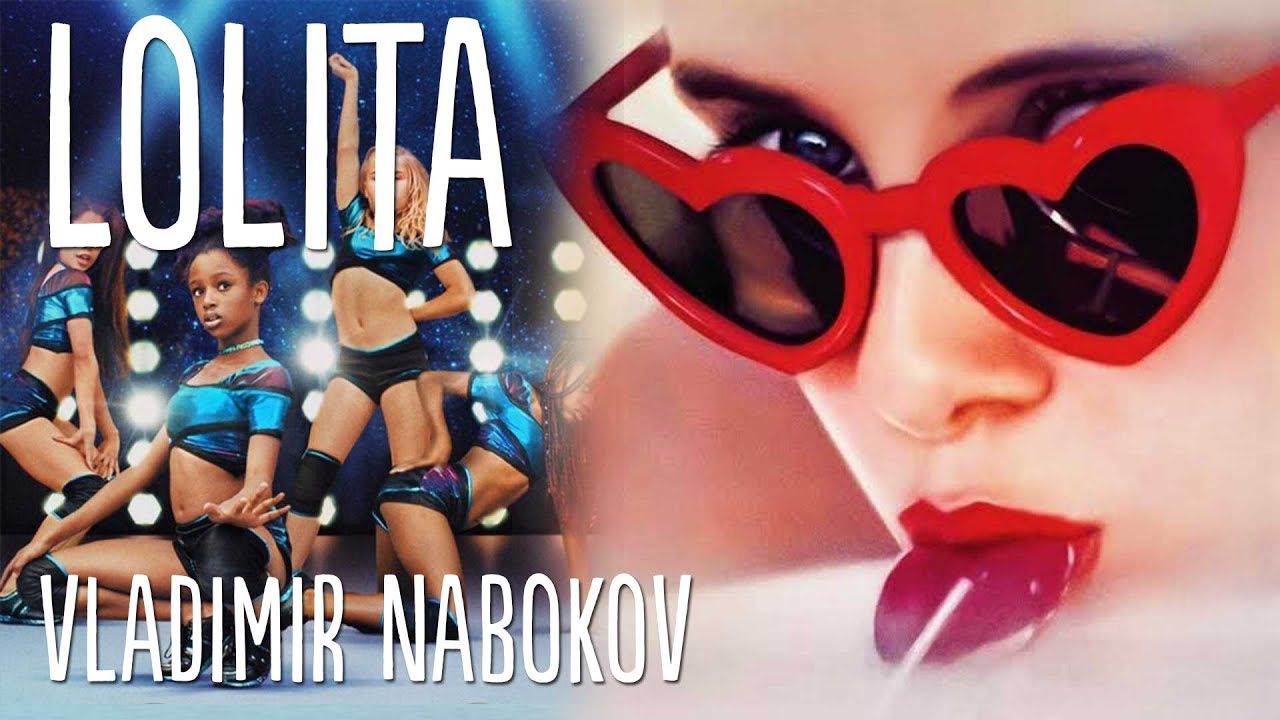
I personally believe that the associations we have with the book as a love story comes less from foolish people or predators reading it and assuming it's romantic and more from the way the novel has been framed over time and the iconography it has accumulated. Much of the iconography we now associate with LOLITA is not part of the source material whatsoever - iconography like these rather flirty heart-shaped sunglasses, which never appear in the book at all. In fact, when Dolores has initially introduced, she's said to peer over dark glasses.
Humbert: Kinda hard to do in these ones because they're so large.
Another common misconception about this work is that Lolita is the name of the main character / love interest of the novel. No doubt this misconception was perpetuated by the Kubrick adaptation, in which Lolita is actually her nickname which... sigh... FINE... but since I have to be that one nerd pushing her regular old glasses up over here, in the novel, Lolita is in fact not even Dolore's nickname. None of the adults in her life nor her peers call her Lolita - they call her Dolly, Lo, or Lola. Humbert writes: and he reveals on page one, in the opening lines of the story, that Lolita is a sexually objectifying pet name, one reserved for the bedroom. It is a dehumanizing term he employs in his own fantasy life, and not a term she would ever willingly associate with herself. Which, considering it's the name of the book, says something.
Greg: "you guys have this concept of "grooming, but that requires you have sex with somebody right after they turn 18.
"in order to have a crime you need often a victim and some kind of proof. If at "any point we want to date whoever we want, it's my business, but we did not "groom anyone as they would have been bedded by now if that were the case, so..." There have been a few articles at this point written about how the #MeToo movement is hindering new adaptations of LOLITA. To quote the Guardian's Laura Waddell: These are, in my opinion, ridiculous assertions. However a sense of security accompanies us when these Pentapod Monsters are fictional and not stared straight in the face via docu-series.
Therefore, as a female writer in general literature nerd, I find it necessary to acknowledge that political correctness has not deemed Lolita unmarketable; a parable about rape, misogyny, and our cultural obsession with youth is especially timely at the moment and aligns with movements such as me to #TimesUp and #MuteRKelly.
"But the problem is like with the thing where "they say I chained a seventeen-year-old to the wall, there's no evidence at all.
"There's no 17-year-old. They think this 19-year-old at the time was a 17-year-old, "and that's a huge difference. The cockiness, the arrogance, the narcissism... "it's amazing that you guys actually wound up to be a narcissistic ones... "the narcissism of you guys to just say that we slept with someone it's insanely "pathetic, because you have no proof. "Ohh they're grooming teenagers!!"
"Someone the other day said that my whole house is full of teenagers."
In truth, however, there are other reasons why it makes for a daunting screen adaptation.
"You know the police would be on my side."
"Because if something of mine got screenshotted and doesn't make me look good, so be it... We gotta own our words.
When John Milton first published the epic poem PARADISE LOST, readers were outraged to discover what they considered to be heresy; the verse is representing primary holy figures, namely God the Father and God the Son, were perfect, rigid, thoughtful, and beautiful... they were also pretty boring.
Lucifer's verses, on the other hand, were fun, playful, and engaging. They shone with charisma, they glittered with rebellion. Lucifer declares better to reign in Hell than serve in heaven. And readers of the 1600s, despite being staunch Christians, felt compelled. And LOLITA is written very much the same way. The language of the text, witty and captivating, is what defines the novel.
Humbert: It is written with the rhetoric of the fictional author, and while immersive, it's difficult to differentiate fact from personality while reading.
"You know what liars do?
This is what they do - they literally try to make themselves look as good as "possible, and I gotta ask you guys this... when the (BLEEP) have I ever tried to make myself look as good as possible?"
The story is obfuscated with allusion and other linguistic tricks - as Humbert himself says... Humbert: It is in this way that Humbert's use of words is its own form of assault on the reader. As his language becomes harder to unravel, the intent behind it seems murkier and thus more forgivable. And for those who suffered with trauma after a sexual assault or instance of grooming and found themselves trying to rationalize or empathize with the person that hurt them, this is especially close to home.
"They say their life is destroyed... "yet they go on obsessing. And I don't get it, if your life is so destroyed, "why are you still obsessing? Why don't you move on?"
Additionally, Lolita is a rich novel with small scatterings of (dare I say) comedic anecdotes. Between the brief but striking images, the made-up locations, the absurd names, and Humberts mean-spirited but nonetheless entertaining observations, the text can easily veer into the realm of fantasy despite being set in real life.
Adapters are left with a narrative far more strange and complex than what a two-hour long movie can usually cover with any degree of success. Thus, it is also important to remember that the novel's unreliable narration is inherently subjective whereas the camera is inherently objective. This isn't to say that every adaptation needs to be a shot-for-shot remake of its book - in fact, often the best adaptations tend to cut and paste quite a bit in pursuit of the greater goal, creating a work of art that stands strong on its own - however, this is also hard to do with LOLITA because there are decades of negative or erotic associations with the novel, as well as its subsequent adaptations. It might be tough to convince audiences of a new spin. For example look at the vitriol surrounding Netflix's Anne with an E.
BOO!!!
"Why do you do this?"
Now before some of you bite my head off, in my own Canadian opinion, it is a terrible adaptation. But there's arguably some potential in reimagining L.M. Montgomery's Anne of Green Gables series as darker, edgier, and grittier, complete with a theme song by The Tragically Hip.
After all, Canadians do experience angst when it comes to their national identity, And Anne of Green Gables is a huge part of that identity for many Canadians. And PEI, in particular, has a tricky history of economic disparity and struggle. As a Maritimer myself, I feel that. And the comparison is also apt because although LOLITA is an American novel, Nabokov was inspired by his Russian national angst and used much of his novel to criticize American identity. However, most of the fanbase of Anna Green Gables wouldn't tolerate Netflix's adaptation from the get-go. They claimed it was the dark tone of Anne with an E that ruined their favorite girl single-handedly. It doesn't matter that PEI is actually a grey, muddy, difficult place to live for many inhabitants, plenty of whom are frustrated that much of the island's time and energy is now invested in tourism. Audiences wanted cherry blossom trees, idyllic countryside, and a true individualist to brighten the environment further.
Likewise, it's hard to separate LOLITA from its aesthetic. Much of the popular iconography involved falls under the visual umbrella of Americana: we imagine endless glass bottles of coca-cola, fresh daisies, old muscle cars, and gingham. So what can we do?
Perhaps we should consider that Nabokov himself would likely be unhappy with this aesthetic. In a letter written to the American publisher of LOLITA on March 1st 1958 outlining his wishes for the novel's jacket, he specified the following: Said Nabokov, "there is one subject which I am emphatically opposed to: any kind of representation of a little girl." Meanwhile, more than 60 years later, we've been inundated with reprintings of LOLITA featuring... well... Sorry, Nabokov.
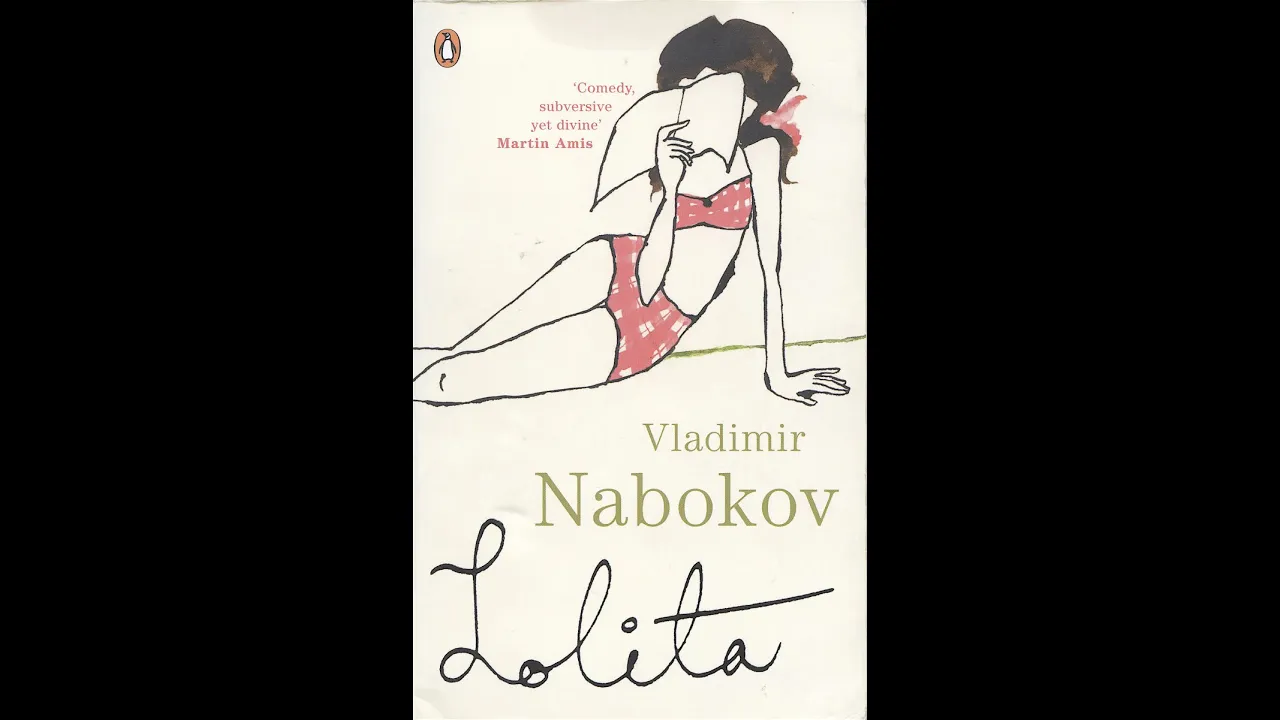
It's tempting to put a girl on the cover of elitist novel, maybe even a headless one. And ditto the flirty promotional materials of the film adaptations. This seems apt when you consider that compartmentalizing and decontextualizing Dolores is all Humbert does over the course of the novel. But a disturbing parallel can be drawn between the disconnect Humbert and the disconnect of his audience. This is a marketing strategy, one picked up by the likes of pop stars like Katy Perry:...one I might call malicious. It is truly disturbing that most of the iconography related to LOLITA has been scandalized and sexualized "Sarah Rose knows that you're a teenage girl. Mmmm, and she definitely knows that you are ready for the ultimate in teen glamor... [patriotic fanfare] Being on the new paperback cover of LOLITA!
...something that designer Jon Bertram attempted to address in his 2013 book LOLITA: THE STORY OF A COVER GIRL. Within, he examines the relationship of LOLITA's outrageous sleeves and the perception of the book in general.
Bertram: But Bertram's commission covers are more than just stunning: they challenge the novel's preconceived imagery, spark the imagination, and challenge what an adaptation of LOLITA could potentially look like. After all, which is a more accurate portrayal of the book's tone: a young girl fellating bubblegum, or bubblegum stuck to the bottom of a man's shoe?
And it's inspiring for the book's fans to see that bubblegum. True, many readers blatantly romanticize Humbert as a misguided or tragic figure, but this phenomenon worsens when adaptations frame him as the hero of the story. When Humbert no longer calls the shots through his possessive narration, adapters must resort to other means to make him sympathetic. Otherwise, the audience won't stick around. This means that those who tackle the daunting task of reworking LOLITA must question his truthfulness more than the average reader: is he truly a handsome, charming, well-meaning, and socially adept romantic who never meant to do harm, as he often assures the jury that he is? Is he a reincarnation of milton's Lucifer, or is he not? Here lies perhaps the greatest danger in adaption: warping the nature of the source material to pursue a pleasing aesthetic - which is what you want for your movie, right?
I'd say that Stanley Kubrick and Adrian Lyne both fell into this trap with their respective film adaptations. Kubrick cast Golden Globe winner James Mason to play the role, and Lyne chose one of the few winners of acting's Triple Crown: Jeremy Irons. Broadway mastermind Alan Jay Lerner, however, did something a little more subversive: he employed perhaps the more accurate John Neville as his Humbert when taking LOLITA to the stage. "These "murders were not just the work of a madman, but a madman with certain medical skills, considerable intelligence, and education."
Neville a Shakespearean actor famous for playing Hamlet, whose sharp almost abrasive voice carried the theatrical affectation of his era and made him the perfect Sherlock Holmes on television, was considered less handsome than Mason, and his delivery is far from Iron's soft, dreamy wist. And he's not unattractive, but unfortunately, Neville struck audiences as too pretentious... even for Humbert Humbert. Indeed, the Broadway musical LOLITA, MY LOVE written by the same Alan Jay Lerner that brought us such classics as Brigadoon, Camelot, and My Fair Lady actually failed because audiences refused to sympathize with its protagonist... which is a pretty good sign for humanity, if you ask me. And how could anyone sympathise, with lyrics sung from his mouth like... Then the elephant in the room: how to cast Dolores?
One can't actually have a 12-year-old girl kissing a 37-year-old man on screen.
"What's statutory rape, I've never known what that was."
"That's when a man is seduced by a girl under 20."
That's why 1997's Dominique Swain had a body double. Dolores is described as a sturdy, healthy, but decidedly homely kid with chestnut hair, grey eyes, and a meretricious gait - implying that Humbert finds her youth attractive, but doesn't see her soul as having much integrity.
The Kubrick film adaptation disregards this characterization in casting Sue Lyon, an old Hollywood beauty with bright blond hair who looked old for her age.
meanwhile, Lyne's Dominique Swain, who has a retainer and almost acts her age, appears closer to the girl from the book, but is easy to imagine alongside the Calvin Klein models and Tarantino heroines of her decade. Other considerations for the role in this vein were Christina Ricci, and Natalie Portman, whose Women's March speech on her sexualization from a young age highlights one of the many issues with casting a teenager, even one of legal age, in this role.
"I turned 12 on the set of my first film, The Professional. At that moment in my life, I too was discovering my own womanhood, my own desire, and my own voice. I was so excited at 13 when the film was released and my work and my art would have a human response. I excitedly opened my first fanmail to read a rape fantasy that a man had written me. A countdown was started on my local radio show to my 18th birthday, euphemistically the date that I would be legal to sleep with. Movie reviewers talked about my budding breasts in reviews. At 13 years old, the message from our culture was clear to me."
"You know, I had that squeaky, high little kid's voice. I was not Lolita, I was not. He said that I looked mature, but I was still a very much a little kid, and he said that he didn't want a provocative- not a girl cognizant of her sexuality. And that was definitely me I was like that little girl. It was so fascinating because I had never kissed anybody before, except for my mom, I'd kissed her all the time and I had to have this kiss with Keith Carradine and I think he was tortured. He must have been just tortured by it, because he's, you know, in his 30s, and I'm 11, and he's thinking 'oh god, you know, I don't want to scar this kid.' And I looked like I was sucking on a lemon. I just kept scrunching up my face and the director kept getting mad at me. And he'd say 'would you please relax your face? Just relax your face, stop looking like you're sucking on a lemon.' I was like 'I don't know how to relax my face! I've never done this before! I don't know what this!' So Keith took me aside and he said 'Hey, I got something to tell you.' And I said 'What?'
He said 'You know that this doesn't count, right?' I said 'It doesn't?' and he goes 'No.'
He said 'The first? That's a totally separate thing, this totally doesn't count." [interviewer] "What a wonderful thing to say." [Brooke] "I mean-" in both film adaptations, Dolores has aged up from age 12 to 14-16. This choice appears to be an attempt to dodge all discussions of strict pedophilia as the age of consent in most United States is 16-years-old. Yet, in a stranger way, it reveals the hypocrisy of our society and its values. In attempting to lessen the shocking age difference in LOLITA, so that audiences will be more comfortable viewing it, we discover how comfortable we are with sexualizing teenage girls. Promotional materials and early cuts from the 1997 film, for example, are so overtly sexual that New Line Cinemas dropped distribution and it was eventually released straight to cable. [interviewer] "Adrian Lyne's films have often been controversial, but his adaptation of Vladimir Nabokov's LOLITA has eclipsed almost everything else he's ever done. He began shooting the film in 1995 and it's only now being shown in the United States, initially passed on by every major film distributor. LOLITA will air this Sunday at 9:00 on Showtime; joining me now is Adrian Lyne, welcome back to the broadcast, it's good to have you.
What happened?"
[Lyne] "God, at what stage? I cut the movie for a year, it took forever to cut, it was very difficult, and then during the course of the cutting there was a new law that came into being, you know, when Clinton was reelected, which meant that I then had to sit with an attorney for six weeks in the cutting room because the law basically said that you couldn't have a an adult imitating a minor, you couldn't have an adult pretending to a minor, so I had to cut out shots that I had done with the with the body double. Then, we went to the MPAA where it was given an R rating straight away, so there's no problem with the rating.
Then I showed it different studios and I got a fabulous reaction. Then and I had letters written to me, I mean more really than I've ever had on I would say any other movie, and certainly two and I think maybe more executives from studios said they wanted it for their studio... and then they kind of faded away and I was given to understand that corporate decisions were taken; decisions above them not to get involved with this subject matter." [interviewer] "Are you sorry you did it?"
[Lyne] "That's nothing. There's no sense of 'man, I wish I'd spent my life doing something else'. If it achieves nothing else, people should go out and buy this book. It's such an extraordinary piece of work."
[interviewer] "Why?" [Lyne] "Oh God, everything. The language is just exquisite."
[interviewer] "Adrian Lyne's LOLITA, later on Sunday August 2nd 9 p.m. on Showtime." But surely filmmakers now more than ever would know that there is a market for sexualizing teenage girls; especially in a world plagued by what writer Alison Gray calls pedophile culture, has real-world ramifications. According to a study by John Millward, who in 2013 conducted research into the U.S. porn industry, "teen" is the most common role in adult films, and "teen porn" is the most popular kind of porn. And despite the fact that Dolores and Humbert's alleged relationship consists of nothing but statutory rape, they're often photographed as a couple with all the chemistry in the world. [interviewer] "Okay, let's clear something up, because I've been getting a rundown on the street; everybody seems to think that y'all either girlfriend a boyfriend or cousins or..." [Aaliyah] "We are very close, he's my best friend." [R Kelly] "In the whole wide world." [Aaliyah] "In the whole wide world."
[Interviewer] "Where does the title of the album come from?" [R Kelly] "she's running around a studio one day with her friends talking 'age ain't nothing but a number' I'm like 'girlll?'
[interviewer] "Are you thinking about maybe becoming an actress?" [Aaliyah] "I may be."
[interviewer] "You know, moving into film down the road?" [Aaliyah] "yeah, I would like to." This doesn't aid the fact that there are also people quick to blame the child for the abuse she's received. No, in my opinion, it doesn't matter one iota that Dolores seduces Humbert in the narrative. It is not the responsibility of underage girls to protect themselves from predators. It is the responsibility of other adults to intervene. Sadly, every adult in Dolores' short life lets her down. Her mother, Charlotte, is emotionally unstable and attempts to get rid of her. Shirley Holmes, her camp counselor, despite displaying mixed feelings about Humbert, releases her to him; he proceeds to kidnap her. And yes, Dolores Haze is a flawed character. It isn't healthy for a child to flirt with her stepfather. She is also shown to have a certain vapidity and a fiery temper. Nonetheless, she should be applauded for her courage, not despised. Dolores attempts to take care of herself. She is a survivor; although she does not succeed in living into adulthood, she picks herself up and keeps moving on more times than one could count. Now, let's take a look at that pin from earlier. Look, I'm not claiming all teenage girls who love this book are incredibly advanced intellectuals who've actually read it.
But when I first read it, I was a 16-year-old already in college. I was aware of the grown men circling me like sharks, and I was trying to make sense of it in my own way. Being a teenage girl is tricky; no one likes you, or the things you like, but there are a lot of people who try to engage in sexual activity with you. Is it any wonder some of us resort to literature fandom?
Mishka Hoosen wrote an excellent article about the "nymphet culture" of tumblr, primarily filled with teenagers and young women, which is definitely worth a read. Like Hoosen, I think there is something smart and subversive happening when it comes to teenage girls entranced by the novel. [Hoosen] And yes, when I was a teenage girl myself, LOLITA helped me recognize my own power as a writer. On another level, however, it also helped me realize more specifically the power I had over men - especially the ones attempting to groom me. For when they tried to use my love of LOLITA against me? I turned it right back on them.
This is how victims of abuse have found solace in LOLITA; sure, Humbert may be a pentapod monster, but so are we. And there's nothing more empowering to many young girls... than the monstrous femme. At one point in the novel, Humbert pleads, "I need you the reader to imagine us for we don't really exist if you don't. Please reader, no matter your exasperation with the tender-hearted, morbidly sensitive, infinitely circumspect hero of my book, do not skip these essential pages. Imagine me: I shall not exist if you do not imagine me.
Try to discern the doe in me trembling in the forest of my own iniquity. Let's even smile a little; after all, there is no harm in smiling." And for once, he's saying something valuable. Dolores Haze does not exist except within the imagination and the portrayals we assign her. We can help girls like her who suffer abuse by acknowledging them; their feelings and what empowers them. We need to see them for who they are: complex human beings who deserve the same respect as the men who victimized them. I don't think Lolita is a shelved work, nor should we shelve it. It will take artists with serious vision, incredible sensitivity, and deep understanding of socio-political issues to take it on again someday. However, the fact that its legacy can no longer fall into just anyone's hands is a good thing. This is what we, the jury, and the work itself, deserve. [Lyne] "I then worked with four writers; I work with David Mamet, I work with Harold Pinter, I work with James..." [Interviewer] if they can't do it who can?"
"Well I eventually worked with Steven Chef, and-" Nabokov's other fictional academic, John J. Jr. PhD., might become correct in his words that make up the novel's forward: Victims of abuse no doubt find gratification here; just as it is reassuring to see R. Kelly's career so rapidly fall apart with the release of "Surviving R. Kelly", it's wonderful to see LOLITA as a staple of pop culture; and pop culture might just be the thing Humbert Humbert hates most. So perhaps we should stop pinning all of paedophile culture onto one book. Perhaps the question we should be asking ourselves isn't "How did they ever make a movie of LOLITA?" but perhaps "How will we ever make a movie of LOLITA?" [Irons] "People who've been to see it after all this talk about it, what was all the fuss about?" My last video got some people railing on it about how much of a narcissist I am because I did that joke of yourself talking to a camera but you're not allowed to be cute while you do it. [Greg] "You think you catch me in lies and shit..." So, while I'm on the subject, [Greg] "I've done quite a few bad things." I was writing and editing this video when the Onision controversy really blew up. And I'm not gonna spend too much time talking about it because other videos have covered it really well and, to be perfectly honest with you, his particular brand of manipulation is a little too close to home. So, to keep things very short, Onision was once a popular YouTuber. He and his partner KY have groomed multiple underage girls, including one who they had legal guardianship over.
He has also made videos rating the bodies of girls in his fandom, most of whom are teenagers. Do you remember at the beginning of the video when Azar Nafisi stated that it is a-political statements that speak best to audiences?
I think in the case of Greg Jackson that also applies. Harassing his young fans does nothing to draw them away from the person they like; it only proves his assertions that his critics are prudish assholes correct, and pushes his fans toward him. People who are just trying to help end up sounding exactly like the people he's making fun of. [Greg] "It's wrong, and it's wrong because it hurts people.
Is that the right answer? No but obviously every human being thinks that doing bad things is typically bad, most every human being thinks that, and the reasons bad things are bad is because obviously a lot of times, they hurt people."
So when talking about the Onision controversy, I'd like to clarify that while it's good to keep circulating the evidence of his monstrous behavior, my intention is not to insult his fans; only to encourage them to have a look at the receipts for themselves and take it all in, and furthermore to examine any parallels between this and their own lives."
[Sarah] "So Greg reassured him that it would be ok because they could just date me when I was 18. Why don't we just wait for Sarah?"
[Shiloh] "So like, just so everybody knows, me and Greg, we're on really good terms, like seriously, where we don't hate each other we don't dislike each other. Everything is... fine. Yeah." [Sarah] "So we were tweeting back and forth and then he DM'd me 'hey how old are you' and I said 'hey Laney, I'm 14, and he said oh you look older'. He sent me a message that said 'I'm about to delete this app, here's my phone number and he gave me his phone and at this time. I was 14." [Interviewer] "were there ever any inappropriate text messages that from Ky, who again is Onision's partner, to you?" [Sarah] "yeah, we would make like sexual jokes to each other, he would joke about us being together but he also he would send me like pictures of like him without a top on. basically, Ky was taking selfies and he sent me a few of the selfies and one of them he doesn't have any bottoms on but he has shirt on and one of them like his entire like... it was in the picture there was at least one picture that I had sent of me when I was 15, topless."
[interviewer] "how did you go from that to, at the age of 16, and living with them? [Sarah] "so he had been pregnant. I was 14, I was going through a lot, and he had joked about me living there, but one night after so really not so great stuff went down. I was outside crying texting my best friend Ky and he said that he was seriously going to talk to Greg about me living there and I was at first I was just... like Isat there like what do you mean? And I was like 'wait really?' and he was like 'yeah'. It hurts to say this but I do feel I feel like they knew what they were doing and I mean it already had cemented conversations and thoughts when I was 15 and I know that in the video that he posted online I basically was like 'oh nothing is going on, guys, but he wanted me to make that video, and he was really pressured me into making it and I really didn't want to.'
I have bloopers from it of me literally like having like a mental breakdown like sobbing because I was just so overwhelmed." [interviewer] "Controlling, right, like to have this adult move you in and then forced you to go on camera and explain how nothing inappropriate is going on..." [Sarah] "But also what would hurt me a lot is like having to watch him say like 'oh we don't even hug Sarah, we don't even do this or that, and it's like, I mean, I'm sitting there like 16 watching this and I'm just like 'but yes you do, like you're sitting here and you're blatantly lying' and I can't say anything."
The fact of the matter is, LOLITA is an amazing book.
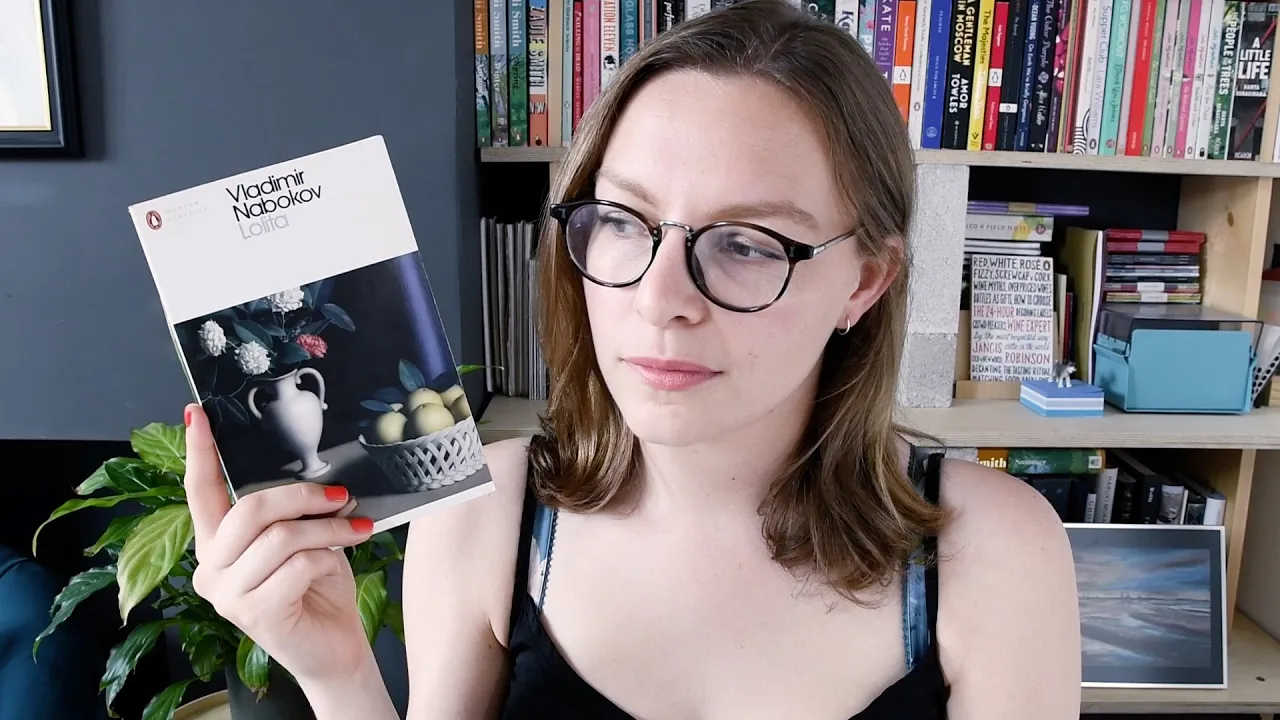
One of the best. This is my first international edition, I found it at a thrift shop and I don't know if you guys can see this but it goes straight from the copyright page to the foreword, there's no author's note, pretty incredible stuff.
"I am thinking of aurachs and angels, the secret of durable pigments, prophetic sonnets, the refuge of art and this is the only immortality you and I may share, my Lolita." [Moe, The Simpsons] "And truly, she was my... friend... Flicka." Therefore I'd like to say a few things to any young ladies watching. Pedophiles don't own Lolita. I don't think you're dumb.
I don't think you're a bad person. I don't think you must have daddy issues or just want attention. I think you deserve love and care just like everyone else, and I can never begin to know what you've gone through. I'm sorry if someone hurt you or made you feel powerless.
People are gonna come at you with all kinds of dumb arguments you've heard a million times before. People won't admit this to you, but in many ways you're right! Boys your age are dumb, and you are smart, but honey, that kind of love is not going to last; because if he's dating high schoolers, it's not because he thinks you're his soulmate, it's because older women won't touch him, and I had to learn that the hard way. Now that I'm in my 20s, I'm absolutely repulsed by the idea of dating a teenager, and I can't believe that any guy, much less multiple guys, were interested in me when I was in high school. Now you don't have to listen to me, I'm just some person on the internet, but I'm gonna encourage you to tell on him. And maybe you have, maybe you've made it abundantly clear. Maybe your parents know that you're hanging out with an older dude but they don't feel like they can step in. Maybe you just don't feel like you can open up to a lot of people in your life. Maybe this person is in your family, or as a family friend, or maybe he's an authority figure and you're afraid. Or maybe you met online, and he didn't seem to know your age right off the bat, so you feel like you fell for the real you. If you're a fan of Onision or another controversial creator, and you feel like you're being attacked, linked in the description of this video are some resources you can use. And if you ever feel like you're in a really dire situation, please feel free to reach out to me. [reporter] "R. Kelly's daughter Buku Abi is breaking her silence on the allegations surrounding her estranged father. On Thursday Abi posted a lengthy message on her Instagram stories condemning her terrible father for his actions. She also referred to Kelly as a 'monster', saying 'the same monster you all confronting me about is my father; I'm well aware of who and what he, is I grew up in that house.' And if I may add just one last call to action: go check out the art of women affected by predators.
I spent a lot of time listening to Shiloh and Aaliyah while I was making this essay and it just really hit me, I mean, it completely got to me, totally affected me just how much the world loses in the silencing of young women, the sheer detriment it has upon humanity. Aaliyah died when she was 22. Shiloh has just recently begun to make music again. Who knows how much incredible art, how many scientific discoveries, how many budding academics, or just excellent people are thrown into obscurity and squalor and judgment because of predators. I'm Ms. Lola and Onision, if you're watching, you look 100 percent better when I can't see you.
Up Next

16:38
Goethe's Werther: Literary Analysis & Psychological Novel
@TheLastSitcom
17.6K views•2020-02-11

13:43
Formalism in Literary Criticism: An Academic Lecture Overview
@mattalberhasky9952
39.1K views•2015-08-05

6:08
Point of View in Fiction: First Person vs. Third Person
@magicalthriftyteacher
153.8K views•2014-03-31

15:25
1984: Orwell's Dystopian World and the Mechanisms of Totalitarianism
@AlternateHistoryHub
7M views•2017-03-04
Related Study Plans & Knowledge Roadmaps
Structured learning paths in Literature
literature
Graphic Memoirs: Visual Art, Trauma & History
01Foundations of Sequential Art and Visual Language
02Autographics and Processing Historical Trauma
03Visualizing Personal Trauma, Grief, and Graphic Medicine
+ 2 more learning modules
14h5 modules
Explore Roadmap
literature
Campus Novels: Evolution, Themes & Critique
01Introduction to the Campus Novel Genre
02Mid-Century Satire and the Post-War Academy
03Dark Academia and the Critique of Privilege
+ 2 more learning modules
14h5 modules
Explore Roadmap
literature
Theater of the Absurd: Philosophy & Plays
01Postwar Existentialism & Historical Roots
02Dismantling Narrative: Esslin & Absurdist Conventions
03Samuel Beckett and Tragicomic Existentialism
+ 2 more learning modules
12h5 modules
Explore Roadmap
literature
Revenge Tragedy: Justice, Madness & State
01Foundations of Early Modern English Theatre
02Anatomy of Revenge: Structural Conventions
03Psychological Complexity: Madness and Melancholy
+ 2 more learning modules
15h5 modules
Explore Roadmap