














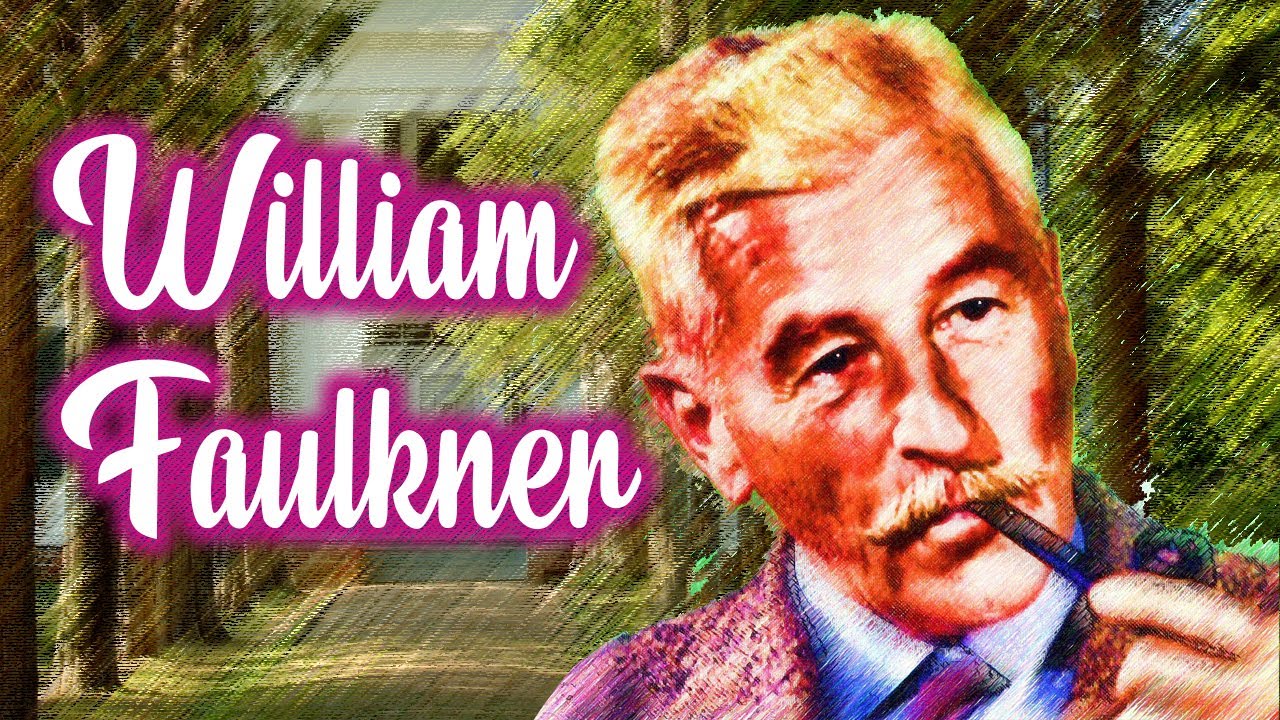
World War I fundamentally transformed American literature by creating an ironic structure that permeates the works of Hemingway, Fitzgerald, and Faulkner, where the impossibility of romanticizing war leads to narrative experimentation, understated emotions, and sensory detail as alternative modes of representation; Hemingway responds to war's horror through precise, concrete language and understatement, Fitzgerald employs sensory synesthesia to capture fragmented wartime experiences, and Faulkner explores counterintuitive outcomes where war paradoxically creates unity among diverse groups, demonstrating that irony extends beyond mere negation to encompass unexpected forms of human connection.
Hemingway, Fitzgerald & Faulkner on War and Modernism | Yale Lecture 1
Added:Historical context of World War I, including its global scale, technological warfare, and the resulting psychological trauma of the 'Lost Generation'.
An introductory understanding of Literary Modernism, particularly its rejection of 19th-century Victorian narrative conventions in favor of fragmentation and disillusionment.
Basic familiarity with the core stylistic traits of Ernest Hemingway (such as the iceberg theory), F. Scott Fitzgerald, and William Faulkner.
Definitions of fundamental literary devices such as irony, sensory detail, and narrative voice.
Close textual analysis of seminal works by these authors, such as Hemingway's 'A Farewell to Arms', Fitzgerald's 'The Great Gatsby', and Faulkner's 'Soldier's Pay'.
An exploration of the expatriate writer experience in 1920s Paris, focusing on the cultural exchange between American and European Modernists.
Advanced study of narrative experimentation, specifically stream-of-consciousness and non-linear structures in high modernist literature.
An investigation into 'Southern Modernism' and how Southern writers negotiated regional history, race, and memory in the post-war era.
110.4K views0likes43:09Original Release: 2012-04-05
WAI CHEE DIMOCK: I'm going to start right away.
And I know that Hemingway, Fitzgerald, and Faulkner are very much iconic figures of American literature and probably you guys are here because you know something about those authors already.
So I'm not going to be going over a lot of material that you guys know already.
Instead, what I'd like to do is to come up with a little bit of material that might be somewhat surprising to you.
And I'm going to be talking about three analytic scales.
This is kind of a critical paradigm that we'll be using throughout the semester with the use of three analytic scales to talk about authors.
So first of all, there's the macro history of the United States in the world, and two texts come to mind, both Hemingway's For Whom The Bell Tolls and To Have and Have Not.
So that's the largest possible level.
And then we'll go down a little bit to the next level, which is still large.
But it has to do with narrative experiments of modernism, and the texts that we are reading can all be called modernist texts in one way or another.
So we'll be looking at The Sound and the Fury specifically for that analytic register of experimentation.
And finally, we'll be looking at the smallest possible scale, micro level.
And it has to do with sensory details, and all three of them are wonderful on sensory details, but today we will just be talking about one text, The Great Gatsby, and one particular moment when the registering of the sensory world is very important.
Let me go to Hemingway and talk a little bit about him in many ways as a kind of gateway or a guide to a global vision of American literature.
Hemingway was very much a world traveler.
Basically, you can get a map of the world by just looking at his writings, but he had a special love of the Spanish language.
So For Whom The Bell Tolls-- we'll be reading this in class --is about the Spanish Civil War.
And Hemingway was there as a war correspondent, but we can see that he actually got into combat situations right here.
So it's really interesting to think about Hemingway as both a journalist and also a novelist.
So the global dimension of Hemingway but also the global dimension of the Spanish Civil War itself.
It was a civil war, it was between two sides fighting in Spain, but it was also very much an international war in the sense that Russia was a part of it, Germany was a part of it, Italy was a part of it.
So it very much was a gathering of a lot of nations converging on the soil of Spain and fighting a war that in name was the Spanish Civil War but actually in action, in terms of its cast of players, was very much an international war.
So this is one level at which we can understand Hemingway, is that he really was a player in a very large scale map of the world.
And because he was such a player on a large scale map, we shouldn't be surprised that he would be going to other countries as well.
And his love of the Spanish language would take him to Cuba.
So we'll be reading To Have and Have Not, which is about Cuba.
And this is a very unforgettable image of Hemingway and Castro.
We might not know that they were actually good friends, so this is just something that we should keep in mind as we read Hemingway.
The Spanish Civil War ended in 1939, and from 1939 to 1960, he actually lived in Cuba.
He wrote a lot of his important novels there.
The Old Man and the Sea was written when he was living in Cuba, so again a very important fact to bear in mind.
And this is the interior of his house in Cuba, and I'll put all this PowerPoint on our website so you'll be able to see the detail.
But this is a cigar box that was given to Hemingway, and on the cigar box is says, "Gran amigo de Cuba," great friend of Cuba.
So Hemingway right now is not just an American author but very much a Cuban author in Cuba.
So we won't actually be talking about Castro's Cuba.
To Have and Have Not actually took place earlier, but this is just kind of a continuing relation that Hemingway has to that country.
We'll move on now to the next scale of analysis, and this is the narrative experiment, the very striking narrative styles that we see in this body of writing and no more so than in The Sound and the Fury.
I think that if we've read that novel, we know that it's impossible just to read it once and understand all of it.
This is the kind of novel that really compels us to go back to read several times because of the level of experimentation in that novel.
This is from the opening of The Sound and the Fury, and you guys probably know that there are four sections to The Sound and the Fury, and the first section is told by Benjy, who is clinically retarded.
So all the action is unfolding in the mind of someone who's not really registering the world most of us do.
So let's just see how Benjy understands the world, how he takes in the world.
"'Did you come to meet Caddy,' she said rubbing my hands.
'What is it?
What are you trying to tell Caddy?' Caddy smelled like trees.
I like when she says we were asleep.
"What are you moaning about?
Luster said.
You can watch again when we get to the branch.
Here.
Here's you a jimson weed.
He gave me the flower." It makes no sense right?
Right now it doesn't make any sense.
OK, so I'm sorry, but I have to tell you that this is actually a conflation of two moments in time.
The first moment takes place when Benjy was just a young boy.
The second, in italics, takes place when Benjy is actually 33 years old.
So we don't usually tell the story that way, jumping across such a vast space of time, but that's exactly the kind of narrative technique that Faulkner uses in The Sound and the Fury, and the numerous advantages and challenges to that kind of writing.
But one interesting fact that emerges from this little moment is that a young white girl Caddy is Benjy's sister.
A young white girl is seen in intimate parallel with a young black boy who's Luster, the black servant who's taking care of Benjy.
So what could be the connection between a young white girl and young black boy?
It turns out it really has everything to do with smell.
Benjy loves Caddy, and she smells like trees to him.
I don't think that Benjy actually registers Caddy as a person.
She's really just a smell to him.
And I think that most of us actually register people in that way, taking one very specific aspect of other people.
But I think that Benjy especially does that.
So it is Caddy's smell that means everything in the world, really, to Benjy.
And when Luster gives him the jimson weed, it is not exactly the smell of Caddy, but it's close enough so that Luster is actually the closest that Benjy can get to in the very sad times when he is 33, when he's really lost everything that he loves in the world.
Luster and the jimson weed is the closest that he can get back to Caddy.
So this is the linkage, the way that Faulkner is telling the story is not based on linear chronology, it is based on the logic of association in our minds.
And different people have different logics of association, and Benjy's logic of association is completely based on the sense of smell.
Based on sound as well, but in this moment especially.
So we can say that in some sense, Hemingway has taken us to a foreign country, taken us to Spain and to Cuba.
And Faulkner has also taken us to a foreign country in the sense that the mind of a retarded person is a sort of foreign country to those of us who are not retarded.
And this is a very interesting type of foreign country to go to and to steep ourselves in.
So finally, we'll move on to the smallest possible scale, which is actually related to what we've just seen in Faulkner.
But this is an early moment in The Great Gatsby, and it is about Daisy, one of the most famous characters in American literature.
And this is Nick Carraway, the narrator, talking about Daisy, his cousin.
So Nick is not retarded, he is highly intelligent, but his take on Daisy is interesting in that it is not necessarily the take that we would have to our cousins We think about our cousins probably nothing like this.
So, "Her voice compelled me forward breathlessly as I listened.
Then the glow faded, each light deserting her with lingering regret like children leaving a pleasant street at dusk."
It's highly idiosyncratic, the idiosyncrasy of a highly intelligent person, but in many ways as unusual as Benjy's mind.
So Nick tends to conflate different senses.
He's talking about the quality of sound of Daisy, but he's using visual images to talk about that quality of sound.
So Daisy's voice fading out is like children leaving the street at dusk.
It's a very interesting visual image to talk about a certain quality of sound.
Why does he want to do that?
Why does Fitzgerald want to write in that way?
Why is it that the visual register is being invoked in order to talk about the quality of sound.
That's one of the questions that we'll be thinking about as we move on in our class.
So far, you've noticed that I've associated one scale of analysis with one author.
So Hemingway is associated with the largest possible scale, Faulkner with kind of a middle scale, and Fitzgerald with a micro level.
We could do it that way, but I don't really want you to get the impression that one author is to be associated only with that one particular scale.
So in the rest of the lecture, what I'd like to do, is to talk about one phenomenon that is a cross-scale phenomenon, that is something that invites experience on all three levels, on the largest possible scale, on the mid-level, and small scale as well.
That all three authors talk about to some extent.
Maybe they don't talk about it in a kind of frontal way, but they engage it in some fashion.
So it's an important event for them.
And it's not surprising that war should be an important event to all three authors because the body of writings that we are looking at really all come right after World War I. So World War I is in some sense the unspoken horizon right behind all of these writings.
And we'll be talking about war today, talk about war generally, as the most obvious level, which is large-scale geopolitics.
And to some extent, when you have action happening on that scale there is a kind of a loss of individual agency and the narrative problem that comes with that.
There's also the problem of the deformation of language, the way that words get used as euphemisms under conditions of war and what that does to language in general.
And then we'll talk about war as a psychic phenomenon, combat trauma, and the psychology of homecoming.
All these are familiar, all these are just things that happen when we go to war.
But World War I is especially important to think in terms of those lines because this is in many ways the first war that was not only fought on this scale that was unprecedented, but also different war strategies were being tried out.
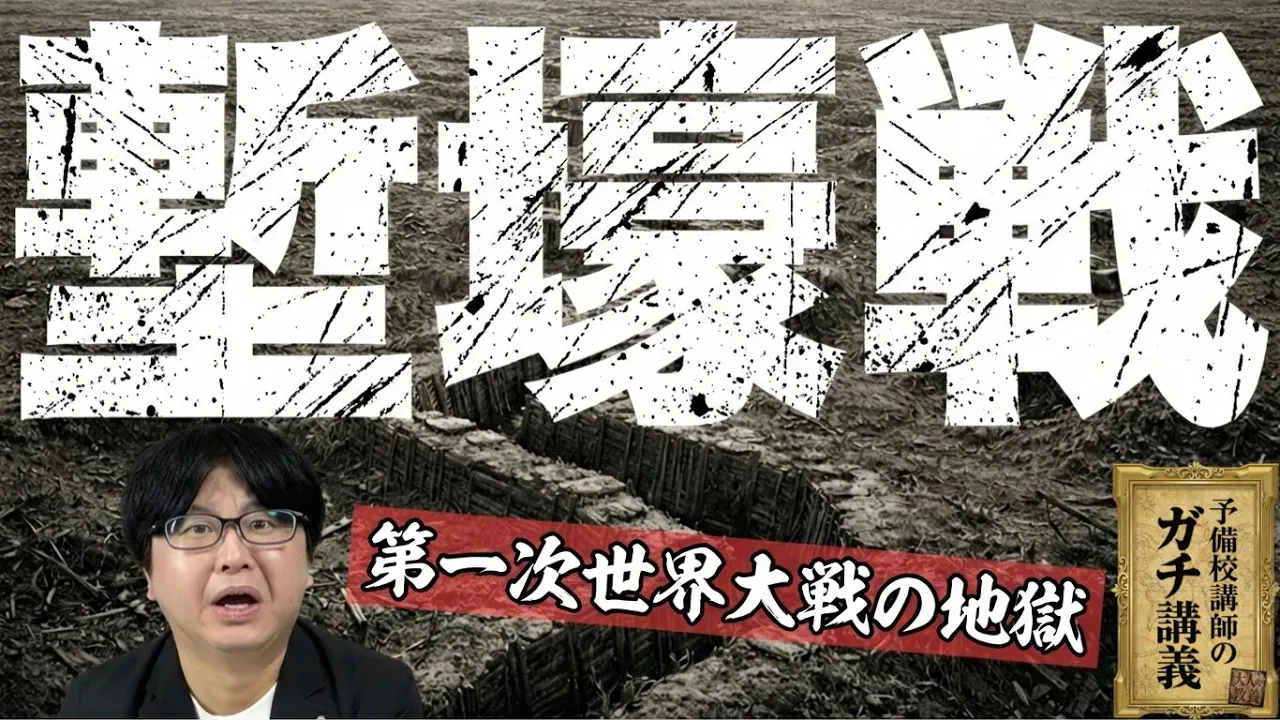
So one of the very important features of World War I was trench warfare.
This is really what we see here, people digging themselves in and staying in those trenches for months and years, really, and to experience war as no more than people firing at you and then being sunk in mud.
Mud is the most important sensory material that people actually remember about the war.
World War I is also important because chemical warfare was introduced.
And so in this image, we see actually British soldiers who suffer from poison gas in World War I. Just looking at these images, we can see that this is really not a glorious war.
It is not a heroic war.
Is it a war that is impossible to romanticize when you're stuck in those conditions.
There's almost no way you can prove that you're a brave person.
Personal bravery doesn't really come into play under those conditions of war.
So it is a war that is impossible to feel good about.
No matter how brave you are, you can't get a satisfaction that comes from that kind of bravery.
And so there are a number of consequences of that impossibility of feeling heroic, impossibility of getting any kind of emotional satisfaction from fighting.
Paul Fussell, who's a very insightful and important critic, wrote a book called, The Great War and Modern Memory.
And this is kind of a celebrated classic on war and narration and this is what he says.
Well, he claims, "The primal scene is undeniably horrible, but its irony, its dynamics of hopes abridged, is what haunts the memory.
I'm saying that there seems to be one dominating form of modern understanding that it is essentially ironic, that it originates in the application of mind and memory to the events of the Great War." And the Great War is World War I.
So Paul Fussell claims that the war structures human experience, both those who were actually fighting and civilians back at home or people who come back to civilian life as basically an ironic structure through which we experience the world.
What does that mean?
We'll be looking more to think about what it means to experience the world through the lens of irony.
But right now, we can also get a little bit of what Fussell means just from this one passage.
It has to do with the dynamics of hopes abridged.
What does it mean to live without any kind of hope for yourself or for the outcomes of war?
And sometimes hope is not even linked to victory, which is a really radical claim.
That it doesn't really matter if you're on the winning side.
That doesn't really give you grounds for hope. why would that be the case?
And then the other claim that Fussell is making is that irony is basically a mental structure, the structures of memory as well.
It's not just our immediate reaction to war when you're going through it, that you can make ironic comments about things that are happening.
But when you think about it, when you bring it back to your mind afterwards, the irony is the structure by which you recall something and live that event over again.
What does it mean to have an ironic recall in relation to your own experience?
So let's look at Paul Fussell's claim through three authors who have written very memorable things about those phenomena.
And I'm very glad to be able to talk a little bit about Farewell to Arms. We're not reading Farewell to Arms in this class.
Some of you might have read it on your own.
But this is a celebrated moment in Farewell to Arms talking about the effect of war on language and how it makes it impossible for us to use certain words.
This is the protagonist Frederic Henry, "I was always embarrassed by the words sacred, glorious, and sacrifice, and the expression in vain.
We had heard them sometimes standing in the rain almost all out of earshot so that only the shouted words came through and had read them on proclamations now for a long time.
And I have seen nothing sacred, and the things that were glorious had no glory, and the sacrifices were like stockyards in Chicago if nothing was done with the meat except to bury it.
Abstract words such as glory, honor, courage, or hallow were obscene beside the concrete names of villagers, the number of regiments and the taste. " This is Hemingway writing in Farewell to Arms, but in some sense this really describes the whole Hemingway that we know, the importance of days, the importance of places, the importance of numbers.
This is a lifelong habit for Hemingway, and here we in some sense see the origins of that way of writing, very clean, very economical, very not thrilling kind of writing is in some sense a response to the circumstances of war.
It's almost as if war makes it impossible to do a romantic kind of writing.
And Hemingway's writing is kind of the counterpoint to a flowery, to a heroic, to a romantic kind of writing.
So on the level of use of words, certain words just become impossible to use.
But I think that irony also extends to a larger scale, which has to do really with the way we tell a story, whether or not we can tell a story in a straightforward fashion.
And Paul Fussell also suggests and I'd like to test this with Hemingway, is whether or not after World War I, it is still possible to tell a story in a completely linear, straightforward fashion.
Is there something about war that makes it almost necessary in order to tell a story from the side, tell it in a truncated version, tell it in a jumbled version as we've seen in Benjy, or tell it in some way that is mixed up?
All those things that we recognize in all three authors, maybe it has to do with war.
So right now, I just outlined some things to look for as we are reading these authors.
One is the twisted logic of events and that things are just not working out, not landing where we would expect them to land.
The possibility of symmetry of blame, which seems a logical consequence when we have no heroes.
And I will focus retelling of the past, not looking at the events frontally, but looking at it in a blurry fashion.
And that there could be some point in being blurry.
Usually being blurry is not a narrative advantage, but it could be that under some circumstances, blurriness is actually a cultivated effect and is designed to do something.
So there's work that is being done by being blurry.
Understated emotions we know something about.
Hemingway was famous for that, just giving us the minimal expression, understated emotions.
And then the possibility of counterintuitive outcome.
So this just a kind of schematic way of laying out some of the things that we're looking for that we'll test once again by looking at specific passages.
So I just said that Hemingway, Fitzgerald, and Faulkner all engage World War I in some fashion, but I should qualify that by saying that the engagement is sometimes quite oblique.
So Hemingway actually fought in World War I. He was an ambulance driver, and so he was actually in the war.
But he got wounded very quickly.
He got wounded after a few months.
He was out of commission for the rest of the war.
So he didn't actually experience World War I in any deep way.
And even though he talks about World War I in A Farewell to Arms, really his deepest experience with war is actually a war that came a little later, which is the Greco-Turkish War, a horrendous event.
I think it's safe to say that there really are no good guys in that war.
Both the Turks and the Greeks were equally reprehensible.
This is an image of the burning of Smyrna in 1922, and the first story that we'll be reading in In Our Time is "On The Quai of Smyrna." So this is the background to that Hemingway story.
And I'll be reading you two passages by Hemingway to think about what irony means for Hemingway.
First this is the image of the leader on the Turkish side, and Ataturk is actually the founder of Turkey, of present-day Turkey.
So a very important historical figure that also actually figures in Hemingway's account of that war.
So this passage is Hemingway once again going to cover the Greco-Turkish War as a war correspondent.
He was writing for The Toronto Star, and this is the news article that he sent to the Toronto Star.
"It is oil that Kemal"-- Ataturk --"and company want Mesopotamia for, and it is oil that Great Britain wants to keep Mesopotamia for, so the East that is disappointed in Kemal the Saladin because he shows no indication to plunge into a fanatical holy war, may yet get the war from Kemal the businessman."
So this actually has kind of a current resonance.
It's about oil in the Middle East. And what's frustrating about Ataturk to the religious side, Islamic side, is that he turns out not to be a fanatic at all.
He's totally cool and completely deliberate and deliberative in his moves.
He was not going to plunge into any unwise war.
So you're not going to get someone fighting a fanatical religious war.
War is not going to happen because of religious fanaticism.
Instead, war is going to happen because of a very familiar kind of economic rationality.
That is really the irony that Hemingway as a war correspondent is pointing to is that some wars are highly rational.
We can't really say it is an irrational war.
We can't really say that the war is bad because it's irrational because some wars are highly rational.
And this is supremely ironical.
Hemingway is not pro-war.
All he is saying is that this is a war that is driven by economic rationality.
So this is one side of irony is that things are not lining up.
The good guys don't look like good guys, and the bad guys are bad guys not because they look like the bad guy that we would expect bad guys to look like.
So it happens on the largest possible scale.
It's really the global geopolitics of war that's creating this monster that is Ataturk but who's also a model of economic rationality.
So the other bit of irony of war is actually what we'll be reading is the first story in In Our Time "On The Quai of Smyrna" And this is the concluding paragraph of that story.
"The Greeks were nice chaps, too"-- the losing side --"The Greeks were nice chaps, too.
When they evacuated, they had all the baggage animals they couldn't take off with them, so they just broke the four legs and dumped them into the shallow water.
All those mules with the four legs broken pushed over into shallow water.
It was all a pleasant business.
My work, yes, a most pleasant business."
So much for the brutality of the Turks, and so much for the victimhood of the Greeks.
Victimhood is something that actually expands from those who experience it into a condition that they then confer on other people.
There's no glory, there's no moral advantage to being a victim in a war because the victims are just as reprehensible as the victors.
So this is really, I think, what Paul Fussell means by saying that there's really an abridgement of hope in a war like this is that we can't really go and fight for the Greeks because they are victims of the Turkish aggressors.
You can't really say that because the Greeks are aggressors, too, on their own mules on their own animals of transportation.
So it is a world that is in some sense has been empty of moral meaning, empty of moral virtue.
And to the extent that that makes it impossible to take sides with any satisfaction.
It is a very, very desolate landscape, emotional as well as moral landscape.
So this is really what irony means for Hemingway is that it is an impossible place to inhabit.
It is unbearable to talk about it directly or straightforwardly.
And the only way you can talk about it is being ironic and talking about it in a particular tone of voice.
So a very important component of irony is the tone of voice, and in that sense, our senses are important to use.
Use our ears to listen to Hemingway as we read his words on the page.
So let's move on now to Fitzgerald and The Great Gatsby.
Fitzgerald actually did not have a very extensive experience of World War I either.
He actually enlisted, but he didn't actually get to fight in World War I. So this is a really interesting reaction of someone who wants to talk about a war as in some sense the central event of his generation but who didn't actually have a personal acquaintance with that central event.
So this is from The Great Gatsby.
At this point, we haven't been introduced to Gatsby, right, because you guys know that Nick Carraway is the one who's been telling the story for a good part of the time as The Great Gatsby begins.
And he's just meeting this fellow that he's making conversation with.
"'Your face is familiar, ' he said politely.
'Weren't you in the First Division in the war?' 'Why yes, I was in the 28th Infantry.' 'I was in the 16th until June 1918.' 'I knew I've seen you somewhere before.' We talked for a moment about some wet, gray little villages in France.'"
OK.
I can tell you we can go to the Gatsby and see that this is taken from The Great Gatsby but they could've been written by Hemingway, right?
Exactly all those points that he makes in A Farewell to Arms about the importance of the number of your division, dates, places.
Fitzgerald writes exactly as Hemingway says people would write under conditions of war.
Because those are the only details, completely unemotional, factual, plain numbers, plain geographical facts.
Those are the only things you can bear to name because to name anything else is in some sense an insult to your own experience and an insult to the English language.
So I don't think that most of us actually think about The Great Gatsby as a war novel, and it is not.
So don't think that I'm trying to create a reading of The Great Gatsby based on the importance of World War I. No.
It's not a war novel, but it is significant that this person that Nick is talking to is Gatsby, of course, and that they do have World War I in common, that they both actually were combat soldiers in World War I. And that's part of the bond between Nick and Gatsby, what it means for that to be the beginning of the relationship between the two of them.
In that sense, The Great Gatsby is shadowed by World War I, and we can think of various ways in which war or the phenomenon of war functions as a shadow, an unspoken, barely alluded to but nonetheless not inconsequential, not trivial event that we should bear in mind as we read on about Gatsby and about Nick.
You shouldn't be surprised that we'll be moving on to Faulkner.
And I should tell you something about Faulkner which is really very unheroic.
We've been talking about World War I as a very unheroic war, but Faulkner's own conduct is especially unheroic.
Faulkner actually went to Canada in 1918 to enlist in the Royal Air Force.
So he enlisted, never saw action.
His brother actually was seriously wounded in World War I. But for the rest of his life, Faulkner actually claimed that he actually fought in World War I.
This is not something that he claimed for awhile, not like 1919 or 1920.
1943.
He's still claiming to his nephew that he was in action in World War I. This is kind of a shocking fact about Faulkner.
I don't know what to do with that except that it's just there in his biography.
So Faulkner writes to his nephew, Jimmy Faulkner, "I would have liked for you to have had my dog tag, Royal Air Force, but I lost it in Europe, in Germany.
I think the Gestapo has it.
I'm very likely on the records right now as a dead British flying officer spy." So that's just a fact, and we can do what we want with that.
Faulkner did write a novel called Soldier's Home.
I'll give you the reference.
His first novel is actually about a veteran coming back.
So I will put that on the website.
So he actually does write about World War I, but for the most part he's not known as someone who writes about World War I. And instead, we can say that there's shadows of World War I in all his writings about the American Civil War, which is obviously what is appropriate to Faulkner to write about.
And he's not making anything up when he's writing about the American Civil War.
What is interesting about Faulkner's writing about the American Civil War is that of the three authors, Faulkner is actually the only author that gives us a heroic, idealistic, possibly romantic image of war.
Someone who did not fight in World War I can actually give us a utopian account of war.
I think that it's interesting that Hemingway would not be capable of writing anything like this even about a Civil War though he's idealistic about the Civil War, as well.
Faulkner is the only person because of his complicated relation to World War I. That for him, the Civil War is actually an affirmative moment in a kind of twisted, counterintuitive way.
So this is a novel that we won't be reading, but it's a great novel, so I encourage you to read this on your own if you have a chance after this class.
But it's really about a Civil War as the background to the novel in the sense that it doesn't really appear in it.
But a good part of it-- some of it-- is about the women left behind.
And I'll just read you this moment, and then we can talk about it.
"Not as two white women and a negress, not as three negroes or three whites, not even as three women, but merely as three creatures who still possessed the need to eat but took no pleasure in it, the need to sleep but from no joy in weariness or regeneration." "We grew and tended and harvested with our own hands the food we ate, made and worked that garden just as we cooked and ate the food which came out of it: with no distinction among the three of us of age or color." "It was as though we were one being, interchangeable and indiscriminate."
We already have seen in The Sound and Fury that for the races to be interchangeable and indiscriminate between Caddy and Luster is a good thing for Faulkner.
And here, the Civil War is what enables that breakdown of racial distinction to take place.
Usually, being interchangeable is not really a good quality for us.
It's an insult to our individuality.
But here, it is under the circumstances of deprivation, when all you can do is just to keep your body afloat, just to make sure that you can put something into your belly.
When that is the basic condition of life and when everyone has to work towards the fulfillment of that condition, then race really doesn't matter.
So this is a really-- for Faulkner-- really emblematic moment when whites as well as blacks have to work just as hard, that labor is just a given for the mistress as for the slaves.
And when there's just a complete commingling of lives in every aspect of daily life.
For Faulkner, that is one of the consequences of the Civil War is that even though there is a battle going on and deadly consequences of the battle that are dividing the nation in one sense.
Nothing can be more divisive than a Civil War.
Even though the nation is being torn apart by war, there is a strange kind of healing, a strange kind of unity that's coming from that division, which is the very local, very personal, everyday unity between those who were left behind to tend for themselves and the necessity of acting as one.
So it's three people, blacks and whites, acting as one and war as the necessary conditions, really the genetic wrong for that kind of configuration of three people acting as if they were of one mind and of one body.
It is a supremely utopian vision of war.
And ironically, both for good and ill, it is Faulkner, who never fought in World War I, who is capable of imagining that Utopian possibility.
So I would say that this is a kind of irony that Paul Fussell wasn't really thinking about.
For him, irony is basically is kind of a negative phenomenon.
But I would argue that we can actually also extend Paul Fussell's insight to say that the irony of war is such that one of the counterintuitive outcomes would actually include an affirmative understanding of war.
And actually, we see this all the time, the bond among comrades, GI's bonding.
That's just the phenomenon that we know about.
And what Faulkner is really talking about in some sense is the similar bond among the women, parallel to this kind of important emotional and social bond under conditions of great divisiveness.
All of which is to show that there's actually no good resting place.
And this is really what I would say about all three authors is that I think that all of us want to bring them to rest at some point and they do come to rest in our own minds.
But I think that it's always possible to give yet another twist to interpretation of what is going on and the range of possibilities that emerge from any one event.
So this is really what's wonderful and challenging about those authors is that something that seems to come to an end at one level, actually if we just look at the largest possible level and the divisiveness on the level of geopolitics, it turns out that this actually [? unifying?]
level on a much smaller scale.
So what seems a tragedy on one level can turn into a kind of a comedy of sorts.
Not straightforward comedy either, but comedy in the sense that allowing some hope to emerge.
So I would amend Paul Fussell's argument about the abridgement of hope in some way as well.
It's that yes, there is an abridgement of hope, but there's also the possible reconstitution of hope.
And what we are seeing in Absalom, Absalom!
is in some sense the reconstitution of hope.
So I'm going to stop right here.
And once again, for those of you who came in late, let me just say that I'll be talking a little bit about writing in this class.
This class fulfills the writing requirement.
And also I'll ask all of you to sign both the sign-up sheet and also put down on the index cards your preferences for sections.
Up Next

46:43
Nabokov's Lolita: Censorship, Art, and the Death of Play (Part 3/3)
@YaleCourses
157.9K views•2008-11-21

13:43
Formalism in Literary Criticism: An Academic Lecture Overview
@mattalberhasky9952
39.1K views•2015-08-05

50:06
Faulkner's The Sound and the Fury: Benjy's Narrative & Innocence
@YaleCourses
58.1K views•2012-04-05

15:25
1984: Orwell's Dystopian World and the Mechanisms of Totalitarianism
@AlternateHistoryHub
7M views•2017-03-04
Related Study Plans & Knowledge Roadmaps
Structured learning paths in Literature
literature
Graphic Memoirs: Visual Art, Trauma & History
01Foundations of Sequential Art and Visual Language
02Autographics and Processing Historical Trauma
03Visualizing Personal Trauma, Grief, and Graphic Medicine
+ 2 more learning modules
14h5 modules
Explore Roadmap
literature
Campus Novels: Evolution, Themes & Critique
01Introduction to the Campus Novel Genre
02Mid-Century Satire and the Post-War Academy
03Dark Academia and the Critique of Privilege
+ 2 more learning modules
14h5 modules
Explore Roadmap
literature
Theater of the Absurd: Philosophy & Plays
01Postwar Existentialism & Historical Roots
02Dismantling Narrative: Esslin & Absurdist Conventions
03Samuel Beckett and Tragicomic Existentialism
+ 2 more learning modules
12h5 modules
Explore Roadmap
literature
Revenge Tragedy: Justice, Madness & State
01Foundations of Early Modern English Theatre
02Anatomy of Revenge: Structural Conventions
03Psychological Complexity: Madness and Melancholy
+ 2 more learning modules
15h5 modules
Explore Roadmap