






![[ESTÉTICA] EISENSTEIN e sua MONTAGEM INTELECTUAL](https://i.ytimg.com/vi/hZPQjcJBDk8/maxresdefault.jpg)






Soviet Montage theory, developed by Russian filmmakers after the 1917 revolution, established that the power of cinema lies in how shots are edited together—specifically through techniques like intellectual montage (juxtaposing unrelated images to create new meanings), tonal montage (grouping similar emotional shots), metric montage (cutting on fixed frame counts), rhythmic montage (matching cuts to music or action), and overtonal montage (combining all approaches)—transforming film from passive storytelling into an active tool for shaping public opinion and political propaganda.
Soviet Montage Theory in Film History | Educational Analysis
Added:Basic concepts of film editing, specifically classical continuity editing (the Hollywood style) which prioritizes seamless, invisible transitions.
The historical context of the Bolshevik Revolution of 1917 and the early Soviet state's focus on using cinema as an educational and propaganda tool.
The Kuleshov Effect, which demonstrated how viewers derive more meaning from the interaction of two sequential shots than from a single shot in isolation.
The fundamental limitations and creative strategies of the silent film era, where visual storytelling and pacing were paramount due to the lack of synchronized dialogue.
Sergei Eisenstein's five methods of montage (metric, rhythmic, tonal, overtonal, and intellectual) and how they function in his film 'Battleship Potemkin'.
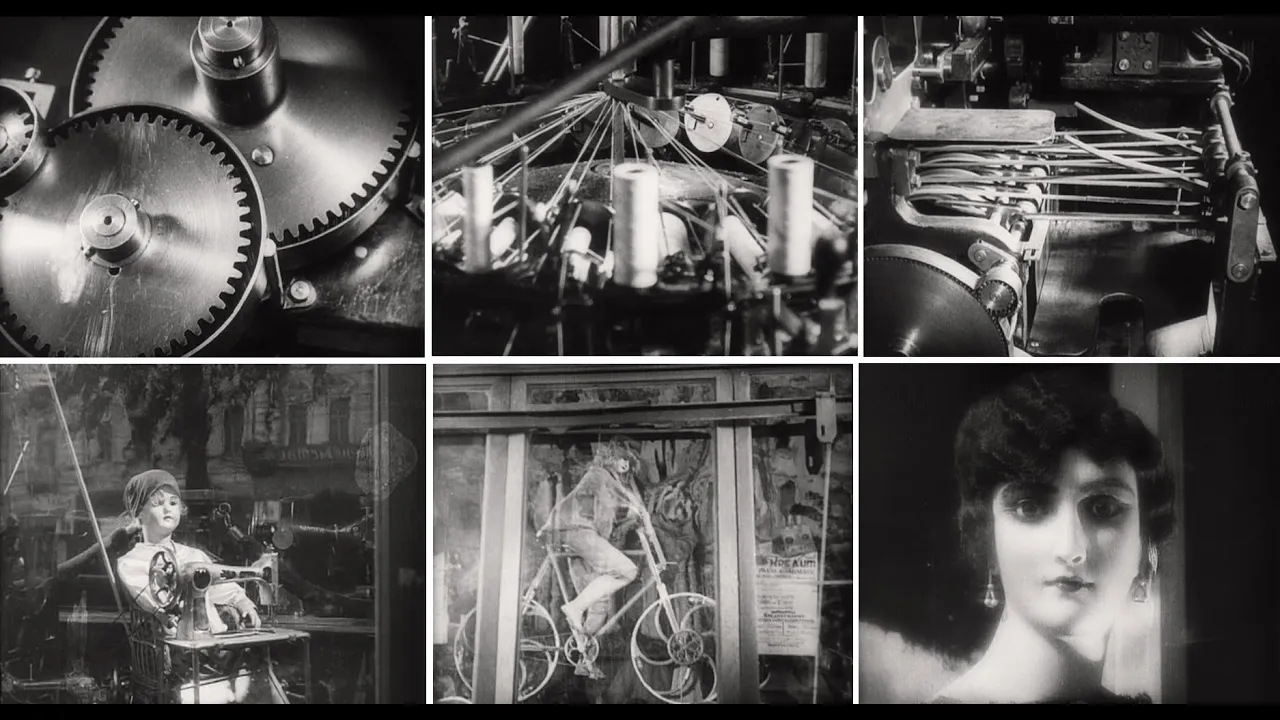
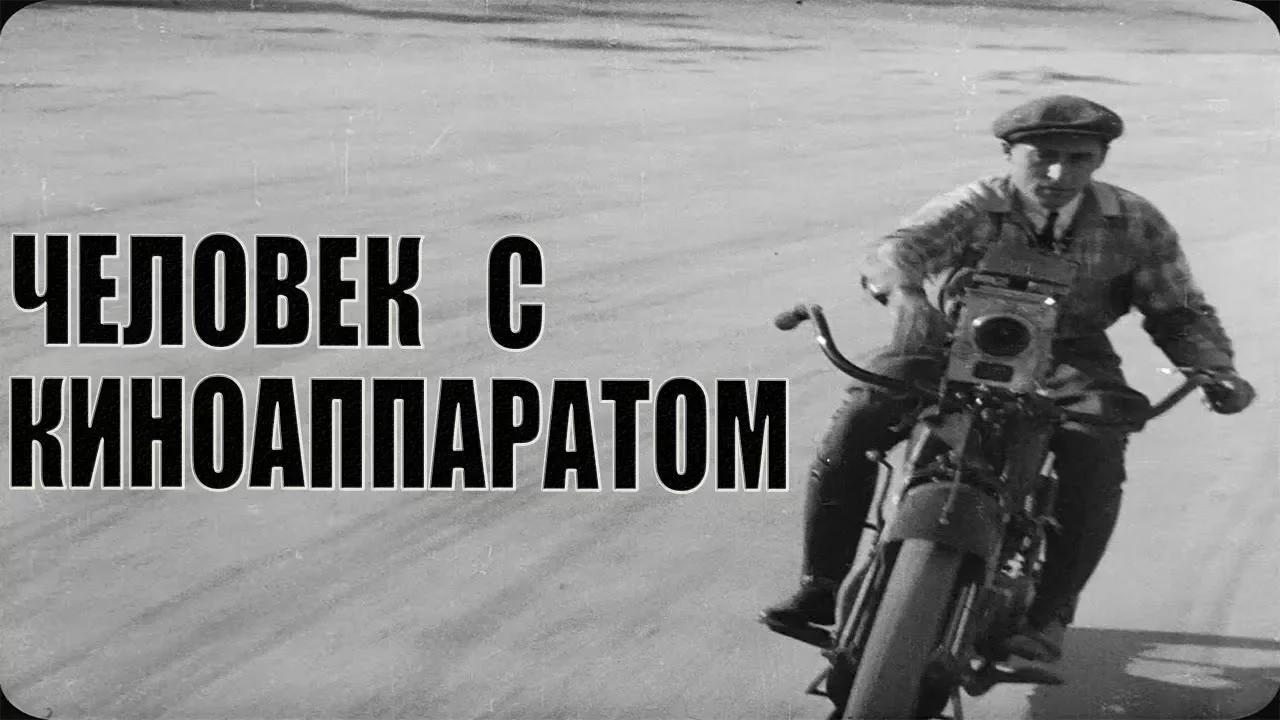
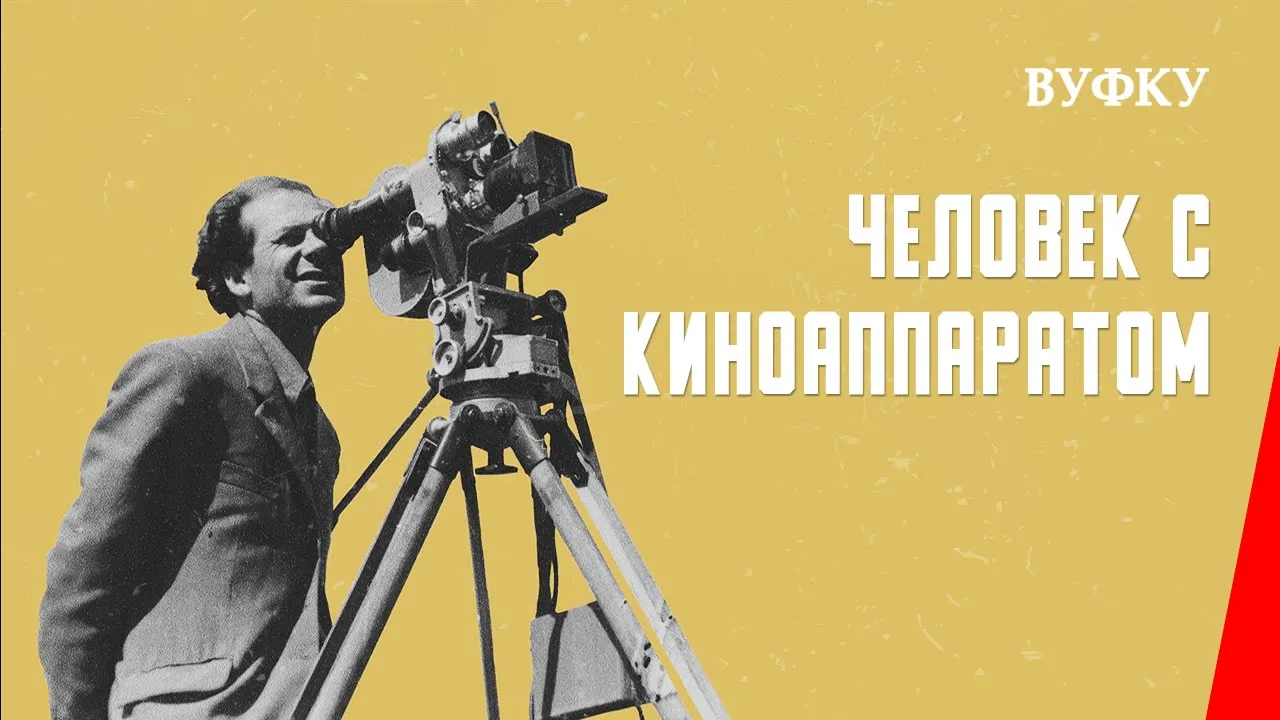
Dziga Vertov's 'Kino-Eye' theory and how it challenged traditional narrative filmmaking through experimental documentary editing in 'Man with a Movie Camera'.
The global legacy of Soviet Montage on contemporary cinema, including its influence on the French New Wave, Hollywood blockbusters, and modern music video editing.
The contrast between Pudovkin's theory of montage as 'linkage' (building a scene brick-by-brick) and Eisenstein's theory of montage as 'collision' (conflict of shots).
560.9K views12.8Klikes12:29Original Release: 2017-06-01
The Russian Revolution marked the first major civil war fought in the age of cinema.
And the big winners in that struggle understood the unique ability of film to change minds and inflame hearts.
Today, we’ll meet a bunch of filmmakers who spent as much time studying films as they did making them.
We’ll see the founding of the world’s first film school.
And we’ll watch the rise of a cohesive, self-conscious, and game-changing film movement that would unlock the power of the cut to create meaning, shape public opinion, and call a hungry populace to action.
It’s time to cut... to Soviet Montage.
[Opening Music Plays] In 1917, the second of two violent revolts in Russia, led by Vladimir Lenin, overthrew the Tsar and brought the Bolsheviks to power.
“Bolshevik” means “majority” in Russian, by the way, and this political movement grew from the peasant and working classes who acquired their power through persuasion and force.
That’s important.
You should remember that.
Because the resulting government, ruled by what would become the Communist Party, was organized around principles of workers’ rights, state control of industry, and the suppression of dissent.
So the government took a strong interest in film, because it recognized cinema for what it was – a powerful tool for social and political influence.
But before it could get that engine started, the party had a few obstacles to overcome.
First, it needed to centralize the Russian film industry.
Prior to the revolution, there were a lot of production companies, mostly making pro-Tsarist films.
In 1918, the new Bolshevik government did what Germany had done in creating UFA – which we talked about last time.
They took over the studios, combining them to form one state-owned company called Narkompros, also known as The People’s Commissariat for Education.
Second, and more importantly, there was virtually no raw film stock in the country.
You're gonna need film stock if you're gonna make films.
The revolutionary government choked off imports, and Russia didn’t have the capacity to manufacture much of its own stock.
So, some enterprising Russian filmmakers took a different approach.
They started studying films.
What?!?! That’s what you’re doing right now!
And they didn’t just watch them; they dissected them.
Literally.
They took the actual reels of film, cut them apart, and analyzed them.
How long were the shots?
What was the camera angle?
How was the image composed?
How did they do the thing?
And most importantly, how were the shots edited together?
In what order, and why?
Then they began experimenting – rearranging the order of the shots, shortening some, repeating others – all to see what the effects might be.
To encourage this experimentation, the government founded the world’s first film school in 1919.
It was called VGIK, or the State Institute of Cinematography.
The most well-known and influential teacher at this new school was the filmmaker Lev Kuleshov.
And his most famous discovery bears his name and provided his students with the cornerstone of a new cinematic philosophy.
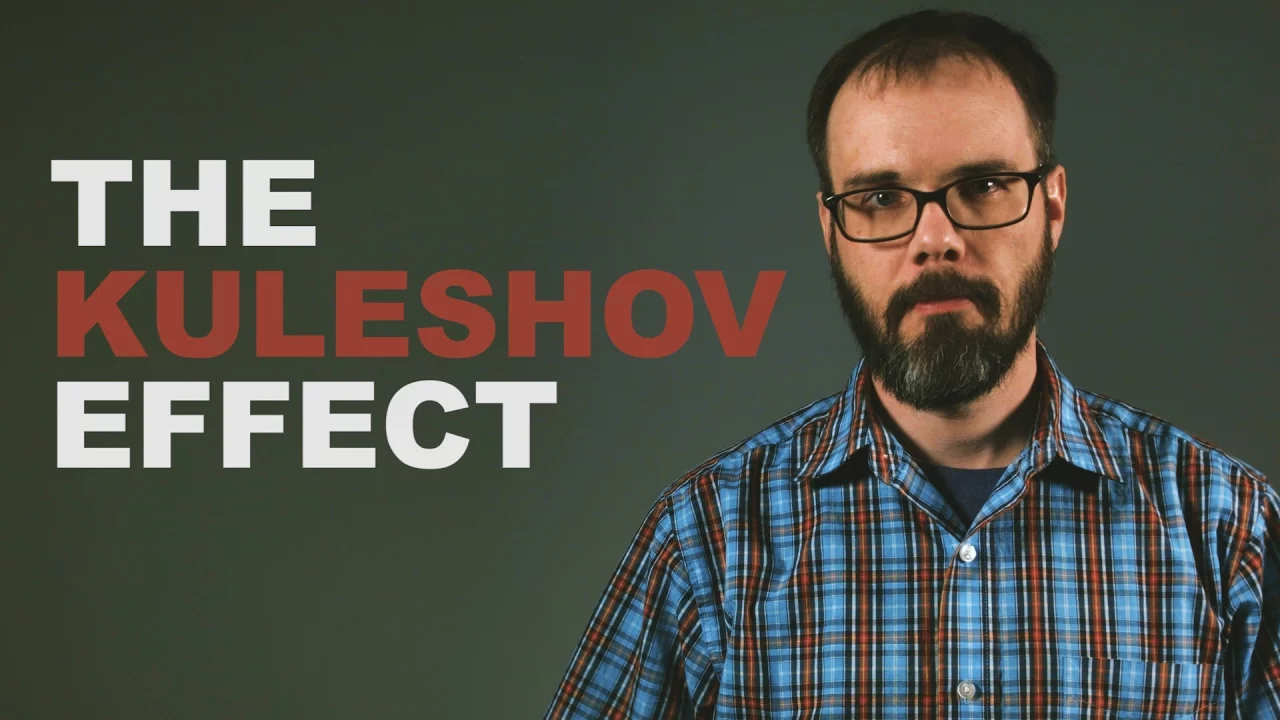
What he discovered is now known as the Kuleshov Effect, and it came to light like this: Kuleshov took a shot of a well-known Russian matinee idol named Ivan Mosjoukine staring off-camera with no expression.
He then cut to an image of a bowl of soup, and then back to the shot of Ivan.
When he asked viewers what Ivan was feeling, they said he was hungry.
Kuleshov then took the same footage of Ivan, but this time intercut it with a shot of a girl in a coffin.
Now, the audience said Ivan felt sad.
Finally, Kuleshov projected the shot of Ivan, then cut to a woman on a couch.
The viewers said he was feeling desire.
The Kuleshov Effect suggests that viewers draw more meaning from two shots cut together, than either shot on its own.
And the Soviet filmmakers believed that phenomenon was the true power of cinema, something no other art form can do: juxtapose two images in real time to create a new, and sometimes unrelated, meaning.
It’s also one more example of film as an illusion of reality.
Kuleshov took Georges Méliès one step further: not only can a cut be used to hide a magic trick, it is a magic trick!
And that wasn’t Kuleshov’s only contribution.
Or his only illusion.
He also developed a concept called Creative Geography, also known as Artificial Landscape.
This effect can be created when two segments of film shot in entirely different locations are cut together to make them appear to be happening in a continuous space.
If you’ve watched Doctor Who, this is how they make it seem like the TARDIS is bigger on the inside.
Just kidding. It actually is!
We call the overarching theory of film developed by Kuleshov and his students Soviet Montage.
Montage comes from the French word, meaning “assembling” or “editing” or... "montage."
And the theory of montage proposes that films derive their ultimate power and meaning through the way the shots are cut together – their order, duration, repetition, and rhythm.
Beyond that, Soviet Montage filmmakers believed that for film to reach its true potential, the cuts themselves should be visible.
The audience should be aware of them.
That the illusion should be obviously constructed, and not hidden.
We call this style of editing discontinuity editing, and it fit quite neatly into another political idea the Soviet Montage filmmakers had: that the artist was an engineer, simply another worker, joining shots the way a brick-layer builds a wall or a factory worker assembles a vehicle.
For these folks, the process of filmmaking was as much a political statement as the movie itself.
Within Soviet Montage, there are a lot of ways to juxtapose images.
There’s Intellectual Montage, for example, which refers to the juxtaposition of two otherwise unrelated images to create a third idea in your mind.
This is the purest form of Soviet Montage, and Kuleshov’s experiment is a perfect example.
Ivan’s face juxtaposed against soup equals hunger.
Tonal Montage puts together two or more shots that have similar tonal or thematic qualities.
The idea here is that these shots build on one another and reinforce the emotional or psychological meaning the film is trying to convey.. Two rams butting heads next to a fist next to people rioting and you’ve got images that may make you think of conflict.
But, a flower opening next to a baby yawning next to a sunrise might be beginnings.
To take a great – and decidedly non-Soviet example – think about Dumbledore’s death scene in Harry Potter.
The shots between Snape and Dumbledore are drawn out, still, each wrestling with his emotions, followed by Dumbledore’s slow-motion fall.
Metric Montage dictates that shots are cut after a specified number of frames, regardless of what’s happening in the shot.
This can be quite jarring, as on-screen actions are interrupted, but the rhythm of the editing itself has a psychological effect.
The speeding up or slowing down of edits can greatly affect the amount of tension the audience is feeling.
There are moments in the famous shower scene from Psycho where Hitchcock uses this technique, cutting between the knife and the victim without regard for continuity, tone, or musical rhythm.
And, any modern action movie tends to pick up the pace of the editing as the fight scenes pick up intensity.
Rhythmic Montage, on the other hand, matches the cuts to music, sound effects, or action on screen.
Marching feet or beating drums.
Modern movie trailers do this all the time, using music to link various shots from a movie.
And finally, overtonal Montage is the combination of metric, rhythmic, and tonal montage.
One of the best examples of Overtonal Montage comes from the final stand off in The Good, The Bad, and The Ugly.
we see Tonal Montage in the Mise en Scene. Desert, cracked Earth, tired and weathered faces, a cemetery, this is the end, death is coming.
[Craig sings theme from The Good, The Bad, and The Ugly] Rhythmic Montage is pretty obviously used as the scene is punctuated with cuts of the 3 gunslingers based on the rhythm of Ennio Morricone's incredible score.
Finally, Metric Montage.
We begin the sequence is long cuts but as the intensity picks up, we cut faster and faster and faster UNTIL!
Now, imagine you’re a Soviet Montage filmmaker, and you’ve spent months or years studying films and developing your theories.
What happens when you finally get your hands on some fresh film stock in the early 1920s?
That’s right.
You start making films with a vengeance.
Not, like, films with "a vengeance" in the title, like Die Hard with A Vengence but like, you make films with the attitude of vengeance.
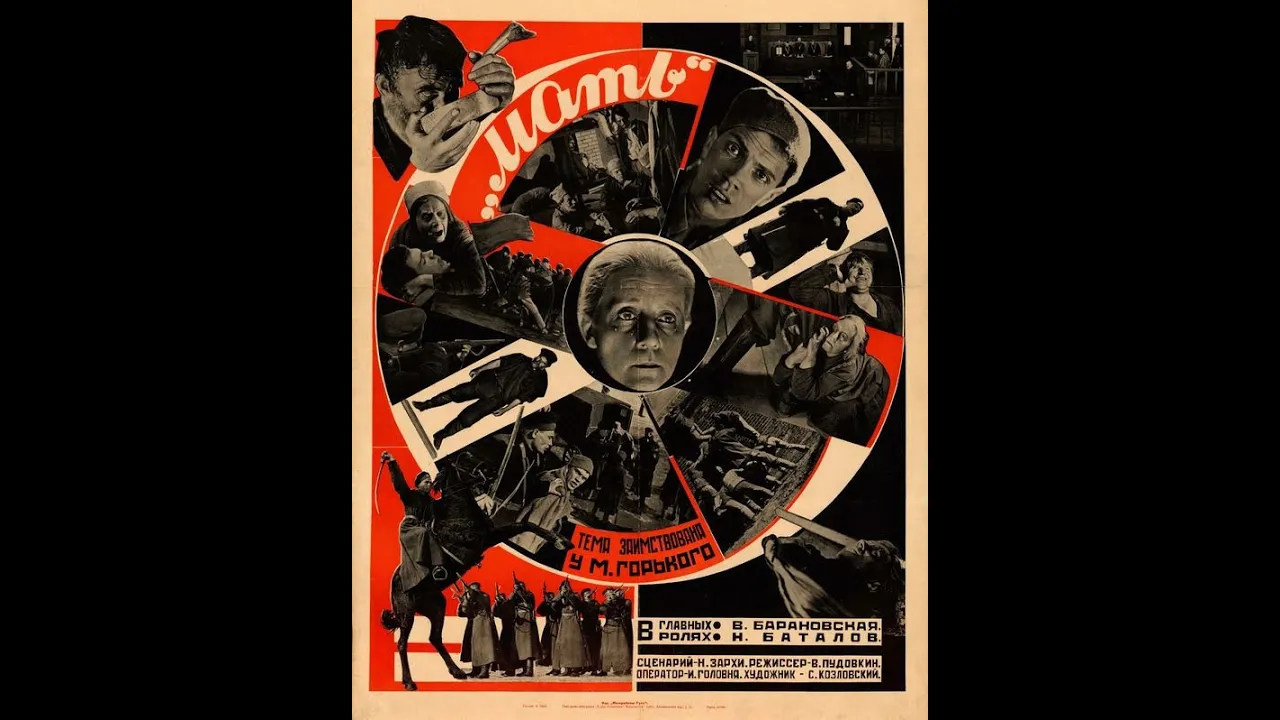
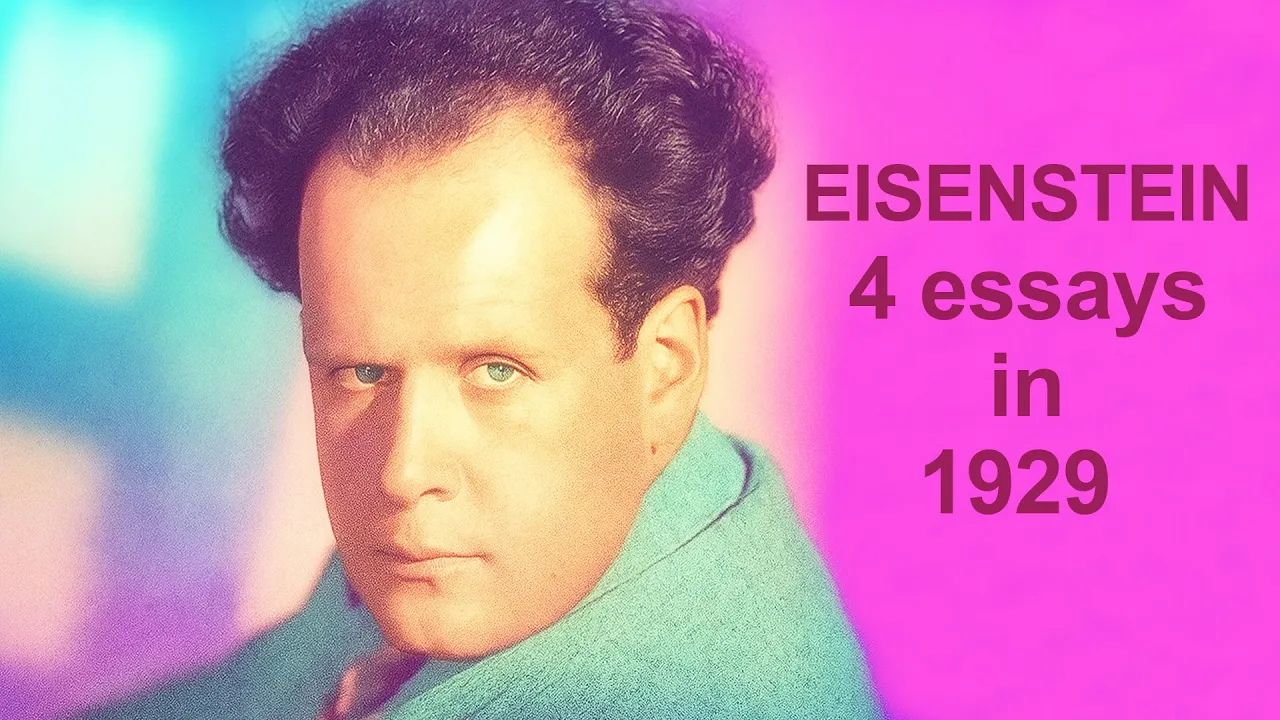
One of the most influential Soviet Montage filmmakers was a former engineering student named Sergei Eisenstein.
It was Eisenstein’s second feature film, Battleship Potemkin, that launched him to international fame and provided a blueprint for how filmmakers could incorporate Soviet Montage theories – particularly intellectual montage – into fiction films.
Made in 1925, Battleship Potemkin tells the true story of a mutiny aboard a Russian battleship in 1905.
Rather than focus on a single protagonist, the film dramatizes the miserable conditions of the sailors as they toil under officers who beat them and deprive them of food.
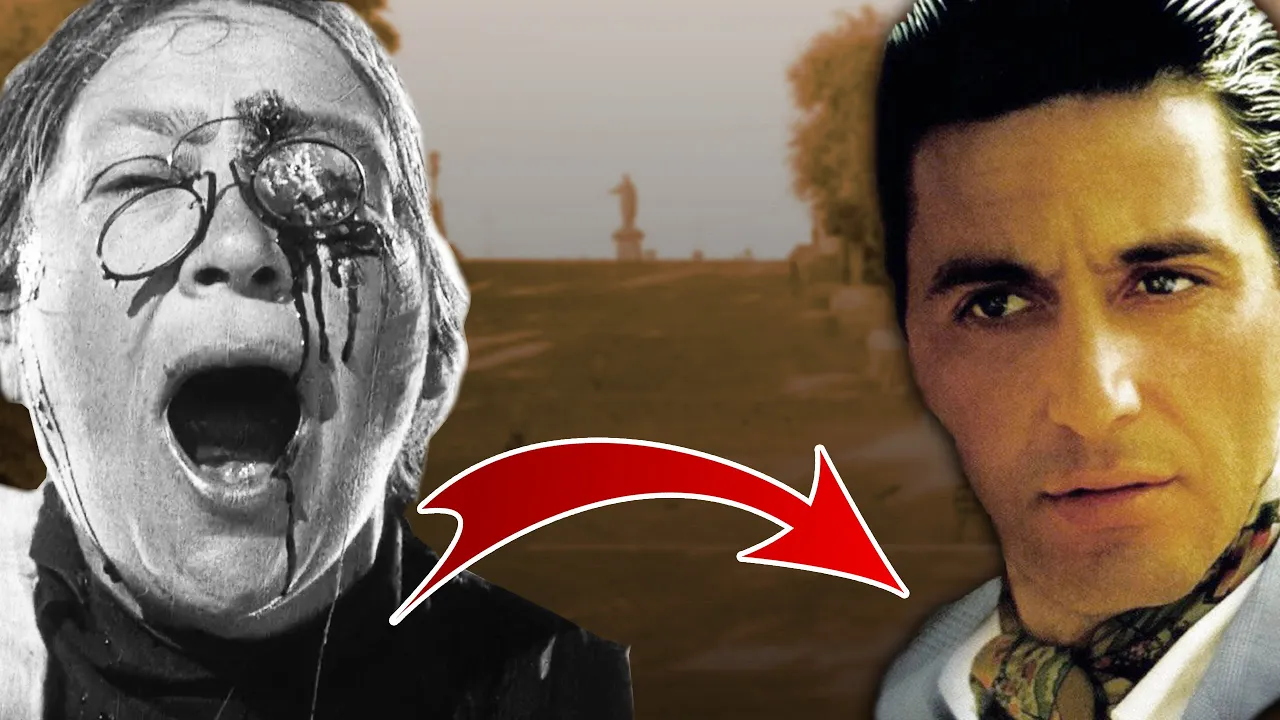
In the film’s most famous section, the Odessa Steps Sequence, the sailors are cheered on by the people of Odessa… until Tsarist troops show up and slaughter the crowd.
The shots themselves are fairly horrifying – bullet wounds, trampled children, anguished parents, a baby carriage rolling perilously through the middle of the battle.
But Eisenstein’s real innovation lies in the use of montage to bring life to the chaos, madness, and violence of the action.
Eisenstein wanted the juxtaposition of sometimes-unrelated images to jolt the audience out of their complacency.
The film is also a powerful piece of propaganda, which we’ll define as a biased or misleading communication designed to promote a particular point of view.
And just because something’s propaganda doesn’t mean that it’s false.
The Tsarists really did put down a revolt in Odessa in 1905!
But by making the sailors and civilians so innocent and the officers and Tsarist troops so cruel, the film comes down on one side and stokes the viewer’s outrage against the other.
We’ve seen this before – in the egregious re-writing of American history in Birth of a Nation – and we see it today – in everything from political ads to issue documentaries.
Film was and remains one of the most powerful tools of persuasion in the world.
Another Soviet filmmaker who excelled at persuasion, but took a different approach to montage, was the documentarian Dziga Vertov.
Vertov began his career as an editor in 1918, before becoming a cameraman and travelling around the country taking newsreel footage.
Vertov was an opinionated and rigorous thinker, and he banded together with other like-minded documentarians to propose their own ideas about film.
They called themselves “Kinoki” or “Cinema-Eye” and wrote manifestos dissing fiction films.
They believed that only documentaries could be true and honest.
Vertov’s goal was to use the camera to record quote-unquote “reality,” and then arrange his shots using montage to create pure meaning, rather than tell a story.
His masterwork is The Man with the Movie Camera, made in 1929.
It follows a day in the life of a city, from empty streets and sleeping figures through work and meals and evening traffic.
Actually, the film is as much about the process of making the film as it is about anything else.
We see the cameraman shooting the footage.
We see the editor, Yelizaveta Svilova, who was also Vertov’s wife, choosing shots and cutting them together into sequences that we then see unfold on screen.
Vertov uses special effects, freeze frames, special camera rigs, animation, compositing, even non-linear editing – all the tools cinema had at the time.
He painted a portrait of his city, its people, and the artist as an engineer, pulling back the curtain to reveal the truth of how the film was made.
But of course, as we’ve talked about, film is ultimately an illusion of reality, not reality itself.
Film scholars have long recognized that however useful Vertov’s theories were in making films, they don’t account for the fact that all moving photographs are by nature constructed realities.
Whether they’re in service of a fictional story or a documentary, they’re chosen and cut together to articulate a point of view.
Just as there’s very little “reality” in reality TV, so Vertov’s documentaries are simply a different use of the magic trick of film.
As power shifted to Stalin, western films began to pour back into the U.S.S.R., and film stock became more readily available.
And the government cooled on the esoteric Soviet Montage filmmakers.
Audiences wanted something more accessible, more emotional.
Socialist Realism, which began as a movement in literature, became the state-supported style of cinema.
Filmmakers were told to focus on realistic stories that supported communist values.
A sort of propaganda-through-relatability, rather than abstract theory.
A prime example of this is the 1935 film Youth of Maxim.
The story follows a naive, young factory worker in pre-Revolutionary Russia who helps his colleagues hide a subversive teacher from the police.
Over the course of the film, the young man is radicalized and eventually joins the Revolution.
Rather than use jarring cuts and juxtaposition, the film relies on a much more smooth, mainstream style, encouraging viewers to identify with the character and buy into the reality of the story.
That brought an end to the Soviet Montage movement.
As often happens, however, the techniques developed by the Soviet Montage filmmakers continue to influence cinema to this day, in everything from the shower scene in Psycho, to the latest music video.
And movie trailers… pretty much all the movie trailers.
Today we learned how the Russian Revolution led to a subsequent revolution in cinema.
We talked about how the Soviet Montage filmmakers believed editing was the most foundational element of film technique.
We looked at some of the filmmakers who put those theories into practice, and how their films worked as state-sponsored propaganda.
Next time, we’ll cross back to Hollywood to witness the Golden Silent Era and the rise of the studio system – where movies were made as art, entertainment, and commerce, more often than political statements – as the story of film continues.
Crash Course Film History is produced in association with PBS Digital Studios.
You can head over to their channel to check out a playlist of their latest amazing shows, like Brain Craft, It’s Okay to Be Smart, and Physics Girl.
This episode of Crash Course was filmed in the Doctor Cheryl C. Kinney Studio with the help of all these nice Kinoki and our amazing graphics team, is Thought Cafe.
Up Next

19:09
Soviet Montage Theory: Eisenstein, Kuleshov & Constructivism
@filmandmediastudieschannel
29.9K views•2021-01-31

23:14
Visual Analysis Essay: How to Analyze Graphic Novels in College Writing
@nataliepleimann5941
1K views•2020-10-14
12:06
Melodrama in 19th-Century Theater: Origins & Impact
@crashcourse
227.5K views•2018-09-07

4:00
Evolution of Darth Vader: Anakin Skywalker's Animated Journey Across Star Wars Films
@TellItAnimated
13.4M views•2019-03-30
Related Study Plans & Knowledge Roadmaps
Structured learning paths in Film Analysis
film-analysis
Sensory Cinema: Foley, Haptic Sound & Texture
01Introduction to Film Sound and Foley Artistry
02Micro-Sounds, Textures, and Extreme Amplification
03Haptic Audition and Film Phenomenology
+ 1 more learning modules
12h4 modules
Explore Roadmap
film-analysis
Breaking the Fourth Wall: Mockumentary & Satire
01The Invisible Wall: Basics of Cinematic Illusion
02Looking at the Lens: Direct Address & Character Glances
03The Mockumentary: Satire, Realism, and Complicity
+ 2 more learning modules
12h5 modules
Explore Roadmap
film-analysis
Analyzing the Long Take: Cinema, Space & Ethics
01Foundations of Film Grammar: Montage vs. The Long Take
02Choreography and Mechanics of the Simulated One-Shot
03Phenomenology of Film: Real-Time Spatial Continuity
+ 1 more learning modules
14h4 modules
Explore Roadmap
film-analysis
Anachronistic Music: Period Drama & Subversion
01Foundations of Film Sound and the 'Needle Drop'
02Traditional Authenticity vs. Revisionist History
03The Rise of the Anachronistic Soundtrack
+ 2 more learning modules
12h5 modules
Explore Roadmap