



















The Marvel Cinematic Universe operates as a simulated reality within a computer system, where characters like Deadpool and She-Hulk can break the fourth wall because their 'inhibitors'—which normally prevent awareness of the simulation—are damaged by their unique conditions (cancer/healing factor for Deadpool, and mutant powers for She-Hulk), allowing them to perceive the underlying digital architecture of the MCU.
Deadpool and the Simulation Hypothesis: An MCU Analysis
Added:The Simulation Hypothesis: Understanding Nick Bostrom's philosophical argument that reality could be an artificial computer-generated simulation.
Metafiction and Narrative Theory: Familiarity with literary concepts such as 'breaking the fourth wall' and self-referential storytelling.
Marvel Cinematic Universe (MCU) Canon: Basic familiarity with the narrative structures of 'Loki', 'She-Hulk: Attorney at Law' (specifically the meta-character K.E.V.I.N.), and the 'Deadpool' franchise.
Basic Neurobiology: Conceptual understanding of neuroplasticity (the brain's ability to reorganize itself) and neural inhibitors, as applied to cognitive adaptation.
Jean Baudrillard’s Simulacra and Simulation: Analyzing how massive media franchises construct hyperrealities where simulated representations replace the original reality.
Digital Physics and Holographic Principle: Exploring physical theories that propose the universe is fundamentally informational or holographic in nature.
Computational Narratology: Investigating how complex, multi-layered narrative structures can be modeled and analyzed using computer science and database frameworks.
Cognitive Science of Media Consumption: Studying how the human brain processes nested realities, meta-commentary, and the cognitive load of multiversal storytelling.
1.4M views56.6Klikes21:51Original Release: 2024-05-05
As we look forward to Deadpool and Wolverine this summer, and both Weapon X and the Merc with a Mouth's entrance to the Marvel Cinematic Universe, I'm here to tell you that the MCU is not what it seems.
The Marvel Multiverse shares more in common with a computer than a comic book, and the secret to unlocking that?
The fact that Deadpool can see you.
Oh, hello!
I know, right?
Hello Internet!
Welcome to Film Theory, the show that always knows when you're watching.
I can see you, Trevor!
Are you subscribed?
You should be subscribed, I'll know if you're not.
So it's no secret that the MCU has been in some rough waters lately.
For every certified banger like Loki or X-Men 97, it feels like we've had a misstep like Quantumania or Secret Invasion.
It's been choppy enough that both Disney and Marvel have taken a step back and allowed for the franchise to rest.
For a franchise that's had four movies per year in the past, the only one set to release in 2024 is Deadpool 3, featuring the return of Hugh Jackman as the fan-favorite hero that made his career.
And honestly, I'm really looking forward to this one.
Deadpool 1 and 2 were breaths of fresh air for the superhero genre, and the MCU could really use some of that energy right now.
So what's this new Deadpool and Wolverine movie actually about?
Well, it looks like Deadpool has been arrested by the literal continuity police over at the Time Variance Authority.
You know, the Time Gestapo from Loki.
Maybe for all that history-changing he did at the end of Deadpool 2.
Maybe not.
Deadpool is informed that Oh, thanks, Nick.
And the TVA needs Deadpool for some kind of community service that will presumably involve a lot of gunplay, sword-swinging, and dirty jokes.
You know, basic Deadpool stuff.
The thing that really stuck out to me here?
Just how aware that Deadpool is that there's a lot riding on this movie.
And I don't mean like, the movie is aware.
Literally, Deadpool the character seems to know that he has a lot of responsibility for the future of the MCU in our real world on his shoulders.
Now don't get me wrong, this sort of meta-humor isn't entirely new to Deadpool.
He breaks the fourth wall all the time in the comics and in his movies.
But this is amongst the first times, at least in his movies, that it's more of a plot point, more or less.
Which of course got my theorist brain doing the theorist thing and asking, why?
Why is the TVA, which has plenty of tech and hardware at its disposal, bothering with Deadpool?
This guy, who apart from his healing factor and big mouth, is just kind of really good at guns and swords?
Clearly they think Wade has something that they don't.
So, of course, I wondered, is there something more going on with this meta-analytical fourth wall breaking power than we first realize?
Well, friends, after diving into it, looking at all the examples I could find of this sort of ability across Marvel Multimedia, Deadpool's ability to break the fourth wall here tells us a lot more about the MCU than you might think.
Spoiler alert, the Marvel Cinematic Universe is not what you imagine, and it has a lot more in common with the Matrix or Digimon than you first think.
Suit up, loyal theorists, and do your best superhero landing.
It's time to get down and dirty.
But before we really dive into the nitty-gritty, we should clarify exactly what we mean by breaking the fourth wall.
It's one of those slippery terms that people in media use all the time, like Chekhov's gun or Save the Cat, without considering if people actually understand what they're saying.
The idea of the fourth wall dates back to live theater and the sort of pocket reality that theater characters exist in.
In these sorts of live productions, the first three walls were the sides of the stage and the backdrop of the set, while the fourth wall was the invisible one between the performers and the audience.
The audience can see in, but the characters in the play or movie or book or whatever cannot see out.
They are unaware that they're being watched, which makes it a big deal when a character suddenly does act like they can see the audience or talks directly to the camera or whatever.
That is breaking the fourth wall.
This matters because the ability to break the fourth wall is what really set Deadpool apart from a lot of other similar characters from the time when he was made.
It basically let Deadpool shatter the mold and become this massively popular character that he is.
See, Deadpool was created back in 1991 as a sort of villain of the week for the New Mutants.
And in this debut, he was basically just a guy with a cool costume, big guns, and a bunch of pouches.
Like, a lot of pouches.
It was a thing in the 90s.
Deadpool, real name Wade Wilson, was a sort of thinly-veiled, original OC Do Not Steal ripoff of the DC villain Deathstroke, real name Slade Wilson.
It was really not subtle.
Regardless, because looking cool and being connected to the X-Men was all you really needed to be popular in the 90s, readers loved Deadpool enough that he was given his own solo series.
But instead of just making another brooding anti-hero, writer Joe Kelly used the character to poke fun at the over-the-top, gritty, extreme 90s comics.
And eventually, this is where Deadpool first started dropping jokes about being aware that he was in a comic book.
Talking to readers, interrupting editor notes, you know, that sort of thing.
This caught on and became a staple of Deadpool's personality, with subsequent writers and artists leaning on the shtick so much that it's no longer just a funny thing that Deadpool does.
It's core to the entire Deadpool brand at this point, across movies, animations, games, you name it.
But what exactly is this?
Some sort of superpower?
A result of the experiments done on Wade?
At least in the films, that's always been the case.
Though he makes quips and jokes all throughout, Wade never directly addresses the audience until after he gets his powers.
Seriously, go watch the whole thing.
He only acknowledges us once he goes through the Francis Experiments, which This is even consistent with the Deadpool version that appeared in X-Men Origins Wolverine.
He didn't break the fourth wall until the post-credits scene, after he already had other mutant powers spliced into his body.
So was this just Deadpool's latent mutant power?
Not quite.
Though it's not outright stated in the film, it's heavily implied that the people giving Wade his powers were from the Weapon X or Weapon Plus program.
You know, the same project that bonded the adamantium to Wolverine's skeleton.
Their whole thing has always been grafting additional mutant powers onto people who didn't have them, rather than activating powers that weren't already there.
And given that none of their other experiments, Wolverine included, have this fourth wall-breaking ability, clearly this wasn't something Weapon X was doing intentionally.
Something else is going on with Wade here, but we might be able to find some answers thanks to the comics.
For example, he might just be a crazy guy that has a mutant healing factor that would make the voices and audience that he talks to a very unrealistic take of dissociative identity disorder.
Kind of anticlimactic, but I guess it is possible.
See, at one point, Deadpool was assigned to a writer who wasn't super familiar with the character, who characterized Wade as a, heavy air quotes here, realistic mentally ill person, rather than the human cartoon who knew he wasn't real.
Suffice to say, it was a divisive take on Deadpool, and these out-of-character moments were later retconned to have been the result of Wade accidentally absorbing the consciousness of a character named Madcap during one of his near-death regenerations.
If you don't know, and why would you, Madcap was a forgotten 80s era Captain America enemy who was pretty much just Marvel's rip-off version of the Joker, a costumed killer with the power to drive people insane.
Thus Wade's belief that none of this is real and we're all just in a comic book.
It's the kind of thing that Marvel would like you to kindly forget.
But this could actually explain a lot of what we're seeing out of Deadpool and his fourth wall breaking, just not in the way you'd expect.
See, the Joker, you know, the character that Madcap was a rip-off of, is a unique character.
And one of the longest running fan theories about him is that he acts like, well, the Joker, not because he's insane, but because he's actually super sane.
As in, he's able to comprehend the true nature of his universe, that he's a character being written in a comic book, or movie, or whatever.
And the fallout of that knowledge left his otherwise mortal brain broken.
To everyone else, and to us, the reader, this comes across as the Joker being some sort of crazed lunatic.
But he knows that he isn't.
Lending credence to this theory, in a few cases, different incarnations of the Joker have spoken directly to the audience, including in Batman, the animated series.
And in books like the Batman 80-page giant, where he straight up looks at the reader and asks if they're imaginary.
If Madcap is the Marvel ripoff version of the Joker, it would follow that he would have a similar super sanity, and therefore would have passed it on to Wade during a bit of their regeneration.
Now, we can't quite say that this is exactly what happened with the Ryan Reynolds Deadpool, that he was somehow infused with the DNA of some obscure Z-list villain.
But this is a good starting point, and the idea of super sanity is really cool, and may have some backing here with what we see in the films.
And it all comes back to the healing factor.
See, Deadpool isn't Deadpool just because he heals like Wolverine.
No, it's because he has this power on top of having an aggressive terminal cancer.
That diagnosis is why he signed up to be experimented on in the first place, but the healing factor supercharged his cancerous cells along with his healthy ones.
In the movies, it's implied that the cancer is still super aggressive, and not necessarily cured, but instead… Basically, the healing factor is replacing the cancerous cells as quickly as they can pop up.
Elsewhere in the movie, we can also figure out that this cancer has probably spread to most if not all of Wade's body.
When he gets his prognosis in the film, he's told that… And we see x-rays showing us where the cancer is earlier in the scene.
It looks like it's all over his lungs and on both sides of his abdomen, implying that it has spread.
That is what defines stage 4 cancer, the latest stage of the disease.
And if this cancer continues to grow, it likely means that it will also spread to Wade's brain along with the rest of his body, thus the ugly face.
But the brain part here is important because if the cells in Wade's brain are constantly being rejuvenated and regenerated, that would give him high neuroplasticity.
Now we go into a lot of detail about neuroplasticity in our episode about whether or not Omni-Man was right in Invincible.
The long and short of it is that when we're really young, our brains are really good at forming new neural pathways.
But as we age, they become less good at it, resulting in us becoming set in our ways, so to speak.
But if Wade's brain is in an indefinite state of being destroyed by his cancer and regenerated by his healing factor, his brain would remain young, allowing him to form those new neural pathways.
So maybe what we're seeing here is some sort of weird combination of these two ideas.
The constant regeneration of his brain cells supercharging his neuroplasticity, letting him absorb new concepts and accept new ideas regardless of how universe-breaking they are, thus giving him Joker-like super sanity.
This would let him comprehend that he's a comic or movie character and see past it to us the viewer and speak to us.
That's a really fun, cool answer and might very well be what's going on here with Deadpool.
But there is one problem with this.
Deadpool isn't the only character in Marvel's roster who can break the fourth wall.
Comedic characters like Howard the Duck and Spider-Ham have done it.
Kid Loki can crawl out of his own comic book panels and change past events through retcons.
Even the Fantastic Four regularly spoke to readers back in the 1960s before that fell out of style and they became normal heroes.
I'd hesitate to call that one outright canonical, but it is worth noting.
And that's just in the comics.
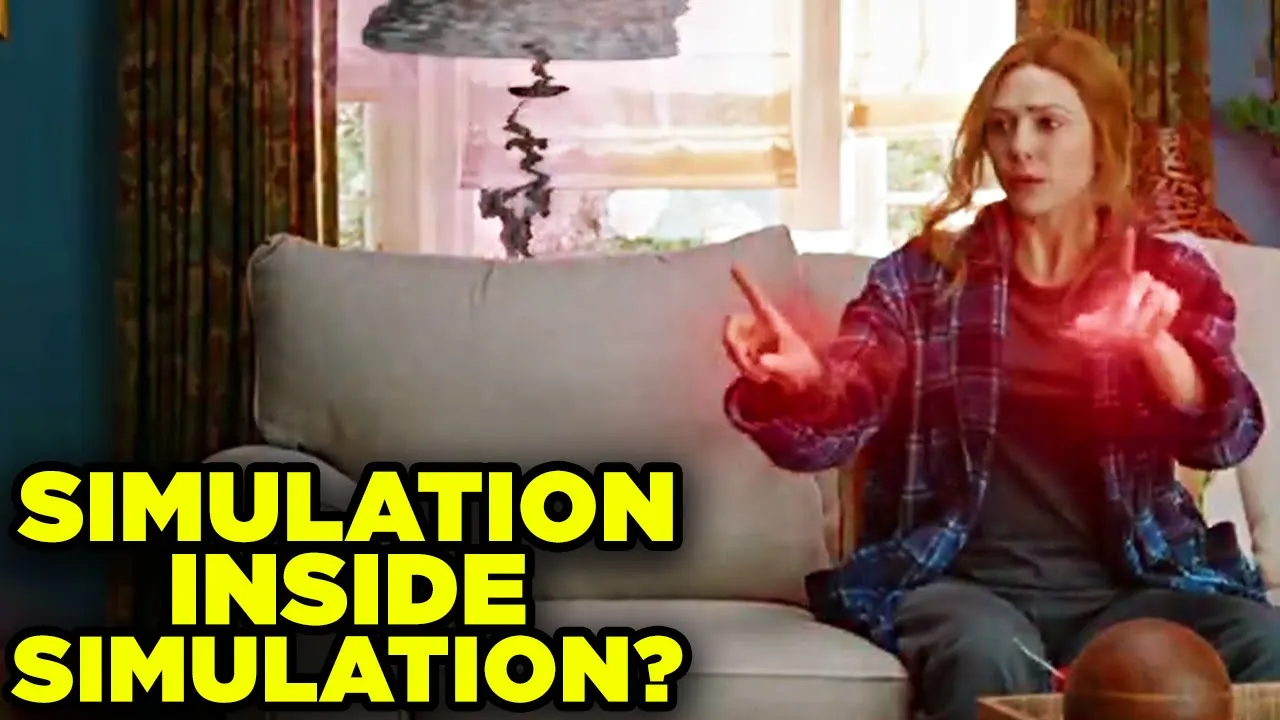
In the MCU, both Scarlet Witch and Ultron have broken the fourth wall to great effect in Multiverse of Madness and What If, respectively.
However, the single biggest other character that breaks the fourth wall, and just as frequently as Deadpool, She-Hulk.
Yep, she's been breaking the fourth wall since her solo series back in the 90s, which pretty much created the version of She-Hulk that we know today.
The same one that was adapted pretty faithfully in the Disney Plus show.
This also predated the original, boring, normal bad guy version of Deadpool by a full two years.
The same amount of time she beat him by in the MCU, too.
Fun coincidence.
Now, obviously, all of these characters aren't suffering from the same battle with cancer that Wade is, or have his same healing factor.
Like, maybe the argument could be made for She-Hulk, since she got her powers from Bruce's irradiated blood.
But how would that work for Loki?
For Scarlet Witch?
For Ultron?
Something else is going on here.
There is one explanation that works with it all.
One answer that could apply to all of our characters.
Deadpool, yes, but also the likes of Loki, and She-Hulk, and whoever, everything, and everyone, could be a simulation.
As in, in a computer.
And characters like Deadpool breaking the fourth wall could be them seeing the different layers of the simulation.
Now that is a pretty bold claim, but hear me out.
There's a real world philosophy that would line up with this shockingly well.
And there's even evidence in the MCU to support it.
If you don't know, the idea that the entire world is just some sort of computer reality is known as the Simulation Hypothesis in the scientific community.
Now, the whole subject is full of a lot of lengthy discussion and in-depth arguments.
But the long and short of the idea?
Imagine for a second that, somewhere down the line, humans become technologically advanced enough to create perfect simulations of anything they want, including a world full of people with consciousness.
Well, if that simulation is perfect, then at some point, the people in the simulation would eventually create their own supercomputers powerful enough to create their own perfect simulations.
Thus, they also create their own simulated world with simulated people, who could go on to make their own simulated world with their own simulated people.
So on and so forth, forever and ever, turtles all the way down.
Basically, it's like the Matrix meets Inception.
A simulation within a simulation within a simulation, going on forever.
If this were indeed the case, proponents of the Simulation Hypothesis would believe that it's infinitely more likely that we live in a simulated reality than in the real one.
Now, I'm not quite so convinced of that myself, but it is a compelling idea.
And fun to apply to little mind experiments like this.
Why?
Because this idea lines up shockingly well with what we see in the Marvel Cinematic Universe.
Yeah, you may not have realized this if you fell off the MCU wagon after Endgame, but the Marvel Universe has gotten really… complicated over the past few years.
And I mean that literally.
The universe itself has gotten a lot of weird rules since the introduction of the multiverse that have some wild implications if you think about them.
For example, a pretty big one?
There are layers of the Marvel Multiverse.
Universes stacked on top of universes.
The same way we just talked about with the Simulation Hypothesis.
Check this.
At the bottom we have the individual universes of the films.
Stuff like the mainline 616 MCU, the 838 universe from Multiverse of Madness, the universes from other individual series like the Tobey Maguire Spider-Man movies, the Fox X-Men, Fant4stic, Blade, animation like X-Men 97, etc, etc. One layer up.
On top of these, you have the weird reality that connects all of these individual universes.
This is where the TVA exists and can prune universes like they're turning off a simulation, where the god of stories Loki is overseeing the new multiverse, and where the quantum realm lets you pass between timelines.
The Watchers also seem to exist in this space, though I'm not exactly sure where.
The director of Loki said that the Watchers would know about the TVA, so they're like one layer up, or on the edges of this universe?
It's not exactly clear.
Regardless, this weird timescape is where many characters seem to be breaking the fourth wall into.
Like Scarlet Witch in Multiverse of Madness when she looks directly at the camera, and Ultron in What If when he can hear and see the Watcher.
But what about Deadpool and She-Hulk?
Is this where they're looking when they talk to their audience?
Well, not exactly.
See, there is another reality on top of all of this.
Our reality.
Well, kind of.
It's still a simulation that exists on Disney+.
Like, as in, the real world website.
Yes, really.
During the climactic fight of the season 1 finale of She-Hulk, Jen is frustrated by the mess of storylines in her show and looks directly at camera, saying, We cut to the Disney Plus homepage, where Jen breaks out of the She-Hulk icon and exists on the website.
And from here she jumps into an icon for an episode of Marvel Studios Assembled, a documentary series about the creation of different Marvel films and TV series.
She's using this to jump between universes, again exactly like what we just talked about with the simulation hypothesis.
In this assembled universe, she meets the actual writers of her show before she comes face to face with Kevin, the omnipotent supercomputer producer that runs the whole Marvel Cinematic Universe.
Clearly, this assembled universe exists on the same plane as Disney+.
One layer below us, here in the real world, but one above the TVA universe where the individual movie-slash-TV universes exist.
We here, in IRL space, are looking into this simulated world created through the Disney Plus website, or app, or whatever, which itself created those sub-universes for the different shows and movies.
Now that's really weird, and really cool, and really meta in a very strange way.
But why would I say that it's all simulated?
Well, for a few reasons.
Firstly, Kevin here, the one running the MCU, is straight up described as a supercomputer AI.
So off to a good start when it comes to the simulation idea, right?
Secondly, in his conversation with Jen, Kevin refers to his world as a platform, like you would a simulation.
Next, this Disney Plus reality is able to edit lower realities, literally changing the format, removing ideas, and adding in new characters.
The ability to do all of this on a whim would make sense if it were some sort of simulation, like you were just changing the parameters in a game engine or something.
This would also explain how different characters are able to access different universes in crossovers like No Way Home or Loki.
They're just going to different simulations, it's just data getting moved.
And the TVA destroying universes is more like them just shutting down a server.
She-Hulk being able to break into the Disney Plus reality would even make sense since they're both digital simulations.
It's just data moving from one layer to another, in the same way that characters like Deadpool can be taken by the TVA into different realities.
And think about it, the Infinity Stones that let you rewrite reality and time itself?
That's basically just you getting cheat codes for your simulated universe.
But do you know what the craziest part of all of this is?
Given what we see here in this sequence in She-Hulk, Deadpool shouldn't be alone in his ability to break the fourth wall.
In fact, in theory, in superhero theory, anyone in the MCU should be able to do it too.
See, when Jen breaks out of the Disney Plus menu, she says this.
And when she confronts her writer's room, you can hear one of them say.
The real thing keeping these characters in these simulations from breaking the fourth wall are inhibitors, which presumably do exactly what they sound like, they inhibit your ability to see past the simulation.
Oh, and isn't it interesting that Marvel just brought back inhibitor collars as a major plot point in X-Men 97?
These inhibitors and the idea of them breaking even fit with everyone that we've seen break the fourth wall in the MCU so far.
Deadpool's constantly feuding healing factor and cancer could have broken his inhibitor, and the same thing for the mishmash of mutant powers shoved into Deadpool in X-Men Origins.
Ultron, from what if, had all of the Infinity Stones for a long time, much longer than Thanos did, potentially damaging his inhibitor from the sheer power of it all.
And Scarlet Witch's fourth wall breaking hex magic in WandaVision would have damaged her inhibitor.
All in all, given everything that we know about breaking the fourth wall and what it means in the Marvel Universe, the rules that the MCU has set up around it, and the power sets of the characters who can break it, the simulation hypothesis is the best answer we have to make sense of it all.
But now, the real question, will Deadpool and Wolverine, and Marvel themselves, be brave enough to confront the rules that they set up for their own universe?
Or will this just be another forgotten idea left behind in the multiverse saga?
I'm not even sure Marvel knows at this point.
But hey, if you want another MCU theory right now, go check out our video talking about whether or not the MCU should push the reboot button and start from scratch.
Or if you want something a little different, go check out my theory talking about how Spider-Man's spider-sense might literally be killing him.
But as always, remember that it's all just a theory, a film theory, and cut!
Up Next

40:59
Ex Falso Sequitur Quodlibet: Anamorphosis in Hitchcock's Rear Window
@boundarylanguage
667 views•2022-02-08

26:22
Walking in the City: Urban Rituals and the Flâneur in Contemporary India
@PSBTIndia
1.9K views•2016-08-02

9:49
FastAPI vs Flask vs Django: Choosing the Right Python Web Framework
@TechWithTim
302.5K views•2024-05-26

1:42
Game of Thrones Opening Credits: A Cinematic Analysis
@gameofthrones
46.3M views•2011-04-18
Related Study Plans & Knowledge Roadmaps
Structured learning paths in General & Interdisciplinary Studies
general-studies
Artificial Light: History, Tech & Human Impact
01The Pre-Electric Era: Fire, Oil, and Gas Lighting
02The Incandescent Revolution and Grid Electrification
03Gas Discharge and Fluorescent Illumination
+ 3 more learning modules
14h6 modules
Explore Roadmap
general-studies
Elevator Engineering: History, Physics & Cities
01From Hoists to Safety Brakes: The Dawn of Vertical Lift
02Hydraulic vs. Traction: The Engineering Physics of Elevators
03Modern Speed, Safety, and Algorithms
+ 2 more learning modules
12h5 modules
Explore Roadmap
general-studies
Rubber: Material Science, History & Geopolitics
01Origins of Natural Rubber & Mesoamerican History
02The Chemistry of Natural Rubber & Vulcanization
03The Geopolitics of the Rubber Boom & Colonization
+ 2 more learning modules
12h5 modules
Explore Roadmap
general-studies
Containerization: Evolution, Logistics & Trade
01Ancient Trade & Bulk Cargo: Amphorae to Barrels
02The Industrial Revolution & Cardboard Packaging
03The Containerization Revolution: Malcom McLean
+ 2 more learning modules
12h5 modules
Explore Roadmap