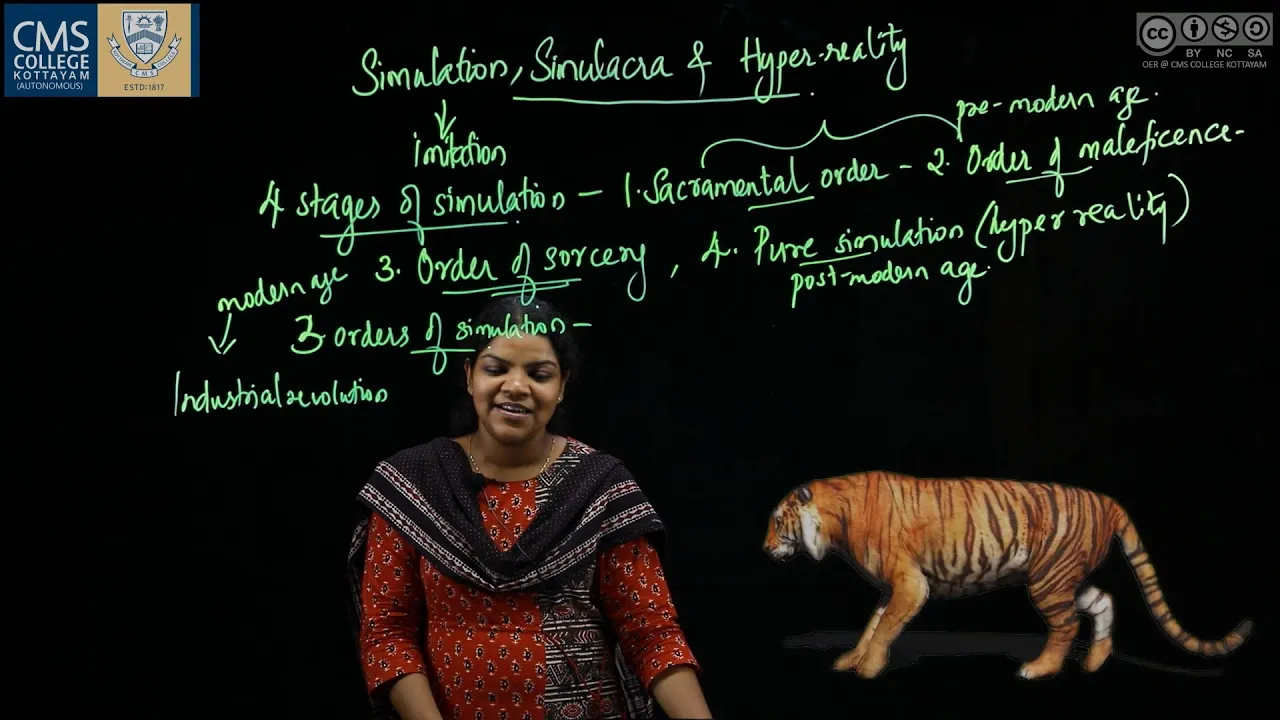














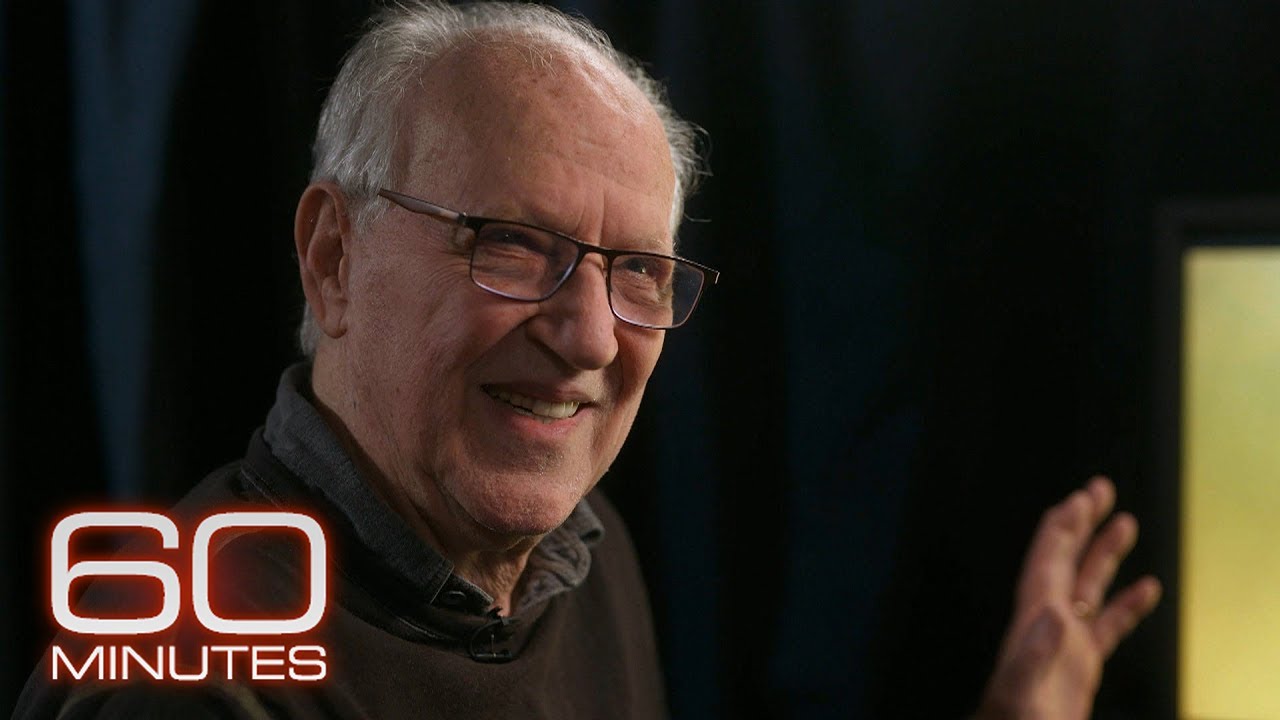






In media studies, a simulacra is a copy or reflection that masks the difference between true and false, while simulation produces actual symptoms of the thing being simulated—when someone simulates illness, they actually produce physical symptoms. This distinction, derived from Jean Baudrillard's philosophy, reveals how reality TV and other media create hyperreal environments where the line between authentic experience and constructed simulation becomes impossible to distinguish, fundamentally altering how we perceive and interact with reality.
Deconstructing Reality: Nathan Fielder's The Rehearsal and Hyperreality
Added:Jean Baudrillard's theory of Simulacra and Simulation, specifically the concept of hyperreality where the distinction between the real and the simulation collapses.
The structural conventions and production methods of reality television, including how editing, scripting, and producer intervention construct a 'real' narrative.
The core concepts of postmodernism in media, particularly metafiction, self-reflexivity, and the questioning of absolute truths.
Familiarity with Nathan Fielder's established style of docu-comedy, which relies on social awkwardness, elaborate schemes, and testing social boundaries.
Advanced analysis of media ethics, particularly the moral responsibilities of creators toward non-actor participants in semi-scripted or simulated media.
Deepening study of Baudrillard's broader philosophical works concerning consumer culture, media ecology, and the disappearance of the 'real' in the digital age.
Exploration of performative and participatory documentary modes, examining filmmakers who insert themselves into their narratives (e.g., Werner Herzog, Errol Morris).
An investigation into how social media, deepfakes, and algorithmic feeds act as modern engines of hyperreality in everyday life.
798.3K views21.7Klikes25:55Original Release: 2022-09-13
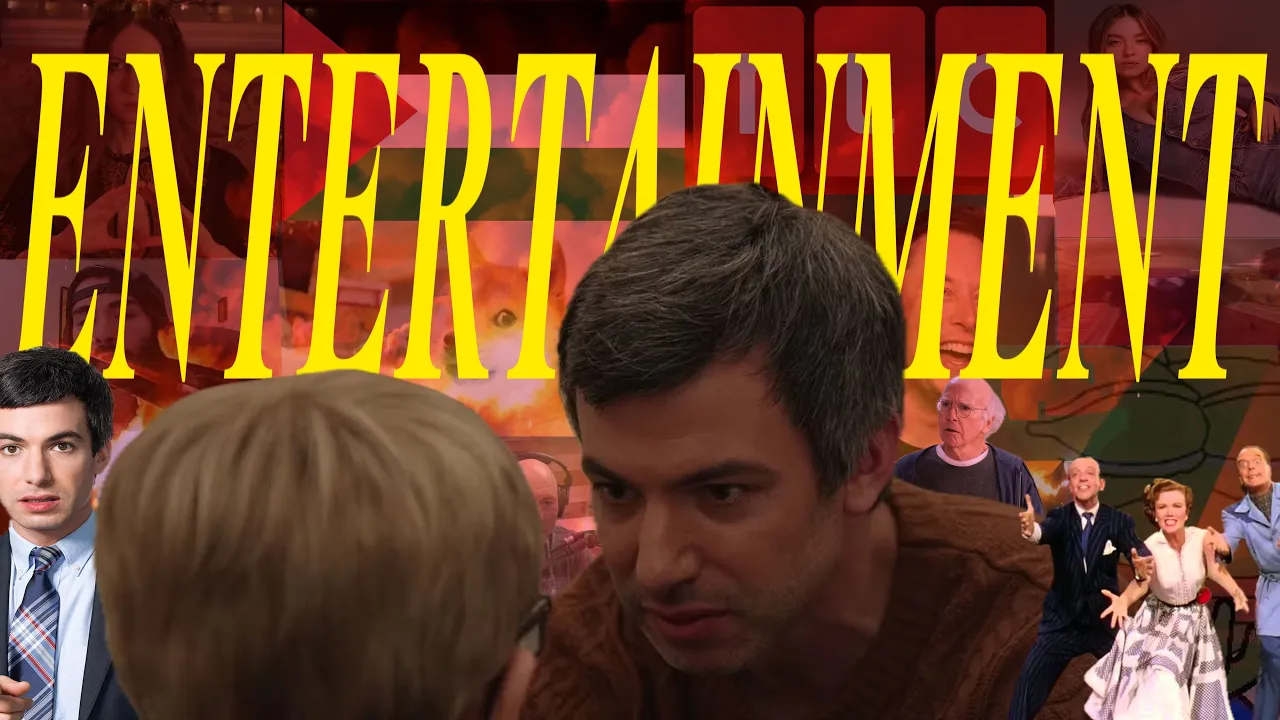
this video is sponsored by mubi go to movie.com thomasflight for your 30-day extended free trial not everything is some things are real okay there's a question that inevitably arises when you watch the rehearsal and that's how much of this is real to what extent is what I'm seeing manipulated so this is a camera in regards to the production yes like it's same with the timer I assume yeah the clock is a countdown clock because this is an actor and this is by Design the rehearsal isn't really a reality TV show so much as it is a show about a man making a reality TV show we have to put on a hat we have to put on a hat it's not going to match do you have it Nathan Fielder seems Above All Else intent on pulling back the curtain on his own manipulation and the manipulation and deception inherent to creating this kind of TV in the first place but despite the fact that it feels like the curtain is being pulled back for us trying to untangle the question of how much of the show is real feels more like navigating a house of mirrors and the reason it does has implications that I think reach far beyond the scope of reality television you're you're a Willy Wonka on the Chocolate Factory um Charlie Bucket trying to get the I don't remember the plot fully what did Willy Wonka do was he good well he he created a bad guy well he has some questionable things but I'm Willy I'm the bad guy well but he's a Dream Maker that's wrong 240 volts are you sure this is not causing any lasting damage he sounds in like he's in a lot of pain well the short smoking people are not harmful this is a recreation of something called the Milgram experiment and it's being performed by filmmaker and Illusionist Darren Brown in his TV special The Heist it's a fascinating experiment that goes something like this you have two subjects both are told they're participating in an experiment about the effects of punishment on learning subject a is in one room reading test questions and guided by the experimenter while subject B is taking the test unseen in a second room for every question subject b gets wrong subject a is instructed to administer an electrical shock at increasing voltages if they question whether or not the experiment is safe the experimenter urges them to continue so yeah then it's someone will check on something it's just he's not making any noise now and he was before well I'm quite happy to go on but just a bit worried about she would continue except there's a Twist the study isn't about the effects of punishment on learning it's actually about the effects of authority on the participants Behavior subject B is in on the experiment and isn't actually hooked up to anything [Music] he's in a lot of pain it's a new place the whole experiment is wild and the original Milgram experiment a full 65 percent of the participants went on to administer what they believed to be a massive 450 volt shock even after the fake subject in the other room had stopped responding seemingly unconscious um it's an experiment that reveals a lot about our willingness to compromise our own concerns or moral judgments in the face of pressure from a source of authority I know I'm in a position of power when I say this to you so I don't want that to influence your willingness to decide I want you to be honest with me and tell me but it's also an interesting experiment because an important part of conducting the experiment is misdirection if you know you're in an experiment about the effects of authority it will influence how you behave in that experiment but because ethics you can't just run random experiments on the unsuspecting public at least legally you have to get them to consent to being experimented on you got to get them to sign Nathan uses this kind of misdirection all the time in his work to understand why we need to understand a dynamic at the very heart of reality TV um I've never reveal the name at this point but um in episode one of the rehearsal Nathan is going to Great Lengths to rehearse this confession with core my educational situation is up front and the rehearsals core is able to spit out the confession pretty easily over and over again but when it comes to the real thing this happens it was the perfect opportunity to begin his confession but for some reason he wasn't doing it core seems to feel the weight of the reality of the situation and for some reason he seems to suddenly become very aware of the presence of the cameras not only might he be nervous about the outcome of this moment something Nathan has been going to extreme lengths to try to prepare him for but also he's now realizing whatever happens in this moment will be permanently recorded and broadcast on TV adding a whole other layer of anxiety this is one factor Nathan has failed to prepare core for it'll feel just like this yes no surprises no you know everything that's going to happen the rehearsal went so far as to try to give core the experience of the aftermath of his confession but what is never rehearsed is the impact having this kind of personal interaction broadcast on TV will have on core and you have to imagine In This Moment the presence of the cameras is impacting his behavior I felt a rush of excitement come over me when I remembered there were cameras filming me HBO cameras in a profile for Walter Nason says if the person knows you're trying to find out about them then they're not going to present a real version you can kind of see this Dynamic playing out with Angela there are moments where she seems to want to say something and crazy it's crazy but then catches herself and says something else no it's good it's fabulous oh yeah or with Robin he seems conscious and aware of the cameras at least at first you might be thinking these people are willing to do and say crazy things on camera you don't have a license plate no it's okay so why would we think the presence of the camera is inhibiting them in some way but the outlandish things they say and do I think are often less an element of inhibition and more that those things are a part of the identity that they are putting forward on screen just because the identity they're presenting seems ridiculous to you doesn't mean that they're not self-censoring in some way because of the camera and sometimes I think the opposite might even be true instead of self-censoring the person knowingly or even unknowingly plays up ridiculous elements of themselves in front of the camera I actually think this happens a lot in all kinds of reality TV where the participants act a certain way because they're playing a kind of role the role not of themselves but of reality TV show participant and they know this role intimately because it's been shaped by the reality TV they've consumed almost all reality TV selects for in the edit over-the-top and dramatic characters and behavior because that's what's entertaining in doing so it shapes the expectations audiences have for normal behavior on reality TV and if you watch these kind of shows especially enough that you're interested in being in one it seems natural then that you'd consciously or unconsciously lean into that kind of character because if you're participating in one of these shows we know at least one thing about you you want to be on TV I love being on camera but I wanted to play it cool like I didn't care that much you often see accusations of fakeness or artifice in reality TV insinuating that the participants are actors and not real participants he's an actor he'll be playing your brother but I think this is a kind of false dichotomy while very direct manipulation and scripting does happen in reality TV is this um [Music] you don't need someone to be given a script or coached by producers for them to be acting and I wasn't given a lot of Direction um I could have been a collaborator with you on this more so than than you've let me this moment is very interesting to me because it reveals that Angela wanted more direction that she wanted to be a collaborator with Nathan in this process I think we often think of reality TV show participants as these unwitting marks being exploited by the producers and while that's the case in some scenarios I think a lot of participants are aware explicitly or implicitly that they're participating in something that needs to be entertaining or interesting yeah I don't know it's uh it's weird but this is also fascinating so what are you gonna do right all of this is actually great for you if your goal is to produce an over-the-top dramatic reality TV show but if your goal is to actually capture reality people's real or natural responses to certain situations something I think Nathan is trying to do because the whole goal of rehearsing is to prepare people for real situations this whole dynamic of people modifying their behavior consciously or unconsciously because they know they're being filmed or they know they're on a show is a big problem but I've recently come to realize I've been neglecting one key component of every crucial life event feelings get down on the floor get down on the floor in the same TV special where he runs the Milgram experiment Darren Brown is trying to convince participants in the show to commit a robbery they think is real without them realizing he's influencing them or that the robbery is part of the show to pull this off he tells them that they're participating in a filmed motivational seminar and gets them to sign the necessary paperwork for him to film them over a certain period of time and then gets real sneaky and films them when they are unaware they're being filmed all of this manipulation is necessary so that you can get them to legally consent to being filmed while you're trying to capture their behavior uninfluenced by the camera it's no coincidence that this TV special by Darren Brown was recommended by Nathan Fielder to the author of that vulture profile knowing these influences and that Nathan as a child was interested in Magic before he got into media you want to see a card trick or something like a magic trick helps us understand some of his tax tactics after today's rehearsal I had the actor playing Patrick's brother asked Patrick out of character to help him move an old Generator at his Grandpa's Barn when Nathan sets up this scenario where Patrick is off on an adventure that to his knowledge is not actually part of the show despite the fact that it's still being filmed they're not filming he's pulling the same kind of misdirection Darren Brown is borrowing from the Milgram experiment and this misdirection really actually seems to make a difference the impact that it has on Patrick is clear tired of living I guess they have to read the difference between Patrick's response to these two scenarios is the difference between what John beaudriard calls simulacra and simulation and this distinction is ultimately what pushes Nathan Fielder to the point where he worries he's gone too far well this is the perfect replica I mean there's not even the fun house version of it it has it looks wow a simulacra is an image of something a reflection but Nathan creates for core is a high fidelity simulacra this chair is an exact this these wow and that even even that's um exactly the way it is but for Nathan something is still missing in this the feeling of reality isn't there what he's striving to achieve with Patrick is not simulacra but simulation beaudryard in simulacra and simulation says simulating is not pretending whoever fakes an illness can simply stay in bed and make everyone believe he is ill whoever simulates an illness produces in himself some of the symptoms what's that simulation apart is that simulation feels real to the participants on the flip side those inside a simulacra have knowledge that they're pretending but you can't orchestrate a simulation from the inside knowledge that you're in a simulation disrupts it this is the problem that Nathan runs into when he makes the rehearsal about himself and his own experience he tries to create a simulation of reality for himself by striving forever greater levels of detail in that simulation I was thinking of calling it at SUNY Lake room I don't even know what it means it's an actor key New York Caden runs into the same problem he wants to create a play that is truly honest that reflects reality in some kind of fundamental way tell me why you're here 11.
following you for 20 years so I knew about this Edition because I follow you and I've learned everything about you by following you so hire me and you'll see who you truly are his attempts to do this lead him away from creating an image of reality towards creating a simulation of reality well it up all of it once this simulation reaches a certain level of detail Caden's real life and the simulation of his life become indistinguishable therefore pretending leaves the principal reality intact the difference is always clear it is simply masked whereas simulation threatens the difference between true and false the real and the imaginary when we can't distinguish between the real and the imaginary the simulation and reality itself have imploded beaujiard calls this implosion this environment where we lose the ability to distinguish between the real and the imaginary the hyper real where is it oh hi hi I'm here to see the doctor eye doctor farts can I have a seat Dr farts AKA Remy is hired as an actor to play Adam the child that Nathan and Angela are raising in their simulacra of a home who am I [Music] who am I Daddy but there's a hiccup unknown to Nathan Remy in real life doesn't have a dad and wants one and during his time as Nathan's pretend son Remy is young enough that he doesn't understand all the lines between true and false reality and fiction for him what is meant to be a simulacra becomes a simulation he doesn't have a real dad during this time but as beaudryard put it he has all the symptoms of having a real dad someone who spends time with him encourages his creativity and says I love you what did you say oh love you Daddy oh I love you too Adam this is where Nathan comes face to face with the reality of what he's doing the ethical dangers of blurring the lines between simulacra and simulation I spent a week with a child who had no dad pretending that I was his dad what did I think was gonna happen and for the first time he's forced to feel something responsibility or remorse maybe Nathan is brought out of his world of simulacra by a genuine human feeling and interaction with a real person in the real world but something happens here on the show that's important and it relates to one of the fundamental elements of reality TV we'll call it never questioned the premise you'll know you'll know what exactly to say for every possible then that would be extremely appealing yes every reality TV show is predicated on some kind of premise or scenario Netflix is full of reality TV where the hook is the absolutely ridiculous premise that is used to create drama and entertainment in Love is Blind couples that have never seen each other agree to get married within a matter of weeks but there's an interesting thing that often happens on this show or others like it or some of the participants back out or Express concerns that on some level can be boiled down to things are moving too quickly or I don't really know this person it's only been five days oh my god I've had meals in my refrigerator for longer than that like that's crazy participants in the show might Express these kinds of vague feelings but what's important the critical role that almost every reality TV show lives by is don't question the premise of the show when someone on Love is Blind is like yeah this person seems great but I'm not sure I want to marry them right now because hey I've only known them for two weeks the show never points out or allows the participants to explicitly acknowledge that this problem is directly created by the very structure and premise of the show the drama is not between the two people the drama is between the participant and the structure of the show from the show's perspective it's best to just move on and forget about it or try to pass it off as something else like hmm weird I guess they're afraid of commitment or something like I'm scared that it's not gonna last because to point out that this conflict is created by the completely artificial structure of the premise is to point out how utterly artificial and ridiculous the entire trauma is Nathan represents this tension perfectly in the rehearsal while he's constantly unpacking and deconstructing elements of the reality TV format like the Dynamics of power created by the camera it's all standard signature is on the fourth page right sorry yeah okay great we'll see you tomorrow yeah or the enticement for the participants of appearing on TV he never questions his own core premise for the show that premise of rehearsal the idea that trying to avoid unpleasant Feelings by trying to control every detail of an interaction before it happens is a productive or helpful way to navigate life when Nathan seems to encounter the real-life feelings created by the situation with Dr farts he ultimately doesn't approach the situation in a genuine way but instead continues to rehearse forcing himself back into the very trap that caused all of these problems to begin with just when you think Nathan might be reaching some level of insight about the situation we get this Charlie don't forget what happened to the man who suddenly got everything he always wanted what happened he lived happily ever after [Music] there's a music video from 2016 called cliches by the French artist hero fonte that I returned to periodically and it inevitably leaves me with a kind of existential queasiness the Instagram account insta repeat is a more recent documentation of this same phenomenon when we take and post an Instagram photo are we trying to capture a reflection of our real life are we crafting a simulacra or are we instead creating an image that is a reflection of the kind of life that we've seen in other images and that we want to be living um how real is the rehearsal I think there are many elements of genuine unscripted moments that crop up in the show and perhaps with the help of Nathan's Milgram experiment style misdirection participants like Patrick uncover some real emotions in response to scenarios but all of this exists to us the viewer within Nathan's simulated world I don't mean it exists within the world of the sets that he built that real people walked around in I mean the world of the video file that we're pressing play on on HBO we the viewers don't see the actual events as they happened we see a simulacra of the events that took place in the real world a simulacra called the rehearsal it's an image shaped and created by Nathan Fielder and not Nathan Fielder the character on the show a real-life Nathan Fielder that we never get to see when viewing the show it's impossible to escape the narrative frame of the show a narrative frame created by somebody who is openly manipulative reality TV Productions are usually very secretive we don't get behind the scenes material like we do for a lot of fiction films and shows participants are almost always required to sign non-disclosure agreements limiting them from talking about their experience on the show or aspects of the production much of this is I think because like a magic trick once you know how the trick is done it doesn't seem so impressive Nathan has a problem with lying he lies a lot always in the back of my mind is the fact that perhaps the real Mark here for Nathan's manipulations is not just core Angela or Patrick but us the viewers we can see in places that divide between Nathan the character on the show and the real Nathan in the real world the real Nathan who's producing the show orchestrates and acts out these scenarios where his character on the show goes right up against a realization about the questionable nature of what he's doing reliving the day again as Thomas made me realize there was a whole other layer to his experience I hadn't considered but the Nathan who's on screen and who's in the voiceover the character may be the best use of my resources at this point would be to figure out what I could have done differently doesn't actually learn from these realizations and each time instead of changing his behavior doubles down on the thing that caused the problem in the first place and I wondered if I was going far enough and this is played multiple times throughout the series as a joke and I began to question the tactics this teacher was encouraging so I suggested to Thomas that he move into an apartment that reflects the living situation of his primary the real world Nathan obviously gets the lesson the character of Nathan is failing to learn because otherwise the real world Nathan wouldn't be able to use his character failing to learn that lesson as a joke I'm as invested as I can be but this is all sort of absurd right and as we descend deeper into the show seemingly unsuspecting participants from outside of the rehearsals like course friend Trish are no longer even present and many scenes are just Nathan and other actors acting out a scenario like we're just acting yeah you know that right yeah yeah and yet the whole style and presentation of the show still represents these moments as if they are being captured spontaneously when we watch a show like this if we forget that we're only seeing a simulacra and not the real we can enter into a hyper reality of the show where the line between the real and the manipulated is impossible for us to really determine all we're left with is speculation I think we shouldn't have done that show huh it's like a weird thing for a little kid to be a part of the most real Nathan seems to be on the show is when the doctor fart situation seems to genuinely make him question what he's doing [Music] remember we're just pretending and maybe the real life Nathan actually learned something here and handled the situation with emotional maturity I'm I was the problem not you but in the Arc of the show the character of Nathan does not learn his lesson did you get enough yeah I think so okay good talk a lot [Music] thank you but do we it's not just reality TV that generates the hyper real while many of us will never participate in reality TV many of us try to craft an image of Our Lives that we present to the world social media goes from being a place where we present reflections of our real selves to simulations of social environments that we participate in simulations we increasingly treat as real we can easily get lost in these simulations in this hyper real world of images and in doing so Overlook the real that's right in front of us the entire time sometimes to get to that reality we have to question the premise it was a work of art and it was just real life Daddy family romance LLC is a Werner Herzog film about a Japanese company that hires out actors to play the role of family members in funerals or other significant life events and it's a movie that delves deeper into this world of hyper reality you can watch it right now on mubi my sponsor for this video mubi is an online hand curated streaming service with an exceptional selection of Cinema from all around the world to have an amazing selection that they add to every day they're very careful about what they choose and increasingly they release movies themselves like with family romance LLC and some upcoming films which I got to see at can and really enjoyed you can get a 30-day extended free trial to mubi right now when you go to mubi.com thomasflight that's mubi.com thomasflight newbie is not only a great place to watch Cinema but a great one to Discover It click the link in the description or on the screen to try mubi for free today foreign Thomas [Music] [Applause]
Up Next
12:49
Exploring the Impossible in Borges' Masterpieces
@ReframedYT
62.9K views•2021-06-09

164:01
John of Damascus on Holy Images: A Theological Defense
@BannedBooks
139 views•2026-04-25

68:32
Should We Destroy the Machines? Big Tech Surveillance Critique
@TheStoriesWeTell303
167.9K views•2025-11-30

4:57
The Myth of Sisyphus: A Greek Legend of Eternal Punishment
@TEDEd
8.6M views•2018-11-13
Related Study Plans & Knowledge Roadmaps
Structured learning paths in Philosophy
philosophy
Frankfurt School: Critical Theory & Culture
01Foundations of the Frankfurt School and Critical Theory
02Horkheimer & Adorno: The Critique of Instrumental Reason
03The Culture Industry and Mass Deception
+ 2 more learning modules
12h5 modules
Explore Roadmap
philosophy
Philosophy of Language: From Frege to Austin
01The Linguistic Turn: An Introduction to Language in Philosophy
02Gottlob Frege: Sense and Reference
03Early Wittgenstein: The Picture Theory of Meaning
+ 3 more learning modules
15h6 modules
Explore Roadmap
philosophy
Feminist Epistemology: Standpoint & Injustice
01Introduction to Epistemology and Feminist Critiques
02Sandra Harding and Standpoint Theory
03Donna Haraway and Situated Knowledges
+ 2 more learning modules
12h5 modules
Explore Roadmap
philosophy
Environmental Philosophy: Ethics & Deep Ecology
01Foundations of Environmental Ethics & Anthropocentrism
02Biocentric Individualism and Animal Liberation
03Ecocentric Holism and Deep Ecology
+ 1 more learning modules
10h4 modules
Explore Roadmap