








![Intensivo UNI 2022 - Academia César Vallejo / Álgebra - Lenguaje [Semana 15]](https://i.ytimg.com/vi/W2Jos4v5v0Y/maxresdefault.jpg)








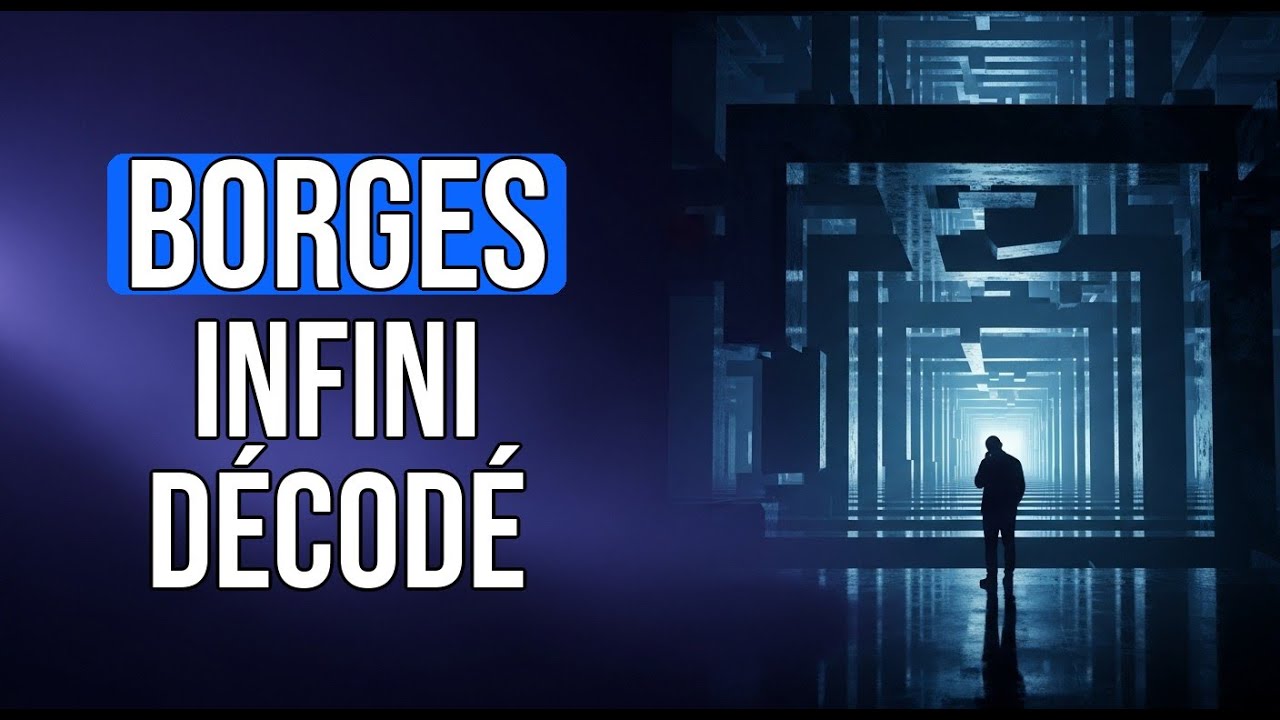





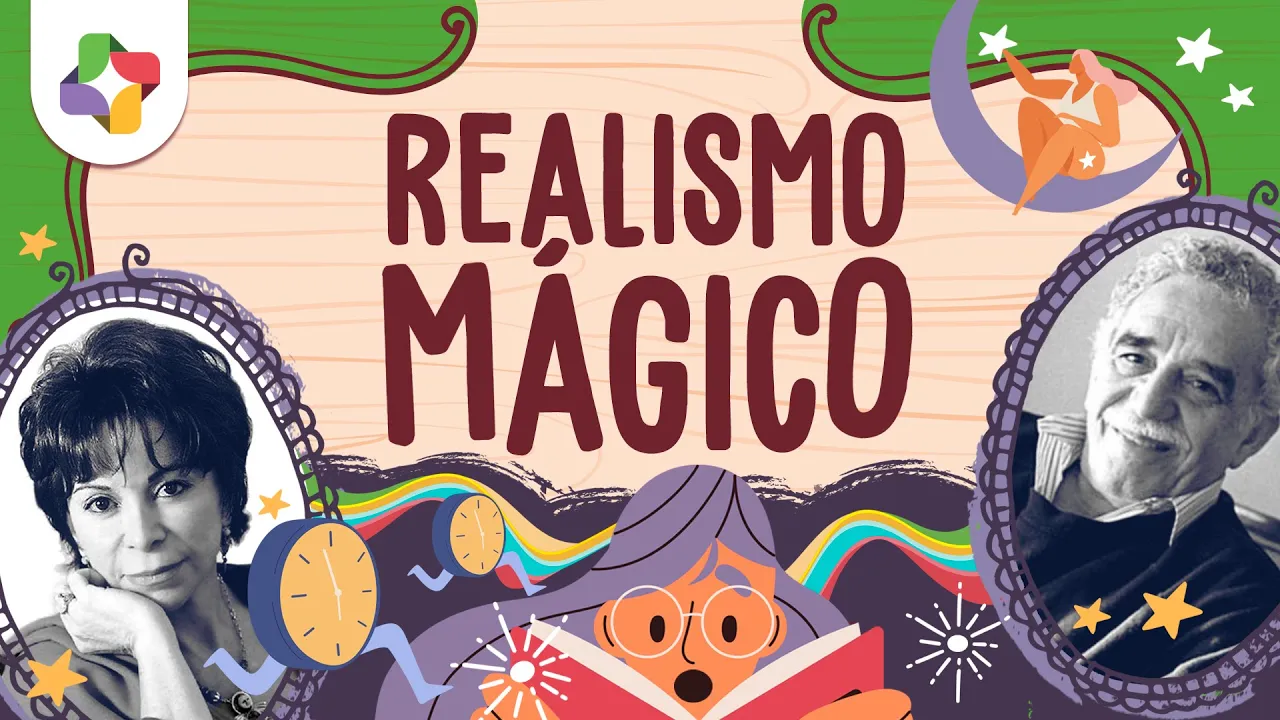
Jorge Luis Borges pioneered magical realism by embedding impossible, paradoxical concepts—such as infinite libraries, one-sided discs, and infinite timelines—within everyday settings, using scholarly framing devices to make the deliberately unreal feel plausible; his stories explore Meinong's three levels of existence (absistence, subsistence, and physical existence) to demonstrate that fictional impossibilities can be logically coherent even when physically impossible, ultimately revealing that all language is metaphorical and that true understanding requires accepting the limits of human cognition.
Exploring the Impossible in Borges' Masterpieces
Added:An introductory understanding of 20th-century Latin American literature and the core tenets of Magical Realism.
Familiarity with fundamental philosophical paradoxes, such as Zeno's paradoxes of motion and the concept of infinite regress.
Understanding the literary definitions of metafiction, solipsism, and the symbolic use of recurring motifs like labyrinths, mirrors, and infinite libraries.
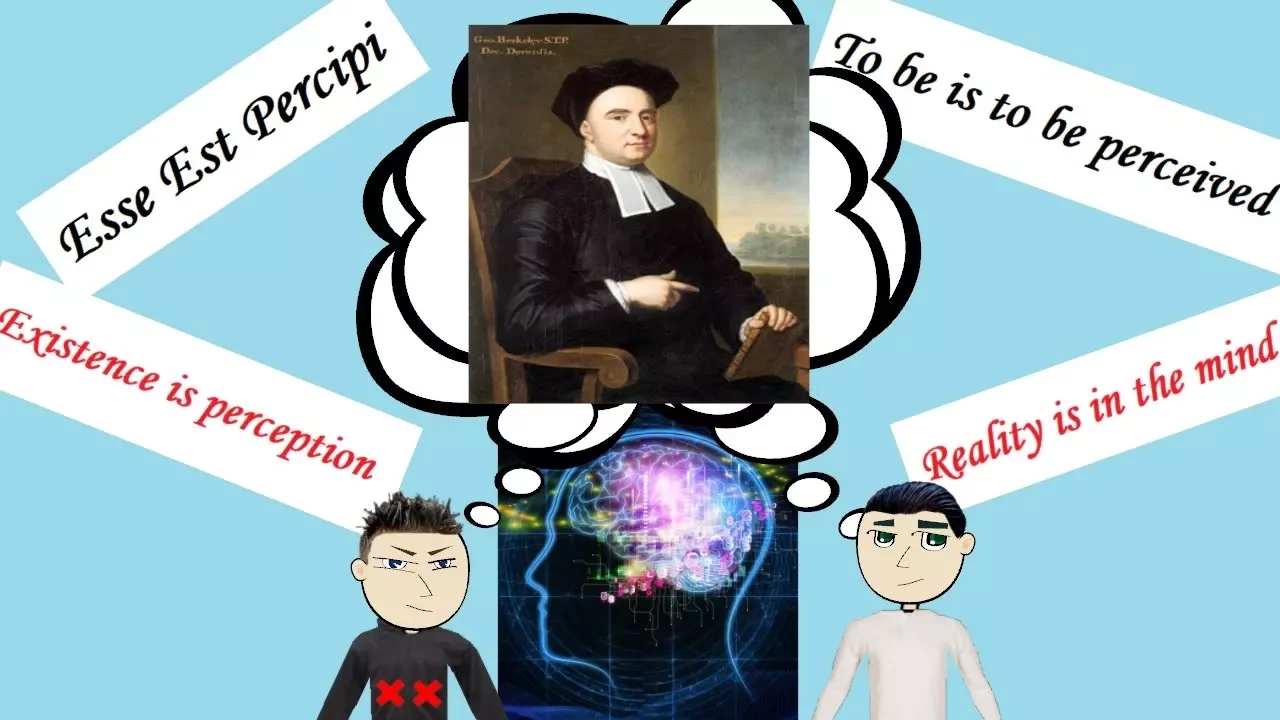
A basic grasp of philosophical idealism, particularly the ideas of George Berkeley regarding reality existing only in perception.
A close literary analysis of Borges' seminal short stories, such as 'The Library of Babel', 'The Garden of Forking Paths', and 'The Aleph'.
Exploring the intersection of Borges' fiction with mathematical theories, including infinite set theory, combinatorics, and topology.
Investigating Postmodernism and how Borges' narrative structures influenced authors like Italo Calvino, Umberto Eco, and Vladimir Nabokov.
Examining the philosophical implications of Borges' work on modern cognitive science, simulation theory, and the concept of the multiverse.
62.9K views2.7Klikes12:49Original Release: 2021-06-09
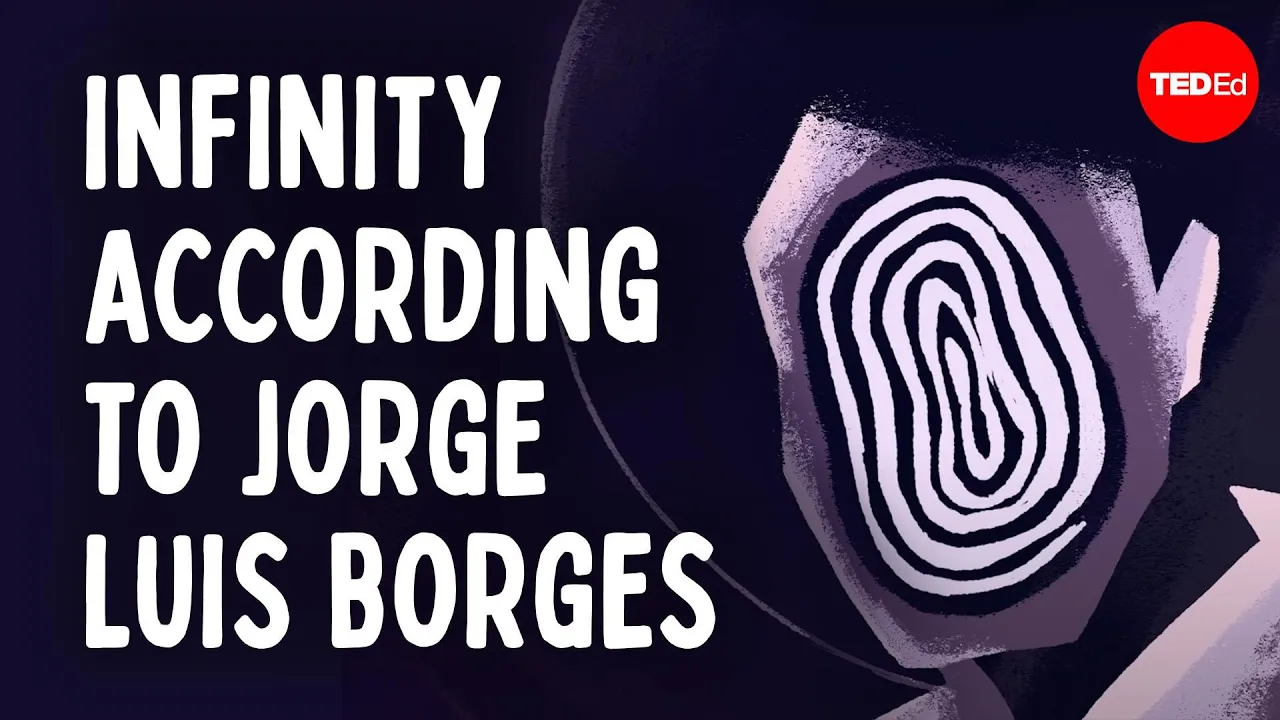
reality is not always probable or likely we accept reality so readily perhaps because we sense that nothing is real these intriguing seemingly false statements could only come from the mind of jorge luis borquez argentinian essayist translator poet and writer best known for his short stories that he published from 1935 to 83 which is said by many to have helped found the genre of magical realism rather than dealing with mystical powers and epic heroes in vast legends like those of jrr tolkien or c.s lewis borquez's stories occupy only a couple of pages on average and usually depict the fantastical within the everyday presented in a philosophical scholarly manner what's even more unique to his writing is the nature of fantasy that he explores not only do his subjects not exist unlike many other fantasy concepts they can't exist we'll call this unreality something which deliberately goes against physical possibility let alone existence books with infinite pages a disc with only one side a perfect sphere containing everything in the known universe what we see in his stories is a rejection of scientific logical and perceivable reality in favor of the deliberately paradoxical and conceited which is by fascinating and completely terrifying to imagine one of the key principles of magical realism is the embedding of this unreality in the recognizable many of boracay's stories are presented as transcripts or translations of ancient foreign documents that he has supposedly discovered and in many the narrator is a fictionalized version of borjez himself recalling personal memories or academic encounters all of which provide a believable ground for the following strangeness for example in tron ukbar and orbis tertius borges is drawn into a mind-bending revelation of an entirely new planet and linguistic convention through a wild goose chase for missing encyclopedia entries and letters having been intrigued to investigate the origin of a quote on the significance of mirrors from a heretic of the country of ukbar of which he could find no record apart from in a single volume of an obscure encyclopedia the form of a fictitious document that the narrator provides a commentary for is one that emerged around the latter half of the 18th century with the life and opinions of tristram shandy and sartor rosatas both purporting to be commentaries on fictional biographies and works this style not only makes the fictional elements of the story more believable but it also firmly associates the following unreality with the medium of literature itself as borges says verse in drama does not allow its spectators to forget unreality which is a condition of art borges was interested in the concept of metaphor as a literary conceit that links two things together through language he argued that all nouns all of language are actually metaphoric inaccurate representations of things and that what we readily call metaphors are just more obvious than those whose inaccuracies we've chosen to forget then we have the word king king was originally queening and this meant a man who stood for the people so etymologically king kinsmen and gentlemen are the same world and yet if i say the king sat in his counting house counting out his money we don't think of the word king as being a metaphor if we go in for abstract thinking we have to forget that words were metaphors in funerals the memories a story exploring memory the titular character unable to forget anything following a head injury loses the capacity for thought because he can't generalize what he perceives to the point that one word no longer accurately describes something for him to think is to forget differences generalize make abstractions in the teeming world of fewness there are only details almost immediate in their presence once you've got past the wealth of biographical details literary references academic formatting and the language itself you find yourself in a completely different universe of mathematical physical and metaphysical impossibilities the images he conjures up are hard to comprehend sustained only by the words on the page and in your head how the hell do you picture an object with only one side porquez explained that in these types of stories he was attempting to combine a plain style with an impossible argument which produces the effect of something which is simultaneously accessible and completely senseless the best comparison i can think of is with mcshirt who produced artwork of impossible spaces mobius strips and intertwined objects that make sense while you're looking at the small details where one staircase leads to another and so on but which completely fall apart mentally when you try and apply real world logic and an understanding of physics to them geometry and architecture are usually central to borquez's literary conceits in the library of babel he goes into great detail to describe the exact proportion of the hexagonal chambers that comprise the titular library which is for all intents and purposes infinite containing every possible book written within the confines of 410 pages there's no explanation as to how such a place could have come into being because in describing it porquez has ensured its creation in our minds anyway it's here that we stray into a rather niche branch of ontology pioneered by austrian philosopher alexius meinen the study of the imaginary and unreal meinong argued that rather than there being things that either exist or don't exist there are in fact three levels of cycled existence if something can be thought of no matter if it's impossible or not it absists within obsistence you can apply some kind of logic as if it did exist for example you'd say unicorns have a horn despite the fact that neither the unicorn nor its horn are real then above ab systems you have subsystems where something doesn't physically exist but can be applied to the real world with a coherent logic for example numbers subsist because although they aren't physical things we can use them effectively as if they were applying their logic to our own world therefore existence is when something can abscess subsist and be physically present in the real world a lot of what boracays writes about is absysten having no place or function in our universe and the stories often read like elaborate thought experiments where he and the reader attempt to apply logic because fiction is by definition not real borquez's use of abstinent ideas is just an extension of this the conclusion usually arrived at in his stories is that what's being described is not just impossible but impossible to think about with most fantasy concepts like goblins or dragons or talking lions we know that they don't exist in our world but they at least take the form of a creature which could have existed if evolution went a different route the concepts imagined by borges not only don't exist but even thinking about them or trying to express them in any detail is an impossible task the aleph probably his most famous story sums this up the best here begins my despair as a writer all language is a set of symbols whose use among its speakers assumes a shared past how then can i translate into words the limitless aleph which my floundering mind can scarcely encompass aleph itself a point of space where all points converge is infinity packed into a finite space trying to imagine infinity is hard enough let alone when it's packed into a sphere a little over an inch in diameter not only did borges explore infinity in space one of the most remarkable ideas he developed was that of infinite timelines years before the many worlds interpretation was proposed in the garden of forking paths the chinese professor pays a visit to a man in possession of a manuscript written by his ancestor a heretical writer who was supposedly in the process of creating both a labyrinth and a book before he was murdered a note made shortly before his death mentions his garden of forking paths believed to be in reference to the labyrinth he was designing but as it turns out the book and the maze were one in the same thing with the forking paths not existing in space but in time representing all the possible outcomes of an ancient battle described in the book this revelation makes narrator feel a swarming sensation as if the house was infinitely saturated with invisible persons causing him and us to consider just how unique and objective our reality is or whether we're living in just one of innumerable others infinity whether it be in time or space is a mind-boggling and terrifying concept in porque's stories within the space of a few pages we're forced to confront things beyond the laws of physics and the bounds of time and space with the knowledge that we will never be able to fully get our heads around them like the librarian from the library of babel despite attempts to quantify infinity and find the elusive crimson hexagon at the center which supposedly contains the meaning of life we emerge none the wiser there is a concept which corrupts and upsets all others i refer not to evil whose limited realm is that of ethics i refer to the infinite it's fitting and pretty ironic that after many of these stories were written borges became blind and therefore in some ways was stranded in a world of potentially infinite possibilities which he was unable to perceive the true genius of boracays is the way he ends his stories undermining the vast incomprehensible ideas that occupy them the final lines often blunt biographical facts detailing the deaths of the extraordinary characters to ensure that neither they nor their impossible qualities can exist any further for example the protagonist of the godscript trapped in an isolated cell facing a jaguar having realized that the secret to gaining god-like abilities and therefore freedom lies in the utterance of 14 words imprinted within the spots of the animal remains stranded unable to claim his reward because in the many years he's been there attempting to figure out this secret he's forgotten who he is funes the man with an infinite memory died in 1889 of congestion to the lungs the one-sided disc the prized possession of an ancient king is lost to the world when it was dropped face down even the garden of forking paths the book of many worlds is ultimately meaningless to the story it's in as the professor kills the man in possession of the book named albert in order to alert german high command to an oncoming attack on the town of albert the impossibilities and unrealities of his stories are always defeated by reality and practicality what difference does knowing about parallel universes make when we are trapped in our single reality stories are in the end only stories and there's nothing more humbling than to be reminded of that as a reader it also allows porquez to play with these lofty ideas without coming across as pretentious as he acknowledges the impractical and theoretical nature of his conceit before we can pick up on it there's room for philosophical speculation and who's to say that you can simply rule out a lot of what we call an impossible but in the end we're limited in our experience by our mortality and the laws that govern the universe just as as readers we're limited by an alphabet and page numbers what he's able to accomplish within these limitations though is pretty amazing you
Up Next

28:35
John Locke & John Stuart Mill's Political Philosophies | Rubin Report
@RubinReport
99.2K views•2017-04-26

164:01
John of Damascus on Holy Images: A Theological Defense
@BannedBooks
139 views•2026-04-25

68:32
Should We Destroy the Machines? Big Tech Surveillance Critique
@TheStoriesWeTell303
167.9K views•2025-11-30
4:57
The Myth of Sisyphus: A Greek Legend of Eternal Punishment
@TEDEd
8.6M views•2018-11-13
Related Study Plans & Knowledge Roadmaps
Structured learning paths in Philosophy
philosophy
Frankfurt School: Critical Theory & Culture
01Foundations of the Frankfurt School and Critical Theory
02Horkheimer & Adorno: The Critique of Instrumental Reason
03The Culture Industry and Mass Deception
+ 2 more learning modules
12h5 modules
Explore Roadmap
philosophy
Philosophy of Language: From Frege to Austin
01The Linguistic Turn: An Introduction to Language in Philosophy
02Gottlob Frege: Sense and Reference
03Early Wittgenstein: The Picture Theory of Meaning
+ 3 more learning modules
15h6 modules
Explore Roadmap
philosophy
Feminist Epistemology: Standpoint & Injustice
01Introduction to Epistemology and Feminist Critiques
02Sandra Harding and Standpoint Theory
03Donna Haraway and Situated Knowledges
+ 2 more learning modules
12h5 modules
Explore Roadmap
philosophy
Environmental Philosophy: Ethics & Deep Ecology
01Foundations of Environmental Ethics & Anthropocentrism
02Biocentric Individualism and Animal Liberation
03Ecocentric Holism and Deep Ecology
+ 1 more learning modules
10h4 modules
Explore Roadmap