This video introduces the foundational concepts of cinematic realism, emphasizing Andre Bazin's influential role in defining realism as a movement that truthfully shows life's complexities without technical manipulation, presenting life in a non-sensational manner through logical senses. It further explores how the cinematic apparatus creates optical illusions of reality and how modern society controls individuals through ideological apparatus like the state and church, with the concept of suture explaining how viewers are inserted into cinematic discourse through their exclusion from the visible frame.
Film Studies Basics: Realism, Theory & Movements | Calicut University Module 1
Added:Deep Dive
Basic film terminology, including fundamental concepts like mise-en-scène, cinematography, editing, and narrative structure.

Principles of Film Form (mise-en-scène, cinematography, editing, and sound)
13.4K
Film form is expressed through four interconnected elemental systems: mise-en-scène (the physical aspects of a scene including staging, locations, sets, costumes, props, makeup, lighting, and acting style), cinematography (the art of capturing moving images through camera techniques like framing, angles, focus, and movement), editing (the process of selecting, arranging, and assembling visual and sound elements to control pacing and meaning), and sound (divided into diegetic sounds from within the film world and non-diegetic sounds heard only by the audience). Together, these elements create the unique language of cinema that transports audiences into fictional worlds while conveying complex emotions and ideas.
Click to watch →

미쟝센이 뭐죠? 몽타주? 맥거핀? 궁금했던 영화 용어 설명! 영화 Q&A영상 1-1!
34.1K
This video explains three fundamental film terminology concepts: (1) Mise-en-scène refers to the visual elements within a film scene—including set design, props, lighting, costumes, and spatial arrangement—that convey character information and narrative meaning without dialogue, using composition to express emotions and themes; (2) Montage is an editing technique that combines multiple short scenes into a single narrative sequence to show progression or development, such as depicting a relationship's evolution through various shared activities; (3) MacGuffin is a plot device or object that drives the story forward but ultimately proves irrelevant to the actual narrative, serving only as a catalyst for character actions.
Click to watch →
Guía básica del LENGUAJE CINEMATOGRÁFICO / Cine con Veida Hood
16.7K
Cinematic language encompasses the fundamental elements of filmmaking including shot types (extreme long shot, long shot, medium shot, close-up, etc.), camera angles (high angle, low angle, eye level), camera movements (zoom, pan, tilt, dolly), lens types (telephoto, wide-angle), lighting techniques (natural, artificial, hard, soft), editing concepts (montage, continuity), sound design (sound mixing, masterization), and narrative time manipulation (ellipsis, flashbacks, flashforwards), all of which work together to communicate meaning and emotion in film.
Click to watch →

Aula 02 - OS ELEMENTOS DA LINGUAGEM CINEMATOGRÁFICA
11K
The basic elements of cinema language include shots (plano), framing (enquadramento), camera angles, and montage. A shot is any image between two cuts. Framing selects what portion of the image is recorded. Camera angles determine how scenes are viewed from above, below, or eye level. Montage intercuts shots to create meaning. Decoupage divides screenplays into shots, with directors defining framings, angles, and camera movements. The editor arranges these shots in specific orders to create narrative flow and emotional impact.
Click to watch →
Les 5 ans - Le FLOP 10 VLOG
82.9K
This segment analyzes creative mise-en-scène techniques in Vous n'avez rien vu, where objects only exist when used by actors, creating a unique visual language. The segment also examines Trans (2013) by Danny Boyle, a thriller about a man who knows the location of a valuable painting. The critic discusses how narrative structure can undermine engagement when films prioritize providing answers to audiences over exploring character motivations. This highlights the distinction between what characters want and what films want to convey, and how prioritizing narrative resolution can diminish emotional impact.
Click to watch →
Deep Dive
The historical distinction between early cinema's actualities (documentary-style recording) and illusionism (constructed storytelling).
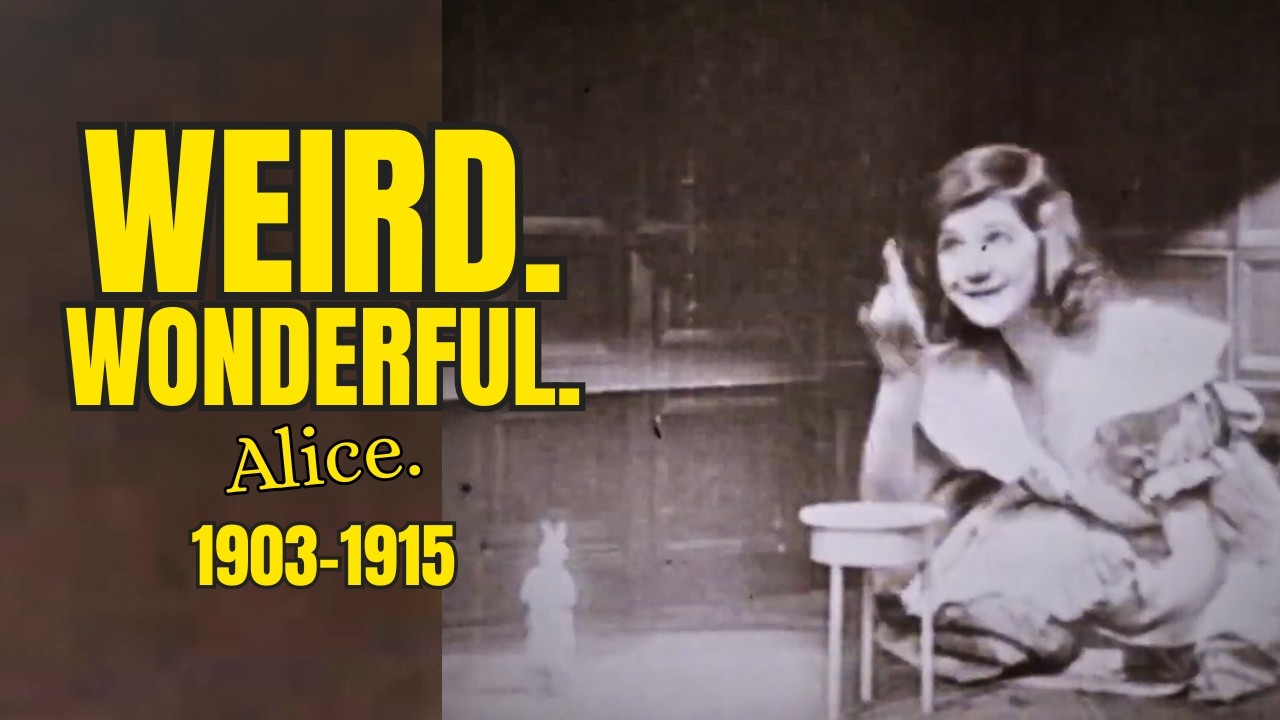
Alice in Wonderland: Silent Cinema's Strangest Obsession
398
Early cinema (1890s-early 1900s) developed two main traditions. The Lumiere brothers focused on capturing reality through 'actualities' - documentary-style films showing everyday life. In contrast, George Melies pioneered trick films using special effects and elaborate sets to visualize the impossible. This fundamental divide between realism and fantasy shaped all subsequent film development. Cecil B. Hepworth's 1903 Alice in Wonderland exemplifies this era, using intertitles to provide scene checklists before the film begins, making sense for familiar stories where the pleasure came from watching well-known moments reenacted in this new medium.
Click to watch →
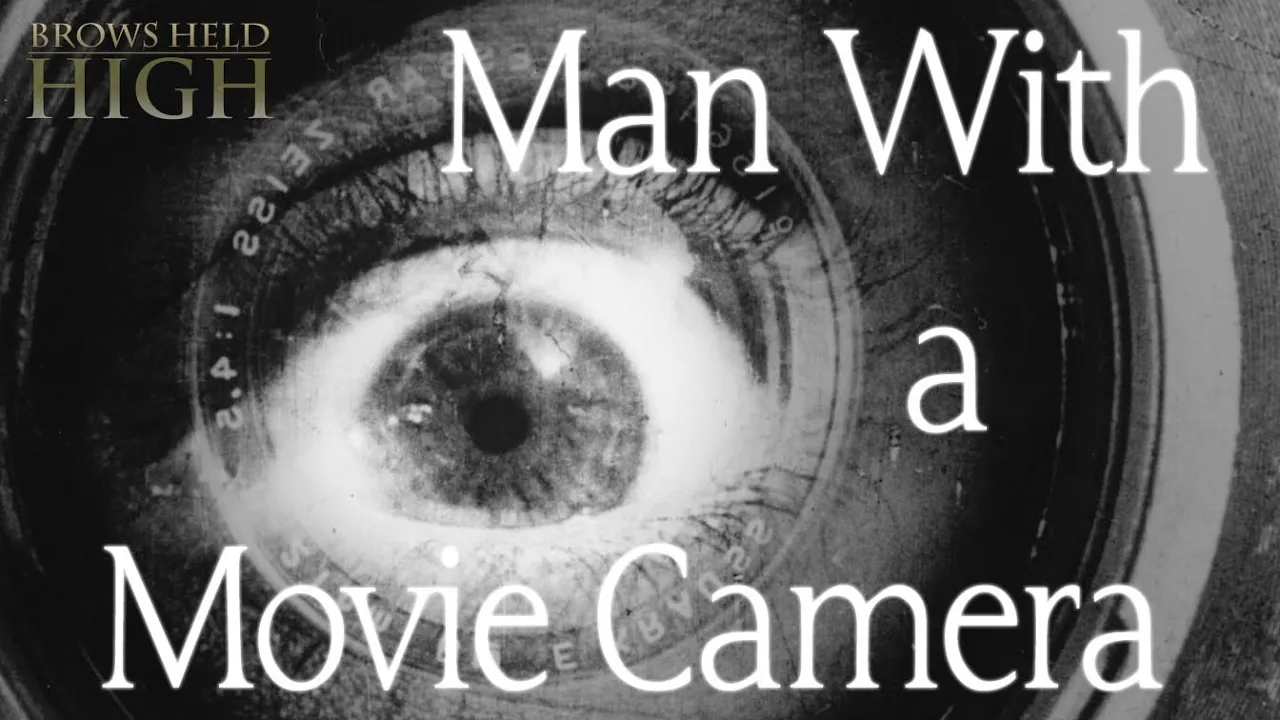
Man with a Movie Camera and the Truth in the Movie-Eye - Brows Held High
71.6K
Early films, by today's standards, might be considered documentaries—they were simply slices of everyday life that filmmakers found interesting. These were called 'actualities.' However, actualities soon gave way to experimentation in fiction films. Even early works that we now call documentaries were often staged recreations of life or history, as seen in the works of Robert J. Flaherty or Benjamin Christensen.
Click to watch →

Кинематограф – между документом и вымыслом (on-line лекция)
287
Documentary cinema claims to offer truth and factual information about the world, establishing a relationship of trust with audiences who expect objective representations. Fictional cinema deliberately moves away from reality, offering fantasy, imagination, and entertainment rather than claims to factual accuracy. This distinction manifests in audience expectations, where documentary is perceived as educational and requiring effort, while fictional cinema is seen as pleasurable and engaging. Cinema is fundamentally a technical medium that mediates human vision through mechanical apparatus, introducing objectivity that distinguishes it from other art forms. Documentary cinema emerged alongside cinema's birth, with Lumière brothers' films capturing real events without fictional embellishment. The term 'documentary' was explicitly applied in 1926 when John Grierson described 'Nanook of the North' as documentary, establishing that documentary involves 'creative treatment of actuality' rather than pure mechanical recording. A fundamental paradox exists: audiences expect objective representations, yet all documentaries involve subjective choices in framing and editing. Fictional cinema inherently contains documentary elements—real actors performing before cameras create records of actual human presence. Cinema is fundamentally an art of montage, where directors' choices in sequencing images shape meaning. Documentary cinema has historically served ideological functions, as seen in Nazi Germany's Leni Riefenstahl films and Soviet documentary cinema of the 1920s-1930s. Since the 20th century, scholars like Peter Galison have challenged the ideal of objective scientific observation, with significant implications for documentary cinema. Direct Cinema (North America) and Cinema Vérité (France) emerged as responses to perceived limitations in traditional documentary, seeking to minimize director intervention and voice-over narration. Jean Rouch's 'Chronique d'un été' (1961) represented a radical departure, actively engaging subjects and inviting their participation in interpreting footage, acknowledging the gap between how subjects see themselves and how they appear on camera.
Click to watch →

1922: How Robert Flaherty Invented the modern documentary.
47.6K
Robert Flaherty's 1922 film Nanuk of the North pioneered modern documentary filmmaking by expanding the passive camera technique of early actualities into a narrative structure that constructed subjective truths about Inuit life, despite staging scenes like building a three-walled ice set for filming; this approach later influenced two major documentary movements—direct cinema and cinema verite—which sought to minimize filmmaker intervention while acknowledging that all documentaries inherently construct subjective narratives rather than capturing pure objective reality.
Click to watch →

"The Reality of Illusion: Cinema's Undecidability" -- Gertrud Koch at The Steve Tisch School @ TAU
674
Film production relies on creating illusion to construct believable fictional worlds. This includes projected stills and visual effects that make the fictional appear real. The appreciation of fictional over factual content depends on conscious illusion, where viewers recognize the world as illusion while experiencing it as real within the film's context. The distinction between fiction and documentary films is based more on conventions than clear definitions, requiring judgments about truth values and contextual conditions. Scientific fiction operates on the boundary between true and false as hypothetical statements, while aesthetic fiction constructs images that cannot relate to empirical reality in similar ways. Films exist as partially materialized fictions—both as material objects and as static fictions of perception. Unlike lies or promises that make concrete truth claims, film is experimental and remains open about how allegations of reality are provided. Documentary films are aesthetic constructions working with camera movement, lighting, and lenses that orchestrate the entire potential of the film shape. The film recording apparatus records light from surrounding reality, making the fictional world already temporarily closed without aging. What currently appears as present is already passed, distinguishing film from music which repeats the past in present performance.
Click to watch →
Deep Dive
An introductory understanding of literary theory or art history criticism, which serves as the foundation for film studies analysis.
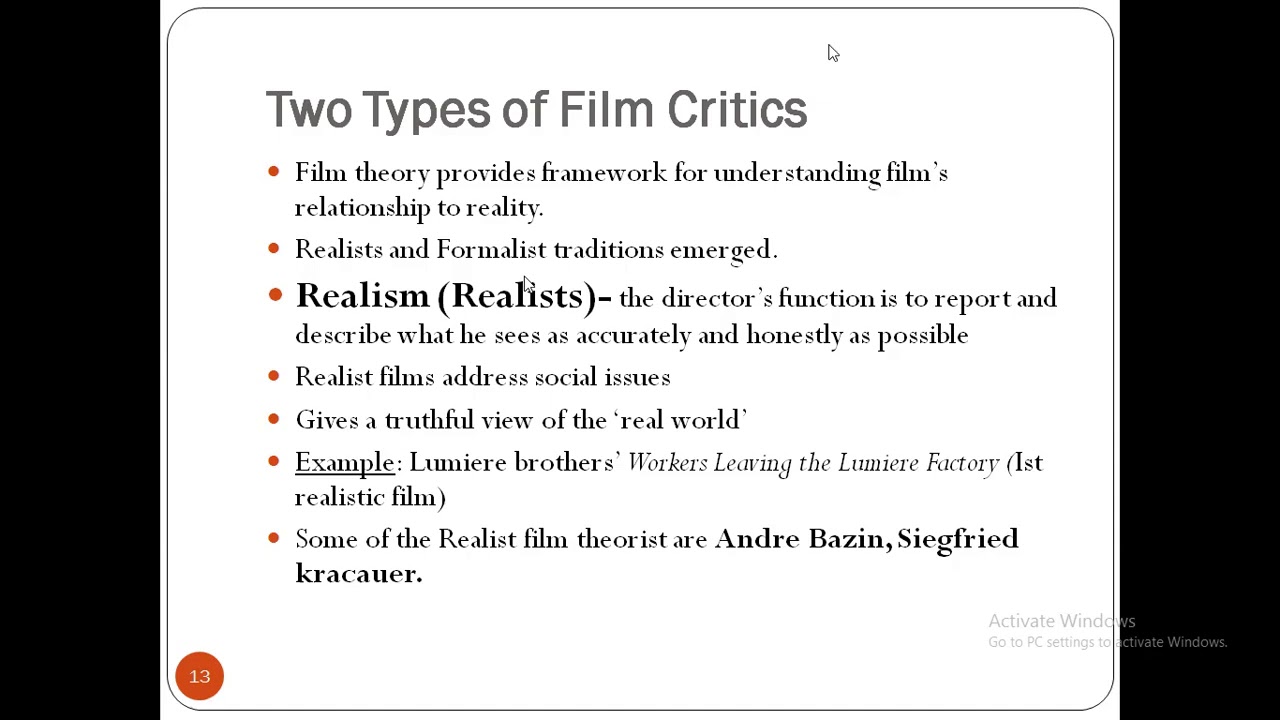
Film studies - Introduction
313
Film Studies is an academic discipline that analyzes films through various theoretical frameworks including formalism, feminism, and structuralism, examining how films represent social issues and ordinary life while emphasizing the importance of understanding film form, structure, and linguistic elements for effective critical analysis.
Click to watch →

Film Theory
718
Film theory is an academic discipline within cinema studies that provides scholarly frameworks for analyzing films as distinct art forms, examining how technical elements like camera work, editing, and sound create emotional and mental effects on audiences; major theories include formalism (focusing on technical aspects), structuralism (examining larger patterns), apparatus theory (arguing film is inherently ideological), Marxist theory (analyzing power dynamics), feminist theory (critiquing gender representation), queer theory (examining sexual identity), and auteur theory (viewing directors as primary authors of their work).
Click to watch →

Introduction Literary criticism
906
Literary criticism is the systematic analysis, interpretation, and evaluation of literary works through various theoretical approaches, including moral criticism, formalism, psychoanalytic criticism, Marxist criticism, reader-response criticism, structuralism, semiotics, cultural studies, post-colonial criticism, feminist criticism, gender studies, and queer studies; it involves comparing, analyzing, interpreting, and evaluating works of literature by examining theme, style, setting, and historical or political context to support reasoned opinions with specific textual evidence.
Click to watch →

സിനിമ നിരൂപണം | Film Criticism | Wayanadan Talk
1.9K
Film criticism is the analysis and evaluation of films, which can be divided into journalistic criticism (appearing in newspapers and magazines) and academic criticism (by scholars informed by film theory). The earliest artistic criticism of film emerged in the early 1900s, with the first paper dedicated to film critique being The Optical Lantern and Cinematograph Journal, followed by the Bioscope in 1908. In 1911, Ricciotto Canudo proclaimed cinema to be the 'Sixth Art' (later 'Seventh Art'). By the 1920s, critics began analyzing film for its merit and value beyond entertainment, and by the 1940s, new forms of essay-style criticism emerged that brought film criticism to mainstream attention.
Click to watch →
How Three-Act Screenplays Work (and why it matters)
809K
Film theory is an analytical framework that frames works, artists, or movements in terms of history, meaning, interpretation, sociology, psychology, and other academic disciplines. It differs from film criticism and film history, though there is overlap. For example, applying feminist film theory versus auteur theory to the same film like Hitchcock's North by Northwest produces different readings. Theory uses guidelines based on comparable precedents from existing bodies of work.
Click to watch →
Deep Dive
A general historical awareness of the early to mid-20th century, particularly how major global events influenced artistic expression.

Livestream (continued)
963
The early and mid-20th century was shaped by global conflicts including WWI, the Great Depression, WWII, and decolonization, profoundly influencing artists who responded emotionally to these events. Key concepts include abstract versus representational art—where abstract art rejects recognizable reality while representational art aims for objective depiction, though neither achieves true objectivity due to artistic influence. Major movements include Fauvism (bright, violent colors reacting to WWI anxiety), Expressionism (emotional abstraction influenced by non-Western art), and Cubism (breaking subjects into geometric pieces, pioneered by Braque and Picasso with Analytical and Synthetic phases).
Click to watch →

Clase 20 (Parte 1): Primeras vanguardias del siglo XX (Fauvismo, Cubismo, Futurismo)
62.2K
The early 20th century was dominated by scientific and technological progress including the automobile, airplane, radio, and cinema. In the artistic sphere, there was a profound need for renewal, a will to break with the past, and a struggle against sentimentality. This gave birth to vanguard movements characterized by confrontation with past forms, rejection of established values, concern for aesthetic theory, interest in subjectivity and ideological commitment, and affirmation of artistic freedom. The development of photography and cinema freed traditional arts from the need to reproduce reality, allowing artists to move toward abstraction. The art market also changed, with artists seeking new channels outside official salons and the emergence of art dealers. There were two blocks of vanguards: the first historical vanguards (1900-1930s) and the second artistic vanguards (post-WWII).
Click to watch →
Что за ДАДА? #авангард
1.3K
The early 20th century was a period of strengthening communist ideas and the spread of freedom in all its manifestations. The world, particularly America and Europe, experienced significant events including wars and new ideas, which profoundly influenced the artistic expressions of painters and artists.
Click to watch →

4TO SECUNDARIA Lunes 24 Mayo 2021
13.1K
Understanding 20th century art requires knowledge of historical events: the First World War and Russian Revolution were particularly influential. The consolidation of liberal regimes, the Second Industrial Revolution, imperialism, and social movements shaped the artistic landscape. The movement of workers created instability and tension. Contact with other cultures through colonial expansion influenced art, particularly African and Japanese artistic traditions. Scientific and technical advances definitively transformed life and expression. Art became internationalist with universal reach unprecedented in previous centuries. The development of art was frenetic, with styles emerging and disappearing rapidly.
Click to watch →
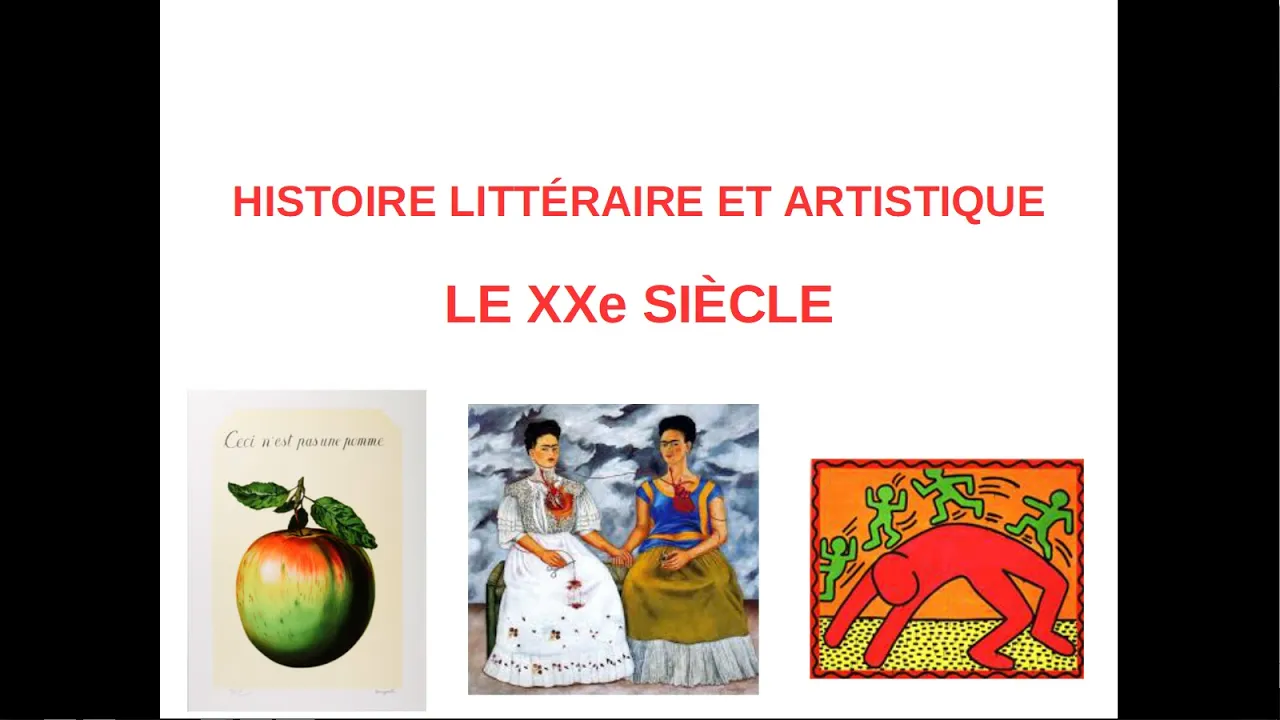
Histoire littéraire et artistique : le XXe siècle
16.6K
The 20th century (1914-2001) was defined by unprecedented global conflicts, technological advancement, and artistic transformation. Major events included World Wars I and II, the Spanish Civil War, the Great Depression, decolonization, and the rise of totalitarian regimes. In response to these upheavals, artists developed revolutionary movements: Expressionism (Chagall, Kandinsky) expressed inner turmoil through distorted forms; Cubism (Picasso, Braque) deconstructed reality into geometric shapes; Futurism celebrated modernity and speed; Surrealism (Dalí, Magritte) explored dreams and the unconscious; Abstract Expressionism (Pollock, Mondrian) abandoned figurative representation; and Pop Art (Warhol) embraced commercial imagery. Cinema evolved from silent comedies (Chaplin, Keaton) through German Expressionism (Lang), horror classics (Dracula, Frankenstein), to the French New Wave (Truffaut, Godard). French poetry underwent radical transformation with Apollinaire's liberation of form, Surrealist exploration of dreams, and Dadaist challenges to convention. This comprehensive cultural evolution demonstrates how artistic movements emerged as responses to and reflections of the century's defining characteristics of trauma, modernity, and rapid social change.
Click to watch →
Prerequisite Knowledge
- Concept 01Basic film terminology, including fundamental concepts like mise-en-scène, cinematography, editing, and narrative structure.
- Concept 02The historical distinction between early cinema's actualities (documentary-style recording) and illusionism (constructed storytelling).
- Concept 03An introductory understanding of literary theory or art history criticism, which serves as the foundation for film studies analysis.
- Concept 04A general historical awareness of the early to mid-20th century, particularly how major global events influenced artistic expression.
Subsequent Learning
- Step 01In-depth analysis of specific national film movements, such as Italian Neorealism, Soviet Montage, and the French New Wave.
- Step 02Advanced film theories, including Auteur Theory, Genre Theory, Feminist Film Theory, and Semiotics.
- Step 03The study of 'Third Cinema' and post-colonial film movements that challenged Western/Hollywood cinematic norms.
- Step 04Practical application of film criticism methods to write formal, academic film analyses and textual readings of contemporary cinema.
Postwar Realism
Realism Defined
Apparatus Critique
Production System
Suture Concept
Postwar Realism
0:10Playing Section
- 1
Post-WWII Europe, especially France, saw cinema shift toward realism.
- 2
André Bazin, a key critic, championed truthful life representation.
- 3
Realism used objective shots and logical sequences, not technical tricks.
Formalist Film Theory (Formalism)
While realism (championed by theorists like André Bazin) argues that cinema's primary value lies in its ability to faithfully record and represent physical reality, Formalist Film Theory presents a direct counterpoint. Formalists, such as Rudolf Arnheim and Soviet montage theorists like Sergei Eisenstein, argue that film is an art form precisely because it deviates from reality. Instead of merely capturing the world, formalism emphasizes the deliberate manipulation of the medium's unique properties—such as editing, camera angles, lighting, and framing—to construct a subjective artistic experience. According to this perspective, film does not just reflect reality; it actively creates new meanings and emotional responses through aesthetic construction, challenging the realist assumption that invisible editing and objective representation are the highest achievements of cinema.
Deep Dive
In-depth analysis of specific national film movements, such as Italian Neorealism, Soviet Montage, and the French New Wave.

DIRETORES INDISPENSÁVEIS PARA INICIAR NA CINEFILIA | Cortes do Desencontros
9.9K
Italian Neorealism and French New Wave are among the most important cinema movements in history. Italian Neorealism's three major directors are Roberto Rossellini, Vittorio De Sica, and Luchino Visconti. The 1948 Italian elections marked the first election during the Cold War, with significant US and Soviet interest. The US invested heavily, causing the communist front to lose parliamentary representation, leading to the rise of the Christian Democratic Party and persecution of Italian Neorealism. 'Bicycle Thieves' is the paradigmatic film of Italian Neorealism, while 'The 400 Blows' serves as an entry point to the French New Wave.
Click to watch →
21. Truffaut, the Nouvelle Vague, The 400 Blows
98.6K
This comprehensive section traces the evolution from Italian neorealism to the French New Wave, examining both comparative analysis and theoretical foundations. Italian neorealism (Umberto D) emphasizes social problems with heavy moods of disturbance and misery, serving as parables of impoverishment. French neorealism (The 400 Blows) maintains a lighter, lyrical tone while still addressing social critique. The 'retarding impulse'—lingering on peripheral details to enlarge story implications—is present in both but manifests differently. The section traces the origins of the Nouvelle Vague to influences including Jean Vigo, Renoir's lyrical improvisatory style, and Italian adaptations. Cahiers du Cinema critics, particularly Truffaut who spent eight years as a critic before directing, provided theoretical foundations. Alexandre Astruc's 'camera-stylo' theory proposed directors wield cameras like writers wield pens, giving visual style literary subtlety. The auteur theory held that directors leave signatures in every frame. Three defining films emerged: Hiroshima, Mon Amour (Resnais) plays with subjective time; Breathless (Godard) shows Belmondo imitating Bogart; The 400 Blows (Truffaut) won Cannes Best Director. Jump cuts and elliptical editing create discontinuity and self-reflexivity, distinguishing the New Wave from classical Hollywood style.
Click to watch →

Italian Neorealism
119
Italian Neorealism was a major film movement that emerged in post-World War II Italy (1940s-1950s), characterized by its realistic depiction of poverty, social struggles, and the devastation of war through non-professional actors, on-location shooting, and minimalistic storytelling. The movement, which included filmmakers like Roberto Rossellini, Federico Fellini, and Vittorio De Sica (whose Bicycle Thieves is considered the most representative work), served as a cultural rehabilitation for Italy after the war and profoundly influenced filmmakers worldwide, including Satyajit Ray and Martin Scorsese.
Click to watch →

"La trilogía sagrada: Accattone, Mamma Roma, El Evangelio según Mateo (1961-1964)", por Carlos Colón
2.2K
Italian Neorealism (1945-1950s) was the most influential film movement in cinema history. It directly inspired the French New Wave (Nouvelle Vague), which considered Rossellini its Italian father. The movement's influence extended globally, particularly to Latin America and Asia, where directors like Satyajit Ray (India) and the New Latin American Cinema adopted its combative spirit. Neorealism was characterized by its commitment to depicting the real Italy, fighting against fascist lies and superficial entertainment. The movement's strict theory, championed by Cesare Zavattini, advocated for life as it truly is: using non-professional actors, filming real stories in actual locations, and eliminating narrative ellipses.
Click to watch →

MIS CINEASTAS FAVORITOS DE LA A A LA Z - SEGUNDA PARTE: N - Z
133
This section examines three major cinematic movements. Sam Peckinpah's Wild Bunch (1969) evolved Western cinema through graphic violence and moral complexity. Steve McQueen (British-Jamaican) transitioned from video art to feature filmmaking, winning Best Picture with 12 Years a Slave (2013). Roberto Rossellini's Roma, Città Aperta (1945) and Germany Year Zero (1948) established Italian Neorealism, documenting post-WWII struggles. Eric Rohmer's Cinq Étés (1989-1998) explored human relationships through philosophical dialogue. These movements demonstrate how cinema can address difficult historical subjects, explore themes of violence and morality, and commit to authentic storytelling with social commentary.
Click to watch →
Deep Dive
Advanced film theories, including Auteur Theory, Genre Theory, Feminist Film Theory, and Semiotics.
Film studies 6th semester B. A. English. Calicut university. Module 1. Movements and Theories
43.4K
This video provides an examination-focused overview of seven major film movements (silent movies, classical Hollywood cinema, German expressionism, French neorealism, Italian neorealism, Third Cinema, and Iranian cinema) and eight key film theories (psychological theory, formalism, realism, apparatus theory, culture industry theory, auteur theory, male gaze theory, and film semiotics) for Calicut University's B.A. English sixth semester Film Studies course.
Click to watch →

Auteur Theory - Author Theory
389
Auteur Theory is a film theory that identifies the director as the primary creative force in a motion picture, treating them as the 'author' who applies centralized and subjective control to express their personal creative vision, thoughts, and worldview through their films; this theory originated in France in the 1920s and was championed by critics like François Truffaut and the Cahiers du Cinema magazine, which argued that each filmmaker's distinctive style and sensibility can be recognized across their body of work, though later developments incorporated poststructuralist and feminist perspectives that emphasized the complex interplay of culture, history, and language in meaning production.
Click to watch →
Film Analysis 101: A Complete Guide to Watching Movies Critically
807.5K
This extensive section addresses advanced frameworks for understanding film within broader contexts. It begins with auteur theory, explaining how this approach assigns primary authorship to filmmakers (typically directors) and examines films within their larger body of work to identify recurring themes and stylistic elements showing distinct artistic vision. The lecture clarifies that the auteur doesn't necessarily have to be the director—it could be an actor, producer, or other key figure—and emphasizes acknowledging the collaborative nature of filmmaking and studio influences. The section then explores film history and genre conventions, explaining how every movie exists in conversation with other films across time. Using Home Alone as an example, the lecture demonstrates how the film draws from multiple influences including Angels with Filthy Souls, Nosferatu, Raiders of the Lost Ark, and Straw Dogs, revealing patterns in how filmmakers explore similar ideas. Finally, the section examines genre as a system for categorizing movies based on collections of elements and tropes, explaining how genres communicate audience expectations and how filmmakers strategically use genre conventions to quickly communicate specific emotional effects.
Click to watch →
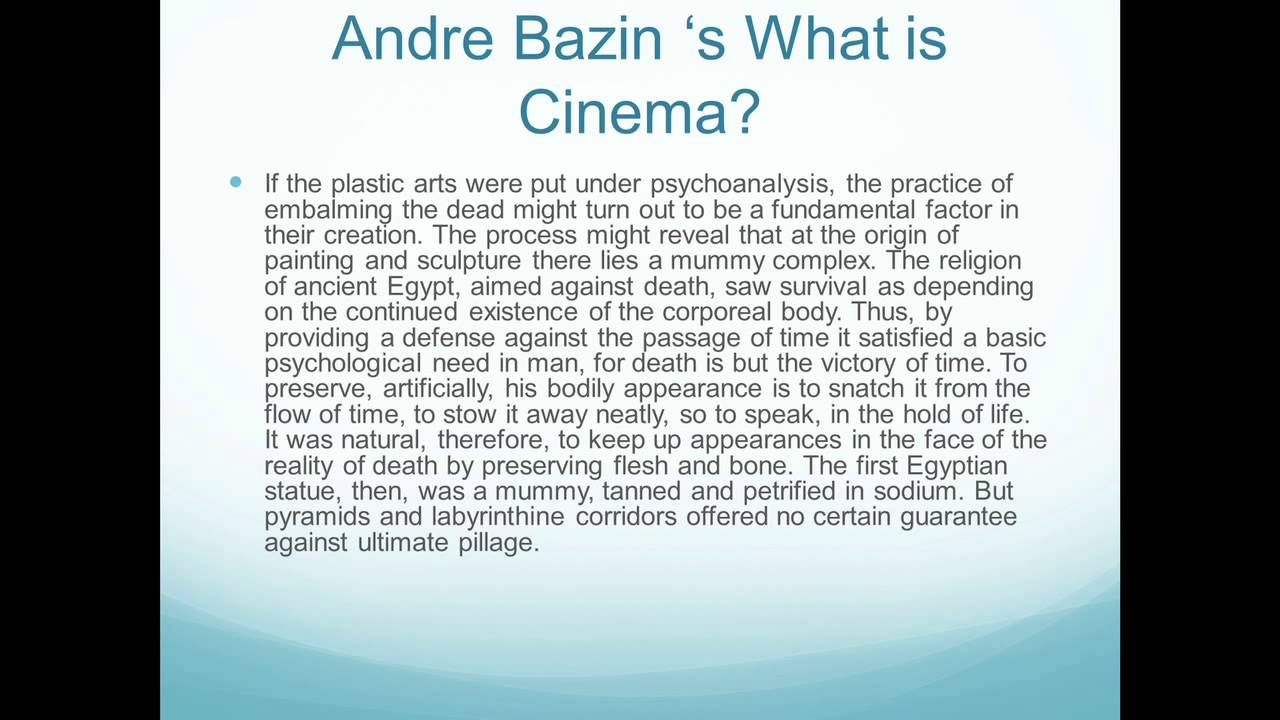
Film Appreciation 2015: Lecture 4: Film Theory
10.8K
Cinema began with Edison's kinetoscope in 1894 and Lumière brothers' projections in 1895. Early theory focused on fictional narrative films. Russian formalists like Kuleshov developed montage theory, demonstrating how meaning is created through shot juxtaposition. Pudovkin refined this with 'linkage' editing. Sergei Eisenstein's collision theory showed how dramatic juxtaposition synthesizes images into meaning. André Bazin countered with realist theory, arguing cinema can reflect reality through deep focus and long take techniques. Genre theory recognized film's popular nature as a Hollywood product. Structuralist approaches used binary oppositions to analyze Westerns. Christian Metz's semiotics demonstrated how films signify meaning through specialized quotes. Feminist theory emerged with Laura Mulvey's 'Visual Pleasure and Narrative Cinema' describing women as passive objects for the active male gaze. Narratology uses literary concepts to analyze filmic narrative. Postmodernism features denial of meaningful theories and media domination. Post-colonial theory examines race and eurocentrism. Contemporary approaches analyze film form, plot, and story, with cognitivism addressing spectator mental activities.
Click to watch →
Film Theory
718
Film theorists analyze films using specific elements: shot types (extreme close-ups, medium, long shots), camera angles, lighting, color, sound (diegetic/non-diegetic), editing, and mise-en-scène. Major theoretical approaches span diverse perspectives: Formalist theory focuses on technical elements creating viewer impact; Structuralist theory examines patterns within and between films within larger contexts; Apparatus theory argues cinema is inherently ideological—its mechanics of representation (point of view, what gets filmed/cut) are part of its nature, not imposed externally. Marxist theory analyzes power dynamics and realism; Feminist theory critiques the male gaze and women's objectification; Queer theory examines heterosexual norm construction and marginalization; Auteur theory (from French 'author') holds directors as primary authors with distinctive styles marking their work despite collaborative production processes. Neoformalism rejects overemphasis on symbolism, focusing instead on cognitive effects and directing viewer attention to narrative importance. Cognitive film theory examines how human intellect processes films, enhancing significance through intellectual engagement. Cinema reproduces reality through acting, cinematography, lighting, sound, and editing, making viewers believe stories are real. The viewer's position is ideological—they choose seats for optimal viewing experience, demonstrating cinema's power to shape perception. Every viewer imposes different meanings based on personal interpretation of these mechanical elements.
Click to watch →
Deep Dive
The study of 'Third Cinema' and post-colonial film movements that challenged Western/Hollywood cinematic norms.

WEBINAR ON "THIRD CINEMA" by Dr. Vellikkeel Raghavan
1.1K
Third Cinema can be understood as the cinematic counterpart of post-colonialism, representing resistance against colonialism. The movement sprouted from the basic seed of resistance against colonial rule in Latin American countries, which were former Spanish colonies (hence Spanish-speaking) and Western African countries (former French colonies, hence French-speaking). By making films in their own languages, these nations were essentially 'writing back' to their former colonizers, using cinema as a tool for post-colonial self-expression and cultural reclamation. This connection between Third Cinema and post-colonial theory demonstrates how film served as a medium for decolonizing cultural production and asserting national identity.
Click to watch →

Stuart Hall's "Cultural Identity and Diaspora" (Summary/Notes)
7.2K
Third Cinema, also called Third World Cinema, is an aesthetic and political cinematic movement that serves as an alternative to First Cinema (Hollywood) and Second Cinema (European Cinema). It focuses on the experiences of black individuals in post-colonial contexts, placing the black subject at the center of representation. This movement represents a new type of cinema emerging in the Caribbean that joins other Third Cinemas worldwide.
Click to watch →

40+ Films by Black Directors You Need to See | Reclaiming the "Lost" Cinema of Resistance
348
Third Cinema is a Latin American film movement that emerged in the 1960s as an explicit response to neo-colonial and anti-imperialist conditions. This movement mixed film forms to serve audiences in countries being fed by Hollywood cinema, which was seen as fueling neo-colonial and capitalist systems. Third Cinema aimed to refute Hollywood's influence and inspire revolution in viewing audiences. The movement influenced filmmakers across Africa, Asia, and the Americas, and its emphasis on anti-colonial themes directly impacted the development of the LA Rebellion and other black cinema movements.
Click to watch →

Manthia Diawara: Africký film nezúčastněných zemí. Ousmane Sembène a Abderrahmane Sissako
110
Third Cinema, developed by filmmakers like Gillo Pontecorvo and others, emerged as a response to Hollywood cinema and 'auteur cinema' (including French New Wave and Italian Neorealism). Third Cinema uses the camera as a weapon to make marginalized places visible, thereby liberating them. It constituted itself as a language against Hollywood's invisibility of non-Western places and against other cinema movements that ignored the voices and realities of different places.
Click to watch →
30 ዓመታትን የፈጀው ፊልም - ፕሮፌሰር ሀይሌ ገሪማ || ጥቁር አንበሳ - የሮማ ተኩላ - Black - Lions Roman Wolves || Haile Gerima
23K
Third Cinema is a filmmaking philosophy that emerged from the Third World as a response to the oppression of Black people and other marginalized groups. It differs from First Cinema (Western commercial cinema) and Second Cinema (Hollywood-style entertainment) by focusing on telling authentic stories of marginalized peoples and their struggles for liberation. The Black Renaissance Movement emerged in the 1960s as a collective struggle for liberation and self-determination, involving Black people using their artistic and cultural tools to tell their own stories and represent themselves authentically. Third Cinema is described as a tool for liberation that allows oppressed peoples to tell their own stories and represent themselves authentically, using cinema as a form of artistic resistance. This movement is positioned as an alternative to Hollywood and other forms of cinema that tell stories from the perspective of oppressors, focusing on authentic representation and cultural liberation.
Click to watch →
Deep Dive
Practical application of film criticism methods to write formal, academic film analyses and textual readings of contemporary cinema.

CRÍTICOS VS ANALISTAS DEL CINE
104
Film criticism is a subjective evaluation of movies that expresses personal opinions about direction, acting, and other elements, while academic film analysis uses objective, technical, and theoretical approaches (such as structuralist, psychoanalytic, and phenomenological methods) to systematically deconstruct films and uncover deeper meanings and cultural contexts.
Click to watch →
Come si analizza un film: IL METODO DI ANALISI
1.3K
Film analysis differs from subjective criticism by pursuing objective, rigorous examination. The process follows three phases: pre-comprehension and hypothesis formation, field delimitation and tool selection, and practical textual analysis. Textual analysis comprises description (decomposition of form and content) and interpretation (uncovering implicit meanings). Decomposition uses segmentazione (horizontal breakdown into units) and stratificazione (vertical analysis of components). Recomposition transforms findings through enumeration, ordering, ricompattamento, and modellizzazione. Verification ensures balance between objective description and subjective interpretation, preventing excessive paraphrasing or aberrant readings. Methodology functions as a deontology—recommended practices adapted case-by-case to specific goals.
Click to watch →
Re-inventing Film Criticism | Dr. Walter Metz | TEDxSIUC
946
Film criticism should fuse the strengths of popular and academic approaches: popular criticism engages audiences when they care about films, while academic criticism provides theoretical frameworks for deeper analysis. Effective criticism requires using tools from sociology, history, and critical theory to move beyond reductive summaries, enabling viewers to understand how films position them in relationship to the world and make them think about their own place in it.
Click to watch →

MARATONA PARÓDIAS E BESTEIRÓIS AMERICANOS | Melhores Momentos e Cenas Marcantes
256.4K
Film criticism employs various analytical approaches: (1) Formal analysis examining narrative structure and technique, (2) Thematic analysis exploring underlying messages and ideas, (3) Historical analysis considering context and influences, (4) Cultural analysis examining social and political implications, and (5) Audience reception analysis studying viewer responses. Effective criticism combines multiple analytical perspectives to provide comprehensive evaluation.
Click to watch →
Film Analysis 101: A Complete Guide to Watching Movies Critically
807.5K
Mise-en-scène refers to everything that appears in the frame—costumes, locations, lenses, lighting, and all visual elements that result in what we see on screen. It encompasses the dozens or hundreds of choices that filmmakers make to create meaning. Cinema exists on a spectrum between pure realism (reproduction of reality) and pure formalism (entirely artificial). Most movies exist in classicism, combining realist elements (naturalistic performances, subtle editing) with formalist elements (musical scores, camera movement). In Home Alone, glossy Hollywood lighting, 35mm film, and realistic settings combine with musical scores and exaggerated camera angles to communicate Kevin's perspective.
Click to watch →
Postwar Realism
Realism Defined
Apparatus Critique
Production System
Suture Concept
Postwar Realism
0:10- 1
Post-WWII Europe, especially France, saw cinema shift toward realism.
- 2
André Bazin, a key critic, championed truthful life representation.
- 3
Realism used objective shots and logical sequences, not technical tricks.
Formalist Film Theory (Formalism)
While realism (championed by theorists like André Bazin) argues that cinema's primary value lies in its ability to faithfully record and represent physical reality, Formalist Film Theory presents a direct counterpoint. Formalists, such as Rudolf Arnheim and Soviet montage theorists like Sergei Eisenstein, argue that film is an art form precisely because it deviates from reality. Instead of merely capturing the world, formalism emphasizes the deliberate manipulation of the medium's unique properties—such as editing, camera angles, lighting, and framing—to construct a subjective artistic experience. According to this perspective, film does not just reflect reality; it actively creates new meanings and emotional responses through aesthetic construction, challenging the realist assumption that invisible editing and objective representation are the highest achievements of cinema.
Basic film terminology, including fundamental concepts like mise-en-scène, cinematography, editing, and narrative structure.
The historical distinction between early cinema's actualities (documentary-style recording) and illusionism (constructed storytelling).
An introductory understanding of literary theory or art history criticism, which serves as the foundation for film studies analysis.
A general historical awareness of the early to mid-20th century, particularly how major global events influenced artistic expression.
In-depth analysis of specific national film movements, such as Italian Neorealism, Soviet Montage, and the French New Wave.
Advanced film theories, including Auteur Theory, Genre Theory, Feminist Film Theory, and Semiotics.
The study of 'Third Cinema' and post-colonial film movements that challenged Western/Hollywood cinematic norms.
Practical application of film criticism methods to write formal, academic film analyses and textual readings of contemporary cinema.
10.8K views218likes15:28@easysem5638Original Release: 2022-03-14
[Music] that happened in the post world war europe europe especially in france and then when the cloud this is a shift in the cinema data [Music] is recognized as the most prominent figure behind realism in our neighbor andre beijing was very influential film critic the founder defining feature was its ability to bond with the social world and to to truthfully show life in all its complexities he was not interested in technical manipulation of the film structure technically uh it has a slice of life in it in cinematic realism we see objective tracks de presented a non-sensational manner through logically made senses foreign [Applause] is an apparatus that creates optical illusions and produces an impression of reality reality in the out impression um he said that modern society controls people by using ideological apparatus like a state church theory mirror stage of flag station associated [Music] said that cinematic apparatus includes the entire production process and the way in which individual individuals are positioned in relation to images um [Music] foreign used by film to make us forget the camera that is really doing the looking miller using it to name the relation of the subjected to the change of it of its discourse idea of suture is based on the premise that in cinematic discourse the meaning is produced due to the viewers viewers of sensor the viewer is inserted into cinematic discourse by their exclusion foreign thank you
Up Next
104:31
Cinema, Myth & Modernity: Analyzing The Last Laugh | Lecture
@garryleonard2846
560 views•2020-11-22

23:14
Visual Analysis Essay: How to Analyze Graphic Novels in College Writing
@nataliepleimann5941
1K views•2020-10-14
4:55
Film Blocking Techniques for Directors: Space, Shapes, Lines
@StudioBinder
1.9M views•2018-07-23

4:00
Evolution of Darth Vader: Anakin Skywalker's Animated Journey Across Star Wars Films
@TellItAnimated
13.4M views•2019-03-30
Related Study Plans & Knowledge Roadmaps
Structured learning paths in Film Analysis
film-analysis
Sensory Cinema: Foley, Haptic Sound & Texture
01Introduction to Film Sound and Foley Artistry
02Micro-Sounds, Textures, and Extreme Amplification
03Haptic Audition and Film Phenomenology
+ 1 more learning modules
12h4 modules
Explore Roadmap
film-analysis
Breaking the Fourth Wall: Mockumentary & Satire
01The Invisible Wall: Basics of Cinematic Illusion
02Looking at the Lens: Direct Address & Character Glances
03The Mockumentary: Satire, Realism, and Complicity
+ 2 more learning modules
12h5 modules
Explore Roadmap
film-analysis
Analyzing the Long Take: Cinema, Space & Ethics
01Foundations of Film Grammar: Montage vs. The Long Take
02Choreography and Mechanics of the Simulated One-Shot
03Phenomenology of Film: Real-Time Spatial Continuity
+ 1 more learning modules
14h4 modules
Explore Roadmap
film-analysis
Anachronistic Music: Period Drama & Subversion
01Foundations of Film Sound and the 'Needle Drop'
02Traditional Authenticity vs. Revisionist History
03The Rise of the Anachronistic Soundtrack
+ 2 more learning modules
12h5 modules
Explore Roadmap