



![FILOSOFÍA - Estética | Walter Benjamin [CICLO FREE]](https://i.ytimg.com/vi/yUYs1I8At8I/maxresdefault.jpg)












Film operates as an aesthetic fiction that exists at the intersection of illusion and reality, where the medium's doubled coding of recording and projection creates a unique form of virtuality that transcends simple binary distinctions between fiction and documentary; this is exemplified by how films can simultaneously present themselves as both fictional narratives and documentary records, while their temporal nature—where what appears present was recorded in the past—fundamentally distinguishes them from other art forms and enables a distinctive mode of aesthetic experience that mixes levels of consciousness in ways that create what Sandy Cavell termed a 'mythological mode' of viewing.
Cinema's Undecidability: Illusion, Fiction, and Reality | Gertrud Koch | Tel Aviv University Lecture Series
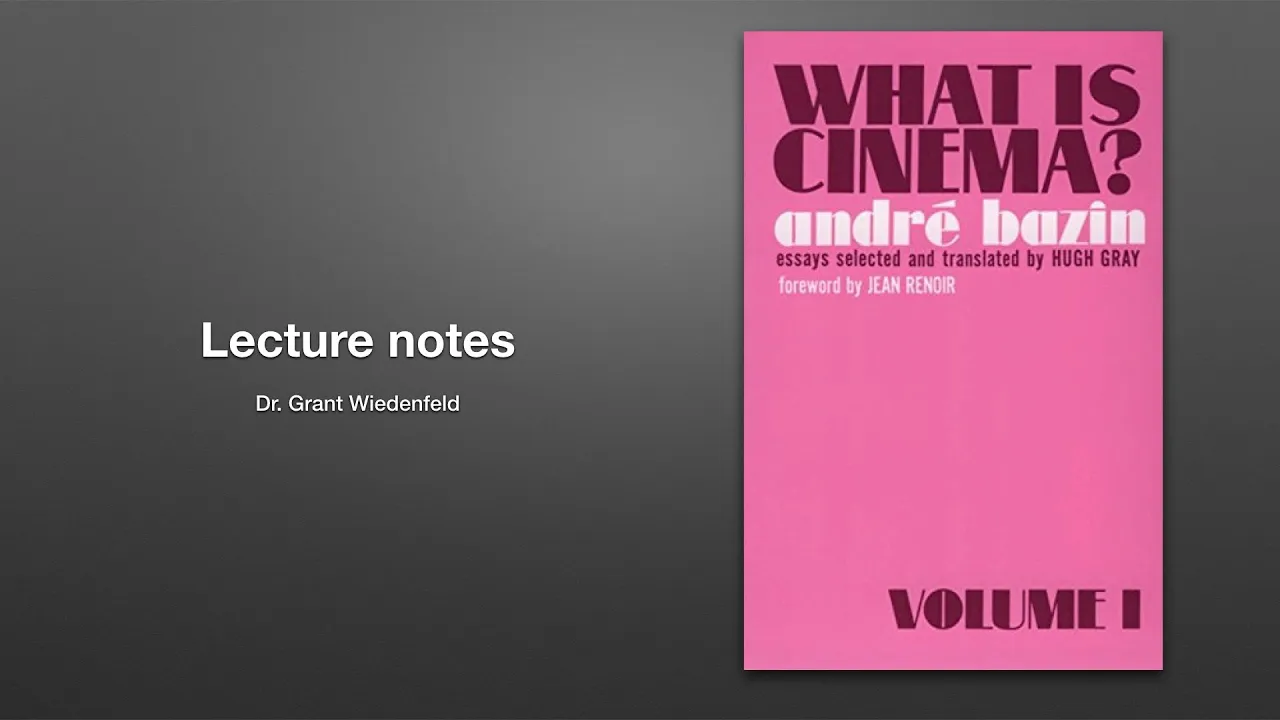
Added:Basic concepts in film ontology, particularly André Bazin's theory of the photographic image and its indexical relationship to reality.
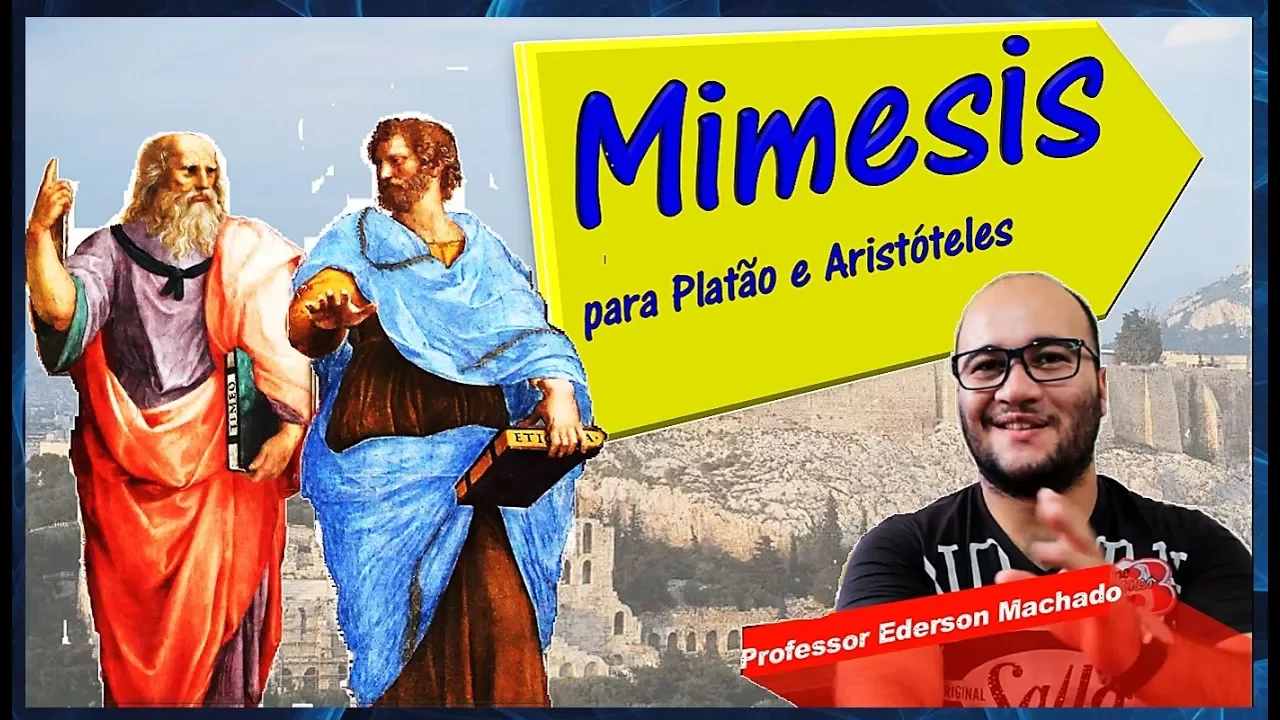
The philosophical concept of mimesis and representation, dating back to Plato and Aristotle, concerning how art mimics or distorts the real world.
An introduction to the Frankfurt School's critical theory, particularly the work of Siegfried Kracauer and Walter Benjamin on film and aesthetics.
The traditional distinctions and historical boundaries between documentary (non-fiction) cinema and narrative (fiction) filmmaking.
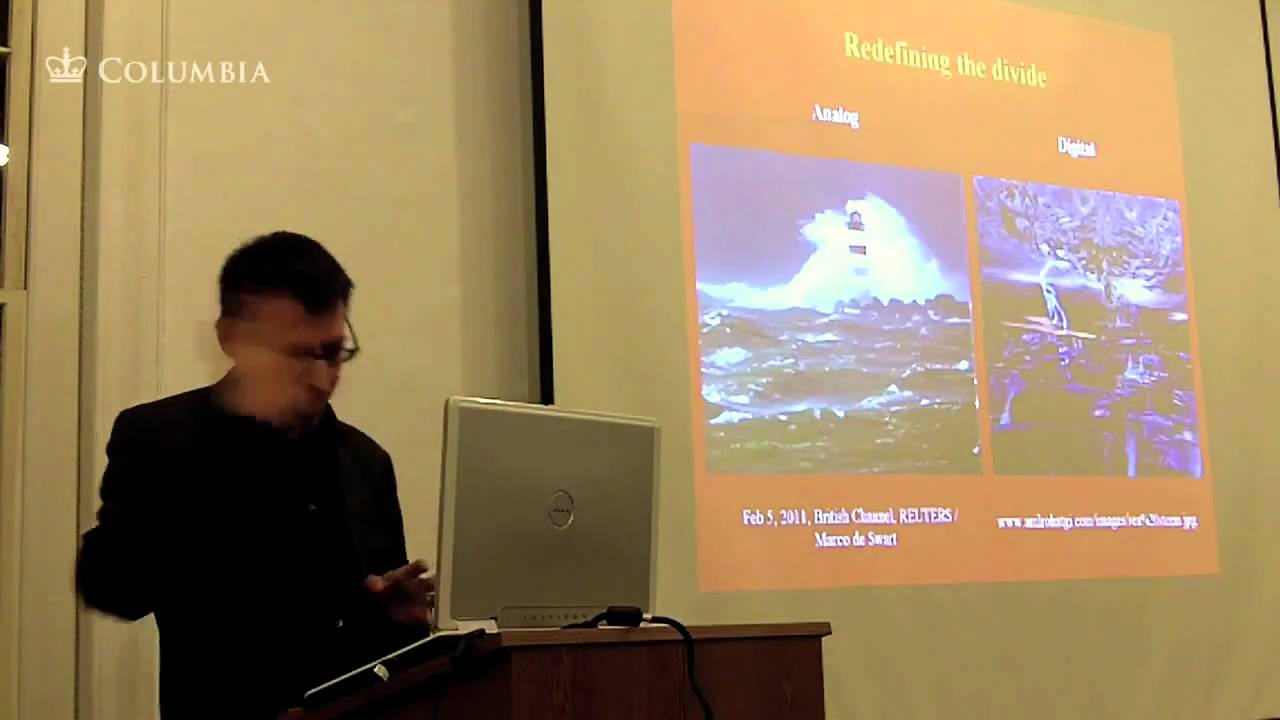
The impact of digital technologies, CGI, and deepfakes on the ontology of the moving image and the concept of 'digital indexicality'.
Jean Baudrillard's theory of simulacra and simulation as it applies to hyperrealism in contemporary media.
Analysis of hybrid film genres, such as docufictions, mockumentaries, and the essay film, which deliberately disrupt the boundaries of reality and fiction.
Psychoanalytic film theory (e.g., Christian Metz) to understand how spectators negotiate belief, illusion, and desire while watching films.
674 views6likes1:51:58Original Release: 2020-11-19
okay good evening everyone um i'm gonna be brief but i'd like to say a few words before we start this series um it was this april a few weeks after coffee 19 really erupted in our region that we soon realized that we would have to cancel the international colloquium that we hold in our school every two years and which was scheduled to be held in june um it was razba as myself and the rest of the co-founder committee um found it very disappointing that we could not host all of our distinguished guests here in tel aviv as we always do while we could not really tell for sure as we still cannot when international conferences would resume and whether it is going to be in the near future at all we nonetheless agreed that in the current moment it becomes urgent even more urgent than ever to discuss the roles that moving images play in our world as the pandemic has appended so many aspects of our lives without any clear end in sight yet and as power grabs upheavals and protests sweep across the globe and simultaneously leave us all in a transitional period of anticipation to what has yet to come or has yet to at least fully and clearly materialize we thought that it would be timely and relevant to invite our international friends and colleagues to lend us their thoughts about any aspect that relates uncertainty to the moving image our speakers in this series will all connect their talks to the many possible ways in which moving images and the theory and history of film television and media relate to uncertainty they will attempt to ask what happens when viewers are not sure of what they just saw or heard on screen what is the fate of film theories that have lost their predictive power do and can moving images document that which is unknown or yet to occur that which exceeds our control the ambiguous the impossible how do film and television deal with reality and history going off scripts so each meeting in this series will host one distinguished scholar in our field we'll give approximately a one hour talk that talk is going to be followed by a discussion and whenever possible followed also by respondent i am very happy that we are able to kick start our series this evening with professor gertrude koch who will speak about the reality of illusion cinema's undecidability please stay tuned to our advertisements in our series poster to find the dates for future talks in the upcoming semester and also the one following it and before we start i'd like to thank my fellow serious committee members professor raj yourself and dr boss hugging to our wonderful serious coordinator miss diana glenstein to professor koch for accepting our invitation to be here this evening foreign chairing this session and to all of you who came so without further due pass the mic to our chair so hello and uh welcome again everyone as uh ohad has already mentioned today we have the pleasure of hosting professor gerkinkoff whom i will soon introduce after professor carl's talk i will present a short response and afterwards we shall open the floor for discussion professor koch uh professor dr gertrude koth is professor emerita for cinema studies at flyer universitat berlin a visiting professor at brown university usa and a part-time full professor at oslo university she has been a research fellow and a visiting professor in institutions such as nyu columbia berkeley tel aviv university and getty research center in los angeles she served as the director of the research center aesthetic experience in the sign of the entanglement of the arts in berlin from 2006 to 2014. professor koff has written numerous monographs in german as well as in english an extremely abbreviated list of which would include her book consequently cacoel that came at princeton university press in 2000 her book breaking out breaking bad breaking even from 2017 and the very recent machine that came at minnesota university press and uh that i am very eager to read he is also the co-editor and on the board of numerous german and international reviews such as october constellation philosophy and social criticism and others the title of her talk today is the reality of illusion cinema's undecidability professor cough please yes thank you for the introduction and for the invitation i think it's great at least to meet in real time that's at least one dimension where we have as cancer some senses um i'm very glad that i can present you a topic of my choice i will speak about illusion and fiction and how this comes together in film and so it on the outlook it might be looked like a very out old-fashioned paper but i think in the middle of all these kind of newest skepticisms it might be useful to just reflect or reflect on some of the notions we are using when we are speaking writing and thinking about film and cinema so it's a rather dry exercise you are invited so it has a promising title the first part creating fiction um what i will undo because i hope i don't create fiction here um but maybe conceptual fiction what would be another interesting topic on a meta level of what we are doing it's based on a presumption that film has a special need for illusions that it's built on aesthetics of illusion and that it brings also this aesthetic of illusion back into the other art so this would be another part in this project the space of fiction in a film world is built on illusion so production illusion in this first degree means you know the seeing movement where it's only you know projected stills and so on and so on you know this the production of film roles is made possible by the creation of illusion to put a variation on mendelsohn you can deduce that conscious illusion goes along with the appreciation of the fictional over the factual the world experienced as illusion is not only recognized as such in its own fictionality but is also a knowledge as world bearing this results in the necessity to clarify the relationship between the real world and the fictional world in the film and whether this relationship is appropriately captured in the genre discussion um between fiction film and documentary any attempt in this direction is bound to have to take up this historically enduring and contest the distinction it is a popular distinction that not only classifies films according to whether they operate as fiction or documentary typically this distinction is also seen for types of texts and literary genres like a novel versus a repertoire and so on big discussion in the 20s as you know and there as well we can distinguish between factual reports non-fiction books and literary fictions gregory curry and many others have rightly pointed out that these distinctions are based more on conventions than other than others than on clear definitions of the terms we do distinguish genres from one another according to their degree of creating fiction but the fact that we can do this actually requires us to be able to keep the terms separate from one towards the other either something is fictional or real and there would have to be reasons given for this judgment are determinations of fictional or non-fictionals and determinations of qualities of an object that can be true or false and what are the contextual conditions under which the discursive practices of naming documentary or fiction are cultivated that is for instance empirical cultures of knowledge institutions of fiction productions etc so a child might take some fiction for the real world because it doesn't know uh doesn't has the knowledge uh to reject a presented world as you know fiction um cultures are are indeed organized institutionally but they are adept to rapid shift of motions that are quite unstable for instance fictional elements the documentaries are more strongly emphasized today that they were 20 years ago you can see this with this huge wave of so-called mocumentaries or historical pseudo documentaries and so an aesthetic argument has broken out over this question in photography for example as well in this context for instance the reception and self-representational presentation of andreas gorski's photographic work is interesting i don't know if you know it it is huge photographs taken from institutions like the uh the stock market in tokyo or in shanghai and it's done in a huge format in a very i mean kind of shiny and record way and there's a kind of technical twist in it he had long held back information about the significant share of digital post-production in his work until a shift in general estimation had taken place that photography need not necessarily be purely referential but that digitization could be benefit to create freedom and technological autonomy during the transition period gorski was attacked because this astounding images were taken as iconic signs of a global alienation as critical reportage and not as highly artificial visual commentary on the same issues the fact that he had not indicated the specific difference from his work was charged up to being a deceptive maneuver of his part an argument that has disappeared was increasing familiarity with the practices and aesthetics of digital photography so it became part of the shared knowledge that we wouldn't look on a photograph on a photograph that is digitally enhanced or post-produced as fake for example the question of whether this is merely about fluid borders between two technologies analog and digital photography or whether ontological divisions follow from this difference which concern the relationship between sign and referent leads to the heart of the problem of fiction must objects be fictional as a whole it's a unicorn or can they be so only in certain respects a question that we can pose with regard to a history film or a docudrama and if it concerns the letter this in turn raises a question of whether it only concerns aspects of the medium of the distinct or if that is the medium of the distinction between fictional non-fictional is in specific qualities of the object furthermore the question arises as to what the value of the static frictions is in the context of these various fictions so says you know in fiction theory there's always this distinction between you know different kinds of fictions and this aesthetic fiction a specific one how are aesthetic fiction distinguish from non-aesthetic fictions such as legal fictions or scientific fictions we speak in mathematics for example an example of a legal fiction's property i can be the owner of a thing without being in possession possession of it that is i have a legal title over an object that i might possibly never have seen or held an aesthetic fiction by contrast is not something i can own but only generate as a producer and recipient a scientific victim if i buy an art object i am the owner of a material object described in a contract but this does not mean that i end up possessing all the aesthetic fictions that that form in the minds of others so i can only have a title of position of the material object but not what makes width in the static objects is indeed this kind of imaginary space that comes with it so this i cannot really own it's not about ownership [Music] an aesthetic um sorry scientific fiction is an assumption about a fact that i cannot directly prove or observe construction by means of which i want to make claims about something etc so it's a matter of construction if you want an aesthetic fiction like a model also an aesthetic fiction constructs images of the world that have a commenting character and that cannot relate to the empirical world in any way that is remotely similar to that of science fictions scientific fictions all these fictions operate on the dividing line between true and false and or between existent non-existent they fundamentally differ from aesthetic fictions however in that they are established as hypothetical statements in the realm of the possible while fiction becomes as if reality so if my car is stolen it's possible that i gain back the material possession and not only the legal possession of the car you know but let's say when i have a design order the design of a car so i cannot be the potential user of this car the fiction of ownership is based on the possibility that my stolen piece of jewelry or whatsoever might come back into my possession and it's not just a legal fiction but also material ownership scientific fiction sings from the position of probability that something can be assumed to be real that is is possible but there are also fictions whose relation to the object seems questionable is a square root a mathematical fiction or is it material so this would be some questions you would have discussed in applied mathematics ironically however most of these doubts do not even arise in aesthetic fiction the worlds that i see in the film will never become mine i will never walk around the house and be able to warn the inhabitants about the attacking birds also i have constant access to the film the birds at any time and i can travel to bodhida bay the coast regime named in the film etc and yet the fictional film exercises an uncontested effort effect on me without itself needing to be material in the sense of an extensionally unfolded three-dimensional world that i could enter and without my lapsing into the delusion that george taylor has been waiting for me to visit bodega bay for decades the film itself is a partially materialized fiction it's it exists both as a material thing a dvd a video a film print a copy etc and as a static fiction of my perception as fiction it only exists in the three-figure relation the materialized thing mechanical the imagined subject of the recipient's recipients and the fiction forming network of science fiction in contrast to the lie or the promise for instance which always make a concrete truth claim and possibly breaches it is experimental in as much as it necessarily remains open as to how and were allegations of reality or transfers to it are provided for or undertaken fiction can function as forming hypothesis both about a possible world and about the concrete empirical role so this would may be a way to come to a distinction between the documentary and the picture film i understand the static fiction first as those formations of fiction that produce internally coherent figures in a special way and that make true claims and that make truth claims that do not arise from the function of illustration so film is not an illustration of reality in the organization of the materials they open up perspectives perceivable by the senses which have an effect on my thinking feeling with their modulations a film can module modulate my ideas about love or hate or whatsoever or the life of a tribe on easter island without my having to believe in the existence of the characters or without having to have a complete so-called three-dimensional image of real existing persons who i could also equally find there my next point is about virtuality and aesthetic fiction as i try to discuss in the first part some of the possibilities of how can i come to distinctions aesthetic fiction is independent of genre in as much as its epistemological claims are not canada is partial right from the start and aim for the dimension of experience more than knowledge that is it's a complex liaison of sense perception emotion and thought that amounts to the aesthetic experience also i cannot introduce any clear division between different experiences here i would like to examine the degree to which general definitions of states of consciousness are also illustrated for aesthetic fictions my thesis is is that what pers refers to the philosopher pers to as a virtual of meanings in the stream of consciousness is valid to a special degree for aesthetic fiction because its stillos is anchored in the virtual and not in the possible charles sunderland's purse expressed the difference between something possible and something virtual as follows i quote a virtual x remarks pers while referring to sinking vote is something not an x which has efficiency the virtues in the latin sense of an x this is a proper meaning of the word but it has been seriously confounded with potential which is almost its contrary for the potential x is of the nature of x but is without actual efficiency so the crown prince might be a potential king but he has not the efficiency of a king a virtual king in let's say in in the novel may have this virtuality uh to act as a kin king at least in this realm of fiction perth relates his definition to the temporal dynamic of thought from which meaning is produced i quote further computers meaning lies not in what is actual thought but in what this sort may be connected with in representation by subsequent source so that the meaning of a thought is altogether something virtual so something that will be developed in time and not so much in [Music] material form the temporalization of sword takes a harshness out of the distinction that fit between fiction and non-fictional without however in the least solving the logical problem relating to the clear distinction between the terms with the dynamization of meaning however the structure within which something is to be thought of as fictional or non-fictional shifts into a temporal horizon that is in principle open if we take this assumption by pers as our basis for a moment then the thought of something is first displaced as non-fictional on the level of a future action which in principle is not determined by any individual thought there will indeed also be distinctions in the structure of future thinking and acting that are dependent on whether something is viewed as fictional or real but the distinction loses its binaries of severity in the word severity in thinking of a sentence out of the mouth of a character in a novel or a gesture from a film scene i can easily come to this su decisions about actions that are at least real in their consequences but it may be difficult to prove this connection as a monocausal reference so i speak here in my next part on relativistic realism and it's not a relativism in the sense of you know that i would deny says truth or something it's not my claim here but that we i mean refer to surreal in relations it is also necessary however to examine whether the performative power of fictions can also be be seen in other contexts of activity or whether they are restricted to aesthetic fictions in the so-called called thomas theorem it is claimed that it is enough to consider something real for it to generate the effects that could be expected if it were actually real i mean here you have this as a fiction condition the claim is if men define situations as real they are real in their consequences that's the so-called tennessee syrian the thomas theory was developed in 28 1928 by the american sociologist dorothy and williams thomas and since then it has become a central assumption of symbolic interactionism at core this sets up the principle that human actions are always based on subjective evaluations of situations an enthusiastic lottery player reckons with a real chance of winning even so it is rather improbable that he will win he acts as if he had a real chance all also he usually knows that the statistical probability is low he considers his luck to be a rare but real entity his evaluation of reality based on a wish turns him into a player which has real effects on his financial budget sets the bad side of this condition he behaves as if he could could get lucky he interprets the lottery's promise of luck as a future possible possible reality in analogy to the thomas theory one can therefore pose a question what do i have to consider real in a fiction for this to be relevant for my actions i mean that's this you know the question when does fiction um has real consequences for the spectators for the readers for the consumers so what are we taken out of the fictions into our own reality my thesis is that fictions can supply such a selfish such as if assumptions with consequences for action and regardless of whether the story that is taught is taken as true normative interpretations of the situation that are conveyed in them can be accepted as real and can lead back to the world of empirical actions as interpretations i mean you know that's what you sometimes have when you say you come into a situation or building and you say oh my it's really have gas so um it's not that i think that i'm entering the building where kafka situates this novel on the triumph but i take some of the static impressions that i got from the novel and transpose them into a kind of real world so do i fictionalize than the real world or do i realize the fiction now this is always a tricky question here if if a fictional oh sorry and regardless of whether the story that is taught is taking as true it's not that i believe that this is our realistic story or you know documentaries um and regardless of whether the story that is taught is taken as true normative and appreciations of the situation that are conveyed in them can be accepted as real and can lead back to the world of empirical actions as interpretations of the world if a fictional story about love is understood by the spectator or reader as an applicable character as a characterization of love the possibility for corresponding self-interpretation with consequences for action in his or her own realm of life is consequently greater than if the fictional events are considered impossible and necessarily unreal the realm of correspondence can lie within the normative in a confirmation that something is conceivable because it turns up in aesthetic fiction and represents a matter of value within the institution of aesthetic fiction so i can get some normative let's say confirmations out of pictures it's lyrical sounding montage it was called in the 18th century um the realm of correspondence can also sorry so modulation of subjectivity starts here at least on the level of a synchronous of asynchronous emotionality the indication given by thomas theory at the level of a sociological theory of action designates a subject perspective of persons as constitutive for evaluating evaluating the satori content of fictions it may sound banal but it is quite revealing where it is a question of claiming that mass media have a causal influence of the behavior of consequent consumers in his brief study of the reality of mars media the sociologist nicholas lumen describes it as fellow or as follows i quote here the medium of narrative journalist fictionality is chosen to individualize motivational positions individuals appear here with a biography with problems with self-generated life situations and shame existences with a neat understandable observer for suppression for unconsciousness for latency the medium of fictionality has advantage of being able to bring about or at least allude to concrete realities while at the same time being able to leave it to the readers or viewers whether or not they wish to draw any conclusions for themselves or for people known to them and of course lumen lumen describes here's a peculiar way in which not only our fictions opened up in the symbolic exchange exchange but the spectator is also fictionalized in the sense of the subjunctive self-determination how could it be otherwise as paradoxes of a simultaneous occurring individualization and de-individualization the play and this is part of this you know where subjectivity gains objectivity as it becomes part of a setting of a in a public sphere the play with identities by persons who no longer have any traditionally or institutionally performed rules for creating identity is taken on by the mass media and their fictionalization luman writes it is extremely tempting to try out virtual realities on oneself at least in imagination which one can break off at any time lumen points to the meaning ascribed to the body in the shift from print to visual media in film the body and its movements is observable in space the film thus becomes a medium of intensified body control in which the boundaries of the body are tested out this is drastically visualized above all in the increasing expansion of areas like action genres erotics and sports this is also and precisely we understand films as illocusionary statements not a matter of an impulse reaction schema conceived as casual causal and based on pneumatic imitation rather a complex network of meanings emerged said to use echoes terms is open and not any kind of spider's web in which the spectator is ensnared victim of a direct intention on the part of the producer the thesis is that's authorial intention that completely determines the spectator and the act of perception is just not very convincing also it is not possible to rule out that there are works and spectators that look for exactly this kind of authoritarian reference for instance training films propaganda movies and educational films seek to advocate all their claims and convictions for direct adoption and imitation so this would be one part on this on the scale from fiction documentary to this kind of you know interactionism what goes you know on between the subject and the perceived object so what then is this virtues of the medium my preliminary hypothesis is that aesthetic fiction which card definition does not function as a factual claim supplies increased virtuality in perth sense i would like to examine the thesis which is in no way surprising on you by looking at some processes for creating fiction in the outcome of creating illusion in films first i will return to a question post at the beginning whether it makes sense to maintain the genre distinction between fiction film and documentary in the sense of a broad conception of a static fiction has increased virtuality documentary film would also count as fictional for its assertive visual acts are subject to the very same production of meaning as are fictional statements documentary films are also edited they work with camera movement with off-screen music excerpts lightning and different lenses that orchestrates entire potential of the of the film shape from the panoramic shot large scale location shots up to detail and close-ups this difference from fiction films i said this difference from fiction film is that the perspective under which i see what is being shown is different namely that of an inter interpretive presentation of reality in principle however i can also view every fiction film as a documentary that documents the materials of production such as sets costumes actors etc this all depends on the technical requirements for film the film recording apparatus already consists of a part that is purist to reality which records or receives in the camera running in real time with its optical lens system that are open to the surroundings recording light from the surrounding reality which is directed on inwards by the lens to the inserted film or chip where the film is transported by the lens system is a project in the projecting apparatus later during projection we see on screen what was recorded in the past as if it were taking place in the here and now the fictional world of the film is therefore a world that is already temporarily closed without ageing and without deaths at most the material object can change not be distorted by censorship be contextualized by new background information etc even when i see the film on screen everything that there is to see can already no longer be seen in reality in the way that i am getting to see it now the lights have been pre-positioned they said to be located the street renamed the passersby have long brought their shopping back home and i won't meet that interesting group guy in the sidewalk cafe anymore either in many respects films are based are time-based media the location of the camera the lighting the actors who may be dead by now the streets of houses that may no longer exist because they were destroyed all of this can no longer be changed the wheel of the object is its site as a thing its nature as a work its choose as we can say with hana rent for quote conceptually we make a call choose what we cannot change so this would be a very very basic definition of sufficient but this means that the real in film always appears as fiction a fiction that can then only be transcribed by new thoughts about the object that is in the mode of the imaginary the fact that what i currently see in the moving image as present is already passed distinguishes film for example from music which is a repetition of the past in the present of the performance in a different sense that in film which in its singh hood as a material object requires its temporal performance tech mechanical and technical projection while the musical sound can be heard each time as a different variation on the score or composition and only becomes a reproducible material object itself in the technological medium of a record or cd the fictionalization of the spectator always only takes place in the screening when the images end up in movement therefore spurring an attention that is different than that in front of a static painting the perception of which i myself can temporary structure with how i direct my gaze and where i position myself in front of it and into in relation to it the traumatic interruption of the fiction of the living is the basis of the so-called la reciolimage the freeze frame shot which marks a relapse into photo into photography and is often associated with a horrifying fiction of being the vision of a dead person or of death so it means of the future as does this process can show both diegetically as a figure as well as a current dyeing of the medium film in its quality as a moving image so the film dies in front of my house eyes in when it freezes i know it's an aesthetic form it's not that the film will technically uh freezing that's totally different than if just you know there's a technical failure to project the film this process can show both which appears to be as a modification of movement after such a formal moment in a film it seems altogether as fragile as a roman slave at the circles where to greet the caesar with a formula moriturite salutant i don't know the correct english translation the self-reference to the aesthetic temple in the essays of the photographic and film image is closely interwoven with the question of the fictionality of film as a medium and independent of the question of the fictionalism of certain genres the distinction between fictional and documentary film is not solely based on general rules but is also dependent on the possibilities of the technical medium which will still have to be considered later i can therefore as already mentioned see any fiction film as a documentary with regard to a particular actor the costumes the shooting location etc this doubled coding of recording and projection underscores that often criticize referentialism of the photographic image which has also been maintained in films shot digitally in as much as i are still based on the optical lens system and the exposure to light undertaken by the camera what has changed is the storage medium but not the recording apparatus from chemical emulsion to digital storage by chips and hard drives in principle the light emitted by the physical object is now processed and stored as information and no longer conserved chemically in contrast to the computer generate generated image most film images remain bound to this dispositive of the photographic the documentary character belongs to the concept of the documentary film which is why we would not refer to animated films as documentaries even we could argue that there are you know models involved and whole scenarios and set designs uh done and so so that there are also material objects and may it be the drawings that are you know um filmed by a camera um but we don't do this and i think it's interesting i mean i wouldn't go as far as cavelo said animation film is not film at all but there's an interesting distinction to make here it is more complicated with experimental films even which move at the furthest end of the scale of the mimetic in relation to the objectification of the apparatus itself from repotash to prose to poetry if we accept oblique analogies as a distortion of recognizability normatively it does not this does not in any way mean that only films that maintain this double status should be considered films obviously there are all kind of films that put their efforts either into undermining this experimentally for instance like kenneth mclaren who affects unexposed film material with direct manipulation he writes and draws on the film without a camera or through animation operations to produce moving images that are either drawn or digitally created all that we need to note here is that being able to operate in systolic positioning of recording and montage is one aspect to the medium film the concept of aesthetic fiction as an illusion based emotive perception means more than a theory of identification conceived as either literary or theatrical is identification dispersants figures and situations that prosper into particular plasticity in the visual space of film enhanced by illusion rather it is about the perceptual conditions of film that are independent of the objects that is about the haptic rhythmic and synesthetic aspects that contribute to enhanced absorption by the spectator and precisely not about the properties of simple mimetic illustration and it's so it's not about a similarity so to say christian met's famous essay on the impression of reality in the cinema takes off from the psychopsychologist michot who discuss movement as a prop of fiction as for make-believe in order to propose a variation on kendall walton's suggestion and not so much about the photographic referential the creation of fiction has such a strong effect because a perception of movement made possible by an objective illusion becomes the significant of a lift presence that one cannot elude and as is well known michot demonstrated this aspect of seeing movement by using films with abstract objects and not realistic forms it is therefore like a music the temporal structuring of the moving image that plays into creating fiction in the virtual formation of meaning i mean we shot this was interested in this narratives structures and micro narrative structures that come with the observation of movement so what then would be visual fiction in both the cinema and the theater we are simultaneously participant and observer we see how actors play characters and can jump back and forth between internal and external perspective sometimes i can observe the body of monroe or the elegantly manicure tense of cary grant sometimes i can i can't have an emotional reaction to a character set facial expression or see the danger of falling in sawn hill's fingers clutching at a cliff a quote here from gregory curry's essay on visual fiction there certainly are differences between the emotional power of visual and descriptive fictions visual fictions exploit the vast information processing capacity of the human visual system so as to provide us with a wealth of easily assimilated detail simply by seeing cary grant's hands as he clings to the rock we are put in a position to make believe that sauna's hands are holding the rock just that way if visual fictions more easily engage us when it comes to the presentation of say physical danger that is because of the way they determine say content not because their content involves a perceptual relation between the action and the audience so it's not a question of genre what we call genre would be kind of matter how to i mean present and make experience this formal arrangements this means that the doubled coding of film cooperates as recording and the consolidation of symbols in the creation of fiction in film the division into participant in a fiction and observer of a screening is increased by the fact that film presents a complex arrangement of perspectival views in the montage of shots that raises the question of what role the film's perspectivity is accorded in the definition of the fictional i have previously already pointed out that film because of the optical system that is that it is built on proceeds perspectively that is the camera always records particular views this is in no way this in no way means that these standpoints are must be should be or even are seen as possible standpoints of the human body at most they are real in the fact that they indicate a possible camera position this however neither has to be realistically plausible through the inner diegetic viewpoints of fictional characters nor internally internally insured through the construction of diegetic space rather it allows the film process to have a perspectival use that are fictional in the sense that they do not indicate any causal relation to the fictional world i mean that's the kind of super fiction my thesis is that's a nonsense vouch for the existence of the fictional world indeed as one that exists independently of the participant perspective of the diages that is developed because they say being gazes from nowhere do nothing other than interests the spectator in her role as the meurgic observer for what remains to be shown the trailers for a cinema of attractions are supported precisely by the shots of this non-human gaze which melts the elementary joy of looking with looking at something the canonical example of this of this are two shots from hitchcock i quote it here because everybody knows it the opening shot of psycho starts with a flying movement that advances from nowhere up above into the window of a high rise to the bed in the room where the protagonist is lying playing it thus combines anarchically free under undetermined gaze with the targeting view to a scene of a voyeuristic type leading into the heart of the narrative that's where you can where the story starts but the exposition of the story starts exactly with this totally un diegetic gaze and flight of the camera and the second canonical example is from your window where the board photographer stuck in a wheelchair with his leg in the cars lets himself be drawn in by the indeterminacy of a crime that is possibly being carried out before his eyes but still taking place undercover pulling him into a story that begins with a spectacular scene it is therefore precisely the entanglement of causal inner diegetically positioned narrative perspectives within the fiction with fictional optical perspectives on a possible narrative that turns a film into a medium of meta fiction in the sense of a virtual source of stories you know i mean i would take this fly fly through the camera um into this window um it's for me a meta fiction um it has even you know if you remember um an inscription telling the place so but you don't take it for a documentary on the city that is named you take it exactly for a kind of indeed opening shot that opens a real existing world into a fictional space and this would be for me this first let's say technique a static technique of transformation of something documentary in fiction and uh so i don't look at this with the eyes of an urbanist who would be interested to look at this phoenix uh in this year how it looked like from above you know um so this is for me this kind of meta fiction that is uh has to do with the medium so that's what i mean it makes film interesting for the spectator as a medium of fictionalization it is therefore present another example is i don't know if you know this from michael clear's film there is a giant which edits found footage material from surveillance cameras providing a soundtrack with synesthetic suggestion so that the spectator is fictionalized in the documentary material in the documentary material the footage suddenly seems as if they were those opening shots that turns a spectator from an observer into the participant in emotive involvement in which the unforeseen is expected perhaps tensely namely the transition from the recording into a story that is already being insinuated in the music so the film shows this surroundings you know what observation camera surveillance camera is a recording and you i mean always look for the moment when you enter the crime story that never happened but it's again this you know the first step of fictionalization and is i think it's a it's an imminent aesthetic operation because it's a fictionalization of the real world or something that we see as part of the real world and the fictionalization starts just there in the real world and that's for me the capacity of film to go with this immediacy in the fiction in shots that are truly documentary if you will sandy cavell assumes fiction to be a processional category when he writes i quote one or two of the preoccupations of my book to bear directly however on the concept of fiction the idea of a type for example is raised as it's a worldview it's a bookish pixel the idea of a type for example is raised as a way of grasping the particularity the particular ways in which the human being is fictionalized which is to say molded by film subsequently however carvel comes to a completely different suggestion namely he would like to define fictional as a mode in which something can occur in its narrativity or drama for film however he does not see the mode of fiction as a means of its dramatic or narrative becoming but the vote mr mythological mode so it's interesting that cavalier argues was mythological instead of the fictional he wants to replace it it is not clear to me whether this mode is in fact not fictional or rather a particular kind of forming fiction with regard to film cavall understands a mystical mode as a paradox that is created by simultaneously being absent both spatially and temporarily and nuns less being caught in a highly intensive experience of presence that of the film quote they are responding to the fact that i am seeing things things not there experiencing them as overwhelmingly present in the quote the mode would be mythic in that it not no longer emanates from the difference between fiction non-fiction but from the unsettling experience of being unpredictably simultaneously on several levels of space and time which cannot be logically related to one another so there's it would be kind of status of allergicity that i'm sitting you know in sit in a in a seat in a movie theater and i look at something that is 2 000 miles remote and plays 200 years before my age and is still experienced by me as an observer as being you know of a mystical presence so that's he calls this interminglement of spheres of time for him i guess is a kind of mythical mode and not only fictional mode well it's debatable precisely's operation operation of being able to show a world in which i am involved from the outside creates the uncanny quality that shifts film more into the realm of the fantastic for unlike mere fiction it's a mode of appearances so to say that's how i translate it for unlike mere fiction the fantastic attracts us because it shows us denied or suppressed worlds as being in the world just as in pearl's story of the murders in the remark which puts the animal excluded from human society into the center of the practices of linguistic attribution because only witnesses are those who heard the presumed perpetrator speaking a foreign language also in the end this turns out to be an ape that it's doing the same thing in the world of humans that they themselves do therefore they think it's a foreign language they don't make the distinction it's an animal um cabell connects the motive of uncanniness to perspectivity i quote i relate that idea most immediately to my perspectiveness passiveness before the exhibition of the world to the fascination the uncanniness in this chance to view the manifest manifestation of the world as a whole in another essay cavell adds a further building block to his argument in what becomes of things on film cavall defines film precisely in its possibility for undermining the distinction between fiction and non-fiction relying among other things on the aesthetic operations of the surrealist filmmaker luis boniel in belgium was a job subjunctive of wishing and desiring males with the indicative of the film image so that the levels of consciousness become indistinct is indistinguishable for the spectator it remains opaque until the end of the film whether what we have seen is a stage daydream or real events so we cannot decide it even as we pretend to be inside of the film so it's nothing that we have we have no position no perspective on this from which we can decide if it's a a a daydream of a protagonist or if it's events that happen to the protagonist and for cavaliers this is a very a true cinematic operation for the spectator remains the film therefore leads us to a level in which several fictions are already imploding into one and into one another either we become mystically visionary at this point or mata skeptical in fact the suggestions amounts to a suspension of the fictional which can only occur in this way in the medium of film as an aesthetic operation the complete melding of participant and observer perspective is identical with the human faculty to mix levels of consciousness such as they appear for instance both in freud and perth albeit was entirely different intentions kavel's argument against the fictionality of film can nonetheless be used in the support of such a fictionality since it is based on an ontology of physical filmic applied by media which results precisely from the double coding of indicative and subject subjunctive of the indexicality and symbolicity of moving images if we understand the fantastic not simply in opposition to fiction but as a mode of the fictional then cabel's argument can be completely interpreted as an affirmative response to the fiction debate he can therefore specify at least provisionally the term fiction for film theory the typical concept of fiction as related to genre must be differentiated according to the medial properties of film doubled coding of recording and montage this implies a distinction between institutional and discursive practices of production and reception fiction means a processional operation of a double double fictionalizing since a spectator is also fictionalized by reinventing himself in the film the requires this requires that attention exists between the empirically possible and the mentally virtual of the symbolic not only does the perspectival arrangement of the shots in relation to each other and with respect to the viewer player decisive role here but also the possibility of creating illusion as a requirement to intensify fictional events so this was my lecture and i guess edo has prepared a comment on this yes thank you very much professor koh for this fascinating talk to which i shall now present my response i would like to begin by showing a very short clip taken from preston sturge's 1941 film the lady eve assuming you have uh managed to watch the clip for most of you i shall begin the production of film worlds says professor in her presentation is made possible by the creation of illusion at the same time cough reminds us that the medium of film stages complex relations between this created illusion and what we may term for the lack of a better term the real i find a concise emblem for this inherent tension of the photographic moving image in a lovely scene from preston sturges 1941 film the lady eve where after they went horseback riding henry fonda and barbara stanwick take a break and look at the sunset fonda breaks in a romantic monologue but it is continually interrupted by one of the horses who keeps nuzzling in trying to chew on the actor's hair while the scene is obviously staged the actions of the animal in it which could not have been controlled completely injects the moment with a sort of authenticity and with expectation for some chance happening at the same time the cinematic frame excuse me at any time the cinematic frame even that of classical hollywood cinema can become infiltrated with contingency this of course has significant implications on the fiction documentary distinction koch maintains that just as fictions are always also documentaries of their own production if nothing else so documentaries are edited they work with camera movement with off-screen music lighting etc in other words they are likewise aesthetic constructions and yet this aesthetic construction commence on the reel in a way that is different in degree if not in essence from fiction films i am reminded here of robert flaherty's notoriously staged documentary nanook of the north on which critic roger ebert said if you stage a seal hunt it still involves hunting a seal and the seal hasn't seen the script sturge's horse and flaherty's seal remind us that working with animals in film crystallizes a basic feature in film practice as such namely that whether documentary fantasy or drama film is placed at the intersection of design and contingency of fabrication and the real this intersection of design and contingency this blurring of fiction and documentary does not mean that the distinction between the two modes of filmmaking can be disposed of indeed despite the bridge of rigid differentiation documentaries and fictions seem to be operating in different epistemic fields cough suggests that the difference lies in and i quote the perspective under which i see what is being shown end quote in other words it depends to a large degree on the context of reception and the epistemic conventions within which each of the modes is understood still when it comes to documented film as aesthetic fiction a question presents itself with respect to such practices as actuality films amateur documentaries and home videos those films generally lack planned nissan sand professional editing and camera works and musical score non-diegetic curation and other markers of professional cinema what is the status of these kinds of bare cinematic products can they also be regarded as static fiction do they also supply an increased virtuality in pierce's sense and if so is the degree of which differs from that of professional documentaries and fiction films put in more general terms what is the role of the formal institutional markers of the cinema as we know it in the production of aesthetic fiction the ability to regard the documentary aspect of any film what cough calls the doubled coding of recording and projection is according to cough maintained in fields shot digitally what has changed with the digital turn is merely the storage technology not the recording's reliance on light emitted by the physical objects in contrast to the computer generated image says cough most film images remain bound to this dispositive of the photographic here i find an echo to the end rotowig's claim about the persistence of cinema within new media and the subsistence of celluloid logic in the underpinnings of digital filmmaking rotawik writing in 2007 believes that the digital cinema has not yet broken free from its forefather and that it is possible that one day and perhaps by now this this day has already arrived digital cinema will come of age and we shall witness something entirely different than what we know i wonder what you think professor koff of whether such a coming of age of digital could potentially impact the function and nature of the aesthetic fiction in the moving image finally i wish to present one more question professor koff asks what do we have to consider real in addiction for this to be relevant for our actions and she suggests that fictions can supply as if assumptions with consequences for action and that and i quote the possibility for corresponding self-interpretation with consequences for action in the realm of life is greater if the fictional event is considered possible end quote my final question then is whether theorizing as such counts an empirical action for that matter in other words what are the implications of the degree to which a fictional event is considered possible on the validity of the product of the theoretical analysis of that work and with this question i conclude my response and call professor koch back to our virtual stage um i was already lost here in the i cannot get go back to the regular zoom thing i'm stuck in the it doesn't matter so i i i lost the shared space so to say i couldn't re-switch from the clip to the but it it's it's okay so i have uh two things i mean thanks first for the command and um yes i mean i'm pretty sure um that when digitalization becomes more prominent in filmmaking and it is already as we know most films are already done with at least digital equipment and little cameras but that's different from and i i would maintain the assumption that as long as the optical systems and cameras are still working um we have at least a hybrid construction and with the optical um [Music] technology um we don't can entirely leave this realm of a virtual perspectival world i think that's part of the production in the realm of the optical media it's totally different when we consider purely digital films that are images based on images we can even talk with its images still done by computers and as we know it's still a very very time consuming and coastal production mode to entirely create a fictional world out of bits and bits let's say without pieces so therefore i doubt that it will be a near future and as long as we still have this let's say in the aesthetics a moment of this impulse to take the material world as a static material for fictions i guess the optical illusions will not go away so easily i even would defend it and i think it's for me very interesting to observe that in many other art forms like theater and opera and so um you have already a huge impact of this techniques that come with video cameras and therefore you can say they come already with a different technology but this technology is again used in a way that makes a static play between recording and projecting and so the let's say what's when the video comer is bill viola explained it for him the video camera is the one who is recording um by sorry it's not recording and any longer but it's a [Music] um transmitting and so you have uh in the with the digital this opportunity uh to stay in real time and you know that was one of the the inventions of television that you can have this huge transmissions and no longer have to pre-record things that you then project so the temporality of film is indeed already shattered at this moment but as i try to argue that all these aesthetic operations are based on technological um possibilities they are not entirely reduced to them so it's still not the equipment that makes a film but with the equipment you can do filmic forms or you know one can even go to this old manner which uh ceases that the computer will be the medium that can simulate all other media and so and so far i would say the film as an aesthetic form [Music] will stay the means and the operations and technologies definitely already have changed but when we define film as this interplay between fiction and a mode of recording or documenting i think this tension that goes with it as an aesthetic play probably will remain and this says nothing about computer art this might be a totally different field so this would be my prognosis but who knows i i i'm not prophetic here um the other question that um i found very um very smart is indeed to bring this discussion back to the writing about and thinking about film and i think you are um entirely right i i would answer it was a yes i would say yes i mean thinking in notions terms and categories is a way of taking action and as and and i i therefore i would say they are the aesthetic um aesthetic fictions offer us this kind of you know world views uh that we can try to um to take a swords off the world and on the world um that have a kind of status i mean it's a it's the lewis argument if you want you know that films are thoughts and that when we see films um we are thinking also about a world that refers to us and it's not about a realism in the classical sense that you know in realistic forms the factual world will be imagined in terms of similarity how can i simulate the world no it's it's a fictional world and it's as fictional as our thinking is because our thinking is something that develops in time and when i think today what will be the outcome of my practices tomorrow i'm already in a kind of fiction i imagine a world that is not yet there and so one can say that what links film with a human action is that it's developing in time as thinking is and therefore one can argue that there's a centrality of a need for fiction um what i mean you know not only mendelssohn but after mental also already as a philosopher made very clear that illusion is part of the human capacity to sing itself in time so it's part of this you know we develop this kind of illusions also as kind of cognitive tropes but this would be a little bit different uh talk because i'm um not so much interested in the cognitive part in it but i would say i mean for mendelssohn it's also a moral part in it um that we consider um fictional and illusions he speaks of aesthetic illusions in fiction so we need this to [Music] learn you know different modes of action so you know i can learn more in the art fiction the artistic fiction um than when i um try to do everything by myself so it's a kind of intense intensification of experiences that i cannot all do by myself and you know life is short how many deaths can you die only one so it's a uh all that's you know lives that live to the fear and lead to different uh deaths for example we can engage with them in the aesthetic fiction um but not in reality but it will stab our shape our relationship to life and death if you so that's part of this okay thank you very much uh for this and uh now if anyone would like to ask the question please use the raise hand feature the floor is open i i can't raise my hand so i'll just barge in um i was wondering if i could ask you to talk more about why animation uh doesn't count as an aesthetic illusion what doesn't count as a study animation whether you could talk more i would uh take it uh as an aesthetic illusion uh it was kavel's argument he argues that huh yeah sorry yeah he argues that while animation um is no longer in this mode of uh you know an automated world projection but is drawing so he would say this is not film it's drawing it's fine art so to say i think it's not a good argument so i in contrary i would say that in animation you have an enhanced version of illusion uh because uh all that is developed there uh is working with kind of illusionistic tricks you know when you look at the william cantwidge films also and animation things uh it's always very specific and original developed um technologies uh to do the trick so to say to bring things into movement so i would now this was my argument i i tried to um to counter kavel's argument and i think he's so contradictory there thank you any other questions or comments hurry thank you thank you for this rich talk um i'm i was wondering if you could tell us a bit about the larger context that it's drawing from why were you interested in that now as you said you're coming back to it's it's it's a time [Music] it's a subject that has a lot of uh let's say history and is it does it have anything to do with both truthful your questions or is it unrelated us a bit more about the context yes i mean the context is that i'm doing for years um some projects on uh uh the question what illusion plays a role in film or for film and so i am i have a book that of course in german it's partner of the english translation i would will come out sometime so let's say for me the initial question was indeed one that reflects the use and the practices of this kind of videographing on the stages in theater and opera and i found it very interesting that in all other arts and film they would claim a kind of christian status that they are anti-illusionary so illusion would be seen as a kind of you know pap machine from the 19th century and i was interested in looking again at this notion and see how far one can go in let's say reshaping this concept you know in analytical philosophy i mean there's a kind of preference to say we don't speak anymore illusion we tell it we name it today imagination and i have also an argument against this because i think that the moment of optical illusion objective optical illusion in film is very strong so with all training we are not able to see 24 stills in a second each second of the film protection we can it's our limit in our physical thing or you can say it's a performativity or film that it can make things look like moving and so i think this basic operation that film is not sharing with other arts is very specific and from there i want to look is film enabling a different aesthetic of illusion that has that comes definitely as film comes from the end of the 19th century in this you know full area of the aesthetics of illusion but it transforms it already and for me it was and therefore i'm now writing um and preparing uh another book that goes more versus a technical question so why is film so dependent on all this kind of technologies and how are these technologies used and when i go to the digital you can see that even the digital um in more conventional films are mostly used to create again this kind of you know the naturalistic world of science fiction or fantasy and so on so it's again based on the construction of world of kind of worldliness of the representations and moving images um that is interesting for me and so therefore i wanted to go back and to discuss also in philosophical terms um what illusion designates and you have this i mean very different notions of illusion i mean and the most common notion is that illusion is fake it's self-deception you know and i would say that this is not the question in the concept of illusion in aesthetics and so therefore for me it's part of an aesthetic theory of film that includes a technical side um answer uh poetic techniques if you want that's a project in which this uh this part is embedded so i was really interested in why is it you know you sit for example here in berlin you know there are huge theaters it's a theater city and so you sit there with thousand people in one immense face and you have a stage with really interesting actors and actresses and you look for big parts of the the time you look at the screen where you can see a close-up of a shoe or of a face of the same real objects that are on stage so what makes it so you know it's it's a discursive aspect also what counts as an image and why is it partly more attractive to look as a moving image than on a moving actor this fascinated me i said that's interesting you know that now theater is engaging with his moments of illusion [Music] in order to re-rest invest so to say in this capacity of illustration of the spectators and they became very very the trousseau in doing this you know it's a technique where a videographer is all the time on stage or behind stage and follows the actors it's a choreography uh so you can bring it also in in terms of dance and in dance um it was very early on used to have computer you know accompanied directings in choreographies and so william for science has done it when he was in the ballet director in front potential so i was very much influenced by this uh let's say stealing technologies practices bringing into a totally different environment and starting there again so they brought something to the theater but maybe also to film because this whole question of what is you know this animation why are we so animated when we are in a in a in a mediocre film we sometimes are much more animated than when we are in a high uh uh highly abstractifying the nissan in the modern theater so how comes that this quality is still so big so it's far you can say it's a defense of cinema um as a part of the future of all the other arts also so this was a frame that was my question was done in this huge research project on the aesthetic experience where we worked you know interdisciplinary with musicologists with people from literature and a lot of art history and so and huge parts of our film science film studies department so this was a kind of question that was interesting for everybody for example it's very hard to say is there illusion in music but back to the animal what would be also interesting regarding the comment and the clip i unfortunately have not seen the clip my computer didn't produce it but um i mean what's the interesting thing this year that animals are brought into film as this mega signifier of something real eg more nature or what so that's interesting so it came up in the in in the comment um twice so now the first example was the horse and um this is i found amazing and you know i had since the second was the seal and in my paper i discussed the edgar allen plow who were seen as a foreigner over the sound right and i think i think i mean of course it's true about animals but in a way it's it's true also about um um about mega stars i mean of course people like klaus kinski or you know idiosyncratic actors they bring their own uh your syncray or or or vitality but it's true also about barbara stanwick or any star star persona is also um also brings um an aspect of the real in the same manner i think as an animal absolutely this is what i mean with this double coating you know i when i go to a theater mostly i don't look so much um i see much more a kind of fiction a role you know and in film you have this i mean body reference that is makes it very interesting that you cannot abstract from the body and it's part of the game i mean let's say that um hollywood actors have this body doubles who play the erotic scenes or the dangerous scenes and so and it doesn't break the fiction i mean it's no one second where you think oh is it now really um [Music] or is it a body body uh double um so this shows us i mean how willing we are uh to take part in the fictionalization what i call the illustration you know and it's not that we are too stupid that we don't understand that it's it cannot be real it must be what it about it's too dangerous you know what in this film by tarantino what was a cash crash um you know was this a real double stuntment um complaints about it digital that now they don't need any sentiments because they can just uh you know um go to a technical replacement and uh but the fascination is still in this moment that it's a real body and that's how film started i mean the old comedians stand up comedian they didn't had any body doubles they were very artistic acrobatic even so it's a in sofa i think it uh it fulfills this claim that film has still this materiality in it that it's related to to objects and things that are spectral or material any other thoughts questions and comments i do have one more i was wondering a bit about the framing and nesting of one medium inside another that you mentioned now uh what would it be like to see a film stage play for example in your theory which is something i do now because theaters are closed [Music] would it have the same impact as as a film um i think the impact is always a different one i mean it depends on let's say the medium of reception we are speaking here about one at one side of the medium of production and how this is changed how let's say a video camera invades a theatrical space and replaces some of the you know body features of the actors and then we can speak about the replacement of the spectator um that girl comes is you know drawn out of this real space in real time um into this uh consuming pre-recordings i mean what we can you know it's only weeks i guess until you have the first uh big analysis of this kind of zoom interactions um where it is also not quite clear um what the basis of this interaction is i mean you still can say we are in real time together but not in the same space and still this has enormous impacts on communication and so and i must say i i'm trying to destroy it because i never shut down my microphone so that i can still do nasty remarks but um it's not what you are supposed to do you're supposed to shut down your microphone when others speak so that you make it into different shots where you have a moderator who is the kind of director who will i mean you reopen the possibility that you enter the spaces so i think it's a very complicated minerva of directing that is going on there and i guess partly this experiences will go back to the theater and then to film and to everywhere thank you um and i think we have another question from gilad hello um first of all uh thank you very much i was wondering uh if i understood correctly you were saying that film isn't a film as an aesthetic is in on the intersection between the real and the fiction in the fictious so basically what i was i wanted to ask uh is if let's say one day the camera as a physical object is abolished and everything is abolished but still using motion capture suits movement is dragged as a reference as a referent uh of the reel of of something of a motion capture stage is that would that still um entail that aesthetic that um um aesthetic fiction uh so to say um yes i mean i just um you do mentioned it in the beginning i got this booklet on the machine and there i argue with exactly with this kind of motion capture techniques and how they are built to even enlarge this inherent filmic capacities to produce a fictional world um that has this virtual um character of you know giving us impression uh that it is real and it's i mean you know when you even look at the developments in the 3d technologies for example avatar i thought it was a really very very interesting film because it was maybe the first film who managed to use the 3d technology in this kind of enchanting way that you really had the impression that a butterfly would sit on your shoulder so that the film object enters the space of the spectator so i think it was really very well done and much better than other 3d films so you still have more the impression that it's a hologram but there it was really a move into you know it's an old eisenstein dream you know that the image would reach into the space of the spectator and you know grab him or enchant him or would whatever do it can do so yeah i would say that this is a part of what i would all call as a static illusion in film because you know how to animate the spectator and it's also interesting that i mean this um in avatar here also um it reflects also in the narrative but i thought was also the first film in which the stream was subverted and you know in most films about artificial intelligence and avatars and robots and so it says fewer robots who want to become humans and in avatar it's an engineer who want to become an avatar and i think that's indeed for me it was kind of you know a kind of homage to cinema to say yes we want to be the avatar we don't want to when we go to a film we don't want to be you know the one we are when we leave the film so it's for me this comes together with this capacity of aesthetically illusion uh to bring the spectator into the object and not the other way around thank you very much more questions or comments i i have a comment about contingency in relation to the moving invention how much it's inherent to fiction and i think the the the example that you do gave is wonderful the lady eve it reminded me also of what uh sobchak speaks about when she lays out the example of jean-renoir's rules of the game and how the hunt suddenly becomes the the eruption of fiction or the penetration of non-fiction into the fictional space and so it kind of uh blurs the distinction and also very much as you say enjoy yourself very much dependent on reception on the context of reception but since documentary is is basically an aestheticized form of fiction in a certain way um and don't mention the example of the nuke i was wondering if we can also think perhaps about contingency in documentaries moments whereas within the construction of documentary there is this contingent contingent moments that come as a surprise whether that start from the very early lumiere film that we noticed believed in the background in the middle of the breakfast but also when aniasvada you know forgets the lens cap on her camera or when the sound is not working for ross mccoy in sherman's march and you have these wonderful contingent moments within non-fiction yeah i would entirely agree and so that was my let's say my argumentative strategy to say i don't discuss this as a binary opposition but fail and the scale between documentary and let's say digital animation would be the distant test to the world surrounding the camera and you can say that the documentary that fascinates us is usually working exactly with filmic props like the close-up you know to make an emotion of a speaker a more experienceable and so but also what i started with with this kind of you know panorama shots it is also very important in documentaries i mean they want to locate something and so maybe one could also arguing that for documentaries space and place is a very very important thing while you can say in narrative narrative modes um it's much more about the timing how something develops in time and so i don't know when one has to look at this when you look at say at frederick weissman film films that are very long they are very kind of you know um elaborated they really have a fine cut so it's a specific rhythm in it and so it would be also interesting to compare documentary rhythm is there something like this you know are we when we look at the documentary we are not expecting um let's say car races or extreme speed also depends on the subject but usually i mean you know this wouldn't be the place to do it and i guess there develop things more that would go back to this resonance in everyday life and the capacities we can do so maybe one could argue that in the documentary when we go back to the scaling that there's a scale also from [Music] possibility in the virtual you can say that the documentary tries to look through the virtual to the possible so it's a world that would much more um solidify itself not like bel de jour where the whole film is about you know nullifying the difference and i think the documentary would always look for signs that would uh enable the spectator to accept that this is about a world that exists outside i can have a different view on this world but i wouldn't have a split with the film so to say in the acceptance that this world exists if a documentary would invent a world that doesn't exist it would either be a lie or a mockery so you could argue that there are different modes of uh um in stating and in initiating a worldview an infection you would have already this kind of you know unrelated opening shot that shows your world um you know already it's a fiction whereas a documentary usually would start maybe with a similar thing but i guess it would be much more related to a possible human viewpoint the helicopter when it's done from a helicopter you would see the helicopter but one has to do to discuss this more with films i mean to see really how it works and when is this a moment of skepticism entering um the experience of a documentary where you think as a viewer this might be very much staged also as we know a lot of even nanuk was a lot of state really maybe not the ceo the humans are always players any other thoughts anyone okay if we don't have any other uh comments um please join me in thanking again uh professor for joining us today and have a good evening thank you very much thank you thank you and hope to see you soon yes wherever
Up Next
19:46
Creating Sound Effects for Film: Foley Recording Process Explained
@Audientworld
80.9K views•2017-09-21

23:14
Visual Analysis Essay: How to Analyze Graphic Novels in College Writing
@nataliepleimann5941
1K views•2020-10-14
4:55
Film Blocking Techniques for Directors: Space, Shapes, Lines
@StudioBinder
1.9M views•2018-07-23

4:00
Evolution of Darth Vader: Anakin Skywalker's Animated Journey Across Star Wars Films
@TellItAnimated
13.4M views•2019-03-30
Related Study Plans & Knowledge Roadmaps
Structured learning paths in Film Analysis
film-analysis
Sensory Cinema: Foley, Haptic Sound & Texture
01Introduction to Film Sound and Foley Artistry
02Micro-Sounds, Textures, and Extreme Amplification
03Haptic Audition and Film Phenomenology
+ 1 more learning modules
12h4 modules
Explore Roadmap
film-analysis
Breaking the Fourth Wall: Mockumentary & Satire
01The Invisible Wall: Basics of Cinematic Illusion
02Looking at the Lens: Direct Address & Character Glances
03The Mockumentary: Satire, Realism, and Complicity
+ 2 more learning modules
12h5 modules
Explore Roadmap
film-analysis
Analyzing the Long Take: Cinema, Space & Ethics
01Foundations of Film Grammar: Montage vs. The Long Take
02Choreography and Mechanics of the Simulated One-Shot
03Phenomenology of Film: Real-Time Spatial Continuity
+ 1 more learning modules
14h4 modules
Explore Roadmap
film-analysis
Anachronistic Music: Period Drama & Subversion
01Foundations of Film Sound and the 'Needle Drop'
02Traditional Authenticity vs. Revisionist History
03The Rise of the Anachronistic Soundtrack
+ 2 more learning modules
12h5 modules
Explore Roadmap