
















Movies feel more real when they employ techniques that trigger perceptual realism (deep focus and long shots that mirror natural vision), maintain indexicality (physical connection between image and reality), invoke haptic visuality (touch-based sensory engagement through texture and detail), and create cinematic qualia (subjective emotional and bodily experiences). Modern cinema often sacrifices these elements for shallow depth-of-field shots and excessive post-processing, resulting in less immersive viewing experiences.
Why Modern Movies Lose Cinematic Realism and Immersion
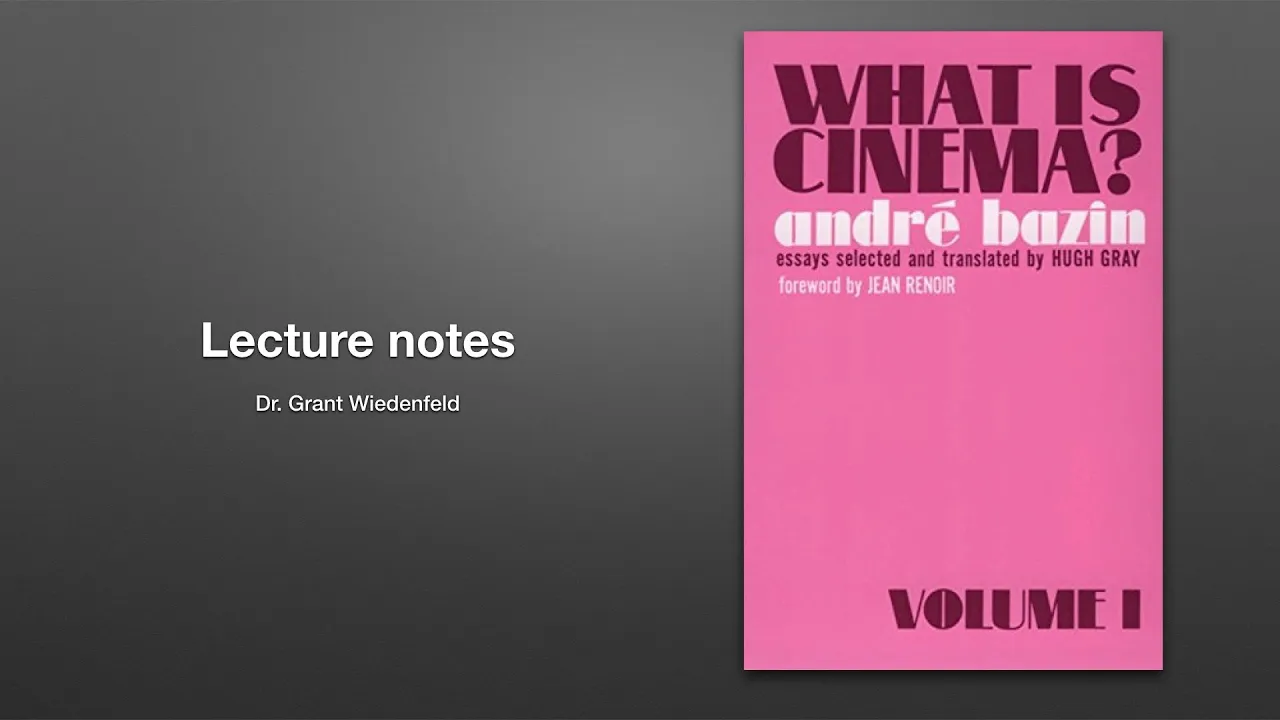
Added:André Bazin's classical film theory, specifically his ontology of the photographic image and the traditional concept of cinematic realism.
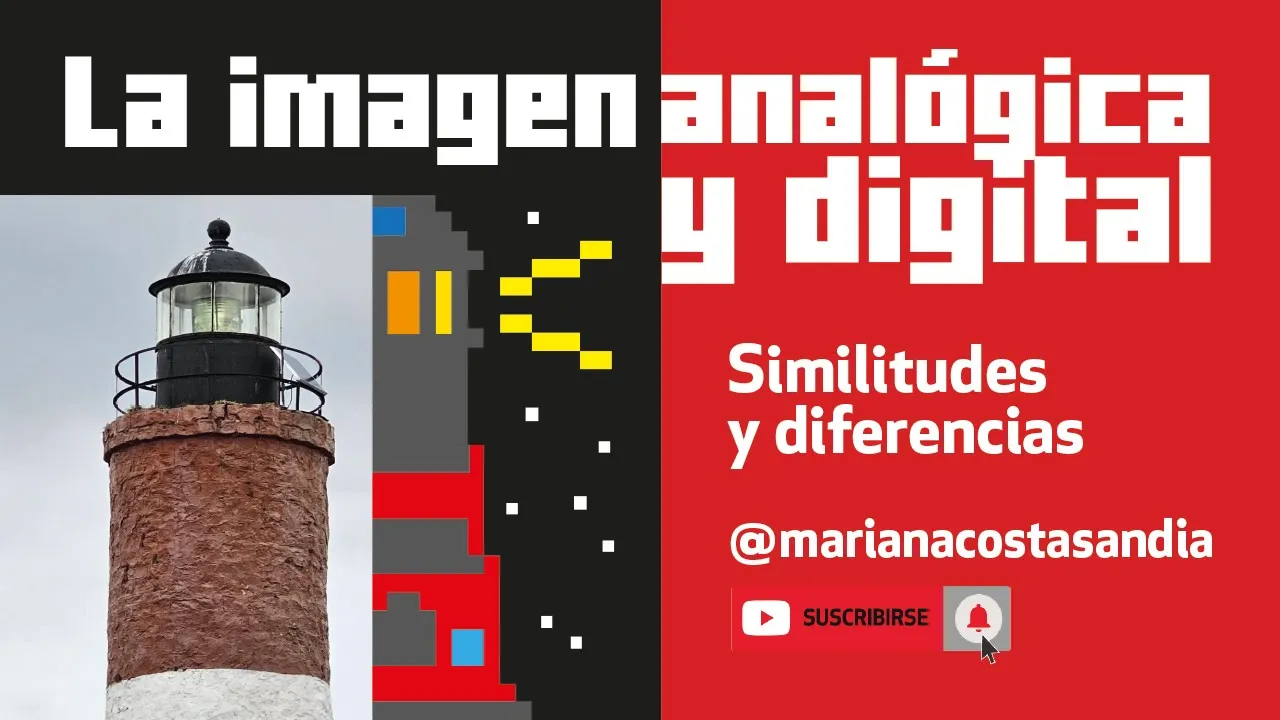
The difference between indexical images (photographic/analog film) and iconic/digital images (CGI).
Stephen Prince's theory of 'perceptual realism' in cinema, which explains how audiences accept digitally constructed spaces as real because they cue familiar visual experiences.
Basic film terminology regarding cinematography, depth of field, tactile lighting, and spatial continuity.
Deep dive into 'haptic visuality' (Laura U. Marks) and phenomenological film theory, exploring how cinema appeals to the viewer's sense of touch and bodily presence.
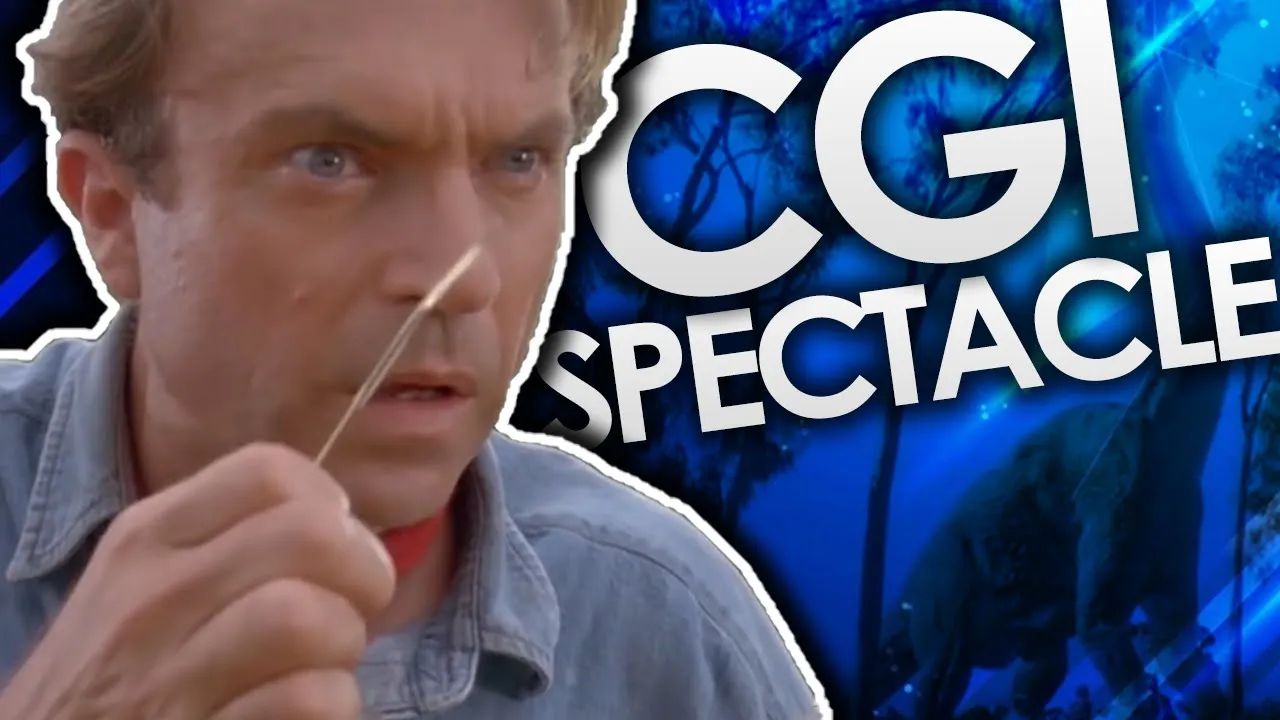
The 'Uncanny Valley' effect in digital cinema, analyzing why hyper-realistic CGI characters often fail to generate emotional connection or immersion.
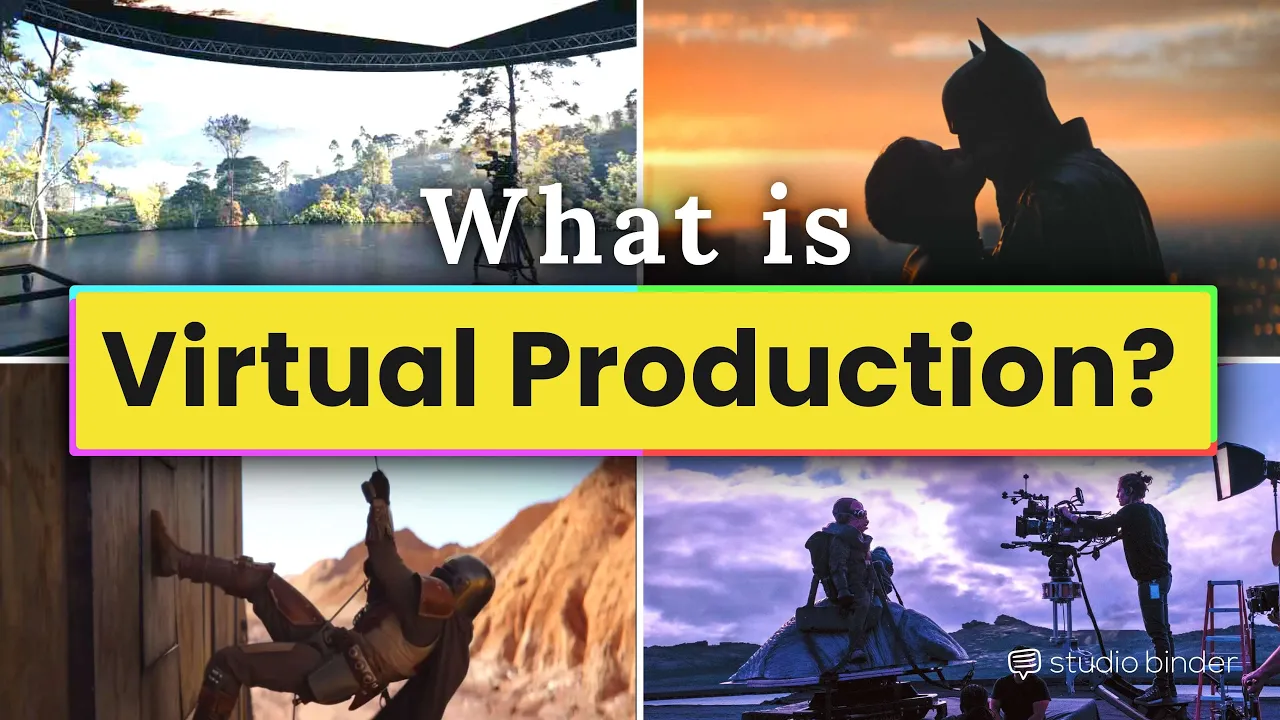
The impact of Virtual Production technology (like LED Volumes/StageCraft) on restoring realistic, physical lighting and actor performance in modern blockbusters.
Aesthetic critique of contemporary 'flatness' in digital color grading and its role in reducing sensory immersion compared to historical celluloid processes.
4.4M views185.2Klikes28:36Original Release: 2025-11-15
Take a look at this shot from the latest Jurassic World movie.
Now, compare it to this one from The Lost World.
Did you notice that difference? I deliberately picked some without dinosaurs because that’s not what this is about. It’s not about CGI. It’s about a deeper level of immersion, a deeper feeling of realness and vividness that is so often missing today. I mean, look at this movie, this was shot in 1959, yet, it still feels like you could step right into the frame. And I love that, you know, watching The Lord of the Rings made me want to visit New Zealand. Those movies made me feel like I could actually stand in those same rugged landscapes. But The Hobbit… not so much.
And I know, complaining about modern movies looking kind of bland or fake isn’t exactly the most original thing to do, and you might already be thinking, “well, that’s just because of digital cinematography, it’s just bad color grading, bad lighting and also bad CGI, actually,” and you’re right, these are all definitely relevant to the discussion, but they are also just technical elements that in themselves don’t fully explain the essence of this problem. I always felt like there had to be deeper philosophical and psychological mechanics at play here, like some sort of first principles of cinematic reality and our immersion in it. And I figured that if we truly want to tackle this issue once and for all, then we need to understand those as well.
First, to very briefly define the obvious: the idea of a movie feeling real is not the same as a movie being real. We understand movies are staged, that they are constructed realities, not actual ones. And yet, we can still be sold on the realness of their fictional worlds, even if they contain fantastical elements like live dinosaurs or Terminators or aliens. And that’s because despite recognizing movies as being essentially make-belief, we can still experience them as perceptually real. “A perceptually realistic image is one which structurally corresponds to the viewer's audiovisual experience of three-dimensional space,” film scholar Stephen Prince wrote in a Film Quarterly paper. “Such images display a nested hierarchy of cues which organize the display of light, color, texture, movement, and sound in ways that correspond with the viewer's own understanding of these phenomena in daily life. […] Because of this, unreal images may be referentially fictional but perceptually realistic.” Simply put, according to the concept of perceptual realism, a movie feels real when it triggers the same mechanisms through which we also construct and navigate our own reality. In this sense, it’s actually kind of like being in Inception. You create the world of the dream, you bring the subject into that dream, and they fill it with their subconscious.
As I was going back through some older movies that I remember feeling highly immersive, that I remember having this kind of perceptual realism, one thing I noticed was just how much of the image is often in focus, and how frequently they filmed from a distance to include a lot of the environment around the main subject of the shot. Just look at how much of the background is perfectly readable here, how clearly you can make out faces and objects in the distance, the textures on the ground, and so on. Images like these really invoke a sense of place, of three-dimensionality. As the renowned film scholar Noël Carroll also once said in an interview; “[deep focus, long shot compositions like these] invite the audience to scan the frame for meaning in a way that was more analogous to the way we perceive affairs outside the movie theater […] That is, they were more realistic because they were more like ordinary perceptual experience.” And I thought this was interesting because it really draws attention to the form through which the audience engages with an image instead of merely focusing on the content they observe within it. This, for one, largely circumvents the age-old discussion of digital versus film photography, in which the latter is generally seen as the more realistic medium, and the former is often blamed for being the reason why movies look worse now. But just look at The Revenant or A Hidden Life, two relatively recent movies that were digitally filmed. I think these look just a good as most classic movies do, maybe not necessarily in a way that emulates the old film look, but certainly in one that offers those same rich and immersive images that absorb you completely into these stories. Now you might protest and argue that this is still mostly a matter of content, that it’s because these movies featured a lot of real locations and, in particular, a lot of beautiful exterior environments. And generally, I’d say you would be right, and that having real elements in a movie does matter, especially in a time when it’s so easy to just throw up a green screen and decide on the specifics later, or to set up that new Volume display and just match the lighting as closely as possible. Compared to these efforts, movies that feature concrete locations and tangible elements do tend to hit different, they really make you feel like there’s a kind of animus to the real world, a kind of soul that, when captured rightly, then also adds a latent substance to the image that just isn’t there in a digitally constructed one.
And you can tell the difference, that this is no plastic boat and that this slope is no joke at all. But then again, consider Avatar: the Way of Water.
Say with you will about the story, but the fully computer-generated alien planet that James Cameron has created here, to me, is just beyond beautiful, and in many ways, more engaging and more perceptually realistic than some movies shot in the real world, which again demonstrates that, in its essence, this achievement is a matter of form. It’s because of the way this movie cultivates a distinct perceptual relationship with the audience.
Take this sequence for example where our main characters first arrive at the water tribe, notice how much information is available here in any given shot, how well the subjects are integrated into their surrounding environment, and how rewarding it is to scan each image for immersive details. You may not actively register every little thing that’s in focus here, but that doesn’t matter, as we also don’t do that in real life. I think that even if you only catch those details on the edge of your peripheral vision, it still adds tremendously to the perceived reality of this world. Now, jump scare alert, contrast this with a movie like Quantumania. This movie also mostly takes place in a fully fantastical realm, but unlike The Way of Water, it is one of the worst and most fake-looking films I’ve ever seen. Of course, there’s a lot of qualitative differences between these movies, one has a well though-out world with actual ecosystems and animal genealogies, the other is just a grab-bag of what feels like AI hallucinations. One has state-of-the-art graphics, the other, well… But anyways, if we try to limit ourselves to those specific techniques that enhance perceptual realism, the differences are also night and day. Instead of offering those rich, immersive images for the audience to scan like they would in the real world, the backgrounds in Quantumania are often completely blurry and visually uninteresting. And aside from the occasional blink-and-you-miss-it establishing wide shots, which still aren’t in focus for some reason, most shots are medium close-ups that only center the subject and don’t integrate them into their surrounding environment.
In other words, they hardly invoke a real sense of three-dimensionality, which in turn, negatively affects their perceptual realism. And while Quantumania is an extreme example, this is something we see in a lot of movies today, this is the “cinematic look,” right? Deep focus, that’s only if you want to make your movie look like a documentary. But if you want cinema, then a shallow depth of field and the medium close up are your main instrument.
And you know, I’m not even saying that in an entirely critical sense. In fact, when used purposefully, I do think it can invoke its own kind of realism, which I’ll get back to in a bit. But when you just assume this approach as the default standard, like Zack Snyder for example seems to have done. Ever since he became his own cinematographer, it feels like his movies have become virtually two-dimensional, then I feel like it does come at the cost of perceptual realism, of the audience actually feeling grounded within the world of the story. And especially when combined with a rather careless use of digital effects, it can even undermine the realness of the actually real elements of an image. I’m always reminded of the 2016 Assassin’s Creed movie here. In the promotional material, they boasted that they had a stuntman perform one of the highest free falls in cinematic history for its iconic leap of faith scene, which should have been an absolutely exhilarating moment. And yet, in the actual movie, it ended up looking like this. Like, would you even have known this was a real stunt if they hadn’t told you? Does this man diving into a brown CGI sludge obfuscated by digital volumetric smoke in any way trigger any actual perceptual instinct? I bring this up because what it also demonstrates is that the problem is not just that modern movies don’t have enough deep focus long shots. No, it’s the more general lack of consideration for what filmmaking techniques and cinematic elements actually create an immersive experience for the audience. Going back to Jurassic World Rebirth, the movie we opened with. Here too, the “cinematic look” is definitely part of the problem, with many blurry backgrounds and medium close-ups that leave little room to scan the image for meaningful details, which stands in pretty stark contrast to the original movies. But more than that, there’s also many environments here that don’t feel real because they just clearly aren’t. I can imagine the filmmakers wanted to invoke the more rugged feeling of a prehistoric world by digitally heightening its landscapes to these almost fantastical proportions. But you know, this isn’t Avatar, this isn’t the world of Pandora, it’s ours. A big part of what sold me on the dinosaurs back in the original movies, and still does so today, is precisely how the environment around them always felt so tangible and ordinary. Like, that’s just the real world, that’s a forest, that’s a field, those are all places I feel I could visit myself.
And having the dinosaurs interact with that familiar world made them feel more real too.
The over-manipulation of modern imagery, and the resulting feeling of fake-ness even when they contain real locations or real practical effects, is part of a bigger issue that we briefly need to address here, and that’s the amount of post-processing that’s done on movies nowadays, and the more general shift from filmmakers having to make sure an image was exactly as they wanted it before rolling the camera, to them being able to make more, if not most of those decisions after the fact in post-production. As Patrick Tomasso already explained in his video, this idea of avoiding definitive filmmaking choices, and of wanting to have more options in post-production, has also significantly affected how modern movies are shot in the first place: Because you might get into post and that room won't even be the same room anymore they're going to say you know what that window we don't even want that window anymore the light doesn't make any sense we got to re-shoot this whole thing so what do we do we shoot it bland we shoot it boring we light it flat we don't commit. And to understand how, besides resulting in more boring-looking visuals, this also affects realism and immersion, we have to talk about the concept of indexicality. Based on the work of philosopher Charles Peirce, an index is a sign that has a direct, physical connection to what it represents. Simple example: a footprint is the index of a foot, with the former being directly caused by the latter.
In traditional cinema, a filmed image was seen as an index of the subject that it captured, because that image was physically caused by real light hitting the photosensitive surface of celluloid film. It is for this reason, this direct, material connection between subject and image, that film was, and still is to some, deemed as the more realistic medium. And if you look at some classic movies, this does seem to explain that more ineffable quality that they tend to have, you know, that intuitive feeling of the image being a more direct, a more pure and more authentic reflection of the filmed reality, in a way that goes beyond just the focus settings and angle of the camera. It’s as if there really is a direct, material connection, a true indexicality to the image that just isn’t there anymore today. You know, digital cinematography is considered to have no indexicality because it lacks that direct, causal relationship. Instead of physically imprinting light on celluloid, a digital sensor converts light into data, into a set of digits that, as film scholar David Davies explained in his paper on the subject, might accurately reflect the filmed reality, but is also inherently mutable, and therefore not a true index of it.
However, as we also discussed earlier, there are digitally shot movies that I think, come close enough to having that same feeling of unaltered reality. And inversely, modern movies that are shot on film, like Jurassic World Rebirth for example, tend to be significantly modified in post-production anyways, arguably to a point where any true sense of indexicality is lost.
And indeed, as Davies also concludes, “There is no reason to think that the viewer’s experience of a moving image in a fictional film is affected either by the indexicality or non-indexicality of the image, or by her beliefs about the indexicality or non-indexicality of the image.” So if the nature of the image isn’t necessarily linked to the experienced realness of a movie, why bring all this up at all then? Well, it’s because even though the physicality of the filming process might not matter, it’s the feeling of physicality in the final image that does. And this brings us to what to me is probably the most interesting idea in this video.
If there’s been one recurring theme so far, it’s the idea that a movie feels more real and more immersive when it establishes a more direct connection to the senses of the spectator. In her book The Skin of the Film, film scholar Laura Marks makes this connection even more explicit as she explains that: “Film is grasped not solely by an intellectual act but by the complex perception of the body as a whole. This view of perception implies an attitude toward [a film], not as something that must be analyzed and deciphered in order to deliver forth its meaning but as something that means in itself.” Basically, Marks argues that cinema is not just a visual medium that we merely watch and listen to, it is an embodied experience, it engages our physical senses being beyond just our eyes and ears. And to conceptualize and expand on this idea, she coined the term “haptic visuality.” “Haptic perception is usually defined by psychologists as the combination of tactile, kinesthetic, and proprioceptive functions,” Marks writes, “the way we experience touch both on the surface of and inside our bodies. In haptic visuality, the eyes themselves function like organs of touch.” This, as she continues, is different from the way we usually conceive of optic visuality, or you know, just regular vision, which is more about perceiving depth and spatial dimensions, and about observing from a distance.
“Optical visuality depends on a separation between the viewing subject and the object. Haptic looking tends to move over the surface of its object rather than to plunge into illusionistic depth, not to distinguish form so much as to discern texture. It is more inclined to move than to focus, more inclined to graze than to gaze.” As you may have noticed, Marks is actually building on the concept of perceptual realism here, she’s not looking to replace it but rather to offer another dimension to it. To simplify it somewhat; haptic visuality can be seen as an extension of the earlier discussed perceptual mechanisms through which we engage with cinema, as if suggesting that the relationship between the two can be even more intimate, more sensual, than initially assumed. And indeed, if we take another look at some of those earlier deep focus, long shot compositions, the two concepts do seem to enhance each other quite well as those same elements that allowed me to visually map out the three-dimensionality of the image are also the ones that let me feel its textures, that have an undeniable haptic quality to them by being so richly detailed and focused. And inversely, it’s because I can sense the material presence of the image, because I can so clearly imagine myself touching the grass, and have such a visceral response to that playful fluidity of water, that the entire space also feels much more three-dimensional and immersive. Here, we can explore some additional filmmaking techniques that create haptic images, or images that invoke a haptic response in the audience, such as literal depictions of touch. But even without directly depicting any touching hands, extreme close-ups on their own can already be quite effective at invoking a sensory response.
Think, for example, of how Andrei Tarkovsky likes to slowly gaze over richly detailed environments in a kind of tactile contemplation. Or how Paul Thomas Anderson often invites you to study the intimate minutia of his actors’ faces. Here we can also redeem the “cinematic look” somewhat as a shallow depth of field can serve to highlight specific haptic elements within an image.
Martin Scorsese’s Taxi Driver for example feels a lot more dreamlike than those classic, more plainly realistic-looking movies I showed earlier, yet to me, it’s still a movie that feels tactile and immersive, and I think it’s in large part because of shots like these that add a distinct texture to its setting, they make you feel like you can reach out and feel the wetness of rain on a cold, metal surface as if your eyes are indeed organs of touch. Invoking the elements in general is an undeniably powerful tool for immersion. Scorsese also does this really well in Silence, where the kinetic force of tidal waves feel just a bit too real for comfort. Similarly, I’m also always taken aback a little whenever a movie shows a real, raging fire, as if I had gotten so used to the image of computer generated ones that I almost forgot how powerful the sight of an actual one really is. And the same goes for power of wind, which Béla Tarr for example often uses to heighten the sensory sting of his already harsh and dreary landscapes. Lastly, on a more meta-visual level, an image itself can be given a certain texture through grain and artifacts, which are naturally baked into the image when shooting on real film, and which is probably where the link between realism and indexicality came from. But nowadays, this can also be done digitally to varying degrees, depending on what the filmmaker wants. And indeed, most digitally shot movies have at least a subtle layer of grain to add some basic texture to their image. Though there are also those that take it a lot further: that make film grain an integral part of the image, or somewhat inversely; that really lean into the specific kind of noise that digital cameras can produce, especially in low light settings.
The reason why haptic visuality is so effective, and so important for making movies feel more real and vivid, is because touch is simply an extremely powerful human sensation. It is the first sense we develop in the womb. And as newborns, it is not just the primary sense through which we start exploring the world around us, but it’s also vital for bonding and for emotional regulation, which is to say that touch is something that also works its way back, that to touch is also to receive. And Mark’s concept of haptic visuality understands this as well. It assumes a more dynamic, two-way connection between subject and object. Instead of maintaining a separation by merely regarding an image from a distance, you generate a feedback by coming in close. The touched object offers resistance, it has a certain feel to it, which then impresses itself back on the touching subject. It’s kind of like how a breaking of the fourth wall can flip the direction of the cinematic gaze, making it feel as if you as the spectator is suddenly the one who’s being watched. And besides eliciting rather concrete sensations of matter, texture and structure, this effect can also invoke more abstract sensory realities. An image can prompt within in the body what in philosophy is known as a qualia, as a feeling of “what-it-is-like.” Take this scene from Sorcerer, where a guy has a drink in a rundown bar in a humid, tropical location. The camera is close on the skin, the lighting is sharp, both of which help to emphasize the textures of the characters faces, emphasize the sweat, the grit, the imperfections, which in turn, gives the audience a visceral impression not just of those specific material elements, but also of the more general feeling of what it is like to be in that place, to be in that humidity, that oppressive, inescapable heat. Now, for contrast, let’s look at Rebirth one more time, which has a similar scene in a tropical setting, but which to me at least, doesn’t come nowhere close to invoking that same feeling. The medium shots don’t bring us close enough to read the faces of the actors, and even if they did, the flat lighting and vanity make-up make them look way too clean anyways, which is another issue that plagues many modern movies. Everyone is just way too pretty now, which once again reminds us that, ultimately, all this is about much more than a set of filmmaking techniques, it’s about purposefully trying to elicit a feeling, to make a meaningful connection to the audience, and to actively immersive them into a story.
As Marks also points out, haptic visuality as we’ve discussed it so far is only the beginning.
“Touch is a sense located on the surface of the body: thinking of cinema as haptic is only a step toward considering the ways cinema appeals to the body as a whole.” And indeed, what I love about movies is that they can invoke deeper forms of realism, not just perceptual with regards to form and space, not just haptic in a material sense, but also in relation to states of being, to emotions, dreams, memories. You know, the physicality of a panic attack, the nostalgia for a half-remembered past, childhood nightmares about being alone in the dark. All the more abstract interactions and subjective phenomena that define the human experience, and that can be articulated through great filmmaking. Often by combining all these differing ideas of realism. For in the end, this deep immersion doesn’t so much arise out of a single image, as much as it is created over the course of a carefully constructed continuation of them. With each shot, each scene, building on the other, creating sensory dynamics and feedback loops that map out spaces, add details and textures, and that, in combination with attention to other aspects of filmmaking, you know, make-up, wardrobe, set dressing, sound design, music, and so on, can make a story come alive in a way that feels more immersive, more vivid, and more impactful than the sum of its various technical parts. And that’s what we’re going for, right? To be transported, to be moved, to be touched. To feel like we just watched something meaningful, that we just experienced something real.
The kind of care and intentionality that makes for great and meaningful cinematic experiences doesn’t just limit itself to the actual filmmaking itself, it’s the structures around it, the platforms where we watch movies, that also help us to navigate, cultivate and celebrate the art of cinema.
And whenever I know I want to watch something with intention, whenever I’m feeling truly curious, that’s when I turn to MUBI. MUBI is a curated online cinema streaming hand-picked movies from around the globe. They offer a vast library of great movies from iconic directors to emerging auteurs, and from timeless masterpieces to hidden gems and festival favorites.
Recently, they’ve acquired a fascinating miniseries on Mussolini’s rise to power. I just watched the first few episodes but it’s really something else. Its narrative is both grounded within real historical footage and simultaneously heightened with that classic Italian theatricality and with Mussolini directly talking to you in the audience.
It feels as if the entire cinematic language serves to emphasize how the evolution of fascism was really just driven by charisma and emotionality. Main actor Luca Marinelli, who you might have seen in The Eight Mountains or in Death Stranding 2, is absolutely transformative here as the Italian dictator, and delivers a truly magnetic performance while also never letting you forget that this is, in the end, a portrait of evil. Anyways, I’m excited to watch the rest of it, and if you want to check it out as well, you can sign up using my personal link, that’s mubi.com/likestoriesold, to try MUBI for free for thirty days. So be sure to claim your extended free trial, to start your free month of great cinema today.
Up Next

19:56
Andrei Tarkovsky's Filmmaking Style Explained
@StudioBinder
206K views•2025-02-03

23:14
Visual Analysis Essay: How to Analyze Graphic Novels in College Writing
@nataliepleimann5941
1K views•2020-10-14
4:55
Film Blocking Techniques for Directors: Space, Shapes, Lines
@StudioBinder
1.9M views•2018-07-23

4:00
Evolution of Darth Vader: Anakin Skywalker's Animated Journey Across Star Wars Films
@TellItAnimated
13.4M views•2019-03-30
Related Study Plans & Knowledge Roadmaps
Structured learning paths in Film Analysis
film-analysis
Sensory Cinema: Foley, Haptic Sound & Texture
01Introduction to Film Sound and Foley Artistry
02Micro-Sounds, Textures, and Extreme Amplification
03Haptic Audition and Film Phenomenology
+ 1 more learning modules
12h4 modules
Explore Roadmap
film-analysis
Breaking the Fourth Wall: Mockumentary & Satire
01The Invisible Wall: Basics of Cinematic Illusion
02Looking at the Lens: Direct Address & Character Glances
03The Mockumentary: Satire, Realism, and Complicity
+ 2 more learning modules
12h5 modules
Explore Roadmap
film-analysis
Analyzing the Long Take: Cinema, Space & Ethics
01Foundations of Film Grammar: Montage vs. The Long Take
02Choreography and Mechanics of the Simulated One-Shot
03Phenomenology of Film: Real-Time Spatial Continuity
+ 1 more learning modules
14h4 modules
Explore Roadmap
film-analysis
Anachronistic Music: Period Drama & Subversion
01Foundations of Film Sound and the 'Needle Drop'
02Traditional Authenticity vs. Revisionist History
03The Rise of the Anachronistic Soundtrack
+ 2 more learning modules
12h5 modules
Explore Roadmap