Metalepsis is a literary device where the boundaries between different levels of narrative or reality are blurred, allowing characters, events, or elements from one level to interact with or affect another level, creating a complex interplay between different narrative planes.
Understanding Metalepsis in Narrative Structure | Academic Analysis
Added:Deep Dive
Gérard Genette's theory of narrative levels, specifically the distinctions between extradiegetic, intradiegetic, and metadiegetic levels.

Les niveaux diégétiques
2.6K
Gérard Genette developed a framework for analyzing narrative structure through four diégétique levels. The narrateur hétérodégétique is external to the fiction and does not participate in the story. The narrateur homodégétique participates in the story as a character. The narrateur autodégétique is specifically the hero of the story. The narrateur métadégétique creates nested narration by giving the pen to another narrator within the fiction. These levels represent different relationships between the narrator and the story world, from external observation to internal participation to complex nested storytelling.
Click to watch →
Literary Theory Made easy - PK Nayar Read along - Mikhail Bakhtin , Roland Barthes, Gerard Genette
107
Gérard Genette proposed three hierarchical narrative levels: (1) Story (histoire) - real events needing to be told; (2) Discourse (discours) - the telling of the story as speech or text; (3) Narrating - the larger process producing discourse. Additionally, narrative perspective includes: (1) Instance - actual movement and context of narration; (2) Time - verb tenses indicating when events occur; (3) Levels - relation between events narrated and the act of narration itself, based on who is doing the narrating.
Click to watch →

EL MODELO DE GENETTE
3.5K
Genette's narrative model analyzes narrative structure through three key elements: Time (the relationship between story time and narrative time, including analepsis/flashbacks and prolepsis/flashforwards), Mode (the narrative distance and perspective, including discourse types like imitated, narrativized, and transposed, and focalization types like non-focalized, point-of-view, and objective), and Voice (the characteristics of narration including who enunciates, from where, and when, covering narrator types such as heterodiegetic and homodiegetic, and narrative levels like extradiegetic, diegetic, and metadiegetic).
Click to watch →

UGC NET English Literature 2025 | Lit Crit Made Easy |Structuralism Saussure, Levi-Strauss & Barthes
542
Structuralism is an intellectual movement that analyzes cultural practices by examining their underlying structures and codes, treating texts as systems of underlying structures where meaning is generated through differences and relationships rather than authorial intention. Ferdinand de Saussure, the father of modern linguistics, established key concepts including langue (the collective system of rules shared by a community) versus parole (individual speech acts), and the signifier-signified relationship where meaning is arbitrary. Claude Levi-Strauss applied structuralist methods to anthropology, introducing 'mythemes' as the basic units of myths, similar to phonemes in language, and 'bricolage' as the process of using available materials to construct meaning. Roland Barthes extended structuralist analysis to popular culture, identifying narrative codes (proairetic, hermeneutic, cultural, symbolic, and semiotic) and analyzing everyday phenomena like fashion, food, and advertising as modern myths. Gérard Genette further developed narratology by distinguishing between story (chronological events) and narrative discourse (how events are organized), and by categorizing narrators as extradiegetic (outside the story), intradiegetic (inside the story), and metadiegetic (story within a story).
Click to watch →

TeleŞcoala: Limba şi literatura română clasa a XII-a – Tipuri de perspectivă narativă (@TVR2)
5.1K
Narrative perspective has two types: extradiegetic (narrator outside the story universe, like a controller watching from outside) and intradiegetic (narrator inside the story universe, like a participating character). Extradiegetic narrators are omniscient (know everything about events and characters), omnipresent (can present simultaneous actions in different locations), and omnipotent (can direct character movements and interpret situations). Intradiegetic narrators are limited to personal experience, making assumptions about events they don't witness, creating subjective interpretations conditioned by their experiences and sensibility.
Click to watch →
Deep Dive
The fundamental concept of diegesis and how a fictional storyworld is constructed and sustained.

Diegese - Que termo é esse e o que significa?
1K
Diegesis is a fundamental concept in narratology, literary studies, and film studies referring to the fictional dimension of a narrative. It encompasses the fictional world, diegetic time and space, and the events narrated within a specific dimension. The term originated from Plato's Republic, where it was distinguished from mimesis as narrator-driven versus character-driven storytelling. Classical theory divided drama (mimesis) from epic (diegesis). Modern narratology, particularly Étienne Souriau, defined diegesis as the set of events narrated within a specific space-time dimension, aligning with the Russian formalist concept of 'fábula.' Crucially, diegesis differs from narration itself, which constitutes the act of producing the report. This concept remains essential for understanding narrative structure across literature, theater, and cinema.
Click to watch →
Lesson 31. Place & Space│The Mechanics of Fiction Writing
619
Human beings possess an innate cognitive ability to form mental images of places and objects, rooted in the hippocampus—a brain region responsible for spatial mapping, memory formation, and narrative comprehension; this evolved capacity enables readers to construct immersive storyworlds from textual descriptions by mentally mapping spatial relationships and visualizing scenes, making effective world-building in fiction possible without requiring explicit cartographic details.
Click to watch →

Criação de Mundos | ESCRITACAST 3 - Carlos Rocha e Newton Nitro #dicasdeescrita
951
A useful exercise for writers is to analyze existing stories by separating the protagonist from the storyworld - this reveals what elements constitute the world that supports the story. The storyworld is everything that isn't the protagonist - the environment, society, geography, and cultural context that shapes the story. Even a three-minute scene like a birthday party in a favela has a storyworld that includes the location, social dynamics, and cultural elements. The primary goal of worldbuilding is to make readers believe in the fictional world. Writers should create enough depth and detail that readers feel the world is real and complete. Blade Runner's world is so detailed that even background elements like newspaper stands have futuristic magazines and posters, creating immersion even if readers never directly observe these elements.
Click to watch →

"Lost Highway" Explained. The Rules of the Road
87.1K
In film theory, diegesis refers to the story world or the reality within a film. The Mystery Man's shack and the Lost Highway Hotel exist outside the diegesis, representing backstage space where filmmakers operate. This is analogous to the Red Room in 'Twin Peaks,' which represents the backstage of a television series. The curtain animation when portals open between Fred's cell and the shack symbolizes the boundary between the fictional world (diegesis) and the real-world filmmaking process.
Click to watch →
Mimesis - Diegesis /Anlat Anlat Heyecanlı Oluyor / Uluç Esen
203
Mimesis (mimetic representation) and diegesis (narrative storytelling) are two fundamental modes of representing stories in drama and media, originating from Plato's 'Republic' and further developed by Aristotle in his 'Poetics'; mimesis involves actors embodying characters and enacting events in the present moment, while diegesis involves a narrator recounting events from the past, and these two modes can be combined in works like Shakespeare's plays and modern films such as 'Forrest Gump' and 'Schindler's List' to create complex narrative structures.
Click to watch →
Deep Dive
The structural mechanics of frame narratives (stories-within-stories) and 'mise en abyme' techniques.

Synchronicity and the Double Life of Veronique (1991)
38.2K
Mise en abyme is a narrative technique where one story contains another story within it, creating recursive patterns that repeat across levels. In 'The Double Life of Veronique,' Alexandre's puppet show mirrors the twins' story, representing invisible forces of chance and fate guiding Veronique's choices. This mirrors Kieslowski himself as director, who creates the illusion of reality through film. The structure becomes fractal—each level contains the same pattern as the whole. This suggests our universe might itself be fractal, with patterns repeating infinitely from galaxies to neurons to atoms, implying a unified underlying reality connecting all levels of existence.
Click to watch →

Pourquoi La Tempête des échos est la meilleure fin possible à la Passe-Miroir ?
17.5K
The saga uses a multi-level cyclical narrative that turns characters in circles, like Ophélie in the architectural loop of the second protocol. The book itself becomes a labyrinth through mise en abyme—stories nested within stories that recur across multiple levels. This process of mise en abyme is a modality of revelation, a path to the heart of the text. The book takes on the appearance of a new burr, a serpent biting its own tail, or a Penrose staircase—an impossible architectural construction that cannot be exited.
Click to watch →

𝗖𝗹𝘂𝗯 𝗹𝗶𝘁𝗲𝗿𝗮𝗿𝗶𝗼 𝗶𝗹𝘂𝘀𝘁𝗿𝗲𝘀 𝗱𝗲𝘀𝗰𝗼𝗻𝗼𝗰𝗶𝗱𝗼𝘀 - Esto no es metaficción
251
The instructor explains that 'mise en abyme' is a structural phenomenon where a story contains within itself and from itself a commentary on the act of telling that same story. This creates a mirror effect where the text reflects upon its own construction, creating an infinite regress of meaning within meaning.
Click to watch →

Mise en abyme
1.2K
In Western art history, mise en abyme involves images containing smaller copies in infinite sequences, termed recursive. André Gide cited Las Meninas and Shakespeare's Hamlet (play within play) as examples. Popularized by Lucian Dallenbach in 1977, it became central to literary and film studies. In literature, it creates unstable meaning through mirrored subtexts, serving deconstruction theory by illustrating language's inability to reach foundational reality through recursive reference. In film, it encompasses 'film within a film' (showing production processes) and 'dream within a dream' (characters questioning reality). Contemporary examples include Inception, Synecdoche, New York, and Citizen Kane's snow globe. The concept applies broadly to comedy improvisation cycles and represents a paradigm of intertextual language structure.
Click to watch →
"Perfect Blue" Explained. No Good Roles for Women.
18.9K
Perfect Blue uses mise en abyme, a device where a story contains a smaller version of itself. The TV show 'Double Bind' mirrors the events of Perfect Blue. In Twin Peaks, a soap opera called 'Invitation to Love' perfectly mirrors the show. In Lost Highway, a black and white movie has the same plot points as the real movie. Kon uses this device to show how art imitates life and to highlight the complexity of the themes.
Click to watch →
Deep Dive
The conventional roles and boundaries dividing the author, the narrator, the characters, and the reader in classical storytelling.

How to Read Bible Stories: Authors, Narrators, Readers - and the a story of Tamar
306
Every story contains three essential characters that are often not explicitly mentioned: the author (composer who writes the text), the narrator (conductor who guides how we understand the story), and the reader (performer who brings the text to life). Understanding these three roles is crucial for biblical interpretation because the author determines what is written, the narrator shapes how we perceive events and characters, and the reader applies the text to their own context. The narrator can be first-person (a character within the story), second-person (rare in biblical texts), or third-person (most common in the Bible), and narrators can shift throughout a story. This framework helps readers distinguish between what the author wrote, what the narrator reveals, and how the text should be applied to their own lives.
Click to watch →

MARATONANDO A FCC | RESOLUÇÃO DE QUESTÕES - CICLO
356
In literary analysis, it is essential to distinguish between three distinct roles: (1) Author - the person who wrote the work (e.g., Machado de Assis wrote Dom Casmurro), (2) Narrator - the voice that tells the story (which may be the author, a fictional character, or an omniscient third-person voice), and (3) Character - the fictional beings within the story. A character can also serve as the narrator (narrador-personagem), as seen in Dom Casmurro where Bento Santiago narrates his own story. The author is always separate from the narrator and characters.
Click to watch →
Filosofía de la Educación. Dispositivos pedagógicos, tecnologías del yo y experiencia de sí (II)
117
Narrative establishes the position of the speaking subject (the narrator) and the rules for their insertion within their narrative framework. The narrator is constituted through an implicit, never-saturated correlation among three radically different orders occupying distinct dimensions in the discursive space: the author, the narrator, and the character. Each operates according to its own rules and cannot be reduced to a single unified subjectivity.
Click to watch →

05 La narratologie : du récit dans l’art au récit comme art
234
In narrative structure, there are distinct roles: the author (who signs and is responsible for the text), the narrator (a secondary character who tells other characters' stories, as in 'One Thousand and One Nights'), and the characters (who speak of themselves). Characters are secondary products of narration, while the narrator is the secondary character who tells other characters' stories. The lecture uses examples like Scheherazade and Cadichon to illustrate these roles.
Click to watch →

catégorie du récit #le narrateur# #le statut du narrateur# partie 1
6.5K
There are three distinct actors in a narrative: (1) The character, who lives and participates in the story; (2) The narrator, who tells the story and is a fictional being who assumes the narration; (3) The author/writer, who is a real being. In some cases, these three roles can be combined, such as in autobiographical works where the character is also the narrator and the author.
Click to watch →
Prerequisite Knowledge
- Concept 01Gérard Genette's theory of narrative levels, specifically the distinctions between extradiegetic, intradiegetic, and metadiegetic levels.
- Concept 02The fundamental concept of diegesis and how a fictional storyworld is constructed and sustained.
- Concept 03The structural mechanics of frame narratives (stories-within-stories) and 'mise en abyme' techniques.
- Concept 04The conventional roles and boundaries dividing the author, the narrator, the characters, and the reader in classical storytelling.
Subsequent Learning
- Step 01Analyzing Postmodernist literature (e.g., works by Italo Calvino, Jorge Luis Borges, or Julio Cortázar) where ontological boundaries are intentionally subverted.
- Step 02The study of transmedial metalepsis, exploring how the device functions in film, television, and interactive media like video games.
- Step 03Brian McHale's theories on postmodernist fiction, focusing on the shift from epistemological to ontological questions in narrative.
- Step 04Investigating the cognitive effects of metalepsis on the reader's immersion, aesthetic distance, and suspension of disbelief.
Opening scene
Laughter
Reaction
Key segment
Core message
Finale
Opening scene
0:15Playing Section
- 1
Visuals and music set an engaging tone.
- 2
Initial moments establish the video's atmosphere.
The Rhetorical Critique of Narrative Levels
While classical narratology views metalepsis as a transgression of boundaries between distinct narrative levels, critics like Richard Walsh argue that this framework relies on a misleading spatial metaphor. From a rhetorical perspective, fictional worlds do not possess actual ontological boundaries to cross; therefore, 'metalepsis' is not a literal violation of narrative layers but a rhetorical device of representation. This critique suggests that structuralist theories overcomplicate the phenomenon by treating narrative levels as objective structures. Instead of representing a radical ontological disruption or a collapse of reality, these narrative shifts are better understood as conventional communicative tools used by the author to modulate the reader's aesthetic distance and engagement, demonstrating that the 'boundaries' being crossed are mere illusions.
Deep Dive
Analyzing Postmodernist literature (e.g., works by Italo Calvino, Jorge Luis Borges, or Julio Cortázar) where ontological boundaries are intentionally subverted.
Where to Start With Postmodern Literature
57K
This section explores hardcore postmodernist science fiction and metafiction. Science fiction is identified as the quintessentially postmodern genre because it breaks ontologies and boundaries between worlds. Slaughterhouse-Five and Breakfast of Champions by Kurt Vonnegut are highlighted as flagrantly postmodern works featuring drawings, poetry, and pop songs. If on a Winter's Night a Traveler by Italo Calvino is described as extreme postmodernism about reading books about reading books. The Crying of Lot 49 by Thomas Pynchon captures postmodern paranoia and pop culture. These works represent the most challenging and experimental aspects of postmodernist literature.
Click to watch →

What Is Postmodernist Literature? An Introduction
83.8K
Postmodernist literature is characterized by its ontological focus on exploring how individuals shift between different worlds and realities, using techniques like breaking the fourth wall, self-referential storytelling, and mixing genres to reflect contemporary experiences of constant world-switching; key theoretical frameworks include Brian McHale's emphasis on ontological questions about worlds, Linda Hutcheon's concept of historiographic metafiction that challenges official histories and gives voice to minorities, and Fredric Jameson's analysis of pastiche as a product of late capitalism that mixes high and low culture without clear political purpose.
Click to watch →

Lecture 35- Atonement: Background (Author and Context)
364
In postmodernist fiction, ontological landscapes projected by characters are never fixed or static. Reality is seen as a social construct shaped by characters' behavior, utterances, interactions, and systems of beliefs. For postmodernist writers, reality can never be read on a surface level. When a reader interprets a literary text, they unveil the linguistic role each character performs and the implications of their ontological worlds. McEwan uses the Chinese boxes device, including a fictional world within another bigger fictional world, which is the novel itself. Critics praised it as genius, calling it a beautiful and majestic fictional panorama. The ending is not tacked on unnecessarily but is the novel's reason for being.
Click to watch →

Andrea Bajani presents Italo Calvino and the Cold Warmth of Exactitude
51.1K
Calvino questioned fundamental assumptions about what constitutes a novel, rejecting the idea that writing a novel is always the same thing. His postmodern experimentation with open-ended narratives and contradictory structures influenced later literary developments, showing how writers can seriously explore the nature of fiction itself.
Click to watch →
What is Postmodern Literature REALLY?
11K
Brian McHale's influential framework distinguishes modernist fiction's epistemological focus (knowledge, truth, and perception) from postmodernist fiction's ontological focus (reality, existence, and world construction). This shift reflects artists responding to nuclear weapons and technological change that made traditional grand narratives untenable. Philosopher Emmanuel Levinas's concepts of 'totality' (rigid unified systems) versus 'infinity' (embracing multiplicity and incongruity) further illuminate postmodernism's rejection of unified worldviews.
Click to watch →
Deep Dive
The study of transmedial metalepsis, exploring how the device functions in film, television, and interactive media like video games.
''Metalepsis'' (Demon) by Excellent567 | Geometry Dash 2.2
161.8K
Metalepsis in game design refers to the deliberate breaking of the fourth wall or narrative boundaries to create unique player experiences; in this Geometry Dash level, the creator uses the term 'Metalepsis' to describe a level that challenges players with complex geometric obstacles while incorporating musical elements from the song 'Metalepsis' by zohka, demonstrating how game levels can integrate artistic themes with gameplay mechanics.
Click to watch →

How Metafiction Actually Works
524
Outside of these different forms of meta reference, there are also literary techniques that are used in metafiction to comment on art as a whole. One of these techniques is called metalepsis, which is French for 'put in the abyss.' It is a transmedial technique that is described as placing an image within an image or a text within a text. One example of metalepsis is Alan Wake 2 where the game uses an embedded narrative or a story within a story as the main focus of its narrative.
Click to watch →

吉田 寛「デジタルゲームの感性学」2021年度夏学期:高校生と大学生のための金曜特別講座
8.5K
Metalepsis is a literary technique where the boundary between the story world and the real world is broken, creating strange effects. In games, metalepsis occurs when the boundary between the player and the game world is broken. Unlike comics where authors might appear in stories, games involve players whose external actions can be incorporated into the narrative. In the original Animal Crossing (2001), the game's reset function was incorporated into the game world through the character 'Reset Man,' who scolds players for wasting time. This creates metalepsis by incorporating the player's external action into the game world's narrative. Stanley Parable (2011) is a game where the narrator responds to player choices in unusual ways - sometimes narrating what the player did, sometimes ignoring choices, and sometimes criticizing player behavior.
Click to watch →

«Videojuegos y Lenguaje» - La narratología en la era de los videojuegos
122
The concept of metalepsis—the displacement of elements between diegetic (in-world) and extradiegetic (out-of-world) levels—provides the most valuable contribution of narratology to video game studies. Unlike traditional narrative theory that focuses solely on storytelling, metalepsis captures the unique interactive nature of games where player actions (extradiegetic) directly influence the game world (diegetic), creating a naturalized metalepsis that dissolves boundaries between the player and the fictional world. This concept allows scholars to analyze how games create 'ludofictional worlds' that integrate narrative and gameplay mechanics, moving beyond the traditional debate between narrative and ludic elements to understand games as unified fictional experiences.
Click to watch →

26 May/OPENING REMARKS & KEYNOTE LECTURE - PEETER TOROP
157
Reculturation refers to the capacity of particular semiotic resources to realize similar or different meanings in texts, resulting from intersemiosis. Transmediality describes the simultaneous existence of texts in different forms, including translations, filmic adaptations, and fragmentary forms. This creates a transmedial whole that exists in plural form as a mental story world, interpretable across different cultural situations.
Click to watch →
Deep Dive
Brian McHale's theories on postmodernist fiction, focusing on the shift from epistemological to ontological questions in narrative.
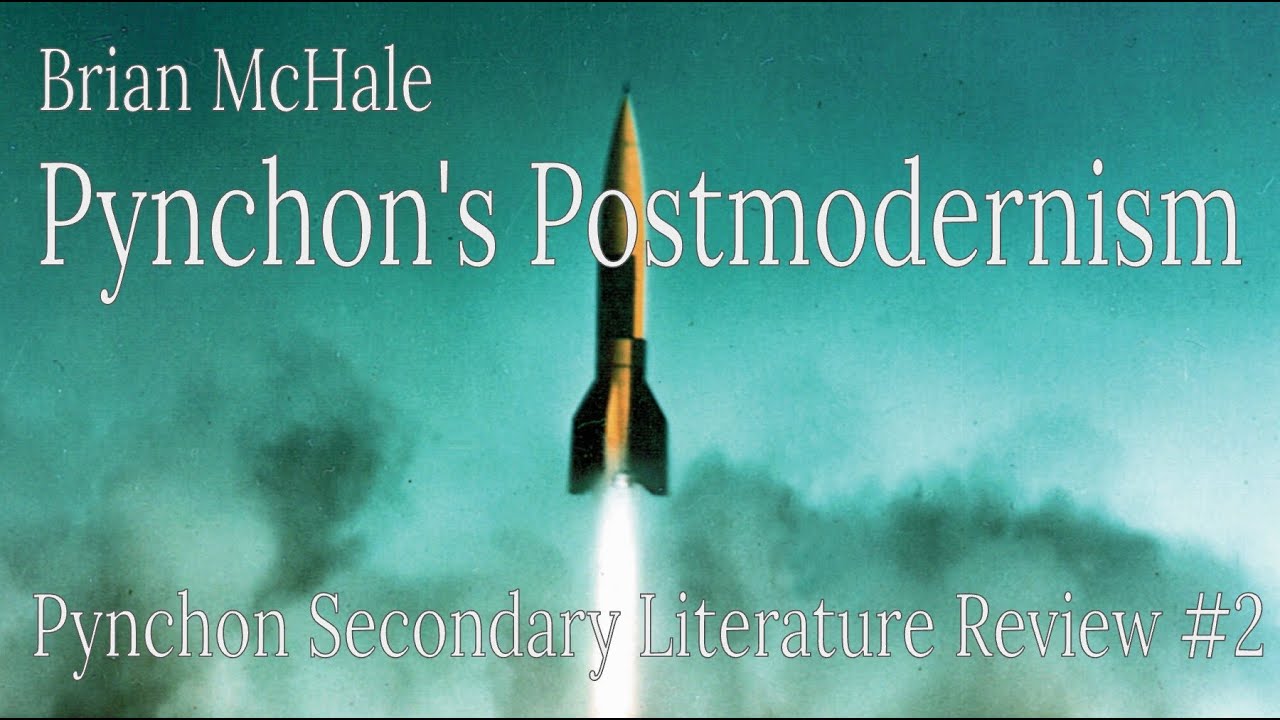
Brian McHale "Pynchon's Postmodernism" | #2
316
Postmodern literature shifts from epistemology (theory of knowledge) to ontology (theory of being). Modernism focused on perception, cognition, and subjective experience; postmodernism explores fictionality, modes of being, world plurality, and how worlds are constructed. Pynchon questions whether the self is singular or multiple, whether fiction precedes and shapes reality, and how determinism functions in indeterminate worlds. Epistemological quests become moot in volatile, indeterminate worlds where certainty proves unattainable. Four conceptions of worlds emerge: lost worlds (undiscovered realms beyond our perspectives), parallel worlds (existing alongside our reality), passages between worlds (transitional spaces enabling access), and visitations from other worlds (encounters with beings from different realms). Narrative architecture employs strange loops where inset worlds prove continuous with primary worlds, and metalepsis where level boundaries are violated.
Click to watch →
What is Postmodernism in Literature? Brief Introduction to Postmodernist Theory
34.1K
According to Brian McHale, modernism has an epistemological focus (questions about knowledge and truth), while postmodernism has an ontological focus (questions about existence itself). In modernist fiction, readers act like detectives trying to determine if the narrator is trustworthy and uncover hidden truths. In contrast, postmodernist fiction raises questions about reality, parallel universes, and whether this is the only world.
Click to watch →
What is Postmodern Literature?| Literary Theory| Postmodernism
12.1K
The prefix 'post-' in postmodernism does not mean modernism has ended. Postmodernism actively engages with and plays upon all major tropes of modernism, requiring deep understanding of modernism to be truly postmodern. Brian McHale distinguishes modernism as epistemological dominant (focusing on questions of knowing and truth) versus postmodernism as ontological dominant (focusing on questions of being and existence). In modernist novels, readers question narrator reliability and truth; in postmodern novels, readers question fundamental existence itself. Science fiction serves as postmodernism's sister genre because it deals with multiple realities and parallel timelines.
Click to watch →

Postmodern Literature: A Short Introduction
1.5K
According to Brian McHale, modernist literature operates with an epistemological framework (concerned with questions of knowledge and truth), while postmodernist literature operates with an ontological framework (concerned with questions of existence itself). In modernist fiction, readers function like detectives trying to determine if the narrator is trustworthy and uncover hidden truths. In contrast, postmodernist fiction foregrounds questions about existence—whether this is the only world, whether there are parallel universes, and whether this is the only reality.
Click to watch →
What Is Postmodernist Literature? An Introduction
83.8K
Postmodernist literature is characterized by its ontological focus on exploring how individuals shift between different worlds and realities, using techniques like breaking the fourth wall, self-referential storytelling, and mixing genres to reflect contemporary experiences of constant world-switching; key theoretical frameworks include Brian McHale's emphasis on ontological questions about worlds, Linda Hutcheon's concept of historiographic metafiction that challenges official histories and gives voice to minorities, and Fredric Jameson's analysis of pastiche as a product of late capitalism that mixes high and low culture without clear political purpose.
Click to watch →
Deep Dive
Investigating the cognitive effects of metalepsis on the reader's immersion, aesthetic distance, and suspension of disbelief.

Retour sur les Mémoires d"une femme de l'espace – Naomi Mitchison, la greffe et la grossesse
456
The narrator explains that in this narrative device, 'la métonymie devient une métalepse' (metonymy becomes metalepsis). Metonymy is defined as 'la partie pour le tout' (the part for the whole), while metalepsis is defined as 'le franchissement de seuil narratif' (the crossing of narrative threshold). This device creates 'une immersion dans le récit' (immersion in the narrative) and 'une plus grande suspension d'incrédulité' (greater suspension of disbelief). The narrator notes that this is a 'système à contrainte' (system with constraints) that requires internal coherence while also connecting to the real world, creating a tension between fiction and reality.
Click to watch →

Sesión 2. Seminario con Luz Aurora Pimentel
219
Narrative space carries symbolic meaning beyond practical function. In 'Casa tomada,' the house's spatial arrangement creates axiological doubling where the front is less valuable than the back, and the narrow hallway figuratively represents a uterus expelling siblings. Every narrative creates a diegetic universe with infranqueable boundaries separating it from reader reality. Readers experience dual consciousness while reading fiction, simultaneously inhabiting both the fictional world and their actual reality. In meta-diegetic narratives, access to the second world is mediated by the first narrator, who controls what readers can see and know. Metalepsis is a rhetorical-narrative figure that transgresses conventional boundaries between worlds, creating disturbing effects that challenge readers' sense of safety. Meta-diegetic narratives that mix reality and fiction create questioning effects about what constitutes 'real' reality.
Click to watch →

Suspension of Disbelief in Fantasy and Fiction
8K
Suspension of disbelief—the audience's willingness to accept fictional elements for enjoyment—is governed by two key psychological principles: (1) audiences require internal consistency within a fantasy world's rules, accepting violations only when they feel logically coherent within that established framework, and (2) audiences are more critical of elements that contradict their direct life experiences, such as physical realism like running in heels, because these details trigger immediate cognitive recognition of impossibility, whereas large-scale fantastical elements like dinosaurs don't conflict with personal experience and thus don't disrupt the immersive experience.
Click to watch →
IDENTITATEA VIRTUALĂ # 2: Cum se întoarce împotriva noastră "personajul" pe care-l creăm în rețea?
5.8K
Metalepsis is a literary device that breaks the classical convention separating reality (where both author and reader exist) from fiction (the result of a creative mind). When an author uses this technique, the boundary between the two worlds becomes unclear, creating an ontological vertigo effect that makes one question what is real and what is fictional.
Click to watch →
"You should never open a story with a dream sequence" - Why?
1.1K
Metalepsis occurs when there is a breakdown and collapse of diegetic levels, allowing characters from different levels to interact directly. In The NeverEnding Story, Bastian reads a book and transitions into reading what he is actually reading, creating a situation where Bastian (diegetic level) and Atreyu (hypodiegetic level) can communicate directly. When authors choose to open with dream sequences or other non-standard openings, they must consider the purpose and effects—such openings don't establish the main diegetic level but may establish tone, atmosphere, or unsettle the reader. Authors should be aware that this approach is not standard and will affect reader expectations differently.
Click to watch →
Opening scene
Laughter
Reaction
Key segment
Core message
Finale
Opening scene
0:15- 1
Visuals and music set an engaging tone.
- 2
Initial moments establish the video's atmosphere.
The Rhetorical Critique of Narrative Levels
While classical narratology views metalepsis as a transgression of boundaries between distinct narrative levels, critics like Richard Walsh argue that this framework relies on a misleading spatial metaphor. From a rhetorical perspective, fictional worlds do not possess actual ontological boundaries to cross; therefore, 'metalepsis' is not a literal violation of narrative layers but a rhetorical device of representation. This critique suggests that structuralist theories overcomplicate the phenomenon by treating narrative levels as objective structures. Instead of representing a radical ontological disruption or a collapse of reality, these narrative shifts are better understood as conventional communicative tools used by the author to modulate the reader's aesthetic distance and engagement, demonstrating that the 'boundaries' being crossed are mere illusions.
Gérard Genette's theory of narrative levels, specifically the distinctions between extradiegetic, intradiegetic, and metadiegetic levels.
The fundamental concept of diegesis and how a fictional storyworld is constructed and sustained.
The structural mechanics of frame narratives (stories-within-stories) and 'mise en abyme' techniques.
The conventional roles and boundaries dividing the author, the narrator, the characters, and the reader in classical storytelling.
Analyzing Postmodernist literature (e.g., works by Italo Calvino, Jorge Luis Borges, or Julio Cortázar) where ontological boundaries are intentionally subverted.
The study of transmedial metalepsis, exploring how the device functions in film, television, and interactive media like video games.
Brian McHale's theories on postmodernist fiction, focusing on the shift from epistemological to ontological questions in narrative.
Investigating the cognitive effects of metalepsis on the reader's immersion, aesthetic distance, and suspension of disbelief.
4.1K views170likes3:22@Excellent567Original Release: 2024-07-26
show [Music] [Music] [Laughter] oh [Music] my [Music] [Music] from [Music] [Music] is [Music] [Applause] [Music] o [Music] he [Music]
Up Next
18:18
Narrative Voice & Genette Explained | Literary Theory (THL3701)
@LCLupus
418 views•2025-02-05

13:43
Formalism in Literary Criticism: An Academic Lecture Overview
@mattalberhasky9952
39.1K views•2015-08-05

6:08
Point of View in Fiction: First Person vs. Third Person
@magicalthriftyteacher
153.8K views•2014-03-31

15:25
1984: Orwell's Dystopian World and the Mechanisms of Totalitarianism
@AlternateHistoryHub
7M views•2017-03-04
Related Study Plans & Knowledge Roadmaps
Structured learning paths in Literature
literature
Graphic Memoirs: Visual Art, Trauma & History
01Foundations of Sequential Art and Visual Language
02Autographics and Processing Historical Trauma
03Visualizing Personal Trauma, Grief, and Graphic Medicine
+ 2 more learning modules
14h5 modules
Explore Roadmap
literature
Campus Novels: Evolution, Themes & Critique
01Introduction to the Campus Novel Genre
02Mid-Century Satire and the Post-War Academy
03Dark Academia and the Critique of Privilege
+ 2 more learning modules
14h5 modules
Explore Roadmap
literature
Theater of the Absurd: Philosophy & Plays
01Postwar Existentialism & Historical Roots
02Dismantling Narrative: Esslin & Absurdist Conventions
03Samuel Beckett and Tragicomic Existentialism
+ 2 more learning modules
12h5 modules
Explore Roadmap
literature
Revenge Tragedy: Justice, Madness & State
01Foundations of Early Modern English Theatre
02Anatomy of Revenge: Structural Conventions
03Psychological Complexity: Madness and Melancholy
+ 2 more learning modules
15h5 modules
Explore Roadmap