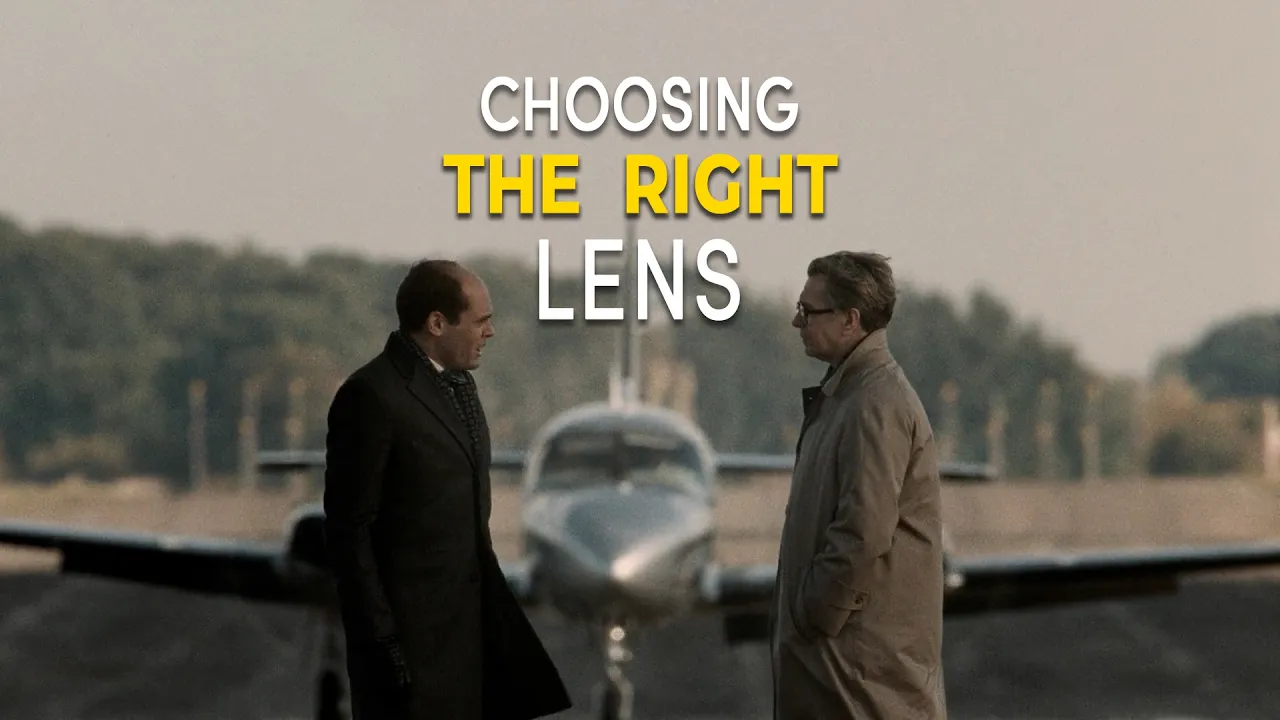
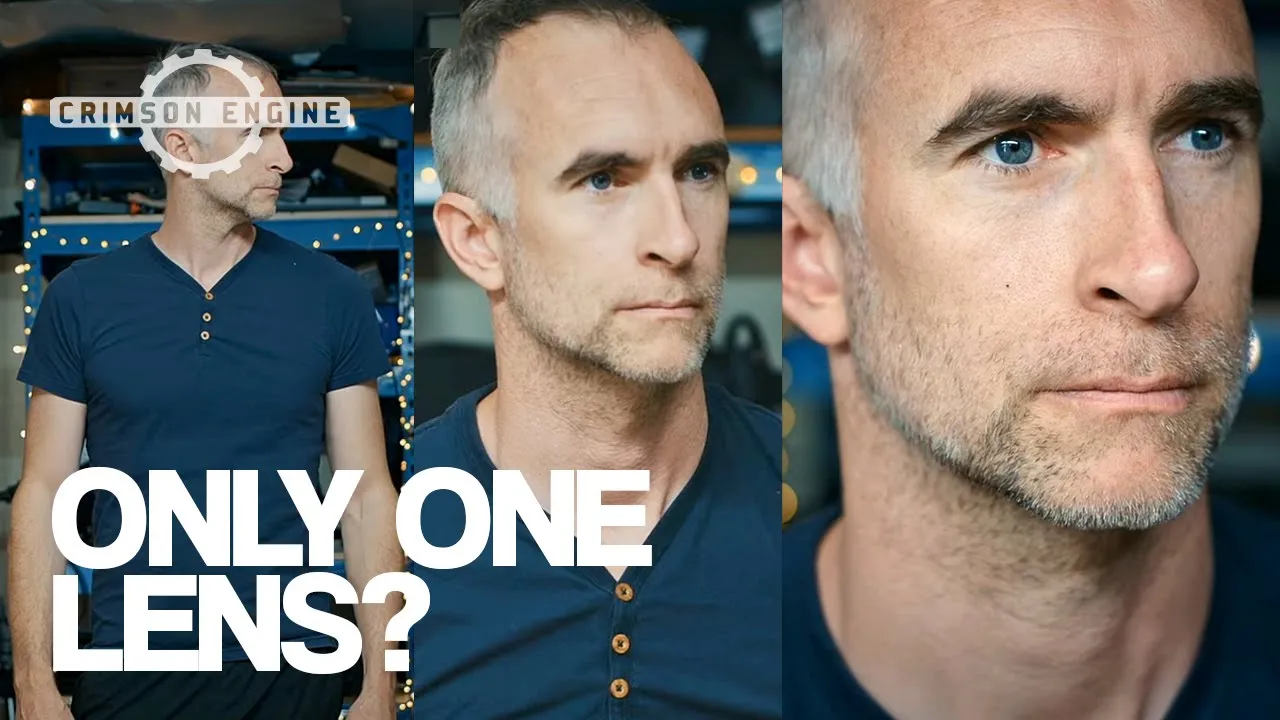


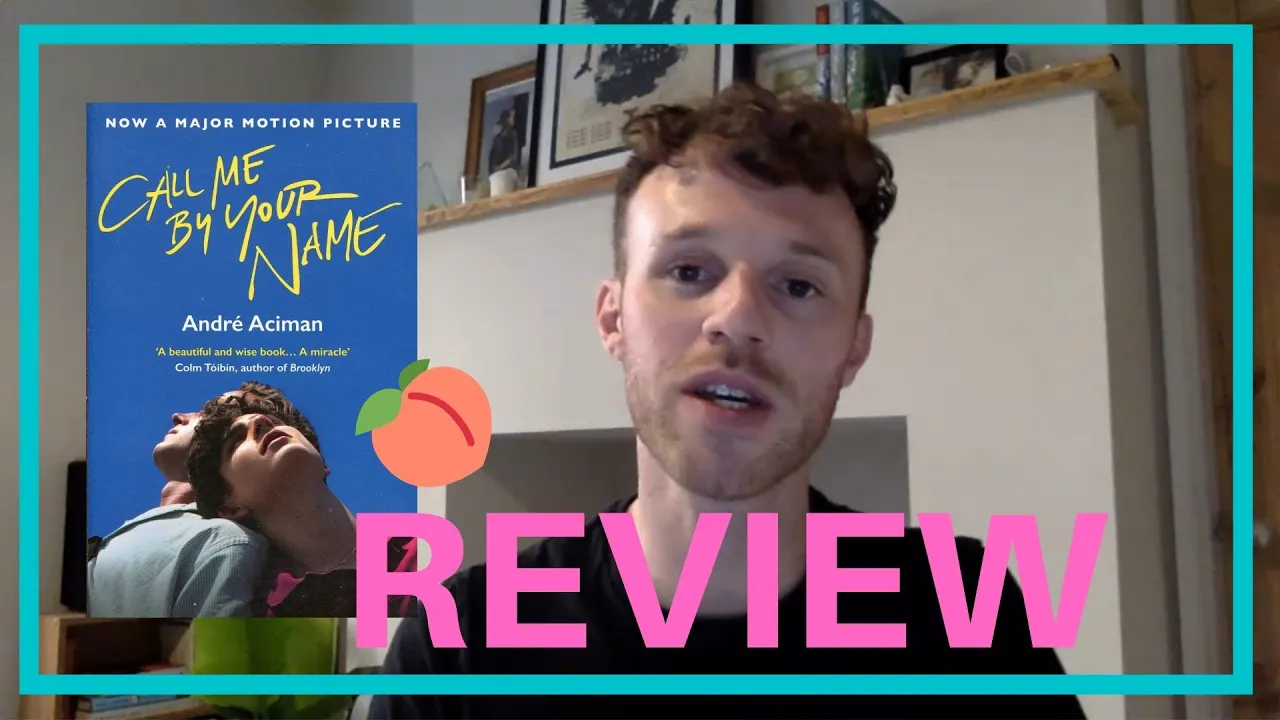













Director Luca Guadagnino employs a deliberate cinematic philosophy of refusing to cut away from uncomfortable or painful moments, forcing viewers to remain present with characters' emotions throughout the film. This technique, combined with the use of a single 35mm lens throughout the entire shoot, creates an immersive experience that makes us feel what Elio feels. The title 'Call Me By Your Name' appears at the very end, symbolizing how falling in love serves as a mirror into ourselves—a scary but transformative experience that requires us to face our feelings directly rather than avoiding them. The film teaches that when we feel the worst pain of our lives, we should not cut away from that feeling because the feeling means we're alive, and with it, the joy we felt.
Call Me By Your Name Ending Explained: Film Analysis
Added:Call Me By Your Name ends with a long shot of Elio staring into a fire, feeling his pain, and not turning away from it.
The camera likewise refuses to cut away from his face, making us feel his pain for a long time.
The title comes on, announcing that this whole film has been a cold open, a prelude to a realization, and as the credits roll, we still don't cut away.
It's a bold ending that stays with us.
But throughout this story of young, intense love between Elio and his father's American graduate student Oliver, director Luca Guadagnino is following through on the same philosophy of the closing scene.
The philosophy of not cutting away from our feelings.
Through his camera style Guadagnino visually makes us feel what Elio does and he won't let us escape, especially not when it's uncomfortable.
We can't cut away when Elio is waiting in anticipation hoping that Oliver will come into his room and he doesn't.
When he's masturbating with the peach and later when he has to undergo the shame of Oliver discovering the fruit.
[Oh I see.
You've moved on to the plant kingdom already?]
[What's next, minerals?
You've given up on the animals.]
[You know that's me.]
In the key scene when Elio is finally trying to admit his feelings to Oliver in the town square, the camera is uncomfortably far away from the characters, not cutting in close for the intimate moment we might expect -- just as they're uncomfortably far away from each other, in a public space for this most private of moments.
[Why are you telling me this?]
[Because I thought you should know.]
[Because you thought I should know?]
Even in his moment of confession, Elio finds awkward phrases to tell Oliver how he feels, without really saying any of the actual words.
[And the distance that is in between them,] [that is symbolized physically by this monument,] [is the necessary distance that has to be covered] [for the two of them to finally be united.]
[Because there is no one else I can say this to but you.]
[Are you saying what I think you're saying?]
So we're included in how excruciatingly hard this moment is for him, and because we're there with him, we remember how hard those moments are for all of us.
Especially when we're young, especially when it's the first time, especially when we like someone so much, with the crazed paralyzing intensity that Elio feels for Oliver.
Throughout the movie, Guadagnino and his DP use only one 35mm lens.
The limitation of not switching focal lengths imitates the human eye, which also can't switch between different perspectives in the same moment.
So the storytelling is never relying on glib camera techniques to make us feel.
[Only one lens for everything, for the main titles,] [for the entire shoot, for the part for the ending,] [it's one lens.]
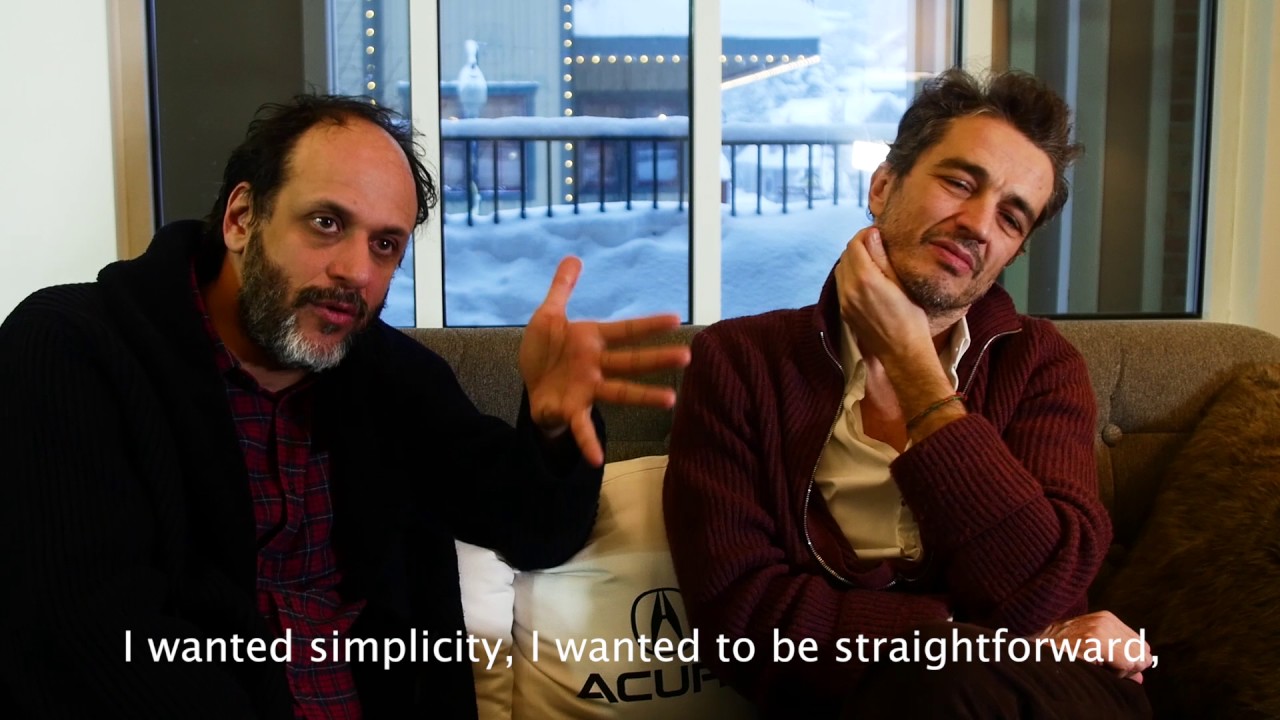
[I wanted simplicity, I wanted to be straightforward,] [I didn't want to create technology in between] [the camera and the performances.]
The consistent camera visually pins us in the place of one person who's present.
And this choice subtly builds a very strong emotional impact.
We've never been spared Elio's discomfort, so near the end, the pain and the beauty of what he's lived hits us in a profound, personal way.
As if we are the ones who"˜ve lived it.
The movie also departs from the novel in some key ways to heighten the immediacy.
First of all, it's set in the present, whereas the novel is recalling the past -- feelings are influenced by the passage of time and later developments in Elio's and Oliver's lives over 20 years.
Screenwriter James Ivory wrote a third-person voice-over narration into the screenplay, but the final movie leaves this out.
So the film is grounded in visceral, visual experience -- how characters look, act, and respond in the moment.
And from that, we have to decode and perceive for ourselves their unsaid invisible thoughts and feelings.
[I tried to rely on behavior and the physical space] [where this behavior happens to unfold.]
As a side note, because the movie doesn't use all the parts of the novel -- that also means we may get more movies about Elio and Oliver.
Guadagnino has said he wants to make sequels.
[He's such an interesting character.]
[To see him grow up and to become maybe a great pianist,] [and to understand what will be] [his interest in sexuality he's interesting emotions] [and how they gonna meet again,] [Oliver and Elio,] [all this is very interesting,] [let alone the fact the book ends with a chapter] [that is like 40 pages long where you follow] [the characters for 20 years.]
In the final scene of the film, the title finally comes up Call Me by Your Name.
Because we're seeing this at the very end, we're able to contemplate the title based on everything we've just seen.
And ask why the director chooses not to show it until now.
The phrase again ties in to the "don't-cut-away" theme of facing our feelings, and ourselves.
[Call me by your name and I'll call you by mine.]
The words are a secret language between Elio and Oliver.
They say it in bed together.
[Elio.]
[Oliver.]
Oliver uses it to give Elio the gift of his shirt.
[For Oliver, from Elio] And in their final phone call when Oliver tells Elio he's getting married, they call each other by their own names once more.
And then Oliver says, [I remember everything.]
The words "Call me by your name," express the way that falling in love is a mirror into ourselves -- The truest love, this kind that comes around only once if ever, is like staring ourselves in the face in a way that we've probably never done before, in a way that we can't on our own, and in a way that for these reasons, is incrediblely scary.
The momentousness of this explains why they're so terrified to act for most of the story.
The game of using each other's names is one way of breaking through the barriers of their sexual insecurities.
Elio is anxious about exploring his sexuality for the first time in his life.
Oliver understands his desire better, but he's trying very hard to repress it.
So as hard as it is for anyone to admit and pursue a true love, it's even harder for them because of the context.
[We can't talk about those kinds of things,] [we just can't.]
The act of calling each other by their own names takes on even more meaning in this story because it's set in 1983, and Oliver feels that he has to get married and keep up an illusion of heterosexuality.
This moment in their lives, thanks to the shelter of Elio's accepting parents, is a rare opportunity to love openly and not hide themselves.
[...why didn't you give me a sign?]
[I did.]
[When?]
[Remember when we were playing volleyball,] [and I touched you...] [Just to show you that I liked you.]
The true self that Elio and Oliver see in each other is also their best self.
Near the end, Elio tells his father [I think he was better than me,] to which his father responds [I'm sure he'd say the same thing about you,] [which flatters you both.]
Their relationship is based on a deep and mutual admiration -- a desire to be more like one another.
Elio idealizes the older, more experienced Oliver.
He wants to be like Oliver-- cool, suave, independent, projecting a happy and carefree persona.
He immediately notices Oliver's self-assured confidence, he complaining that the casual signoff [Later!]
as impolite and arrogant -- but then he imitates it with great joy.
[Just watch, this is how he'll say goodbye] [to us when the time comes.]
[With his "Later!"]
And he admires Oliver's physical and emotional maturity, which is understandable as Elio is on the edge of adulthood, and the movie is a coming-of-age story.
Meanwhile, Oliver wants to be more like Elio, he sees in Elio the freedom he desires but feels he can't have.
He admires Elio's musical genius.
[I can't believe you changed it again.]
[I changed it a little bit.]
[Why?]
[I just play the way that Busoni would've played it if he'd,] [altered Liszt's version.]
[What is wrong with Bach's?]
[Bach never wrote it for guitar.]
[In fact, we're not even sure it's Bach at all.]
[Forget I asked.]
Elio's knowledge and profundity.
[I never even heard of the Battle of the Piave.]
[Battle of Piave was one of] [the most lethal battles of World War I.]
[Hundred and seventy thousand people died.]
[Is there anything you don't know?]
And he admires Elio's youthful, unabashed thrill in his sexuality.
Even though he is younger and less experienced.
Elio is the one who acts on their romantic feelings.
And Oliver wishes he had Elio's open and accepting european family.
[You're so lucky.]
[My father would have carted me off] [to a correctional facility.]
So over the course of the summer, Elio and Oliver actually become more each other, each taking on the characteristics they love in the other.
Calling each other by their own names is a way of signaling that they're merging, that they are each other.
Elio starts wearing his own Star of David after Oliver does.
As we saw he imitates Oliver's "Later!" signoff.
He joins Oliver in his dance to "Love My Way" after watching him longingly for quite a while.
He wears Oliver's shirt, and gets into Oliver's shorts and bathing suit.
And he imitates Oliver's mannerism on more than one occasion before they go for a swim.
Visually, at times, we also see them merging.
In a voiceover in the screenplay which isn't included in the film, the narrator says near the end, "They had become each other that summer."
It goes on to say "They had found the stars, Elio and Oliver.
And this is given once only."
Call Me By Your Name is the third part of a trilogy about desire, with I am Love and A Bigger Splash.
[at the beginning I thought,] [oh my god, it's another movie] [about rich foreign people lounging] [in the Italian summertime.]
[And I really thought that desire in a way] [is the force that motivates the characters.]
And Guadagnino ends his trilogy on a note of self-knowledge.
[So I thought the conclusion of trilogy] [about desire on a sweet note.]
So the title coming up at the end is an affirmation that Elio, because of what he's felt, is now fully himself.
In a scene near the end, Elio's father beautifully articulates the philosophy that corresponds to the film's "don't cut away from the feeling" aesthetic -- He tells his son, [We rip out so much of ourselves] [to be cured of things faster,] [that we go bankrupt by the age of thirty.]
[and have less to offer] [each time we start with someone new.]
[But to make yourself feel nothing] [so as not to feel anything -] [what a waste.]
As we the viewers take in this conversation, feeling by then that have been through all of this ourselves, his advice might awaken in us a renewed determination to face life, even and especially when it's hard.
[At the end of the movie, yeah I got a Q&A,] [someone said to me,] ["Oh don't you think it's sad?"]
[No, it's not sad it's actually joyful,] [because Elio becomes a man.]
So if there's anything this movie teaches us, it's that when we feel the worst pain of our lives, don't cut away from that feeling -- because the feeling means we're alive.
[Right now, there's sorrow, pain.]
[Don't kill it,] [and with it, the joy you felt.]
Hi guys, Susannah here.
We're excited about Guadagnino's plan to do sequels following Elio over time.
And we've heard this idea being compared to François Truffaut's series about Antoine Doinel.
A lot of you probably know of The 400 Blows from 1959.
But Truffaut actually made four sequels following the same character as he grew up, all of them starring the iconic Jean-Pierre Léaud.
The series is a great precursor to the character-driven, episodic TV we know and love today.
So while you're waiting for more Elio, you can spend a little time getting to know Antoine.
If you're new here, please subscribe and support us on Patreon if you're able.
Up Next

Understanding Italian Neorealism: Key Filmmakers & Legacy
@kubricklynch
69.7K views•2021-11-15

Visual Analysis Essay: How to Analyze Graphic Novels in College Writing
@nataliepleimann5941
1K views•2020-10-14

The White Savior Trope Explained: Harmful Narratives in Film
@thetake
1.1M views•2020-07-01

Evolution of Darth Vader: Anakin Skywalker's Animated Journey Across Star Wars Films
@TellItAnimated
13.4M views•2019-03-30
Related Study Plans & Knowledge Roadmaps
Structured learning paths in Film Analysis