









![#295 GRAZIE MAESTRO Federico Fellini - Il fascino dell'immagine: LA DOLCE VITA [VOLUME2]](https://i.ytimg.com/vi/yq2uzr3ZYnY/hqdefault.jpg)




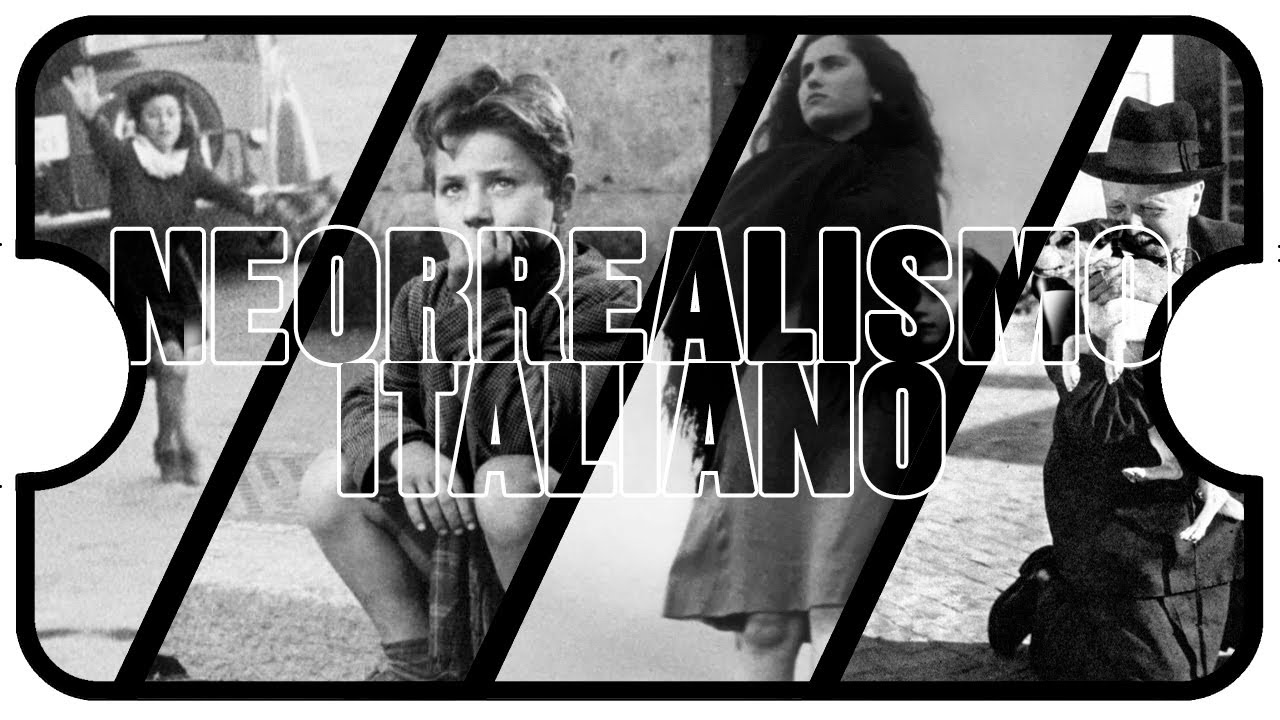



Italian Neorealism was a groundbreaking 1940s-1950s film movement in post-WWII Italy that revolutionized cinema through innovative techniques including location shooting, use of non-professional actors, and focus on working-class narratives; led by directors Roberto Rossellini (Rome, Open City), Vittorio De Sica (Bicycle Thieves), and Luchino Visconti (Ossessione), it profoundly influenced global cinema including the French New Wave, Martin Scorsese, Akira Kurosawa, and Satyajit Ray, demonstrating that compelling cinema doesn't require studio productions or famous actors.
Understanding Italian Neorealism: Key Filmmakers & Legacy
Added:Historical context of post-World War II Italy, including the economic devastation, social upheaval, and the fall of the Fascist regime.
Familiarity with pre-war cinema conventions, specifically Hollywood's highly stylized studio system and Italy's escapist 'White Telephone' (telefoni bianchi) films.
Basic film production concepts, particularly the distinction between studio-bound sets and on-location shooting, as well as the use of professional vs. non-professional actors.
The global legacy of Neorealism, specifically its direct influence on subsequent film movements like the French New Wave and Brazilian Cinema Novo.
The transition of post-war Italian cinema into Modernism, exploring the later, more introspective works of filmmakers like Federico Fellini and Michelangelo Antonioni.
A close-reading analysis of foundational Neorealist masterpieces, such as Roberto Rossellini's 'Rome, Open City' (1945) and Vittorio De Sica's 'Bicycle Thieves' (1948).
The evolution of social realism in contemporary cinema, studying how modern independent filmmakers continue to use Neorealist aesthetics to highlight marginalized communities.
69.7K views2.1Klikes12:32Original Release: 2021-11-15
The film movement known as Italian Neorealism was one of the most important in cinema history and left a massive legacy on the art form. The movement took place in the 1940s and 50s and was heavily impacted by the conditions of post-WW2 Italy. The fascist regime led by Benito Mussolini that fell in 1943 strictly censored the film industry, and its demise led to new artistic freedom. However, fascism also caused a general disillusionment about the world among Italians, which is clearly visible in the Neorealism movement.
Neorealism had a monumental influence on cinema, especially art house films. Two huge ways in which it did so were shooting on location as opposed to in studios, and the use of first-time untrained actors. Neorealist films also had a cynical outlook on life and often focused on the working class or other marginalized members of society.
The plots were structured differently than most at the time. They were less formulaic, sometimes episodic, and often ended in an intentionally unsatisfying or ambiguous way. Neorealists were inspired by Poetic Realism, a French movement from the 1930s that included director Jean Renoir, as well as Soviet Montage, and the early work of Japanese filmmaker Yasujiro Ozu.
Within Italian Neorealism, many film historians have noted that there are three directors that clearly stand above the rest in terms of significance.
Director Roberto Rossellini was one and he exemplifies many of the traits I just described.
His statements "I do not want to make beautiful films, I want to make useful films.” and "I try to capture reality, nothing else." do a great job of summing up the aims of Neorealism.
Rossellini broke through gaining international acclaim in the aftermath of World War Two. His 1945 film Rome, Open City, set during the Nazi occupation of the title city, was a commercial and critical success. It was a huge step forward for Italian film, as it won the Palme d’Or at the Cannes film festival and was even nominated for the Best Adapted Screenplay Oscar, something very rare for a movie not in English.
The leads are played by professional actors, but Rossellini went with first-time actors for the smaller roles.
Although partially due to budget constraints, this film helped define Neorealism in that it was shot on location and used lots of natural lighting. There was no need to create sets as Rossellini filmed on the real war-torn streets of Rome, and many of the props and outfits were real as well.
Rossellini also bucked the traditions of narrative cinema by having a main character be killed halfway through the film.
The character is murdered by an anonymous soldier and the film simply moves on without them.
Despite all this, the film is not completely without artifice and it doesn’t shy away from melodrama backed up with a sentimental musical score.
Among the scriptwriters was Federico Fellini, who collaborated with Rossellini multiple times and would eventually become the preeminent Italian director of all time.
I’ll discuss Fellini more later in this video.
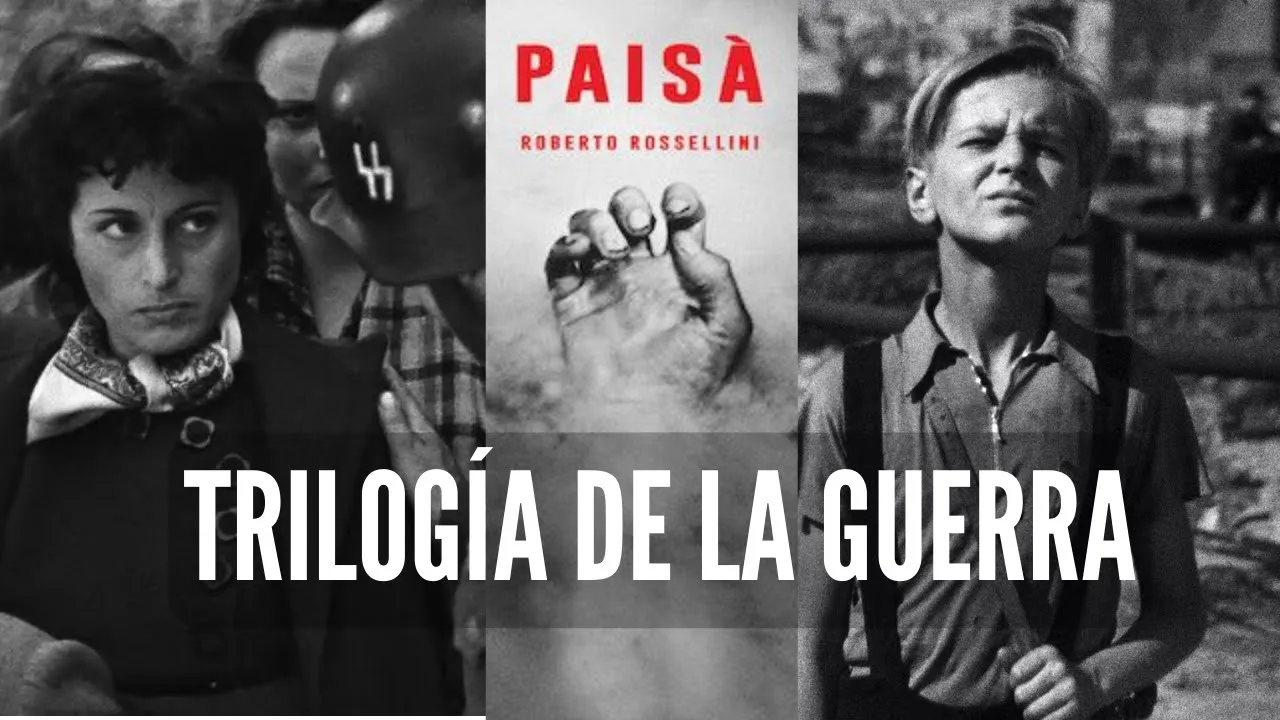
Rome, Open City is considered part of a loose thematic trilogy, with the second entry being Paisan.
It is also set during World War Two, but instead of focusing on a city, it deals with the entire nation of Italy. Paisan is made up of six segments and Rossellini would often use an episodic structure in his films. Rossellini again used first-time actors, as well as mixing in authentic documentary footage with his fictional narrative.
For his final film in the trilogy, Germany, Year Zero, Rossellini moved from Italy to post-war Germany under Allied occupation. The cast was found on the streets of Germany and the main character was played by a boy Rossellini found at the circus. It was Rossellini’s darkest ending and the pessimistic tone led to a lukewarm reception from audiences.
Rossellini made a series of films with his wife Ingrid Bergman in the 1950s and his work in this era still maintained some Neorealist sensibilities. By the 1960s, he had moved away from Neorealism entirely and started making movies about historical philosophers.
The second director to discuss is Vittorio De Sica.
He gained international attention in 1946, with Shoeshine, often considered his first masterpiece. It was actually the first foreign film to receive an honorary Oscar in what would eventually become the best foreign film category. Shoeshine was written by Cesare Zavattini, who would collaborate with De Sica many more times and become one of the major figures of Neorealism.
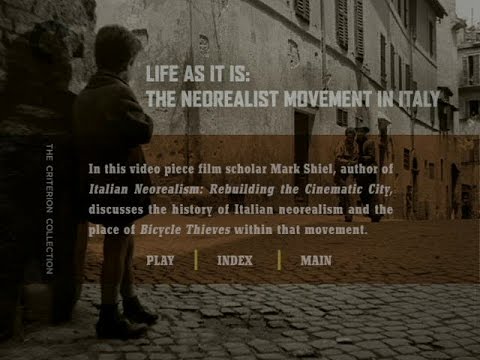
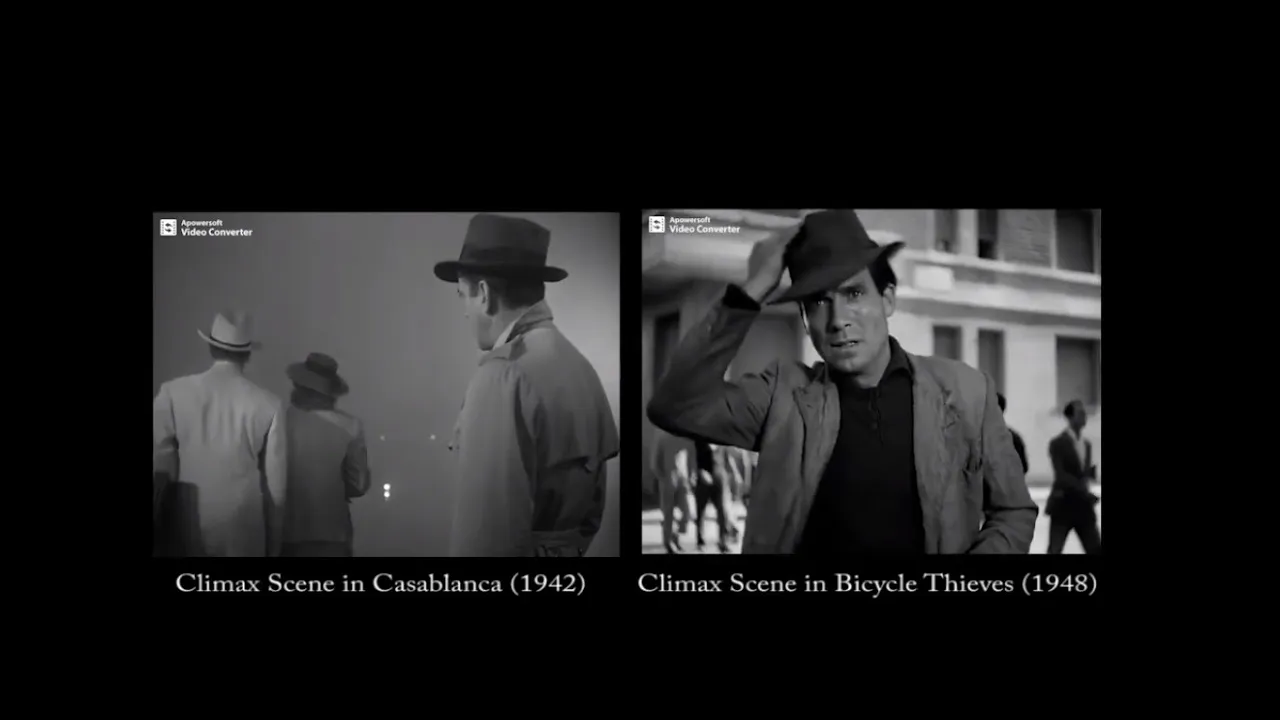
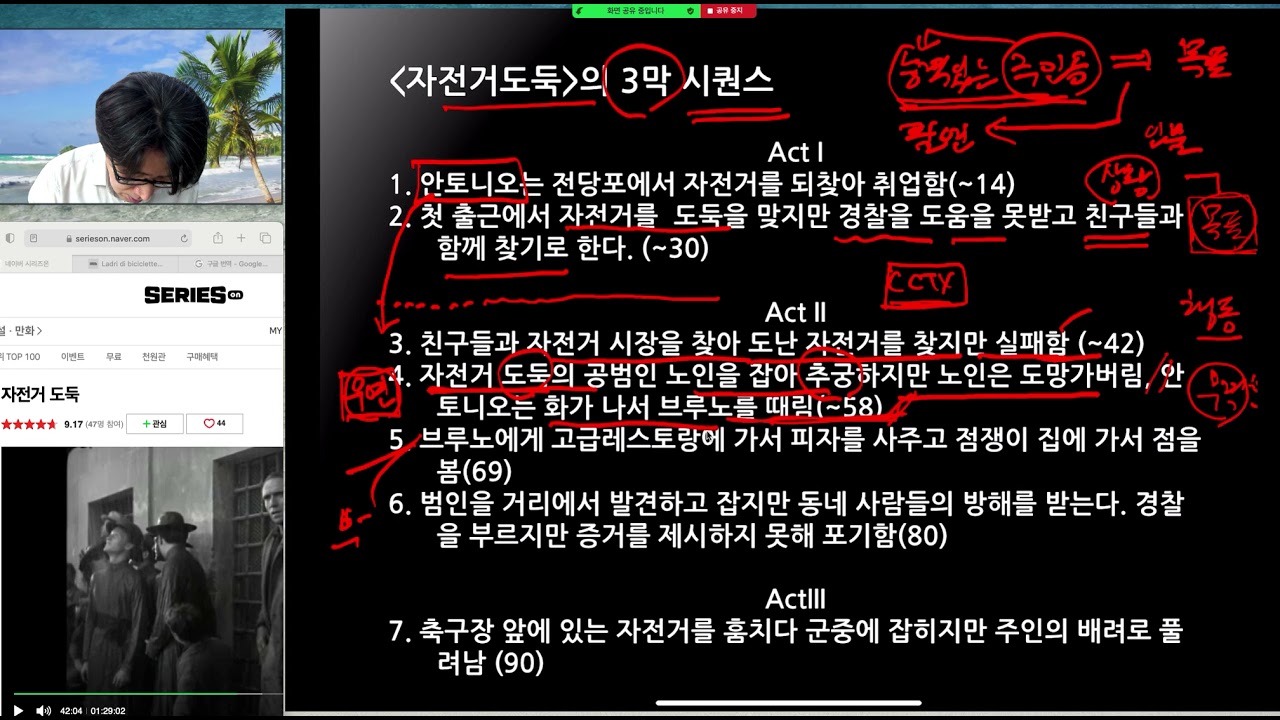
De Sica directed the most famous Neorealist film, Bicycle Thieves, again collaborating with Zavattini. Like Rossellini, De Sica used first-time actors and shot on location. Another hallmark of Neorealism was a focus on poverty in postwar Italy and we see that here as the film follows an unemployed man desperate for work. Of course, this was an unflattering portrayal of Italy, and this was also common in the Neorealism movement.
Like Shoeshine, Bicycle Thieves also earned an Honorary academy award, giving him two in three years, and its reputation has only increased in the decades since.
It’s often been called one of the best movies ever made.
De Sica’s other major Neorealist work with Zavattini was also one the last, Umberto D, a sad story of an impoverished elderly man and his dog. Umberto D is a retired government employee whose paltry pension isn’t enough for him to pay rent. The title character was played by linguistics professor Carlo Battisti, and this was his only film appearance. His friend, the maid, was also portrayed by a first-time actor, and there were some professionals in the supporting cast as well.
We see a portrayal of the mundane when De Sica shows us the maid’s daily routine in detail.
Umberto D. is remembered more now for its more realistic and depressing parts, but these aspects were juxtaposed throughout with whimsical humor, mainly in the form of the antics of Umberto’s pet dog.
Umberto D was a flop at the box office, and was even attacked by politicians for making Italy look bad. So it’s no surprise that De Sica moved away from Neorealism afterward to more lighthearted fare.
The third director was Luchino Visconti, who started his career as an assistant director for Jean Renoir. Visconti was openly bisexual and even claimed to have a relationship with Umberto II, the final king of Italy.
His debut and preeminent work of the era was Ossessione, which having been released in 1943, is the earliest of the big Neorealist films. In fact, it even came out a couple of months before the fall of fascism, and it was made despite strict government scrutiny and censorship.
The film’s dreary portrayal of Italy was not what the Fascists wanted and it was removed from theaters after early showings.
They even went so far as to destroy the negatives, but luckily Visconti saved a duplicate.
The film was based on the 1934 James Cain novel The Postman Always Rings Twice, but the Marxist Visconti added sociopolitical commentary. Ossessione centers around a wife cheating on her husband, and the focus on sexual immorality didn’t help its censorship problems. The film does not present her infidelity as a moral failing, but instead the result of a broken society.
Unlike later Neorealist films, Visconti used established actors.
The bored wife was played by Clara Calamai, one of the biggest Italian actresses of the era.
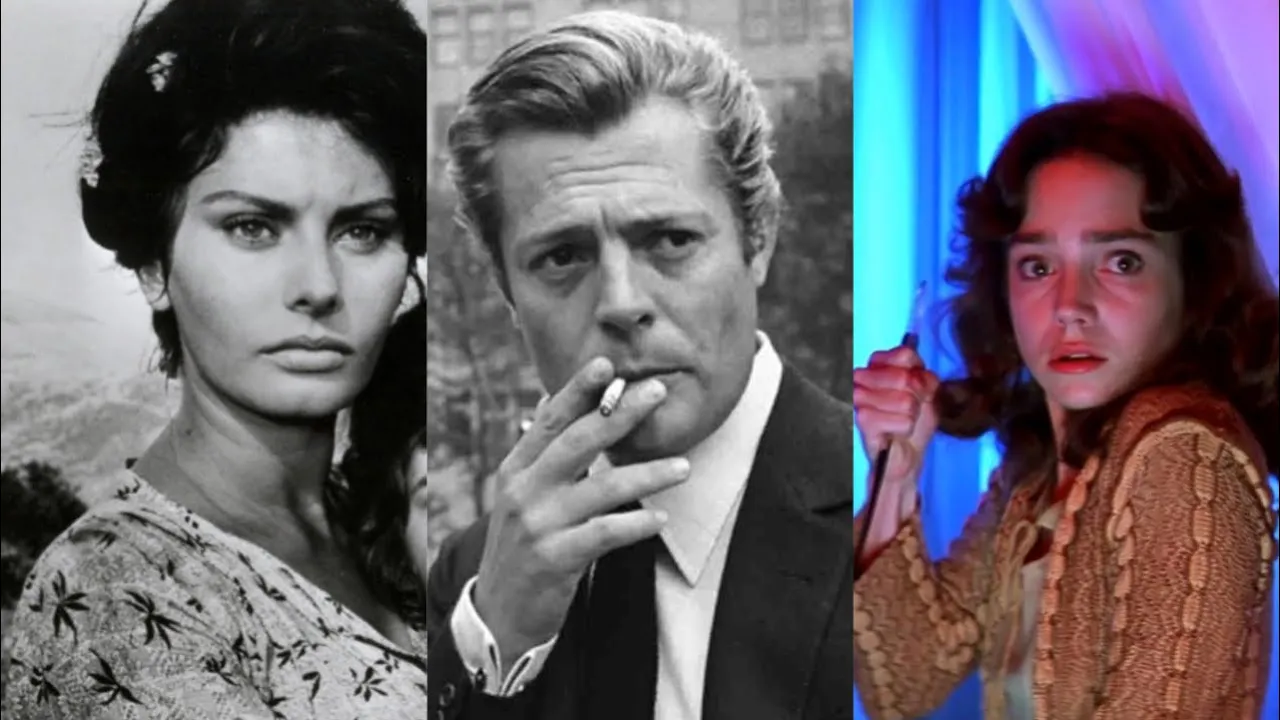
However, we do see the Neorealist tendency of focusing on members of lower social classes, as her lover Gino is a drifter. Visconti was born an aristocrat but he was a member of the Communist Party for much of his life. The film was also shot on location in the Italian countryside and features scenes of a mundane routine. Ossessione is also considered a forerunner of the Italian horror genre known as giallo that thrived in the 1960s and 70s.
Visconti did exclusively use nonprofessional actors in his second feature film, The Earth Trembles, from 1948. In fact, they aren’t even credited by name, but rather collectively as “Sicilian Fisherman”, which fits in with Visconti’s Marxist ideology. The Earth Trembles is more explicitly Marxist than most Neorealist films and was funded in part by the Italian Communist Party. The film deals with the exploitation of working-class fishermen by the upper class.
Like the previous two directors, Visconti abandoned Neorealism by the mid-1950s.
Those are the three big names of the movement, but there’s definitely more to mention.
The aforementioned Federico Fellini is also often associated with Neorealism, especially his first films that came out in the early 1950s.
His 1953 film I Vitelloni is often described as being at least Neorealist adjacent.
It was filmed on location but did have a cast of experienced actors.
His 1954 film La Strada contains aspects of Neorealism, but is more often referred to as Fellini’s break with the movement, or at least a bridge to his later, more fanciful work.
The acclaimed Italian director Michelangelo Antonioni started out with a neorealist apprenticeship and his early documentary shorts were done in the Neorealist style.
A lesser-known filmmaker involved with Neorealism was Giuseppe De Santis.
We see the influence of Marxism and working class characters in his 1947 debut Tragic Hunt, which features peasants forming a collective.
His most well-known work came two years later, with Bitter Rice, which got De Santis an Oscar nomination for Best Original Story. This film portrays the working class but also criminals, fitting in with Neorealism often showcasing societal outsiders.
Another less remembered Neorealist director was Alberto Lattuada. His 1946 film The Bandit, which played at Cannes, criticized post-war Italian society and dealt with taboo topics like prostitution. Two years later Lattuada made The Mill on the Po, which centers around peasant farmers and contains some anti-capitalist sentiment.
He was also the co-director on Fellini’s first film as director, Variety Lights.
Other Neorealist directors include Luigi Zampa, Aldo Vergano, and Raffaello Matarazzo. Also screenwriter Suso Cecchi d'Amico deserves a mention for her collaborations with Visconti, De Sica, and others.
Unfortunately, Neorealism was a very short-lived movement, but its influence was anything but. It even inspired mainstream filmmakers like Martin Scorsese, as seen in his documentary on Italian cinema, My Voyage to Italy. The films noir of the 1940s and 50s were also connected to Neorealism, with the director of the seminal noir The Naked City stating that the movement led to him utilizing location shooting and non-professional extras. These techniques became more common in Hollywood in the 1950s, as seen in the classic starring Marlon Brando, On the Waterfront.
Neorealism changed art house cinema forever and its influence can be felt in basically all of art house film. It was some of the earliest European Art Cinema that broke through internationally and showed a generation of filmmakers that you don’t need big names or a fancy studio to make something great. This was especially true in developing areas like Latin America and Africa.
A direct inspiration can be seen in many of the movements of the 1950s and 60s, most notably with the French New Wave, with Jean-Luc Godard and Francois Truffaut both citing Rossellini as influences. French New Wave films often used location shooting, nonprofessional actors, and had social and political commentary. Furthermore, both movements started with film critics who weren’t happy with their country’s cinema.
Renowned director Akira Kurosawa’s work from the late 1940s is often compared to Italian Neorealism, with specific examples being Stray Dog, One Wonderful Sunday, and No Regrets for Our Youth.
The most celebrated Indian art house director, Satyajit Ray, was inspired to become a filmmaker when he saw Bicycle Thieves, and that’s clearly seen in his Apu Trilogy.
Neorealism made Italy one of the major nations in the world of cinema for decades to come, and even to the current day, films are often cited as being influenced by it. Active directors with connections to Neorealism include Chloé Zhao, Sean Baker, and Alfonso Cuarón.
Up Next
29:19
Italian Neorealism in World Cinema | Film Studies Lecture
@filmappreciation1336
8.2K views•2015-05-08

23:14
Visual Analysis Essay: How to Analyze Graphic Novels in College Writing
@nataliepleimann5941
1K views•2020-10-14

4:55
Film Blocking Techniques for Directors: Space, Shapes, Lines
@StudioBinder
1.9M views•2018-07-23

4:00
Evolution of Darth Vader: Anakin Skywalker's Animated Journey Across Star Wars Films
@TellItAnimated
13.4M views•2019-03-30
Related Study Plans & Knowledge Roadmaps
Structured learning paths in Film Analysis
film-analysis
Sensory Cinema: Foley, Haptic Sound & Texture
01Introduction to Film Sound and Foley Artistry
02Micro-Sounds, Textures, and Extreme Amplification
03Haptic Audition and Film Phenomenology
+ 1 more learning modules
12h4 modules
Explore Roadmap
film-analysis
Breaking the Fourth Wall: Mockumentary & Satire
01The Invisible Wall: Basics of Cinematic Illusion
02Looking at the Lens: Direct Address & Character Glances
03The Mockumentary: Satire, Realism, and Complicity
+ 2 more learning modules
12h5 modules
Explore Roadmap
film-analysis
Analyzing the Long Take: Cinema, Space & Ethics
01Foundations of Film Grammar: Montage vs. The Long Take
02Choreography and Mechanics of the Simulated One-Shot
03Phenomenology of Film: Real-Time Spatial Continuity
+ 1 more learning modules
14h4 modules
Explore Roadmap
film-analysis
Anachronistic Music: Period Drama & Subversion
01Foundations of Film Sound and the 'Needle Drop'
02Traditional Authenticity vs. Revisionist History
03The Rise of the Anachronistic Soundtrack
+ 2 more learning modules
12h5 modules
Explore Roadmap