












![PHILOSOPHY - Language: Gricean Pragmatics [HD]](https://i.ytimg.com/vi_webp/we6uSVf4qss/maxresdefault.webp)


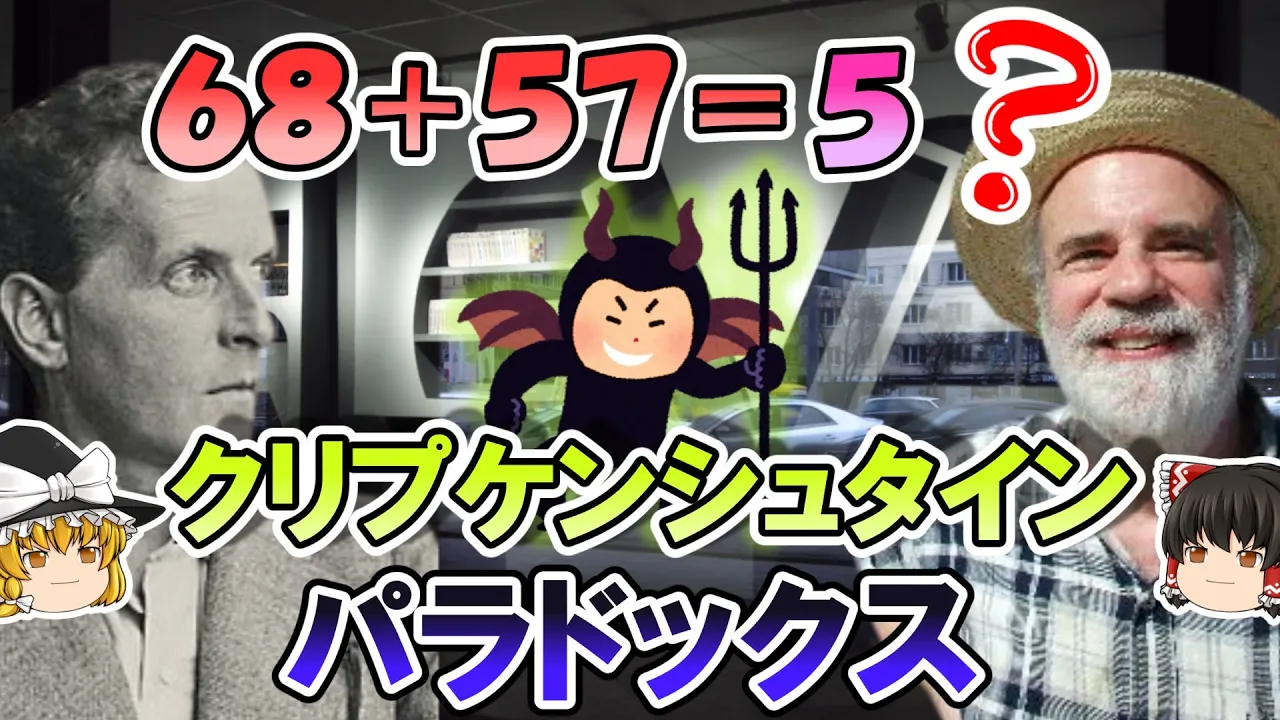
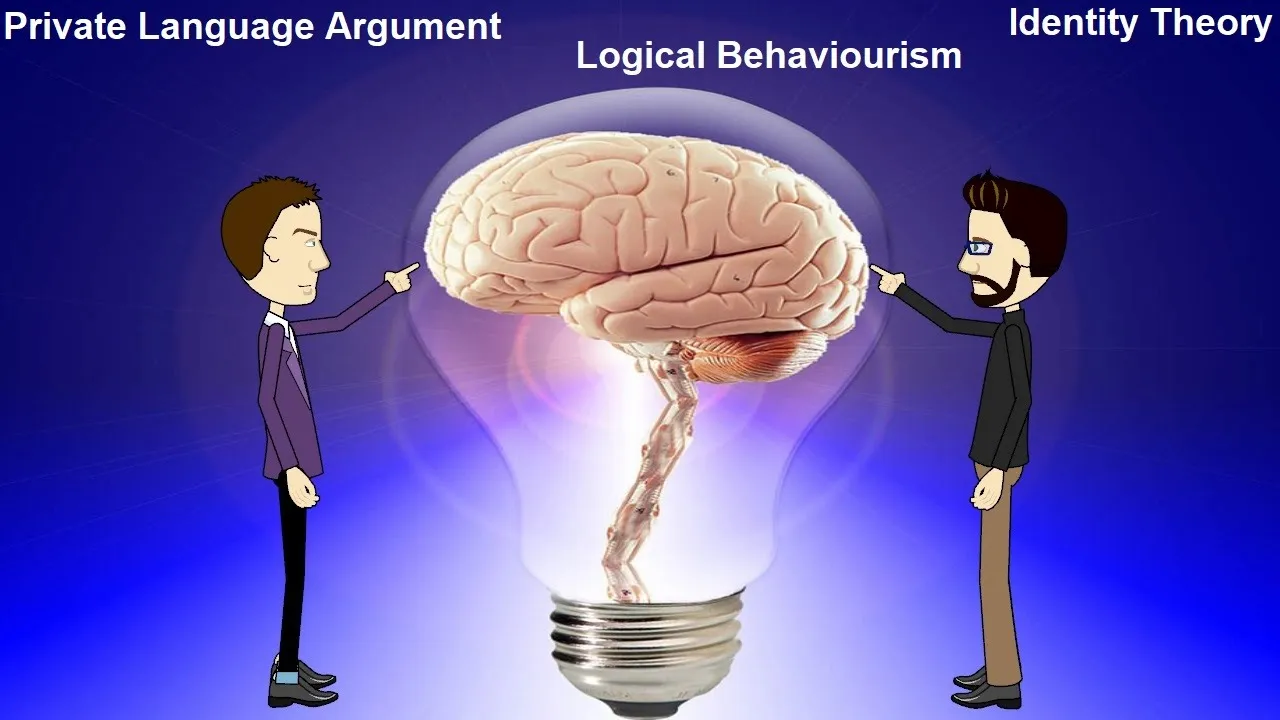

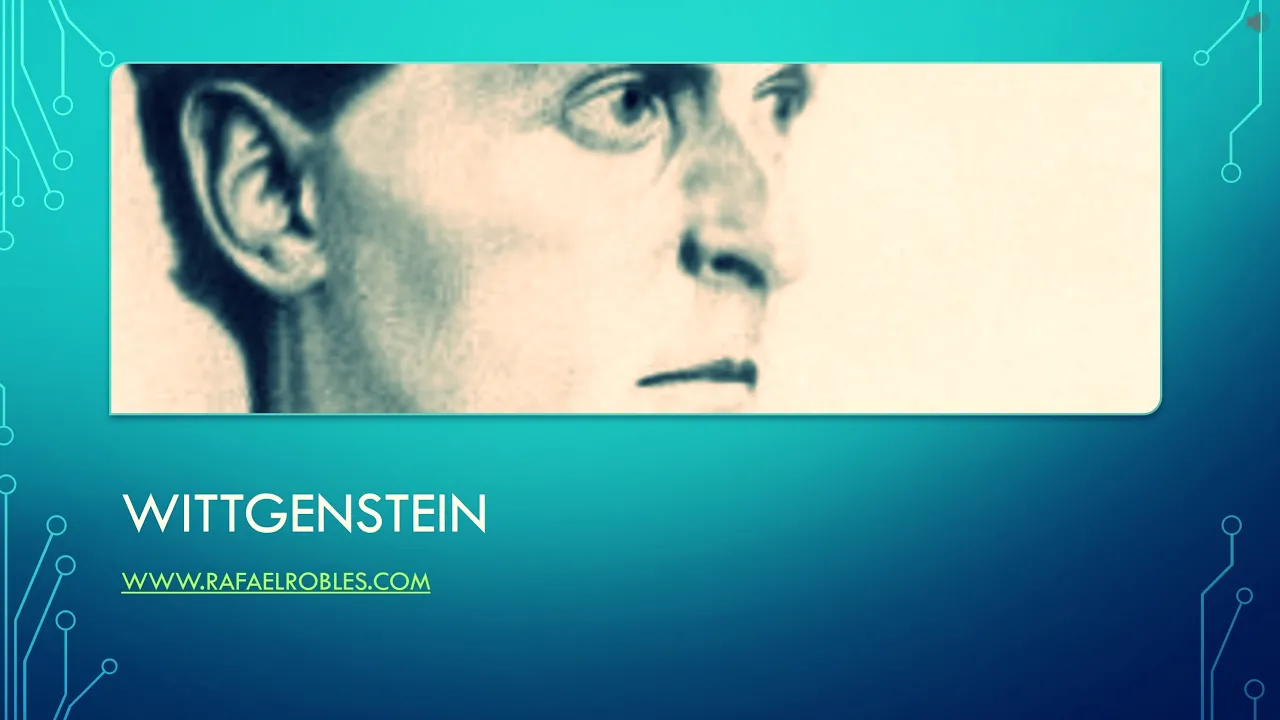
Ludwig Wittgenstein revolutionized our understanding of language by arguing that meaning is not derived from rigid definitions but from how words are used within linguistic communities; he introduced the concept of 'family resemblance' to explain that words like 'game' share overlapping characteristics rather than a single defining feature, and that meaning is fundamentally tied to observable use rather than private internal states.
Philosophy of Language: Sense, Reference & Wittgenstein
Added:Basic understanding of analytic philosophy and its focus on language as a tool for philosophical inquiry.
The fundamental distinction between syntax (the rules of combining words) and semantics (the study of meaning).
Familiarity with the correspondence theory of truth, which posits that the truth or falsity of a statement is determined by how it relates to the world.
An introductory awareness of Ludwig Wittgenstein's early work in the 'Tractatus Logico-Philosophicus' and the 'picture theory' of language.
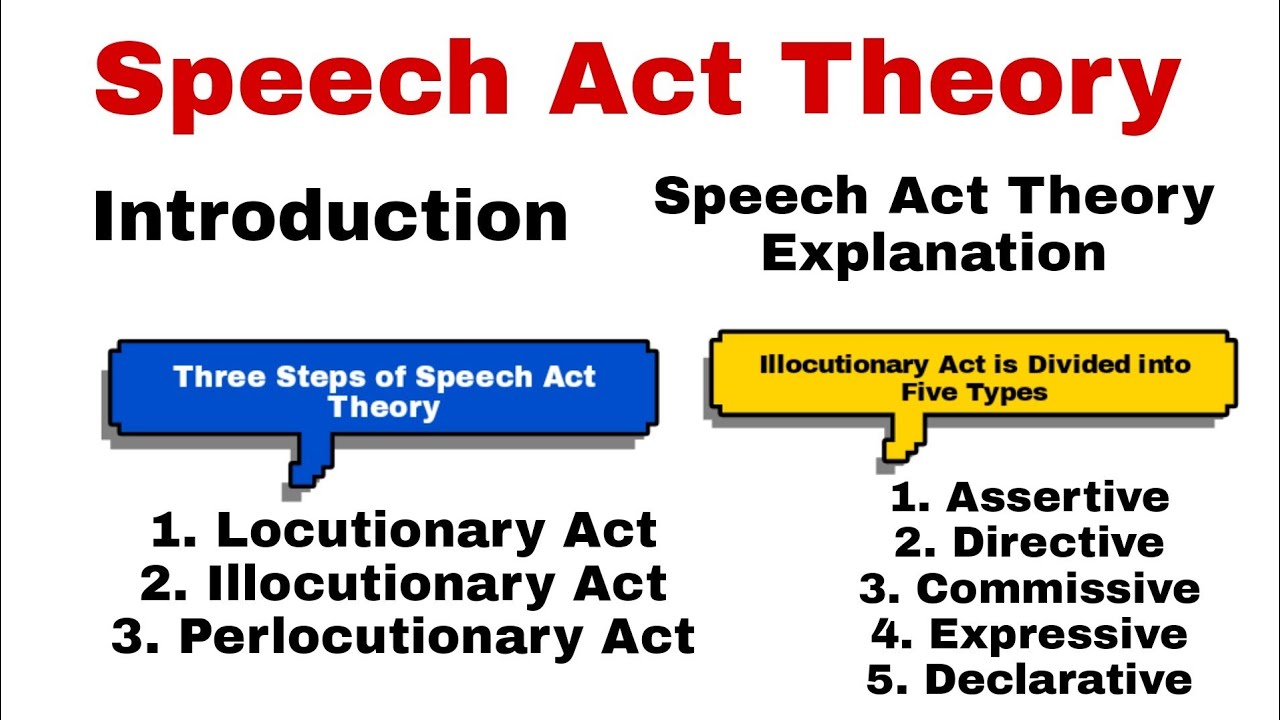
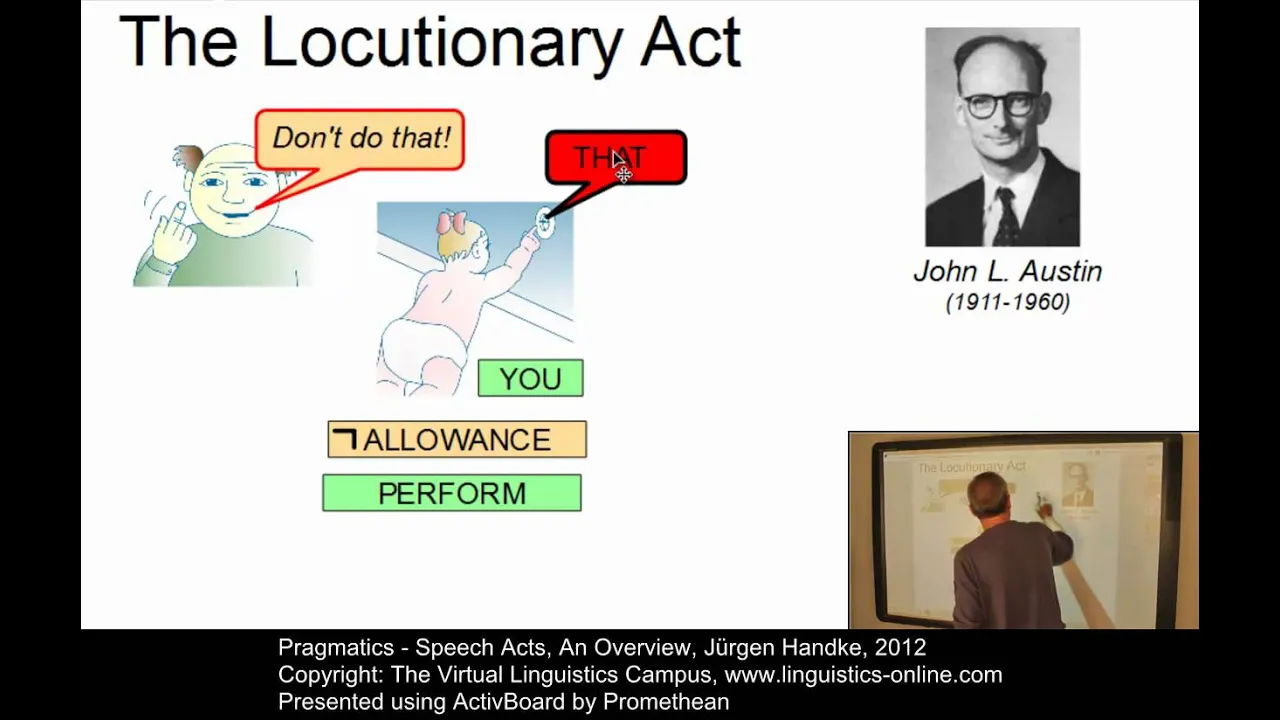
Speech Act Theory by J.L. Austin and John Searle, exploring how language is used to perform actions rather than just state facts.
Saul Kripke's theory of 'rigid designators' and the causal theory of reference in his seminal work 'Naming and Necessity'.
The study of pragmatics, focusing on how context contributes to meaning beyond the literal definitions of words.
The implications of Wittgenstein's later philosophy on the philosophy of mind, specifically the 'Private Language Argument' and rule-following paradox.
1.3M views25.9Klikes9:31Original Release: 2016-08-29
What is a game? Easy question, right?
You know what a game is – there’s basketball, Chutes and Ladders, Dungeon and Dragons, tennis, Wizard School!
But those are examples of games. What I’m asking for is the definition of a game.
Maybe, if you haven’t been keeping up with Crash Course Games, you’d simply say that, a game is a competition, with winners and losers.
But, what about a game like ring around the rosie?
Does a game require at least two players?
No, there is literally a game called solitaire solitaire.
Maybe a game is just a thing you do for fun.
But what about “who can stay quiet the longest” – the game that your parents used to use on long car trips?
Or, like, Russian roulette?
Or The Game of Thrones, where you win or you die?
When it comes to language, there’s a lot to philosophize about.
But one question that philosophers of language like to mull is the question of meaning.
What do words – like ‘game’ or ‘red’ or ‘banana’ What do they mean?
How do we know what they mean?
And who gets to decide?
[Theme Music] Language is one of our most nuanced and powerful tools.
It takes all of the stuff that’s swirling around in each of our lonely, isolated brains – all those thoughts – and transfers them into someone else’s brain.
Which is really, fabulously cool. It’s like telepathy!
But with the extra step of actually speaking or writing.
But, how do words – a collection of sounds or written symbols – key into the mental concepts that we want to communicate?
The naive understanding of what words mean is just that they’re just whatever the dictionary says.
But we know that’s not totally true.
Think about the difference between words like ‘cat,’ ‘kitty,’ ‘mouser,’ and ‘feline’.
Early 20th century German philosopher Gottlab Frege helped parse out this difference by drawing a distinction between what he called sense, and reference.
The reference of a word is the object or concept that it’s meant to designate.
The reference of all these words is this.
Sense, on the other hand, is the way in which the words tie us to the object or concept.
So, while the reference of each of these words is the same, they have different senses.
A kitty might be a baby cat, or sort of fancy lap cat, while a mouser might be a cat that lives in a barn and kills rodents for a living.
So how do words get their meaning?
A definition is traditionally understood as whatever meets the conditions for both necessity and sufficiency.
A necessary condition is what’s needed – like, what must be present – in order for a thing to be a thing.
In order for X to be X.
A necessary condition of being a bachelor, for example, is that you must be unmarried.
A sufficient condition is something that’s enough for X to be X, but it’s not required for that thing to meet that definition.
For example, being born in the United States is a sufficient condition for being an American citizen.
But it’s not a necessary condition, because people who weren’t born in the US can still become citizens.
The long-standing view of definitions was that, if you can figure out both the necessary and sufficient conditions for something to be X, then you’ll have your definition.
That is, you’ll have found the criteria that exclude all non-X’s, but include all X’s.
If you’re following me.
But 20th century Austrian-British philosopher Ludwig Wittgenstein said this rigid concept of definitions doesn’t actually work.
For example, you just can’t define the word ‘game’ in a way that’s going to make everybody happy.
Any definition you give, someone’s going to come up with a counterexample – either some game that’s excluded by the definition, or something that the definition includes that not everyone would agree is a game.
It took Andre and entire 10 minute episode to define games!
But the thing is, Wittgenstein said this doesn’t matter!
Because, everyone knows what a game is!
He pointed out that we learn and know the meaning of words by hearing the way other members of our linguistic community use them.
We hear Candyland, rugby, and Cards Against Humanity all referred to as games, so eventually our brains piece together what’s common between them, in a recognition that Wittgenstein called family resemblance.
You know how you can just see the relation between people sometimes?
Rather than rigid definitions, Wittgenstein said word meanings are so-called cluster concepts.
There’s no one element that everything in the cluster has in common, but they all share something with some other members of the group.
It’s sort of like you have your dad’s nose and your mom’s sense of humor, and your sister has your mom’s eyes and your dad’s athleticism.
You and your sister don’t really have much in common, but you do both resemble both parents.
But it’s not like every concept in the cluster is equal.
The ones that everyone would accept are the paradigm cases – you can picture them in the center of the cluster.
And as you move to the outer edges you’ll get fringe cases, the ones that some people would include in the group but others would exclude.
Everyone will agree that football is a game, but there’s going to be some disagreement about things like, I don’t know, knife fights, or how long you can hold your breath under water.
And Wittgenstein said that’s fine.
Language is a living phenomenon, and like most living things, there’s going to be change and variation.
But who gets to decide what words mean, or if a meaning is legitimate?
Here, Wittgenstein said, “meaning is use.” In other words, as long as a linguistic community uses a word in a particular way, it has that meaning.
Watching the way words develop and change does suggest that Wittgenstein was onto something.
I mean, ‘mouse’ didn’t used to mean that thing, but now it does.
We make words up as we need them.
And at the same time, words also fall out of use, or take on entirely new meanings.
Now, this view of language assumes that meaning is tied to a particular linguistic communities.
And a community might, or might not, span all of the speakers of that language.
Think about the regional differences in words that might be specific to your town, or school, or group of friends, or family.
And what about this: Do you and your best friend have code words – words that you use to talk privately, even when you’re in public?
Like, the two of you could be at a club, and one of you would say to the other: “That guy at the bar is a total shoehorn” and the other one would know exactly what you meant?
In that case, do those words, that have meaning specific to the two of you, really mean what you say they mean, even if no one else agrees with you?
And what happens if the two of you forget that meaning?
Is the meaning still there?
Or does it only exist as long as someone uses the word that way?
Let’s bounce over to the Thought Bubble for a bit of Flash Philosophy.
A linguistic community of two – like you and your friend – seems fairly plausible.
But is it possible to have an entirely private language?
Wittgenstein asked us to imagine that each of us has a box, and inside each box is something.
We all refer to the thing in our box as ‘a beetle,’ but no one can see inside anyone else’s box, ever.
We all call our hidden thing a beetle, but we have no idea if the content of our boxes is the same.
Wittgenstein said there’s no way we can meaningfully use the word ‘beetle’ in this context, because we have no way of verifying what others mean when they use the word, and they have no way of verifying what we mean.
This is meant to illustrate how it’s impossible to directly communicate our subjective experiences.
We all use the word ‘red’ to refer to the color we see when we look at a stop sign, but I have no way of knowing if you’re actually seeing the same thing that I’m seeing.
I don’t know if your pain feels like my pain or your love feels like my love.
Our minds are like boxes.
No one else can see what’s inside.
But here’s the thing: it doesn’t matter.
Because ‘beetle’ just means, ‘what’s in the box.’ It could literally be a beetle, or it could be a fox! In socks!
The point is, we don’t know if the color red in my mind is the same as the color red in your mind, because the color red is a beetle in a box.
It’s a label for what’s in our minds.
So language, Wittgenstein said, can’t refer directly to an internal state, like what it’s like to see the color red, or to experience pain.
Instead, it can only refer to the aspect of it that’s publicly observable by other people.
So, the word ‘pain’ isn’t the feeling of physical suffering, it’s jumping on one foot and cursing when you stub a toe.
It’s rubbing your temples when you have a headache – the observable behaviors that are associated with it.
Thanks, Thought Bubble! Now I want to propose an experiment.
If use is meaning, you should be able to give a word meaning by using it, right?
At least, if you can convince a linguistic community to go there with you.
So let’s try it.
If every Crash Course viewer starts referring to bananas as chom choms, can we make it catch on?
Can we create meaning?!
We’ll have to stay tuned for the answer to that one, but in the meantime, we can think about what might happen.
And to do that, we need to make a distinction between two different types of meaning.
When people communicate verbally, there’s speaker meaning, which is what the speaker intends when using a word.
And then there’s audience meaning, which is what the audience understands.
Since the whole point of language is communication, our goal is for speaker meaning and audience meaning to match up.
But, as anyone who’s ever, like, had a conversation, knows, this doesn’t always work out.
Like, Billy tells Bobby that he likes Sally.
Billy, the speaker, means that he likes Sally as a friend.
Bobby, the audience, takes Billy’s statement to be a profession of, like, you know, like-like.
So Bobby then goes and tells Sally that Billy like-likes her, when in fact Billy actually like-likes Suzy, and pretty soon, you know how it goes. Tears.
The point is, that even with a simple word that we all think we understand, like ‘like,’ speaker meaning and audience meaning can fail to connect.
When we get into more complicated or nuanced words, or when we try to invent a new word, like chom chom, we’re likely to run into some pretty high-level speaker-meaning/audience-meaning confusion.
But for now, we learned about meaning.
We talked about sense and reference, beetles in boxes, and language games.
And we learned that bananas are called chom choms.
Repeat it with me: chom choms.
Never say bananas again.
Next time, we’re going to talk about another linguistic concept – conversational implicature.
Crash Course Philosophy is produced in association with PBS Digital Studios.
You can head over to their channel to check out a playlist of the latest episodes from shows like PBS Idea Channel, It's Okay to be Smart, and Physics Girl.
This episode of Crash Course was filmed in the Doctor Cheryl C. Kinney Crash Course Studio with the help of all of these awesome people and our equally fantastic graphics team is Thought Cafe.
Up Next
33:18
Philosophy of Language: A Short Introduction | Epistemology & Semantics
@SBPhilosophy
704 views•2020-12-08

164:01
John of Damascus on Holy Images: A Theological Defense
@BannedBooks
139 views•2026-04-25
9:20
How Can We Talk About Nonexistent Objects? | Philosophy
@crashcourse
872.8K views•2016-09-27
4:57
The Myth of Sisyphus: A Greek Legend of Eternal Punishment
@TEDEd
8.6M views•2018-11-13
Related Study Plans & Knowledge Roadmaps
Structured learning paths in Philosophy
philosophy
Frankfurt School: Critical Theory & Culture
01Foundations of the Frankfurt School and Critical Theory
02Horkheimer & Adorno: The Critique of Instrumental Reason
03The Culture Industry and Mass Deception
+ 2 more learning modules
12h5 modules
Explore Roadmap
philosophy
Philosophy of Language: From Frege to Austin
01The Linguistic Turn: An Introduction to Language in Philosophy
02Gottlob Frege: Sense and Reference
03Early Wittgenstein: The Picture Theory of Meaning
+ 3 more learning modules
15h6 modules
Explore Roadmap
philosophy
Feminist Epistemology: Standpoint & Injustice
01Introduction to Epistemology and Feminist Critiques
02Sandra Harding and Standpoint Theory
03Donna Haraway and Situated Knowledges
+ 2 more learning modules
12h5 modules
Explore Roadmap
philosophy
Environmental Philosophy: Ethics & Deep Ecology
01Foundations of Environmental Ethics & Anthropocentrism
02Biocentric Individualism and Animal Liberation
03Ecocentric Holism and Deep Ecology
+ 1 more learning modules
10h4 modules
Explore Roadmap