







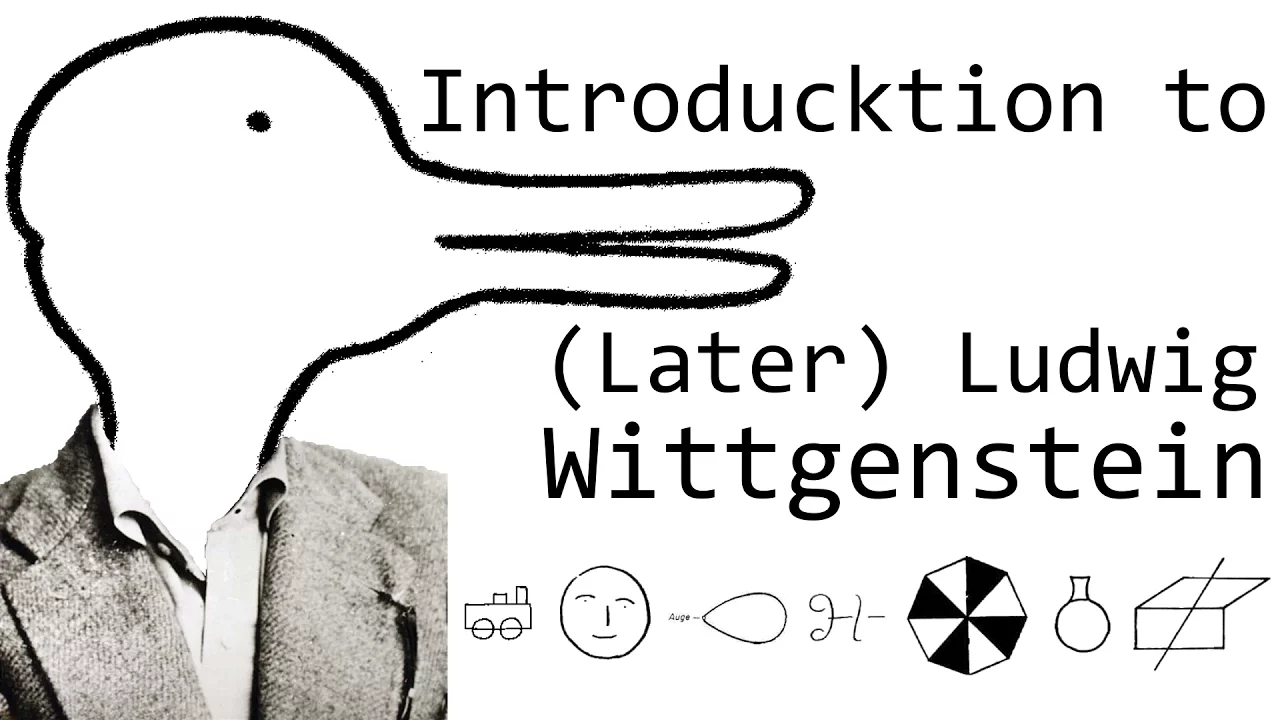





Ludwig Wittgenstein's Tractatus Logico-Philosophicus presents the revolutionary idea that the world consists of facts (states of affairs) rather than substances, and that propositions function as pictures of reality by having logical forms that correspond to the structure of facts; however, Wittgenstein ultimately concludes that meaningful propositions can only describe what can be clearly stated, while profound aspects of human experience—ethics, aesthetics, metaphysics, and the meaning of life—lie beyond the bounds of language and must be passed over in silence.
Wittgenstein's Tractatus: Facts, Language, and the Limits of Thought
Added:Basic propositional logic and the formal structures of symbolic logic, which Wittgenstein uses to frame his arguments.
The philosophy of language pioneered by Gottlob Frege and Bertrand Russell, particularly Russell's Theory of Descriptions.
The metaphysical concept of Logical Atomism, which argues that reality is composed of basic, independent logical facts.
The historical context of early 20th-century analytic philosophy and its attempt to resolve metaphysical problems through linguistic analysis.
Wittgenstein's self-critique and transition to his later work in 'Philosophical Investigations', introducing 'language-games' and 'family resemblances'.
Logical Positivism and the Vienna Circle, specifically how they interpreted and applied the Tractatus to form the verificationist theory of meaning.
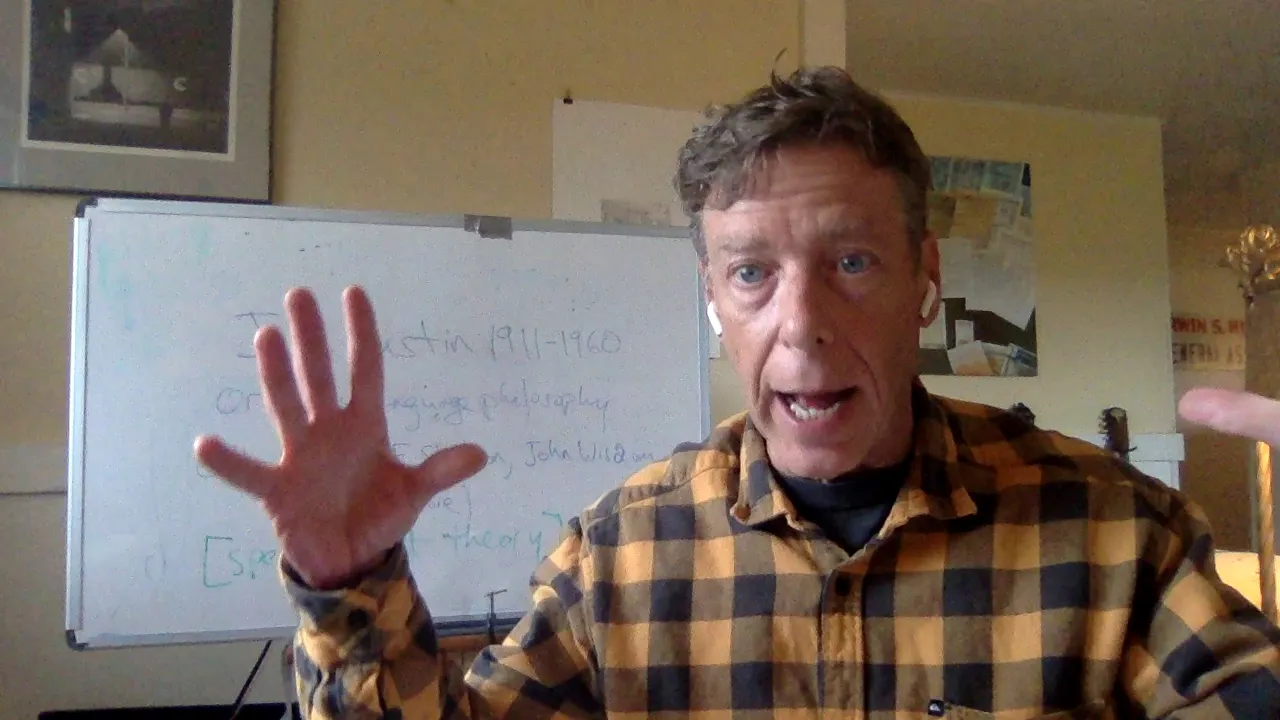
Ordinary Language Philosophy, focusing on thinkers like J.L. Austin and Gilbert Ryle who analyzed language in everyday contexts.
Contemporary theories in the philosophy of language, such as truth-conditional semantics and speech act theory.
149.4K views2.9Klikes34:00Original Release: 2013-10-02
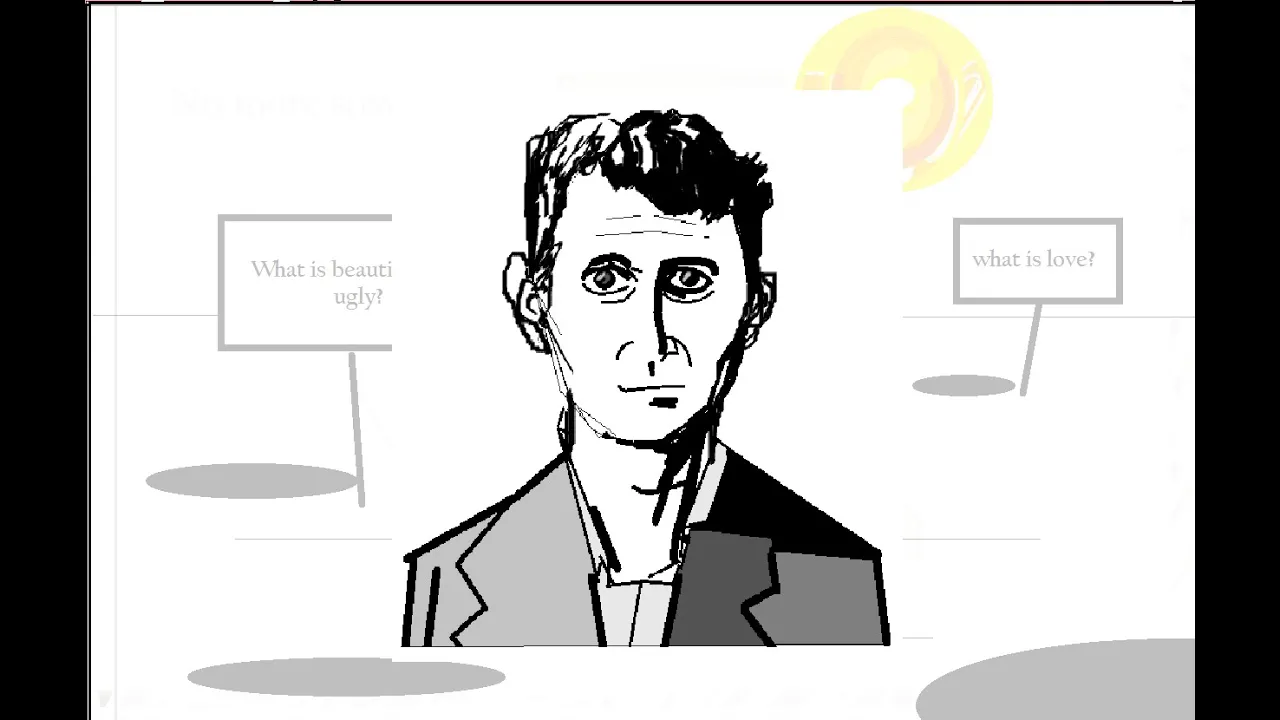
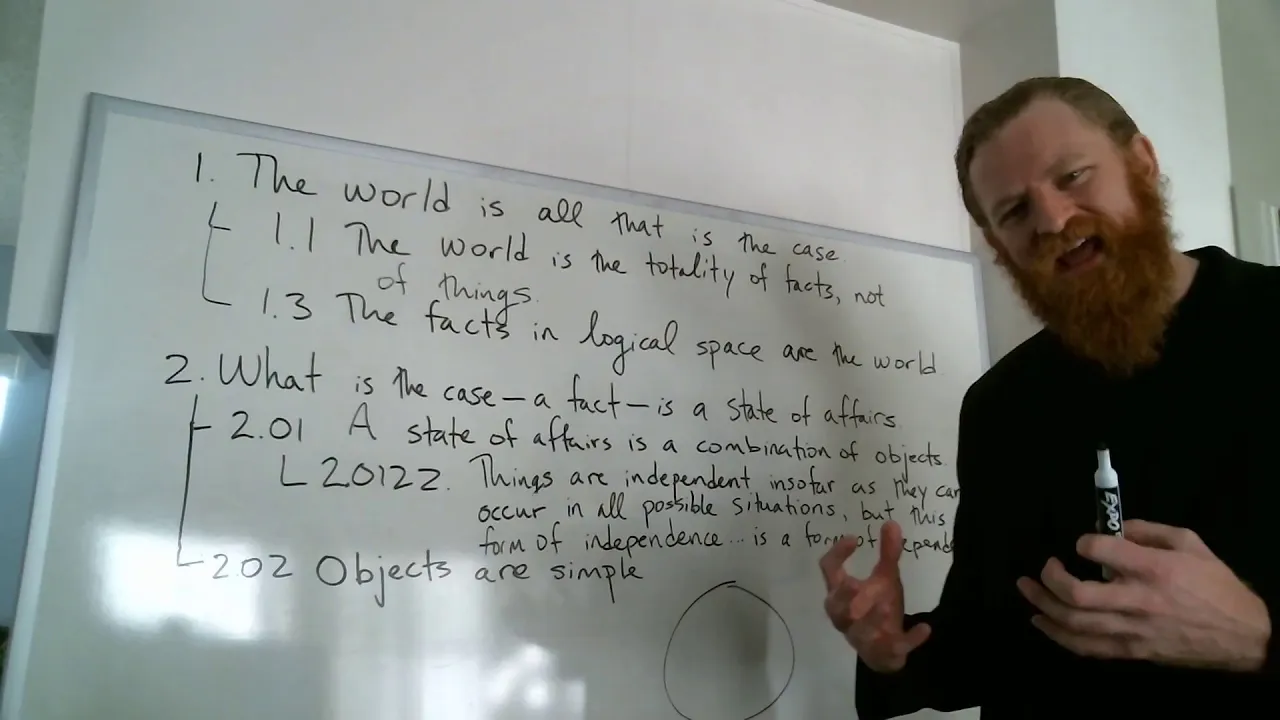
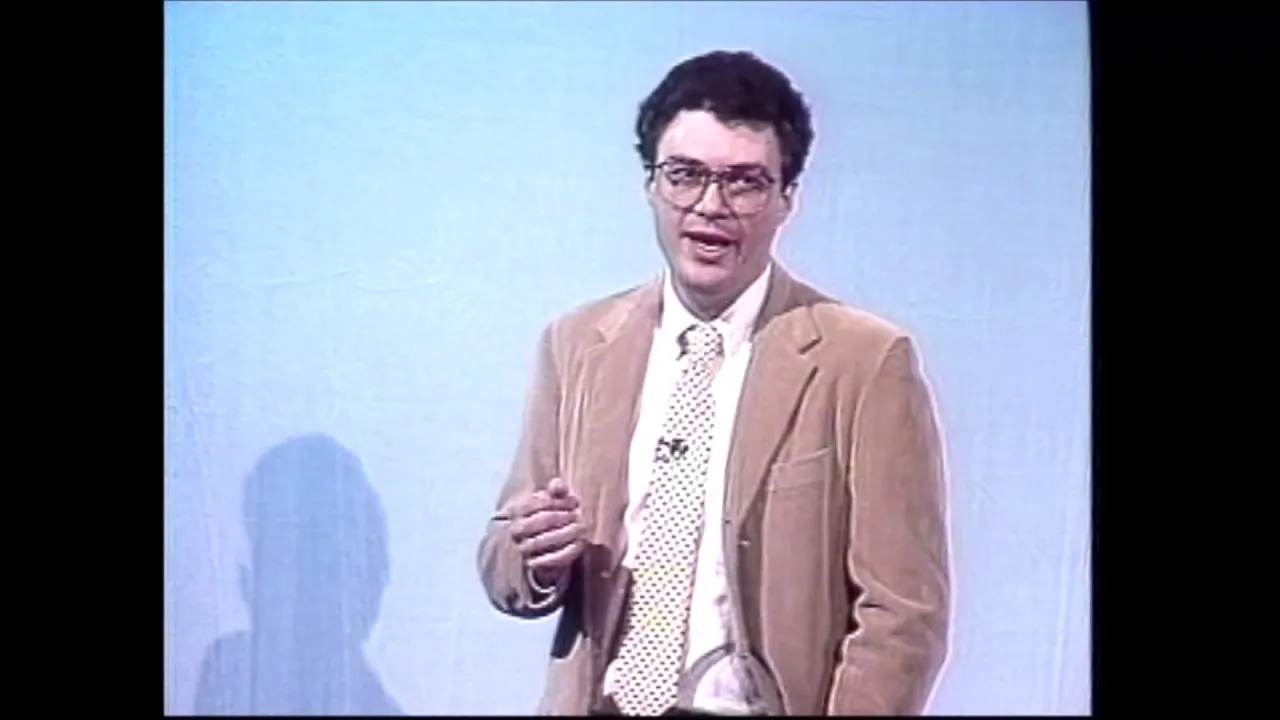
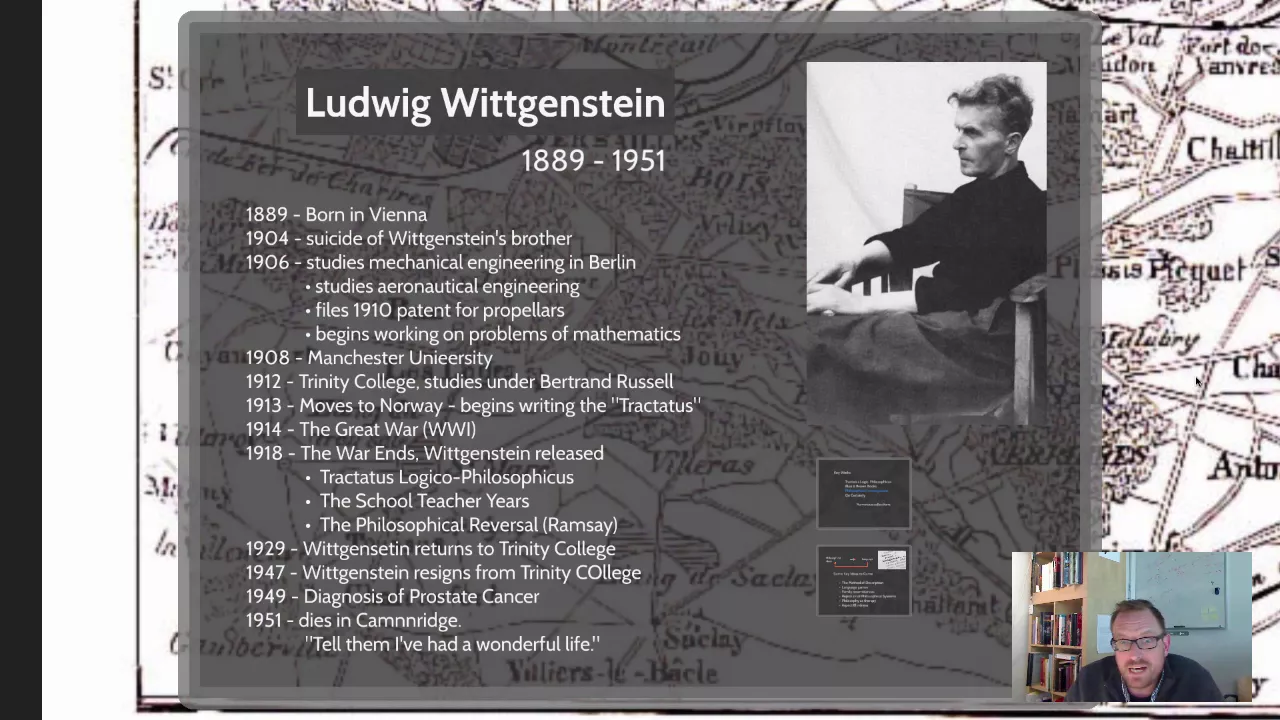
let's start with viken Stein vien Stein himself is one of the strangest people of the 20th century he was born into the second wealthiest family in Austria Hungary just behind the hapsburgs uh he lived in VI the youngest of nine children if you go if you Google wienstein house um you will find many different houses because the Vicken Stein family owned a palace in VI but then also houses all over Austria Friends of the family include the sculptor AUST Rodan famous for The Thinker and painter Gustaf Clint composers BRS and merer and so he was very well connected not only to people of immense power and wealth in Austria Hungary but also to people who were really the center of austr Hungarian culture he was homeschooled until he was 14 then he went to a technical school one of his classmates was Adolf Hitler uh then he studied Engineering in Berlin and Manchester at 22 he got unhappy with engineering and decided he wanted to study logic so he went to Cambridge to study with beran Russell and then later he taught of Cambridge he took over GE Moore's chair we'll find out more about Moore later Russell described vien Stein as obstinate and perverse but I think not stupid later he became convinced that Vicken Stein was an unparalleled genius in any case he was odd he taught for a while at Cambridge he served in the first world war um with the austr Hungarian Army he spent many years then living in a Norwegian fishing Village uh he worked as a gardener for a while he taught Elementary School in a remote Austrian Village um where it was very difficult for him to keep his identity secret but he did his best he was known for being incredibly strict with his students he taught them mathematics for two hours every morning first thing and if they did anything wrong he would yell at them shout at them and even SL so imagine having him as your first grade teacher okay Johnny what's 1+ two um two no anyway we're going to be talking today about his first great work The tractatus Logical philosophicus It is Well an odd work as you've probably seen it's just propositions in fact there's a joke from John pleas in a faulty Tower episode come on man this is not a proposition from Vicken Stein um the motto of the book is taken from kernberg all that we know that isn't just rustling and roaring it can be said in three words and indeed the book really by its own light is meaningless by the time you get to the end the moral is everything I've just told you is meaningless okay but only now have you gotten to the point where you can see that it's meaningless yes now he summarized the book this way what can be said can be said clearly what cannot be said must be passed over in silence and it turns out that a lot that he really cares about has to be passed over in silence The Logical empiricist of the Vienna Circle Rudolph carna Kurt girdle a number of others were inspired by Vicken Stein's work they thought he was one of them they saw his work as a logical empiricist work Russell did too viin hated Russell's introduction to the truck to thought he had got it completely wrong the vi Circle inv wienstein to speak before them he came up before the group they expected him to give a paper on logical analysis and the nature of the world and language and thought and so on instead he turned his back to them and read poetry now they were mystified by this it just added to his reputation as a crazy person but actually I think it related to this last Point there's certain things he's maintained that can be shown but cannot be said and so the point of reading poetry before the group is to say look I'm not saying that all that other stuff stuff is nonsense I'm saying that actually the most important things in life we can't really articulate we can't even ask the question let Al Lo pose an answer but that doesn't mean it isn't important that doesn't mean it isn't there and so we have to show it art can do that music can do that um poetry can do that the TR maybe can do that but he didn't think ordinary language could do it well what is this book really about it's about the relationship between mind and world it's about the relationship really between thought and let this circle represent the mind and take that as being a thought okay I don't know what that's supposed to be but it's just something okay that indicates something happens in the mind it's a thought and there is what we might say the cat drinks water from the glass and there is my cat zot drinking water from my glass something happens frequently in my house I get myself some water sit on the table before I can drink any the cat drinks it not always this cat usually the cat in any case Okay so that's what we want to understand the sentence the cat drinks water from the glass the thought which has that as something like its content and then this is the fact in the world well actually what you see here is a picture of the fact in the world we're going to be interested in pictures and the ways in which language and thought dep depict things here's the traditional view as formulated for example by ER the world consists of what of things okay of people like you and me of objects like chairs and tables and cameras of maybe microparticles scientific type objects like I don't know electrons Fields things like that that's what the world consists of in the traditional philosophical terminology those things are called substances so the idea is the world consists of substances those substances have certain properties for example the camera is black or my shirt is striped they also stand in relations I am wearing my shirt or the camera is on the tripod they have a location in space and time camera's over there and my shirt is right here they do things and have things done to them and so all of those things you might say are our ordinary ways of categorizing the world in fact Aristotle describes all this in a work called the categories he just says here's what it is look at language there are nouns that refer to people places things then there are verbs that say what they do or what is done to them and then there are adjectives that describe their properties there are all sorts of things like prepositions that refer to their relations and then we have various ways of expressing their location in space and time and so on and so really he says if you look at the structure of language and its grammatical categories they match on to very nicely the categories of things in the world well viken Stein is really denying this right at the outset but he does maintain a deeper point that Aristotle is also maintaining it is the correspondence theory of Truth we'll meet it it a number of times in the course the idea here is that thoughts and utterances are true when they correspond to reality so I say the cat drinks water from the glass and that is true if and only if well there's a corresponding fact you might say the cat is actually drinking water from the glass now actually I've cheated a bit by saying the cat drinks water drink the simple present in English is complicated it's not in most languages but in English it is so actually you might think that sort of means it habitually or frequently or routinely drinks from the glass and so on um here pretend that it's a sports reporter okay they often use the simple present in a way that just says it's happening now okay so one of my favorite examples windfields going back back he Rams his head against the wall it's rolling toward second base well the ball was rolling towards second base not his head but anyway that's he you know notice Winfield's going back actually I cheated goes Windfield goes back goes back he hits his head in the wall it's rolling toward second base the simple present there he hits his head against the wall means happens right de so ignore in other words all the complexities of tense for the moment so the idea is just you look at this it's true if only if something like that is going on in the world that object really does stand in that relation to that other object that object really does have that property that object really is doing that thing and so on well look at vien Stein right at the beginning you can read it here in German if you want or in English he starts out by saying the world is all that is the case okay and he elaborates he says the world is the totality of facts not of things now when I took a seminar on bin science tractus we spent an entire two and a half session on just those to propositions I don't recommend that um but here's the idea he's trying to say don't think of it the way Aristotle did don't think of the world as consisting of objects that have properties and standing relations think about the facts this object standing in that relation to that other object the fact of this object having that property in other words don't think about the world consisting of the shirt and the camera and the table and so on think about the world is consisting of the shirt that's being stried or the cameras being black yes or me speaking okay those are facts those are the things he wants to think of the world is consisting of why well really he's motivated by the correspondence theory he says when is a sentence or a thought true when there is a corresponding fact I say the cat drinks water from the glass and there it is the cat is drinking water from the glass notice the cat isn't enough to make that sentence true the Glass isn't enough it requires that a certain relationship hold between them and fact is what he says is making sentences true or false so think in terms of facts not of things yeah what if you said like the blanket is comfortable is that a fact like because it depends on like if somebody could think it's comfortable somebody's not so is it a fact or is it true or false or oh good the blanket is comfortable is that a fact be an opinion well it is attributing a property to it the question is is that a simple property or is it a relational property is it comfortable for you um it's a fact for me yeah it might be a fact for you or really the way B can sign say yeah look don't be a relativist about this instead just think it's a relational property being comfortable so you might say that's comfortable that really means the relationship between it and me produces comfort in me or something like that and so think of it as really relational there are lots of things like that if I say for for that matter that something is large that actually has a sort of hidden relational element it doesn't look like it and yet might say look that's a large rat somebody says well rats are animals so I guess that's a large animal um no a large rat is still kind of a small animal and so there's a kind of hidden relational part to that and I think comfortable is like that when you say that's comfortable or actually my earlier example that's yummy you really kind of mean from his point of view that you find it yummy you find it comfortable so there's this hidden term that isn't explicit in a sense now that points out something important which is that we're going to act later as if the terms of sentences and the terms of thoughts and then the things in the world all neatly correspond to each other but notice they comfortable that's a great example there we've got something that's left out in the thought and left out in the sentence but really seems like it has to be part of it in the world to make this make any sense and so we're going to find places where there isn't a very nice onetoone correspondence here which complicates his picture and maybe even refutes it he's going to think no no no really um there's this exact matchup but maybe there's not if we go on and look at the further propositions the world is determined by the facts and by there being all the facts so what do I need to know to describe the world exactly I just need to list the facts but then also to say and that's all the facts okay I can't just list the facts and you want well is that the complete story or not I have to say at the end and that's all there is the to it of facts determines what is the case and what is not the case the facts in logical space are the world the world divides into facts so the world really is made up of facts don't think if the world is consisting of all these things think of the world as something like a big list of facts okay really it's not just a list of course of facts it's this comp complex combination of facts that brings us to the second proposition what is the case a fact is the exist of states of Affairs I can think of a fact as being something like the cat drinking water from the glass but I can describe that as a possible thing without it being actual right when I took the photograph that was actually happening the cat actually was doing it so that State of Affairs was actual but if I describe it now I didn't leave any water well I mean they have their water bowls but there was no glass of water left in my house so now it's false it's a possible State of Affairs that a cat would be drinking water from a glass in my house right now but it's not actual there was a question yeah yeah but aren't there like a limited facts like an infinite amount like weird 5 hours away from Dallas by a car and 20 hours by skateboard you know yeah yeah yeah yeah so okay good if you think about the existing state of affairs the actual facts you're right there are infinitely many of them so this is going to be an infinite collection the world will be an infinite collection of facts but then if we think of the merely potential states of Affairs the facts that could obtain um that could be any configuration of objects at all actual or possible so if I start telling a story I say ah yes once upon a time I had a class just like this and we decided that when we got to Quin later and he talks about jungle linguist we couldn't really understand it without going to the jungle and finding some wild tribes who spoke a completely unfamiliar language and so we did that and we ventured Through the Jungle a mountain lion leaped out at us luckily one of the students had an iPad and threw it like a Frisbee and took the head of the mountain line right off okay now this did not happen but it's a possible State of Affairs right an extremely remote State of Affairs you might think but nevertheless a possible State of Affairs so there are infinitely many of these State of Affairs that really exist that really are actual and then there are infinitely many more that are just merely possible well binstein advances what is called the picture Theory that's his basic idea of how thought represents the world and how language represents the world here's the idea we picture facts to ourselves if I describe that the student throwing the iPad and beheading the mountain lion or just thinking about my house right now there could be there isn't but there could be a glass of water that a cat is drinking from you can picture those right you can imagine those things and I've represented them in speaking to I've had the thoughts and so I've represented it in thought so we have different ways of representing these facts we can represent them in thought we can represent them in language we can represent them in photographs or images or paintings or things like that now what is a picture whether it's a sentence that's a kind of picture or thought is a kind of picture for binstein but then there are physical pictures like photographs and paintings drawings and so on what are they like well they're really models of reality they are an indic of how some part of reality is if they're true if they're accurate or how it could be but isn't if they are inaccurate or false well in a picture objects have the elements of the picture corresponding to them so go back to that picture with the cat drinking water from the glass there are elements of the picture there's the image of the cat that represents that corresponds to the actual cat zadok and then there is the glass of water it cor the IM the picture the sort of image there of the glass of water corresponds to the actual glass of water so the idea is that in a picture the elements of the picture represent the objects well so far you might just say yeah yeah boring boring right and there are times when I read the tractus and I just think ah this is obvious okay there's nothing very exciting going on but notice what he's saying this is something he thinks is true not just of for example a photograph or a drawing but it's something that's true of thought it's something that's true of language too so a picture even if it's really a sentence or a thought is going to have some logical pictorial form there must be some form by virtue of which that depicts what it depicts so if we think back to that photograph of the cat drinking the water there is some form by virtue of which it represents a cat drinking water right and it's not too surprising there's something in it that looks like a cat there's something in it that looks like a glass of water um it gets more complicated if we think about abstract art if I say ah cat drinking water I'll draw about I see it see cat drinking water actually yeah that's not bad that's better than most of my art I studied drawing and painting for an entire year when I was an undergraduate my teachers thought I was good I thought they were insane I thought it was terrible but in any case um yeah I by virtue of what might that represent cat drinking water I entitle it cat drinking water then you could look at oh that's a head yes and that's the tail these must be legs and here's the bowl of water in fact it looks kind of like a fish bowl doesn't it you sort of expect a goldfish [Music] here uh so anyway that's something that you could sort of deal with and say all right there's something that looks very vaguely like a cat it gets more complicated if I just give you something you know it's like C C drinking water looks like some Chinese character maybe uh yeah then well I don't get it I don't see why that represents anything and that's because it doesn't have a pictorial form by virtue of which it seems to be able to represent them so here's the now the stunning move if we're thinking of pictures in terms of drawings or painting are photographs it's easy to see what he has in mind but then he says a proposition is a picture of reality so if I simply say the cat drinks water from a glass that's something that actually also depicts in something like this sense it also has parts that represent and have a certain form that allows them to represent the cat and the water and the glass well a proposition is true and here I'm not quoting this is just I think the general idea it's true if it maps onto the world if there there's a way of taking certain elements of that picture of that proposition of that sentence of that thought and saying that maps on to the cat that maps on to the water that maps on to the glass and those stand in a relationship that corresponds in some way to the relationship they really stand in in the world so here's our basic picture we can find elements in that proposition the cat oh look that corresponds to the cat zok and then water that corresponds to what's in the glass and then the glass that corresponds to the glass and then we can say ah drinks a drinks B from C that's the basic relation well indeed that relation is holding there the cat is drinking water from the glass okay so we can actually see how their various parts correspond well the picture Theory then is actually a pretty simple way of thinking about this it's not new to vien Stein it's something that ainus for example in the Middle Ages held and so it's not really a new thought at all in fact once you identify it this way it seems almost humdrum so why do we get anything interesting out of that well first of all he says a logical picture of facts is a thought in the case of a photograph we can say well look I understand what's happening this part of the image that stands for the cat and so on in a sentence I don't have too much trouble saying oh the words the cat represent the cat but now in a thought what represents well it's not a physical thing anymore it's something more abstract he says there's a logical picture okay going on in a thought and what is a thought well it's a proposition with sentence a significant proposition a proposition that has a meaning so if you want to think of it this way a thought is a corresponds to a way the world is or could be but it's a little more complicated than that language he says disguises thought partly we've got the problem already identified that it might be that language leaves out certain things that really have to be there in the world like the blanket being comfortable for me but there are other ways in which the form of language doesn't really match the form of thought we use language for all sorts of other purposes and so think about the ways in which we use language he talks about this much later much more in his later work where it really is designed for other purposes other than just depicting the way the world is I've got some examples Escape from Castle Vick canstein that's partly a joke Senior Center don't forget remember to turn wake up let only $4 turn down well notice that's not just depicting the world right I mean don't forget remember to turn wake up all of those are commands right and one way in which I can be doing something other than depicting the world is commanding so I can use language for that there are other things actually I don't know what this is doing this is a Chinese restaurant in dalan and it's entitled romantic land and art life so I I'm not sure what I guess it's supposed to be beautiful and romantic is the idea but it's somewhat confusing to an English speaker here's an old Viking poem which to love a woman who ways are falses like sledding over slippery ice with unshod horses out of control badly trained 2-year-olds or rting rless on a rough sea or catching a reindeer with a crippled hand on a thawing Hillside fate not to do it so the Vikings had their problems too here is someone singing someone singing isn't necessarily trying to describe the world I mean they might be they might be telling a story or what have you but they might not be there aren't that many singing bass players so when I saw her in and there aren't that many female B bass players either so I saw somebody singing and playing the bass in Copenhagen who was a woman I had to get that picture oh here this actually happened on campus yesterday although this is a picture of the same thing happening in Denmark the signs say free hugs and there were these people just giving free hugs at the bus station yesterday it was happening just out in front of the non fre yeah non- free hugs are very bad suppose you go to Starbucks and you say I'd like a latte well you're you're not really you know you're not really meaning to describe the world you're asking for something right you might go in say I worked in Starbucks and I'm sort of an adher to Vicken Stein you say I would like a vanill latte I say yeah bet you would you actually want me to do something right you're trying to ask for something you know what you're not just making observation about the world or here bring me another beer similar type of thing these are in downtown Austin I don't know what they mean Focus one point and breathe or Let's Pretend We're robots that's not a description of the world that's an exhortation of some kind or here's a quarterback calling an audible he's not describing things I mean he could be he could say be saying wait a minute I see the linebacker over there but but no that's not what he's doing he's just calling out a play so it's sort of a command or here he's going put that's not a description of the world right I mean viin Stein isn't going to say that's false I'm sorry um or here are the cheerleaders shouting Texas fight or what have you that's an exhortation that's not really a description of anything here are the fans cheering again I don't know what they're saying but it's not likely to be a description of the world you can imagine the language this guy was using when his CED that it probably wasn't a description of the world so in any case what about philosophy lots of language doesn't really describe the world it's doing other things and that means we shouldn't think the form of thought and the form of language are just the same nevertheless he thinks for certain purposes they're analogous enough that we can use language to understand thought what about philosophy well it aims at The Logical clarification of thoughts he says it's not a body of Doctrine but an activity so the philosopher isn't really describing the world what would a philosopher describe I mean scientists describe the world historians describe the world but philosophers what would be our sphere of activity to describe well s says it's a matter of seeing how everything sort of fits together in this big picture well maybe we could do that but finckenstein says look really philosophy is about clarification it is about logical analysis it is about what do you mean let's try to get clear on this what kind of thing is really going on here but it isn't it really has langu language is its focus and thought is its focus not the world at all he says philosophy's job is to set limits to what can be thought and in doing that to what can't be thought it's got to set limits in that way by working outward through what can be thought it will signify what can't be said by presenting clearly what can be said so he's giving you a picture here of what you can actually Clearly say and clearly think and then what must lie Beyond those bounds of language our job is to you might take draw the perimeter draw the fence and say within this sphere we can actually say meaningful things like the cat is drinking water from the glass that's a meaningful description but most philosophy isn't like that he thinks most philosophy to the extent that it tries to talk about the world is engaging in something that has nothing to do with facts the realist for example says some facts about the world are mind independent and Vicken Stein will say I that's not a description of the world I don't understand um the idealist says no every fact is mind dependent again viin sign will just say I I don't get it what are you talking about you're not talking about the cap drinking water you're not talking about something in the world you're making this big Global pronouncement about the whole world he says Ah I don't get it so his claim is everything that can be thought it all can be thought clearly everything that can be put into words can be put clearly and it's philosophy's job to help do that what is a proposition well he says it's a truth function Elementary propositions If This Were a logic course I'd now proceed to talk for quite a while about this since it isn't I won't all I'll say is there are certain basic things that allow us to combine propositions to form other propositions in the trus words like and I can say the cat is on the table and is drinking water from the glass or I can say the cat is on the table or asleep on the sofa not I can say the cat is not drinking I've learned how to get the cat to stop drinking water put a lemon or a lime in it then the cat doesn't like it so the cat is not drinking the water because I put a lemon or some um some cat is on the table all all the cats are asleep so we can construct sentences out of those from these Atomic things about objects standing in simple relations and so forth but that's all and Vicken Stein then says something dramatic he says the limits of my language mean the limits of my world logic pervades the world the limits of the world are also its limits so the world has fundamentally a logical structure not too much after this Rudolph carap a member of the vi Circle wrote a book called The Logical structure of the world okay the idea is indeed the world has a logical structure fundamentally and we can determine what that structure is by examining language this has a number of consequences one of the interesting ones the world of a happy man is a different one from that of the unhappy man here's the happy man here's the unhappy man here's Vic canstein now we can take this in a number of ways is he arguing for realism the limits of the world limits my language well you could take it that way you might think there are facts they are states of Affairs they're the objects that make them up and that's independent of what I think or say about them but it limits what I can think or say because I've got to restrict myself to saying things about them you could take all this in a realist way or you could take it in an idealist way is he saying that the limits of my language determine the limits of my world most people have actually thought that's what he means that does seem to express idealism what there is depends on my language and what my language is depends on my thought and so actually thought is determining the world and everything ends up being dependent on the Mind well officially vidin sign's position is these are both meaningless CL okay neither they're both nonsense these are metaphysical positions and according to the tractus itself all that kind of philosophy is utterly meaningless there's no fact to which they could correspond so in a letter to his publisher he said what's most important in this book is what I couldn't I didn't and couldn't say and indeed by the end he says the tractatus is meaningless if you've gotten this far in the book you realize none of the propositions I've written down here like the world cons of facts not of things none of those actually have truth values none of them are descriptions of facts in the world so they're actually all meaningless but he said nevertheless they have a use they're like a ladder that you can use to climb to the point where you see that they're meaningless and then you can kick them away so they do something to you even though they're strictly speaking meaningless they show you something even if they can't literally say it well what is left out a bunch of things get left out can't be reconstructed in this way the whole sense of the world you say what's the meaning of it all okay what's the question he said there is no question there is no meaning to it all if you take the whole world and say it does it all depend on the mind or is it all really real independently of us or it has this meaning or it's all good or it's all bad he just says that those are not propositions in the world you can't ask about the totality of the world and formulate any meaningful proposition about it so any sense any meaning that the world has has to lie in some sense of side in the world everything is as it is the cat is on the table the cat is drinking water from the glass Etc it happens as it happens there is no value in the world is it good or bad that it happens that's not something in the world okay and if there were values they would have no value he says so is the world good is the world bad that's not something that's there in the world itself so he says there can't be any such things as propositions of Ethics what is just or unjust right or wrong good or bad what you ought to do ought not to do all of that is strictly speaking meaningless it can't be put into words other things end up being beyond the bounds necessity and possibility Beyond logical ones anyway counterfactuals like if this were the case then that would be the case causation actually I cheated and used the word because a few moments ago but he can't use the word because that's not a combination that is truth functional attitudes John thinks this hey Sally knows that Bob wants that Freddy is afraid of blah blah blah those can't really fit in either they're not truth functions yeah so does morality fit in all of this it doesn't it's part of what must be passed over in silence you look at the horror of the first world war and can you actually say anything about it no you can you can show it you can show somebody a picture you can write a poem about it but can you actually describe it can you say that was horrible no you cannot actually articulate now it seems like I just did that right I said that was horrible but he say that's meaningless that doesn't describe a fact in the world so he says in the end the riddle of the meaning of life he says the riddle doesn't exist and that itself is the answer now concludes what we cannot speak about we must pass over in silence y yeah and Arthur prior at Oxford criticized it this way what can't be said can't be hinted at either which I love anyway so they're silence
Up Next

22:26
Wittgenstein's Philosophy of Language and Limits Explained
@pangeaprogressredux
179.2K views•2011-08-21

164:01
John of Damascus on Holy Images: A Theological Defense
@BannedBooks
139 views•2026-04-25

49:55
Wittgenstein's Tractatus Logico-Philosophicus | Analytic Tradition Lecture
@PhiloofAlexandria
103K views•2017-02-11
4:57
The Myth of Sisyphus: A Greek Legend of Eternal Punishment
@TEDEd
8.6M views•2018-11-13
Related Study Plans & Knowledge Roadmaps
Structured learning paths in Philosophy
philosophy
Frankfurt School: Critical Theory & Culture
01Foundations of the Frankfurt School and Critical Theory
02Horkheimer & Adorno: The Critique of Instrumental Reason
03The Culture Industry and Mass Deception
+ 2 more learning modules
12h5 modules
Explore Roadmap
philosophy
Philosophy of Language: From Frege to Austin
01The Linguistic Turn: An Introduction to Language in Philosophy
02Gottlob Frege: Sense and Reference
03Early Wittgenstein: The Picture Theory of Meaning
+ 3 more learning modules
15h6 modules
Explore Roadmap
philosophy
Feminist Epistemology: Standpoint & Injustice
01Introduction to Epistemology and Feminist Critiques
02Sandra Harding and Standpoint Theory
03Donna Haraway and Situated Knowledges
+ 2 more learning modules
12h5 modules
Explore Roadmap
philosophy
Environmental Philosophy: Ethics & Deep Ecology
01Foundations of Environmental Ethics & Anthropocentrism
02Biocentric Individualism and Animal Liberation
03Ecocentric Holism and Deep Ecology
+ 1 more learning modules
10h4 modules
Explore Roadmap