











![[Clip] Queer and Critical Race Theories](https://i.ytimg.com/vi/4Qs-kxGnx8U/maxresdefault.jpg)

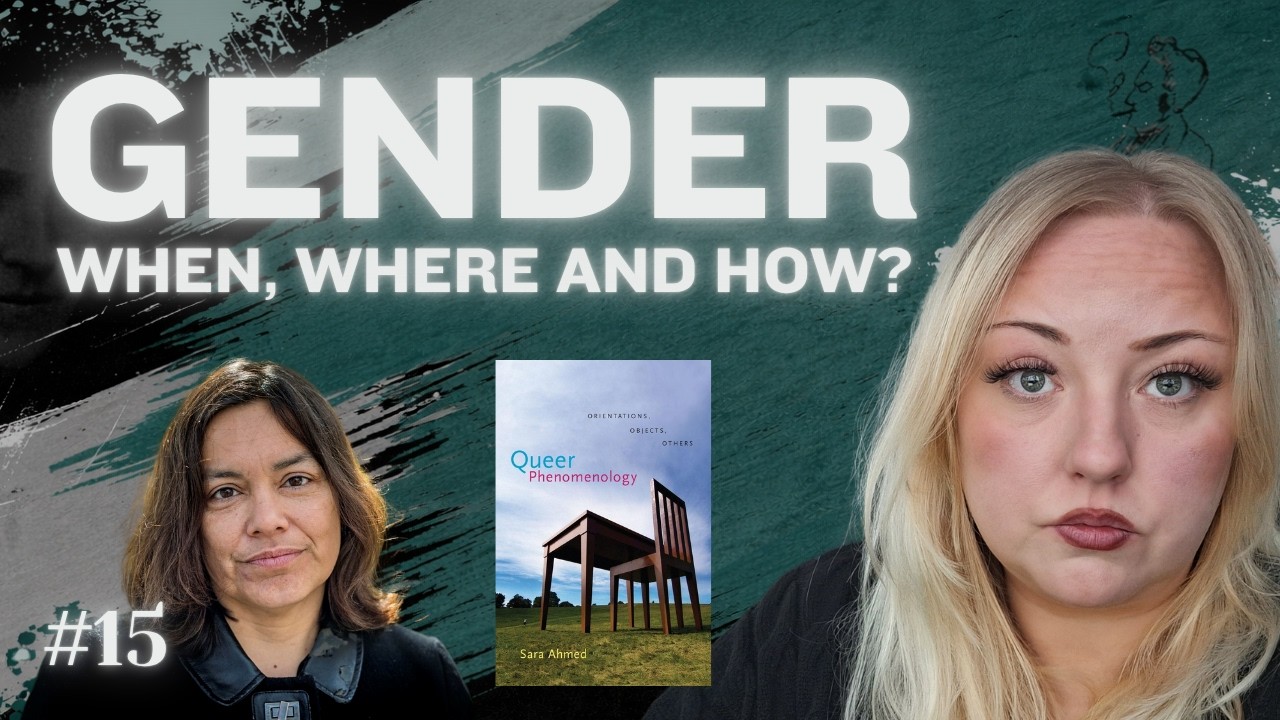


Queer theory challenges the assumption that words have fixed, inherent meanings by proposing that language operates through 'language games' where meaning emerges from usage rather than definition; this framework reveals how marginalized communities can reclaim derogatory terms like 'queer' to assert agency over their own narratives, while also exposing how dominant discourses shape what questions can be asked and who gets to participate in meaningful dialogue.
Queer Theory Explained: History, Language, and Identity in Philosophy
Added:Understanding of social constructionism, specifically how social categories like gender and sexuality are constructed by culture rather than being purely biological.
Basic familiarity with the distinction between biological sex, gender identity, gender expression, and sexual orientation.
An introductory grasp of the Philosophy of Language, particularly the idea that language does not just describe reality but helps construct it (e.g., Wittgenstein's language-games).
A foundational knowledge of 20th-century LGBTQ+ history and activism, including the Stonewall Riots and the response to the HIV/AIDS epidemic.
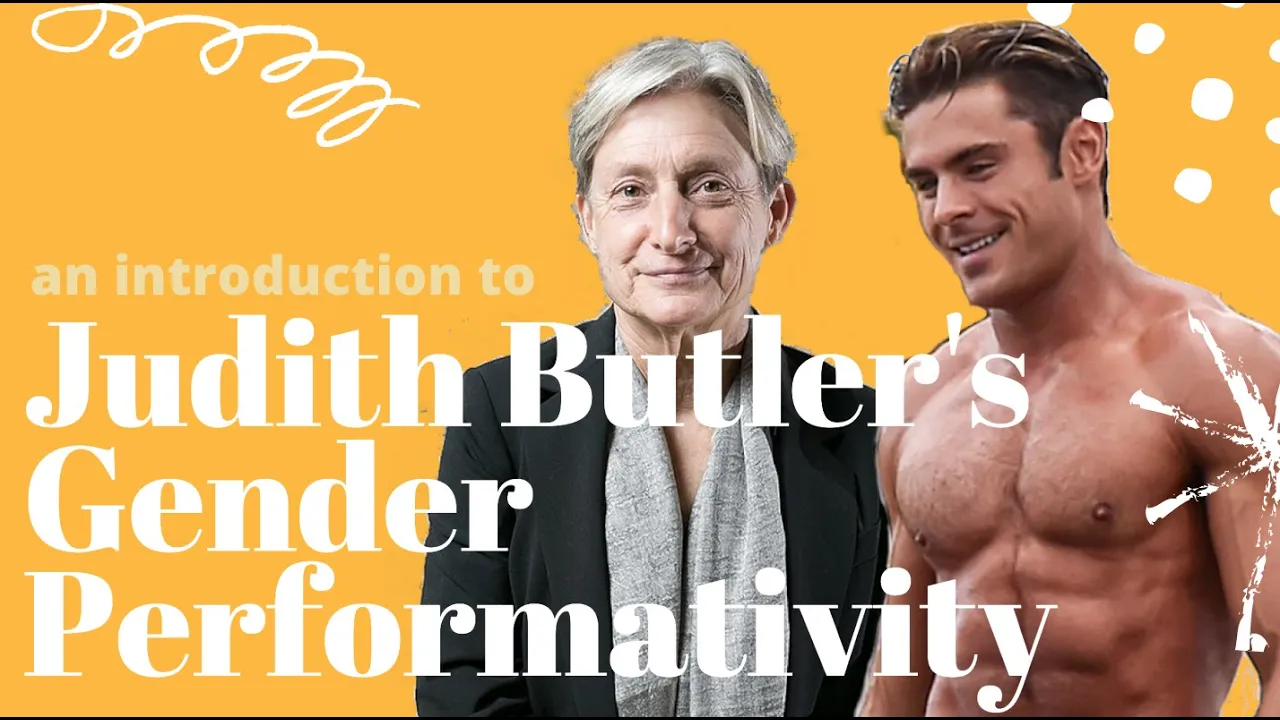
In-depth study of Judith Butler's theory of gender performativity as outlined in 'Gender Trouble'.
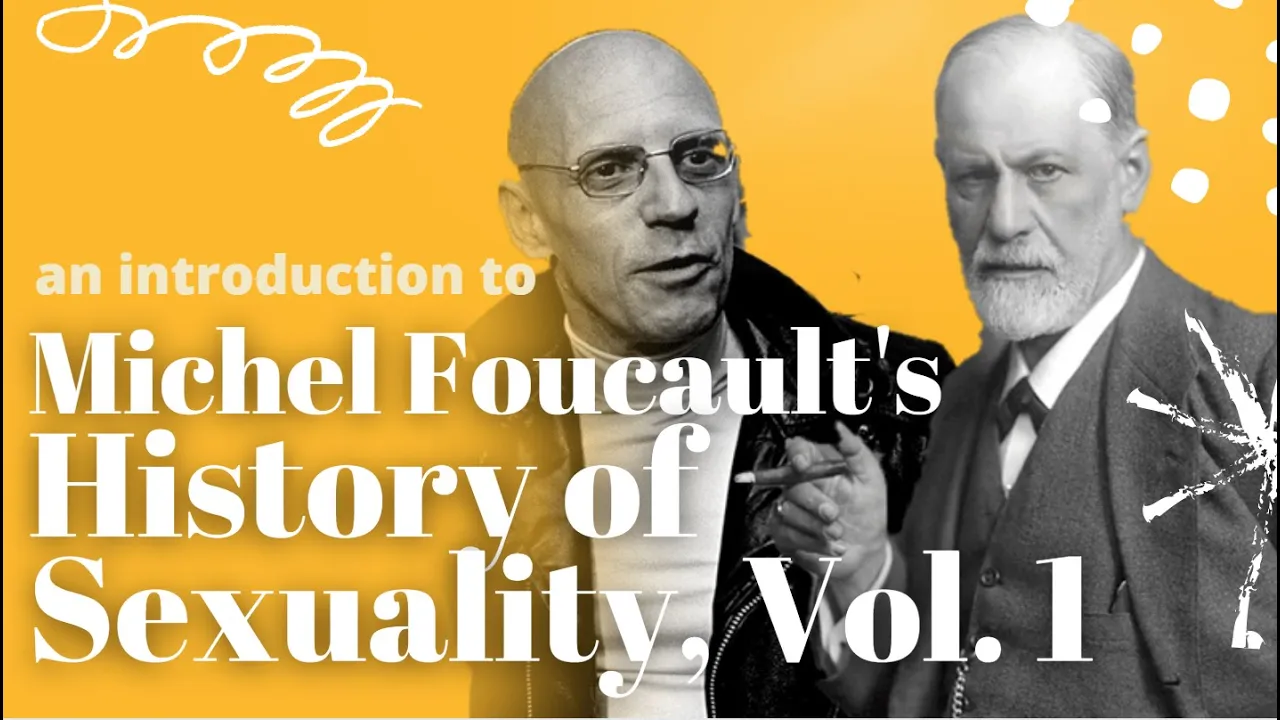
Exploration of Michel Foucault's 'The History of Sexuality' to understand how power, knowledge, and discourse shape sexual identities.
Analysis of Intersectionality, exploring how queer theory overlaps with critical race theory, postcolonialism, and disability studies (crip theory).
Application of queer theory to media studies, literature, and art history through queer readings of classical and contemporary texts.
Investigation of advanced concepts like 'queer temporality' (Jack Halberstam) and 'queer phenomenology' (Sara Ahmed).
1.6M views86.5Klikes36:39Original Release: 2019-10-28
When I was a postgrad, there was a certain topic that didn't come up a lot in class, but it definitely came up at parties.
Or at least, that's what the people who went to parties told me... It was so controversial that we weren't even sure if we were allowed to say the name: 'Queer theory.'
My university wasn't the most progressive place in the world, so there weren't that many classes on it available anyway, but I didn't take the ones that were on offer because I thought I knew what queer meant.
I thought it meant that it wasn't for me.
Growing up in the North of England, we had an old song called "The Legend of the Lambton Worm."
It's about a young guy called John Lambton who goes fishing in the River Wear, and he catches an eel upon his hook that he thinks looks very queer.
And what'n sorta eel it was, young Lambton couldn't tell, and he couldn't be arsed to carry it home, so he hoys it down a well, and years later he comes back and he finds that the eel has grown into an enormous dragon that's threatening the town.
And the moral of the story is: the things that you throw away today... Can come back to bite you.
Whisht lads, had your gobs, and I'll tell yous all an awful story.
Whisht lads, had your gobs, and I'll tell yous boot The Werm.
<pop music like ohhhh yeeeahhh baby> On the 24th of April 1993, 20,000 lesbians marched through the streets of Washington D.C.
and ate fire in front of the White House.
<20,000 lesbians cheering> [Protestor] We take the fire! And make it our own!
[Olly] They had no permit, it was absolutely illegal, but the police had no ability to stop them.
[This Legend] We're moving up, quickly, fastly, and in a hurry, so get out our way!
<AALLL RIIIIIIGHT OOOOOWWWW!> - On the exact same day, 3,535 miles away, I was born.
<cool chill 80s music> The 80s and 90s were a big time for LGBT activism, and academics are a little bit like YouTubers.
They see something that gets them excited, like a TV show or 20,000 lesbians, and they decide to write a paper about it.
Now just because something's taught in a university doesn't mean that it's legit.
Plenty of things have been taught in universities and are complete nonsense, like phrenology, or business studies but the early queer theorists weren't your typical tweed jacket elbow patches academics.
Many of them were out in the streets protesting when they weren't up in the ivory tower.
Queer theory was, and is, queer people writing theory about themselves, and it emerged in the early 90s specifically because that was a time when the meaning of queerness was changing.
Not so long ago, a lot of people used to use the word 'lesbian' to mean a woman who was mannish and frigid, a librarian in need of a good f***!
Male politicians even used to use it as an insult if their female colleagues got a little bit too uppity, but in 1992, an activist group sprang up called the Lesbian Avengers, whose specialty was big, theatrical, edgy, funny political messaging.
[Avenger] Shameless lesbian propaganda right here!
Lesbian activist propaganda right here!
Free of charge, free of charge, go ahead.
- [Person On Megaphone] This is an incredible march, it's an incredible protest. I just wanna say one thing.
- [Avenger] Shameless lesbian propaganda!
[Activist On Megaphone] On behalf of homosexuals, yes, we protest, but we never-- [Avenger] Lezzie propaganda free of charge... - The Avengers were also unapologetically sexy, which was partly 'cause it was fun and attention-grabbing, and also partly a serious point.
In order to participate in The Discourse, people are often expected to act in a very serious, rational way, but lesbians were stereotyped as shrill, emotional man-haters, so no matter how serious they acted, it was a game they were never gonna win, so the Avengers said, "F*** your standards of respectability! Public discourse is horny now."
Which is a stance that I respect.
I deliberately sexualize myself on this show, partly to get away from philosophy's image as this boring academic thing... but mainly 'cause it's fun and I crave attention.
A lot of people assumed that The Discourse was open to everybody, but the Lesbian Avengers showed that wasn't really true.
They had to do things differently if they were gonna be noticed, so they exposed the fact that The Discourse was really just for The Straights.
And the queer theorists found the same thing with philosophy.
It's supposed to be about asking questions and challenging assumptions, but this chromedome French philosopher called Michel Foucault realized in the 70s that who is in charge tends to affect what kinds of questions can be asked.
So the queer theorists tried to ask questions that philosophy had previously ignored, like if you're talking about, I don't know, the philosophy of knowledge and how knowledge comes from experience, don't you think it's worth bringing up the fact that some knowledge is forbidden?
In some places, kids are prevented from learning about things like gay and lesbian families, so the kids who grow up queer have to learn what that means through unofficial channels and different kinds of experiences.
There's a bit of a blind spot in philosophy there that queer theorists might like to write about, and they wrote about everything.
Language, gender, sexuality, fashion, politics, film, time... And you might be thinking, hang on a minute, time?!
Surely time is the same for everyone?!
It's not like there's the Gregorian calendar, the Jewish calendar, and then a separate calendar for queer people.
I mean, Einstein did prove that time is relative, but it's not *that* relative!
If you take a set of identical twins and put one of them in a spaceship orbiting Earth at the speed of light, one of them may end up younger, but neither of them ends up trans!
But not everybody has the same perspective on time.
The life pattern that goes child, teenager, job, house, marriage, children is one that queer people go through less often, so their relationships to past, present and future can be different.
Some trans people say that gender transition is like becoming a teenager again: going backwards in time but also kinda different.
If your transition involves surgeries or hormones, there's often a lot of waiting to access those things with no idea how long you'll be waiting, so the future can weigh heavily on the present.
There can be a sense of lost time, as well.
A childhood that you never got to have.
The possibility that somebody who's literally younger than you might be a senior trans person because they've been out for longer, And what if you get clocked?
I'm sorry.
A different form of life means different ways of thinking about the major events that divide a life up, and that's why you can go and read philosophers and they will talk about queer time, as opposed to straight time or "heterotemporality."
Which raises the hilarious possibility that we could rank time travel movies according to how queer they are.
Fellas, is it gay to travel back in time to 1955 to make sure your parents go to the Enchantment Under the Sea dance?
I mean, you're basically helping another man have sex... I left my philosophy degree 22 years after the Lesbian Avengers marched on Washington.
My university was actually famous for being the one where you were most likely to meet the person that you spend the rest of your life with!
Unfortunately, my university girlfriend and I... we didn't stay together... and then... a while ago actually, I realised something really weird, which is that at 26, I am now older than my parents were when they were married... <powerful rock music> [Yer Mum] - ♪ Find yourself a girl and settle down ♪ ♪ Live a simple life in a quiet town ♪ ♪ Steady as she goes ♪ ♪ So steady as she goes ♪ ♪ Your friends have shown a kink in the single life ♪ ♪ You've had too much to think, now you need a wife ♪ ♪ So steady as she goes ♪ ♪ Steady as she goes ♪ ♪ Well here we go again ♪ ♪ You've found yourself a friend that knows you well ♪ ♪ But no matter what you do ♪ ♪ You'll always feel as though you tripped and fell ♪ ♪ So steady as she goes ♪ <bass like "Mmm, yes quite, indubitably"> ♪ When you have completed what you thought you had to do ♪ ♪ And your blood's depleted to the point of stable glue ♪ ♪ Then you'll get along ♪ <guitar like "Good heavens sir!"> ♪ Steady as she goes ♪ ♪ So steady as she goes ♪ ♪ Steady as she goes ♪ ♪ Well here we go again ♪ ♪ You've found yourself a friend that knows you well ♪ <DEOW NEOW NEOW NEOW NEOW NEOW!> ♪ But no matter what you do ♪ ♪ You'll always feel as though you tripped and fell... ♪ ♪ So steady as she goes ♪ ♪ Steady as she goes ♪ ♪ Settle for a world (settle for a world) ♪ ♪ Neither up or down (neither up or down) ♪ ♪ Sell it to the crowd (sell it to the crowd) ♪ ♪ That has gathered round (that has gathered round) ♪ ♪ Settle for a girl (settle for a girl) ♪ ♪ Neither up or down (neither up or down) ♪ ♪ Sell it to the crowd (sell it to the crowd) ♪ ♪ That has gathered round (that has gathered round) ♪ <Guitar like, "Now you listen to me young man!"> ♪ Steady as she goes ♪ ♪ Are you steady now? ♪ ♪ Steady as she goes ♪ ♪ Are you steady now? ♪ ♪ Steady as she goes ♪ ♪ Are you steady now? ♪ ♪ Steady as she goes ♪ [Yer Dad, ludicrously] "Are you steady now?!"
♪ Steady as she goes ♪ <Music fades to downbeat moogly synth note> The Lesbian Avengers became a big, popular movement, and in doing so, they changed the meaning of the word lesbian.
A lot of philosophers, most famously a guy called Bertrand Russell, thought that words are just shorthand descriptions of things, like the word 'lesbian' is just short for 'a woman who only loves other women.'
My name, 'Oliver Thorn,' is just short for 'that actor who does the philosophy videos,' but what about a word like 'queer?'
To a lot of people, it's actually a slur, a way of saying "somebody who deserves "what's coming to them."
To activists and academics, starting around the 90s, it was a word that they could use to reclaim some of their agency.
Some people treat 'queer' as just short for 'LGBTQIA+,' but here's a weird thing.
Somebody can say, "I believe in queer rights," even if they don't know what all the letters in that acronym actually stand for.
The problem with Russell's theory, that words are just shorthand descriptions of things, is that you can use a word even if you have no definite description in mind.
You can even use the same word to mean very different things.
If 'lesbian' is just short for 'a woman who only loves other women,' how can we explain the difference between a protestor in 1992 saying, "Washington D.C. is full of goddamn lesbians," and a male politician in 1992 saying, "Washington D.C. is full of goddamn lesbians."
And what about all the non-binary people who call themselves lesbians?
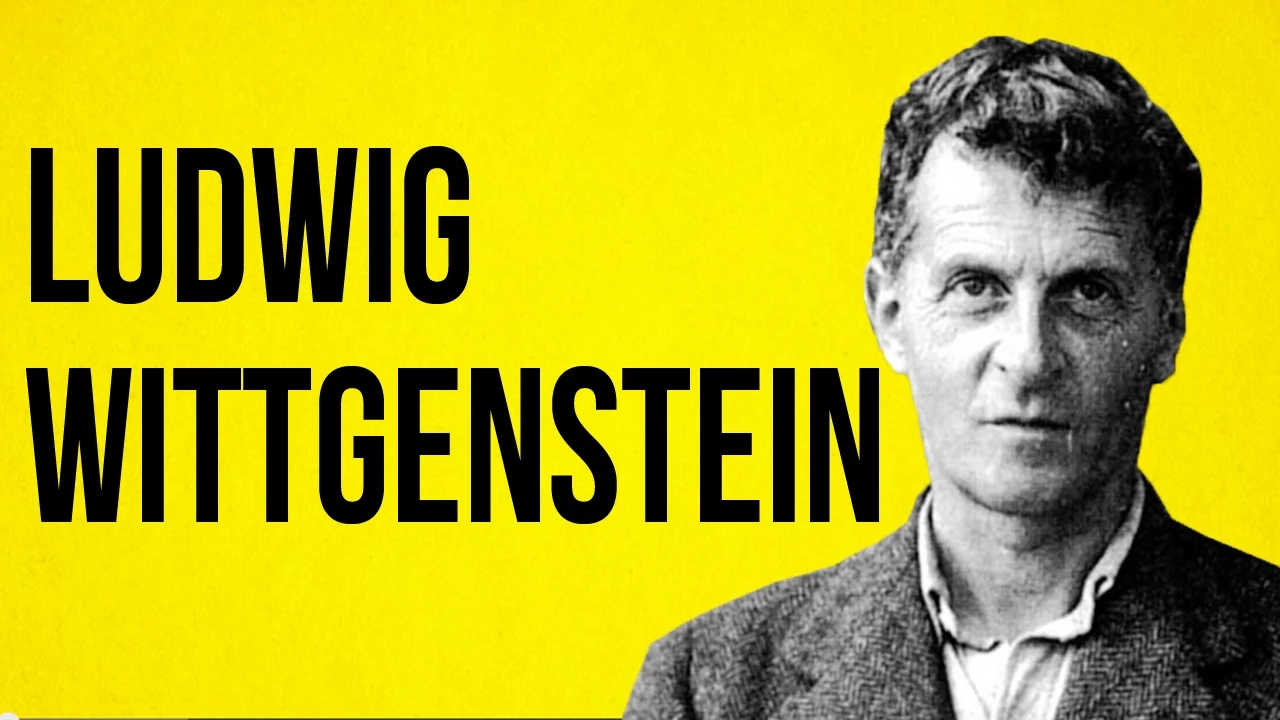
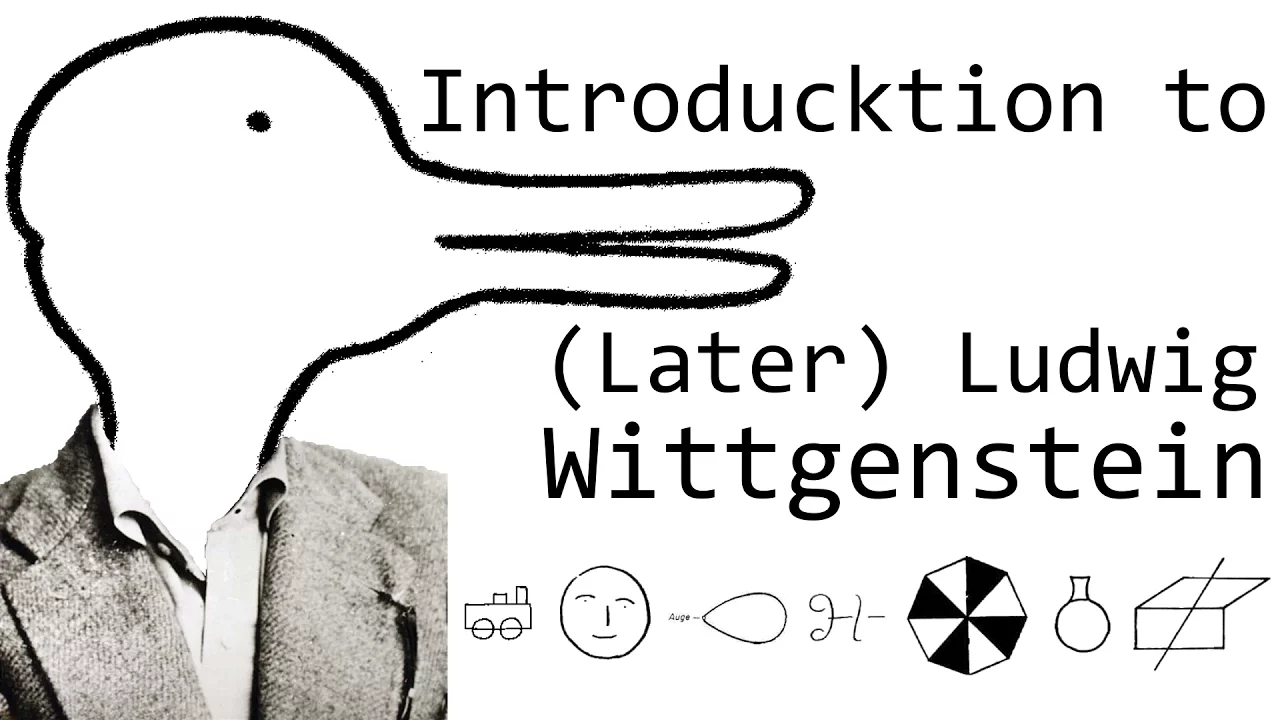
So another philosopher called Ludwig Wittgenstein came along with a radical idea, and he said language is a lot like acting.
Let's say that you are a Hollywood actor and you're on set and your line is, "I am your father," and you say it, and the director calls, Cut! <bell rings> Was really nice, really nice work.
Tell me a little bit about that line, though.
Talk me through your process, tell me what you're thinking... Well, "I" is just a shorthand way of saying Darth Vader, which is a shorthand way of saying 'Sith Lord and bigtime bad guy,' and "your," that's short for 'Luke Skywalker, rebel hero of the movie,' and "father," which is just a short way of saying I had sex with his mum.
To act the line properly, you don't just need to know what all the words refer to.
It's about what you do when you say it.
Are you threatening him, persuading him, reassuring him, tempting him?
The question a director will sometimes ask their actor is, "What action are you playing?"
And Wittgenstein said, yeah, language is just like that.
The meaning of a word like gay or lesbian, queer or trans, isn't its definition.
It's how it's used in what he called a language game, and language games can change.
In the 16th century, people used the word queer to just mean weird or odd.
There's that line in the Legend of the Lambton Worm, "He catched a fish upon his heuk he thought looked vary queer," which just means the fish looked unusual to him, rather than it had a septum piercing and an undercut.
'Queer' started to be used in the Victorian era to look down on men who had sex with other men, and it took about a century for it to start being reclaimed.
The debate about whether or not it's okay to say the Q slur is often a generational thing, with younger people like my audience generally, though not always, skewing towards accepting it whilst older folks can be a little bit more hesitant, 'cause it depends what kind of language games you're used to playing with it, and that's before we even introduce the internet.
<PBS Idea Channel music> In her book "Because Internet," linguist Gretchen McCulloch points out that online speech has a lot of cool ways of showing you're not being serious, like earlier on, I didn't just say heterotemporality, I said, "heterotemporality."
People get put off by jargon, so when I use a technical term, I undercut it by taking the piss.
If you go back and watch this video again, you'll find I've done it in a lot of other places too.
That's internet language, baby! Very access! Much engagement!
Whomst feels like this is a friendly space that they can contribute to by doing a hecking subscribe and sharing the video?
Today's title is very deliberately not 'Queer,' but 'Queer ✨' The sparkle emoji is a digital gesture that lets you know I'm probably not playing a serious action like using it as a slur, and one person describing themselves with a slur is an eccentric.
A whole group of people suddenly playing that language game became a movement.
But why bother reclaiming it at all?
Activists use the word queer to be edgy and get attention, but why did anybody else start picking it up?
Well, in his video "Basically I'm Gay," YouTuber Daniel Howell says that he sometimes finds all the labels in LGBTQIA+ a little bit rigid and restrictive, and he likes queer because it's like an amorphous blob, and amongst those who describe themselves as queer, there's often a general feeling that it avoids putting a definitive label on things.
Queer can be used to mean 'strange from a conventional viewpoint,' but that allows for a lot of diversity and change and it's pretty open-ended, which reflects the open-ended, diverse ways queer lives often unfold.
But on the other hand, some people hate it because they fought for so long to call themselves something more definitive.
It goes back to that issue of who is in charge and what questions can be asked.
I used to think that queer meant not for me... not of me.
It never really occurred to me to ask the question.
I always just assumed that I was straight.
I threw my feelings away, like the Lambton Worm... and like the Lambton Worm, they only got bigger.
I couldn't tell you when it happened, or how exactly, but I just started to become more and more uncomfortable when people used the word 'straight' to describe me.
I was still attracted to women, but the meaning of men was starting to change for me.
I started noticing different things about them, and to begin with, that was a little unsettling.
I had to have some long conversations with myself, only it's me, so they were less conversations and more... ♪ I'm not gonna tell you you're making a mistake ♪ ♪ Tell you not to go, no I won't ♪ ♪ I'll only say what I've learned along my way ♪ ♪ The devil you know ♪ ♪ Beats the devil you don't ♪ <jazzy music> ♪ We don't work in the best of situations ♪ ♪ We don't live very well ♪ ♪ We don't reside in the neighborhood of heaven ♪ ♪ We live somewhere closer to Hell! ♪ ♪ Now we can learn to work around the situation ♪ ♪ Learn to hide till the heat has passed ♪ ♪ You will learn the promise of salvation ♪ ♪ Can mask another inferno's blast! ♪ ♪ The devil you know ♪ ♪ Beats the devil you don't ♪ ♪ That promised land could turn out to be dry ♪ ♪ Once you're gone you might ask yourself why ♪ ♪ Maybe you will or maybe you won't ♪ ♪ But the devil you know ♪ ♪ Beats the devil you don't! ♪ ♪ Oh ♪ ♪ You don't know the world beyond YouTube ♪ ♪ You don't know what Satan can plan! ♪ ♪ You don't know the safety you'd be leaving! ♪ ♪ We're your family, we're your clan! ♪ ♪ Here we've got each other to depend on! ♪ ♪ Here you've got the best life you'll ever find! ♪ ♪ Violent folk won't know how to take us! ♪ ♪ The world out there can be so unkind... ♪ ♪ The devil you know (devil you know) ♪ ♪ Beats the devil you don't ♪ ♪ Beats the devil, the devil you don't! ♪ ♪ His game of chance ♪ ♪ Don't take that chance! ♪ ♪ Just might be a scam... ♪ ♪ It's just a scam! ♪ ♪ You can't play then decide you should scram! ♪ ♪ Maybe you'll win or maybe you won't ♪ ♪ But the devil you know ♪ ♪ Beats the devil you don't! ♪ ♪ How can you say that boy's a devil? ♪ ♪ How can you say it's wicked and bad? ♪ ♪ How can you criticize an angel ♪ ♪ Promising more heaven than we ever had?! ♪ ♪ I'm a fortune teller ♪ ♪ I can see the future ♪ ♪ We can get it on with either woman or man ♪ ♪ Though it might be crazy ♪ ♪ I see us bound for glory ♪ ♪ When we live our truth there's no choice but to stan! ♪ ♪ That boy's not a devil, no ♪ ♪ I know that he's not ♪ ♪ I've seen the devi, ooohhhl ♪ ♪ We all could get much more than we got! ♪ ♪ Much more, much more than we got! ♪ ♪ What if he's the devil? ♪ ♪ What if he's not? ♪ ♪ He could be an angel!
♪ That heaven forgot! ♪ ♪ I think you may be jealous... ♪ ♪ Jealous of what?! ♪ ♪ That all of us without you might still have a shot! ♪ ♪ The devil you know (he's not a devil) ♪ ♪ Beats the devil you don't! ♪ ♪ I won't believe it, believe it I won't! ♪ ♪ That promised land (understand) ♪ ♪ Could turn out to be dry ♪ ♪ He should give it a try (so dry) ♪ ♪ Once you're gone you might ask yourselves why (why?) ♪ ♪ Maybe he will or maybe he won't! ♪ ♪ But the devil you know ♪ ♪ No, no, he's not a devil ♪ ♪ But the devil you know ♪ ♪ No, no, he's not a devil ♪ ♪ But the devil you know!!!! ♪ ♪ ALLLL RIIIIIIGGGGHHHHTTTT!! ♪ ♪ Now we can argue all night ♪ ♪ Because we care about you too ♪ ♪ Maybe you will go ♪ ♪ Or maybe you won't ♪ ♪ But I hope you will remember ♪ ♪ That this mean old lady-killing, gin-guzzling ♪ ♪ Name-calling devil you know ♪ ♪ Might be better than that smooth-talking, fine-looking ♪ ♪ Dream-spinning, promise-making devil ♪ ♪ You don't ♪ ♪ No, no, no, don't call him a devil! ♪ ♪ Beats the devil you don't! ♪ ♪ No, no, no, don't call him a devil! ♪ ♪ Beats the devil you don't! ♪ ♪ No, no, no, don't call him a devil! ♪ ♪ Beats the devil you don't! ♪ Imagine being a philosopher and also questioning your sexuality.
It's like, oh, how do I know if I'm really bisexual?
Well nevermind that, how do I really know anything?!
The idea that a word can change its meaning can be really scary.
Wittgenstein realized if the meaning of a word is how it's used, then philosophy is basically screwed, and so is science and journalism and Twitter and basically everything, except art.
How can you have a conversation with somebody or do a logical argument if words don't have fixed meanings, they're just pieces in a language game?
And yeah, this is the issue of how do we do philosophy after Wittgentstein?
The answer is very carefully, and by paying close attention to things like who's in charge and what questions can be asked.
I was in New York City on my 26th birthday, 26 years to the day since the Lesbian Avengers marched on Washington, and I walked past the Stonewall Inn, and I clearly remember thinking, was this really done for me?
I had thought that I was straight for so long and I had developed my style and my ways of speaking in environments were straight was the presumed default.
I'm very what they call straight-passing.
I'm such a terrible queer that I didn't even know what voguing was until somebody told me, and I learned in the most straight way possible, by watching a documentary and writing notes.
Even when I started to suspect that I might be deviant, most of the examples of bisexuals I could find online were American woman, people like Marina Watanabe.
When my good friend Harry came out as bi on YouTube, I felt incredibly validated because if bisexual meant somebody like him, it could mean somebody like me, as well.
The fact that I'm kind of a public figure now adds an extra dimension of challenge.
It's not like I can hide it.
If I'm dating men, then sooner or later, someone's gonna find my Tinder profile and post screenshots on Twitter, so I might as well just come out now, and the advice from some of my queer friends was be careful what you come out as, 'cause after this video, somebody's gonna update my Wikipedia page, and the language games that people play using my name are gonna change forever.
There go my chances of becoming Pope. <laughs> I don't know why I care.
I legitimately care that I cannot be the head of the Catholic Church now, and I don't know why I care!
Should I even have come out at all, or should I just act like it's no big deal?
Since I do date women, I could, if I wanted to, just blend in and go back to wistfully looking at hot guys on the train.
So by coming out and dating men, I am bisexual but I'm choosing to be seen as queer, and that's a choice that I'm very lucky to be able to make, and if I had only read some queer theory, I would have learned that so many people before me had been asking all the same questions.
The Lesbian Avengers became hugely popular.
They were young, they were cool, they were funny, they were sexy.
They weren't just doing stylish activism, they were doing style as activism, and queer academics and the mainstream media jumped on it.
But it turned out it was double-edged sword.
For one thing, comedy is subjective, and the purpose of edgy comedy is to gesture at the thing that you can't really say, so they were always at risk of being misinterpreted by the mainstream or canceled by their own side.
Thank god we didn't have Twitter in 1992, it would have been a disaster!
But also by changing the meaning of what it meant to be a lesbian in public, they kind of accidentally made lesbianism cool.
A lot of articles about the Avengers mentioned their appearance and their clothing choices, how hot and funny and cool they were, without really talking about their political goals all that much.
And starting around 1993, a new trend emerged in fashion and advertising called lesbian chic.
The most famous examples were this cover of New York Magazine, and this issue of Vanity Fair in which supermodel Cindy Crawford pretends to shave singer-songwriter k.d. lang who is dressed like a man.
"The pop culture attention to lesbians "smacks of zoo-going, an outing to view "the latest kind of exotic animal on display," said The Washington Post in 1993, though at least in most zoos you aren't also encouraged to find the animals fuckable.
This was happening just one year after a lesbian woman in Oregon was burned to death in a hate crime, and the government was still largely ignoring the AIDS crisis.
In the same year as that Vanity Fair issue, a transgender man named Brandon Teena was murdered in Nebraska, along with two of his friends.
The killers, one of whom was a white supremacist, wrongly thought that Brandon was a woman and his friend Phillip DeVine was black and disabled, so at a time when a lot of queerphobic violence was going on, queer activists were getting more attention, but the best the media could really do was, "Hey, um... lesbians, lesbians are hot now!"
<woman moans> None of that, by the way, was the Lesbian Avengers' fault.
They weren't using bad tactics or anything.
They just didn't own the media.
Now, I am contractually obligated by George Soros to mention Marxism at least once per video, so this is kind of an example of what Marx called commodity fetishism.
The social, political and economic realities behind words like gay, straight, bi and trans get swapped out for products - fashion, music, Drag Race - and we forget that these words can also be used in language games about making the world a better place.
- Ronald Reagan, could he be bothered to mention HIV/AIDS?
No. - Nope.
- But he could be bothered to put some gel in his hair, and I just feel like that is a thing.
- Like a lot of advertising trends, lesbian chic was mainly aimed at young people with money, mainly progressive, white and living in cities, so other ways of being queer that didn't fit that mold got left out, and some queer theorists worried that young people growing up would see this and think that they had to look that way in order to be authentic, which is exactly what I was worried about before I came out.
When I finally admitted to myself that I was capable of being attracted to men, I felt a sudden inexplicable need to change the way I dress.
<chill house music> Burton blue suit, John Lewis shirt, and black tie, straight.
Gresham Blake purple suit, John Lewis shirt and black tie with black Ted Baker shoes, also straight.
Gresham Blake purple suit, John Lewis shirt and black tie with silver shoes and rings, bisexual.
Vintage leather jacket, blue jeans and Primark white shirt with black combat boots, straight.
Vintage leather jacket, pink shirt and black jeans with New Rock cowboy boots, bisexual.
Flannel shirt that I stole from my ex, straight.
Flannel shirt that I stole from my ex with Bloomingdales cardigan, also straight.
Flannel shirt that I stole from my ex, Bloomingdales cardigan and blue Ted Baker shorts with New Rock cowboy boots, bisexual.
Complete nudity, could be anything.
Calvin Klein black trunks with pink waistband, definitely bisexual.
The fact that some of these looks seem bisexual to me is 'cause they're part of fashion games that I've seen other people play.
There's nothing about these looks that is transcendentally bisexual.
What's interesting is that a lot of the discussions the 90s activists were having about the pros and cons of suddenly getting a lot more representation are being had again now by trans and non-binary people.
Not so long ago, if a trans or an NB person was in the news, it's 'cause they were the butt of a joke, or they were dead, but now, they can be anything.
Beautiful, talented, funny, as long as it sells, but that's not an option that's available to everybody, and also being cool and marketable isn't the same thing as having rights.
The twist this time is that whereas it seems to have been fairly easy to sell lesbians as 'women who are just really horny' - <woman moans> Some straight cis people have hangups about dating a trans person.
Now, I'm one of the lads, you know?
I've got a penis, I've been to Nando's at least twice.
I date women, including trans women, and some of the straight lads might raise an eyebrow at that last part, even straight lads who say they support trans rights, because of a kind of commodity fetishism of dick.
Sorry, I mean, uh - Commodity Fetishism of Diiiiiiiii You know when it's just you and Blagaz and Stroodles and Dickskin, hanging out being lads, and then Big Dave comes in, and he's like, "Oi lads, let's gan Toon for cheeky Nando's, ladsladslads!"
So you all gan down Nando's, get your Nando's on, and while you're waiting for the chips, Spenlad goes, "Oi lad, how's that bird you been smashing?"
And you go, "Bird's really great, smash like a dream, gave her a cheeky finger behind the sports hall the other day!
By the way, she's transgender.
Piri piri or lemon and herb?"
Straight cis lads who date trans women can be shamed and bullied by other straight cis lads who think that that's gay?
So it's like transphobia but indirectly but they think it's homophobia but it's affecting a straight person.
So allow me to present the figure of Alexander the Great, a man who definitely knew what being straight meant, and solve a difficult problem with a single stroke of my mighty sword.
Lads, the first time I had sex with a trans girl, it was just like similar experiences with other girls.
And it was really hot.
And I know some of the straight lads might be like, "Well, y'know I find trans women hot and like trans rights and all that, but if she's got a penis, then I don't really know how I feel about that," and that's the commodity fetishism of dick.
The lads are thinking about the dick, but they're not really thinking about where it comes from or what it does.
So as an alternative.
I'm pleased to present my fellow lads with what I call the Wittgensteinian theory of dick.
I've had sex with men and with women, including trans women, and I can tell you from experience that the meaning of dick is how it's used.
How a trans woman's dick feels, how it behaves, how they like to be touched, taste, and yes, The Mouthfeel is totally different than guy dick.
I'm not the first person to point this out on YouTube, but I'm happy to independently confirm that it is in fact true, and if you don't believe me, I will also literally cite an academic source.
It's a book by Mira Bellweather called "Fucking Trans Women."
It's also a how-to guide with diagrams, so lads, put down your Peronis and your DVDs of Top Gear and get stuck in.
Sometimes I'll suck a guy's dick in a gay way! Sometimes I'll suck a girl's dick in a straight way!
I used to think that there was only one meaning of straight, one meaning of bi, one meaning of queer, and that those meanings were somewhere out there in the world with neat little descriptions on them, and the reason I thought that is because until I came out to myself, I was alone in it.
I only had myself for reference.
But queer has never been a single political trend, or a consistent aesthetic.
It's always been about family rather than membership.
It's always had internal contradictions and ambiguities, and it's that quality of being flexible and full of potential that I think is what makes it radical.
I'm starting a brand new bit of my life, and I dunno what's gonna happen.
It's pretty scary, 'cause there's no plan like there is in straight time, but it's also exciting.
I feel like a Time Lord.
I could go anywhere, I could do anything now.
Anything could happen to me!
"Our identities, how we recognize ourselves and are recognized by others, is a complex construction, an articulation of historical demands on an already discursively mapped body.
The most deeply experienced and personal sense of individuality and interiority is always already social."
<sick ass saxophone hook> <rest of the song comes in like AAAWWW YEEAHHH> ♪ Take a look around the room ♪ ♪ Love comes wearing disguises ♪ ♪ How to go about and choose? ♪ ♪ Break it down by shapes and sizes ♪ ♪ I'm a man who's got very specific taste ♪ ♪ You, you, you're just my type! ♪ ♪ Oh, you got a pulse and you are breathing ♪ ♪ You, you, you're just my type! ♪ ♪ Oooh, I think it's time that we be leaving ♪ ♪ You, you, you're just my type! ♪ ♪ Oooooo-oooh ♪ ♪ When there's loving in the air ♪ ♪ Don't fight it, just keep breathing ♪ ♪ I can't help but stop and stare ♪ ♪ Double check for double meanings ♪ ♪ I'm a man who's got very specific taste ♪ ♪ You, you, you're just my type! ♪ ♪ Oh, you got a pulse and you are breathing ♪ ♪ You, you, you're just my type! ♪ ♪ Oh, I think it's time that we be leaving ♪ ♪ You, you, you're just my type! ♪ ♪ Oooooooh--ooo-ooo ♪ ♪ uwu ♪ <are you ready for this bit? this bit's flippin sick> <saxophone hook like YEEEEAAAHHH> <I never liked my saxophone teacher. AM I GOOD ENOUGH NOW, MRS. DIRGEWATER???> ♪ uwu ♪ ♪ You, you, you're just my type! ♪ ♪ Oh, you got a pulse and you are breathing ♪ ♪ You, you, you're just my type! ♪ ♪ Oh, I think it's time that we be leaving ♪ ♪ You, you, you're just my type! ♪ ♪ Myyyyyyy tyyyypppee! ♪ ♪ Woo ♪ (laughs) All right.
Up Next

75:21
Searle on Frege & Russell: Philosophy of Language 11
@SocioPhilosophy
8.8K views•2011-10-26

164:01
John of Damascus on Holy Images: A Theological Defense
@BannedBooks
139 views•2026-04-25

8:12
Foucault's Panopticon: Surveillance, Power, and Social Control
@PhilosophyTube
190K views•2017-05-26
4:57
The Myth of Sisyphus: A Greek Legend of Eternal Punishment
@TEDEd
8.6M views•2018-11-13
Related Study Plans & Knowledge Roadmaps
Structured learning paths in Philosophy
philosophy
Frankfurt School: Critical Theory & Culture
01Foundations of the Frankfurt School and Critical Theory
02Horkheimer & Adorno: The Critique of Instrumental Reason
03The Culture Industry and Mass Deception
+ 2 more learning modules
12h5 modules
Explore Roadmap
philosophy
Philosophy of Language: From Frege to Austin
01The Linguistic Turn: An Introduction to Language in Philosophy
02Gottlob Frege: Sense and Reference
03Early Wittgenstein: The Picture Theory of Meaning
+ 3 more learning modules
15h6 modules
Explore Roadmap
philosophy
Feminist Epistemology: Standpoint & Injustice
01Introduction to Epistemology and Feminist Critiques
02Sandra Harding and Standpoint Theory
03Donna Haraway and Situated Knowledges
+ 2 more learning modules
12h5 modules
Explore Roadmap
philosophy
Environmental Philosophy: Ethics & Deep Ecology
01Foundations of Environmental Ethics & Anthropocentrism
02Biocentric Individualism and Animal Liberation
03Ecocentric Holism and Deep Ecology
+ 1 more learning modules
10h4 modules
Explore Roadmap