




















![[톡톡] 스마트시대, 누군가 나를 감시하고 있다? ‘파놉티콘’이란 7.1(목)톡톡! 뉴스와 상식/ YTN 라디오](https://i.ytimg.com/vi/PYArPjVSqPo/sddefault.jpg?sqp=-oaymwEmCIAFEOAD8quKqQMa8AEB-AH-CYAC0AWKAgwIABABGDYgZSgkMA8=&rs=AOn4CLAKpWVnjzoHjY6bG--ppqayfwoFHg)



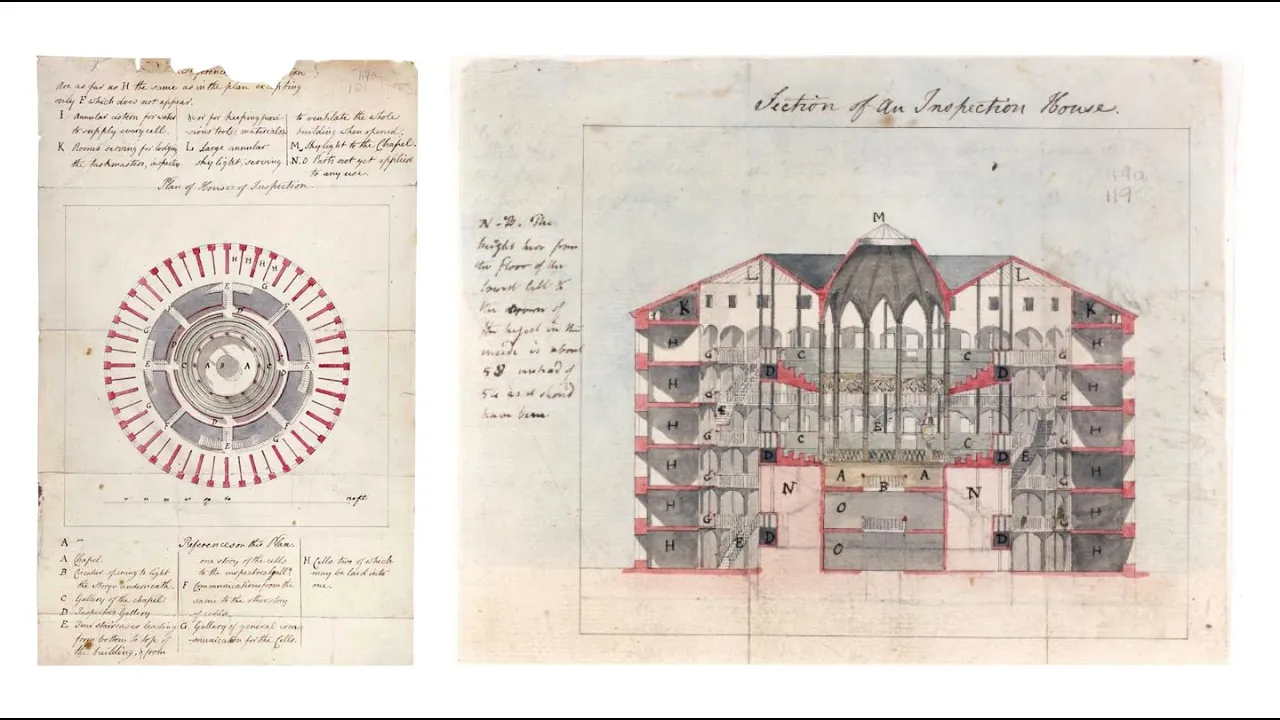
Michel Foucault argued that Jeremy Bentham's Panopticon prison design—where prisoners cannot see if they're being watched but know they might be—embodies four principles (pervasive power, obscure power, structural violence replacing direct violence, and working toward power's goals) that enable the ruling class to expand control into every facet of society, making surveillance a subtle technology of subjection that serves political power rather than genuine security or justice.
Foucault's Panopticon: Surveillance, Power, and Social Control
Added:Jeremy Bentham's original utilitarian architectural design of the Panopticon prison as an efficient model for surveillance.
Michel Foucault's foundational theory of 'power/knowledge' and his post-structuralist view of decentralized power.
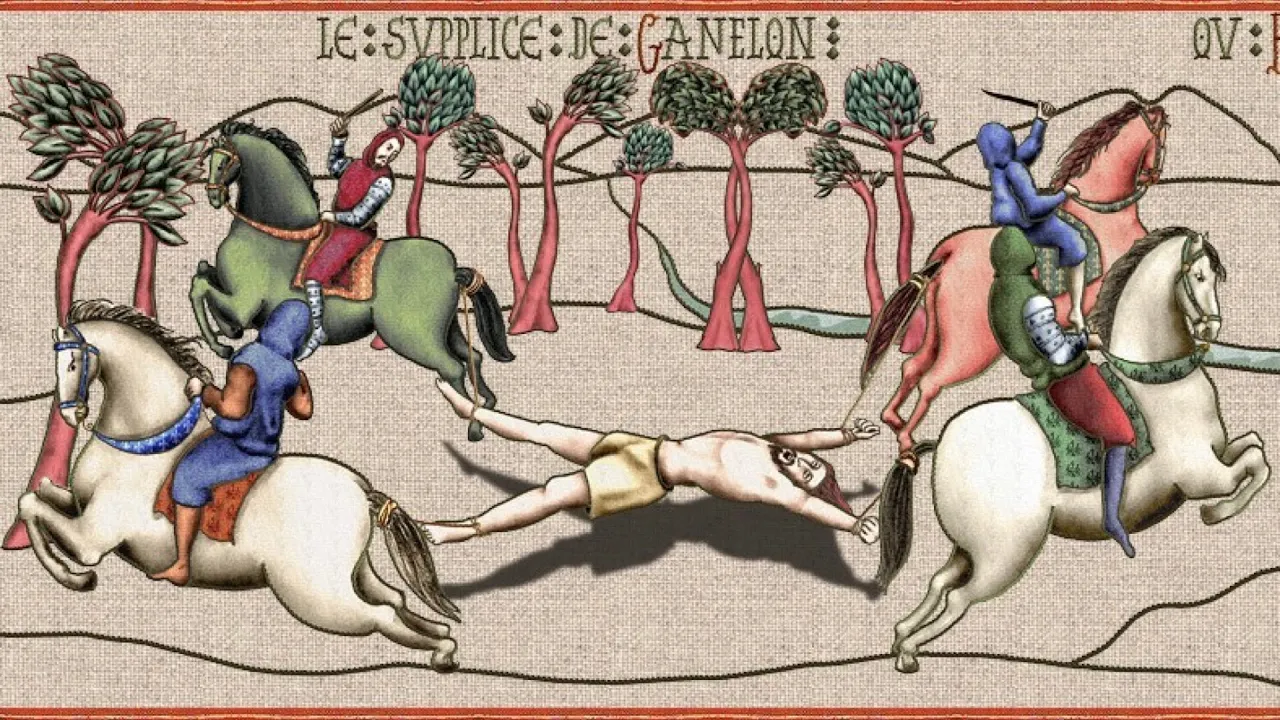
The historical shift in governance from sovereign power (public spectacle and physical punishment) to disciplinary power (internalized self-regulation).
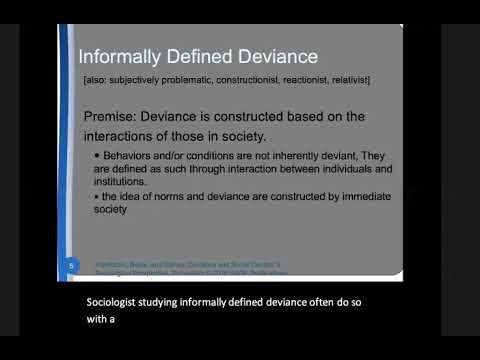
Basic sociological concepts of institutionalization, social control, and the social construction of deviance.
Shoshana Zuboff's theory of 'Surveillance Capitalism' and how behavioral data is commodified by modern tech companies.
Gilles Deleuze's essay on the 'Society of Control,' exploring how surveillance has shifted from physical institutions to digital, continuous networks.
The concepts of the 'Synopticon' (the many watching the few via mass media) and the 'Banopticon' (surveillance used to proactively profile and exclude individuals).
Real-world policy and ethical implications of algorithmic bias, facial recognition technology, and predictive policing in the 21st century.
190K views6.9Klikes8:12Original Release: 2017-05-26
welcome back in part one we talked about French philosopher Michelle fuko's thesis that the penal system that's laws policing and surveillance exists not to prevent crime but to defend the power of the ruling class and that was supposed to explain some of the odd and inconsistent ways we see those systems actually being applied in the real world but in this part two it's time to learn about how he thinks the penal system defends the power of the ruling class what is the mechanism there and to understand that we need to talk about benem 18th and 19th century English philosopher Jeremy benam designed a hypothetical prison called the panopticon the panopticon is a circular building with cells built into the circular wall and a central observation tower from the tower you can see into every cell and from every cell you can see that the tower is there but the Tower is is designed with blinds and shutters so that the prisoners can't see into it they can only see that it's there so at any moment the prisoners can't be sure that they're being watched but they know there's a pretty good chance that they might be the name panopticon is a reference to Argus panoptes the mythological Greek giant with a 100 eyes and the upshot of this design benam thought is that the prisoners would bloody well behave themselves all the time just knowing that you're visible he thought would be enough to keep you in line you wouldn't need whips or chains or trunions most of the time you keep them in reserve just in case but most of the time the prisoners would regulate their own conduct he thought that as far as possible the prisoners should actually be under 24/7 surveillance but the great thing about the panopticon's design he thought is that even if you can't quite manage that the prisoners are going to behave themselves anyway because they don't know whether or not they're being watched 24/7 he also goes on at Great length describing how the panopticon could be privately run and profitable which is going to be important in a second what Fuko realized is that the panopticon is more than a building it's the embodiment of a set of four principles the first is pervasive power the tower sees into every cell and sees everything that goes on so it can regulate everything the second is obscure power the tower sees into the cells but the prisoners can't see into the tower and they can't ever know when how or why they're being observed third direct violence is replaced by structural violence benam makes a big deal about how you wouldn't need chains or beatings the prisoners would behave themselves without being coerced but what he doesn't realize is that the structure of the panopticon itself is coercive it subjugates the prisoners just by being there if you'd like to know more about the difference between direct violence and structural violence there are some links in the dooblydoo the fourth principle is related and that's that working towards Powers goals is the only option available benan thought you could make a panopticon profitable you could make the prisoners work on whatever project you wanted and then sell the things they make for profit if the only alternative was to sit in their cells and eat bread and water that's taking the structural violence and using it for the benefit of those in power by using these four principles the people running the panopticon can expand their power into every facet of the prisoners lives and mold them into the kind of obedient workers that they want the question that they start with is what is good for me not what is good for the prisoners or even should these people be prisoners in the first place and because the panopticon is a set of principles benam thought you could make a panoptic hospital you could make a panoptic school you could make a panoptic mental ward and Fuko realized you could even make a panoptic country there's a connection between being seen and being known when we learn something we might say oh I see or if we don't understand uh I'm in the dark the more power knows the more it sees into the prisoner's cells the more pervasive it becomes so let's shift now from the hypothetical to to the real world when Edward Snowden revealed that the US UK Australian New Zealand and Canadian governments were monitoring citizens phone calls and emails and even forcing internet service providers to hand over personal information why were they Gathering all that data was there any reason to believe that all those people were criminals six British journalists are currently suing the Metropolitan Police Force because they found that they were on the Mets Dem domestic extremism watch list these are political journalists they take photos of political protests perfectly respectable job I've even met some of them they're quite nice but they found that their movements their phone numbers their addresses even their clothing and medical records had all been noted on a police computer somewhere why last time we talked about the police stopping and searching people in the UK if that happens to you the police may ask you for your name and address even though you're not always actually required to give them that information so why do they ask well the official response to a lot of these questions is that it's hard to tell a criminal from a normal person and some investigation techniques especially those that rely on technology are unfortunately a little bit blunt and yeah okay maybe that's part of it but Fuko would say that all that surveillance serves the ulterior purpose of expanding power allowing it to see further into the prisoner's cells and regulate what it finds there that last one stop and search might also serve the purpose of reminding you that the tower is there in the UK less than half of all stop and searches end in an arrest and you're much more likely to get stopped and searched if you're a black or minority ethnic person that is explained if the purpose of stop and search is more to do with reminding you the police are watching and less to do with actually catching criminals if you are in the UK and you'd like to know more about your rights with stop and search what kinds of things you have to tell the police and what you don't have to tell tell them the London campaign against police and state violence is a great resource links in the DDO remember you don't have to put aside legitimate security concerns you can be a police officer or work for MI5 and still read Fuko you can be an anarchist and a police abolitionist and still read Fuko what he's reminding us is that surveillance is necessarily a form of control some people say that when it comes to government surveillance the good have nothing to fear but Fuko argues that if you're being surveilled that's necessarily opposed to your freedom and it's never politically neutral if the people who design and staff the tower in the panopticon are sexist racist transphobic ableist against sex workers or particularly fond of capitalism or whatever then the panopticon itself and the behaviors that it enforces on its prisoners will reflect that Fuko calls the penal system a subtle calculated Tech technology of subjection if you're having conversations in your class about this or you're writing comments you might want to think about how could we dismantle panoptic structures and replace them with alternative law enforcement strategies do we need to do that do you agree with Fuko do you think that he's right and would changing who sits in the tower necessarily make a panoptic system better I always need help paying the bills and giving away free education so patreon.com philosophy tube is where you can just give a tiny bit each month and that really really helps me out alternatively if you can't do a regular donation I have a tip jar at paypal. me/ philosophy tube it's like putting a hat round at the end of the lecture and as always don't forget to subscribe
Up Next
9:31
Philosophy of Language: Sense, Reference & Wittgenstein
@crashcourse
1.3M views•2016-08-29

164:01
John of Damascus on Holy Images: A Theological Defense
@BannedBooks
139 views•2026-04-25

36:39
Queer Theory Explained: History, Language, and Identity in Philosophy
@PhilosophyTube
1.6M views•2019-10-28
4:57
The Myth of Sisyphus: A Greek Legend of Eternal Punishment
@TEDEd
8.6M views•2018-11-13
Related Study Plans & Knowledge Roadmaps
Structured learning paths in Philosophy
philosophy
Frankfurt School: Critical Theory & Culture
01Foundations of the Frankfurt School and Critical Theory
02Horkheimer & Adorno: The Critique of Instrumental Reason
03The Culture Industry and Mass Deception
+ 2 more learning modules
12h5 modules
Explore Roadmap
philosophy
Philosophy of Language: From Frege to Austin
01The Linguistic Turn: An Introduction to Language in Philosophy
02Gottlob Frege: Sense and Reference
03Early Wittgenstein: The Picture Theory of Meaning
+ 3 more learning modules
15h6 modules
Explore Roadmap
philosophy
Feminist Epistemology: Standpoint & Injustice
01Introduction to Epistemology and Feminist Critiques
02Sandra Harding and Standpoint Theory
03Donna Haraway and Situated Knowledges
+ 2 more learning modules
12h5 modules
Explore Roadmap
philosophy
Environmental Philosophy: Ethics & Deep Ecology
01Foundations of Environmental Ethics & Anthropocentrism
02Biocentric Individualism and Animal Liberation
03Ecocentric Holism and Deep Ecology
+ 1 more learning modules
10h4 modules
Explore Roadmap