













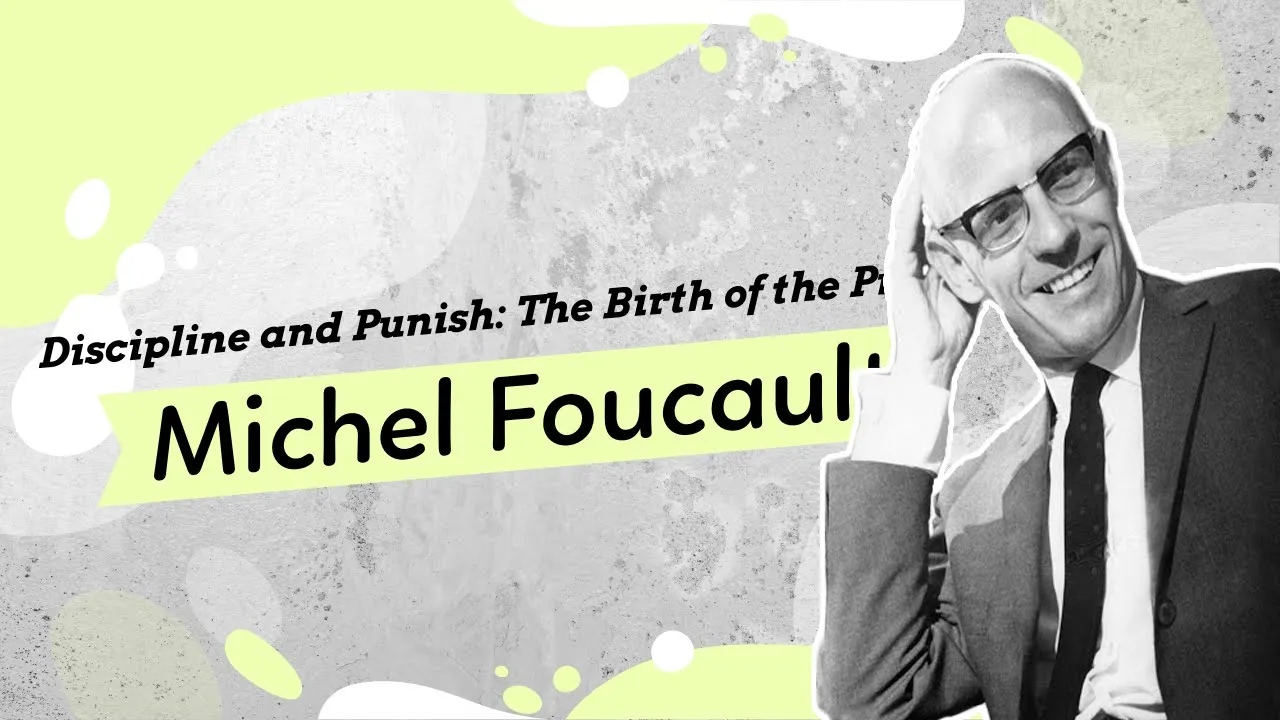



Michel Foucault's 1975 book 'Discipline and Punish' reveals that modern power operates not through overt violence but through subtle mechanisms of surveillance, normalization, and examination, which transform citizens into docile subjects who self-regulate according to societal standards, making power more pervasive and difficult to resist than traditional forms of control.
Michel Foucault's Discipline & Punish: Power & Surveillance
Added:An understanding of Post-Structuralism and how it differs from traditional structuralist thought.
Familiarity with the historical shift in European penal systems from public executions (spectacle) to private imprisonment.
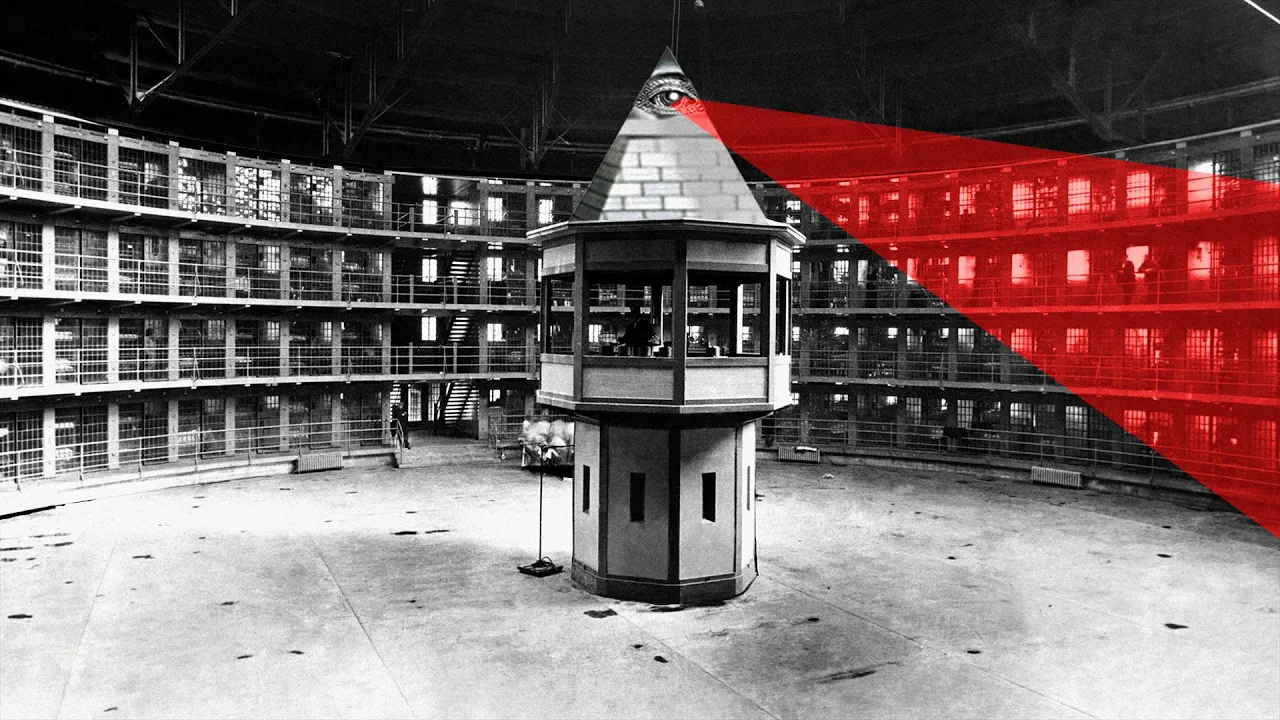
Basic knowledge of Jeremy Bentham's design of the Panopticon and its architectural intent.
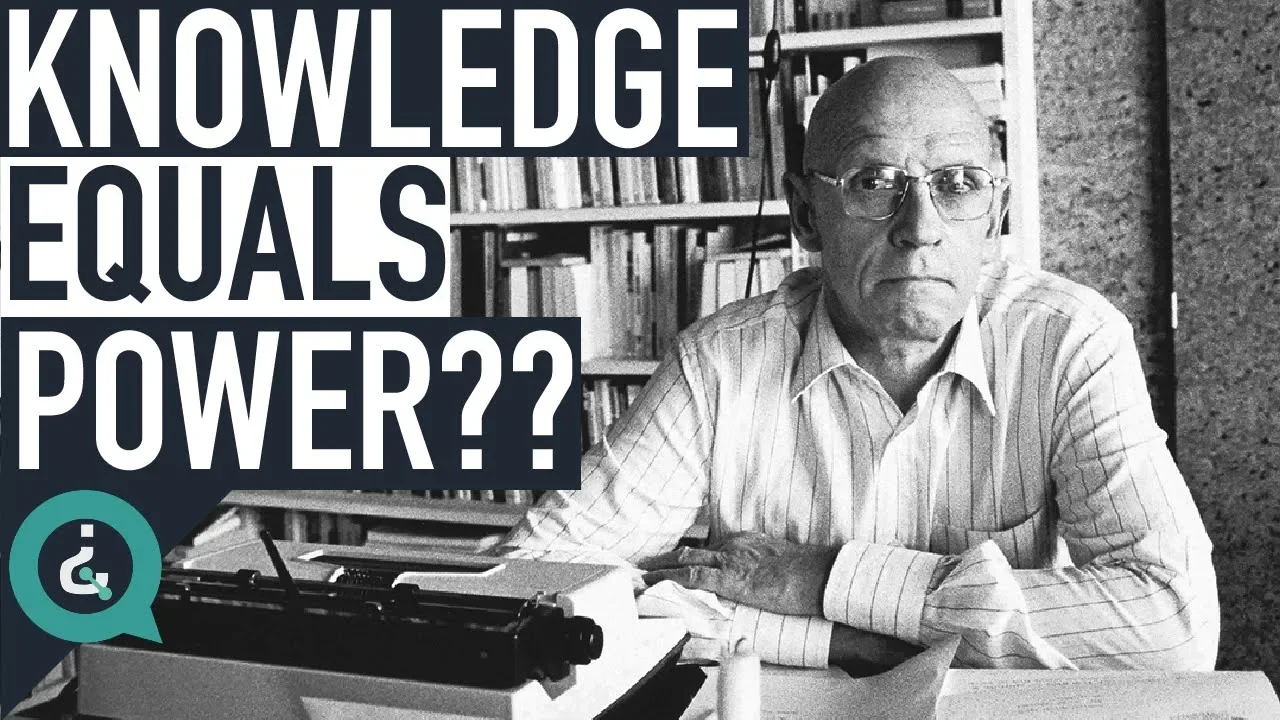
An introduction to Foucault's concept of 'Power/Knowledge'—the idea that power is co-constituted with knowledge and discourse.
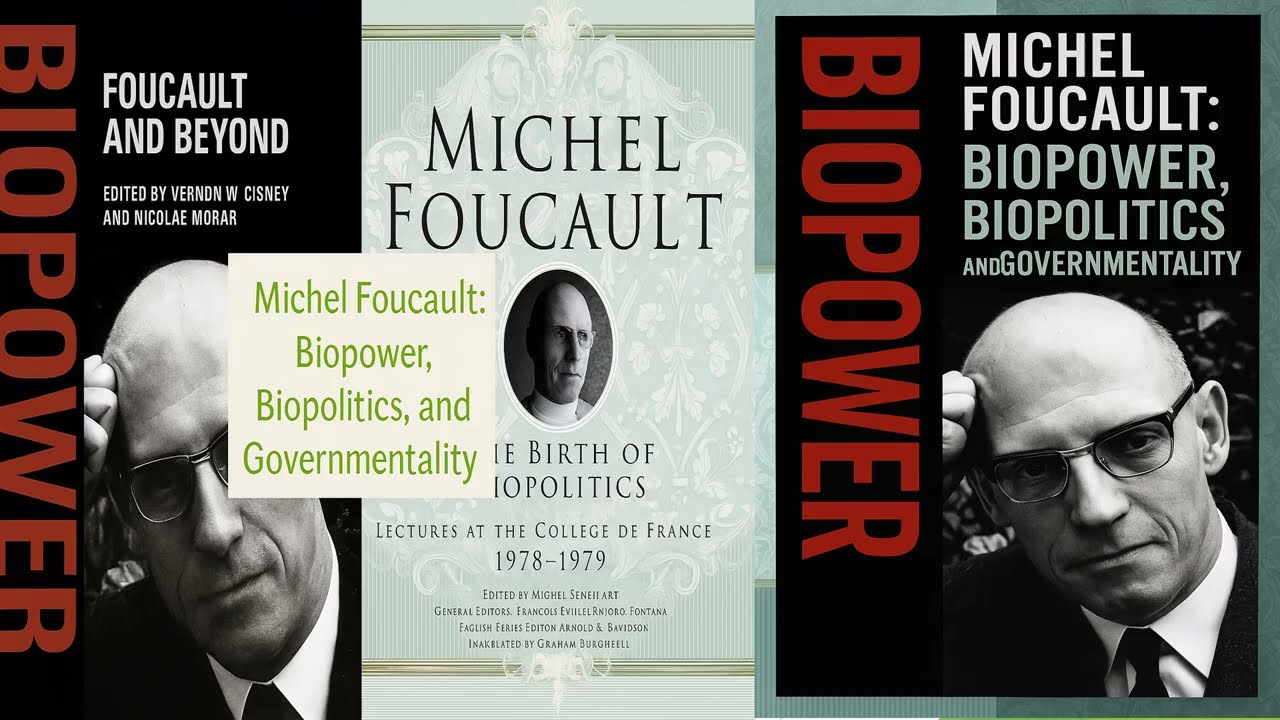
Foucault's subsequent theories on 'Biopower' and 'Biopolitics,' detailing how modern states regulate populations.
The concept of 'Surveillance Capitalism' (as coined by Shoshana Zuboff) and its application of panoptic surveillance to digital data collection.
Critical Prison Studies and the modern prison abolition movement, drawing on Foucault's critique of the carceral system's failures.
Gilles Deleuze's transition from Foucault's 'disciplinary societies' to contemporary 'societies of control' driven by technological tracking.
115K views2.4Klikes34:24Original Release: 2018-08-16
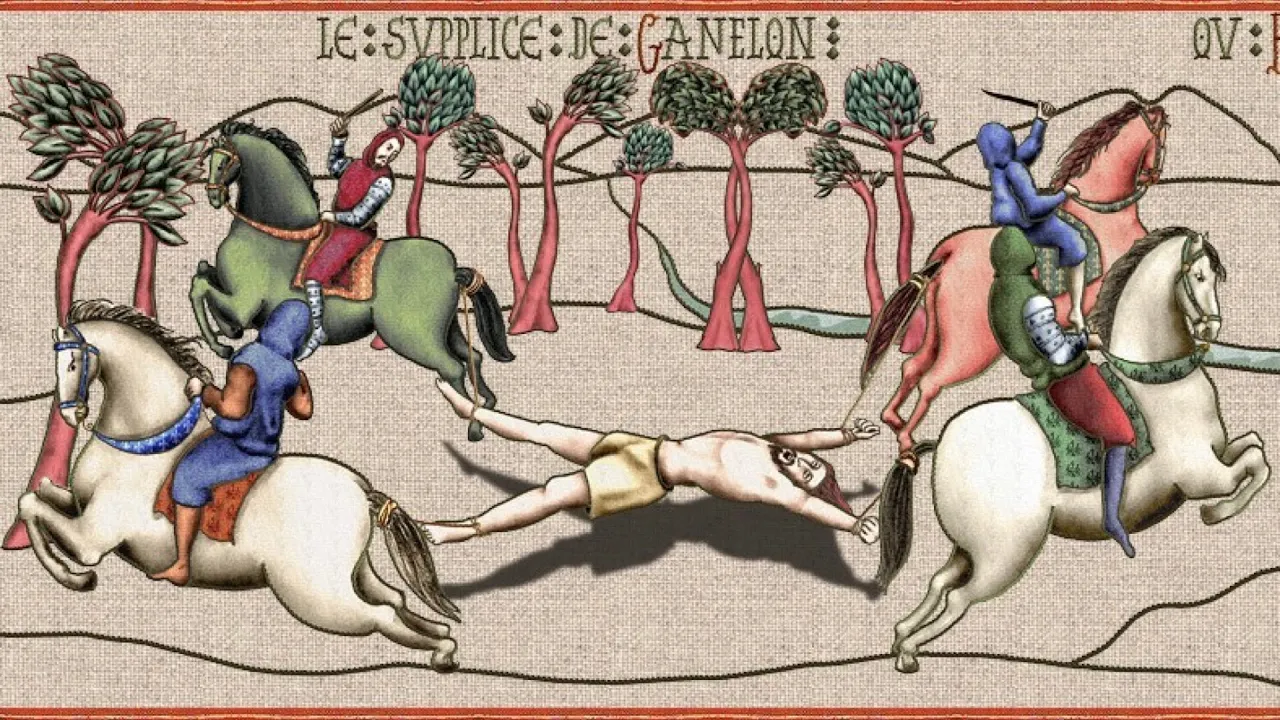
hello everyone I'm Stephen West this is philosophized this if you want to support the show and help keep it going can always pledge a certain amount per episode by going to patreon.com/scishow so Faiz this or you can go to WWF as this org and learn more about how you can contribute in other ways including but not limited to the amazon banner i hope you love the show today so real quick just to clarify something towards the end of last episode I talked about doing a couple episodes on the late work of Vidkun Steen and Heidegger but based on the emails I received after releasing last episode it it seems clear that people don't really want to hear about it they kind of want to just move on to post-modernism now personally I think to fully understand post-modernism it's absolutely crucial to understand this transition from logical positivism to the mid 20th century where there's more of a focus on behaviorism and pragmatism but look let's be honest here at the end of the day I'm a dancin monkey that's doing episodes about what the majority of people want to hear about where else I go out of business so with that in mind today's episode is part one of a series on Michele Foucault and if you're at all confused about the context of these ideas and how they're being brought up send me an email I'll respond to as many as I can but that said if someone were gonna write a short list of the quintessential post modernist philosophers of what's meant when somebody says post modernist philosopher Foucault is definitely gonna be on that list but to some relegating the work of Foucault and labeling it as merely being in the realm of philosophy doesn't really do him justice because his work oftentimes moves into areas that have nothing to do with philosophy to some you could easily refer to Foucault as a historian or a political theorist or a social commentator depending on what era of his life he wrote the book you're reading you could have very different impressions about what subject matters even more important to him now this makes it completely impossible for us to cover the entire scope of fucose work in a single episode and it can kind of make it hard to find a clean entry point into covering his work but I think a really good place to start is for us to talk about the details of his 1975 book titled discipline and punish now to a total outsider to the work of Michele Foucault to somebody that just picked up in read discipline and punished one day to that person the book may seem to be just a history of criminology a historical catalogue of the ways we've treated and punished criminals over the centuries but as we'll talk about later on today's episode Foucault is actually making a much deeper point with this book he's making a point about the structures of where power lies in society and the relationship between the people in power and the average citizen and just so the first half of the podcast doesn't come off completely like I'm doing some documentary on the history of how we've treated prisoners throughout the episode I'm gonna ask some questions when we come to the end of sections to sort of foreshadow why this may be much bigger than just Foucault talking about the history of criminology by the way Foucault himself would never describe this book as a quote unquote history of anything Foucault hated the word history and almost never used it in his writing he used words to describe this book more like a genealogy of the way we've treated criminals or in archaeology of how criminals have been punished over the years he hates the word history because so often the word history brings with it a connotation that we exist in our modern world at the end of this long historical timeline of events that have led to near constant progress this idea that ah we used to be these barbaric savages that followed the PlayBook of Machiavelli the ends justify the means we used to believe it was morally acceptable for the king or the people in power to brutally torture and kill someone that was guilty of a heinous crime but then but then history happened time went on progress was made great political theorists came along great leaders great ethical philosophers did their work and we all realize the error of our ways and brought into existence a more modern world where everyone's much more free the people in power inhibiting the lives of the average citizen far less than they used to Foucault is gonna call this assumption about history into question and really dig deeper into the idea of how much has really changed when it comes to the fundamental relationship between those in power and the citizens Foucault begins exploring this idea in Chapter one of discipline and punished by laying the groundwork for the rest of the discussion and describing what it was like to be a criminal in Western Europe in the seventh 50s specifically he gives an example of what the world was like at this time by describing an actual punishment that was carried out on a criminal in the Year 1757 listen to the punishment this person faced for the crimes they had committed this punishment was to be implemented in public on the steps of the church and the criminal was to be quote taken and conveyed in a cart wearing nothing but a shirt holding a torch of burning wax weighing two pounds then on a scaffold that will be erected there the flesh will be torn from his breasts arms thighs and calves with redhot pincers his right hand holding the knife with which he committed the said parricide burnt with sulfur and on those places where the flesh will be torn away poured molten lead boiling oil burning resin wax and sulfur melted together and then his body drawn and quartered by four horses and his limbs and body consumed by fire reduced to ashes and his ashes thrown to the winds in quote that was an actual punishment carried out on an actual person in the year 1757 now a few things Foucault would want us to initially consider about this situation one would be to recognize the fact that this sentence was handed down on what may as well be a distant alien planet to the planet that you live on see because it's so easy to hear about a punishment like this weigh it up against the moral intuitions that happen to be given to you in modern times feel morally superior to the people that lived in the 1750s and then write off their entire culture as just barbaric savagery from a bygone era that to even talk about is legitimizing a waste of time what could we possibly learn from people that thought something like this was a good idea but the problem with this approach to Foucault is that if you always end the conversation here number one you never understand the historical context that explains why things were different back then but number two and more importantly to Foucault that feeling of moral superiority so often gets us to never consider the similarities between the world back then and the world as it is now more specifically the power structures of that time their relationship to the citizens and how many aspects of them still persist to this day because think about it this punishment was handed down in a world that was pre American Revolution pre French Revolution the state that sentence this prisoner to this punishment was not modeled after the Enlightenment it was modeled more after a Renaissance era interpretation of Machiavelli's The Prince and Leviathan by Thomas Hobbes the stability of this particular Society would have been grounded in social contract theory or if you remember from the podcast episodes we did about this period it's the idea that upon birth each and every citizen of the nation state effectively signs a social contract the citizens sacrificed a certain amount to the state by way of Taxation or public service or by other means and in return they receive protection protection from what Hobbes calls the state of nature protection by a king or a magistrate or whatever sovereign body is in charge that guarantees certain natural rights for the people put another way the citizens job is to sacrifice for the sovereign so that the sovereign can do their job of guaranteeing the natural rights of the population including punishing criminals that disobey the law this is a contract where both parties have a very important role if society is going to function now another thing you may remember from the episodes we did on Hobbes is that when somebody commits a crime in one of these societies the act is seen as a direct attack on the body politic not only that but the crime is seen as a direct affront to every single citizen that has signed a social contract each one of them making up a small piece of that Leviathan that Hobbes describes but more importantly than either of those two things when a crime is committed in one of these societies it is seen as a direct affront to the authority of the king and it's right here Foucault thinks you can start to see the true primary function of the penal system in one of these societies in the 1750s the goal of the criminal justice system back then was not justice there was no real focus on a balancing of the scales in any sort of way the goal of implementing these punishments was not fairness people didn't get the same punishment for the same crime generally speaking the true function of the criminal justice system the reason these punishments were often dramatic and always carried out in front of everyone in the public as a spectacle the primary function was its ability to maintain social order and it achieved this goal in a couple of key ways first of all this type of system was a fantastic deterrent of criminal behavior because if you were someone who had plans that they are committing some sort of heinous criminal act look no further than the guy getting his arms ripped off by redhot pincers as a persuasive essay as to why you shouldn't be doing that stuff but the other reason this type of system was so good back then because in one of these societies when a crime is committed it directly calls into question the authority of the sovereign these punishments being carried out in front of everybody on the church steps ended up being an extremely useful public spectacle because these punishments served as reinforcement of the fact direct evidence of the fact of the population that the sovereign was still upholding their end of the social contract the primary goal of this entire display was not justice it was not fairness it was the maintaining of order within the society and Foucault would want to point out that if you're the sovereign if you're the person or group that's been commissioned by one of these societies to maintain order an absolutely crucial part of doing your job is to make sure that you're still in power able to maintain order tomorrow or next week or a month from now in other words Foucault is saying an intrinsic necessary part of that task of maintaining order if you're the sovereign is preserving the existing power structure but just to ask one of those foreshadowing questions what happens when the power structure no longer serves the needs of the people now Foucault would want to point out that not only did having a sovereign whose job it was to maintain order in this way work for us but it worked well in fact it worked extremely well for hundreds of years but eventually as is the case with any imperfect system problems came up the sovereign and other people in positions of power started to notice some patterns with societies that were structured this way and how they rise and fall they started to run into some unintended consequences flaws in the system that seemed to be repeating themselves over and over again see because when you're in the business of publicly executing people for the sake of sending a message about where the power lies in a society things don't always play out seamlessly in that situation for example sometimes when you try to publicly execute someone they don't die I mean something's eventually gonna go wrong right the the equipment malfunctions the horses aren't cooperating that day you try to hang somebody but they you know they got like a six hack on their neck and they just kind of hang there for a few hours laughing at you point is these sorts of things happen sometimes and when they did it wasn't a far leap for the population to start considering whether this was some sort of bad omen was this a sign that the authority of the sovereign was wavering that they were no longer capable of carrying out their end of the social contract but this wasn't the only unintended consequence that started to crop up in these societies for example at the beginning of the episode we talked about a pretty extreme punishment in 1757 that Foucault cites in Chapter one of discipline and punish well it wasn't entirely uncommon when one of these sorts of extreme punishments were carried out on someone that the population might think the punishment greatly exceeded the severity of the crime that was being committed when this sort of thing happened it wasn't entirely uncommon for the population to side with the criminal or at the very least call into question the authority of the sovereign and whether they're still running things properly but probably the biggest unintended negative consequence for the sovereign that nobody saw coming what's that when you have these sorts of brutal executions and punishments taking place in the public square every day in front of everyone when societies function and well in the sovereigns doing their job there is ZERO doubt in anyone's mind when it comes to who is in charge there is zero question as to who you'll have to answer to and how you'll have to answer to them should you decide to go against the rules enforced by the existing power structure but the flip side to that is that when things are not going well say there's a famine or natural rights aren't being guaranteed or even if there's just a general public sentiment that the sovereigns inept and some change needs to take place the flipside is that there is ZERO confusion in anyone's mind when looking for the people in power that need to be overthrown and killed for this change to occur what the sovereign and the people in power started to realize is that in this type of society that we're talking about brutal as it was the will of the people often had influence over which people were in positions of power and this could be extremely inconvenient for the sovereign at times it made staying in a position of power for any extended period of time a pretty vulnerable enterprise the people in positions of power knew that something drastic had to change if they wanted to make power more sustained and Foucault documents a fundamental shift that occurs in the way societies treat criminals that takes place between the years 1757 and 1837 now real quick I'm just anticipating a place that someone's brain might go here oh oh so what you're saying is that a bunch of evil people in positions of power realize that in this older type of society the will of the people actually mattered and could influence things so they all got together met in backrooms formed a secret society called it something like the Council of the drifting Phoenix came up with a creepy secret handshake and they all sat around coming up with ways to control the population so they'd never have to relinquish power but what Foucault would probably want to point out is that there doesn't need to be some evil secret society for people in government to want power to be more deeply embedded remember the people in positions of power signed a social contract as well part of that social contract is maintaining the order of societies that they can continue to guarantee the natural rights of the citizens and part of maintaining order historically - Foucault has been to preserve the existing power structure there doesn't need to be a single evil person in any of these positions of power for them to be motivated to come up with new better tactics to stay in power and Foucault would say that these new tactics that are being implemented between the years 1757 and 1837 is a broader evolution of the way people in power keep prisoners under control these changes occur gradually over the course of decades sometimes just with subtle changes to the ceremony of the public execution itself whereas before prisoners used to be just paraded around in an open-top cart before their execution slowly over the years that evolved into a closed top cart with wooden planks on the sides that you could hardly see the person that eventually evolved into a bag being over the person said and their identity completely concealed by the 1790s most societies had moved away from these dramatic or creative public executions and favored a more standardized punishment of a guillotine in front of the courthouse a few years later the guillotine was moved behind the courthouse until eventually it was moved inside the prison and all executions were done in private punishment and the reality of the way we treat criminals has slowly moved from before when it was something that was at the forefront of public consciousness that it was impossible not to be aware of - now when it's something abstract silent cordoned off and even locked away in these distant faraway buildings that we never have to see much harder to locate who the people in power are that are inflicting this punishment to ask a couple more foreshadowing questions here what sort of effects might this have on a society more importantly why might people who want to maintain their positions of power prefer a situation like this by the year 1837 two fundamental changes had occurred in the way that we punish criminals the Foucault says are extremely deliberate number one putting somebody to death as a public spectacle that everybody gets to witness had all but disappeared and number two we had changed tactics from punishing criminals by inflicting harm on their bodies to the emergence of a new era in our methods of punishing criminals where we now focus primarily on the disciplining and control of their minds let me say it again there is a fundamental shift from the physical punishment of the person's body like we used to do to the more modern disciplining and Reformation of the person's mind this is why Foucault titles the book discipline and punish this is the emergence and infancy of what will eventually become the modern prison this is the beginning of a long evolution where people in positions of power develop a much more efficient and effective way of wielding and sustaining power over people Foucault in the book cites an actual strict time schedule that criminals in the 1830s that were serving time had to follow during their time in prison you can imagine what something like this might look like right 7:00 a.m. wake up 7:05 you were to be on your mark for roll call 7:15 you are to be at the mess hall for breakfast 7:25 you were to be at your assigned job post for the day 9:15 water break 9:20 back to work in other words when your entire day is scheduled and accounted for down to the second there's not much time for illicit criminal activity there's not much time for any thought outside of disciplining yourself and adhering to this schedule of stuff you're required to do well couple this new strict focus on the disciplining of the mind and reformation of behavior with more new tactics that were emerging over the years more specifically a new improved three-pronged approach towards controlling prisoners that Foucault thinks is one of the most effective methods that's ever been devised the three prongs of this three-pronged method that's used to keep prisoners in line are what Foucault calls surveillance normalization and examination that is constant surveillance of the prisoners which combines nicely with normalization or a normalized standard of how a good prisoner should be thinking and behaving that's been given to you by the people in power and both of these work nicely with a constant process of examination and re-examination for people in positions of power give you a score or a grade determining how well your corresponding with that way of behaving that we've decided a good prisoner should be a reflection of Foucault thinks this new highly effective way of controlling prisoners may have sprung out of the work of a philosopher named Jeremy Bentham the same way Plato and the Republic spends a considerable amount of time trying to come up with the ideal structure of government Jeremy Bentham spends a bunch of time in his work trying to come up with the ideal structure of a prison and the model that he arrives that after thinking about it for so long is what he calls the panopticon simply put the panopticon is a building designed and laid out in a very clever way where a single guard or warden or anyone in a position of power can stand in a specific spot in the center of the building and they can see inside the cell of any prisoner they want to watch them at any time but the prisoners can't see them they can't know when they're being watched they can't know the criteria that determines why they're being watched in a sense Bentham says the reason this is an ideal design for a prison is because the only reasonable thing the prisoners can do when a prison that's designed this way is to behave every second of every day as though they're being watched because they can never know when or when it's not happening the life of the prisoner becomes once again constant surveillance through cameras or armed guards strict adherence to a normalised way a good prisoner behaves given to them by people in power and rigorous examination by experts or the court system or the parole board or whoever it is this week for the prisoner to answer to now some of you out there might be saying why are we going on so much about the history of criminals what does this have to do with philosophy what relevance does this have to me whatsoever well if you're someone that's thought that all we've been talking about so far in this episode our methods we've developed over the years for controlling only prisoners Foucault would probably say I hope you've been paying attention to the details of what's been said so far because when Jeremy Bentham sits down and creates the design of this panopticon of his he's not just talking about the ideal structure of a prison and what follows from that is that Foucault is not just talking about the evolution of methods we've developed the control prisoners Jeremy Bentham describes the panopticon very generally in his work as a quote new mode of obtaining power of mind over mind and a quantity hitherto without example in quote and knowing that he said that it makes sense that he quickly goes on to say that although this is the ideal structure of a prison if he wanted to control prisoners there's no reason the same design couldn't be applied if you wanted to create anything I mean a mental institution that promotes a standard to the inmates of what a good patient is or in a military setting promoting what it is to be a good soldier or in a university setting promoting how you should think and behave if you want to be a good student if Bentham lived in a modern economic society he no doubt would see the utility of the panopticon if it was applied to a factory and producing good factory workers or even more generally how it could be used at a multinational corporation trying to produce good employees see that's the thing let's say you're in a position of power in a corporation to be able to use the fundamentals of these highly effective tactics that have been developed over the years to control your employees you don't need to treat them like they're a prisoner that's part of a chain gang forced to crush rocks all day no as long as you make sure that their chain is long enough that they don't feel like a prisoner you can set up some pretty narrow parameters for what it is to be a quote good employee that not only will they fall into but they will actually police themselves to stay that way they'll feel intense pressure to adhere to that normalized standard of behavior at all times because their life at work is one of surveillance normalization and examination surveillance by way of cameras time clocks supervisors deadlines monitoring activity on your computer I mean even sometimes just the surveillance of other employees around that feel like they benefit from having dirt on someone in a highly competitive environment the normalized standard of being a good employee speaking acting dressing in a professional way however that's defined by whoever decided in the company putting on your work persona always being pull correct doing all the things to make sure you're a good team player then it's on to the examination phase with your monthly quarterly yearly evaluations where they give you a score out of ten in all these different areas to determine how well you're doing or in other words how well you correspond with exactly who I say you should be when you're here well it seems your productivity is about the same level as last evaluation that's fine I guess you're doing good in some areas but you know there's room for improvement a couple other areas and don't worry I made an action plan so that we can see if we can get you back on track how about that this three-pronged method has become the dominant way of controlling human behavior and if you doubt that in any way consider the similarities it has to the structure of some religions with the constant surveillance normative behavior and rigorous process of examination this method is so effective and so capable of being applied to any circumstance imaginable that in our modern world it has so pervaded the way power is exercised that it extends beyond institutions like prisons or corporations and it's actually embedded itself into the very fabric of society the very same process of surveillance normalization and examination could be said to exist in the way you present yourself online and the media you consume it most likely is even being played out in various social circles that you're a part of right now Foucault would say that one of the truly insidious things about the way power is wielded and people are controlled in modern times is that simultaneously you are both a subject that is being controlled while also being an active participant in the system an active participant that in some way most times unknowingly supports the existing power structure let's slow down for a second really talk about what's being implied here for Foucault remember the criminal justice system back in the 1750s so as we talked about the goal of the whole situation back then was clearly not primarily justice or fairness but instead the benefits the system provided to society when it came to maintaining order and keeping things moving forward well Foucault is going to ask is the penal system of the 1970s really so different when you take a closer look at it do we exist in a modern enlightened era where we've grown throughout history and learned the error of our ways and constructed a penal system that first and foremost has the aim of distributing in fairness to Foucault the goal of the modern penal system is not justice or fairness the goal is through surveillance normalization and examination to produce harmless non rebellious working taxpaying productive citizens who follow the rules and are satisfied with a life of conforming to the normalized standard of what it is to be a person handed down to them from above in other words docile useful subjects that carry out the vision for what the future should hold given to them by the people in power this is why there's such a difference when it comes to the sentencing between white collar and blue collar crimes between an executive that Rob's the IRS at $20,000 by evading taxes and some dude that Rob's a Taco Bell of you know 85 bucks and a burrito supreme short of the executive absolutely refusing to pay back any of the money nine times out of ten they are not gonna see the inside of a prison cell because their behavior really doesn't need that much reformation in the eyes of the people in power I mean keep doing almost everything you're doing keep working keep creating jobs keep starting new companies keep going to Badminton on Sundays just pay your taxes whereas the guy that robbed the Taco Bell I mean it doesn't matter if he marches back into that store hands the 85 bucks directly to the manager baby birds the burrito supreme back into his mouth nine times out of ten that guy is going to jail because the goal of the penal system is reforming criminals to fit a pre-existing mold of what a normal person is not direct retribution for a crime now also consider the fact that once you're sentenced it isn't about justice or fairness at that point either in today's day and age there's the modern advent of getting out on good behavior in other words as long as you're willing to reform yourself into the type of person that we've told you to be it doesn't really matter what your initial sentence was we may knock a couple decades off your sentence if only you're willing to play by our rules now some people out there no matter how many times they go to prison are just the type of people that are never gonna play by the rules they're never gonna become this person that people in power want them to become they're never gonna change and those people are the people that will either be lifelong repeat offenders in and out of jail or they'll eventually get life in prison and Foucault would say it's these kinds of people that refuse to play by the rules that are absolutely fascinating to us as quote normal people that's another modern invention for Foucault thinking of ourselves as normal and the labeling of criminals as abnormal or people that need to be reformed to a state of normalcy but it's the fact that they're not like normal people that makes us so fascinated by criminals look at the thousands of true crime podcasts that have absolutely exploded onto the podcast scene in the last couple of years massively popular look on Netflix at all the crime related shows you can find there if you saw the TV subscription look at all the TV shows on the air documenting some crime that was committed this fascination with criminals is not a modern phenomena to Foucault this has existed all throughout our history in the American West there was Billy the Kid and the Great Depression Bonnie and Clyde criminals can even become folk heroes like DB Cooper but this doesn't just happen in the United States this has happened all over the world part of the reason these older societies moved away from the direction of executing criminals as a public spectacle is because of the very real effects of what happens when you put a criminal beloved by the public at centre stage Foucault thinks we love criminals so much because when they vehemently refused to play by the rules of society they have an ability to show us exactly what we are the law-abiding occupants and active participants in what is effectively a massive social prison we live our lives trapped in a Cell inside of a panopticon or a panopticon inside of another panopticon in fact the panopticon is a great metaphor for the entire project of modernity to Foucault see just like in the actual prison where the goal of the operation is not some higher virtue like justice but instead to reform prisoners into subjects that are useful for keeping society going we as occupants of our social prison are constantly being disciplined and reformed into good employees good consumers good voters good students good friends all internalized expectations of ourselves given to us by someone in a position of power we're given standards to adhere to by TV shows movies books all media standards we internalize that tell us how our body should look what beauty is what you should care about what you can and can't say what some people can do that you can't do there is no prison or method of torture that has ever been devised that can do to people what they willingly do to themselves in our modern social prison we live in a panopticon because we live our lives as though we are constantly being watched and held to these standards about how we should be that are given to us by media and the people around us but the truly sick part about it is that we have constructed a world where we are simultaneously both the prisoner being reformed in the cell and the warden at the center of the panopticon that's constantly watching us we've created a world where we are under constant surveillance by ourselves surveillance by looking in the mirror wondering if you should starve yourself tonight to lose that two pounds it'll make you beautiful surveillance of your own irrational toxic thoughts but you suffer in silence rather than have to face the shame of going against societal expectations and asking for help and appearing temporarily weak to the people around you who need you to keep it together there is no prison that can compare to the life of forcing yourself to adhere to a normalized standard of behavior that tells you the person you should be while constantly being surveyed and examined by yourself and others to make sure you stay that way this is what Foucault refers to as the genealogy of the modern soul consider the fact that the media you consume even gives you the very vocabulary you have at your disposal and with it the only categories you have to think about who you even are as a person think about that think about the power you could have if you were the person that came up with the only terms people had to think about who they even are see all throughout history people have asked the questions where does power ultimately lie who has the power and how is it exercised on people and there's been this classic idea that people have brought up over and over again that power lies in the hands of people that are in privileged political positions the thinking is if you're the president of a country you can pass executive orders you can go across the aisle and find bipartisan consensus if you want to you can appoint judges that ultimately dictate the law that's where power lies but then a Marxist tradition came along and said no that's actually a naive understanding of power because in advanced economic societies if you can by the interests of the president if you can lobby politicians and get legislation influenced in your behavior because of financial contributions then it's not people in privileged political positions that have the power but people in privileged economic positions well many post modernists would say Foucault among them that the Marxists are just as naive as the people that came before them and just as hell-bent on trying to find some grand narrative to explain everything like they always try to do with economics to Foucault power doesn't lie in either of these places see it would be great if power actually did lie in the hands of a relative feel like that to Foucault it'd be great if something like the Illuminati really existed because then just like the societies in the 1750s we could point directly at the people in power and do away with them if things were going bad but in our modern world power is much more difficult to identify and part of the reason why is because it's become much more widespread and diffuse power in our modern world of Foucault is always connected to knowledge and having recently talked about the structuralist and post-structuralist and their views on knowledge claims we know that knowledge to them is not some objective codified set of facts about the way the universe is that you learn in school knowledge to these thinkers is nothing more than the findings of the current dominant set of cultural discourses and the method that it uses to chop up and make sense of the world so if power lies in the hands of people with knowledge and knowledge is given to us by people that use narrow cultural biases to chop up reality then where do we get our knowledge and who are these people that are arriving at knowledge for us well in our modern world science is where we get our knowledge and thought leaders within the sciences in their respective fields of study are the people that arrive at knowledge for us to use this is where power ultimately lies you know Foucault has a famous idea it's that that man is a recent invention that's reaching its expiration date that the concept of man is something that wasn't even talked about until around the 1600s and part of what he means when he says that is it it wasn't until the 1600s that people really focused on the human sciences as a prescriptive endeavor it wasn't until the 1600s that fields like psychology biology medicine sociology were being used actively to try to arrive at a scientific rational idea of quote what it is to be a human being Foucault would ask well who have conducted these experiments that are determining what it is to be a human being have we maybe limited ourselves by only looking at what it is to be a human being from the extremely narrow cultural perspective of almost entirely men from a Western European cultural background from a similar educational background from a similar socio-economic situation where they were able to go to school get funding for their experiments they were able to think about stuff like this for their entire lives Foucault and ask when it comes to our understanding of what it is to be a human being has the data we've gathered over the years come from such a limited point of view that much of our understanding of what it is to be a human being is approaching some sort of expiration date regardless of your answer to this question fucose point about power is that it doesn't matter how much money you have or how high of a political office you hold those people may seem to be powerful but if you can dictate the parameters that those people use to understand the most foundational things about their existence if you can dictate their views on what a human being is how they fit into the world the vocabulary they use to think about who they are how about being able to dictate what things even matter to them that they then go on with their economic or political resources to pursue in this world that's where true power lies - Foucault will talk more about this next episode
Up Next

8:12
Foucault's Panopticon: Surveillance, Power, and Social Control
@PhilosophyTube
190K views•2017-05-26

164:01
John of Damascus on Holy Images: A Theological Defense
@BannedBooks
139 views•2026-04-25

26:30
Simone de Beauvoir on Freedom, Oppression & Responsibility
@philosophizethispodcast
24.8K views•2017-07-29
4:57
The Myth of Sisyphus: A Greek Legend of Eternal Punishment
@TEDEd
8.6M views•2018-11-13
Related Study Plans & Knowledge Roadmaps
Structured learning paths in Philosophy
philosophy
Frankfurt School: Critical Theory & Culture
01Foundations of the Frankfurt School and Critical Theory
02Horkheimer & Adorno: The Critique of Instrumental Reason
03The Culture Industry and Mass Deception
+ 2 more learning modules
12h5 modules
Explore Roadmap
philosophy
Philosophy of Language: From Frege to Austin
01The Linguistic Turn: An Introduction to Language in Philosophy
02Gottlob Frege: Sense and Reference
03Early Wittgenstein: The Picture Theory of Meaning
+ 3 more learning modules
15h6 modules
Explore Roadmap
philosophy
Feminist Epistemology: Standpoint & Injustice
01Introduction to Epistemology and Feminist Critiques
02Sandra Harding and Standpoint Theory
03Donna Haraway and Situated Knowledges
+ 2 more learning modules
12h5 modules
Explore Roadmap
philosophy
Environmental Philosophy: Ethics & Deep Ecology
01Foundations of Environmental Ethics & Anthropocentrism
02Biocentric Individualism and Animal Liberation
03Ecocentric Holism and Deep Ecology
+ 1 more learning modules
10h4 modules
Explore Roadmap