














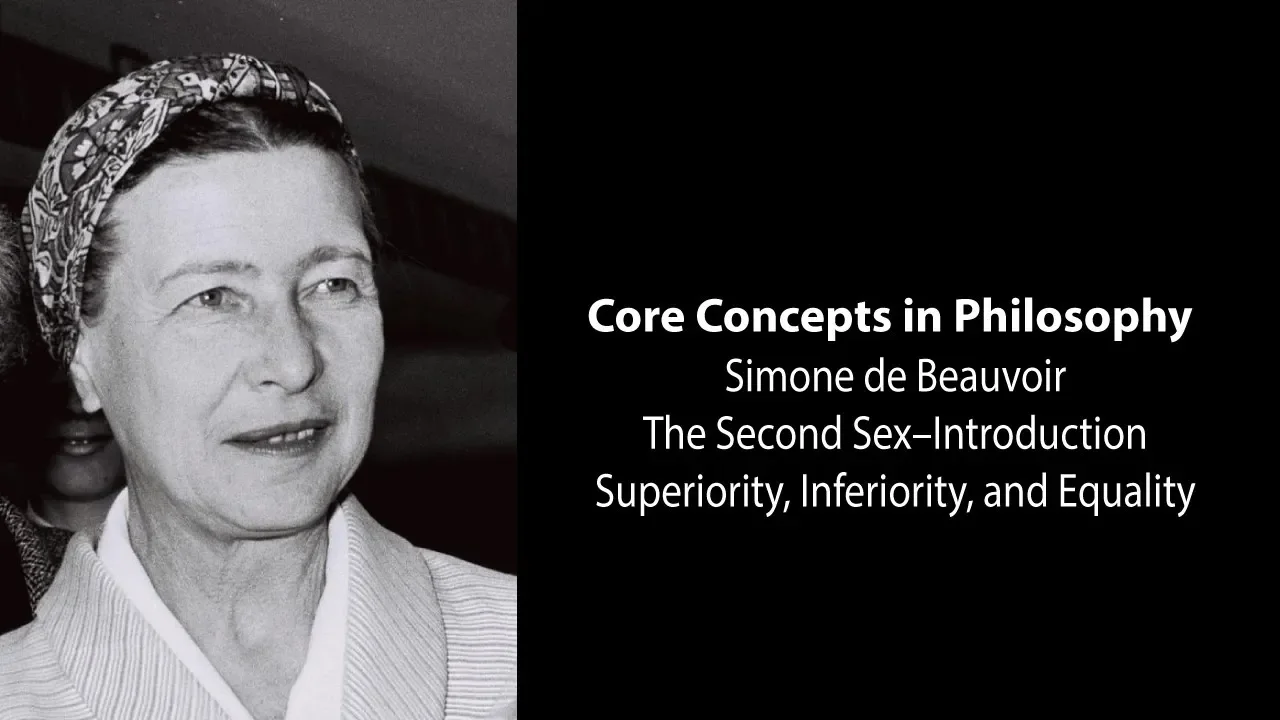

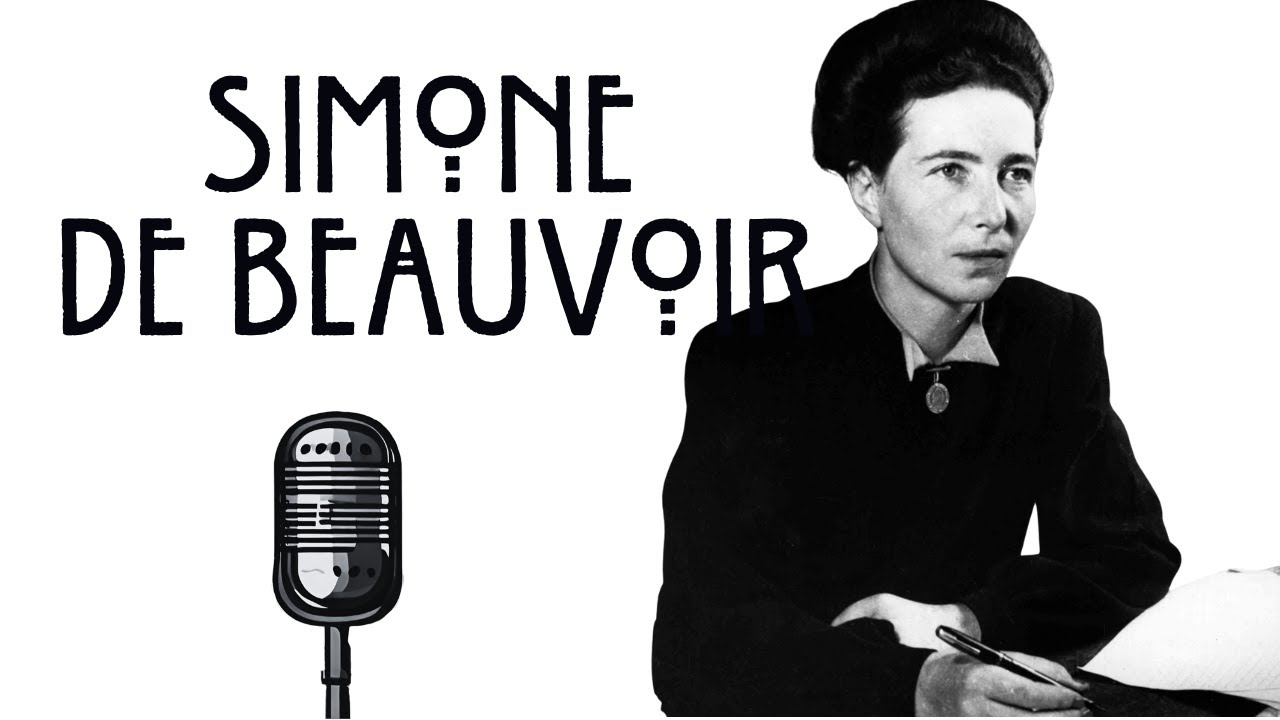







In her conclusion to 'The Ethics of Ambiguity,' Simone de Beauvoir argues that true human freedom requires not only willing one's own freedom but also willing the freedom of others, because our individual projects and meanings are interconnected with others' freedom; this ethical framework leads to the recognition that oppression—where some deny others' subjectivity—is the natural enemy of freedom, and that in extreme cases, violence may be justified to liberate the oppressed, though this requires radical self-awareness, humility, and continuous vigilance against the 'aesthetic attitude' of detached objectivity.
Simone de Beauvoir on Freedom, Oppression & Responsibility
Added:Jean-Paul Sartre's core existentialist concepts, particularly 'existence precedes essence' and the rejection of predetermined human nature.
The philosophical distinction between absolute metaphysical freedom and 'situated' freedom (freedom constrained by one's historical and social reality).
The concept of 'The Other' in philosophy, which describes how dominant groups establish their identity by marginalizing a subordinate group.
A basic understanding of traditional ethical frameworks (utilitarianism, deontology) to contrast with the existentialist approach to morality.
A deep dive into Beauvoir's landmark feminist work, 'The Second Sex', to see how her existential ethics are applied to gender oppression.
How Beauvoir's social philosophy influenced later critical theories, including intersectional feminism and post-colonial studies (e.g., Frantz Fanon).
An exploration of 'situated ethics' and how individuals can act morally when their choices are constrained by oppressive political regimes.
A comparative study of Beauvoir's collective view of freedom versus Sartre's highly individualistic concept of freedom in 'Being and Nothingness'.
24.8K views545likes26:30Original Release: 2017-07-29
hello everyone I'm Steven West this is philosophies this thank you to the over 1,000 people now that support the show on patreon making it possible for all the rest of us and when it comes to Amazon this week funny story actually I I ordered something off Amazon I clicked through the banner and this guy in this nondescript white van got out of his car he had a package I assumed it was him and he came up to my door and and I you know I open the door to say hi this would be nice and he said wait a second I know you you're that guy that hosts that show that Amazon and their affiliate companies in know endorse whatsoever but they they still allow you to have that Banner on the front of your website because you have some sort of weird fetish where you like to drive traffic to Amazon even though it doesn't actually support you you're that guy and of course at that point I had to come clean you know it seems my reputation has preceded me here how are you my good man man I mean it's it it's so great to see that I mean all throughout Amazon even down to the warehouse level words getting out of just how much they don't in any way endorse what goes on on this show front page of the website people today's episode is part three on Simone deir I hope you love the show today so even if you're binge listening to this and you just got done listening to last episode in the interest of painting a clear picture here I think it's important to do a quick recap of everything Simone dear said so far in the ethics of ambiguity when you take an honest look at what it is to be a human what you realize is that we all exist in a strange Place between various dualities subject and object facticity and Transcendence individual and member of a group to be a human being is to be all of these things simultaneously now recognizing you're in this state of ambiguity can sometimes be a bit confusing to people it can cause tension because fact is we don't like not being able to nail down exactly what we are at any given moment and if you look back at the history of philosophy and religion Simone dear says that what you'll find is a long tradition of people in the business of trying to simplify what we are so that everything seems a little less ambiguous for example you you are a citizen of a sovereign and benevolent Nation you've signed a social contract at Birth remember forget whatever your own individual desires are you have a duty to uphold to this state in this life and that comes first in other words reducing one side of this Duality finding some rationalization some way of looking at our place in the world that makes everything less ambiguous or you you're not a body you are a stream of Consciousness temporarily inhabiting that body you can't ultimately control anything that happens outside of you only thing you can really do is choose how you're going to react to whatever happens to you learn to accept it again reduce in one side of this Duality finding some rationalization that makes everything less ambiguous but this isn't really what life is right no to be a human being is to be both an individual with particular individual desires and a member of a state simultaneously being a human being is finding a balance within this state of ambiguity between this Duality it's coming to terms with where your allegiance to your individual desires ends and your obligation to the state begins or to the company you work for or your bowling team whatever being a human being is to exist in a constant state of ambiguity and we can tell ourselves any one of these rational stories from history bury our heads in the sand but we'll never actually Escape that ambiguity in reality now why are we trying to escape it why are we trying so hard to come up with a story that gets us out of this state of ambiguity well to Simone dear it happened to us in childhood we're born into a world into a situation where we don't have to face the ambiguity of existence head on our parents Shield us from it in the interest of letting us just play and be kids all the while hammering into our heads things like hey mister listen you got a lot to learn about the world if you want to be an adult like I am I mean think about it whenever you have a problem as a kid who do you go to your parents and magically no matter what problem you have they always have a solution to a kid parents seem to have this Godlike level of wisdom and industrious ability we start to view them like they're Gods we start to see them as these completed beings that have harnessed the ultimate values of the universe but then something happens as we reach the end of childhood and the beginning of adulthood a pretty arbitrary place in life if you really think about it but what that crossroads is marking really is the moment you face the true ambiguity of the world the existential weight of considering all of your freedom all the different choices you have all the different plates you have to keep spinning finding balance Within These dualities all the mystery all the regret all the responsibility you have for every single choice you make were hit by the tsunami of that and who could blame us for wanting to go back to the safe Cocoon of childhood who could blame us for wanting to find a way to not actually consider all this stuff She lays out a scale of different strategies people use to deny this ambiguity of the world and their true state of Freedom the scale moves from least free to most free first we had the ambiguity by claiming to have found some ultimate cause or ultimate project that you're going to be engaged in for the rest of your life a little bit more free than that person was the nihilist who recognizes the ambiguity of existence but then makes the mistake of thinking that because they're never going to be one of these completed people everyone else is trying to be that nothing's worth doing at all the next entry on the scale more free than the nihilist still not totally free but probably as free as you're going to get without actually being free is what Simone deavor calls the adventure now the Venture without question is n and his whole way of looking at the world not a big fan of this part of n Zone dear's not um if you remember in thus book zarra n lays out the progression of the camel The Lion and the child real briefly we're all born camels Beast of Burden told where to go and loaded up with the baggage of all sorts of cultural expectations to adhere to eventually We Can Shed that baggage to become a lion we can say no to all the other ways people are doing things around us and recognize them for what they actually are not the right way to do things but the way people happen to be doing things right now this allows us to separate for ourselves the aspects of our culture that are useful versus the ones that are crippling us all of this leading to a third level of existence that n calls the child where we start to resemble a child at Play Again the same way a child on a playground just moves from one game to the next present enjoying each game for its own sake we being in this new place where we're not being spoonfed what we should be doing with our lives by our culture we create our own values choose projects to work on that correspond with those values and just move from one project to the next and join them for their own sake live in a very self-fulfilling life this is a really good description of the adventure they recognize the ambiguity of the world so they're not the sub man they recognize the cultural traps you can fall into of believing in a prepackaged meaning to your life so they're not the serious man and they recognize they're free to create their own values and they take action on them so they're not the nihilist the problem with the adventurer to Simone deir the problem with n's prescription is that it's selfish and ultimately when you're living as the adventure Simone deor thinks you're never totally free remember to Simone deir the only way you can be truly free is not only by willing your own freedom but also willing the freedom of others the adventure is an easy trap to fall into because it's just so close to being free you recognize all the ways of denying your freedom you're willing your own freedom but when you choose the projects you're engaging in based on the criteria oh this seems interesting to me let's do it based on that criteria you're not necessarily willing the freedom of others in fact she points out how it's within this sort of self-contained only willing my own Freedom sort of attitude that most tyrannies emerge see the problem with what the adventure is doing is that ultimately they're denying one side of one of these dualities that we exist between and this is a good place to start making the case for why Simone deir thinks true Freedom requires the freedom of others never forget that you are simultaneously both that individual with those personal projects that may be interested to you but also a member of society at large what that means is that as an adventurer you carry out the projects that you're interested in within a larger context that's only made possible by the freedom of other people tons of examples of this first and most fundamentally I guess is that as a person born today you can't help but be standing on the shoulders of giants at this point what I mean is the only way the adventure is able to pick and choose between all those projects that are interesting to them is because they're doing so in a world where people in the past wield their freedom but it's not only the past so many of the options you have at your disposal in the present day are only made possible by a countless number of other people going to work every day willing your freedom it even goes into the future look a common attitude of the adventurers to think of their life as this self-contained thing where I create my own meaning I work on these projects that are meaningful to me and when I die these projects die alongside me because initially when I set them up they were only meaningful to me but that's not the case Simone deir would point out that in a strange way the end of your life is not when you die as the great Marcus Aurelius says what we do in this life Echoes into eternity that the effects of the projects that you choose to engage in when you're alive live on long after your death Simone dear talks about how when you will the freedom of others as many have done before you to make your choices possible it's almost like when you have kids and and a small piece of you lives on after you're dead your freedom lives on long after you're dead in this case you're planting the seeds of a world that's going to allow the next generation of people to act freely this ties into what we talked about last episode in the same way there's no ultimate project you're going to do in your life where once you've completed it you've reached the end and that instead of viewing the completion of these projects as ends in themselves we should view them as a launching point for our next project so too we should see other people as launching points for this next instantiation of Freedom that's going to exist maximiz iing their freedom should be a high priority for us another Point she makes about why the freedom of others is necessary for your own freedom is that so much of the meaning of our lives so much of what we want out of life can only be given to us by other people who are free for example let's say What mattered most to you in your life was to be considered a great parent and a great basketball coach now without the help of other people it is impossible for you to ever be either of those things no you need a backseat full of other people to be a parent of and a whole basketball team of other people to be a coach of otherwise the whole task is impossible what bavar says is that our lives and in turn our values are so close and connected to other people that it's through relationships with other people that meanings disclosed to us at all and they need to be free in order to do that for example if what you wanted was to be loved and respected by your family what gives their love and respect any meaning at all is their freedom to choose between Alternatives right like if you ran your house like you were the supreme leader of North Korea and you gave your family no choice but to love you you know you you lose your job one day and and they didn't cry hard enough when you lost your job so you lock them in the basement for three months or you tell them that you love them and they didn't fall on the ground convulsing over the the overwhelming love they have for you back I mean if you forced them to act like they loved you would you even feel loved there would them going through the emotions mean anything to you in other words to feel loved and to bring about many other goals you may have in life requires willing the freedom of others now once you're convinced to the point that willing the freedom of others is an essential part of what it is to be ethical you're still not out of the woods yet section one of part three of the ethics of ambiguity Simone deor writes about a mistaken way of looking at the world that even people who are totally free are at risk of falling into the name of this way of looking at the world the title of section one is the aesthetic attitude the aesthetic attitude where she's coming from is this it has to do with the history of Art in the world throughout the history of philosophy a lot of lot of people have talked about what the best way is to determine whether a piece of artwork is beautiful or not throughout the history of philosophy there's been this idea that to truly appreciate a work of art to really judge the piece of artwor accurately what you need to do is remove yourself of all biases and prejudices before you look at it for example if you're somebody that just hates bongo drums for some reason you hate how they sound hate how everyone playing them seems to be 20% happier than you are in your life if you despised bongo drums for some reason there's a lot of people throughout the history of philosophy that would say that you shouldn't be reviewing an album that's exclusively bongo drum music reason being you're going to bring tons of biases and prejudices to the table that are going to make you not objective you're not going to be fair to the Bongos now your job at this point as a Critic of art is to adopt an aesthetic attitude it's an attitude where you separate yourself and your own feelings away from the Judgment you have to make about whether the piece of art is beautiful or not Simone dear would say that this is a massive error that thinkers have been making for a very long time over a thousand years and that in reality what it is to view a piece of art or anything in the world for that matter is to view it from a particular perspective you can't help but bring those biases and prejudices to the table that are based on your prior experiences this this whole delusion that that we're somehow going to adopt this aesthetic attitude we're going to exit our bodies and look at this piece of artwork like we're a newborn baby no value judgments it I mean it's just that it's a delusion we just can't do that as people we can't remove ourselves of bias completely it's an integral part of how we make sense of anything at all what we should be focusing on instead is being open and honest about the biases that we have so that we can have a real productive discussion about this piece of art that's in front of us now what follows from this is that over the years people have taken this Paradigm of the aesthetic attitude and they've applied it to the way that they look at the world this attitude that all of us have no doubt heard at some point in our lives is that to truly understand understand what's going on in the world and to commentate it on it effectively he can't be in the thick of things you can't be super involved in what's going on on the ground or else you're going to bring tons of biases to the table that are going to inhibit your ability to see it clearly in other words in the same way when you're judging a piece of art you're supposed to try to remove yourself as a part of that culture entirely in this case you're supposed to try to remove yourself from history entirely and then supposedly look at the world from this objective vantage point from the sidelines but you're not being objective and to Simone deir are the people you should really be worried about are the people that are constantly telling you how objective they're being oh those guys over there yeah yeah they have an agenda when they bring you the news but us over here we're giving you both sides of the story no need to look anywhere else no the fact is all of us approach the world from a particular perspective we all look at the world through a very biased lens what we should be focusing on is being more self-aware of what biases we have so that we can understand how they're shading the way we're viewing things the people with this aesthetic attit ude that think of themselves as just Spectators to history just watching it they talk about the world like they're at a movie theater and they're eating a bag of Sour Patch Kids crazy times we're living in all this stuff happening it's going to be insane to watch it unfold right what they're doing whether they realize it or not is detaching themselves from history as though they aren't actively contributing to it right now you know it's it's so common for people to think of history in this abstract way history is something that exists in history books it's the story that I read and and every day history is unfolding itself before my very eyes people say things like this Simone deir would say yeah like 5 seconds ago when he said that history is unfolding in front of you that's history now that with every action you take or don't take you are actively contributing to that story of History that's eventually going to be written down I mean in a sense you are history unfolding and that makes you at least partially responsible for whatever unfolds you're never actually separate from the world out there on the sidelines so let's talk about what actually unfolds in the world again to be an ethical person is to will your own freedom and the freedom of others but even if we lived in a world where everybody agreed on that synopsis which we don't the the reality is that not everyone in this world is going to be an ethical person the world is not a Utopia there's just going to be people out there that want to use other people denying their subjectivity denying that they're a being for itself so that they can bring about some sort of selfish end that they have Simone dear has a name for this sort of Tom Foolery it's called called oppression because if your main pursuit in life is to will your own freedom and the freedom of others the natural enemy that emerges for you in that worldview is oppression let's talk about what she means by oppression she starts by talking about stoicism and a mistake that she thinks they made you know if you remember stoicism emerged in the helenistic age following the death of Alexander the Great and all the political turmoil that came along with that people found themselves living in a world of extreme volatility I mean they could have a different ruler that demanded allegiance to them twice in one week they could be sold into slavery a a massive earthquake could level their Town not much of a government to help them stoicism responded to this by pointing out that you don't have absolute control over the things that happen external to you all you really have control over is your mind the way that you frame your experience the way you react to things and the stoics lay out tons of great tactics to use if you want to cultivate that ability to accept how out of your control the external World ultimately is Simone de BVO would agree with like half of that but she'd Mark a distinction between the earthquake that leveled the person's town and the guy riding into town on Horseback demanding Allegiance you know there's a reason we don't get mad at natural disasters like earthquakes right I mean Hurricane Katrina killed something like 1,800 people Mount St Helens 1980 kills 60 people and it's horrifying and tragic and people care about these things tremendously but there's no outrage right there's no outrage that we're being wronged by Mother Nature in some way there's this acceptance we have to have about the natural order of things but something changes when it's another person that's ruining people's lives when a person reduces other human beings to just objects to just fodder for whatever ends they want to bring about that's when things change from just an unfortunate obstacle in our way that we have to accept Like An Earthquake to a person or group oppressing another person or group denying them of their subjectivity and that tends to be when people get mad and feel emboldened to call for Action she says quote one does not submit to a war or an occupation as he does to an earthquake he must take sides for or against and the foreign Wills thereby become Allied or hostile it is this interdependence which explains why oppression is possible and why it is hateful as we have seen my freedom in order to fulfill itself requires that it emerge into an open Future it is other men who open the future to me it is they who setting up the World of Tomorrow Define my future but if instead of allowing me to participate in this constructive movement they oblige me to consume my Transcendence in vain if they keep me below the level which they have conquered and on the basis of which new conquests will be achieved then they are cutting me off from the future they are changing me into a thing end quote bad people exist oppressor going to oppress it's just the way of the world and unlike the earthquake where we can't do anything about it if you're being oppressed you shouldn't sit around trying to frame it in a slightly different way that makes you feel better about it you have an ethical obligation to will your freedom if you're on the outside and you see a group of people that's actively being oppressed you have an ethical obligation to will the freedom of others but here's the thing Simone de bavar points out the people doing the oppressing often realize that we have this tendency to accept unfortunate things that are just nature or the natural order of things and if you look back at history many of the biggest instances of Oppression have been people justifying whatever the status quo was claiming that it's just the natural Order of Things take one of the actual examples of Oppression that Simone dear is referencing in this book the Nazi occupation of France and I guess more generally Hitler's whole plan to take over the world look at their justification for that oh the Aryans and Anglo-Saxons are the superior race in other words sorry it's just the natural order of things that we're better than you it's an unfortunate thing that all of us have to come to accept not unlike a hurricane Katrina Colonial Americans saying that the natural order of things is that blacks are inferior to whites it it's unfortunate but let's treat them accordingly or or women for years it was said that naturally they're just the weaker sex so unfortunately they're going to have to stay home and cook Hamburger Helper rather than going out and exercising their right to Transcendence all throughout history people who have been doing the oppressing have tried to sync up the group that they're looking to oppress with some interpretation of the natural world that makes it not oppression anymore but just something we have to accept as a reality Simone dear would say that we should always be on the lookout for this kind of tactic being used now all of this discussion is leading to a bit of a paradox sure many of you out there already see it coming the the problem that's emerging here what she calls the intin of action is that if we have a moral obligation to will the freedom of others and our natural enemy in that cause becomes these oppressive people out there that are denying other people's freedom for the sake of their own in order to will the freedom of the oppressed don't we need to deny the freedom of the person or group that's doing the oppressing she says yes that fundamentally in order to get rid of an oppressor you yourself must in a way become an oppressor what follows from that is that because the reality of the world is that these oppressors aren't often swayed by having a respectful debate with them hey knock it off with all that oppression stuff okay I'm sorry never works like that and what follows from this is that sometimes in rare cases to Simone de bavar violence is Justified if it Wills the freedom of others now if you end up reading the ethics of ambiguity you can find all the criteria She lays out for when violence is Justified but the bigger overall implication of this Paradox is that it immediately underscores the stakes that we're dealing with here and just how seriously we should be taking our Behavior think of what you're being asked to do here you have to look at the world Identify some person or some group that are actively being oppressed and then you have to take action and if the particular circumstances are extreme enough to Warrant it you have to be willing to commit violence or even kill an oppressor based on nothing but your own personal read on the situation Simone deor makes it very very clear that this task you have ahead of you is not one to be taken lightly that part of truly willing the freedom of others rather than just feeling like you're willing the freedom of others is to have an exhaustive level of self-awareness a an exhaustive education on these issues that you're dealing with massive amounts of contemplation on the consequences of your actions a deep deep level of wisdom to really know what the consequences will be because that's the thing Simone deor says that we can never really know beyond a shadow of of a doubt what the consequences of our actions will ultimately be you may do something Hasty with the intention of willing the freedom of others and the consequences of that action may be that even more people are oppressed and what comes along with that is an extremely heavy moral burden to the person that's trying to will the freedom of others a a constant humility accepting how ambiguous the world truly is knowing that you've been mistaken countless times before and this very well may be another one of those times whether you're mistakenly willing the freedom of someone who isn't actually oppressed or whether you're complicit in the oppression of a group and need to take action the point here is that morality is not as simple as just having some sort of moral calculus you reference that gives you the perfectly moral thing to do whenever you have a dilemma no that's a delusion of old philosophy the world is nowhere near that simple it's ambiguous you might say Simone deir says to this point quote it will be said that these considerations remain quite abstract what must be done practically which action is good which is bad to ask such a question is also to fall into a naive abstraction we don't ask the physicist which hypotheses are true nor the artist by what procedures does one produce a work whose beauty is guaranteed the field of Ethics does not furnish recipes any more than do science and art one can merely propose methods end quote to truly be willing the freedom of others it's not enough to just read a pamphlet or watch a documentary or listen to a radio program take a college course and and then you've got it all figured out Simone deavor warns against falling into the fallacy of the serious man once you're on this quest to will the freedom of others you know it it's so easy to hear some points that somebody made one day that resonate with you and then just spend the rest of your life reading thinkers that are in that immediate proximity that reinforce what you already think you know no we have to be vigilant we we have to understand that we have such an incentive to retreat from the true ambiguity of the world that if you ever have something that you think you've totally figured out be highly skeptical of that take take another look at it again truly willing the freedom of others requires this radical self-awareness and honesty with ourselves it even requires us to examine the actual methods we're using to bring about the freedom of others and then consider whether or not we could be doing more towards the cause than we are right now kind of like we talked about on episode 85 that part of acting morally is not just avoiding the Thou shalt Nots sometimes there are certain thou shels that we need to consider such as willing the freedom of others and that part of doing that is examining our method and asking ourselves if maybe there's a more effective way we could be willing the freedom of others for example if you looked out at the world you did your due diligence and you came to the conclusion that you wanted to will the freedom of the people that are actively being oppressed in North Korea let's say you go to joeanne Fabrics on a Saturday you make a sign and for 5 hours you go into the middle of the street and wave it around and chant limericks about North Korea that you made up now no matter how good your intentions were there despite the fact that you just spent five hours trying to will the freedom of others how many Minds were actually changed by you doing that how many people were emboldened to take action towards freeing the people of North Korea by virtue of you doing that to Simone deir it's not enough to just feel like we're willing the freedom of others change is hard change is a campaign against competing interests it takes work it takes real sacrifice but more than anything it takes a radical acceptance of the ethics that emerge when you realize the true extent of the ambiguity of this world we live in
Up Next

11:59
Beauvoir's Existential Ethics of Ambiguity and Freedom
@OverthinkPodcastPhilosophy
64.5K views•2022-02-04

164:01
John of Damascus on Holy Images: A Theological Defense
@BannedBooks
139 views•2026-04-25
34:24
Michel Foucault's Discipline & Punish: Power & Surveillance
@philosophizethispodcast
115K views•2018-08-16
4:57
The Myth of Sisyphus: A Greek Legend of Eternal Punishment
@TEDEd
8.6M views•2018-11-13
Related Study Plans & Knowledge Roadmaps
Structured learning paths in Philosophy
philosophy
Frankfurt School: Critical Theory & Culture
01Foundations of the Frankfurt School and Critical Theory
02Horkheimer & Adorno: The Critique of Instrumental Reason
03The Culture Industry and Mass Deception
+ 2 more learning modules
12h5 modules
Explore Roadmap
philosophy
Philosophy of Language: From Frege to Austin
01The Linguistic Turn: An Introduction to Language in Philosophy
02Gottlob Frege: Sense and Reference
03Early Wittgenstein: The Picture Theory of Meaning
+ 3 more learning modules
15h6 modules
Explore Roadmap
philosophy
Feminist Epistemology: Standpoint & Injustice
01Introduction to Epistemology and Feminist Critiques
02Sandra Harding and Standpoint Theory
03Donna Haraway and Situated Knowledges
+ 2 more learning modules
12h5 modules
Explore Roadmap
philosophy
Environmental Philosophy: Ethics & Deep Ecology
01Foundations of Environmental Ethics & Anthropocentrism
02Biocentric Individualism and Animal Liberation
03Ecocentric Holism and Deep Ecology
+ 1 more learning modules
10h4 modules
Explore Roadmap