




















![Герменевтическая несправедливость | В гостях Михаил Хорт [S01:E93]](https://i.ytimg.com/vi_webp/HCuX7P2FUkw/maxresdefault.webp)


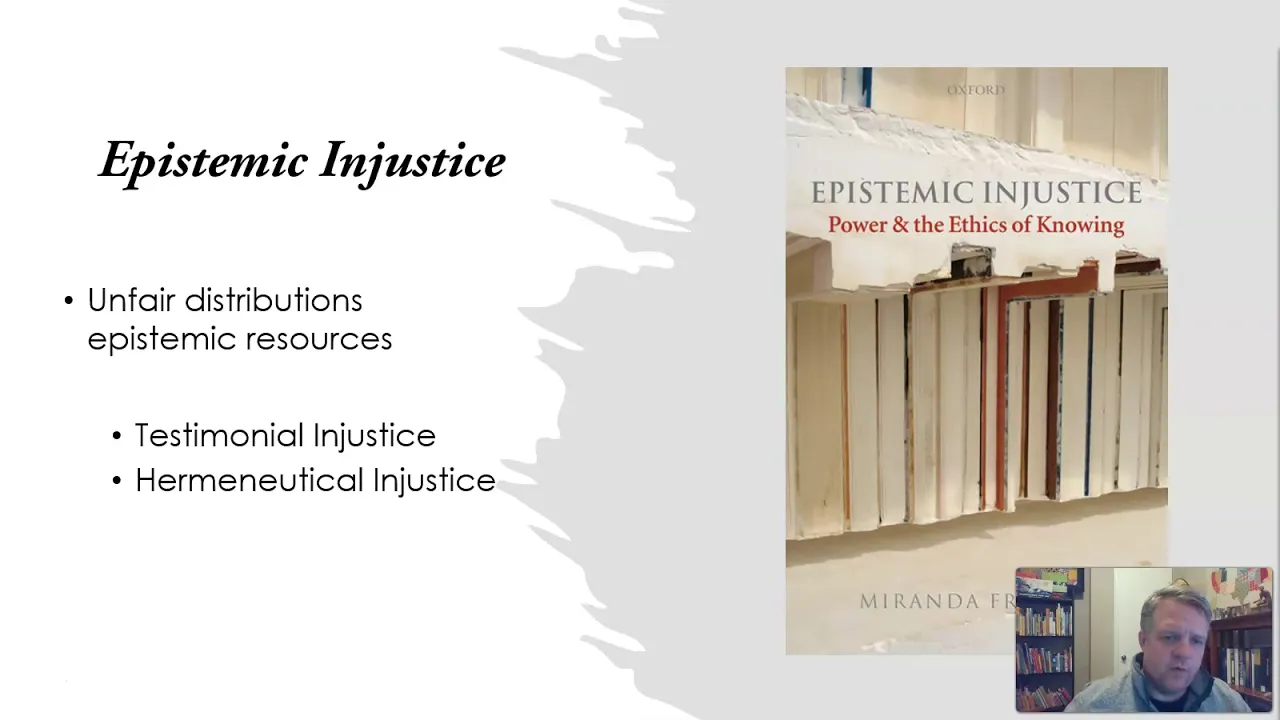






Epistemic injustice, a concept pioneered by philosopher Miranda Fricker, encompasses two forms of unfairness related to knowledge: testimonial injustice, where individuals are unfairly judged for their credibility based on prejudiced attitudes toward their identity rather than the content of their testimony; and hermeneutical injustice, where marginalized populations face unfairness in interpreting their own experiences due to the absence of appropriate terminology and shared language, often resulting from institutional exclusion of these groups from shaping language and discourse.
Epistemic Injustice Explained: Testimonial & Hermeneutical Forms
Added:Basic Epistemology: Understanding the philosophical study of knowledge, truth, belief, and justification.
The Philosophy of Testimony: Knowing how knowledge is acquired and transmitted through the assertions and reports of others.
Social Power and Prejudice: Awareness of how systemic biases (such as racism, sexism, and classism) influence social perceptions of credibility.
Hermeneutics: A foundational understanding of how humans interpret and construct meaning through language and shared cultural concepts.
Epistemic Virtue: Exploring Miranda Fricker's proposed solutions, such as developing the virtues of testimonial and hermeneutical justice.
Applied Epistemic Injustice: Studying how these concepts manifest in real-world institutions, particularly in healthcare (e.g., dismissing patient pain) and the legal system (e.g., witness credibility biases).
Epistemic Oppression and Willful Ignorance: Investigating advanced frameworks by scholars like Kristie Dotson and José Medina on how dominant groups actively maintain ignorance.
Credibility Excess: Analyzing the reverse phenomenon where dominant social groups are granted unwarranted epistemic authority and its societal consequences.
5.8K views61likes3:53Original Release: 2020-11-09
academy for social change presents miranda fricker's epistemic injustice zion is a black student in a predominantly white school he is incredibly smart and he is in an advanced math class with students older than him whenever the teacher asks a question to the class zion is one of the first to raise his hand and he almost always knows the correct answer however the teacher only calls on zion when he is the only student to raise his hand often encouraging other classmates to answer before finally calling on him she then asks other students to confirm zion's answer which does not do when someone else responds zion is a victim of epistemic injustice a concept broadly defined as unfairness related to knowledge despite possessing vast knowledge of the course material zion has not granted equal opportunity to showcase that knowledge simply because of the person he is a subject pioneered by philosopher miranda fricker epistemic injustice comes in two forms testimonial injustice and hermeneutical injustice testimonial injustice refers to unfairness and lending credibility to someone's word often due to prejudicial attitudes towards their identity people sometimes take someone's opinions less seriously simply because of the person they are for example a business manager might disregard a female employee suggestions because he's biased against women or sports team might select a white player to be their captain or a black player because the coach holds racist attitudes in most testimonial injustices the speaker is no less credible than the listeners they are unfairly judged because of the listener's biases hermeneutical injustice refers to unfairness in how people interpret the experiences and events in their lives it is not easy to adequately convey thoughts and feelings without shared languages to express them a lack of terminology thus leads to a lack of internal and external understanding fricker identifies that the institutions which shape our language and its spread such as journalism and academia routinely exclude marginalized populations thus she argues the vocabulary to comprehend these communities is extremely limited contributing to further hermeneutical injustices fricker offers an illustrative example of the term sexual harassment which only came into popular use in the 1970s before that people who were sexually harassed did not have a category for these experiences understanding and then communicating their experiences was unfairly difficult which made it especially challenging to address the issue at hand the concept of epidemic injustice is thought to have been introduced as early as the mid to late 1800s by black female intellectuals who recognize the social inequalities between themselves and white people the term epistemic injustice was not coined until 2007 by english philosopher miranda fricker who today is the most prominent scholar on the topic prickler dedicates much of her work to epistemic injustice for women who experience diminished capacity as knowers in a male-dominated society other populations that are subject to increase epistemic injustice include racial minorities and the lgbtq plus community epistemic injustice is a specific form of the inequalities ingrained in society today it is born from long-standing prejudices against marginalized populations such as women racial minorities and religious minorities epidemic injustice is damaging to the individual victims and to society at large people who are not given credibility for their thoughts or discouraged from sharing their opinions in the future valuable information becomes irrevocably lost similarly without the proper words to describe experiences how do we identify and address suffering or normalize essential identities for these reasons it is vital to recognize epistemic injustices and encourage marginalized individuals to share their knowledge these injustices can lead to lasting harm actors in the criminal justice system need to consider epistemic justice or risk letting their personal biases lead to unfair and unjust punishment epidemic injustices occur in the classroom workplace and countless other settings so we must be aware of it and promote marginalized voices now it's your time to think further have you ever inflicted epistemic injustice upon another person or witnessed it occurring how would you handle that situation differently now
Up Next
94:35
Hermeneutical Injustice & Disability Pride | Elizabeth Barnes
@OSUCEHV
6.7K views•2015-05-09

164:01
John of Damascus on Holy Images: A Theological Defense
@BannedBooks
139 views•2026-04-25

68:32
Should We Destroy the Machines? Big Tech Surveillance Critique
@TheStoriesWeTell303
167.9K views•2025-11-30
4:57
The Myth of Sisyphus: A Greek Legend of Eternal Punishment
@TEDEd
8.6M views•2018-11-13
Related Study Plans & Knowledge Roadmaps
Structured learning paths in Philosophy
philosophy
Frankfurt School: Critical Theory & Culture
01Foundations of the Frankfurt School and Critical Theory
02Horkheimer & Adorno: The Critique of Instrumental Reason
03The Culture Industry and Mass Deception
+ 2 more learning modules
12h5 modules
Explore Roadmap
philosophy
Philosophy of Language: From Frege to Austin
01The Linguistic Turn: An Introduction to Language in Philosophy
02Gottlob Frege: Sense and Reference
03Early Wittgenstein: The Picture Theory of Meaning
+ 3 more learning modules
15h6 modules
Explore Roadmap
philosophy
Feminist Epistemology: Standpoint & Injustice
01Introduction to Epistemology and Feminist Critiques
02Sandra Harding and Standpoint Theory
03Donna Haraway and Situated Knowledges
+ 2 more learning modules
12h5 modules
Explore Roadmap
philosophy
Environmental Philosophy: Ethics & Deep Ecology
01Foundations of Environmental Ethics & Anthropocentrism
02Biocentric Individualism and Animal Liberation
03Ecocentric Holism and Deep Ecology
+ 1 more learning modules
10h4 modules
Explore Roadmap