




![[공감]사회복지조사론(1장-2)-사회복지사1급 2026년 제24회 시험 대비](https://i.ytimg.com/vi/yw0PGU7vO14/maxresdefault.jpg)
![#패러다임 개념 처음 제시한 책, 과학사의 지적 파장은? [#토마스쿤 #과학혁명의구조] #네이버열린연단](https://i.ytimg.com/vi/Lml9B4gRcS4/maxresdefault.jpg)






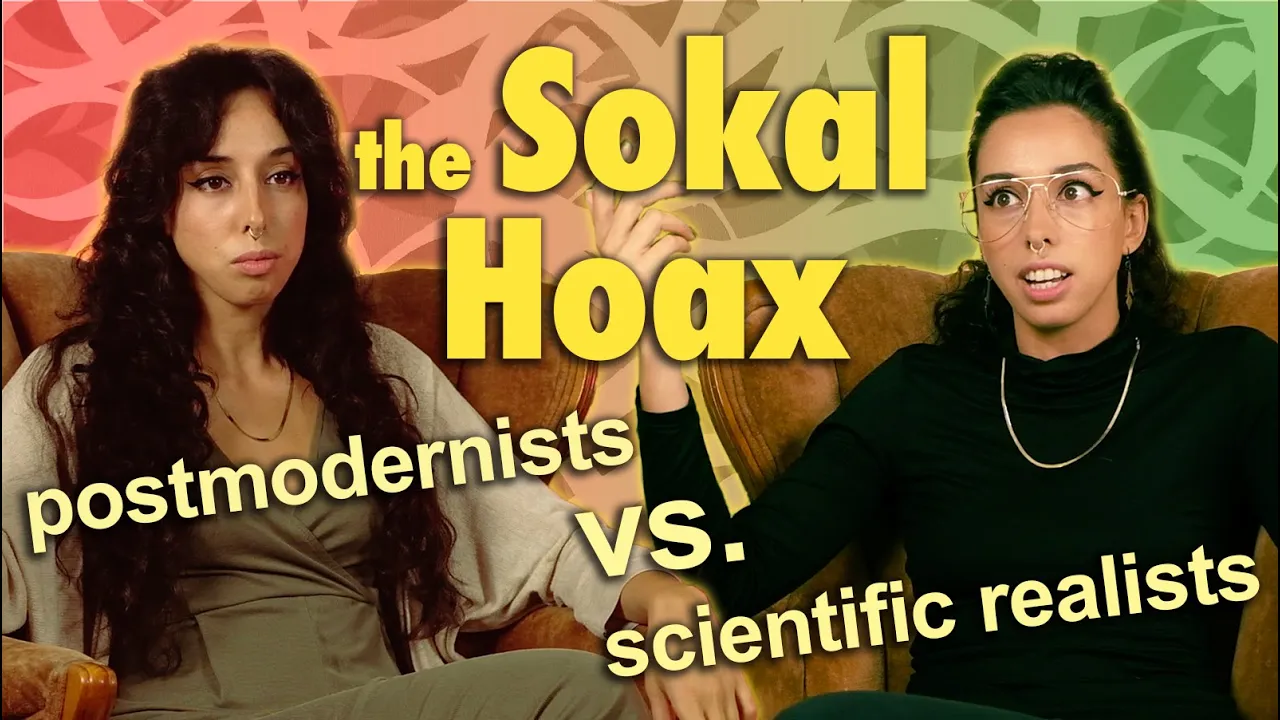



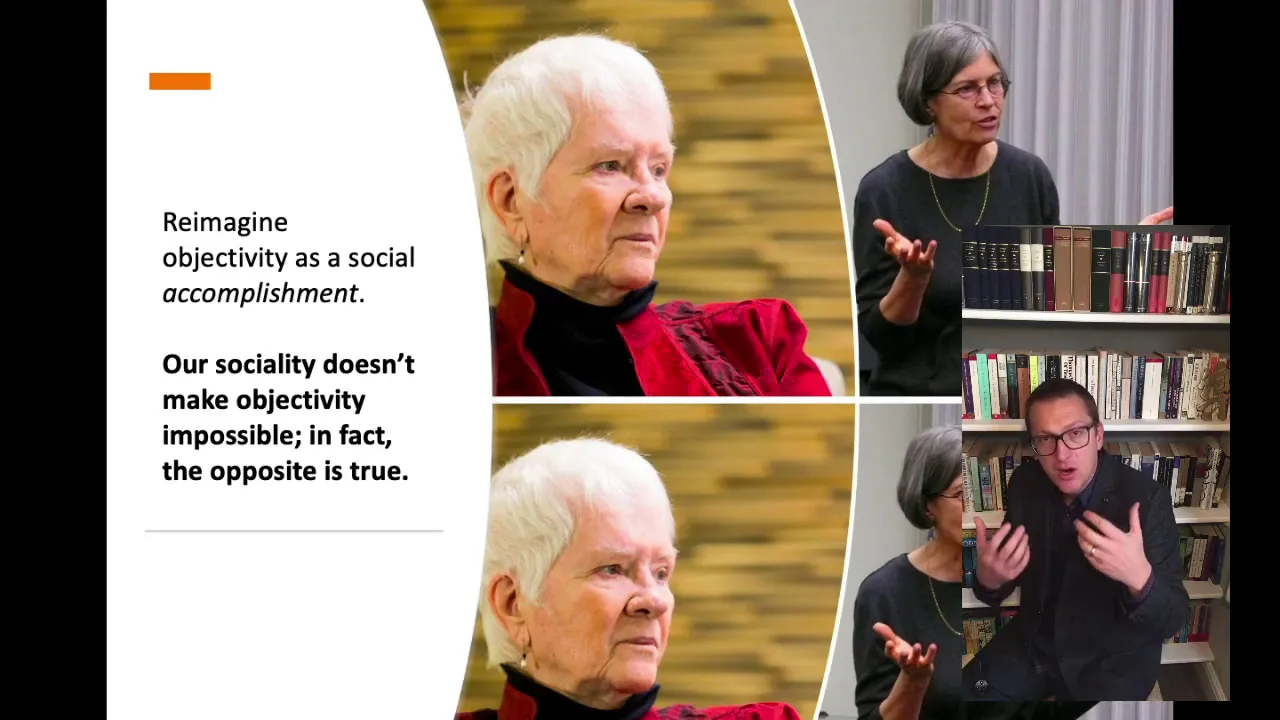


















Feminist epistemology, particularly as developed by Sandra Harding, challenges the traditional notion of objective scientific knowledge by arguing that scientific research is fundamentally shaped by the socially embedded biases of scientists, particularly sexist and patriarchal values; this perspective, drawing on Thomas Kuhn's theory of paradigm shifts and Willard Quine's underdetermination thesis, contends that observations are always theory-laden and that different social groups possess distinct epistemic standpoints, ultimately serving as a template for broader radical constructivist approaches that question the possibility of disinterested scientific inquiry.
Sandra Harding and Feminist Epistemology in the Science Wars
Added:The traditional scientific method and the concept of scientific objectivity (value-free inquiry).
The basics of social constructivism, including Thomas Kuhn's theory of scientific revolutions and paradigm shifts.
An introduction to feminist philosophy and the critique of male bias in historical intellectual traditions.
An overview of the 'Science Wars' of the 1990s, particularly the debate between scientific realists and postmodern critics.
Deep exploration of Sandra Harding's concept of 'Strong Objectivity' and Standpoint Theory.
Comparative analysis of Donna Haraway’s theory of 'Situated Knowledges' versus radical constructivism.
Application of feminist epistemology to postcolonial science studies and global knowledge systems.
Analyzing contemporary debates on public trust in science, expertise, and democratic participation in scientific policy.
A critical comparison of the three main branches of feminist epistemology: feminist empiricism, standpoint theory, and postmodernism.
58.8K views3.8Klikes25:02Original Release: 2017-05-12
[Music] 20 [Applause] 15 10 9 8 7 6 5 4 3 2 1 [Music] [Music] clicks on the phone I cannot help you cu by [Music] World call in R true through wi swn open stes SES Deni all paragraph 5 [Music] subsection the commit is count count to live in rest rest [Music] [Music] [Music] [Music] [Music] in this first volume overviewing the history of the science Wars we're going to be focusing on the theories of knowledge the epistemologies of radical constructivists we will begin with a close examination of feminist epistemology which in addition to having been developed prior to the other epistemologies relevant to the science Wars served as their template into which all of them would eventually be integrated I will elaborate on what this means shortly before I begin I want to offer the disclaimer that this volume is not intended to be a polemic against women's rights and should not be taken as such by the end of the 1980s radical constructivists had already colonized most of the humanities creating an intellectual environment in which the Notions of shared Universal values ninal real and objective historical facts were broadly viewed at best as philosophically naive and at worst as oppressive meta narratives literature departments taught their students to deconstruct Dickens in order to find traces of colonialist conceit history departments taught their students that all mainstream historical claims exist only to justify the current state of affairs and art departments taught their students that the only permissible conflict is the conflict between good and best having successfully colonized one culture the radical constructivists turned their attention to the other one this is where our Story begins in understanding feminist epistemology and the claims that it makes one may have a greater understanding of what provoked the science Wars whicher generally agreed to have started in 1994 it was during this year that the biologist Paul gross and the mathematician Norman levit published higher Superstition which exposed and castigated the radical constructivists a significant portion of their book was dedicated to to the reproach of feminist criticisms of science which is a central activity partaken by feminist epistemologists as we move forward with this series the motivation behind my decision to begin this analysis with feminist epistemology will become increasingly evident the denial of the possibility of objective scientific research whose results are not the product of a scientist's socially embedded sexist biases is what lies at the heart of contemporary feminist epistemology the Chief Architect of this theory of knowledge is Sandra Harding the first and most important thing to take note of when it comes to Harding is that she like other feminist epistemologists believe that scientists bring the dominant values of a misogynistic and patriarchal society into the laboratory and that the results they produce encode those sexist values when the research gets published it carries those coded values and institutionally legitimizes them as facts she justifies her beliefs in these propositions chiefly via the invocation of two philosophical authorities in the philosophy of science whose View use Harding appropriates in order to meet her own ends they are the physicist and philosopher Thomas cun and the philosopher Willard Quin Thomas khun is most famous for his 1962 book the structure of scientific revolutions where he puts forth the view that scientific theories evolve holistically rather than peacemeal that is to say scientific progress isn't made by changes to individual components of existing theories but by the reconceptualization of entire theories what this means is that the progress from Newtonian to einsteinian physics was not achieved step by step with every step logically and inevitably producing relativity rather the Newtonian framework constituted the normal science for a period of time being used to solve the puzzles that interested the scientists of the day however there eventually arose anomalies like that of the procession of Mercury's orbit and the conceptual inadequacy of action at a distance a crisis transpired as attempts to negotiate the details of the old framework continued to fail for instance in order to resolve the Paradox of Mercury's orbit Newtonian scientists searched in vain for a small planet near Mercury that might be causing the perturbations then came the revolution Einstein introduced space-time curvature as a function of mass energy and the associated equations explain the perturbations in Mercury's orbit though at first this met with some resistance the theory eventually proved its value during the solar eclipse of 1919 when the light from Stars Behind the eclipsed sun appeared to change position because the curvature of space caused by the sun's enormous Mass bent the incoming light rays and did so to the exact extent that Einstein's equations predicted when this was confirmed he immediately became a celebrity the physics Community then switched to general relativity crowning it as the best theory of gravity and K suggests discarded Newtonian mechanics there was an old Newtonian Paradigm which constituted normal science the normal science experienced a crisis when it encountered anomalous situations a relativistic revolution transpired and relativity became the New Normal science cun claims that this is the general pattern of scientific progress but that because science textbooks are intended to teach the next generation of scientists how to solve problems within the current Paradigm they don't learn about the stops and dead ends of scientific inquiry they learn a kind of wig History of Science in which progress is linear and guaranteed K also argues that scientific paradigms are incommensurable it is impossible to describe general relativity using Newtonian mechanics and in general different paradigms are incomprehensible within the context of previous and subsequent paradigms also present in K's work is the notion that all observations are done within the context of a particular Paradigm scientific observations are never made under some methodological isolation they are always interpreted in the light of the background assumptions that scientific theories come with I'll expand on this in a moment when I talk about Quin the philosopher Willard Quin was known among many other things for his underdetermination thesis which is closely related to the notion of theory Laden observations two different hypotheses could in principle account for the same phenomenon despite having completely different mutually incompatible background assumptions the newtonians of the 19th century who witnessed Mercury's anomalous orbit didn't interpret their observations in the context of curvatures in SpaceTime since that Paradigm didn't come around until the early 20th century they interpreted the data in the light of Newtonian physics which is what compelled them to search for the disruptive Planet but suppose that the Earth had no moon and therefore no solar eclipses how would physicists have decided which theoretical framework to accept would they continue searching for the missing Planet forever would they just take it on faith that Einstein's theory was correct this is what Quin referred to when he talked about under determination taken together cuns and quin's work suggest that theory selection by the scientific Enterprise is not necessarily A clear-cut Matter there is no standard protocol for deciding whether one underdetermined hypothesis is better than another one or whether a particular background assumption should be discarded in order to account for certain anomalies this is where radical constructivists jump in and take these ideas to an unwarranted extreme people like Sandra Harding use these ideas to argue that science is fundamentally Valu Laden reflecting the dominant culture in which it is situated and not necessarily giving any objective account of reality observations having been made by a person who is socialized within a racist sexist society are not just Theory Laden but also value Laden they are made within the context of a scientific Paradigm whose details reflect the whims of the scientists who subscribe to it and the subsequent observations that are made are infected by bias yet again this time by the bigoted paradigms invented by bigoted scientists one might think that such a hopeless picture of the state of scientific knowledge would lead radical constructivists to stay away from something as obviously flawed and hypocritical as the scientific Enterprise but science as far as they're concerned comes with the authority to make knowledge claims it can lead the masses to believe whatever it claims to be true and this has political value better to co-opt the scientific Enterprise to incorporate it into your vision so that like a Ministry of propaganda scientists will Proclaim whatever facts happen to fall in line with your political Vision so that you can socialize people with whatever values the scientific Enterprise helps to legitimate it's simply a matter of hijacking science and using its bully pulpit in order to achieve your goals the objective of the feminist epistemologist therefore is not necessarily to devise a theory that eliminates androcentric bias but to eliminate science's pretentions to disinterested inquiry and to encourage it to embrace a plurality of biases rather than the male one that it ostensibly disguises with a verer of objectivity the feminist epistemologist thus believes that there is such a thing as male science which in content and application brings about an oppressive State of Affairs and that in opposition to it there is such a thing as female science which in content and application yields emancipatory outcomes put into these terms feminist epistemology is a very clear manifestation of contemporary lysenkoism from 1929 to 1964 the Soviet agricultural scientist trofim lenko dominated biology both in terms of its curricula at the Soviet universities and in terms of its practical application on the fields of the peasant farmers lysenko and his followers demarcated science into two main groups in a bras pseudo science which existed to impose his fascistic will onto the proletariat and an emancipatory Soviet science which championed the good of the peasantry the things that lenko identified as bis science included natural selection mandelian inheritance and even the existence of genes and chromosomes which he and his followers decried as mere boura constructs lysenko held to a laran view of biological systems combined with stalinist ideology and the folk theories of peasants one might say their lived experiences his entire view of biology was dominated by ideological considerations instead of natural selection he believed in natural cooperation between living systems instead of descent with modification he believed in the heritability of acquired characteristics and instead of the gradualism contained within evolutionary theory lysenko believed in Revolutionary leaps which in effect amounted to the transmutation of plant species this included Promises of the spontaneous trans formation of weeds into Rye Rye into wheat and wheat into barley an idea so stupid that even Kirk Cameron and his beloved crocoduck would blush of course anybody who contradicted lysenko was accused of being an agent for international Fascism and was summarily sent to the goog if not shot outright needless to say when lysenko's pseudoscientific policies were put into effect during Stalin's 5-year plans and Sherman mau's Great Leap Forward massive crop failures immediately followed and 50 million people start to death all because of this one man so with all of this in mind let us now examine in Greater detail a contemporary form of lysenkoism in her 1986 book The Science question and feminism Harding outlines three approaches to feminist epistemology the most important one is standpoint Theory which she describes thusly the feminist standpoint originates in hegel's thinking about the relationship between the master and the slave and in the elaboration of this analysis in the writings of marks angles and the Hungarian Marxist theorist G lucak briefly this proposal argues that men's dominating position in social life results in partial and perverse understandings whereas women's subjugated position provides the possibility of more complete and less perverse understandings feminism and the women's movement provide the theory and motivation for inquiry and political struggle that can transform the perspective of women into a standpoint a morally and scientifically preferable grounding for our interpretations and explanations of Nature and social life the feminist critiques of Social and natural science whether expressed by women or by men are grounded in the Universal features of women's experience as understood from the perspective of feminism now the takeaway from this is that men and women are socialized into a hegelian Master Slave relationship which forces women to live in a man's world men not living in a woman's world have access only to a man's point of view however women in addition to having a female point of view have also been imbued with the male point of view by virtue of their being situated within a male centered Society they therefore have double vision and are capable of seeing things that men do not women do not realize their ability to do this until they become introduced to Sandra Harding's particular flavor of feminism then once they realize the truth of their circumstances and their ability to see double they gain feminist Consciousness which imbus them with the capacity to self-actualize and produce their own version of knowledge which is more objective and less distorted than the knowledge produced by men men are not capable of directly accessing this know know because it manifests phenomenologically in the form of first person lived experience and it only presents itself to the oppressed to the slave therefore the only way for men to acquire this knowledge is to uncritically accept the anecdotal testimonies of women they are to listen and believe the dream of standpoint theorists is to have enough people with feminist Consciousness enter into the stem Fields acquire phds and publish research that legitimates the feminist perspective somewhat hilariously in her 1991 book who science whose knowledge Harding calls this strong objectivity in contrast to the weak objectivity that scientists arrogantly presume to have her kind of objectivity is stronger than the actual kind because it incorporates everyone's biases not just one groups so far it appears as though Harding isn't interested in the acquisition of scientific knowledge so much as she's interested in using science to legitimize her political views it's as though she believes that ultimately science is Po ICS by other means noticing how transparent her motives must appear she goes on to say that standpoint Theory isn't likely to be given a warm welcome by the scientific Community those wedded to empiricism will be loathed to commit themselves to the belief that the social identity of the Observer can be a strategically important variable in the potential objectivity of research results strategically this is a less convincing explanation for the greater adequacy claims for all but the already convinced it is particularly unlikely to appear plaus to Natural scientists or natural science enthusiasts but standpoint theory is only one of three epistemic approaches that Harding describes another one is called feminist empiricism feminist empiricism may appear at first glance to be a benign variant of empiricism that happens to be particularly conscious of sexist bias and scientific research as Harding says feminist empiricism argues that sexism and androcentrism are social biases correctable by stricter adherence to the existing methodological norms forms of scientific inquiry I happen to agree the application of safeguards such as double blinding peer review and meta analysis tend to eliminate assertions that are unsupported by evidence including those that happen to be sexist if this was all that there was to feminist empiricism if the motivation behind its development was merely to root out bad science I'd have no problem with it in fact I would embrace it but alas Harding continues it is easier to gain acceptance of feminist claims through this kind of argument for it ident identifies only bad science as the problem not science as usual from this sentence it becomes clear that Harding's Target isn't just bad science but all of science additionally what she appears to be advocating is some sort of subterfuge where feminist empiricism dishonestly presents itself to Outsiders as an improved version of empiricism that'll be even more Adept at rooting out bad science she goes on its considerable strategic Advantage however often leads its Defenders to overlook the fact that the femin empiricist solution in fact deeply subverts empiricism the social identity of The Inquirer is supposed to be irrelevant to the goodness of the results of research scientific method is supposed to be capable of eliminating any biases due to the fact that individual researchers are wider black Chinese or French men or women but feminist empiricism argues that women or feminists whether men or women as a group are more likely to produce unbiased and objective results than are men or non-feminists as a group it appears then that feminist empiricism is nothing more than standpoint feminism in empiricist drag it's a trojan horse designed to infiltrate the scientific Enterprise by taking advantage of everybody else's good intentions gross and levit may have fired the first shot in the science Wars but they were by no means unprovoked before we get to post-modern feminism which is the third and Final epistemic Approach that Harding offers it's worth mentioning that she tries to preemptively rebut the charge that her epistemologist is relativistic or anti-scientific because this would require her to acknowledge that sexist beliefs have just as much epistemic value as non-sexist beliefs and that of course is ridiculous unfortunately for her however this seems to be nothing but lip service and special pleading everything she has written up to this point indicates that science in her view merely serves to legitimize whatever political views its practitioners happen to Harbor she writes after all that the science question critiques appear skeptical that we can locate anything more morally and politically worth redeeming or reforming in the scientific world view its underlying epistemology or the practices these legitimate worse she favorably quotes the postmodern feminist Jane flax perhaps reality can have a structure only from the falsely universalizing perspective of the master that is only to the extent that one person or group can dominate the whole can reality appear to be governed by one set of rules or be constituted by one privileged set of social social relations this flagrant denial of a common reality which science is able to accurately describe is quoted in service of Harding's criticisms of what she sees a standpoint Theory's only major shortcoming because women are very diverse coming from a range of racial socioeconomic and National backgrounds the feminist standpoint alone is incapable of accounting for their lived experiences similar standpoints are required to account for the Master Slave relationships of straits and gays whites and blacks sis and trans and so on because the category of woman can be divided in so many different ways and because of its social and historical contingency the very notion of woman is destabilized this is where post-modern feminism comes in by acknowledging all of these different categories of wom and by expressing skepticism in the objective existence of these categories one has led to a kind of feminism where every category is socially constructed within a Master Slave dialectic each category slaves or oppressed are endowed by virtue of their lived experiences with double vision each category's Masters or oppressors have only a myopic Consciousness and can acquire the double vision of the oppressed can acquire their strong objectivity if and only if they listen and believe this postmodern approach thus serves to generalize standpoint Theory to all categories of the oppressed multiplying the anti-science contained within standpoint Theory by the number of oppressed identities and providing an epistemological framework for a grand unified theory of Oppression as we will see in a future video this anti-science epistemology would come to serve as the basis for the dominant sociopolitical Paradigm of the entire Progressive left we will return to Sandra Harding then after we trace the development of this Paradigm across Afrocentric and queer scholarship until then do not underestimate the influence that this person has had I'm not just picking on her for no good reason Sandra Harding's relevance to both the science Wars of the 9s and the political landscape of today cannot be overstated and dit for the damage that her work is capable of inflicting when you ignore the protests of your biologists against the diletant who's forcing his crackpot ideas on them just so that you can feel secure in the hope that science vindicates your ideology there are going to be consequences when you bypass safety protocols and vainly ignore the warnings of your engineer years in order to adhere to a wildly optimistic launch schedule so that you can secure more Public Funding and support there are going to be consequences when you slander the researchers whose work you feel ideologically threatened by and effectively become an obstacle to the work that they do to help those who you pretend to stand for there are going to be consequences in the next video we're going to critically examine some of the work of the feminist epistemologist Evelyn Fox Keller we're going to examine and great Gater detail the charge that science represents a uniquely masculine way of thinking which Keller takes to be at least partly responsible for the deficit of women and stem we'll join her on her journey through the psychoanalysis of scientific literature in order to contrive some narrative that proves that science itself is sexist and when she analyzes the work of a female Nobel laurate we will discover whether or not uniquely feminine patterns of thinking really do have the potential to bring about fruitful scientific results see you then if you enjoyed this video give it a like to help the YouTube algorithms spread it around more if you really enjoyed it share it on your social media Platforms in order to help it spread even further if you're not subscribed yet go ahead and do so and be sure to hit the Bell next to the red button so that my videos will appear in your subscription feed and finally if you've got a few extra bucks and feel like supporting my work here go ahead and pay a visit to my patreon linked at the bottom of the description box and I'll add your name to the end credits of future videos until next time KY out
Up Next

7:59
Thomas Nagel's View From Nowhere: Visual Metaphors and Objectivity
@conferencereport
4K views•2008-11-01

164:01
John of Damascus on Holy Images: A Theological Defense
@BannedBooks
139 views•2026-04-25

68:32
Should We Destroy the Machines? Big Tech Surveillance Critique
@TheStoriesWeTell303
167.9K views•2025-11-30
4:57
The Myth of Sisyphus: A Greek Legend of Eternal Punishment
@TEDEd
8.6M views•2018-11-13
Related Study Plans & Knowledge Roadmaps
Structured learning paths in Philosophy
philosophy
Frankfurt School: Critical Theory & Culture
01Foundations of the Frankfurt School and Critical Theory
02Horkheimer & Adorno: The Critique of Instrumental Reason
03The Culture Industry and Mass Deception
+ 2 more learning modules
12h5 modules
Explore Roadmap
philosophy
Philosophy of Language: From Frege to Austin
01The Linguistic Turn: An Introduction to Language in Philosophy
02Gottlob Frege: Sense and Reference
03Early Wittgenstein: The Picture Theory of Meaning
+ 3 more learning modules
15h6 modules
Explore Roadmap
philosophy
Feminist Epistemology: Standpoint & Injustice
01Introduction to Epistemology and Feminist Critiques
02Sandra Harding and Standpoint Theory
03Donna Haraway and Situated Knowledges
+ 2 more learning modules
12h5 modules
Explore Roadmap
philosophy
Environmental Philosophy: Ethics & Deep Ecology
01Foundations of Environmental Ethics & Anthropocentrism
02Biocentric Individualism and Animal Liberation
03Ecocentric Holism and Deep Ecology
+ 1 more learning modules
10h4 modules
Explore Roadmap