

















![Герменевтическая несправедливость | В гостях Михаил Хорт [S01:E93]](https://i.ytimg.com/vi_webp/HCuX7P2FUkw/maxresdefault.webp)











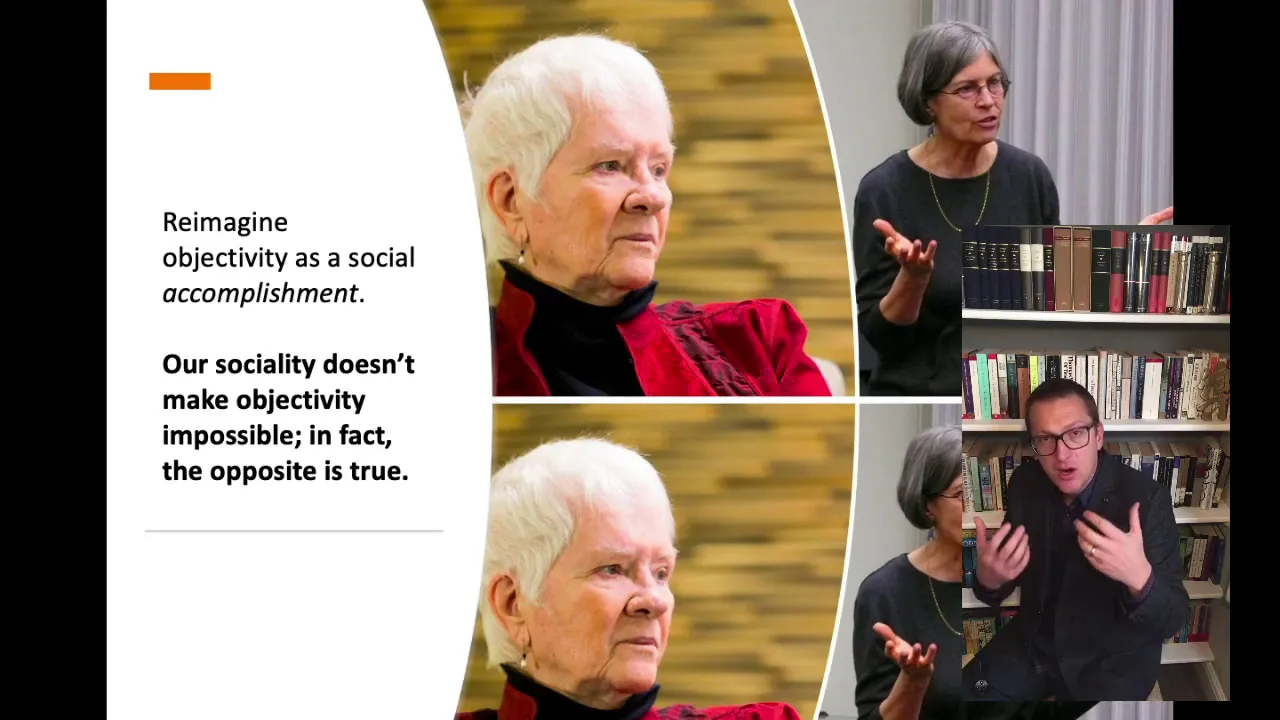

Feminist epistemology challenges traditional knowledge production by critiquing positivism's male-centric, value-free research methods that exclude women and create hierarchical researcher-researched relationships; it proposes alternative approaches like feminist empiricism (including women in research samples), standpoint epistemology (valuing marginalized perspectives and lived experiences), and feminist postmodernism (recognizing intersectional differences based on caste, class, and ethnicity) to produce more inclusive and politically engaged knowledge that serves social change.
Feminist Approaches to Epistemology: A Comprehensive Guide
Added:Basic Epistemology: Understanding traditional theories of knowledge, truth, justification, and belief.
Scientific Positivism: Familiarity with the philosophical assertion that authentic knowledge is solely scientific, value-free, and objective.
Foundational Feminist Theory: Awareness of basic concepts of gender as a social construct and how patriarchal power dynamics function in society.
The Traditional Concept of Objectivity: Understanding the 'view from nowhere' or the ideal of detached, neutral scientific observation.
Epistemic Injustice: Investigating Miranda Fricker's concepts of testimonial and hermeneutical injustice in real-world institutions.
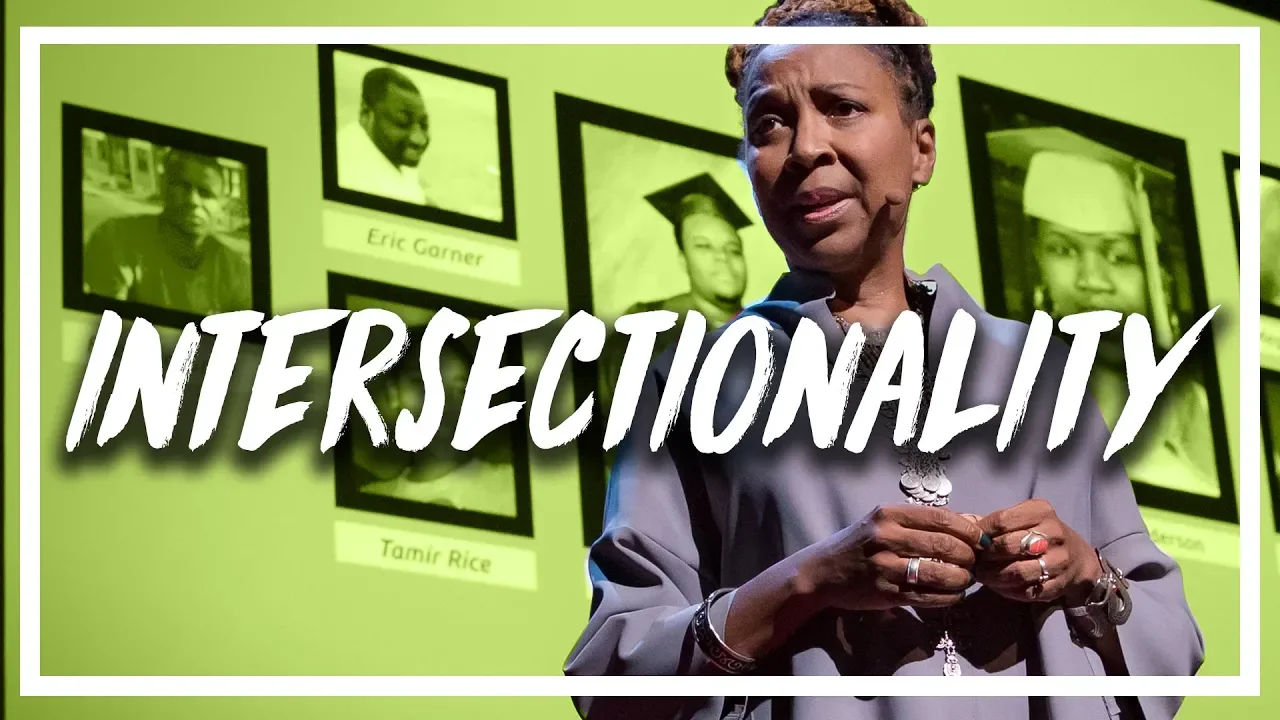
Intersectionality in Epistemology: Exploring how race, class, and other social categories intersect with gender to shape knowledge, such as through Black Feminist Epistemology.
Feminist Empiricism vs. Feminist Postmodernism: Analyzing the debates and differences between different schools of feminist epistemological thought.
Feminist Philosophy of Science: Examining practical case studies of bias and reform in scientific methodologies, clinical research, and data collection.
4.2K views77likes24:34Original Release: 2019-02-12
[Music] [Applause] [Music] [Applause] [Music] friends welcome to EPG part shala i am dr. Prashant kethry assistant professor Department of Anthropology University of Allahabad and today I am going to speak on the issue of feminist approaches to epistemology now to begin with to start with the feminist approaches to epistemology now to begin with before we begin to understand various feminist approaches to epistemology it would be worth to understand what we mean by epistemology in simple terms epistemology is the study of various ways of knowing the world around us through epistemology we try to understand that how we know what we know epistemology may be defined as the science of knowing further epistemology is the study of how we know things epistemology includes philosophical debates on how we ought to know it also includes scientific ways about knowing the world around us at another level epistemology deals with knowing the truth that what is true the central question is what constitutes truth and how as a researcher one is able to reach truth so in this small figure or diagram or or a cartoon you see that a person is going towards the truth so how we reach the truth or how we reach the knowledge is actually what epistemology is all about epistemology is also defined as differing understandings of the nature of knowledge and truth thus there are several ways of knowing a researcher can subscribe to rationalism or empiricism or she may subscribe to the ideology of positivism or interpretivism to begin with let us see what rationalism is rationalism assumes that the best way of knowing is through your own capacity of reasoning rationalists are of the view that there are a priori truths in other words truth already exists around us and in order to know the truth we just need to take help of reason through reasoning we can reach truth that already exists so what is required is to train our minds in such a way that we reach truth the second epistemology is of empiricism now opposing rationalism is the philosophy of empiricism empiricism puts emphasis not on reason but on human experience it says that we are able to know things and events that we are exposed to this suggests that there is no absolute truth we may know something to an extent we are exposed to it and different people are exposed to different kinds of experiences rationalism on the other hand suggests that absolute truths can be gained through reason then the epistemology of positivism the epistemology of positivism owes its origin in st. Simone and its development in Auguste Comte the epistemology of positivism focused on the development of scientific laws for explaining phenomena this way of knowing the social world in social sciences was aimed at making social sciences just like the other physical sciences of the day so there you can see the photograph of Auguste Comte who is known as the father of positive philosophy however there was a reaction against positivism in social sciences that tried to project a different epistle ecology to understand social realities in the counter-revolution of science Frederick von hayek laid out the case against the possibility of what Ogburn imagined would be a science of humanity in the social sciences Hayek said we deal with mental phenomena not with material facts now with all this background we are now coming to that how feminists approach epistemology and what they have to add and they have to say about the epistemology and what different epistemologies they come up with other ways of knowing they come up with to begin with feminists critiqued positivism and with the critique of positivism there was an emergence of feminist empiricism so positivism was a more quantitative epistemology in its scope and it tried to be more exact accurate and measurable in its approach this was criticized by feminists for being intro centric that is male centered as it ignored and overlooked the viewpoint of women during the second wave of feminism it was realized that surveys conducted under various researches and surveys were one of the instruments of how positive philosophy is applied the field because surveys can get you data that are measurable that you can measure you can take out the frequencies of how many percentage of people are saying what so it is more measurable more trying to be more accurate exact so surveys conducted under various researches had only males as their respondents and females were completely overlooked so this was realized as women they are not part of the research samples a skewed understanding of the social phenomena went largely unnoticed it is the fundamental aim of positivism to extract realities and establish laws that are governing the society it is also mandated under positivism that a value free research should be conducted that will not involve the personal choices and attributes of the researcher so just like in the case of Natural Sciences where we deal with the matter where we can be more objective in dealing with the matter in dealing with the material similarly the kind that kind of objectivity was also the aim of positivism in social sciences and that is the meaning of being value free researcher such a research agenda advocates that personal biases and prejudices have no place in an objective inquiry however this research agenda has been criticized by the feminists they contend and they say that while dealing with humans society it is rather quite impossible to have complete objectivity you cannot have complete objectivity when you are dealing with human beings this is because human beings are influenced by their own socio historical backgrounds so you cannot treat human beings just like matter this happens right from the time we go for selecting a research topic and extends well into the phases of data collection and its analysis if one claims to be a value-free researcher as it is done in positivism then it also means that the researcher is claiming to be different from the researched and this sets a kind of hierarchy between the two between the researcher and researched the person who is researching and the person who is researching on the other feminists were against such a hierarchy in research and advocated for abandoning such kind of objectivity that creates a hierarchy because in this way this kind of an objectivity if through positivism we try to gain objectivity in this way by being value free by being detached from the from the researched the person on which we are going to research so it is more like it is more like being a sage being assad who who is who is seen things from the from above ok so this is and this creates a hierarchy that means a researcher is on a higher pedestrian and the researched is on a lower pedestrian so further criticizing positivism it is argued that feminist scholars and researchers illumination of the men's experiences disrupted the positivist claim to universal knowledge and the so called objective methodologies that accompanied and justified that claim indeed feminists exposed the dominance of the positivist paradigm as stemming not from its objectivity or its universality but from its privileged location within a historical material and social set of patriarchal power relations the epistemological orientation of feminist research began with a criticism of positivism however positivism was not abundant completely even within the feminist research frame researchers began by including women in the research samples and taking up researches on specific topics that were relevant to women issues this approach has been called by the name ad women and still approach however you can't just add them in and state so there were problems in this also so this will be taken care of in the further epistemologies that are developed in the feminist research and so we come to the feminist standpoint epistemology the standpoint approach also advocated that the researcher from a disempowered category has an edge in conducting research on other disempowered people even though she is privileged in being able to conduct the research at all she carried with her the consciousness of her own operation within her home society thus the researcher in the marginalized category develops a kind of double consciousness that permits insight into the kinds of power relations that might be oppressing the people whom she studies the standpoint epistemology is unique in itself because it tries to see the social reality from the eyes of oppressed women this is achieved through the method of documenting the lived experiences of women the knowledge gained in such a manner is then used to bring about social change so the standpoint epistemology is more inclined towards understanding the lived experiences of the women so more generally if you if you want to see standpoint epistemology it is like I am taking a stand point I am standing for someone so it is also a more more political kind of an epistemology here you are abandoning claims to neutrality and you are saying look I'm standing for something because feminism is for something so feminist research is also for something for ameliorating the conditions of women for bringing about some kind of a change and that can only happen and that change in the lives of the women in the lives of the people who have been oppressed for a very long period of time and that can only happen when when a person speaks from their point now before the standpoint approach emerged the academic text had an authoritative tonality in this way of writing the author or the researcher presented her arguments in an authoritative voice projecting command over the subject of research and the people or community who were the focus of research this Authority is the result of the positivistic epistemology this situation however changed in these standpoint epistemology as it called for projecting situatedness and positionality of the researcher or the author in the entire research process and while writing the text so while doing the research I am situated somewhere I am situated in this social milieu I am situated in a in a milieu of gender towards one side I am taking a position so there is a positionality in it and also while writing I am also taking care of all these issues so if one wants to conduct a feminist research according to standpoint epistemology then one is bound to take a particular viewpoint and has to take side of the marginalized and as I said for researchers subscribing to this epistemology the research becomes a political Enterprise so now this bleeds us to another episode on og that there is the feminist post-modernism this emerges when it is realized that gender is not a homogeneous category and therefore experiences related to a heterogeneous category like gender are bound to different gender experiences differ on the basis of ethnicity race caste class region etcetera thus women's experiences cannot be homogenized generalized and universalized feminist post-modernism criticized the existence of white feminism as the only form of feminism as a critical theory post-modernism is anti foundational feminists critique the entire critique the earlier version of gendered approach and feminism as they considered it to be a reflection of the dominant female worldview of white women so within feminism you have a criticism that feminism represented one kind of women other epistemological orientations were criticized for laying emphasis on the lived experiences of only some women and in doing so they left the lived experiences of those who can be differentiated on the basis of caste class religion region etc feminist post-modernism talks about creating knowledge on gender experiences rather than discovering it they are more interested in knowing that how gender is negotiated within a given context how association with a particular caste class race ethnicity etcetera influence the category of male and female in a given society and how dominant patriarchal viewpoints are generated through these discourses but there is also a critique of feminist post-modernism that says that within the feminist discourse at a conceptual level both feminism and post-modernism act as antithesis to each other there lies an underlying conflict between the feminist movement and postmodern philosophy feminism strives for creating a political identity of women it tries to address an end women oppression through identity politics on the other hand what potent post-modernism is doing it tries to deconstruct the category of women itself as being falsely totalizing so it divides women within from within on the basis of ethnicity race caste class so to some feminists it is diluting the political agenda of feminism itself so this is the critique of feminist post-modernism so to conclude in the context of the above debate it is clear that there are competing epistemology within the feminist research practice these epistemologies influence the kind of method of data collection and analysis it will be false to state that a researcher should choose or she has to choose one out of the above-mentioned epistemology is for her research no researcher can do that a researcher is guided more by her research questions it can be said that to answer different questions in a research a researcher can subscribe to different philosophically shishun's epistemology will also be governed by the larger academic subject under which research is being conducted by subscribing to standpoint and postmodern epistemology x' feminist scholars have produced different methodologies for data collection for example cree ding group Diaries drama as a new method of data collection consciousness-raising genealogy and network tracking conversations etc there is a scope for creating many more different methods and ways of knowing in feminist research so with this I come to an end of the presentation thank you very much for listening you
Up Next
104:51
Feminist Epistemology: Knowledge, Power, and Social Justice
@thephilosophyproject_
3.2K views•2021-04-17

164:01
John of Damascus on Holy Images: A Theological Defense
@BannedBooks
139 views•2026-04-25

68:32
Should We Destroy the Machines? Big Tech Surveillance Critique
@TheStoriesWeTell303
167.9K views•2025-11-30
4:57
The Myth of Sisyphus: A Greek Legend of Eternal Punishment
@TEDEd
8.6M views•2018-11-13
Related Study Plans & Knowledge Roadmaps
Structured learning paths in Philosophy
philosophy
Frankfurt School: Critical Theory & Culture
01Foundations of the Frankfurt School and Critical Theory
02Horkheimer & Adorno: The Critique of Instrumental Reason
03The Culture Industry and Mass Deception
+ 2 more learning modules
12h5 modules
Explore Roadmap
philosophy
Philosophy of Language: From Frege to Austin
01The Linguistic Turn: An Introduction to Language in Philosophy
02Gottlob Frege: Sense and Reference
03Early Wittgenstein: The Picture Theory of Meaning
+ 3 more learning modules
15h6 modules
Explore Roadmap
philosophy
Feminist Epistemology: Standpoint & Injustice
01Introduction to Epistemology and Feminist Critiques
02Sandra Harding and Standpoint Theory
03Donna Haraway and Situated Knowledges
+ 2 more learning modules
12h5 modules
Explore Roadmap
philosophy
Environmental Philosophy: Ethics & Deep Ecology
01Foundations of Environmental Ethics & Anthropocentrism
02Biocentric Individualism and Animal Liberation
03Ecocentric Holism and Deep Ecology
+ 1 more learning modules
10h4 modules
Explore Roadmap