







![Ciencia y paradigmas según Thomas Kuhn (Introducción a la Epistemología) [UNLaM]](https://i.ytimg.com/vi/vc7UDLPB6Fs/maxresdefault.jpg)








![Debating Standpoint Theory | Daniel Kaufman & Crispin Sartwell [Sophia]](https://i.ytimg.com/vi/u1VYeNju0UM/maxresdefault.jpg)



![[UFMS Digital] (Multi)Letramentos Decoloniais Translíngues - Módulo 2](https://i.ytimg.com/vi_webp/gAEXwTezNWc/maxresdefault.webp)




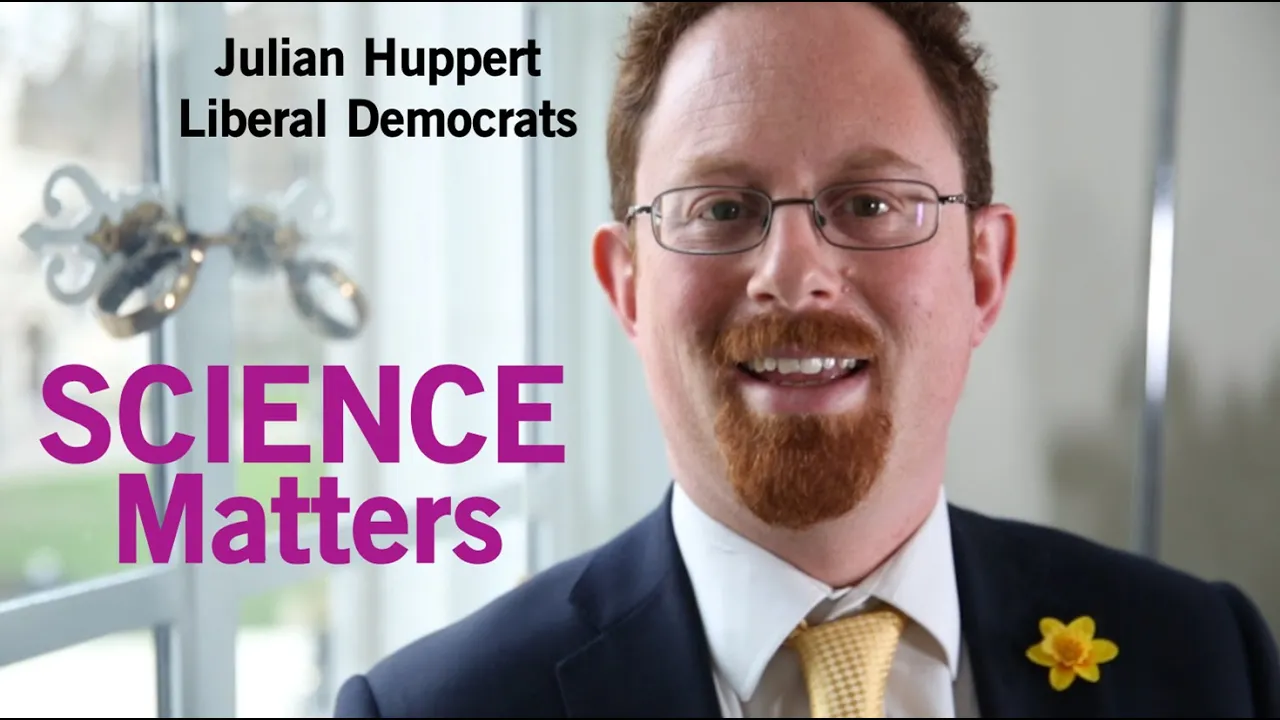


Feminist philosophers of science, particularly Sandra Harding and Helen Longino, argue that objectivity is not an individual trait but a social achievement that requires diverse research communities; they distinguish between weak objectivity (produced by homogeneous scientific communities that exclude marginalized perspectives and produce biased theories like eugenics) and strong objectivity (achieved through diversity of standpoint where different social positions, beliefs, values, and life experiences contribute to more comprehensive and accurate knowledge).
Strong Objectivity in Science: Harding & Longino Explained
Added:Traditional Scientific Objectivity: Understanding the 'value-free ideal' in science and the standard view of scientific inquiry as purely neutral and value-free.
Introduction to Epistemology: Familiarity with basic philosophical concepts of what constitutes knowledge, belief justification, and the role of the knower.
Social Epistemology and Thomas Kuhn: The understanding that scientific knowledge is produced by communities and shaped by social, historical, and cultural paradigms.
Basic Concepts of Feminist Theory: An awareness of how gender biases and social power dynamics historically influence academic and institutional structures.
Donna Haraway's 'Situated Knowledges': Exploring the closely related concept of embodied objectivity and how it challenges the 'god trick' of infinite vision.
Case Studies in Feminist Science: Investigating real-world scientific fields (e.g., primatology, cardiovascular medicine, archaeology) that were corrected or improved by introducing feminist standpoints.
Philosophical Critiques of Standpoint Theory: Analyzing common objections, such as the charge of cognitive relativism or the difficulty of defining authentic marginalized standpoints.
Decolonial and Indigenous Epistemologies: Extending the study of diverse standpoints to include non-Western, subaltern, and indigenous ways of knowing.
Democratic Science and Public Policy: Exploring how institutions can practically structure scientific funding, peer review, and research agendas to integrate diverse social values responsibly.
3.9K views75likes9:09Original Release: 2020-11-28
[Applause] [Music] okay so it's at this point that a rescues gets to the real hero of her narrative or maybe i should say the heroine of her narrative namely social epistemology and in particular feminist philosophy of science she says in the 1960s feminist philosophers of science asked how can science produce disinterested knowledge when so many of its theories are embedded in racist classist and ethnic social prejudices okay so this is a really interesting episode in the history of philosophy and in the history of philosophy of science i think because it shows you something that often happens which is that the people who are most sort of vulnerable to the way a concept has been misused actually end up developing the concept in incredibly productive ways what i mean by that is that if you look at the history of science prejudices against women and against minority groups have been sort of embedded in this claim that oh you know we're not being partial we're not being prejudiced we're not being unfair to you in any way we're just making claims that are objective women are such and such people of other races are such and such so this pretense of objectivity made a group of philosophers particularly interested in what a kind of positive notion of objectivity could be once you strip away all of these sort of problematic uses of the concept so two of the leading lights in this research were sandra harding and helen longino represented here both longino and harding made an effort to reimagine objectivity as a social accomplishment so there you see the kind of social epistemological approach coming in the problem they think is that objectivity has been linked to individuals we saw that in popper right he talked about the kind of character of the scientist the scientist is this really hard-nosed rationalist who just sort of you know sticks to it and is hard-headed and so forth and what they're saying is that no objectivity doesn't happen at the site of the individual researcher the individual researcher is caught up in all kinds of social forces that even though he's hard-headed and really sticks to the facts and so on the sort of social character of those prejudices is going to distort his experience of the world and so they argue that objectivity actually is a social process it's a social achievement it's achieved through the social character and procedures of scientific inquiry our sociality they argue doesn't mean that objectivity is impossible so that's a claim that you often hear we're sort of social creatures and we have all these social prejudices and they get in the way of us being objective and they're not saying that there's no sense in which that happens but they're saying that ultimately our social nature is what makes genuine objectivity possible so it's an interesting argument so one of the things that sandra harding is famous for developing is this notion of standpoint epistemology now this idea traces back to marxist theory to put it simply the idea is that how we view matters depends to a great extent on our social position so the position you occupy in the social world and your relative advantages and disadvantage and so on deeply shapes the way you understand and experience the world so our personal experiences of privilege or disadvantage maleness or femaleness heteronormativity or queerness disability or able-bodiedness influence our perspectives on and our interpretations of the world so all things being equal and this is kind of the core idea behind this notion that objectivity is a social achievement all things being equal a more diverse research community will bring to bear more perspectives on an issue than a less diverse one and when you bring to bear more perspectives on the issue you make the shared perspective that the social totality of the scientific research community has more objective so this leads to sandra harding's very influential distinction between weak objectivity and strong objectivity objectivity practiced by most scientific communities harding argues is weak because of the community's homogeneity for the vast majority of the history of science the scientific community left out the perspectives of women people of color the working classes and many other groups basically it left out the perspective of the vast majority of humanity and lo and behold we find that sexist racist and classist theories emerge from those communities i asked you to read in this book pages 87 to 104 which is a kind of case study of when science can go bad and it talks about the history of eugenics and how the theory of eugenics really got developed in in america and this led to mass sterilization of people with mental disabilities and that the kind of grotesque eugenic theory that was developed in the united states got picked up by the germans some of the american sort of eugenicist scientists were personal heroes for adolf hitler so it's a really interesting discussion that a rescues offers and i hope that you'll look at it but what harding is saying is that kind of theory never would have gotten off the ground if the scientific community weren't just a bunch of old white dudes if the scientific community had all along been diverse a kind of grotesque and simplistic and stupid theory like eugenics never would have gotten off the ground why because you would you would have been standing in a research community with people who didn't look just like you and share your perspective on your own superiority and they would have said well interesting theory bob but that's totally obviously false look around you but that kind of thing couldn't happen because the research community was completely homogeneous and so if like sandra harding you think of objectivity as being a social achievement you would see a homogeneous community like that as one that was sort of characterized by weak objectivity because it's not bringing to bear all the relevant perspectives on the questions that are being researched so strong objectivity is essentially this idea that there's strength and diversity diversity of standpoint the standpoints that i was talking about earlier your standpoint including your beliefs values and life experiences those things affect your work they affect how you see the world they affect the kind of research that you're interested in so the best way to develop objective knowledge is to increase the diversity of knowledge seeking communities so that's a core claim that harding and longino developed and that has been really influential in feminist philosophy of science but then ultimately in philosophy of science in general and it's a very important idea right now it's having a lot of impact so the idea here is that objectivity is not a binary proposition it's not a zero or one it's not like oh you're objective or you're not objective objectivity is a continuum phenomenon it's something that's achieved in social communities and you can have more of it or less of it so it comes in degrees you can have more and less objective research communities and the idea is that the greater a community's diversity the better it's shot at achieving objectivity just to give you a couple of quick examples of how diversity can lead to greater objectivity in primatology for a long time they thought that only male apes tried to have sex with multiple female partners whereas female apes would just sort of attach to one male and try to have kids with him and raise those kids then more women entered the field of primatology and they said that's not true actually female apes are interested in having sex with multiple other apes too another interesting one that you often hear is this idea that in hunter-gatherer societies men hunted and women gathered sometimes you'll even hear these people with a background in evolutionary psychology say well this is why men are interested in things and they want to be engineers and why women are interested in people and you know they want to go into the care professions it's because you know women historically in terms of our evolutionary development were out there in groups gathering and gossiping and talking to each other and men were out there on the savannah trying to hunt well there's recent evidence that that's false and that women hunted too and i'll link to the study that suggests that that was false but you know i think the flavor of these examples is pretty straightforward once you diversify a research community you get people with different perspectives and different interests who are going to look at the world in a different way and are going to study different different facets of that world and so make different discoveries and thereby increase the objectivity of the research community okay so take another break and we'll come back and talk about helen longino
Up Next
58:38
Ep. 293: Donna Haraway on Situated Knowledges & Feminist Science
@ThePartiallyExaminedLife
9K views•2022-05-09

164:01
John of Damascus on Holy Images: A Theological Defense
@BannedBooks
139 views•2026-04-25

68:32
Should We Destroy the Machines? Big Tech Surveillance Critique
@TheStoriesWeTell303
167.9K views•2025-11-30
4:57
The Myth of Sisyphus: A Greek Legend of Eternal Punishment
@TEDEd
8.6M views•2018-11-13
Related Study Plans & Knowledge Roadmaps
Structured learning paths in Philosophy
philosophy
Frankfurt School: Critical Theory & Culture
01Foundations of the Frankfurt School and Critical Theory
02Horkheimer & Adorno: The Critique of Instrumental Reason
03The Culture Industry and Mass Deception
+ 2 more learning modules
12h5 modules
Explore Roadmap
philosophy
Philosophy of Language: From Frege to Austin
01The Linguistic Turn: An Introduction to Language in Philosophy
02Gottlob Frege: Sense and Reference
03Early Wittgenstein: The Picture Theory of Meaning
+ 3 more learning modules
15h6 modules
Explore Roadmap
philosophy
Feminist Epistemology: Standpoint & Injustice
01Introduction to Epistemology and Feminist Critiques
02Sandra Harding and Standpoint Theory
03Donna Haraway and Situated Knowledges
+ 2 more learning modules
12h5 modules
Explore Roadmap
philosophy
Environmental Philosophy: Ethics & Deep Ecology
01Foundations of Environmental Ethics & Anthropocentrism
02Biocentric Individualism and Animal Liberation
03Ecocentric Holism and Deep Ecology
+ 1 more learning modules
10h4 modules
Explore Roadmap