
















Philosophy, originating in ancient Greece around 500 BCE, is the systematic study of fundamental questions about reality, knowledge, and values; it comprises three main branches—metaphysics (examining the nature of reality and existence), epistemology (investigating how we acquire knowledge and what constitutes truth), and value theory (encompassing ethics, which studies how humans should live, and aesthetics, which examines beauty and art)—supported by logic as the analytical tool for reasoning and argumentation.
Philosophy Explained: Origins, Metaphysics, Epistemology & Value Theory
Added:A basic historical awareness of Ancient Greece and its transition from mythological explanations (mythos) to rational explanations (logos).
The general definition of philosophy as an academic discipline centered on critical questioning, reasoning, and conceptual analysis.
An understanding of what constitutes an argument, specifically the difference between holding an opinion and providing reasoned premises to support a conclusion.
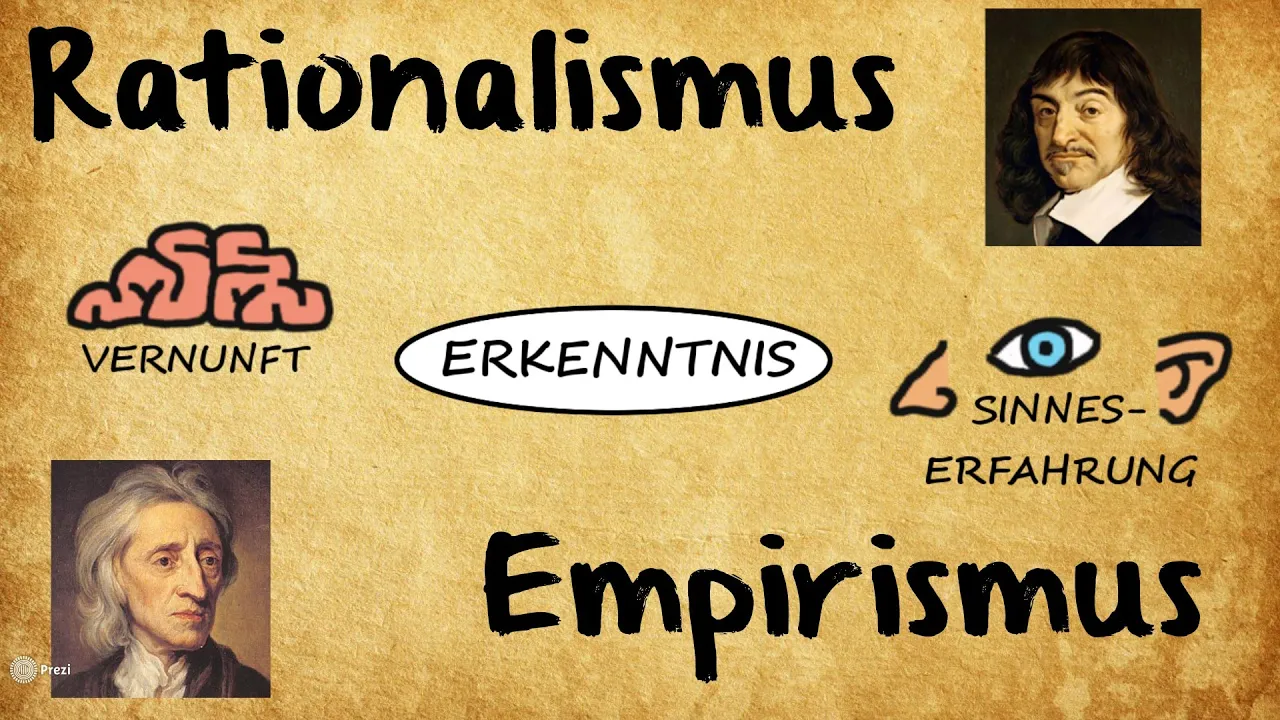
An in-depth study of Epistemology, specifically comparing Rationalism (e.g., Descartes) and Empiricism (e.g., Locke and Hume) regarding the source of human knowledge.
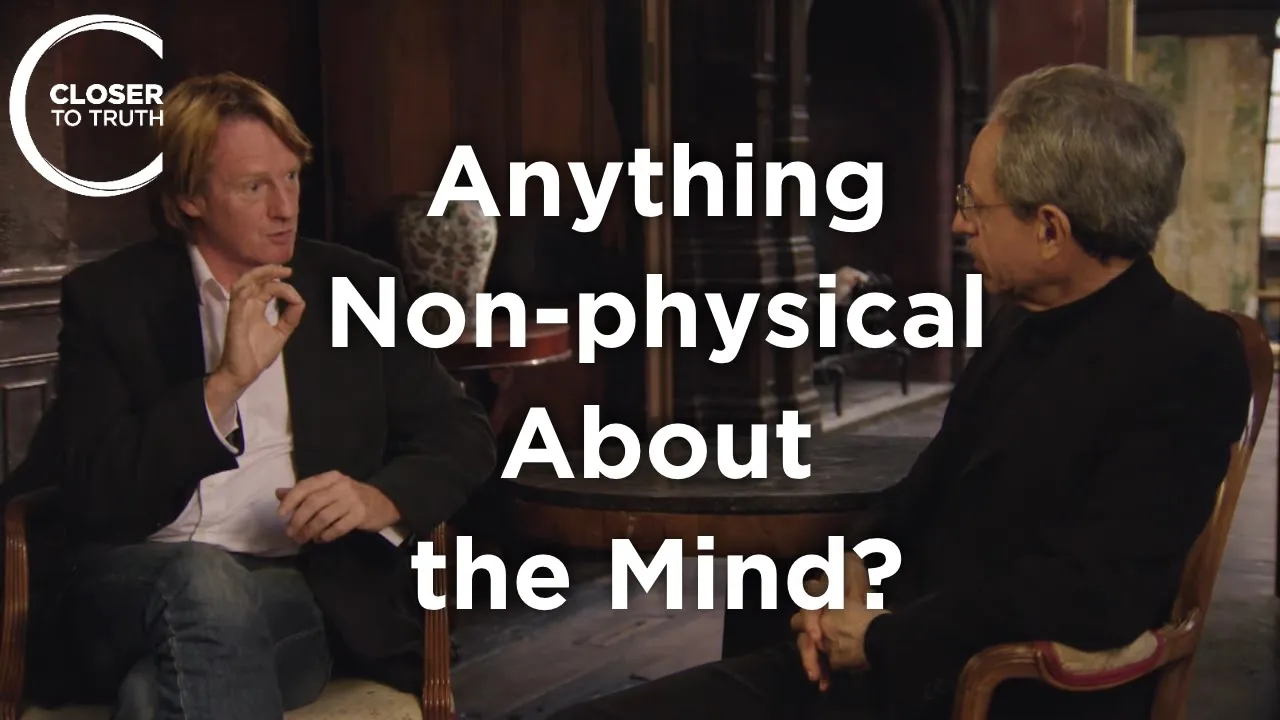
Exploring Metaphysics through the mind-body problem, investigating dualism, physicalism, and the nature of consciousness.
Applying Value Theory to contemporary issues by studying normative ethical frameworks like Utilitarianism, Deontology, and Virtue Ethics.
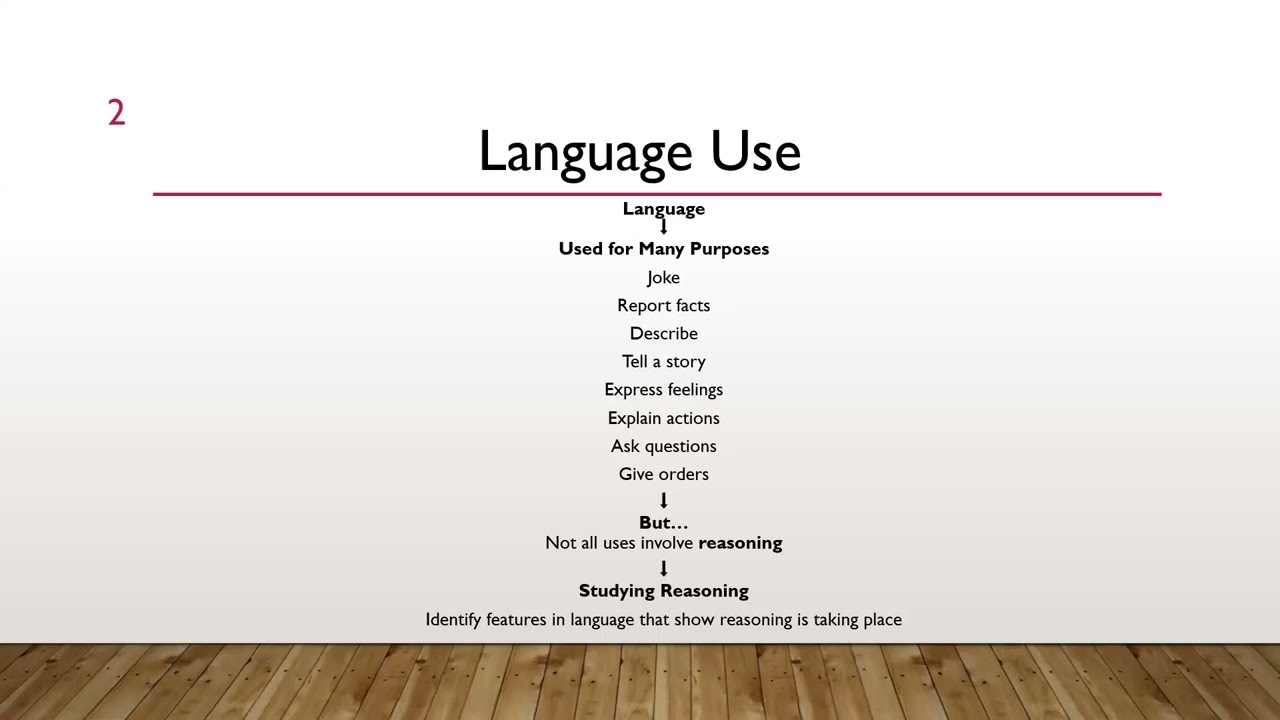
Mastering the fundamentals of Formal and Informal Logic, including identifying common logical fallacies and constructing valid syllogisms.
8.1M views154Klikes10:35Original Release: 2016-02-08
Crash Course Philosophy is brought to you by Squarespace.
Squarespace: share your passion with the world.
I’m Hank Green, and you and I are about to embark on a journey.
A journey of inquiry, into the whole world. Your world.
In an effort to figure out: what gives it meaning, what makes it beautiful, where its evils come from, and ultimately, what is the very nature of reality itself.
And along the way, we’re going to question every aspect of your own personal life -- why you do what you do, why you think what you think, why you feel what you feel.
Now, if you’ve joined me on Crash Course before, you might say, we’ve learned about all that stuff before -- in psychology, and biology, and anatomy and physiology.
And it’s true: Science can definitely help us understand our thoughts, feelings, and actions.
But on this particular journey, we’re going to be exploring aspects of the human condition that can’t be explained only by hormones or neurotransmitters, by personal experiences or hereditary conditions.
Because, all of those chemicals and experiences that make us who we are, can actually raise as many questions as they answer.
Like, if all of my decisions really are just the result of, say, how I was raised, and what chemicals I have flowing in my brain, then are any of my choices actually free?
And if I’m not truly free to make my own decisions, or choose my own actions, then how can I be held accountable for them?
Yeah. It’s going to be that kind of journey.
Rather than just looking at the world and describing what we see, we’ll be evaluating it.
We will take nothing as a given, set our assumptions aside -- or at least, try really hard to -- and do our best to see the world as if we’ve never seen it before.
And for what it’s worth, we’ll also be talking about Batman, and what Dick Grayson can teach us about the concept of identity.
And we’ll learn how The Matrix can you help understand the life and writing of Rene Descartes.
Also we’ll try to answer unanswerable questions, and puzzle over paradoxes that have plagued geniuses for thousands of years.
It’s going to be hard, and enlightening, and frustrating, and if I do my job properly, it’ll stick with you long after you and I have parted ways. Because: We are going to do…philosophy!
[Theme Music] These days, people use the word “philosophy” to describe some opinion they might have, or the approach they take to a certain topic.
Like, you might have a “philosophy” when it comes to golf. Though...I personally do not.
But we’re going to use this word more narrowly, to describe a way of approaching the world that traces its roots back to ancient Greece, 500 years before the Common Era.
This was a time of great intellectual movement around the world. Buddhism and Jainism were developing in Asia, at the same time philosophical thought was emerging in Greece.
There, scholars were tangled up in a distinction they were just beginning to make -- between philos and mythos – or what we’d now roughly call science and storytelling.
At that time, there were bards, like Homer, who were trying to understand and explain the world through stories, while the earliest philosophers were using methods that were more analytical and scientific -- although they didn’t really have the concept of “science” back then.
So philosophia – literally "the love of wisdom" – was a new way of trying to make sense of the world.
When the earliest philosophers used the word “philosophy,” they basically meant, “the academic study of anything.” Which, like, I guess could include golf.
But at what we might call the first universities in the western world – Plato’s Academy, and its rival, Aristotle’s Lyceum — math, biology, physics, poetry, political science, and astronomy were all considered to be philosophy.
Eventually, scholars began thinking of these fields differently -- as separate disciplines.
Studies that had strong empirical elements came to be considered science -- a search for answers.
But philosophy came to be understood more as a way of thinking about questions. Big questions.
And today, twenty-five hundred years after the ancient Greeks first brought them up, philosophers still love asking questions -- oftentimes, the same questions -- and they don’t mind that they never get an answer.
So. What are these big questions that have managed to intrigue -- and stump -- philosophers for so long?
One of the first might best be phrased as: What is the world like?
Sounds simple enough to answer, right Like, just look around! See all the stuff?
Well, this is what the world is like.
But the philosophical approach isn’t just based on observation -- it has other, much more complex questions packed inside it.
When a philosopher wonders what the world is like, she might really be asking: What’s the nature of reality?
Like, is the world just made up of matter and energy, or is there something else going on?
And if it is just matter and energy, then where did it all come from? Is there a God?
And if so, what is he, she, or it like?
And for that matter, when you’re asking about the world, can you also be asking about the nature of yourself, as a citizen of the world.
So…what kind of being am I?
Do I have a soul? Is there something immaterial about me that will survive after I die?
All of these questions are ways of exploring what philosophers call metaphysics -- one of the three main branches of philosophy -- an effort to understand the fundamental nature of the world, of the universe, and of being.
Now, if those questions aren’t heady enough for you, we, as students of philosophy, also have a whole separate set of questions, that are about how we know the answers to any of this stuff.
This particular strain of philosophy, which is like knowing about knowing, is epistemology -- literally the study of knowledge -- the second major field of philosophy.
And it poses questions like: Is the world really what I think it is?
Like, really, is everything I see and think and experience…is it actually…true?
If it isn’t, then, what is true? And what’s the best way to go about figuring out the truth? Is science the best way?
Or are there more ethereal paths to Truth, paths that science can never really travel?
And let’s say that, after a lot of searching and question-asking, I begin to develop some ideas -- an inkling about what might be true.
Then…how do I know if I’m right? How will I ever know I’m wrong?
Can I ever be certain about anything?!
Now, at this point I wouldn’t blame you if you’re thinking: “Am I real?” “Do I...do I know anything?” Well, as questions go, these might not seem super…practical.
But there’s another area of philosophy that helps frame your thinking around what you actually do -- like, how you should act, and what you should attach meaning to.
It’s called Value Theory. And it’s usually divided into two main branches. The first is Ethics.
You’ve heard of it -- it’s the thing that politicians are always said to lack? And Jedi are supposed to have in great supply? Though, don’t get me started on the prequels.
In philosophy, though, ethics isn’t just a code of what’s right and what’s wrong.
It’s the study of how humans should live with each other.
Rather than just sitting around and judging people, ethics involves posing questions like: How should I live?
Is there any reason that I should treat, say, strangers differently than the people I love?
And for that matter, do I owe anything to myself? What about animals? Or the earth?
And if I do have any of these obligations at all, where do they come from? Who says?
Ultimately, whatever system you use to decide what’s good or evil, as human behavior goes, is determined by your values -- that’s why ethics is considered part of Value Theory.
But the other part of value theory isn’t about what’s right -- it’s about what’s beautiful.
Aesthetics is the study of beauty, and art.
Now, the concept of beauty is talked about practically everywhere, from the media, to art school to barber college.
But for philosophers, the pursuit of aesthetics involves considering what beauty is, and whether it even exists.
Aesthetics is a part of value theory, because beauty, and art, are things we value, and evaluate. And many people who study this particular kind of philosophy -- known as aestheticians -- believe there is such as thing as The Beautiful -- something that doesn’t depend on what you happen to find attractive, but something that’s just objectively true.
And finally, there’s one more aspect of philosophy that I should mention, because it doesn’t ask questions, so much as help us find answers. Yes, finally, some answers!
And that thing, which I happen to think can be beautiful in its own way, is logic.
Logic is the philosopher’s toolbox. It contains the saws and hammers, the microscopes and beakers, that philosophers use to go about answering their questions in a clear, systematic way.
Logic is about reasoning, giving strong arguments that don’t fall victim to fallacies, which are, as you’ll learn, the mortal enemies of philosophical precision.
Ok, so metaphysics, epistemology, value theory -- they might all seem pretty airy and abstract.
But don’t worry, because you have already done philosophy, even though you might not realize it.
You do it in almost every aspect of your life.
Every time you argue with your parents, or wonder if you should date someone, or decide to eat a salad instead of a ham ‘n’ cheese Hot Pocket, you are doing philosophy.
Because you’re thinking about the world, and your place in it. You’re figuring out what you value, why you value it, and what you should do about it.
So here’s our plan. We’re going to learn about the major fields of philosophy, posing questions and considering possible answers along the way. And each time, we will use a two-step method.
First, we’ll really try to understand.
You’re not going to agree with all of the ideas that I present to you – and I won’t agree with them either! That’s not the point. The point, in step one, is to really try to get inside of an idea – to understand it as charitably as possible.
Then, in step two, you’ll subject your understanding to some serious critical evaluation – basically, you’ll try to knock down what you think you know about a particular view of the world.
And you’ll do this whether you agree with the view or not.
Why? Because: Only when you challenge your understanding of how some people view the world, can you decide for yourself if theirs is a view worth having.
Which leads me to my final point: Philosophy is not your usual field of study.
I’m not going to be teaching you a body of knowledge where success means you know a bunch of stuff.
Success, in this course, will mean that you know how to think.
All we have are questions. And all you have is a brain. And the goal of philosophy is for you to use your brain to come up with the answers that make the most sense to you.
You’ll learn how to formulate arguments to support your ideas, so you can explain why you think you’re right.
Which, if you’ve ever been on the Internet, you know is something that not a lot of people are good at.
In order to do that, you’re going to need to understand philosophical reasoning – the tools we use to investigate life’s most perplexing questions! And that is where we’re gonna be headed the next time we meet.
For now you’ve learned about the historical origins of philosophy in ancient Greece, and its three main divisions: metaphysics, epistemology, and value theory. We also talked about logic, and how you’re going to use it to understand and critically evaluate a whole host of different worldviews.
But not about golf.
This episode of Crash Course Philosophy is made possible by Squarespace. Squarespace is a way to create a website, blog or online store for you and your ideas. Squarespace features a user-friendly interface, costume templates and 24/7 customer support. Try Squarespace at squarespace.com/crashcourse for a special offer.
Crash Course Philosophy is produced in association with PBS Digital Studios. You can head over to their channel to check out some amazing shows like The Good Stuff, PBS Space Time, and Physics Girl.
This episode of Crash Course was filmed in the Doctor Cheryl C. Kinney Crash Course Studio with the help of these amazing people and our Graphics Team is Thought Cafe.
Up Next

18:36
Sandra Harding on Standpoint Theory: History & Controversies
@villanovauniversity
74.4K views•2016-05-04

164:01
John of Damascus on Holy Images: A Theological Defense
@BannedBooks
139 views•2026-04-25
9:20
How Can We Talk About Nonexistent Objects? | Philosophy
@crashcourse
872.8K views•2016-09-27
4:57
The Myth of Sisyphus: A Greek Legend of Eternal Punishment
@TEDEd
8.6M views•2018-11-13
Related Study Plans & Knowledge Roadmaps
Structured learning paths in Philosophy
philosophy
Frankfurt School: Critical Theory & Culture
01Foundations of the Frankfurt School and Critical Theory
02Horkheimer & Adorno: The Critique of Instrumental Reason
03The Culture Industry and Mass Deception
+ 2 more learning modules
12h5 modules
Explore Roadmap
philosophy
Philosophy of Language: From Frege to Austin
01The Linguistic Turn: An Introduction to Language in Philosophy
02Gottlob Frege: Sense and Reference
03Early Wittgenstein: The Picture Theory of Meaning
+ 3 more learning modules
15h6 modules
Explore Roadmap
philosophy
Feminist Epistemology: Standpoint & Injustice
01Introduction to Epistemology and Feminist Critiques
02Sandra Harding and Standpoint Theory
03Donna Haraway and Situated Knowledges
+ 2 more learning modules
12h5 modules
Explore Roadmap
philosophy
Environmental Philosophy: Ethics & Deep Ecology
01Foundations of Environmental Ethics & Anthropocentrism
02Biocentric Individualism and Animal Liberation
03Ecocentric Holism and Deep Ecology
+ 1 more learning modules
10h4 modules
Explore Roadmap