




















![[STORIA COMPLETA] Quando collassai nella hall dell'ospedale, il mio dottore mi passò accanto e disse](https://i.ytimg.com/vi/5vsb38pP7qs/maxresdefault.jpg)



Sexism creates a credibility gap where women's experiences, perspectives, and knowledge are systematically undervalued and excluded from cultural narratives, leading to epistemic injustice where women are denied the right to be recognized as knowers, and this exclusion manifests in everything from public space design to workplace dynamics, ultimately resulting in unjust societal decisions that fail to account for half of humanity's lived experiences.
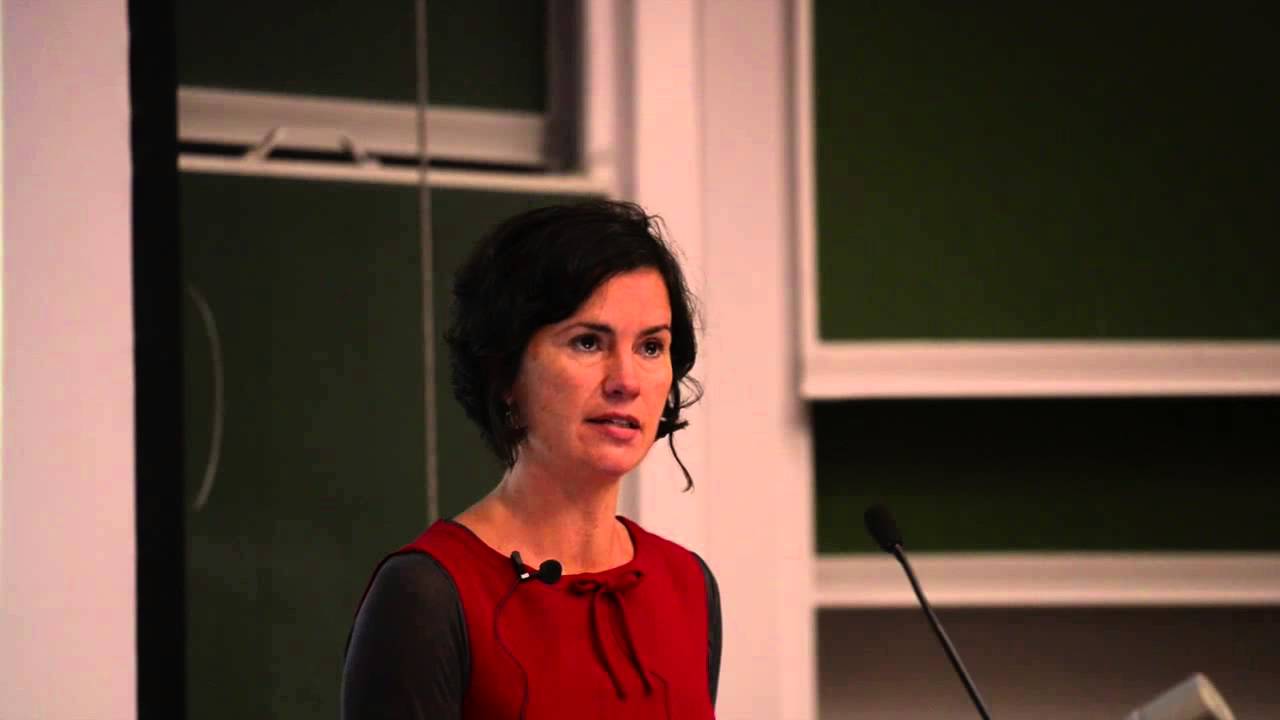
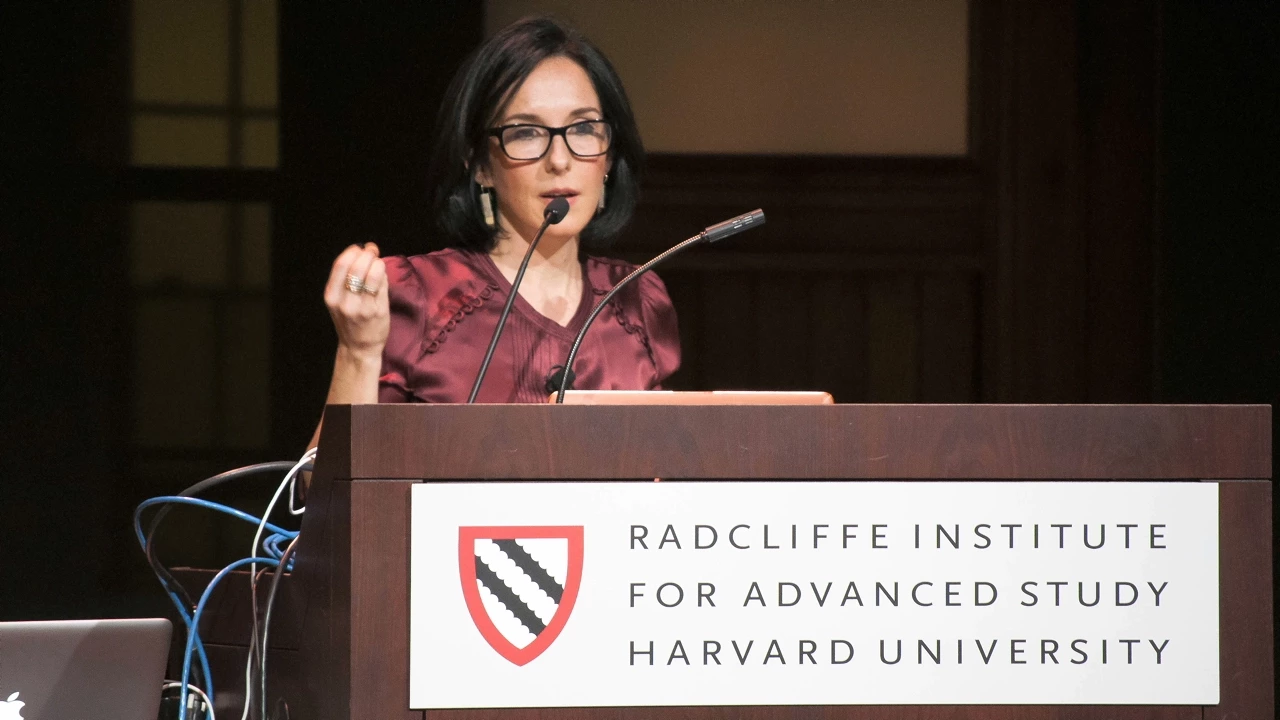
Sexism and Epistemic Injustice: How Male-Centered Culture Shapes Knowledge | Soraya Chemaly | TEDx Talk
Added:Basic understanding of epistemology, specifically how societies define, validate, and distribute what is considered 'knowledge'.
The concept of androcentrism, which is the practice of placing a masculine point of view at the center of one's world view, culture, and history.
An introductory understanding of systemic sexism and how power imbalances operate within social institutions rather than just through individual biases.
The general sociological relationship between social status (such as gender, race, or class) and perceived credibility or authority.
Miranda Fricker's philosophical framework of Epistemic Injustice, exploring the distinct differences between testimonial injustice and hermeneutical injustice.
Feminist Standpoint Theory and situated knowledge, which examine how marginalized social positions can provide unique and critical epistemic perspectives.
Real-world case studies of epistemic bias, such as the systematic dismissal of women's pain in healthcare (gender bias in medicine) and credibility gaps in legal testimony.
Actionable strategies for cultivating epistemic justice in professional and academic settings, including active listening protocols, inclusive citation practices, and bias mitigation in peer review.
395.5K views12.9Klikes21:18Original Release: 2015-07-28
Translator: Helena Jonsson Reviewer: Thuy Ta I write about girls and women every day.
I write about gender and culture.
Sometimes, I write about very graphic violence, sexualized violence various forms of discrimination.
And there's an angry response.
People... send threats.
They can get very ugly.
But nothing I've written recently has upset people as much as something that I wrote about public bathrooms.
Last December, I was in a museum with my family and one of my daughters went to the bathroom.
Half an hour later she wasn't back.
So I went to look and she was at the very beginning of a line.
How many people here, how many women here, have stood in line for a public bathroom?
Make noise.
(Noise) Or gone into a men's room?
(Noise) Or gotten frustrated and walked away?
(Noise) So I didn't do any of that.
I embarrassed my daughter, and I counted the women and the children.
There were fifty... women and children.
And next to them was an empty men's room.
Men would go in and out, sometimes making jokes.
So I went home and I wrote about public space and gender.
And I said that equal sized bathrooms with stalls do not serve people the way they should, and that we needed to fix this.
Generally speaking, our public space is designed, not just bathrooms, but public space, to suit the needs of a single man, usually straight, who is not breastfeeding, not pregnant, doesn't have his period, maybe doesn't have a pelvic floor issue that we heard about this morning.
And... so I thought maybe public space should serve everybody equally.
And for the next week, many, many, many irate people told me how to stand and urinate like a man, because it would empower me.
And then they told me I was lying.
It couldn't be true that women were breastfeeding in public bathrooms.
And it went on and on and on and on, until finally I wrote the 10 most sexist responses to the article.
It wasn't the lines that were bothering people.
It was the idea that I was demanding that society meet the needs of women and our bodies.
This was very upsetting to people.
In general though, public bathrooms are just one way that we demonstrate the male centeredness of life.
We don't pay attention to this. It's part of the air we breathe.
So, if you look at these examples, which I'm not going to read off.
All of them are examples of something we don't think about.
And I'm going to talk briefly about a couple.
After crisis, girls and women are up to fourteen times as likely to die because their bodily needs, their greater exposure to violence, is something that isn't taken necessarily into account in immediate circumstances.
Artificial hearts today will fit 80% of men's chest cavities but only 20% of women's.
And this is something that we never ever talk about.
But, these are symptoms of something that I would argue that's different, and that is actually a male centeredness to how we think of knowing, how we as human beings know.
So one of the first stories that I remembered hearing, I was about 5, it was about my great grand mother, and it went like this.
"When she was 14, the beautiful girl" - and it always started that way because why else would this happen - "the girl was walking in her village and a handsome man on a horse rode in, swept her off her feet, made her his wife" - that’s a euphemism - "and off they went, traveled the world and had seven children.
And here we all are today."
The next time I heard it though, I was 11 and I had much more information.
When I was 9, in my schoolyard, a boy threatened to rape me.
Street harassment - which has never ended - had already started.
It was very aggressive street harassment where I lived, and no one talked about any of this.
It was something that was hard for me to understand.
So this time, I took a deep breath and I said: "You know what, she was kidnapped, assaulted and dragged across the planet.
The person who did this should be punished."
And that was my great grandfather. He was a 105 and we loved him.
He always laughed and he took care of everybody.
But I thought, how it is possible that we’re telling this story this way.
And this is what philosopher Miranda Fricker has a name for; she calls it epistemic injustice.
Both my great grandmother, who had no social construction to help her understand her life, and I, were being denied the right to be knowers.
At the point at which she lived we just didn’t talk about these things.
Feminist had not come up with words like sexual assault, domestic violence, postpartum depression.
There was literally no way to know what was happening to her.
And so, part of this that we all experience fairly regularly, is something called testimonial injustice, which is that when someone hears us, they actually have a prejudice that doesn’t allow them to think we’re credible.
So we go into spaces that are workplaces, or educational environments, and there’s a credibility deficit.
So if you look at this chart these are just different areas and sectors of the economy, and what the image is, it's masculine versus feminine space in terms of the proportion of people, or the proportion of awards that are granted.
There’s something interesting about this.
We know what these numbers look like, and they really haven’t changed much over the last 25 years.
But there’s an interesting verbal activity that’s going on.
In mixed gender groups, in male-dominated spaces, and - who are we kidding - all spaces are male-dominated except the home and nurturing.
So teaching or nursing, being administrative assistant, which still in the United States is the number one job for the women, the same as 1950.
Those are male-dominated spaces, and in those spaces we have less credibility.
We know this from implicit bias.
Implicit bias research basically says, all of it that we look at, if you have just the male sounding name, you have a much higher likelihood of getting a job, getting an academic mentor, getting a good review, getting an award in your field.
That’s not a guess, that’s something that’s been measured over and over again.
But when you look at a picture like these, which I'm going to skip backwards to, if you look at this chart, what you’re actually seeing is a reflection of how our community evaluates knowledge.
What we are saying about knowledge?
And what we’re saying about knowledge is that men are more competent, they’re more reliable, they’re more trustworthy.
And that’s something that I didn’t realize was persuasive enough for all women... (Excuse me) until I wrote something called "Ten Words Every Girl Should Know".
And the 10 words were: "Stop interrupting me", "I just said that" and "No explanation needed".
And for one year still everyday I get messages from women who say "Everyday in my work life I have a need to say this.
I have a way to say, put up my hand and say "I just said that", "Don't interrupt me", "No explanation needed".
Now if you think about it, those phrases are different ways of saying "I know, I can look this way, I can dress this way, and I can have knowledge", which is a difficult thing to do.
Now the thing that really struck me when I did research about this topic, was how early it begins.
So we’ve talked about implicit bias in the workplace and we’ve talked about it in education.
But all of us have implicit biases that we don't talk about, and those are in our homes.
So inequality actually begins in homes.
And the interesting thing about it is that out in the world this is very interceptional, meaning race affects the way we think of people, class affects the way we think of people, sexuality affects the way we think of people.
But in homes, generally speaking, gender is the thing that is most salient when we have interactions.
So parents, in study after study, demonstrate that they believe boys, the most important thing is intelligence.
They ask a lot of questions. “Is my son smart?” “Is my son a genius?” For girls, it’s about their appearance. “Is my daughter pretty?” “Is she ugly?” They also sex segregate chores, which is true in all families except single family homes.
So girls will do traditionally girl chores and boys will do traditionally boy chores.
In the same way they distribute chores, they have conversations with children.
And most conversations starting with girls are about helping, with boys it is about play.
Now teachers and parents both, when they talk to girls and boys, they have a different ways of speaking.
And what they’re saying to girls and boys is very different.
They interrupt girls much more than they interrupt boys, and they talk over girls much more than they talk over boys.
That senses a very powerful message about whose voices is important.
They also often expect different things in terms of boy and girl regulation, who is capable of controlling themselves.
Boys and girls actually have the same ability to control themselves.
But we have different expectations, and those biases affect the way parents and teachers interact with boys and girls both.
An important component in childhood to me, is religion.
How many people here have gone to religious services, in either a synagogue or a mosque or a church, where women cannot serve with authority as clerics?
Yes?
Boys go in to those spaces and they learn that they have authority.
Girls go in to those spaces and they learn to be silent.
And what they end up with is a sex based entitlement to public voice and public power.
Now, those things - voice, speech, knowledge - are all intrinsic human characteristics.
But they are really masculinized.
So we use words, like mankind, and we use images of human beings that are all men all the time.
And when we do that we erase women.
So in this room for example, how many people has said mankind and not thought about it?
Anyone?
And when we do that, if we say a word like actor, a word like actress, over and over again, we’re reinforcing this idea that man is at the center, men are at the center and women are something else, slightly different.
So this is generic, but if you look at the specific image here you can see how the men are represented versus how the women are represented.
Those are very different images.
The men are whole people.
They look competent.
They look able.
They look thoughtful.
The women are objectified.
They’re dehumanized.
They are swirling in chaos. Their heads are swirling in chaos.
So what on earth could they be thinking?
I mean, when I looked at this I think “What are they thinking?” So one day I thought what are our images of powerful women?
Where are they?
And I googled “venerable women”, looking for some wise women, maybe old women, maybe mystiques, maybe even just allegorical figures like most of our female statues.
Google comes back at me and it says: “Do you mean venerable men or vulnerable women?” (Laughter) So…. You have to laugh, right?
Everybody says that feminists don’t have a sense of humor.
You cannot be a feminist, unless you have a sense of humor.
It’s a rule, ok?
(Applause) I thought, that’s an amazing thing.
Now, this is my family’s original all male panel.
The little boy in the very front that went by very fast, was my great grandfather who ended up on the horse.
These are our all male panels today.
The chart that I showed you is room after room after room that looks like these.
And to me, this is a collective image of ignorance.
It’s ignorance about humanity.
Because, generally speaking, if you have this level of sex segregation throughout our culture, there’s no way that it can contain our experiences as women.
And so the decisions that are made in these spaces are deeply immoral.
We need to be raising children to understand that sexism, racism, misogyny, those are irritating things in our lives.
They are like pet projects that were supposed to take care of in our spare time.
Those are unethical things that are inhumane and result in injustice.
(Applause) So I thought, alright, we have all of these venerable men.
And for a thousand or more years, they've been making philosophical decisions, for all of us, cultural decisions, and religious decisions.
What does the accumulated wisdom of our world say when we google “are women”?
And what you get - if I can get the clicker to work - what you get when you say “are women” is the response, the number one response: “Evil”.
(Laughter) OK?
I even took a screen capture.
The number one response from the world searching about women is “are they evil?” Now, in spaces where there are not a lot of women, especially in leadership, the higher you go, the fewer women there are.
In those spaces, men talk 75% more than women.
And we have an interesting listener bias.
And the listener bias is that when women speak as little as 30%, men and women both think we are dominating.
I find that fascinating because what it says to me is, despite the stereotype that women talk more, and we may indeed use more words, which is a different issue, but in those contexts, in those contexts, what it says to me is that the culture expectation is that we are supposed to talk less.
We’re supposed to be quiet.
And all of that is tied to whether we can be knowers.
So when feminists say, as they have been for centuries, are women human?
This is what we’re talking about.
We are objectified, we are silenced.
Those stories that we all have, they are not out in the world as profusely as they need to be.
And so, when I see those rooms full of men even though they may individually be wonderful people, and they may be making what they think are ethical decisions, there’s a epistemological flaw in the culture, that means they simply are not diverse enough to capture what we need to capture for the world to be a more just place.
(Applause) So, I was going to close by saying: Everything has to change, and I am going to leave that to you.
But I can’t do that.
So I have three things.
I really believe that - to borrow science construct - small changes in initial condition can yield exponential difference.
And I really wanted to leave you with something that anybody could do everyday.
And it won’t cost money. It may even save you money.
It doesn’t acquire that you build an institution, as wonderful as the institutions are.
But it requires you to think about the small details of life, in a new way, in a different way.
And, so the first thing I would say is: Be knowers, not pleasers.
We are still, all of us collectively, creating an environment for children, in school and at home, where they are learning that girls are pleasers, that we should be more quiet, that we should be more helpful.
You know, when we do chores right now, boys are more likely to get paid, and they’re more likely to get paid more.
That’s just purely a function of implicit bias in home, but it establishes as a pattern for adulthood.
Teach children that girls are not just pleasers, but that they can be knowers.
And when you teach manners, don’t have those manners be about “ladies and gentlemen”.
Politeness norms are extremely gendered for children, So boys, for example, can be more crude. They can joke. They can curse.
And that might not be great in school, but those very disruptive behaviors take up verbal space, and that’s what rewarded in adulthood.
We actually actively teach girls not to behave that way.
When they are 20, we are like: “Hey, get more confident and ask for that raise.” It is no way to undo the socialization of 20 or 25 years, when you’ve been biting your tongue, because you’ve been taught to do that.
The second thing is that you need to practice at equality at home.
And you need to take it into institutions with you.
So the dynamic that I am talking about, it may be that in your own home there’s a chore gap.
Generally speaking, in all of the world, women are still doing an overwhelming amount of domestic work.
It turns out that one of the greatest indicator of a girl’s ambition, particularly in terms of trying to reach a high level job with a salary, is if she has a father in a home who does cross gender chores.
Now think about that.
It just means - I don’t like taking out the garbage - it means I take out the garbage and my husband makes dinner.
It’s a small thing.
We don’t even think about it, we’re trying to be more efficient.
That has to go into schools.
One of the biggest vectors for sexism that I can ever imagine is the way our schools teach children.
First of all, it’s sex segregated by default, because teachers tend to be overwhelmingly women.
And they are excellent women, but we need men to teach.
We need men to be nurturers.
We need them to be setting examples in schools.
We need them to be interacting with both boys and girls, whether it is a sex segregated school or not.
It’s more a matter of how integrated the teaching staff maybe.
That sends a very strong message to children.
School also have a volunteer culture.
How many people in here that have children have to volunteer in their schools?
What I have found in my experience - I have 3 children, they’re all teenagers - overwhelmingly, mothers are still volunteering, whether or not they work is irrelevant.
Fathers show up.
They do some of the big money fundraising.
And they do the outside things, like build cabins on special days.
But we need those volunteer cultures to also reflect the big change in our lives, the social transformations.
I’m going to leave you by saying: My great grandmother literally lost her voice.
People remember her sitting on the veranda at the end of her life, trembling.
And she never spoke.
Today we would have words for that.
We would talk about trauma.
But that wasn’t the case then. They said that she lost her mind.
And so I thought this isn't a person who lost her mind.
This is a person faced with an incomprehensible life.
And she's kept her mind, she's kept her mind to herself, which was her only recourse.
The change that we have now is that we can talk about these things.
And that’s important.
So the last thing I would tell you is I am here telling her story, which is a huge change in the last 50 years.
And you have that power too.
Don’t bite your tongue.
Most of the men I know whom I love, they really don’t understand what rape is to a woman’s life.
They understand the act of rape, but not the fact of rape.
And those images that I showed you of vulnerable women and venerable men, those are images of people who need more information, and they need women's information.
So thank you so much for being here at the end of the day.
(Applause)
Up Next

11:05
Mobility Justice in Disasters: Inequality & Sustainability
@forumviesmobiles6839
1.2K views•2013-12-02
54:57
Contemporary Sociological Theory: Micro, Macro, Integrative
@NaSESYNC
45.7K views•2016-02-17
10:43
The Hidden Cost of Code Switching: A Tech Founder's Story
@TEDx
460.8K views•2017-08-22
9:41
What is Sociology? The Sociological Perspective Explained
@crashcourse
4.6M views•2017-03-13
Related Study Plans & Knowledge Roadmaps
Structured learning paths in Sociology
sociology
Celebrity Culture: From Hollywood to TikTok
01Foundations of Celebrity Sociology
02The Rise of Micro-Celebrity & Digital Platforms
03Parasocial Relationships & Algorithmic Intimacy
+ 2 more learning modules
12h5 modules
Explore Roadmap
sociology
Hostile Architecture: Space, Power & Control
01Introduction to the Sociology of Space
02Social Control and Surveillance in the City
03Hostile Architecture and Defensive Design
+ 2 more learning modules
12h5 modules
Explore Roadmap
sociology
Loneliness Epidemic: Third Places & Isolation
01Foundations of Social Capital and Community Cohesion
02The Death of Third Places and Urban Space Erosion
03The Privatization of Leisure and Atomization
+ 2 more learning modules
12h5 modules
Explore Roadmap
sociology
Sociology of Tourism: Gaze, Power & Heritage
01Foundations of the Sociology of Travel and Leisure
02John Urry and the 'Tourist Gaze'
03Staged Authenticity and Cultural Commodification
+ 2 more learning modules
14h5 modules
Explore Roadmap