Hostile Architecture: Space, Power & Control
Learning Goal: Analyze the sociological relationship between the built environment and social control, examining how hostile architecture, defensive design, and the privatization of public space regulate human behavior and reinforce class and racial exclusion.
- Prerequisites: None (An introductory understanding of social theory is helpful but not required).
- Estimated Total Study Time: 12 Hours
Module 1: Introduction to the Sociology of Space
Physical space is not a neutral stage where social life simply occurs. Instead, the layout of our cities, streets, and buildings is an active force that reflects, shapes, and enforces power dynamics. In this module, we introduce the foundational principles of spatial sociology. We will explore "spatial justice," the intersection of structure and agency, and how the physical design of human environments affects behavior and community life.
Recommended Videos

Why this video: This academic seminar introduces the core sociological framework of "space vs. place." It details how structural systems interact with individual agency to shape spatial distribution, establishing the perfect vocabulary and analytical foundation for this curriculum.
- Knowledge Checkpoint:
- Explain the difference between "space" (abstract physical metrics) and "place" (socially constructed meaning).
- Describe the dialectic between structure (spatial rules, physical barriers) and agency (the human capacity to navigate or subvert those rules).

Why this video: Scholar Roberto Rocco links physical urban layouts directly to democratic values. He introduces "spatial justice" as a critical framework, showing how sustainable planning must balance environmental, economic, and social dimensions.
- Knowledge Checkpoint:
- Define "spatial justice" and explain why it is essential for political participation.
- Explain how the loss of the urban "commons" affects marginalized citizens.
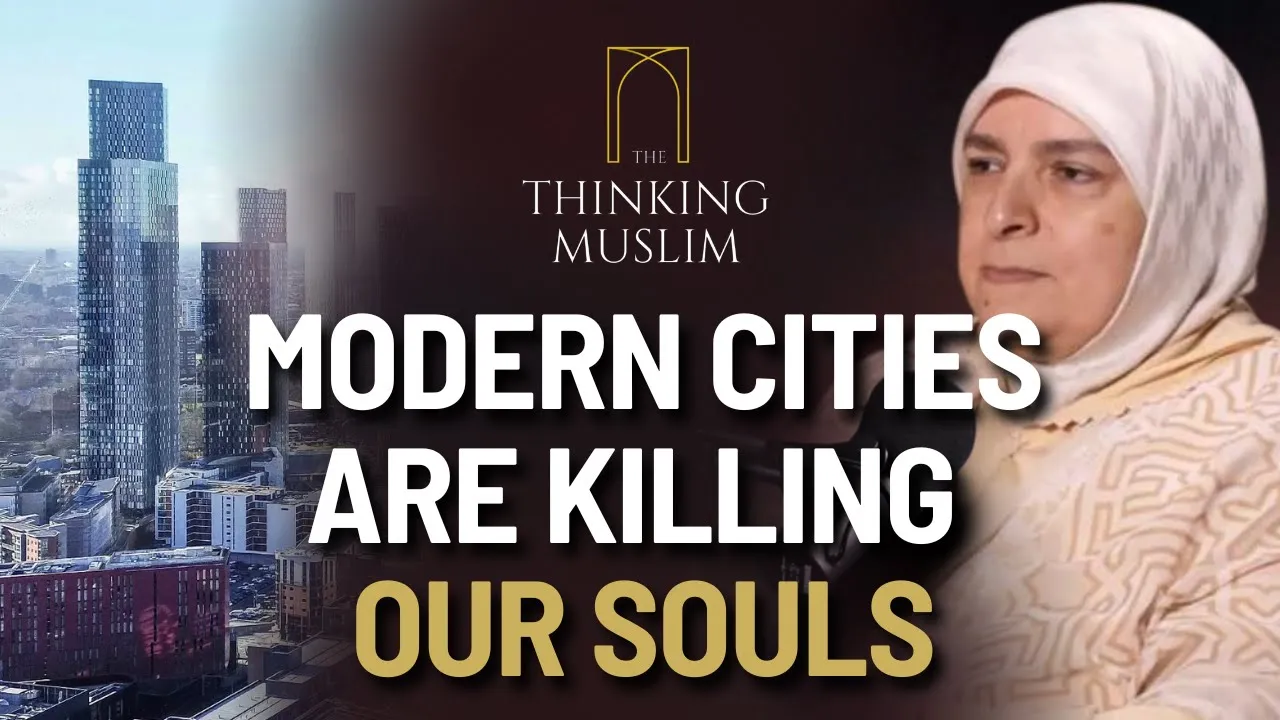
Why this video: Dr. Heba Raouf Ezzat argues that sociological and political theories are incomplete without an urban and material lens. This short, high-impact video highlights the connection between physical environments and our social relationships.
- Knowledge Checkpoint:
- Why must every sociological and political phenomenon include a material and spatial dimension?
- How does modern urban design affect community cohesion?
Curriculum Gap Note: High-quality video essays focused specifically on Henri Lefebvre's theory of the "Production of Space" are limited in our current media pool. To deepen your understanding of this foundational theory, we recommend searching independently for: "Henri Lefebvre production of space introduction" or "spatial justice in urban planning lectures."
Module 2: Social Control and Surveillance in the City
How do institutions guide and police human behavior in modern cities without resorting to physical force? This module examines spatial discipline, using Michel Foucault's analysis of Jeremy Bentham’s "Panopticon." We will examine how constant, pervasive visibility—or the illusion of it—forces individuals to monitor and regulate their own conduct in public spaces.
Recommended Videos

Why this video: This video uses theatrical and philosophical analysis to break down Foucault's work on surveillance. It illustrates how the architecture of the Panopticon is designed to internalize obedience, which serves as a model for how modern surveillance states operate.
- Knowledge Checkpoint:
- Explain the design of Jeremy Bentham's Panopticon and why it makes physical force unnecessary.
- Give examples of how modern technological surveillance replicates the psychological effects of the Panopticon in cities.

Why this video: This audio-visual essay details the historical transition from physical, sovereign punishment to psychological discipline. It explains how modern systems distribute bodies in space to maximize utility and docility.
- Knowledge Checkpoint:
- Contrast sovereign power (spectacles of physical punishment) with disciplinary power (spatial control and observation).
- Define the term "docile bodies" and explain how spatial organization produces them.
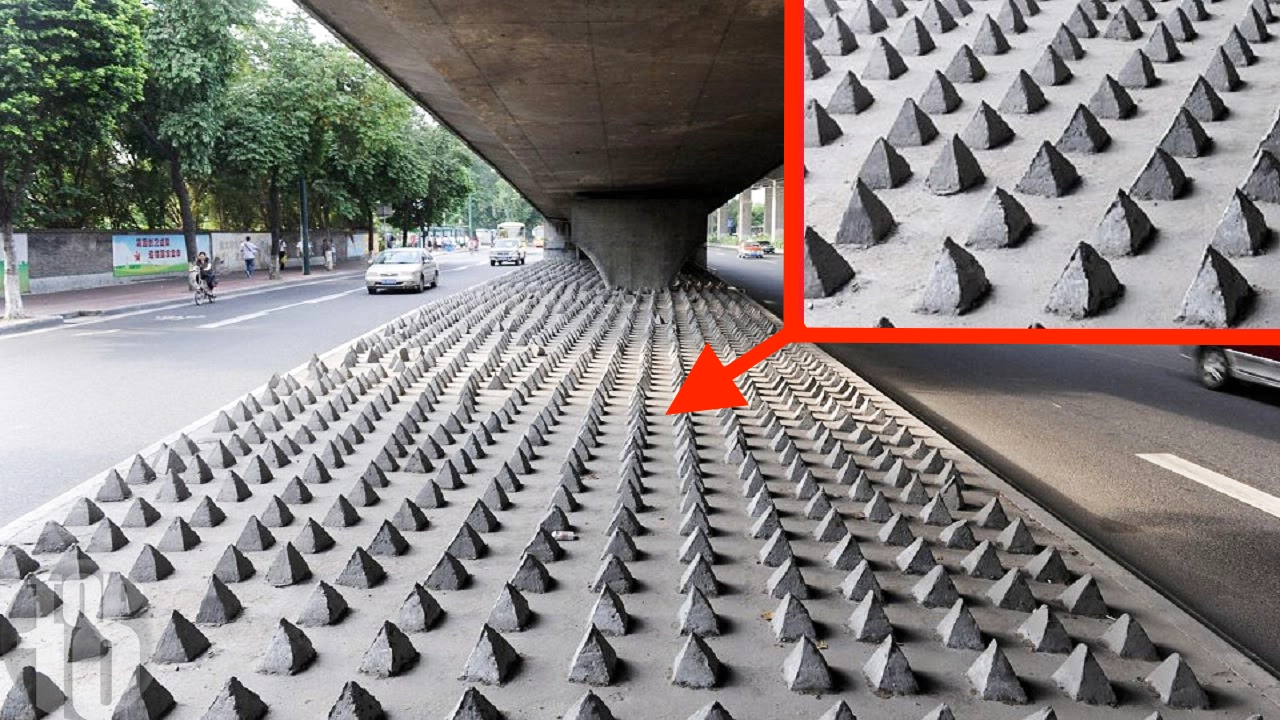
Why this video: This video connects Foucault’s abstract theories of power to concrete, everyday urban design elements. It lists subtle, coercive tools—like fake security cameras, strategically placed lighting, and seating arrangements—used to manage public spaces.
- Knowledge Checkpoint:
- Identify three physical design elements used to influence behavior without relying on police officers.
- Explain the psychological impact of visible deterrents, such as dummy cameras or colored lighting, on public behavior.
Module 3: Hostile Architecture and Defensive Design
Hostile architecture uses physical elements in the built environment to restrict and control human behavior. This module looks closely at specific design choices, such as divided benches, metal spikes, and acoustic deterrents. We will analyze how these choices target vulnerable populations—specifically unhoused people and youth—by making public spaces physically uncomfortable.
Recommended Videos
Why this video: Urban researcher Cara Chellew provides an academic and accessible critique of defensive urban design. She explains how modifying benches, ledges, and public fixtures changes who feels welcome in a space and who is excluded.
- Knowledge Checkpoint:
- Define "defensive urban design" and explain how it differs from traditional urban design.
- Discuss the societal and ethical consequences of prioritizing commercial comfort over public access.
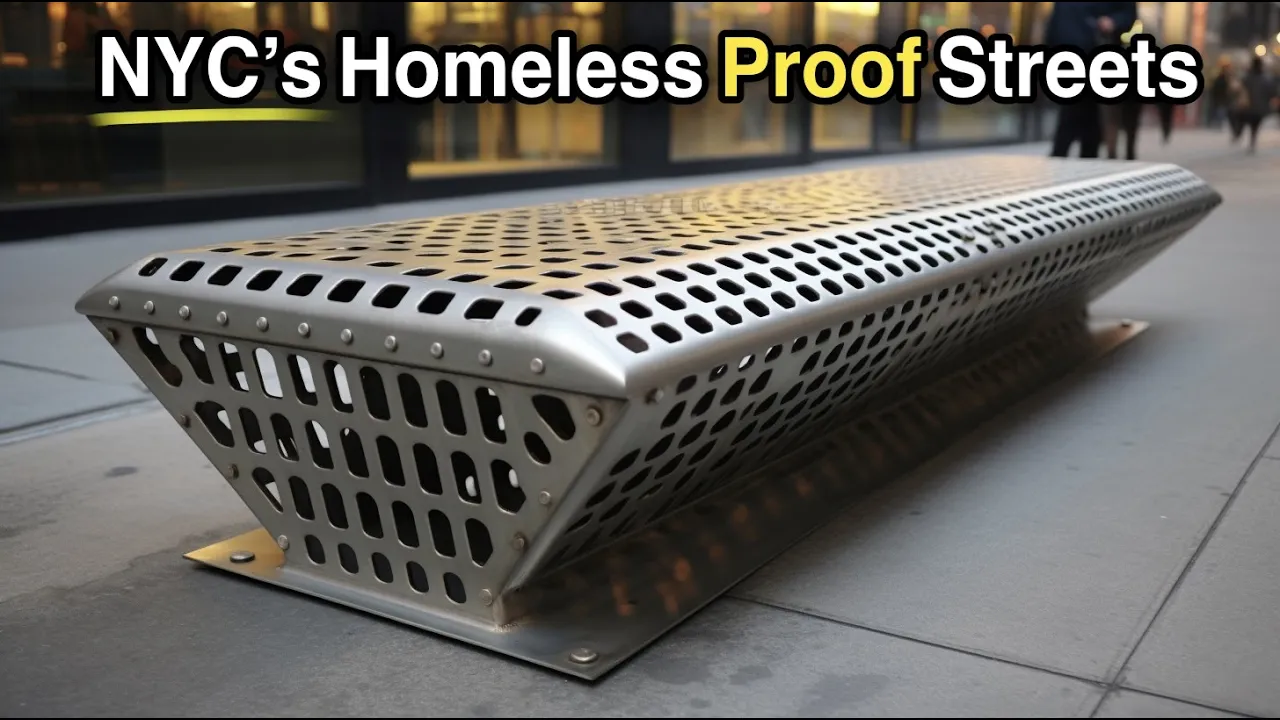
Why this video: This detailed visual essay walks through New York City to document the implementation of anti-homeless design. It provides a real-world look at how public benches, vents, and alcoves are altered to prevent people from finding shelter.
- Knowledge Checkpoint:
- Identify at least four distinct hostile architecture designs used in NYC transit systems and public alcoves.
- Critically evaluate the claim that hostile architecture is designed for "public safety" rather than spatial exclusion.

Why this video: This video categorizes fifteen distinct physical tactics used by developers and municipalities worldwide to control public spaces. It explains the mechanics behind each design, from metal studs to blue-light installations.
- Knowledge Checkpoint:
- Categorize the active and passive deterrents used to target skaters, unhoused individuals, and youth.
- Explain how these physical designs alter our shared public spaces.
Module 4: Privatization of Public Space and the Democratic Commons
Over the past few decades, public space has been increasingly privatized. This module examines Privately Owned Public Spaces (POPS), shopping malls, and corporate areas that look like open city squares but operate under private property rules. We will analyze how this shift restricts civil liberties, limits the right to protest, and changes public space from a civic resource into a commercial commodity.
Recommended Videos

Why this video: This video explains how Privately Owned Public Spaces (POPS) were established in New York City via the 1961 zoning resolution. It details the bargain struck between the city and private developers, and what that deal means for the public.
- Knowledge Checkpoint:
- Explain the "bonusing" incentive system in urban zoning and how it rewards high-rise developers.
- Describe how the rules governing behavior inside a POPS differ from those of a public municipal park.

Why this video: Using Naomi Klein's classic text No Logo, this analysis explains how modern commercial centers (like malls) mimic traditional town squares while using private property rights to prohibit free speech and political assembly.
- Knowledge Checkpoint:
- Explain how commercial environments mimic public civic spaces while restricting constitutional rights (such as political petitioning or protest).
- Analyze the concept of the "branded town square" and how it impacts non-commercial social activity.

Why this video: This video uses real-world examples to show how private entities try to restrict access to public assets. It highlights the growing tension between private corporate control and community members fighting to protect public spaces.
- Knowledge Checkpoint:
- How do private security personnel enforce behavioral rules in public areas?
- What legal and activist strategies have communities used to reclaim privatized public spaces?
Module 5: Class and Racial Exclusion through Urban Planning
Spatial design can enforce and maintain social hierarchies. This module analyzes the history of systemic exclusion in urban planning, focusing on redlining, highway building, and segregation barriers. We will examine how major planners—including Robert Moses—intentionally designed public infrastructure to isolate minority neighborhoods and maintain economic and racial segregation.
Recommended Videos
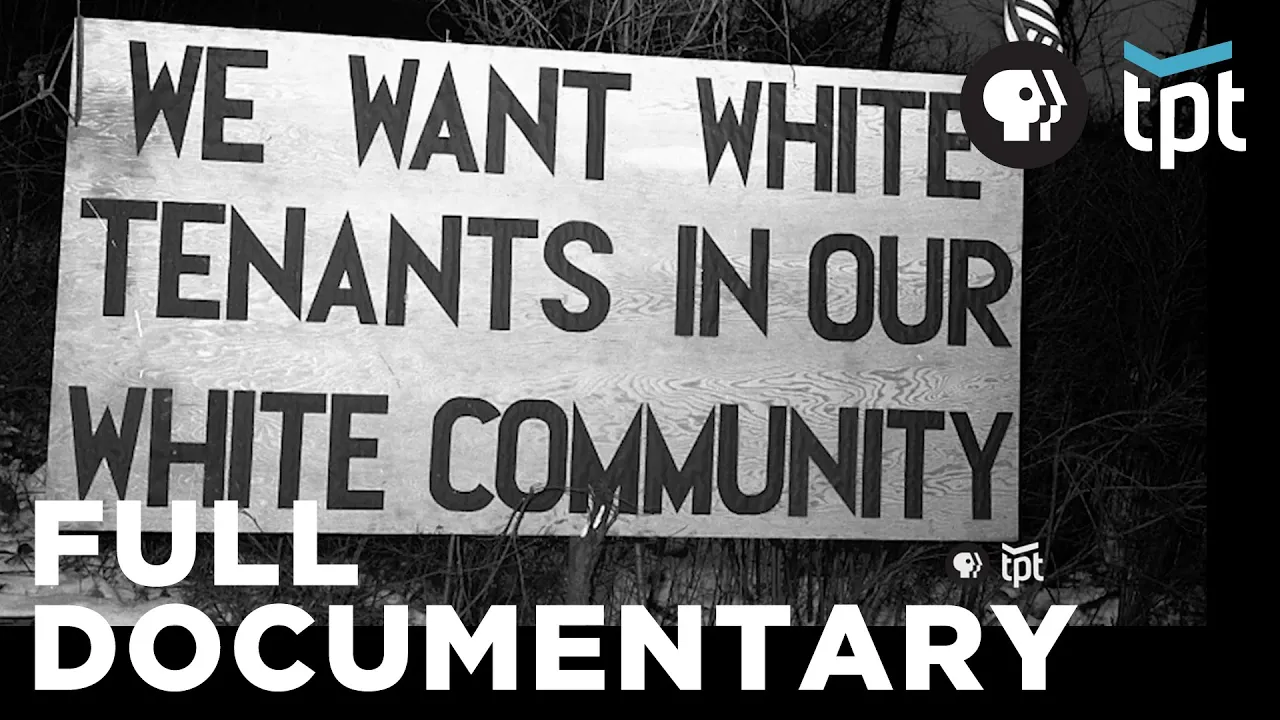
Why this video: This documentary explains redlining and housing segregation. It shows how mid-century land-use planning maps labeled Black neighborhoods as "slums" to justify systemic disinvestment and highway construction.
- Knowledge Checkpoint:
- Explain how the Federal Home Owners' Loan Corporation (HOLC) used color-coded maps to institutionalize segregation.
- Describe the long-term impact of mid-century urban renewal policies on Black property ownership and generational wealth.
Why this video: Sociologist Jacob Faber explains the structural concept of "spatial inequality." He details how geographic location directly shapes access to credit, public services, and lifetime opportunities.
- Knowledge Checkpoint:
- Explain how geographical placement can restrict or enhance an individual's upward socioeconomic mobility.
- How did historic federal housing policies help build the white middle class while excluding minority families?

Why this video: This video profiles Robert Moses, the influential master builder of New York. It details how his car-centric highway projects systematically cut through and destroyed minority and working-class neighborhoods.
- Knowledge Checkpoint:
- How did Moses use highway construction to divide and destroy established urban neighborhoods?
- Explain how physical design choices—such as designing overpasses too low for public buses—were used to restrict access to public recreation sites.

Why this video: This video studies Detroit's Birwood Wall (often called the 8-Mile Wall). It is a physical barrier built in 1941 to separate Black and white areas so developers could qualify for federal housing loans.
- Knowledge Checkpoint:
- Why did private developers build a physical concrete wall along Detroit's 8-Mile road in 1941?
- How do physical segregation barriers continue to affect local neighborhood demographics and home values today?
Course Map
This flowchart shows the progression of modules and how their theoretical frameworks build toward understanding systemic spatial exclusion.
Key People Index
- Michel Foucault (1926–1984): A French philosopher who wrote Discipline and Punish. His analysis of Bentham's Panopticon shows how institutions use spatial distribution and constant observation to encourage self-regulation.
- Robert Moses (1888–1981): A powerful, unelected urban planner who shaped mid-century New York. His automobile-centric projects frequently displaced marginalized communities and built racial biases directly into public infrastructure.
- Naomi Klein (1970–Present): An author and activist who critiqued commercial branding and the privatization of civic spaces in her book No Logo.
- Cara Chellew: An urban researcher who documents and critiques defensive design tactics, showing how hostile architecture is used to exclude marginalized groups.
- Roberto Rocco: An urban planning academic whose research focuses on "spatial justice" and protecting the urban commons.
- Jacob Faber: A sociologist whose work demonstrates how historical policies (like redlining) institutionalized racial wealth gaps through geographic segregation.
Final Self-Assessment
Complete this checklist to verify your understanding of the relationship between urban space, power, and social control:
- I can explain the difference between abstract physical "space" and socially constructed "place."
- I can define "spatial justice" and explain how urban planning affects democratic participation.
- I can describe the architecture of Bentham's Panopticon and explain how Foucault applies it to modern social control.
- I can identify at least five different hostile architecture tactics used to discourage marginalized groups from using public spaces.
- I can explain how Privately Owned Public Spaces (POPS) limit traditional public speech and assembly rights.
- I can outline the legal differences between a public municipal park and a privately owned commercial area (like a shopping mall).
- I can define "redlining" and explain how mid-century loan maps institutionalized geographic wealth inequalities.
- I can identify historical examples of urban infrastructure—such as low bridge clearances or segregation walls—designed to restrict access based on race and class.